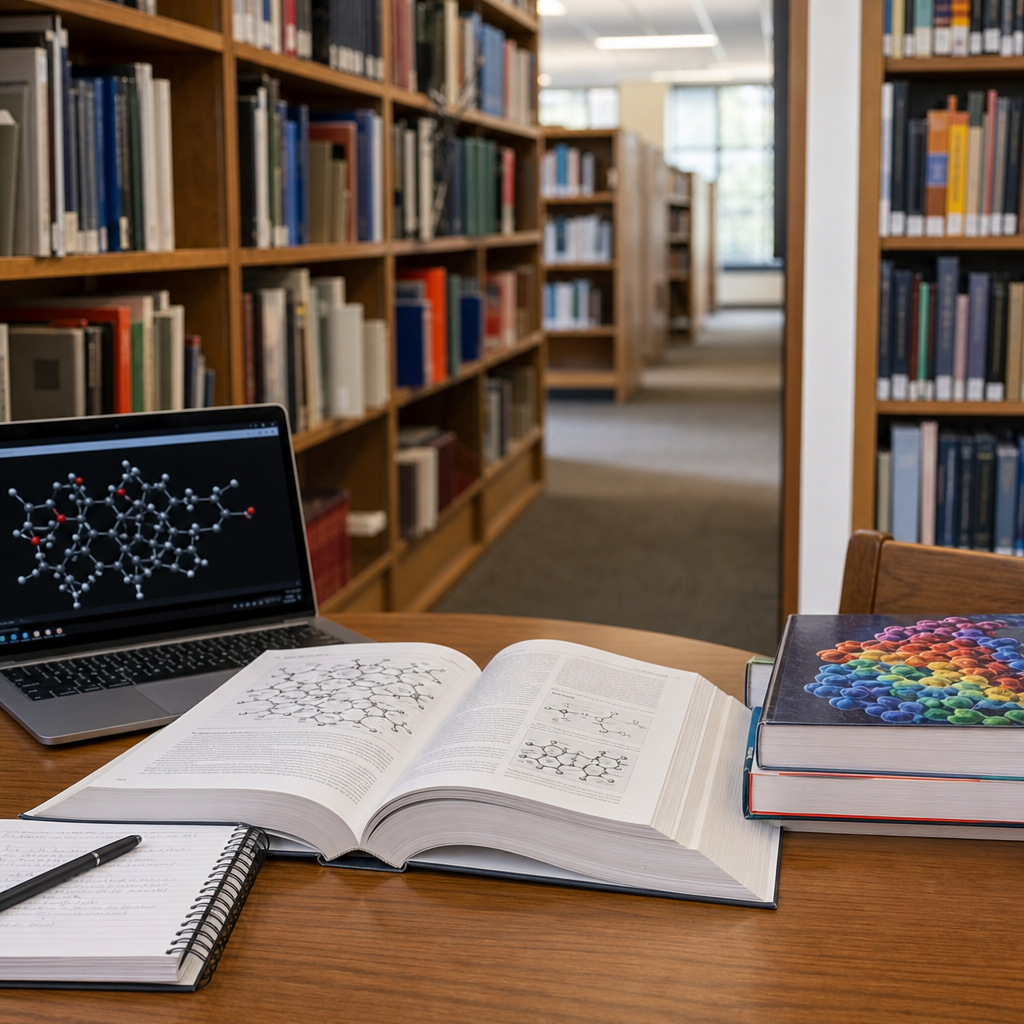
Library resources are still the fastest route to serious polymer studies, especially when you need authoritative books and journals rather than scattered web summaries. In polymer science, the quality of your sources matters because small differences in terminology, test methods, or processing conditions can change the meaning of an entire result. A guide to using library resources for polymer studies must therefore do more than list databases. It should explain how to identify core references, how to search efficiently, how to judge whether a source is current enough, and how to connect books and journals into a practical research workflow.
Polymer studies span chemistry, materials science, chemical engineering, physics, biomedical engineering, and sustainability. Students may be learning chain-growth polymerization, viscoelasticity, blends, composites, rheology, membrane science, or plastics recycling. Researchers may be tracking a narrow question such as the barrier properties of poly(ethylene terephthalate), the crystallization behavior of polypropylene, or the cytocompatibility of hydrogels. Across all of these areas, libraries provide the structured access that random searching cannot: catalog records, subject headings, citation indexes, standards collections, archival journal holdings, interlibrary loan, and librarian expertise. I have seen students cut days off a literature review simply by switching from keyword guessing to a library-led search plan built around controlled vocabulary and citation chaining.
Books and journals are the backbone of this process. Books establish foundations, define terms, explain mechanisms, and summarize mature areas of research. Journals provide current findings, methods, data, and scholarly debate. Used together, they help you move from basic understanding to evidence-based analysis. This hub article focuses on books and journals comprehensively so readers can build a reliable method for course assignments, thesis work, patent landscaping, and laboratory planning. If you study polymers and want sources you can trust, the library is not just a repository. It is a research system.
Why books remain essential in polymer studies
Books are the best starting point when you need context before diving into journal articles. A strong polymer textbook explains nomenclature, molecular weight distributions, tacticity, thermal transitions, morphology, processing, and characterization in a coherent sequence. That sequence matters. A student who reads about differential scanning calorimetry in isolation may understand the instrument but miss why glass transition and crystallinity affect tensile behavior, permeability, or solvent resistance. Good books connect those concepts.
Core titles vary by institution, but many libraries hold standard references from publishers such as Wiley, Springer, CRC Press, Elsevier, Oxford, and Cambridge. Common examples include introductory polymer chemistry texts, handbooks on polymer blends and composites, and specialized references on rheology, biomaterials, membranes, or degradation. Handbooks are especially useful because they gather definitions, equations, processing notes, and property ranges in one place. When I train students, I often tell them to find one general text, one specialized monograph, and one handbook before opening a database. That combination prevents shallow reading and makes later journal searches more precise.
Library catalogs support this process better than open web search because records include subject terms, edition data, and linked formats. Search by broad phrases such as “polymer chemistry,” “polymer characterization,” “plastic materials,” “rheology,” or “polymer composites,” then narrow by publication date, format, and subject heading. Newer editions matter in fast-moving areas like recycling, additive manufacturing, and biomedical polymers, while older editions can still be valuable for fundamentals such as Flory-Huggins theory, rubber elasticity, or standard processing principles. If your library uses Library of Congress classification, browsing nearby call numbers can reveal related works you would not discover with a single keyword query.
How to use journals to find current polymer research
Journals are where polymer science becomes current, specific, and testable. A journal article can tell you exactly which catalyst system was used, which solvent cast film thickness was prepared, what molecular weight was reported, which ASTM or ISO test method governed the experiment, and how the data compare with prior work. That level of detail is why journals are central to polymer studies. They are not just updates to books; they are the evidence base.
Important journal families for this field include polymer-specific titles, broader materials science journals, analytical journals, and applied engineering publications. Depending on your topic, you may need titles such as Macromolecules, Polymer, Journal of Applied Polymer Science, Biomacromolecules, Progress in Polymer Science, ACS Applied Polymer Materials, European Polymer Journal, or materials journals that publish polymer composite, membrane, or packaging studies. Review journals deserve special attention because they synthesize research trends, compare methods, and identify unresolved questions. For a student entering a new area, a recent review article is often the single most efficient source in the library’s electronic collection.
Use the library website to access journal platforms and indexing databases rather than searching publisher sites one by one. Databases such as Scopus, Web of Science, SciFinder, Compendex, and specialized chemistry resources allow better filtering by topic, cited references, author, institution, document type, and publication year. Many universities also provide link resolvers that connect database records to full text, print holdings, or interlibrary loan. If a paper is unavailable immediately, request it. Researchers often underestimate how quickly interlibrary services can deliver scans of difficult articles.
Building a smart search strategy for polymer books and journals
Effective searching in polymer studies depends on synonyms, abbreviations, and material naming conventions. A polymer may appear under a common name, an acronym, a trade name, or a chemical description. For example, poly(lactic acid) may be listed as PLA, polylactide, or poly(lactide). Poly(methyl methacrylate) may appear as PMMA or acrylic. Poly(ethylene terephthalate) may appear as PET, polyester, or bottle-grade PET in applied papers. Without a structured search, you miss relevant sources.
Start with a concept map. Break your topic into material, property, method, and application. If the question is about improving the oxygen barrier of PET films with nanoclay, your concepts might be PET, nanocomposite, oxygen permeability, film processing, and packaging. Then generate variants for each term. Use Boolean logic carefully: combine synonyms with OR and connect major concepts with AND. Phrase searching helps with exact terms like “glass transition temperature” or “ring-opening polymerization.” Truncation can capture variations such as polym* only when the database supports it and when the results are not too broad.
| Research need | Book search terms | Journal search terms | Useful filters |
|---|---|---|---|
| Polymer fundamentals | polymer chemistry, macromolecules, polymer physics | review article polymer chemistry fundamentals | textbook, handbook, review, recent edition |
| Specific material | polypropylene properties, PLA biodegradation | polypropylene crystallization, PLA hydrolysis | subject area, year, material name variants |
| Characterization method | DSC polymers, rheology polymer melts | differential scanning calorimetry polyethylene | method, article type, cited by |
| Applied problem | barrier packaging polymers, biomedical hydrogels | oxygen permeability PET nanoclay film | application, language, full text access |
After your first search, refine by reading titles, abstracts, subject headings, and author keywords. Then use citation chaining. Backward citation searching shows the references an article relied on; forward citation searching shows who cited it later. In polymer studies, this technique is invaluable because landmark papers on polymerization mechanisms, compatibilization, or morphology often anchor an entire subfield. Following citations lets you trace how ideas evolved rather than collecting disconnected articles.
Evaluating quality, relevance, and date of sources
Not every source deserves equal weight. In polymer science, evaluate a book or journal article on four practical questions: Is it authoritative, is it relevant to your exact material and conditions, is the method sound, and is it current enough for your purpose? A classic text may be authoritative on fundamentals but outdated on chemical recycling. A recent article may be current but irrelevant if it studies a different molecular weight range, filler loading, or test environment than yours.
Authority starts with the publisher, journal reputation, and author expertise, but it does not end there. Read the methods and data. If a paper reports mechanical properties, check sample preparation, conditioning, strain rate, and standard method. If it reports thermal behavior, check heating rate, atmosphere, and instrument calibration. If it reports biodegradation, ask whether the work measured true mineralization, mass loss, or only visual change. I have reviewed student bibliographies where five articles looked similar from the title alone but answered completely different questions once the methods section was examined.
Date matters differently across source types. For definitions, theory, and long-established techniques, older books remain useful. For active topics like bio-based polymers, flame-retardant systems, self-healing materials, or solvent-free processing, recent reviews and journal articles are essential. A practical rule is to use foundational books for concepts, then rely on the last five to seven years of journal literature for current state-of-the-art unless you are deliberately tracing historical development.
Using review articles, handbooks, and reference works together
Students often jump straight from textbook chapters to primary research and miss the middle layer that makes literature work faster: review articles, handbooks, encyclopedias, and data-rich reference works. In polymer studies, these resources are exceptionally useful because the field is broad and terminology can shift between chemistry and engineering contexts. A review article can tell you which compatibilizers dominate a blend system, which filler dispersion problems remain unresolved, or which degradation pathways are most accepted. A handbook can provide property tables, processing ranges, and common additives. An encyclopedia entry can clarify definitions and major industrial uses.
The best workflow is sequential. Begin with a textbook chapter to understand the concept. Move to a handbook or encyclopedia entry to capture definitions, equations, and common property values. Then read a recent review article to identify major researchers, common methods, and current debates. Only after that should you build a set of primary journal articles. This sequence reduces confusion, especially in areas like polymer nanocomposites, membrane separations, and biomedical hydrogels where papers assume background knowledge that newcomers may not have.
Libraries make this layered approach practical by licensing multidisciplinary collections and searchable reference platforms. Use chapter-level search where available. Search within full text for named concepts such as Fox equation, WLF equation, tan delta, percolation threshold, living polymerization, or time-temperature superposition. These terms often lead more quickly to the exact section you need than general material names alone.
Making the most of library services beyond the shelf
The most overlooked polymer study resource is often the librarian. Subject librarians can recommend databases, controlled vocabulary, citation managers, and specialized collections you may never find alone. For polymer topics, they can also help you locate conference proceedings, dissertations, government reports, and standards that sit adjacent to books and journals but often answer practical questions about methods and applications. When I worked with library staff on materials projects, one good consultation routinely saved hours of trial-and-error searching.
Interlibrary loan expands your reach beyond local holdings. This matters in polymer studies because older conference papers, niche journals, and specialized monographs are not always digitized in one place. Document delivery can also help when a chapter from a handbook is more useful than borrowing an entire volume. Reference management tools supplied or supported by libraries, including Zotero, EndNote, and Mendeley, are equally important. Polymer literature includes many similar titles and abbreviations, so accurate citation capture reduces mistakes and makes note-taking easier.
Library instruction sessions, database tutorials, and research guides are another high-value asset. Many guides already group materials science resources by function: books, journals, patents, standards, and data sources. Because this article is a hub for books and journals, treat those guides as pathways to deeper subtopics. A book-focused guide can help with foundational reading lists and handbook selection, while a journal-focused guide can support advanced searching, alerts, and citation tracking. Set up saved searches and table-of-contents alerts for your leading journals if your project extends over a semester or longer.
Common mistakes when researching polymers in the library
The first common mistake is searching only by one acronym. Acronyms in polymer science are ambiguous and incomplete. “PVC” is straightforward, but “PU” may refer to polyurethane broadly, while “PUs” can be pluralized in inconsistent ways, and some authors prefer full chemical naming. Always search both acronym and full name. The second mistake is relying on one database. Chemistry-heavy topics may surface differently in SciFinder than in Scopus or Web of Science, and engineering applications may be indexed better in Compendex.
The third mistake is ignoring standards and methods language. If you care about tensile strength, melt flow index, water vapor transmission rate, or dynamic mechanical analysis, include the test language in your search. Articles that cite ASTM D638, ASTM D1238, ISO 527, or DMA terminology are often more directly comparable than papers using broad property terms alone. The fourth mistake is treating every review article as neutral and complete. Reviews reflect author choices, date limits, and scope boundaries, so compare more than one in active fields.
Finally, many students stop once they find downloadable PDFs. That is the point to organize, annotate, and map the literature, not the finish line. Create folders by concept, maintain notes on methods and findings, and record why each source matters. Strong polymer research depends as much on retrieval discipline as on reading volume.
Using library resources for polymer studies becomes easier and more powerful when you treat books and journals as complementary tools rather than separate tasks. Books give you structure, language, theory, and durable reference points. Journals give you current evidence, exact methods, and the latest technical debate. Together, they support better coursework, stronger literature reviews, sharper research questions, and more reliable experimental planning.
The core method is simple. Start with authoritative books to understand the field. Expand through handbooks and review articles to learn vocabulary, methods, and major themes. Search journal databases with synonyms, acronyms, and application terms. Evaluate each source for relevance, method quality, and date. Use citation chaining, alerts, and library services to deepen coverage. When needed, ask a librarian and request materials through interlibrary loan. This process works for first-year students learning polymer basics and for advanced researchers entering a new specialty.
As the hub page for books and journals within educational resources, this guide is designed to anchor your next steps. Use it to build reading lists, improve search strategies, and connect foundational learning with current polymer research. The best next action is practical: open your library catalog, identify one core polymer book, then find one recent review article on your topic and begin from there.
Frequently Asked Questions
What types of library resources are most useful for polymer studies?
The most useful library resources for polymer studies usually fall into four main categories: textbooks and handbooks, peer-reviewed journals, specialized databases, and reference support from librarians. Textbooks and handbooks are often the best starting point because they help you build a solid framework before you begin comparing research papers. In polymer science, that foundation matters. Topics such as molecular weight distribution, crystallinity, rheology, glass transition temperature, viscoelastic behavior, and structure-property relationships all depend on precise definitions. A strong handbook or core text can help you understand how those terms are being used and whether two sources are actually discussing the same phenomenon.
Peer-reviewed journals are essential when you need current findings, processing studies, characterization methods, and application-specific research. Polymer studies frequently involve details that are easy to overlook, including resin grade, additives, thermal history, blending conditions, sample preparation, and testing standards. Journal articles are where those specifics usually appear. Libraries give you access to authoritative journal collections that are far more reliable than fragmented online summaries or isolated PDFs found through general web searches.
Specialized databases are equally important because they allow you to search by topic, author, material class, and citation trail with much greater accuracy. Instead of searching broadly for a term like “polyethylene properties,” you can use library databases to narrow results by publication type, date, subject area, or experimental method. That becomes especially valuable in polymer science, where a broad search may mix basic chemistry, industrial processing, biomedical applications, and environmental studies in ways that are not useful for your specific question.
Finally, librarians themselves are often underused but extremely valuable resources. Academic and research librarians can help you identify major reference works, locate difficult-to-find journals, refine keyword strategies, and use interlibrary loan services when your institution does not own a needed source. For serious polymer studies, the best approach is usually to combine all of these resources: start with books for background, move into journals for evidence and current developments, use databases to search systematically, and consult librarians when you need to go deeper or search more efficiently.
How can I identify authoritative sources in polymer science instead of relying on weak or misleading material?
Identifying authoritative sources in polymer science starts with understanding that not all technical information carries the same weight. A reliable source should have clear authorship, a reputable publisher or journal, and enough methodological detail for you to understand how the conclusions were reached. In polymer studies, this is especially important because experimental outcomes can change significantly depending on processing temperature, solvent choice, polymerization route, sample conditioning, test speed, instrument calibration, or even the standard used for measurement. If a source makes claims without showing those conditions, it should be treated cautiously.
A good first step is to prioritize established academic publishers, major scientific societies, and well-regarded peer-reviewed journals. Core polymer journals, materials science journals, and chemical engineering publications tend to provide the depth and review standards needed for dependable work. Library catalogs and subject databases often help you distinguish these sources from trade publications, general science magazines, or unreviewed web content. Trade literature can still be useful, particularly for processing data or commercial resin information, but it should not usually be your only source if you are making academic or technical arguments.
You should also evaluate whether the source uses standard terminology consistently. Polymer science contains many terms that appear simple but can vary in meaning depending on context. Words like “strength,” “stability,” “compatibility,” and even “degradation” may be used differently across subfields. Authoritative sources define their terms, describe materials carefully, and indicate the test methods or standards used. If one study reports tensile properties according to one testing protocol and another uses a different sample geometry or conditioning method, their numbers may not be directly comparable, even if the polymer name is the same.
Citation patterns can also help. A source that is frequently cited by later research, appears in review articles, or is referenced in advanced textbooks is often influential and trustworthy. Libraries make this easier by giving you access to citation indexing tools and review literature, which can reveal whether a source is foundational, controversial, outdated, or rarely used. In short, authoritative polymer sources are usually those that combine peer review, methodological transparency, clear terminology, and a meaningful place within the broader scholarly conversation.
What is the best way to search library databases for polymer topics effectively?
The best way to search library databases for polymer topics is to search strategically rather than broadly. Polymer science terminology can be highly variable, and a simple keyword search often misses important papers or produces too many irrelevant results. Start by breaking your topic into its core concepts. For example, if you are studying barrier performance in polymer films, your concepts might include the polymer type, the property of interest, the processing method, and the characterization technique. That structure helps you build a search that is focused enough to be useful but flexible enough to catch related terminology.
Use synonyms and technical variants for each concept. A polymer may be listed by full chemical name, abbreviation, common trade name, or broader family. The same is true for properties and methods. “Mechanical properties” might overlap with tensile behavior, modulus, elongation at break, fracture toughness, or creep, depending on the context. Libraries provide access to subject headings, abstracts, and indexing terms that can help you see how experts describe a topic. This is often more effective than relying on whatever phrasing first comes to mind.
Boolean operators are especially helpful. Use AND to combine concepts, OR to include synonyms, and quotation marks for exact phrases when needed. If your initial search is too broad, limit by date range, publication type, language, or subject category. If it is too narrow, remove one constraint, add a synonym, or search for a broader material class before narrowing down again. In polymer research, this iterative method works well because topics often sit at the intersection of chemistry, materials science, physics, and engineering.
Another strong technique is citation chasing. Once you find one or two highly relevant papers or review articles, use their reference lists to move backward to earlier foundational work, and use citation tools to move forward to newer studies that built on them. This is one of the fastest ways to identify the core literature in a polymer topic. A well-chosen review article can save hours of searching because it often maps out major materials, methods, controversies, and benchmark studies. For that reason, many researchers begin with review literature and then move into the primary research papers that the reviews cite.
Finally, keep a record of your search terms and useful databases. Polymer studies often require returning to a topic later, and it helps to know which combinations produced the best results. A documented search process also makes your research more rigorous, especially if you are writing a literature review, project report, or thesis chapter.
Why are books and handbooks still important in polymer studies when journal articles are so current?
Books and handbooks remain important in polymer studies because they provide structure, context, and technical consistency that journal articles alone often do not. Journal articles are excellent for current results, novel methods, and narrowly focused experiments, but they usually assume that the reader already understands the underlying concepts. If you jump directly into research papers without that background, it is easy to misunderstand what is actually being measured, compared, or claimed.
In polymer science, background knowledge is not optional. A paper may discuss chain entanglement, tacticity, crosslink density, melt flow behavior, or dynamic mechanical analysis in only a few lines, yet those ideas may be central to interpreting the entire study. Books and handbooks explain these concepts more fully and place them within a larger framework. They also help you understand relationships between synthesis, structure, processing, properties, and performance, which is one of the defining features of polymer science as a discipline.
Handbooks are especially valuable when you need dependable reference data, standard equations, common test methods, or broad comparisons across material classes. They can help you verify whether a journal result looks typical or unusual. They also tend to be useful when terminology becomes inconsistent across the literature. Because polymer research can span chemistry, biomedical engineering, packaging, electronics, coatings, and composites, the same term may be used with slightly different emphasis in different fields. A respected handbook can anchor your understanding and reduce confusion.
Books are also helpful for identifying the classic literature behind current research. Many advanced textbooks cite seminal experiments, foundational theories, and major researchers whose work continues to shape the field. That makes books a practical starting point if you are trying to understand where a topic came from, not just what was published most recently. In many cases, the fastest route to serious polymer study is to use books for orientation and conceptual grounding, then use journals to investigate the latest evidence, applications, and technical debates.
How can I use library resources to compare polymer studies accurately when results seem to conflict?
Conflicting results in polymer science are common, and library resources are one of the best tools for sorting out why studies appear to disagree. The first thing to recognize is that two papers may not actually be in conflict at all. They may be testing different polymer grades, molecular weights, additive packages, processing histories, blend ratios, or environmental conditions. In a field where small changes in formulation or testing can produce large changes in outcome, accurate comparison depends on reading beyond the headline conclusion and into the methods and