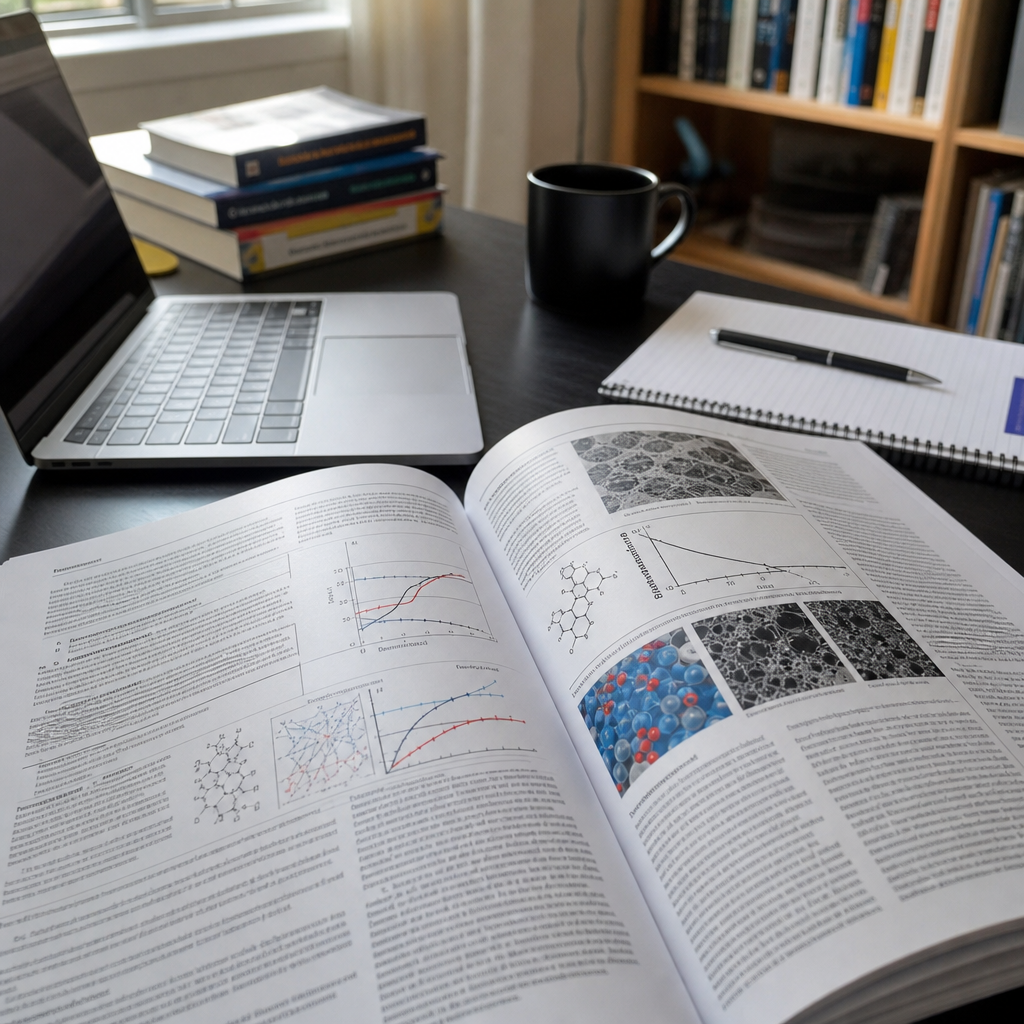
How to write book reviews in polymer science starts with understanding that a review is not a plot summary or a promotional blurb. It is a critical, evidence-based evaluation of a book’s scientific accuracy, scope, usefulness, and place within the broader literature on macromolecules, materials, and processing. In polymer science, that means assessing how well a book explains polymer chemistry, physics, characterization, rheology, engineering applications, sustainability, and current research methods. Because polymer science spans textbooks, handbooks, monographs, edited volumes, laboratory guides, and reference works, reviewers need a structured method that serves students, instructors, researchers, librarians, and industry practitioners.
This topic matters because books and journals play different roles in scientific learning. Journals deliver new findings quickly, while books organize knowledge, define terminology, and teach foundational frameworks. A strong review helps readers decide whether a title belongs on a course reading list, in a laboratory library, or on a researcher’s desk. I have reviewed technical publications for academic departments and materials teams, and the recurring problem is inconsistency: many reviews praise authority without examining pedagogy, or criticize complexity without considering the intended audience. In a field where terms like tacticity, glass transition, viscoelasticity, and living polymerization carry precise meanings, vague reviewing is not useful. Good polymer science book reviews are specific, comparative, and practical.
As a hub for books and journals within educational resources, this guide explains how to evaluate polymer science titles comprehensively. It covers what to examine before reading, how to judge scientific content, how to compare a book with journal literature, how to structure the finished review, and which criteria matter most for different kinds of books. The goal is simple: write reviews that inform decisions, reflect scientific standards, and connect each book to the larger ecosystem of polymer education and scholarship.
Understand the purpose, audience, and publication type
The first task in writing a polymer science book review is defining what kind of book you are reviewing and who it is for. A graduate textbook on polymer physics should not be judged by the same criteria as an industrial handbook on extrusion, a symposium-derived edited collection on sustainable plastics, or a concise primer for undergraduates. Start with the bibliographic essentials: title, author or editor, publisher, year, edition, page count, ISBN, and price if relevant. Then identify the category. In polymer science, the main categories usually include introductory textbooks, advanced textbooks, laboratory manuals, edited volumes, reference handbooks, and research monographs.
Audience determines almost every evaluative standard. For example, a first-year materials science student needs clear definitions of number-average molecular weight, weight-average molecular weight, dispersity, step-growth polymerization, and chain-growth polymerization. A process engineer may care more about melt flow behavior, screw design, additive compatibility, and failure analysis. A researcher in biomaterials may expect coverage of hydrogel networks, controlled release, biocompatibility, and surface characterization. State explicitly whether the author meets the needs of the likely audience. If a book is mathematically rigorous but assumes prior knowledge of statistical mechanics, say so. If it presents spectroscopy methods with excellent figures but limited quantitative treatment, note that limitation without treating it as a flaw for every readership.
Publication type also shapes expectations for currency. A textbook may remain valuable for years if the fundamentals are sound, but a monograph on chemical recycling, dynamic covalent networks, or sequence-controlled polymers can date quickly. Reviewers should ask whether the book addresses developments that readers now consider standard, such as reversible deactivation radical polymerization methods, modern microscopy techniques, or current sustainability debates around mechanical versus feedstock recycling. In my experience, many weak reviews fail because they never establish the benchmark appropriate to the book’s purpose.
Evaluate scientific accuracy, scope, and depth
The core of any polymer science book review is scientific evaluation. Accuracy comes first. Check whether definitions are correct, equations are used properly, units are consistent, and mechanisms are represented clearly. If a book explains Flory-Huggins theory, crystallinity, rubber elasticity, dielectric behavior, or diffusion in polymer matrices, verify that the treatment aligns with accepted understanding. You do not need to recalculate every derivation, but you should sample enough sections to judge reliability. Errors in terminology, mislabeled reaction schemes, or outdated claims about biodegradability are serious because readers often rely on books as trusted references.
Scope asks what the book includes and excludes. A useful review identifies the boundaries. Does the text cover synthesis, structure-property relationships, processing, characterization, and applications, or does it focus narrowly on one domain such as emulsion polymerization or polymer nanocomposites? Breadth is not automatically superior. A compact text that does one job well can be more valuable than a broad but shallow survey. State whether the scope is coherent. For instance, a book titled as a general introduction to polymer science should usually include polymerization mechanisms, molecular architecture, thermal transitions, mechanical behavior, and common analytical methods such as DSC, TGA, GPC or SEC, NMR, IR, and X-ray techniques.
Depth concerns how far the book moves beyond description into explanation. Strong polymer books do not merely state that branching affects properties; they explain how chain architecture changes entanglement density, melt viscosity, crystallization behavior, and end-use performance. A review should mention whether examples are qualitative, quantitative, or both. Does the author connect abstract theory to real materials such as polyethylene, polypropylene, PET, PMMA, polystyrene, nylon, epoxy resins, silicone elastomers, and conductive polymers? Readers benefit when the review tells them what kind of intellectual work the book demands and rewards.
Judge organization, pedagogy, and reference value
Even technically accurate books can fail educationally if they are badly organized. Review the sequence of chapters, clarity of figures, glossary quality, problem sets, citations, and indexing. In polymer science, organization matters because concepts are cumulative. Readers usually need chemistry before kinetics, kinetics before molecular weight control, and molecular structure before processing behavior. If a book jumps from radical polymerization to rheometry without introducing viscoelastic basics, note the resulting friction. If it builds concepts progressively, that is a meaningful strength worth describing.
Pedagogy deserves careful attention, especially for an educational resources hub. Ask whether the book explains difficult topics plainly without sacrificing precision. Effective polymer science writing uses diagrams of chain conformation, phase separation, stress-strain response, reactor schemes, and thermal transitions. It distinguishes among amorphous, semicrystalline, thermoplastic, thermoset, and elastomeric systems. It also signals common misconceptions, such as confusing biodegradability with compostability or treating recycling labels as proof of circularity. If end-of-chapter questions, worked examples, case studies, or laboratory exercises are included, say how useful they are. Instructors selecting course materials often care as much about teaching support as scientific elegance.
Reference value is separate from pedagogy. Some books are not meant to teach sequentially; they are meant to be consulted. Handbooks on additives, degradation, processing defects, or testing standards should be judged by navigability, data presentation, and source documentation. Mention whether tables, citations, standards references, and appendices are practical. ASTM and ISO methods often matter in polymer testing contexts, and a good reference work should at least orient readers toward recognized protocols. Reviews that identify this distinction become much more helpful to librarians and working professionals.
Compare books with journal literature and the wider books and journals landscape
Because this article anchors books and journals content, a polymer science review should place a book within the broader literature ecosystem. Books synthesize established knowledge; journals report current experiments, models, and debates. A strong review explains where the title sits on that continuum. If a book on polymer membranes summarizes transport theory well but stops before recent mixed-matrix membrane advances, that may be acceptable for a textbook but limiting for active researchers. If an edited volume claims to represent the state of the art yet ignores major developments from journals such as Macromolecules, Polymer, Journal of Applied Polymer Science, Progress in Polymer Science, or ACS Macro Letters, the omission should be stated clearly.
Comparison is also how you avoid reviewing in isolation. Ask what competing or complementary books exist. For introductory study, a reader may choose between a chemistry-centered text, a materials-focused text, or an engineering-oriented one. For advanced topics, researchers may compare a specialized monograph with several review articles instead of buying the book. Explain that tradeoff. In fast-moving areas like self-healing polymers, vitrimers, additive manufacturing filaments, or plastic waste upcycling, journal reviews may be more current than books. In stable foundational areas like polymer thermodynamics or rubber elasticity, a mature textbook may remain the better learning pathway. Good reviewing helps readers make that decision.
| Publication type | Primary strength | Main limitation | Best use case |
|---|---|---|---|
| Introductory textbook | Structured learning of fundamentals | May simplify current research debates | Courses, self-study, exam preparation |
| Research monograph | Deep treatment of one specialty | Can become outdated quickly | Focused research projects |
| Edited volume | Multiple expert perspectives | Chapter quality may vary | Surveying a broad emerging area |
| Reference handbook | Practical data and quick consultation | Limited pedagogical flow | Laboratory and industry problem-solving |
| Review journal article | High currency and concise synthesis | Narrower educational scaffolding | Updating knowledge rapidly |
When discussing journals, mention whether the book’s references are current and representative. Does it cite landmark papers and recent reviews? Are industrial applications supported by literature or left anecdotal? In polymer science, claims about recyclability, toughness enhancement, barrier performance, or biodegradation should be grounded in evidence, not trend language. The best reviews show readers whether a book stands on a solid bibliographic foundation.
Use a clear review structure and evidence-based writing process
A reliable structure improves both fairness and readability. I recommend five parts: a concise opening identification of the book and its audience; a summary of scope and thesis; an evaluation of scientific strengths; an assessment of weaknesses or omissions; and a final recommendation explaining who should read or buy it. This structure keeps the review analytical rather than promotional. In practice, I annotate while reading under recurring headings: terminology, accuracy, chapter logic, figures, references, audience fit, and comparison titles. That habit makes the final review more precise and saves time during revision.
Evidence-based reviewing means every major judgment should be anchored in examples. Instead of writing that a book is comprehensive, specify that it covers ionic, radical, coordination, and ring-opening polymerization and links each mechanism to resulting molecular architecture. Instead of saying the visuals are strong, mention clear DSC thermograms, stress-strain curves, or micrographs that genuinely aid interpretation. Instead of claiming the sustainability chapter is weak, explain that it discusses bio-based feedstocks but omits life-cycle assessment, sorting constraints, and end-of-life contamination. Specificity is what makes a review credible to scientists.
Style matters too. Keep summary brief and prioritize evaluation. Avoid reproducing the table of contents chapter by chapter. Use neutral, direct language and distinguish between preference and flaw. A dense mathematical treatment is not inherently poor; it may simply target a narrower audience. Likewise, an introductory text should not be attacked for omitting advanced constitutive modeling if it never claims to cover that territory. The most effective reviews are balanced. They identify strengths confidently, acknowledge limitations precisely, and make a recommendation that follows logically from the evidence presented.
Tailor criteria for textbooks, edited collections, and specialized references
Different polymer science books demand different review questions. For textbooks, prioritize conceptual sequencing, explanation quality, worked examples, problem sets, and integration across chemistry, physics, and processing. For example, a strong undergraduate polymer textbook should connect polymerization routes with resulting morphology, thermal behavior, and mechanical performance rather than treating those as isolated chapters. If the text includes exercises on molecular weight averages, DSC interpretation, or stress relaxation, note whether they reinforce core learning outcomes effectively.
For edited collections, chapter consistency becomes central. These books often gather experts on subtopics such as polymer composites, membranes, biomedical polymers, or circular materials systems. Review whether the editor created a coherent whole or merely assembled unrelated contributions. Are there duplicate introductions across chapters? Do notation, units, and terminology remain consistent? Are some chapters literature reviews while others read like narrow research papers? In edited works, unevenness is common, so a good review identifies which sections are particularly valuable and which readers will benefit most.
For specialized references and handbooks, usability outranks narrative flow. A processing handbook should help engineers solve practical problems involving warpage, die swell, degradation, moisture sensitivity, additive migration, or joining methods. A characterization reference should explain when to choose SEC over MALDI-based methods, when DMA reveals more than tensile testing, or how sample preparation affects microscopy outcomes. Reviews should mention whether the indexing is strong, whether equations are accompanied by assumptions, and whether data tables are readable and sourced. These details determine whether a book is actually useful in laboratories, classrooms, and production settings.
The best way to write book reviews in polymer science is to combine disciplinary precision with reader-centered judgment. Define the book’s type and audience, test its scientific accuracy, map its scope, examine its pedagogy or reference utility, and place it within the larger books and journals landscape. A useful review does not ask whether a book is simply good or bad. It asks what problem the book solves, how well it solves it, and for whom.
For educational resources, this approach creates reviews that are genuinely actionable. Students learn which texts support foundational study. Instructors identify titles worth assigning. Librarians make smarter acquisition decisions. Researchers see whether a monograph adds value beyond recent journal literature. Industry professionals can judge whether a handbook will help with materials selection, processing, testing, or failure analysis. That practical clarity is the real benefit of disciplined reviewing.
If you are building a books and journals hub, use this article as the standard for every linked review. Apply one consistent framework, support judgments with examples, and always connect the book to real polymer science use cases. Start with your next title, review it systematically, and make your educational resources more trustworthy with each publication.
Frequently Asked Questions
What should a polymer science book review focus on besides summarizing the contents?
A strong book review in polymer science should move well beyond chapter-by-chapter summary and instead provide a critical, evidence-based assessment of the book’s scientific value. The central question is not simply what the book contains, but how well it serves its intended purpose within the field. That means evaluating whether the author presents polymer chemistry, polymer physics, characterization methods, rheology, processing, engineering applications, and sustainability topics with clarity, accuracy, and appropriate depth. A good reviewer identifies the book’s scope, intended readership, and contribution to the literature, then judges whether those goals are actually achieved.
For example, if a book claims to be an advanced text on macromolecular design, the review should examine whether it adequately explains structure-property relationships, molecular weight effects, crystallinity, viscoelasticity, and modern synthetic approaches. If it is positioned as a practical engineering reference, then coverage of extrusion, injection molding, compounding, mechanical performance, failure analysis, and industrial relevance becomes especially important. In both cases, the review should comment on whether the explanations are scientifically sound, whether examples are current, and whether the book reflects real developments in polymer research and practice.
It is also important to assess the quality of evidence supporting the book’s claims. Reviewers should pay attention to whether the text cites primary literature, incorporates current standards and methods, and accurately represents established principles and emerging topics. A thorough review may note strengths such as clear figures, useful case studies, or strong integration of theory and application, while also pointing out weaknesses like outdated references, oversimplified treatment of rheology, weak discussion of sustainability, or limited attention to characterization techniques such as DSC, GPC, NMR, FTIR, and microscopy. In short, the best polymer science book reviews analyze usefulness, credibility, and scholarly contribution, not just content coverage.
How do you evaluate scientific accuracy in a polymer science book review?
Evaluating scientific accuracy is one of the most important parts of reviewing a polymer science book because the field depends heavily on precise terminology, sound interpretation of data, and correct explanation of structure-property-processing relationships. A reviewer should check whether the book uses core concepts properly, including polymerization mechanisms, thermodynamics, kinetics, molecular architecture, glass transition, crystallization, diffusion, degradation, and viscoelastic behavior. Even small inaccuracies in these areas can mislead students, researchers, or industry professionals, so the review should explicitly address whether the scientific treatment is dependable.
An effective approach is to compare the book’s explanations with established knowledge and, where relevant, with leading textbooks, review articles, and primary research literature. If a chapter discusses chain-growth polymerization, for instance, the reviewer should consider whether the mechanisms are described correctly and whether distinctions between free-radical, ionic, coordination, and controlled polymerization methods are handled with sufficient rigor. If the book covers characterization, the review should assess whether techniques such as SEC or GPC, DSC, TGA, XRD, DMA, and rheometry are explained accurately, including their limitations and appropriate interpretation. The same applies to discussions of polymer blends, composites, biomaterials, recycling technologies, and sustainable feedstocks.
Accuracy also involves assessing whether the book reflects the current state of the field. Polymer science evolves quickly, especially in areas such as circular materials design, bio-based polymers, additive manufacturing, smart materials, and advanced functional polymers. A reviewer should note whether the references are recent, whether important developments are omitted, and whether the book repeats outdated assumptions without qualification. If a text presents controversial or emerging ideas, the reviewer should consider whether those ideas are framed responsibly and supported by evidence. A strong review does not merely say that a book is “accurate” or “inaccurate”; it explains where the science is reliable, where it is incomplete, and where readers should exercise caution.
How important is it to identify the intended audience when reviewing a polymer science book?
Identifying the intended audience is essential because the success of a polymer science book depends heavily on whether it matches the knowledge level, needs, and expectations of its readers. A book written for undergraduate students should not be judged by exactly the same standards as a research monograph for specialists in polymer rheology or a professional handbook for materials engineers. A thoughtful review makes clear who the book is for, then evaluates whether the writing style, mathematical rigor, conceptual depth, and practical detail are appropriate for that audience.
For instance, an introductory text may be highly successful if it explains polymer nomenclature, basic synthesis, thermal behavior, mechanical properties, and standard characterization methods in accessible language with helpful diagrams and worked examples. That same level of treatment, however, would be insufficient for doctoral researchers seeking detailed coverage of entanglement theory, nonlinear viscoelasticity, interfacial phenomena in blends, or advanced spectroscopic analysis. Similarly, industry readers may value application-focused discussions on processing windows, material selection, product performance, regulation, and manufacturability more than extensive theoretical derivations. The review should clarify whether the book’s structure, terminology, and assumptions align with the audience it appears to target.
This audience-centered approach also helps the reviewer make fair criticisms. A common mistake in book reviewing is to fault a text for not including material it was never designed to cover. Instead of asking whether the book addresses everything in polymer science, ask whether it fulfills its own aims effectively. Does it provide enough background for newcomers? Does it offer sufficient technical depth for experts? Are the figures, equations, references, and examples useful for coursework, laboratory work, or professional practice? By anchoring the evaluation to audience fit, the review becomes more balanced, more informative, and far more useful to readers deciding whether the book deserves their time and attention.
What criteria should be used to assess a polymer science book’s usefulness within the broader literature?
To assess a polymer science book’s usefulness within the broader literature, a reviewer should consider not only the quality of the book itself but also how it compares with existing resources in the field. Polymer science is already supported by classic textbooks, specialized monographs, handbooks, review articles, and journal literature, so a meaningful review should explain where the book fits in that landscape. Does it offer a broad foundational overview, a concise teaching resource, a deep specialist treatment, or a new interdisciplinary perspective linking chemistry, materials science, and engineering? The answer helps readers understand whether the book fills a genuine need or largely duplicates material available elsewhere.
Reviewers should examine originality, organization, and practical value. A useful book may stand out because it synthesizes difficult concepts clearly, integrates theory with industrial practice, provides especially strong treatment of sustainability and recycling, or offers up-to-date discussion of current research frontiers such as self-healing polymers, conductive materials, nanocomposites, and circular polymer systems. It may also distinguish itself through effective pedagogical design, including illustrations, problem sets, tables of properties, processing diagrams, and case studies. In contrast, a book may be less useful if it is too superficial, poorly organized, outdated, narrowly focused without acknowledging limitations, or lacking the references needed for further study.
Another important criterion is whether the book helps readers connect disciplines that are often treated separately. Polymer science sits at the intersection of synthetic chemistry, physical chemistry, mechanics, materials characterization, and process engineering. Books that successfully bridge these areas can be especially valuable, particularly for students and researchers trying to understand how molecular structure influences morphology, how morphology affects rheology and mechanics, and how processing conditions shape final performance. A strong review should therefore explain not just whether the book is good in isolation, but whether it meaningfully advances understanding, teaching, or application within the larger body of polymer literature.
How can a reviewer write critically without sounding unfair or overly negative?
Writing critically and fairly is one of the hallmarks of a professional book review, especially in a technical field like polymer science where authors often make deliberate choices about scope, level, and emphasis. The goal is not to praise everything or to search for faults, but to provide a balanced evaluation grounded in evidence. A reviewer should acknowledge the book’s objectives, recognize its strengths, and then discuss limitations in specific, constructive terms. This approach creates a review that is both candid and credible.
Instead of making vague statements such as “the book is weak” or “the coverage is poor,” explain exactly what is missing or underdeveloped. For example, you might say that the discussion of polymer degradation is too brief for a text that claims to address sustainability, or that the treatment of rheology introduces terms like shear thinning and relaxation behavior without sufficient mathematical or conceptual support. You might note that the book excels in explaining polymer synthesis but gives limited attention to processing-scale considerations, or that it includes strong illustrations but relies on dated references for biodegradable polymers. Specific criticism helps readers understand the nature of the problem and shows that your judgment is based on analysis rather than preference.
Fairness also means giving credit where it is due. If a book has clear prose, excellent figures, strong chapter summaries, or especially useful integration of characterization and application, say so directly. Then place criticisms in context: a limitation may matter greatly for specialists but less so for beginners, or may be acceptable in an introductory overview but not in a research-level reference. Keeping the tone measured and professional is essential. In polymer science, as in all scientific reviewing, authority comes from precision, balance, and evidence. A