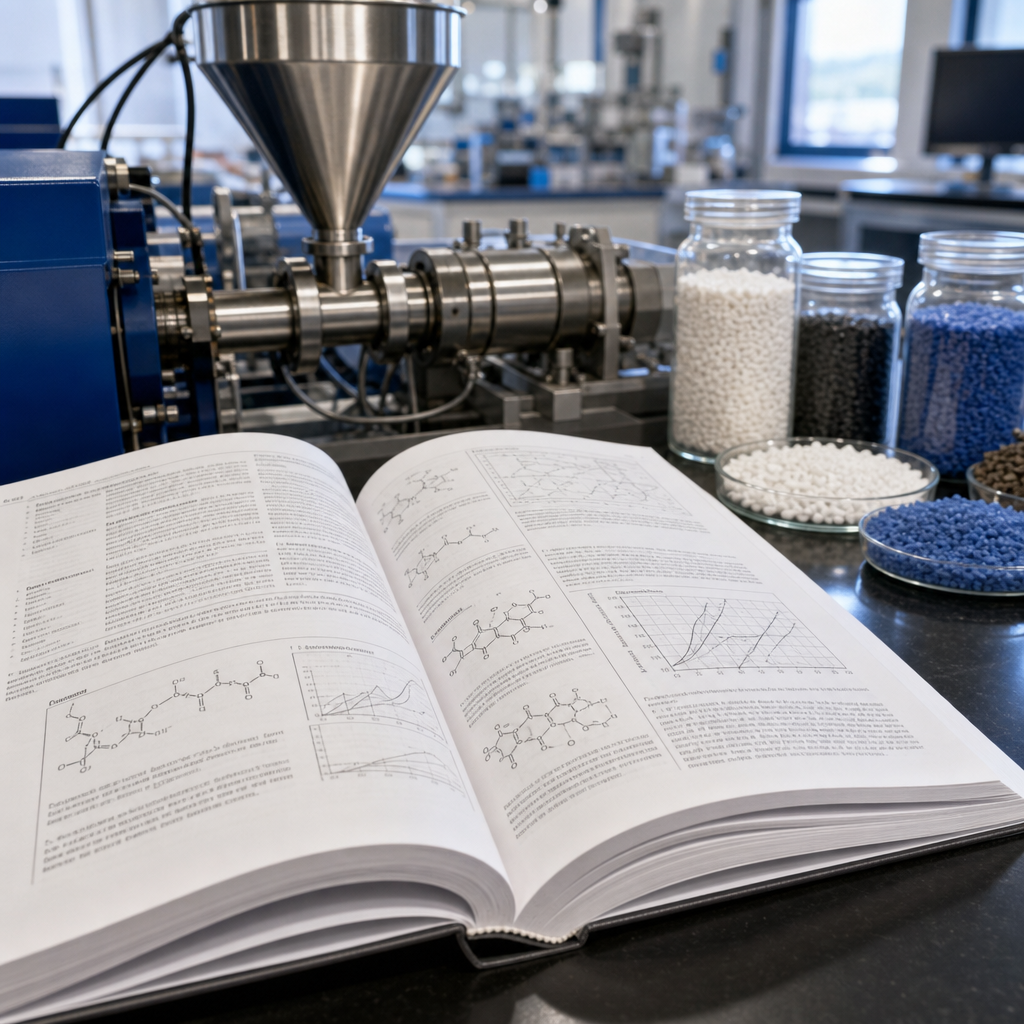
Handbooks remain one of the most practical tools in polymer engineering because they convert scattered material science, processing knowledge, and test data into references engineers can use under real production pressure. In polymer engineering, a handbook is not simply a textbook with tables; it is a working document that organizes polymer properties, additive effects, rheology, processing windows, failure mechanisms, and standards into a format that supports decisions on design, manufacturing, quality, and troubleshooting. As the hub page for books and journals within educational resources, this article explains where handbooks fit, how they differ from other technical publications, and why they still matter in an era dominated by software databases and online papers.
I have relied on handbooks while reviewing resin substitutions, setting molding conditions, and validating supplier claims, and their value is clearest when a team needs a defensible answer quickly. A polymer engineer choosing between polycarbonate, ABS, PBT, nylon, or polypropylene cannot wait to read fifty papers from scratch. The engineer needs baseline tensile strength ranges, glass transition temperature, chemical resistance notes, shrinkage behavior, flammability options, and standard test references such as ASTM D638, ASTM D256, ISO 527, or UL 94. Good handbooks provide that starting point. They do not replace judgment or experimentation, but they sharply improve the quality of the first decision.
That matters because polymer engineering is unusually interdisciplinary. It combines chemistry, mechanics, heat transfer, rheology, manufacturing, durability, environmental exposure, and regulation. A poor materials decision can lead to creep in load-bearing parts, stress cracking in contact with cleaners, warpage in injection molded housings, or premature seal failure after thermal cycling. Educational resources therefore need structure. Books teach fundamentals, journals report new findings, and handbooks bridge theory and application. For students they reduce confusion; for practicing engineers they reduce risk; for organizations they preserve hard-won knowledge that might otherwise stay locked inside supplier slides or senior staff memory.
This hub covers books and journals broadly, but it gives special attention to handbooks because they are often the entry point into deeper study. A clear handbook points readers toward foundational textbooks, major review articles, processing manuals, design references, standards bodies, and specialist journals in polymer science, plastics engineering, elastomers, composites, and additive manufacturing. When used well, handbooks accelerate learning, improve communication across design and production teams, and help engineers ask better questions before they commit time and money to testing.
What polymer engineering handbooks do better than textbooks and journals
Textbooks are designed to explain principles. Journals are designed to present new research. Handbooks are designed to support decisions. That difference shapes everything from layout to content density. A polymer handbook typically summarizes classes of materials, representative grades, processing ranges, filler effects, thermal and mechanical properties, degradation pathways, and end-use considerations. Instead of teaching every derivation behind viscoelastic models, it tells you how melt flow index relates imperfectly to processability, why semicrystalline polymers shrink differently from amorphous polymers, and which property values are sensitive to humidity, orientation, or test speed.
In practice, that makes handbooks especially useful during concept design, resin selection, process setup, failure analysis, and supplier comparison. For example, when evaluating nylon 6 versus POM for a gear housing, a handbook can quickly flag moisture uptake, dimensional stability concerns, friction behavior, and fatigue implications. When reviewing PET versus PBT for an electrical connector, it can highlight hydrolysis sensitivity, crystallization rate, solder heat performance, and flame-retardant formulation considerations. This is not academic convenience; it is operational efficiency. Teams avoid preventable mistakes when they begin with consolidated, technically screened information.
Another strength is terminology discipline. Polymer engineering suffers when teams use everyday language for technical phenomena. A handbook distinguishes yield from break, heat deflection temperature from continuous use temperature, viscosity from melt strength, and compatibility from full miscibility. That precision matters in specifications and root-cause analysis. I have seen projects stall because one department asked for “high temperature plastic” while another assumed short-term thermal exposure and another assumed long-term service aging. A well-edited handbook narrows those ambiguities and gives teams a shared technical vocabulary.
Core content every strong polymer handbook should include
The most valuable handbooks follow a recognizable structure. They begin with polymer classification: thermoplastics, thermosets, elastomers, fibers, foams, and composites. They then explain molecular architecture, including molecular weight, crystallinity, tacticity, branching, crosslink density, and copolymer type, because these features govern performance. After that come property chapters covering tensile behavior, impact resistance, creep, fatigue, thermal transitions, coefficient of thermal expansion, dielectric behavior, permeability, weathering, and chemical resistance. Strong handbooks also explain additives such as plasticizers, stabilizers, pigments, flame retardants, nucleating agents, glass fiber, mineral fillers, impact modifiers, and lubricants.
Processing content is equally important. A polymer engineer needs more than a property table; they need guidance on injection molding, extrusion, blow molding, thermoforming, compression molding, transfer molding, rotational molding, and increasingly additive manufacturing. Good references discuss melt temperature, mold temperature, shear sensitivity, drying requirements, residence time risks, venting, gate design implications, and post-processing. They also connect process choices to defects such as splay, sink, weld lines, voids, burn marks, anisotropy, and warpage.
Testing and standards deserve dedicated treatment. If a handbook lists tensile strength without identifying specimen geometry, strain rate, and conditioning, the number can mislead. The best references tie property data to ASTM, ISO, UL, or DIN methods and explain when comparison across methods is risky. They also note statistical spread, environmental dependence, and the difference between supplier data sheet values and part-level performance. Engineers who understand that distinction make better use of all books and journals in this educational resources area.
| Resource type | Best use in polymer engineering | Main limitation |
|---|---|---|
| Handbooks | Fast material selection, processing guidance, standards lookup, troubleshooting baseline | May lag behind newest grades or niche research |
| Textbooks | Learning fundamentals such as rheology, polymer chemistry, mechanics, and transport | Less efficient for immediate plant or design decisions |
| Journals | Finding new methods, recent data, and specialized advances | Fragmented, narrow in scope, often not directly comparable |
| Supplier technical literature | Grade-specific performance and processing recommendations | Commercial bias and limited cross-material comparison |
| Standards documents | Defining test methods, acceptance criteria, and compliance requirements | Do not teach broader material behavior or design strategy |
How engineers use handbooks across the product lifecycle
Handbooks are most effective when matched to project stage. During concept development, they help define candidate materials based on stiffness, impact resistance, temperature range, transparency, cost class, and regulatory constraints. During detailed design, they support wall thickness choices, rib design assumptions, tolerance expectations, and creep allowances. In manufacturing, they guide drying, screw design, barrel profiles, mold temperatures, and regrind limits. In quality and reliability work, they support comparisons between expected and measured properties and help identify probable degradation routes.
A common real-world example is replacing metal with polymer in a consumer appliance bracket. The initial attraction is lower weight and part consolidation, but the actual decision depends on modulus, creep under sustained load, notch sensitivity, and long-term heat exposure. A handbook can quickly narrow choices to glass-filled nylon, PBT, PPS, or reinforced polypropylene and explain the tradeoffs: nylon offers toughness but absorbs moisture, PBT processes cleanly but may need reinforcement for stiffness, PPS brings excellent thermal stability at much higher cost, and polypropylene may struggle with creep. That framing saves weeks before finite element analysis or prototype trials even begin.
Another example is troubleshooting environmental stress cracking in a clear housing. Journal papers may eventually identify a detailed mechanism, but the first useful step often comes from a handbook entry noting polycarbonate sensitivity to certain cleaners, acrylic brittleness under notch conditions, or SAN limitations in impact loading. Combined with service history and fracture examination, that overview helps the team decide whether to change resin, modify geometry, reduce residual stress, or control chemical exposure. In this way, handbooks are not passive libraries; they are active problem-solving tools.
The relationship between handbooks, books, and journals
As a hub for books and journals, this page should make one principle clear: no single resource type is enough for serious polymer engineering. Handbooks provide breadth, textbooks provide conceptual depth, and journals provide the leading edge. The most effective engineers move among all three. They use a handbook to frame the issue, a textbook to understand the governing science, and journals to check whether newer materials, methods, or data change the answer. That workflow is especially important in areas such as recycled polymers, biopolymers, nanocomposites, battery materials, and additive manufacturing, where technology moves faster than many printed references.
Books also differ by purpose. Introductory materials science texts explain polymer structure-property relationships. Processing books cover screw design, mold filling, orientation, cooling, and residual stress. Design manuals focus on snap fits, bosses, ribs, weld lines, tolerances, and assembly. Failure analysis references address fractography, oxidation, hydrolysis, UV damage, contamination, and misuse. Handbooks connect these categories. A well-built technical library therefore includes at least one general polymer handbook, one processing reference, one design guide, one testing or standards reference, and access to journals such as Polymer, Journal of Applied Polymer Science, Polymer Engineering and Science, Macromolecules, Plastics Engineering, and Composites Science and Technology.
Journals matter because handbook data are often generalized. If you need the effect of graphene nanoplatelets on electrical conductivity in a specific polyamide blend, or the aging behavior of recycled PET under humid heat, a handbook may only offer orientation. Peer-reviewed papers supply the details. Still, journal findings can be difficult to compare because formulations, compounding history, test conditions, and specimen preparation vary. That is why the best educational practice is layered reading rather than relying on isolated papers or isolated handbook tables.
What to evaluate before trusting a handbook
Not every handbook is equally reliable. Start with editorial quality. Is the work written or reviewed by recognized polymer scientists, processing engineers, or standards specialists? Does it cite ASTM, ISO, UL, SAE, or other established frameworks? Are tables dated and sourced, or are they presented without context? Reliable handbooks distinguish typical values from minimums, explain conditioning requirements, and state whether data come from neat resin, compounded grades, or reinforced systems. They also identify when properties depend strongly on orientation, humidity, crystallinity, color package, or stabilizer selection.
Publication date is another practical factor. Some fundamentals do not age: glass transition, crystallinity, viscoelasticity, diffusion, and common degradation mechanisms remain valid. But commercial grade landscapes change quickly. New flame retardant systems appear, PFAS scrutiny affects processing aids, recycled content targets alter resin supply, and regulatory expectations evolve. A handbook published ten years ago can still be excellent for principles and comparative behavior, yet incomplete for current grade recommendations or compliance topics. Engineers should treat older handbooks as foundations and verify current details through updated books, supplier documentation, standards, and journals.
Finally, assess scope. Some references are broad but shallow; others are deep within one family such as fluoropolymers, elastomers, epoxy systems, or fiber-reinforced thermoplastics. The right choice depends on the question. If you work in medical devices, biocompatibility, sterilization resistance, extractables, and traceability may matter more than commodity resin cost curves. If you work in automotive underhood applications, heat aging, fluid resistance, and dimensional stability after humidity conditioning may dominate. A trustworthy handbook is one whose scope matches the decision in front of you.
Building a practical learning path around handbooks
For students and early-career engineers, the best use of handbooks is structured, not casual. Begin by reading overview chapters on polymer classes and structure-property relationships. Then connect those concepts to a processing chapter and a testing chapter. After that, choose a specific application such as a snap-fit enclosure, a flexible tube, a gearbox component, or a transparent lens, and trace how the handbook guides material choice, processing constraints, and likely failure risks. This converts static information into engineering judgment.
For teams, handbooks work best when integrated into design reviews and root-cause workflows. Create internal links between handbook chapters, standards, supplier data sheets, and past project reports. When a part fails, document which sections were consulted, which assumptions held, and where handbook guidance proved incomplete. Over time, that creates an institutional knowledge base far stronger than either a shelf of books or a folder of journal PDFs alone. The main benefit is repeatable decision quality. Engineers become faster without becoming careless.
Handbooks are still central to polymer engineering because they organize complexity into usable knowledge. They help engineers compare materials realistically, understand process-property relationships, interpret standards correctly, and troubleshoot failures with discipline. Within the broader books and journals landscape, they are the hub resource that points readers outward to deeper theory and newer research while remaining directly useful on the plant floor, in the lab, and during design reviews. If you are building your educational resources library, start with a respected polymer handbook, pair it with core textbooks and journal access, and use this hub as the foundation for the rest of your learning path.
Frequently Asked Questions
What is the purpose of a handbook in polymer engineering?
A handbook in polymer engineering serves as a practical decision-making reference that engineers can use during material selection, product design, process setup, troubleshooting, quality control, and failure analysis. Unlike a textbook, which is often structured to explain theory in a progressive way, a handbook is built for fast access to usable information. It brings together polymer properties, thermal and mechanical performance data, chemical resistance, rheological behavior, additive interactions, molding and extrusion guidelines, test methods, and standards in one organized resource. This matters because polymer engineers rarely have the luxury of working from first principles alone when they are under production deadlines, cost constraints, and performance targets.
In day-to-day engineering work, handbooks help translate material science into action. For example, an engineer evaluating whether to use polypropylene, nylon, polycarbonate, or PEEK for a part needs more than general descriptions. They need data on stiffness, impact resistance, moisture sensitivity, shrinkage, processing temperature ranges, weld line behavior, and long-term environmental performance. A well-structured handbook lets them compare these variables quickly and identify tradeoffs before tooling decisions or manufacturing changes become expensive. In this way, the handbook functions as a bridge between laboratory knowledge and production-floor realities.
Handbooks are also valuable because polymer engineering is highly interdisciplinary. Decisions about a plastic part often involve chemistry, mechanics, heat transfer, flow behavior, tooling, regulatory compliance, and end-use durability. A handbook condenses this broad knowledge into a form that supports engineering judgment. It does not replace expertise, but it strengthens it by giving professionals a reliable reference point when making technical choices that affect performance, manufacturability, and cost.
How do polymer engineering handbooks help with material selection?
Material selection is one of the most important and difficult tasks in polymer engineering, and handbooks make that process more systematic. A polymer handbook typically organizes materials by family and then presents the key performance factors engineers need to compare, such as tensile strength, modulus, elongation, impact resistance, glass transition temperature, melting point, density, flammability characteristics, electrical behavior, and resistance to moisture, UV exposure, solvents, and heat aging. Having these variables gathered in one place helps engineers narrow down candidate materials based on the real demands of the application rather than relying on assumptions or incomplete supplier summaries.
Just as important, handbooks often show how additives and reinforcements change behavior. In polymer engineering, a resin rarely enters production in its simplest form. Fillers, stabilizers, flame retardants, plasticizers, impact modifiers, lubricants, pigments, and glass or carbon fibers can all alter processing and final performance. A handbook can clarify, for instance, how glass fiber reinforcement may improve stiffness and heat resistance while increasing anisotropy, wear on tooling, and dimensional variation. It can also explain how a plasticizer may improve flexibility while reducing temperature resistance or long-term mechanical stability. This kind of information is critical because the “best” material is usually the one that balances performance, processability, durability, compliance, and cost—not merely the one with the highest property values on paper.
Handbooks also support better screening decisions early in development. Engineers can use them to identify red flags such as hydrolysis sensitivity in humid environments, environmental stress cracking risk in contact with certain chemicals, or excessive creep under long-term loading. That reduces the chance of selecting a material that performs well in one category but fails in service. In short, handbooks improve material selection by making comparisons clearer, tradeoffs more visible, and decisions more grounded in tested engineering data.
Why are handbooks important for polymer processing and manufacturing?
Handbooks are especially important in processing and manufacturing because polymer behavior is highly sensitive to conditions such as temperature, shear, cooling rate, pressure, residence time, moisture content, and tooling design. Small changes in processing can cause major differences in part quality, cycle time, dimensional accuracy, surface finish, and mechanical performance. A polymer engineering handbook helps by providing recommended processing windows for common operations such as injection molding, extrusion, blow molding, thermoforming, compression molding, and rotational molding. These windows often include melt temperatures, mold temperatures, drying conditions, screw design considerations, pressure guidance, and expected shrinkage ranges.
This information is essential because polymers are not processed like metals. Their flow behavior is non-Newtonian, their viscosity changes with temperature and shear, and many grades can degrade if exposed to excessive heat or moisture. For example, materials such as PET, nylon, and polycarbonate may require strict drying conditions before molding to avoid hydrolytic degradation, brittleness, or cosmetic defects. A handbook helps engineers and technicians understand these requirements quickly and apply them consistently. It can also explain how processing conditions influence orientation, crystallinity, residual stress, warpage, sink marks, voids, delamination, and weld line weakness.
In a production environment, that level of guidance helps reduce trial-and-error. Instead of adjusting settings blindly when defects appear, engineers can consult the handbook to connect symptoms with likely causes. If a part shows flash, short shots, excessive shrinkage, or burn marks, the handbook may offer structured troubleshooting relationships between machine parameters, material characteristics, and tool geometry. This saves time, reduces scrap, and improves repeatability. For manufacturers operating under tight deadlines and quality requirements, the handbook becomes a practical operating reference that supports stable processes and more predictable outcomes.
Can a handbook help with polymer failure analysis and troubleshooting?
Yes, and this is one of the most valuable roles a handbook can play. Polymer failures are often complex because they may involve interactions among material choice, additives, part design, stress state, environmental exposure, and processing history. A handbook gives engineers a framework for identifying likely failure modes and investigating them logically. It typically includes information on brittle fracture, ductile failure, creep, fatigue, thermal degradation, oxidation, UV damage, chemical attack, environmental stress cracking, hydrolysis, abrasion, and poor interfacial bonding in filled or reinforced systems. With that information in hand, engineers can compare observed symptoms against known material behaviors and narrow down root causes more efficiently.
For example, if a molded component becomes brittle after service in a warm, humid environment, a handbook may point the engineer toward moisture-related degradation, molecular weight reduction, or stress concentration effects. If a part warps after molding, the issue may be linked to uneven cooling, fiber orientation, residual stress, or mold design. If cracking appears only after contact with a cleaning fluid, the handbook may help identify environmental stress cracking as a more probable cause than simple overload. This ability to connect symptoms to mechanisms is critical because replacing a failed part without understanding the cause often leads to repeated failures.
Handbooks also strengthen communication across teams during troubleshooting. Design engineers, processing engineers, quality teams, and suppliers may each focus on different aspects of the problem. A shared reference creates a common technical language around material properties, test methods, and likely mechanisms. That leads to better corrective action, whether the solution is a resin change, a geometry modification, improved drying, altered molding conditions, reduced residual stress, or revised service recommendations. In failure analysis, the handbook does not eliminate the need for laboratory testing or expert interpretation, but it significantly improves the speed and quality of the investigation.
What should engineers look for in a high-quality polymer engineering handbook?
A high-quality polymer engineering handbook should be accurate, current, well-organized, and clearly focused on practical use. First, engineers should look for strong coverage of core material categories, including commodity plastics, engineering thermoplastics, high-performance polymers, thermosets, elastomers, composites, and common filled or reinforced systems. The handbook should include meaningful property data, but just as importantly, it should explain how those properties are measured, how they change with temperature, time, and environment, and what limitations apply when interpreting the numbers. Data without context can be misleading, especially in polymers where test conditions and sample preparation can strongly affect results.
Second, a good handbook should integrate processing guidance with material behavior. It is not enough to list tensile strength and melting point if the book does not explain drying needs, rheological behavior, shrinkage tendencies, moldability, extrusion stability, crystallization effects, or sensitivity to thermal degradation. The best handbooks connect design, materials, and manufacturing instead of treating them as separate topics. They also provide insight into additives, blending, reinforcement, part defects, failure mechanisms, and regulatory or testing standards such as ASTM or ISO methods that engineers rely on for validation and specification work.
Finally, usability matters. In a real engineering setting, the handbook needs to be easy to navigate under time pressure. Clear tables, comparison charts, indexed topics, troubleshooting guides, and cross-references are all signs of a strong reference tool. Engineers should also prefer handbooks that distinguish between typical values, design values, and application-dependent performance, since polymers can behave very differently in short-term lab tests versus long-term service. The most useful handbook is one that combines scientific credibility with practical structure, allowing engineers to move quickly from question to informed action.