Advances in polymers for pet care products are changing how brands design litter, toys, grooming tools, feeding systems, waste solutions, and protective gear, making everyday pet ownership cleaner, safer, and more convenient. In this context, polymers are large molecules made from repeating units, including familiar materials such as polypropylene, polyethylene, polyurethane, silicone, thermoplastic elastomers, nylon, and superabsorbent polymers. I have worked with product teams evaluating these materials for consumer goods, and the key lesson is simple: the right polymer does more than form a shape. It controls flexibility, odor resistance, durability, cleanability, chemical compatibility, and cost at scale. That matters in pet care because products face unusual stresses: repeated chewing, scratching, moisture exposure, disinfectants, food contact, UV light, and the need to meet owner expectations for hygiene and sustainability. This hub page on polymers in daily life explains where these materials appear across pet care products, why certain formulations outperform others, and how recent developments are improving animal welfare and user experience. It also helps readers understand tradeoffs. A chew toy that is softer may wear faster. A highly absorbent litter additive may improve clumping but complicate disposal. A recycled resin may reduce virgin plastic use but require tighter quality control for odor and mechanical consistency. For manufacturers, retailers, veterinarians, groomers, and informed pet owners, understanding these advances supports better purchasing decisions, smarter product development, and more credible sustainability claims.
Why polymers dominate modern pet care products
Polymers dominate pet care because few other material classes can match their combination of processability, weight, performance, and price. Injection-molded polypropylene can produce rigid litter pans, carriers, and food scoops at high speed with consistent dimensions. Thermoplastic elastomers can add soft, grippy zones to grooming brushes or fetch toys without secondary assembly. Silicone withstands repeated dishwashing in collapsible bowls and slow feeders while maintaining flexibility across a wide temperature range. Polyurethane foams provide cushioning in pet beds, orthopedic mats, and harness padding. Nylon delivers abrasion resistance in leashes, webbing components, and reinforced toy structures. These are not interchangeable choices; each polymer family brings a specific balance of tensile strength, elongation, hardness, permeability, and resistance to oils, saliva, and detergents.
Daily life applications in pet care also demand manufacturability. Brands choose polymers partly because they fit established converting methods such as extrusion, thermoforming, blow molding, rotational molding, and additive compounding. That allows fast line speeds and scalable production for seasonal products or private-label programs. In practice, I have seen the material decision hinge on one operational question: can the product survive real use without adding too much cycle time or scrap? A water fountain reservoir, for example, may need a polymer grade with low warpage, acceptable transparency, and resistance to biofilm-cleaning chemicals. A dog waste bag needs puncture resistance and seal integrity but must still run efficiently on thin-film lines. These manufacturing realities explain why polymer innovation often focuses on additives, blends, and surface design rather than completely new resins.
Key polymer categories used across the pet care market
The pet care market relies on several core polymer categories, each serving different product needs. Polyolefins, mainly polyethylene and polypropylene, are the workhorses for bowls, storage bins, litter boxes, bags, and molded accessories because they are lightweight, chemically resistant, and economical. Engineering plastics such as polycarbonate, ABS, and nylon appear where higher impact strength, dimensional stability, or toughness are needed, including carrier doors, clip systems, and dispensers. Elastomeric materials, including thermoplastic elastomers and silicone, provide flexibility, chew feel, sealing performance, and slip resistance in toys, mats, collapsible containers, and grooming components. Polyurethanes are central to foams, adhesives, coatings, and flexible comfort surfaces. Superabsorbent polymers, usually crosslinked sodium polyacrylate systems, are essential in training pads, absorbent liners, and some hygiene products because they can retain many times their weight in liquid.
Recent advances are coming from blends and additives rather than from a single breakthrough resin. Antimicrobial claims, for example, often rely on additive packages embedded in the polymer matrix, but responsible manufacturers distinguish between odor-control support and broad health claims, because regulatory boundaries differ by market. Mineral fillers and fiber reinforcement can improve stiffness in scoopers or structural panels. UV stabilizers extend life for outdoor kennels and agility equipment. Processing aids improve flow in complex molds, reducing sink marks and improving consistency. Recycled-content formulations are increasingly common in non-food-contact accessories, while bio-based options such as PLA blends or castor-oil-derived polyamides are being tested where heat resistance and moisture sensitivity can be managed. The result is a broader materials toolbox for products that must balance pet safety, owner convenience, and retail cost targets.
Performance advances in toys, feeders, litter systems, and grooming tools
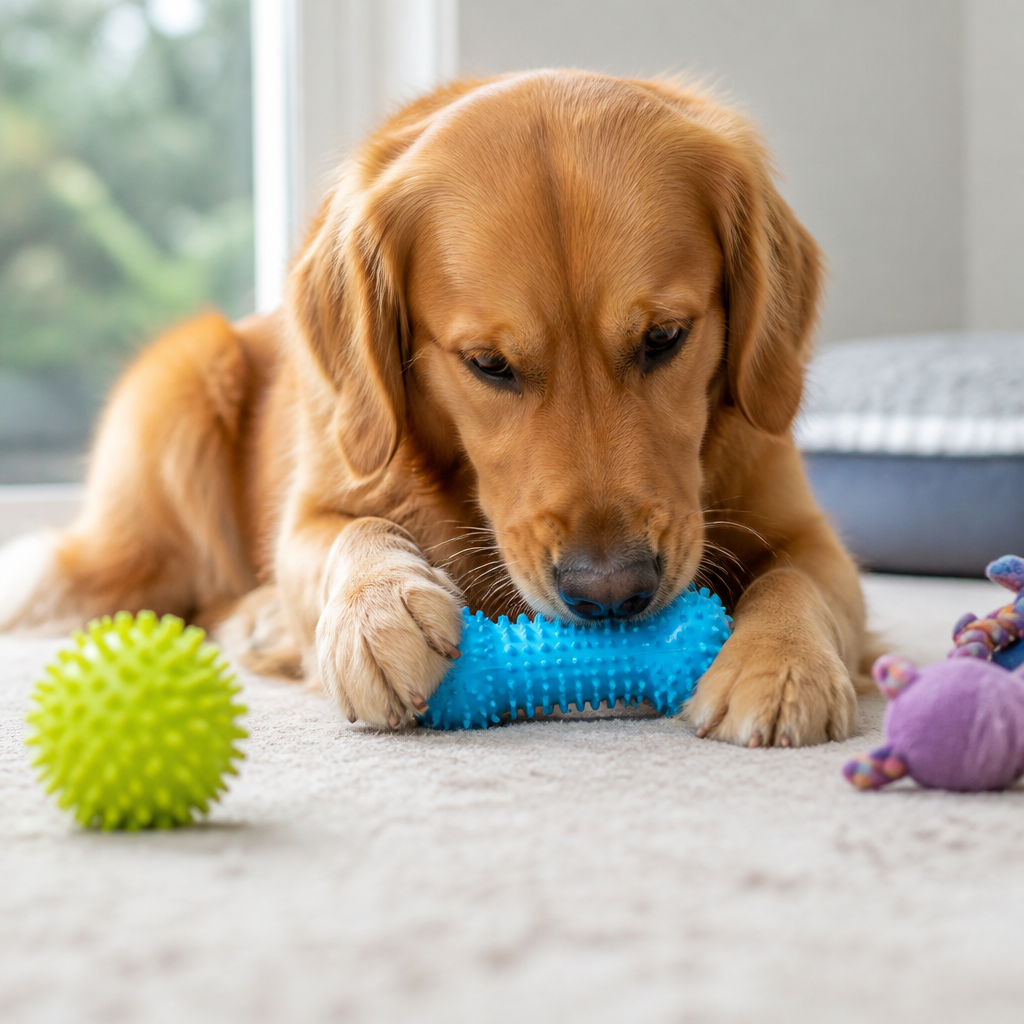
In chew toys and enrichment devices, the biggest polymer advance is better control of durometer, tear resistance, and rebound. Older toys often forced a compromise between hardness and durability. Newer thermoplastic elastomer compounds can be tuned to provide resilient chew response while resisting crack propagation better than earlier soft vinyl alternatives. Reputable brands now also avoid plasticizer systems that raise migration concerns, especially in products exposed to saliva and repeated mouth contact. In feeders and water systems, polymers are improving hygiene through smoother internal geometries, dishwasher-safe grades, and lower-porosity surfaces that are easier to clean. Polypropylene and silicone dominate many slow feeders and lick mats because they combine food-contact suitability with flexibility and stain resistance. Clear reservoirs may use PET or polycarbonate where transparency and toughness are required, although each needs proper testing for repeated cleaning and impact use.
Litter and waste management show some of the most visible everyday gains. Clumping litter technologies often combine absorbent minerals with polymeric binders or coatings that improve granule integrity and moisture capture. In pee pads, the absorbent core depends on a layered construction: nonwoven polypropylene top sheet, fluff pulp, superabsorbent polymer, and polyethylene back sheet. When these layers are well designed, liquid wicks down quickly, gels in place, and stays off the surface, reducing paw tracking. Grooming tools have also improved through material selection. Flexible polymer pins can reduce skin irritation compared with rigid alternatives when properly spaced and anchored. Anti-slip overmolds on handles reduce fatigue during long grooming sessions. For households, these changes feel small, but they directly affect compliance: owners use products more consistently when they are easier to clean, less messy, and more comfortable for the animal.
How manufacturers match polymer properties to pet behavior and safety needs
Material selection in pet care should start with the animal’s behavior, not with the catalog price of resin. Dogs chew, pull, shake, and compress. Cats scratch, scent-mark, and reject surfaces they dislike. Small animals may gnaw edges continuously. Birds can be sensitive to fumes and surface degradation. That means a polymer suitable for one pet category may be wrong for another. In development reviews, teams typically map performance needs against specific material properties: Shore hardness for bite feel, Izod impact resistance for drops, flexural modulus for structural stiffness, coefficient of friction for grip, water absorption for dimensional stability, and environmental stress cracking resistance for exposure to cleaners or oils. Products that contact food or water must also meet applicable food-contact requirements, while toys need robust migration, heavy metal, and durability screening depending on region and retail channel.
Testing matters because laboratory values alone do not predict real-life failure. I have seen a toy pass tensile benchmarks yet fail quickly because thin rib transitions created stress concentrators under repeated canine jaw loading. Likewise, a litter scoop with adequate stiffness on paper became brittle after cold-weather shipping because the selected polypropylene copolymer had poor low-temperature impact performance. Good manufacturers use accelerated aging, dishwasher cycles, drop tests, bite simulations, odor retention studies, and chemical exposure panels. They also design around cleaning reality: consumers use bleach, quaternary disinfectants, dish soap, and hot water. The safest products are those whose polymer system remains stable under that normal misuse range. This is where advances in compounding, additive selection, and wall-thickness optimization have the greatest payoff, reducing breakage, odor pickup, and warranty returns while improving safety margins.
Sustainability, regulation, and what smarter material choices look like
Sustainability in pet care polymers is more complex than simply replacing one plastic with another. The best choice depends on use duration, contamination risk, recycling pathways, and whether the product prevents larger waste burdens by lasting longer. A durable polypropylene carrier that performs for years may have a lower practical footprint than a poorly engineered bio-based alternative that cracks early and is discarded. At the same time, there are genuine improvements underway. Post-consumer recycled polyethylene is increasingly used in bins, dispensers, and some molded accessories. Mono-material packaging structures can improve recyclability compared with multi-layer laminates. Lightweighting reduces resin consumption if stiffness is preserved through ribbing and geometry. Some brands are exploring certified bio-attributed feedstocks through mass-balance systems, which can lower fossil input without changing processing performance.
| Pet care application | Common polymer choice | Main advantage | Key limitation |
|---|---|---|---|
| Chew toys | Thermoplastic elastomer | Flexible, resilient bite feel | May wear under aggressive chewing |
| Litter boxes and bins | Polypropylene | Low cost, chemical resistance | Can retain scratches that trap odor |
| Training pads | Superabsorbent polymer with PE/PP layers | High liquid retention | Difficult to recycle after use |
| Collapsible bowls | Silicone | Heat resistance, easy cleaning | Higher material cost |
| Harness padding and beds | Polyurethane foam | Cushioning and comfort | Moisture management varies by grade |
Regulation and substantiation are becoming stricter, especially for claims around safety, antimicrobial performance, compostability, and recycled content. Responsible suppliers rely on migration testing, restricted-substance screening, and standardized methods such as ASTM or ISO protocols where applicable. Compostable claims are particularly sensitive because a material that biodegrades in industrial conditions may not degrade in home compost or landfill environments. Food-contact compliance for bowls, feeders, and lick mats requires careful control of colorants, additives, and processing residues. For retailers, the smartest material choices are not the most novel; they are the ones with documented supply chains, consistent quality, and claims that can survive scrutiny. For consumers, a practical rule is to favor products that clearly state intended use, cleaning method, and replacement guidance rather than making broad, unverified promises.
The future of polymers in daily pet care products
The next phase of innovation will center on smarter formulations, easier recycling, and designs that reduce hygiene burdens without compromising safety. Expect broader use of single-polymer product architectures that simplify end-of-life sorting, especially in accessories and packaging. Look for more closed-loop thinking in transport crates, storage containers, and refill systems, where durable polyolefins can be reused many times. In absorbent products, research is moving toward thinner cores, better liquid distribution layers, and more efficient superabsorbent structures that maintain dryness with less bulk. In toys and grooming, additive manufacturing may support quicker prototyping of textures and ergonomics, but high-volume production will still favor optimized molding compounds. Material informatics and simulation tools are also making it easier to predict warpage, fatigue, and wear before a tool is cut, shortening development cycles and reducing costly trial-and-error.
As a hub for polymers in daily life within innovative products and solutions, this topic connects directly to packaging, household goods, hygiene materials, medical-grade elastomers, and sustainable materials strategy. Pet care is a useful lens because it compresses many real-world demands into one category: safety, comfort, moisture control, impact resistance, aesthetics, cost, and environmental pressure. The main takeaway is clear. Advances in polymers for pet care products are not abstract chemistry stories; they are practical improvements that owners see every day in cleaner homes, longer-lasting accessories, safer play, and easier care routines. If you are evaluating products or planning new ones, start with function, user behavior, and cleaning conditions, then match the polymer system to those realities. Explore the related articles in this subtopic to compare materials, understand performance standards, and make better decisions about the polymer products used throughout daily life.
Frequently Asked Questions
1. What kinds of polymers are most commonly used in modern pet care products, and why are they so useful?
Modern pet care products rely on a broad mix of polymers because different pet applications demand different combinations of strength, flexibility, hygiene, durability, and cost efficiency. Some of the most common materials include polypropylene and polyethylene for containers, feeders, scoopers, and litter accessories because they are lightweight, impact resistant, moisture resistant, and relatively easy to clean. Thermoplastic elastomers and silicone are widely used where grip, softness, flexibility, and comfort matter, such as chew-resistant toy components, grooming brush handles, collapsible bowls, slow feeders, and wearable accessories. Polyurethane appears in foams, coated fabrics, cushions, and some protective gear because it can provide resilience, cushioning, and abrasion resistance. Nylon is frequently selected for stronger structural parts, bristles, buckles, leashes, carriers, and reinforced toy elements due to its toughness and wear resistance. Superabsorbent polymers are especially important in pet pads and certain waste-management products because they can capture and retain large amounts of liquid, helping control leakage, odor, and mess.
What makes polymers so useful in pet care is not just their variety, but the ability to tailor them to specific performance goals. Product designers can adjust hardness, flexibility, surface texture, colorability, transparency, odor resistance, barrier properties, and manufacturability. That means one polymer may be ideal for a durable litter box wall, while another is better for a non-slip feeding mat or a gentle grooming tool intended for sensitive skin. Advances in polymer science also allow brands to combine materials in layered, molded, or overmolded constructions, creating products that are more ergonomic, easier to sanitize, and more attractive to consumers. In practical terms, polymers help make pet ownership cleaner, safer, and more convenient by enabling products that withstand repeated use, resist moisture and staining, and maintain performance in demanding real-world environments.
2. How are advances in polymers improving pet litter, waste pads, and other hygiene-focused products?
Polymer innovation has had a major effect on hygiene-focused pet products because these categories depend heavily on moisture management, odor control, durability, and ease of disposal. In litter systems, polymers can improve the design of liners, pans, scoops, and storage containers by making them more stain resistant, less prone to cracking, and easier to wipe clean. Smooth, low-porosity polymer surfaces can reduce residue buildup and help control lingering odors. In some litter-related products, antimicrobial additives or odor-barrier layers may also be incorporated, although performance varies by formulation and proper product design. For waste pads, one of the biggest advances has come from improved superabsorbent polymer systems, which can lock away fluid more efficiently and reduce pooling on the surface. Better pad construction also combines polymer films, nonwoven layers, and absorbent cores to improve leak resistance and keep paws drier.
These advances matter because pet owners judge hygiene products on very practical outcomes: how clean the product stays, how often it needs replacing, whether it leaks, how much odor escapes, and how easy it is to handle during disposal. Improved polymer films and backing layers can make pads tougher and more puncture resistant, which is especially valuable in homes with active puppies or multiple pets. In waste bags and disposal systems, stronger polymer blends can deliver better tear resistance and flexibility without making the bag overly thick or hard to tie. In covered disposal units, polymers with good dimensional stability and chemical resistance help parts hold up to repeated exposure to waste, cleaning agents, and daily handling. Overall, advances in polymer engineering are helping brands move beyond basic containment toward more complete hygiene systems that better manage mess, reduce maintenance, and improve the user experience for both pets and owners.
3. Are polymer-based pet toys, feeders, and grooming tools safe for animals?
Polymer-based pet products can be very safe when they are designed, processed, and tested appropriately for the intended use. Safety depends less on whether a product contains polymers and more on which specific polymers are used, how they are formulated, how durable they are in service, and whether they are suitable for contact with mouths, skin, food, or repeated mechanical stress. For example, a toy intended for chewing needs a very different material profile from a slow feeder or a grooming brush. The material must resist cracking, splintering, sharp-edge formation, excessive wear, and chemical instability. In feeding products, polymers should be chosen for food contact suitability, stain resistance, cleanability, and the ability to tolerate washing conditions. In grooming tools, the focus often shifts to flexibility, comfort, skin compatibility, and grip in wet conditions.
From a buyer’s perspective, the best signs of a safer polymer-based product are good manufacturing quality, clear use instructions, durability matched to the pet’s size and behavior, and a reputable brand that pays attention to testing and material selection. No material is universally safe under all conditions, especially if a product is used beyond its intended purpose or becomes damaged. A small chew toy may not be appropriate for a powerful large-breed chewer, and a soft elastomer accessory may need replacement if it starts tearing. Regular inspection is essential because wear, bite damage, and repeated cleaning can eventually degrade even well-made items. In product development, teams often evaluate bite resistance, tensile performance, cleanability, odor retention, and long-term stability because pet products are exposed to saliva, oils, cleaning chemicals, UV light, temperature changes, and mechanical abuse. When those factors are addressed properly, polymer-based toys, feeders, and grooming tools can offer an excellent combination of safety, comfort, and performance.
4. How do new polymers make pet care products more durable, comfortable, and convenient for everyday use?
One of the biggest benefits of newer polymer technologies is that they let manufacturers improve multiple aspects of a product at once instead of making a simple tradeoff between durability and comfort. In the past, a very tough product might have felt rigid or awkward, while a softer product might have worn out too quickly. Today, better material selection and multi-material designs allow brands to combine hard structural polymers with soft-touch elastomers, resilient foams, or flexible hinges. That is why many modern pet care products feel more refined in daily use. A feeder may have a rigid body for stability and a softer base for slip resistance. A grooming tool may pair a durable frame with flexible bristles and an ergonomic grip. A carrier or protective accessory may combine abrasion-resistant textiles, cushioning foams, and molded polymer reinforcements for improved comfort and service life.
Convenience also improves because advanced polymers can simplify cleaning, reduce weight, and extend product lifespan. Lightweight yet strong polymers make bulky items like litter systems, travel accessories, and storage bins easier to move. Moisture-resistant and non-corrosive materials help products dry faster and maintain appearance after repeated washing. Surface engineering can reduce sticking, staining, and residue buildup, which is especially important in bowls, mats, grooming tools, and waste-related accessories. Shape-memory characteristics, controlled flexibility, and impact resistance can also improve foldable bowls, portable feeders, and travel gear that need to open and close repeatedly without failure. For pet owners, these changes may seem subtle, but they add up quickly: less scrubbing, less odor retention, fewer replacements, better handling, and products that continue to function well under the repetitive demands of everyday pet care.
5. What should brands and consumers look for as polymer innovation continues in pet care products?
As polymer innovation continues, brands should focus on performance with purpose rather than novelty alone. The strongest products are usually the result of matching materials closely to real use conditions: chewing force, scratch exposure, moisture load, cleaning frequency, temperature variation, odor sensitivity, portability, and expected lifespan. For brands, that means evaluating not just basic material properties, but also how a polymer behaves after repeated washing, UV exposure, chemical contact, flexing, and abrasion. It also means considering manufacturability and consistency, since even a strong resin can underperform if processing introduces weak points, poor bonding, or surface defects. In categories like litter, feeding, grooming, and protective gear, the next wave of improvement will likely come from better combinations of barrier performance, comfort, structural efficiency, and easier end-user maintenance.
Consumers, meanwhile, should look for products that clearly communicate their intended use, cleaning requirements, and durability level. Material quality matters, but so does design integrity. A well-designed product made from an appropriate polymer often outperforms a trend-driven product with vague material claims. It is also worth paying attention to features that reflect thoughtful polymer selection, such as reinforced stress points, non-slip overmolded grips, easy-clean surfaces, leak-resistant seams, odor-resistant components, and parts that retain their shape after repeated use. Sustainability is another important consideration. More brands are exploring recycled content, lighter-weight designs, and longer-lasting constructions to reduce waste, although these goals must be balanced carefully against hygiene, safety, and durability requirements. In short, the future of polymers in pet care is not just about new materials; it is about smarter material systems that make products more reliable, more hygienic, more comfortable for pets, and more practical for the people who care for them.