Polymers are transforming gardening tools by making them lighter, tougher, safer, and more specialized for everyday work in the yard. In practical terms, a polymer is a large molecule built from repeating units, and that simple structure gives manufacturers enormous freedom to tune stiffness, flexibility, impact resistance, weather durability, and grip. In gardening, those properties matter because tools live in a punishing environment: wet soil, ultraviolet light, fertilizers, abrasion, sudden impact, and constant handling. I have worked with product teams evaluating hand tools, hoses, trimmer line, storage bins, and irrigation parts, and the difference between a poorly chosen plastic and a purpose-built polymer is obvious after one season outdoors. This is why polymers in daily life deserve careful attention, especially in a gardening context where performance and durability are tested continuously.
When most people hear the word plastic, they often picture disposable packaging, but that view misses the wider reality. Modern polymers include nylon, polypropylene, polyethylene, polycarbonate, thermoplastic elastomers, epoxy resins, and fiber-reinforced composites, each serving a distinct engineering role. A shovel handle may rely on glass-fiber-reinforced polypropylene for stiffness and low weight. A watering can rose may use high-density polyethylene because it resists cracking and chemical attack. Soft overmolded grips often use thermoplastic elastomers to improve comfort and slip resistance, while polyamide parts show up where abrasion resistance is essential. These materials are not replacing metal or wood in every case. Instead, they are improving how a tool feels, performs, and survives over time.
The topic matters for three reasons. First, polymers help reduce user fatigue. A lighter rake, pruner handle, or wheelbarrow tray allows longer work with less strain, which is especially valuable for older gardeners and professionals who repeat the same motions all day. Second, polymers extend design possibilities. Injection molding, blow molding, rotational molding, and extrusion allow integrated forms that would be expensive or impossible in metal alone, such as ergonomic contours, built-in storage clips, flexible hose geometries, and impact-diffusing housings. Third, polymers can improve corrosion resistance and maintenance. Unlike steel, many polymer components do not rust, and unlike unfinished wood, they do not swell, rot, or splinter in wet conditions. For a hub page on polymers in daily life, gardening tools offer one of the clearest examples of how material science changes ordinary products in ways users feel immediately.
To understand how polymers are improving gardening tools, it helps to separate broad categories: structural polymers that bear load, elastomeric polymers that provide grip or flexibility, engineered polymers that handle wear or heat, and composite systems that combine polymers with glass or carbon fibers. It also helps to ask practical questions searchers usually have: Which polymers are used in tools? Why are they better than traditional materials in some applications? Where do they fall short? How should buyers evaluate claims about durability and sustainability? The answers are specific, and they reveal why polymers have become central not only to gardening tools, but to the broader story of polymers in daily life across household, outdoor, and professional equipment.
Why Polymers Fit the Demands of Gardening
Gardening tools fail for predictable reasons: corrosion, impact damage, fatigue, weathering, and user discomfort. Polymers address each problem differently. Polypropylene and polyethylene resist water and many garden chemicals, so they are ideal for bins, scoops, watering cans, and hose fittings. Polyamide, commonly called nylon, offers better wear resistance and strength, which is why it appears in moving parts, line trimmer heads, and reinforced handles. Polycarbonate contributes impact resistance for housings and guards. Thermoplastic elastomers improve grip even when hands are wet or gloved. In product testing, one consistent benefit is that polymers can absorb shock better than brittle materials, reducing crack propagation when a tool is dropped onto concrete or knocked against stone edging.
Weight reduction is another major advantage. A forged steel digging head still makes sense for penetrating hard ground, but the handle, grip, collar, and auxiliary components can often be polymer based without sacrificing performance. Lower mass matters because repetitive motion injuries are common in gardening. Every ounce saved at the end of a long handle reduces the moment load on wrists and shoulders. This is the same reason polymers in daily life dominate products from luggage wheels to power tool housings: lower weight improves usability. In gardening, where users often carry, swing, drag, and lift tools, that design principle has immediate value.
Durability outdoors depends on stabilization. Good gardening polymers are rarely raw resin alone. They often include ultraviolet stabilizers, antioxidants, mineral fillers, impact modifiers, and colorants chosen to slow degradation. Carbon black has long been used in outdoor products because it helps block UV radiation. Hindered amine light stabilizers are also common in products that need to resist sunlight exposure. These additives explain why one plastic hose reel survives for years while another turns chalky and brittle after a single summer. Buyers often blame plastic in general when the real issue is resin grade, additive package, wall thickness, or poor molding control.
Common Polymers Used in Modern Gardening Tools
The gardening sector relies on a relatively small set of proven polymers, each matched to specific tasks. High-density polyethylene, or HDPE, is widely used in watering cans, compost bins, wheelbarrow trays, and tanks because it is tough, chemically resistant, and cost effective. Polypropylene, or PP, is common in tool bodies, clips, organizers, and molded handles due to its low density and good fatigue resistance. Nylon, especially glass-filled nylon, is used where higher mechanical performance is needed, such as pruner housings, trimmer components, and fastening features. Polycarbonate appears in guards and impact-prone parts because it resists fracture better than many commodity plastics. PVC remains important in some hose and irrigation products, though many brands now blend or replace it for flexibility and regulatory reasons. Thermoplastic elastomers, often abbreviated TPE, are favored for comfort grips, seals, and flexible joints.
| Polymer | Typical gardening use | Key benefit | Main limitation |
|---|---|---|---|
| HDPE | Watering cans, bins, trays | Chemical resistance and toughness | Lower stiffness than engineered resins |
| PP | Handles, housings, storage parts | Lightweight and fatigue resistant | Can become brittle without proper UV stabilization |
| Glass-filled nylon | Pruners, trimmer heads, structural parts | High strength and wear resistance | Higher cost and moisture sensitivity |
| Polycarbonate | Guards and impact-prone covers | Excellent impact resistance | Can scratch unless coated or textured |
| TPE | Grips, seals, flexible overmolds | Comfort and slip resistance | Not suitable for high structural loads |
Material selection is never just about strength on paper. Designers consider creep, environmental stress cracking, moisture absorption, mold shrinkage, joining method, and recyclability. For example, nylon is strong, but it absorbs moisture, which can change dimensions and properties. Polypropylene is easy to process and light, but a thin unsupported PP part may flex too much under load. In field reviews, the best products are usually hybrids: steel where concentrated force is required, fiber reinforcement where stiffness matters, and softer polymers where ergonomics and impact absorption add value. That mix defines many successful products in polymers in daily life, from toothbrushes to garden shears.
How Polymers Improve Specific Gardening Tools
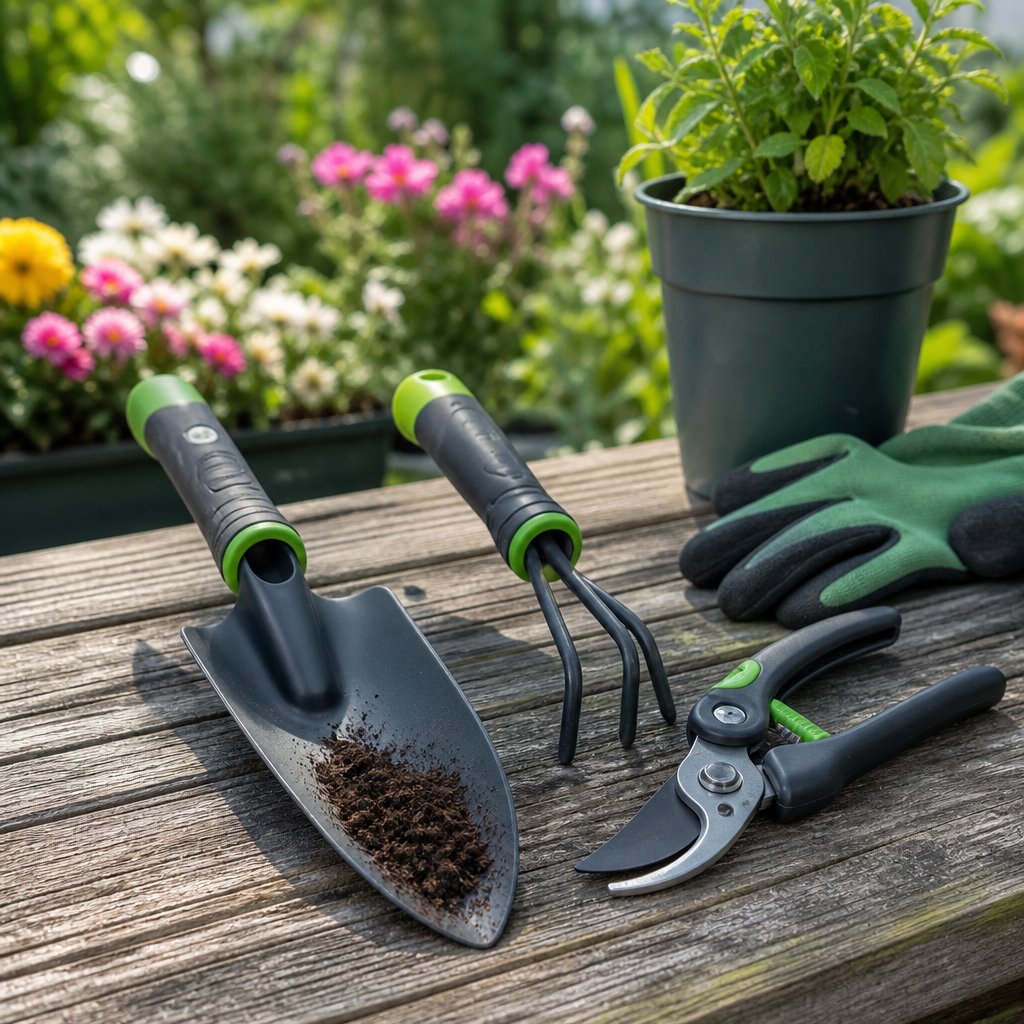
Hand tools show some of the clearest gains. Pruners now commonly use glass-filled nylon or reinforced composite handles with TPE inserts. This combination reduces hand fatigue, improves thermal comfort in cold weather, and provides a more secure grip than bare metal. On loppers and shears, polymer bumpers cushion the closing action, lowering shock transfer to wrists. Trowels and cultivators increasingly use polymer handles shaped around hand anatomy rather than simple cylindrical wood forms. I have seen user tests where grip redesign alone changed perceived comfort more than blade sharpness, which explains why overmolded polymer grips have become standard in premium tools.
Water management products rely heavily on polymers. Garden hoses use layered polymer constructions to balance flexibility, burst resistance, kink control, and weatherability. Hose connectors and quick couplers often combine acetal, ABS, nylon, and elastomer seals to improve fit and reduce leaks. Irrigation tubing depends on polyethylene because it handles moisture, fertilizers, and outdoor conditions well. Drip emitters use precisely molded polymer channels to regulate flow rates measured in gallons per hour. These are not minor conveniences. Efficient irrigation reduces water waste, and polymer precision helps deliver that efficiency at scale for both home gardens and commercial landscapes.
Power equipment also benefits. String trimmer line is a polymer product engineered for abrasion resistance, impact behavior, and controlled flexibility. Different cross sections, such as round, square, or twisted profiles, alter cutting performance and noise. Mower housings in some models use reinforced polymers that resist dents and corrosion better than stamped steel, especially in wet climates. Backpack sprayers use blow-molded tanks that are light, chemically resistant, and easier to contour against the body. Compost tumblers, raised-bed panels, kneeling pads, and storage systems all show the same pattern: polymers improve comfort, modularity, and resistance to moisture-related degradation.
Design Innovation, Ergonomics, and User Safety
One overlooked benefit of polymers is design freedom. Injection molding allows ribs, gussets, textured zones, snap fits, and hollow sections to be built into one part. That can reduce fasteners, simplify assembly, and eliminate stress concentrations. In gardening tools, these features translate into handles that fit the hand better, guards that shield moving parts more effectively, and housings that direct water or dirt away from sensitive mechanisms. Complex geometry is not just cosmetic. It changes force distribution, balance, and control.
Ergonomics improve when material and shape are developed together. A metal handle can be padded, but a polymer component can be molded with variable thickness, integrated finger indexing, and localized compliance. For users with arthritis, that matters. Slightly larger grip diameters reduce pinch force requirements. Softer elastomer zones reduce pressure points. Nonconductive polymer sections also improve safety around electrical equipment, although no material should be treated as absolute protection without proper ratings and work practices. In tools like pruners and hedge shears, bright polymer colors can increase visibility, reducing accidental loss and making tools easier to spot before someone steps on them or runs over them with a mower.
Safety extends to storage and transport. Polymer latches, blade covers, and lockout features are easier to integrate when parts can be molded with living hinges or flexible clips. Wheelbarrows and carts use polymer trays with rounded edges that reduce cuts and rust stains. Even something as simple as a seed spreader benefits from a transparent polymer hopper, which lets users monitor fill level and flow. This is a recurring theme in polymers in daily life: better materials often create safer, clearer, and more intuitive products, not just stronger ones.
Sustainability, Limits, and What Buyers Should Check
Polymers improve tools, but the sustainability picture is mixed and should be discussed honestly. A long-lasting polymer part can be more sustainable than a short-lived alternative because durability reduces replacement frequency, transport impact, and wasted labor. Recycled HDPE and recycled polypropylene are increasingly used in outdoor products, and some manufacturers disclose post-consumer content. Bio-based polymers exist, but they are not automatically better for heavy-duty gardening uses. Performance, service life, and end-of-life handling matter more than marketing language. In my experience, the most responsible products are repairable, use fewer mixed materials where possible, and publish realistic durability claims.
There are also limitations. Some polymers creep under sustained load, which can deform shelves, carts, or tool racks if poorly designed. UV exposure can embrittle unstabilized materials. Cheap molded threads may strip if overtightened. Certain solvents or oils can cause environmental stress cracking. Fiber-reinforced parts are strong, but they may fail abruptly if overloaded beyond design limits. For buyers, the best indicators of quality are specific material disclosure, warranty clarity, replaceable wear parts, and evidence of testing to recognized standards such as ASTM or ISO methods for impact, weathering, or mechanical performance. Brand reputation matters, but engineering transparency matters more.
The broader lesson for anyone exploring polymers in daily life is simple: the question is not whether polymers are good or bad, but whether the right polymer system has been chosen for the job. In gardening tools, the answer is increasingly yes. Polymers make products lighter, more ergonomic, more weather resistant, and often more precise. They work best when paired intelligently with metal, wood, and textile components rather than treated as one-size-fits-all replacements. If you are evaluating new tools, look past labels and focus on function: grip comfort, reinforced stress points, UV resistance, repairability, and how the material supports the task. That approach will help you buy better tools, maintain them longer, and understand why advanced polymers now sit at the center of modern gardening innovation.
Frequently Asked Questions
What does it mean when a gardening tool is made with polymers?
When a gardening tool is described as being made with polymers, it means that some or all of its components are produced from engineered plastic materials rather than only wood or metal. A polymer is a large molecule made from repeating units, and that structure gives manufacturers a remarkable amount of control over the final material’s behavior. By adjusting the chemistry and additives, they can create parts that are rigid or flexible, smooth or grippy, lightweight or highly impact resistant. In gardening tools, polymers commonly appear in handles, grips, housings, blade coatings, wheels, collars, trigger assemblies, and even structural components in products such as watering nozzles, pruners, rakes, shovels, and spreaders.
The key benefit is not simply that polymers are “plastic,” but that they can be engineered for specific outdoor demands. Garden tools have to deal with moisture, dirt, fertilizer exposure, ultraviolet light, sudden temperature changes, abrasion, and repeated impacts. Well-chosen polymers can resist cracking, swelling, rust, and surface breakdown better than traditional materials in many applications. That means a tool can stay comfortable, functional, and safe for longer. In many cases, polymer components are combined with steel, aluminum, or fiberglass to create hybrid tools that balance strength, weight, and durability more effectively than older all-metal or all-wood designs.
How are polymers making gardening tools lighter without making them weak?
One of the biggest improvements polymers bring to gardening tools is weight reduction. Compared with many metals, polymers have a much lower density, so manufacturers can make handles, housings, and accessory parts significantly lighter. That matters in real-world yard work because even a modest reduction in weight can decrease fatigue during repetitive tasks such as digging, trimming, edging, sweeping, or carrying tools around the garden. Lighter tools are especially helpful for older gardeners, beginners, and anyone who wants better control and less strain on the wrists, shoulders, and back.
Reducing weight does not automatically mean sacrificing strength. Modern tool makers use high-performance polymers, reinforced composites, and strategic part design to maintain toughness where it is needed most. For example, ribbed internal structures, glass-fiber reinforcement, impact-modified resins, and overmolded sections can help a polymer component withstand twisting, dropping, and repetitive force. In some tools, polymers are used where flexibility and shock absorption are beneficial, while metal is reserved for cutting edges or high-load points. This selective use of materials creates a more efficient design overall. Instead of building every part from one heavy material, manufacturers place the right material in the right location, which often results in a tool that feels easier to handle but still performs reliably under demanding garden conditions.
Are polymer gardening tools durable enough for outdoor use?
Yes, high-quality polymer gardening tools can be extremely durable when they are properly designed for outdoor service. This is important because gardening is hard on equipment. Tools are exposed to water, mud, UV radiation from sunlight, fertilizers, pesticides, rough surfaces, and occasional impacts from stones, roots, paving, or accidental drops. Many engineered polymers are chosen specifically because they can tolerate these conditions better than untreated traditional materials. Unlike wood, they do not absorb water and swell. Unlike ordinary steel, they do not rust. And unlike some brittle materials, they can be formulated to absorb impact without cracking as easily.
Durability depends on the grade of polymer and the way the tool is built. UV stabilizers can help prevent sun damage and fading. Impact-resistant formulations can improve toughness in cold weather. Abrasion-resistant surfaces can help parts last longer when dragged through soil or gravel. Chemical resistance also matters, since fertilizers and cleaning products can degrade lower-grade materials over time. That said, not all polymer tools are equal. Cheap consumer products made from low-grade plastics may become brittle, warp, or fail under stress. The better indicator is not whether a tool contains polymers, but whether it uses engineered outdoor-grade materials from a reputable manufacturer. In well-made tools, polymers often increase service life while lowering maintenance requirements.
Do polymers improve safety and comfort in gardening tools?
Absolutely. One of the most noticeable ways polymers improve gardening tools is through ergonomics and user safety. Because polymers can be molded into precise shapes and textures, they allow manufacturers to create handles and grips that fit the hand better, reduce pressure points, and improve control. Soft-touch overmolded grips made from elastomeric polymers can reduce slipping in wet or muddy conditions, which is especially useful when using pruners, loppers, trowels, or watering tools. Better grip translates directly into safer handling, particularly during repetitive work or when wearing gloves.
Polymers can also absorb vibration and shock more effectively than many rigid materials. This can make tools more comfortable during prolonged use and reduce hand fatigue. In cutting tools, polymer housings and trigger components can be designed to work smoothly while shielding moving parts. In long-handled tools, composite and polymer elements can help distribute force more evenly and lessen the jarring effect of impacts against hard ground or roots. Another advantage is electrical insulation. While no gardening tool should be assumed safe around hidden wiring without proper ratings and precautions, polymer handles generally do not conduct electricity like metal. Overall, polymers make it easier to design tools that are not only strong, but also more forgiving, easier to control, and better suited to everyday use by a wide range of gardeners.
What kinds of specialized gardening tools benefit most from polymer technology?
Polymer technology is especially valuable in specialized tools where performance depends on more than raw strength. Watering equipment is a great example. Hose nozzles, spray heads, irrigation connectors, and sprinkler bodies often use polymers because they can resist corrosion, handle complex molded shapes, and integrate seals, threads, levers, and ergonomic surfaces into compact designs. Pruning tools also benefit from polymer grips, shock-absorbing bumpers, lightweight handles, and protective blade coatings. In hand tools such as weeders, cultivators, scoops, and transplanters, polymers can improve grip, reduce weight, and create forms that are more comfortable over long periods of use.
Larger tools and garden equipment have also advanced through polymer use. Wheelbarrow trays, spreader hoppers, mower housings, trimmer guards, and tool storage systems often rely on polymers for impact resistance, weatherability, and lower maintenance. Composite handles with polymer matrices can provide a useful combination of stiffness and resilience in rakes, shovels, and post-hole tools. Even safety accessories such as kneeling pads, protective guards, and storage clips benefit from the flexibility and durability that polymers offer. The broader trend is specialization: because polymers can be fine-tuned so precisely, manufacturers can create tools optimized for specific gardening tasks, climates, and user preferences. That makes modern garden equipment not just lighter and tougher, but smarter in how it supports real work in the yard.