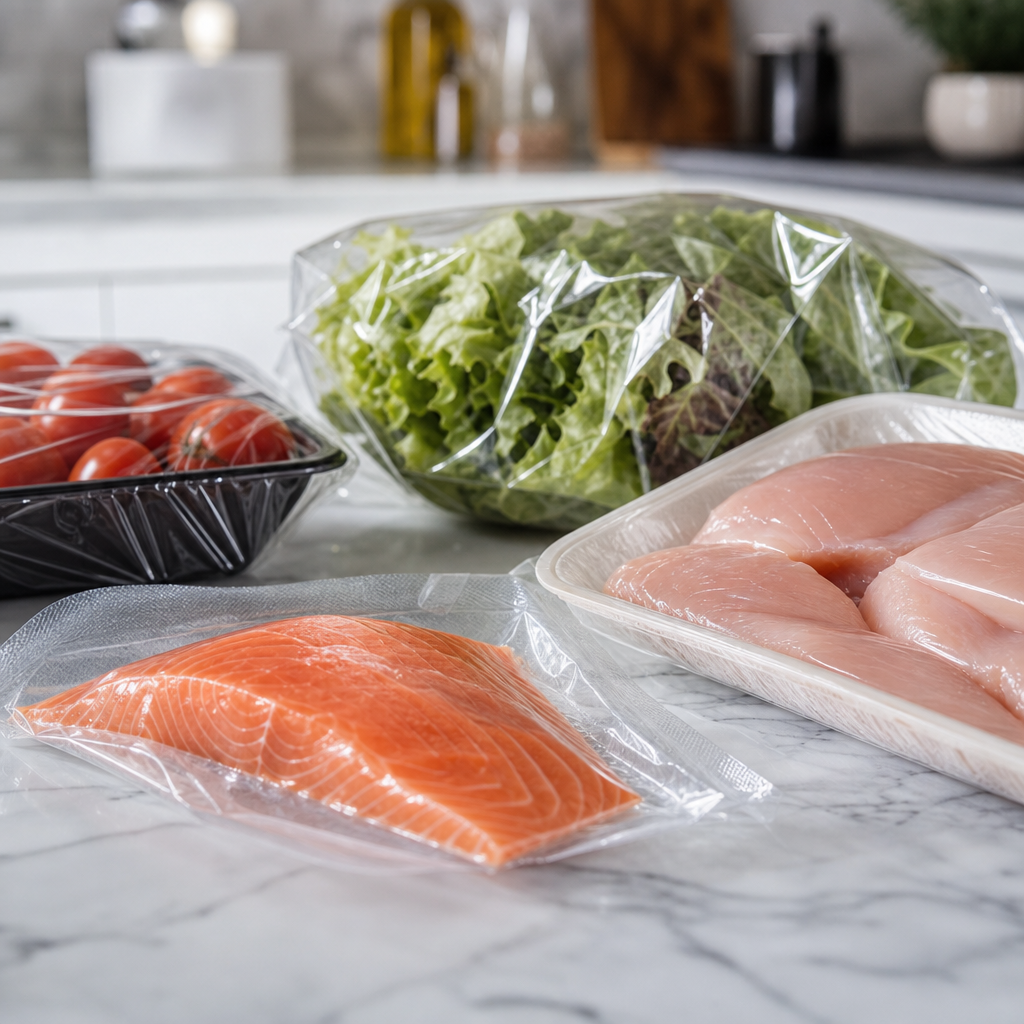
Polymers are the backbone of modern food packaging because they extend shelf life, protect product quality, and reduce contamination risks at every stage of the supply chain. In practical terms, a polymer is a large molecule made of repeating units, and in packaging those materials include polyethylene, polypropylene, polyethylene terephthalate, polyamide, ethylene vinyl alcohol, and a growing set of bio-based alternatives. I have worked with packaging teams that had to balance oxygen transmission rate, seal integrity, drop performance, migration compliance, and line speed all at once, and polymers are usually the only material class flexible enough to meet all those demands together. Glass, metal, and paper each have strengths, but polymers offer light weight, precise barrier tuning, and low-cost conversion into films, trays, bottles, pouches, caps, and lidding structures.
Why does this matter? Food spoilage is driven by oxygen, moisture gain or loss, light exposure, microbial growth, aroma loss, and mechanical damage. Packaging is the control point that sits between the product and those hazards. A good polymer package slows oxidation in nuts, blocks moisture pickup in crackers, prevents freezer burn in meat, preserves carbonation in beverages, and maintains hygiene from filling line to kitchen. It also supports food safety by resisting leaks, enabling tamper evidence, surviving thermal processing, and complying with migration limits set by regulators such as the U.S. Food and Drug Administration and the European Food Safety Authority. For manufacturers, stronger shelf life translates into lower waste, wider distribution, and more predictable inventory turns. For consumers, it means safer food, better flavor, and fewer disappointing purchases.
As a hub page for packaging applications, this article explains how polymers enhance shelf life and food safety across the full system: barrier performance, package design, processing compatibility, active and smart formats, sustainability tradeoffs, and material selection by food category. The key point is straightforward: polymers do not preserve food by magic; they preserve food by controlling the environment around it with measurable properties such as permeability, seal strength, puncture resistance, and chemical stability. Understanding those properties makes it easier to choose the right package, evaluate supplier claims, and connect packaging decisions to product performance on shelf.
How Polymer Barriers Preserve Food Quality
The most important packaging function is barrier control. Different foods fail for different reasons, so packaging engineers match polymer structures to the dominant spoilage mechanism. Oxygen-sensitive foods such as roasted coffee, processed meats, cheese, sauces, and snack nuts require low oxygen ingress because oxygen drives rancidity, color loss, vitamin degradation, and aerobic microbial growth. Moisture-sensitive foods such as cereals, powdered drinks, and crackers need strong water vapor barriers because excess humidity softens texture and accelerates caking. Light-sensitive products including milk and edible oils benefit from pigmented or opaque polymers that limit photo-oxidation. Carbonated drinks need carbon dioxide retention, while fresh produce often needs selective gas exchange that supports respiration without condensation.
Single polymers can do some of this work, but multilayer structures are common because no one resin delivers every property at once. Polyethylene provides excellent sealability and moisture resistance. Polypropylene adds stiffness and heat resistance for hot fill or microwaveable packs. PET delivers strength, clarity, and decent gas barrier in bottles and trays. Polyamide contributes toughness and puncture resistance, especially for vacuum packs. EVOH is widely used as a high oxygen barrier layer in coextruded films and trays, although its performance declines at high humidity, which is why it is usually protected between polyolefin layers. In real packaging development, we look at transmission rates under actual storage conditions, not generic brochure values, because temperature and humidity can change barrier performance dramatically.
Barrier design also depends on pack geometry and headspace. A thick wall bottle does not automatically outperform a thin flexible pouch if the pouch has a better barrier resin and less headspace oxygen. Modified atmosphere packaging for fresh meat is a good example. The polymer tray and lidding film must retain a designed gas mix long enough to preserve color and inhibit spoilage organisms. If seals fail or gas permeability is too high, shelf life collapses quickly. The same principle applies to coffee pouches with degassing valves, retort pouches for ready meals, and blister packs for portion-controlled foods. The polymer is part of a system that includes filling conditions, seal design, atmosphere control, and distribution stress.
Food Safety Functions Beyond Shelf Life
Extending shelf life is valuable, but food safety is the nonnegotiable requirement. Polymers support safety first by creating a hygienic barrier against external contamination. Properly designed packages prevent exposure to dust, handling, insects, and leakage from adjacent products during transport and retail display. Seal integrity is critical here. In audits, seal failures often trace back to contamination in the seal area, incorrect dwell time or temperature, or material mismatch between lidding and container. A package with excellent oxygen barrier but poor seal consistency is not a safe package.
Polymers also enable processing methods that destroy pathogens or reduce microbial load. Retortable polypropylene and multilayer laminates withstand high-temperature sterilization for soups, sauces, and shelf-stable meals. Heat-resistant trays support pasteurization. High-barrier vacuum bags are central to cook-chill and sous vide systems, where low oxygen and controlled processing temperatures improve both safety management and product consistency. For fresh poultry and meat, absorbent pad systems paired with polymer trays reduce purge movement and cross-contact in retail packs, while tamper-evident closures on beverages and dairy products provide visible evidence if a package has been opened or altered.
Another safety dimension is chemical compatibility and compliance. Food-contact polymers must meet migration limits and be suitable for intended use conditions such as acidic foods, fatty foods, frozen storage, microwave heating, or hot filling. Engineers verify this through regulatory declarations, migration testing, and challenge studies. A polymer that performs well with dry snacks may be inappropriate for high-fat cheese or high-temperature filling. Ink systems, adhesives, tie layers, and recycled content also require assessment. Good packaging practice means evaluating the whole article, not just the main resin, because food safety failures often originate in overlooked components such as closure liners or printed layers.
Matching Polymer Packaging to Food Categories
Different products need different packaging architectures, and understanding these use cases helps explain why polymers dominate the market. Fresh produce often uses polyethylene or polypropylene films engineered with controlled permeability. Bananas, berries, salad greens, and herbs continue to respire after harvest, so the package must balance oxygen and carbon dioxide to slow deterioration without creating anaerobic conditions that cause off-odors. Bakery products rely on moisture management and antifog films. Bread packs need enough barrier to reduce staling and mold risk while remaining economical for high-volume distribution. Snack foods use metallized films or high-barrier laminates to protect crispness and prevent oxidation of fats and seasonings.
Dairy packaging shows how precise polymer selection affects both safety and consumer experience. Milk jugs are commonly high-density polyethylene because it is tough, lightweight, and compatible with blow molding, while yogurt cups often use polypropylene or polystyrene alternatives with foil or polymer lidding. Cheese packaging ranges from vacuum bags to thermoformed barrier webs that suppress mold growth and maintain texture. Meat and seafood require some of the toughest structures in packaging because puncture from bones, purge control, oxygen sensitivity, and cold-chain abuse all matter at once. In my experience, small upgrades in puncture resistance or seal contamination tolerance can save more product than headline barrier improvements, because distribution damage is a major real-world failure mode.
Beverages present another set of requirements. PET transformed soft drink and water packaging by providing strength, clarity, and low weight, but oxygen-sensitive juices, beer, and dairy drinks may need scavengers, multilayer bottles, coatings, or opaque structures. Shelf-stable sauces and baby foods increasingly use retort pouches because they reduce package weight and improve heat transfer compared with cans or jars. Frozen foods lean on polyethylene-rich films that resist brittleness at low temperatures and limit dehydration. Across all of these categories, the best polymer package is the one that addresses the actual failure mechanism of the food, the realities of the manufacturing line, and the abuse expected in transport and consumer handling.
Key Polymer Packaging Formats and Performance Tradeoffs
Packaging decisions are rarely about one “best” material. They are about fit for purpose, processing, cost, and end-of-life constraints. The table below summarizes common polymer packaging formats used to enhance shelf life and food safety.
| Format | Typical Polymers | Main Shelf-Life Benefit | Main Safety Benefit | Key Limitation |
|---|---|---|---|---|
| Flexible pouch | PE, PET, PA, EVOH laminates | High barrier with low headspace | Hermetic seals, tamper evidence | Recycling is harder for multilayers |
| Rigid bottle | PET, HDPE, PP | Gas retention, moisture control | Strong closure systems | May need additives for sensitive drinks |
| Thermoformed tray | PET, PP, PE, EVOH structures | MAP retention, puncture resistance | Leak containment for proteins | Seal performance depends on clean flanges |
| Retort pack | PP and multilayer laminates | Supports shelf-stable foods | Withstands thermal sterilization | Needs strict process validation |
Flexible formats are often the most efficient at extending shelf life because they combine high barrier with low material use and minimal headspace. However, they can be vulnerable to puncture and are more difficult to recycle when built from multiple incompatible layers. Rigid packs provide stackability, branding space, and protection against crushing, but usually use more material. Thermoformed trays work well for proteins and ready meals because they can be paired with vacuum skin packaging or modified atmospheres. Bottles remain dominant for beverages because they handle filling, capping, labeling, and distribution efficiently at very high speeds.
These tradeoffs matter because packaging performance is contextual. A snack producer focused on national distribution may accept a more complex laminate to preserve flavor for nine months. A local dairy brand may prioritize monomaterial packaging that fits regional recycling systems because transit times are shorter. In both cases, polymers are still the enabling platform; the design target simply changes.
Active, Intelligent, and Emerging Polymer Solutions
Traditional barrier packaging protects food by slowing external influences, but active packaging goes further by interacting with the internal package environment. Oxygen scavengers are one of the best-known examples. They are incorporated as sachets or built into bottle walls and closures to remove residual oxygen left after filling. This is especially useful for beer, sauces, and nutritionally sensitive products. Moisture absorbers help maintain crispness in dried foods, while ethylene-control systems can slow ripening in produce packs. Antimicrobial packaging exists as well, though it requires careful validation because efficacy depends on the food matrix, target organism, release rate, and regulatory approval status.
Intelligent packaging adds monitoring rather than preservation. Time-temperature indicators, freshness sensors, and traceability codes help brands and retailers understand whether cold-chain abuse or handling issues may have compromised shelf life. These systems often sit on or within polymer packages because films, labels, and closures are convenient carrier structures. While intelligent features do not replace good barrier design, they improve decision-making and can reduce unnecessary disposal by distinguishing actually spoiled food from food that is still safe.
Emerging work in the field focuses on bio-based polymers, mono-material high-barrier structures, advanced coatings, and improved mechanical recycling compatibility. Polyethylene and polypropylene systems are being redesigned to deliver higher barrier while remaining more compatible with existing recycling streams. Chemical recycling is also receiving attention for mixed or contaminated plastic waste, although economics and infrastructure remain uneven. Compostable polymers can be useful in some controlled applications, but they are not a universal answer for food packaging because barrier, heat resistance, sealing behavior, and disposal conditions vary widely. The right question is not whether a polymer sounds greener in theory; it is whether the full package reduces total environmental impact while still protecting food effectively.
How to Evaluate Packaging Choices for Shelf Life and Safety
The best way to assess polymer packaging is to start with the food, not the material trend. Define the product hazards and failure modes first: oxidation, moisture change, aroma loss, microbial risk, light sensitivity, mechanical breakage, or process stress. Then match those needs to measurable package properties such as oxygen transmission rate, water vapor transmission rate, seal strength, coefficient of friction, dart impact, top-load performance, and migration compliance. Shelf-life testing should include accelerated studies where appropriate, but real-time testing under expected distribution conditions is still the standard that matters most.
Manufacturers should also review filling method, sealing window, distribution environment, retail display, and consumer use. A package that performs well in the laboratory can fail on line if the film curls, the tray flange warps, or the sealant layer is too narrow for actual equipment variation. I have seen projects succeed only after teams ran line trials that revealed scuffing, leaker rates, pallet compression issues, and cap torque drift that no desktop specification review would have caught. Good packaging development is cross-functional work involving procurement, quality, operations, regulatory, and logistics, not just material selection in isolation.
Polymers enhance shelf life and food safety because they let packaging engineers shape the food environment with precision. They can block oxygen, hold moisture where it belongs, survive heat treatment, create reliable seals, and integrate features such as tamper evidence or scavenging systems. Those capabilities make polymers essential across packaging applications, from fresh produce films and meat trays to beverage bottles and retort pouches. The most effective packaging programs treat polymers as performance tools, measured against product-specific risks and validated in real use conditions.
For brands building or updating a packaging strategy, the practical takeaway is simple: choose polymer systems based on the food’s real spoilage pathways, processing demands, and distribution risks, then verify performance with data instead of assumptions. That approach reduces waste, protects consumers, and supports profitable growth. Use this hub as your starting point for deeper work on packaging materials, formats, testing methods, and sustainability decisions, and review every package through the same lens: does it keep food safer and better for longer?
Frequently Asked Questions
How do polymers actually extend the shelf life of food?
Polymers extend shelf life by acting as engineered barriers against the main causes of food deterioration: oxygen, moisture, light, aroma loss, and physical damage. Different foods fail in different ways, so packaging teams choose polymer structures based on the product’s specific sensitivity. For example, oxygen can oxidize fats, fade colors, and degrade flavor, while excess moisture can make dry foods stale or cause texture loss. In other cases, too little moisture control can dry out products that need to retain softness. Polymers such as polyethylene, polypropylene, polyethylene terephthalate, polyamide, and ethylene vinyl alcohol are used alone or in multilayer combinations to control these variables with precision.
What makes polymers especially valuable is that they can be tailored to deliver the right balance of protection, flexibility, sealability, and processability. A snack package may need strong moisture resistance to preserve crispness, while a meat package may require high oxygen barrier performance to slow spoilage and maintain color. In dairy, ready meals, frozen foods, and fresh produce, polymer packaging helps maintain product quality across transportation, warehousing, retail display, and consumer handling. By reducing exposure to spoilage conditions throughout the supply chain, polymers help products stay safe, appealing, and usable for longer periods, which also supports reduced food waste.
Which polymers are most commonly used in food packaging, and why are different materials combined?
Common food packaging polymers include polyethylene (PE), polypropylene (PP), polyethylene terephthalate (PET), polyamide (PA), and ethylene vinyl alcohol (EVOH), along with an expanding range of bio-based materials. Each serves a different purpose because no single polymer delivers every property needed in modern packaging. PE is widely used for its moisture resistance, flexibility, and reliable heat sealing. PP offers good chemical resistance, stiffness, and performance in applications that may involve heat. PET is valued for clarity, strength, and useful gas barrier properties in many rigid and semi-rigid formats. PA contributes toughness and puncture resistance, which is especially important in packaging for products with sharp edges or demanding handling conditions. EVOH is a standout oxygen barrier material and is often included when preserving freshness depends on limiting oxygen ingress.
These materials are often combined in multilayer films, trays, pouches, and lidding structures because food packaging typically has to meet several performance targets at once. A package may need to block oxygen, resist water vapor, survive distribution, run efficiently on high-speed filling lines, and form strong seals that prevent leaks or contamination. Layering polymers allows packaging engineers to assign each function to the material best suited for it. For instance, an outer layer may provide printability and strength, a middle layer may deliver oxygen barrier performance, and an inner layer may provide food-contact compliance and heat sealing. This multilayer design approach is one of the key reasons polymers have become central to food preservation and food safety.
How do polymer packaging materials improve food safety, not just freshness?
Food safety depends on preventing contamination and maintaining package integrity, and polymers play a major role in both areas. At the most basic level, polymer packaging creates a physical barrier between food and the external environment. That barrier helps reduce exposure to dust, dirt, moisture, insects, and human handling during processing, transport, storage, and retail display. Properly selected polymer materials also support secure seals and tamper-evident formats, which are critical for minimizing contamination risks and ensuring consumers receive products in the intended condition.
Beyond basic protection, polymer packaging can be designed to support food safety through controlled atmosphere performance and compatibility with preservation systems. In vacuum packaging and modified atmosphere packaging, the polymer structure helps maintain the internal gas environment needed to slow microbial growth or delay quality loss. For products like meat, cheese, prepared foods, and bakery items, maintaining that internal environment can be a major safety and shelf-life advantage. In addition, many polymers are selected because they can withstand demanding filling, sealing, pasteurization, refrigeration, or freezing conditions without losing integrity. When packaging integrity is maintained, the risk of leaks, seal failures, and post-process contamination is greatly reduced. In practice, food safety is not only about the material itself but about how the polymer performs as part of a complete packaging system.
What factors do packaging teams consider when choosing the right polymer for a food product?
Choosing the right polymer is a highly practical decision that starts with understanding the product’s vulnerabilities. Packaging teams look at oxygen sensitivity, moisture sensitivity, fat content, aroma retention, expected shelf life, processing temperature, fill conditions, storage environment, and distribution demands. They also consider whether the product will be refrigerated, frozen, shelf-stable, or heated by the consumer. A dry snack, a vacuum-packed protein, a carbonated beverage, and a fresh-cut produce item all require different performance profiles. This is why material selection is rarely based on a single property. Instead, teams balance barrier needs with mechanical durability, machinability, sealing performance, clarity, cost, regulatory compliance, and sustainability goals.
In real packaging development work, trade-offs are unavoidable. A material with excellent oxygen barrier may be more sensitive to humidity. A highly durable structure may be harder to recycle if it relies on complex multilayer construction. A lightweight option may improve shipping efficiency but still has to meet puncture and seal-strength requirements. Packaging teams often evaluate oxygen transmission rate, water vapor transmission rate, seal window, drop performance, puncture resistance, and compatibility with the production line before finalizing a structure. The right choice is the one that protects the food effectively, performs consistently through the supply chain, and does so in a way that makes commercial and operational sense.
Are bio-based and sustainable polymers capable of delivering the same shelf-life and food safety benefits as conventional materials?
Bio-based and more sustainable polymers are becoming increasingly important in food packaging, but their suitability depends on the application. Some bio-based materials can perform very well in specific formats, especially when the barrier and mechanical demands are moderate or when they are integrated into thoughtfully engineered packaging systems. However, shelf-life and food safety performance cannot be assumed simply because a material is renewable or marketed as environmentally friendly. Packaging must still meet the same real-world requirements for oxygen and moisture control, sealing, durability, and regulatory compliance that conventional materials meet. In many cases, sustainable packaging development is about matching the protection needs of the food first, then identifying the lowest-impact material strategy that still maintains safety and quality.
That strategy may involve mono-material designs for improved recyclability, downgauging to reduce material use, incorporating recycled content where food-contact regulations allow, or using bio-based polymers in targeted applications. It may also involve hybrid solutions that combine performance and sustainability goals rather than relying on a single ideal material. The most important point is that food protection remains the priority. If a package fails to preserve safety or causes unnecessary spoilage, any sustainability claim is weakened by the resulting food waste. The best modern packaging solutions recognize that shelf life, food safety, material efficiency, and environmental impact must be evaluated together. When bio-based and sustainable polymers are chosen with that full systems perspective, they can play a meaningful and effective role in the future of food packaging.