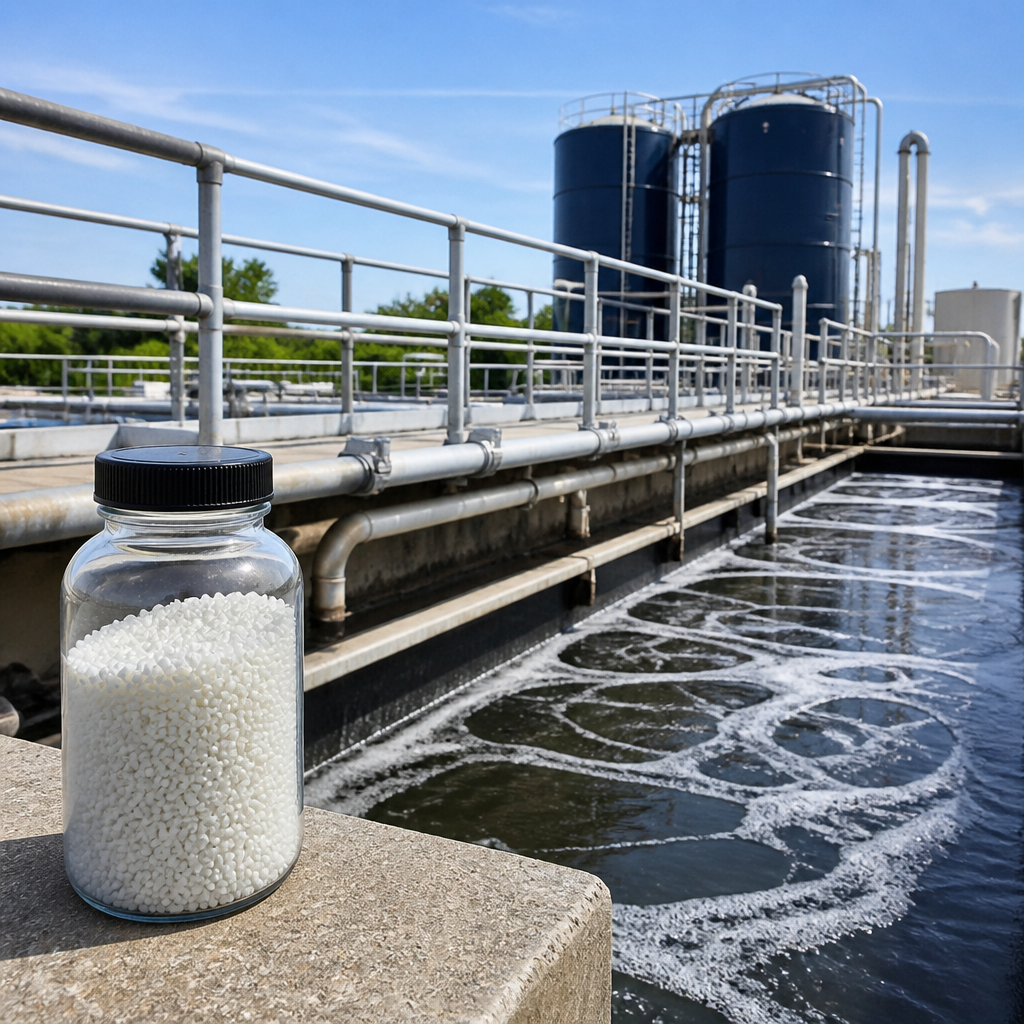
Water treatment operators are reevaluating polymer selection because new product launches are changing how plants control solids, reduce chemical consumption, and meet tighter discharge targets. In water treatment, polymers are long-chain molecules used as coagulant aids, flocculants, scale inhibitors, dispersants, ion-exchange materials, and membrane-support chemistries. The latest polymer products for water treatment solutions matter because utilities and industrial sites now face a harder mix of constraints: higher influent variability, lower sludge hauling budgets, stricter PFAS and nutrient scrutiny, and pressure to cut energy use. I have worked with municipal clarifiers, dewatering presses, and cooling water programs where a small polymer change altered cake solids, filtrate clarity, and operator workload more than a major hardware upgrade. That is why product launches deserve close attention. This hub article explains the newest categories entering the market, what problems they solve, where they fit in treatment trains, and how buyers should evaluate them before rollout. It also serves as a central guide for deeper articles on specific launches, pilot methods, and application case studies across the broader Innovative Products and Solutions library.
Recent launches are not limited to one chemistry family. Suppliers are introducing higher-charge cationic emulsion flocculants for sludge dewatering, low-residual coagulant aids for drinking water clarification, biodegradable antiscalant polymers for reverse osmosis systems, modified adsorbent resins for selective contaminant removal, and smart polymer formulations packaged with digital dosing support. Some products target narrow problems, such as silica scaling or emulsified oil separation; others are platform technologies offered in multiple molecular weights and charge densities. Understanding the terms is essential. Molecular weight affects bridging ability and shear sensitivity. Charge density influences neutralization of colloids and interaction with sludge solids. Emulsion, powder, dispersion, and solution grades differ in shelf life, activation requirements, and feed system compatibility. New product launches often claim broader operating windows, but the practical value comes from measurable outcomes: lower turbidity, faster settling, reduced capillary suction time, cleaner membranes, or lower pounds of active chemical per dry ton. The sections below break down the most important launch themes, the operational benefits, and the selection criteria that separate a promising brochure from a product that performs reliably on a plant floor.
High-performance flocculants for clarification and sludge dewatering
The busiest launch category is still flocculants, especially cationic and amphoteric polymers engineered for better solids capture at lower dose. In municipal wastewater, suppliers are releasing emulsion polymers with tighter molecular weight distributions to improve bridge formation without creating fragile floc that shears apart in pumps. In practice, that matters most at belt filter presses, centrifuges, and dissolved air flotation units. I have seen a new-generation cationic emulsion replace a legacy product at similar charge but lower active dose, raising cake solids by one to three percentage points and cutting centrate suspended solids enough to reduce recycle loading. Those numbers sound modest, yet they directly affect hauling cost and upstream treatment stability.
For drinking water clarification, current launches focus on coagulant aids that work with alum, ferric chloride, or polyaluminum chloride under variable raw water conditions. Reservoir turnover events, algae blooms, and storm runoff can shift particle characteristics in hours. Newer nonionic and low-cationic products are being marketed for faster floc growth, improved cold-water settling, and reduced carryover into filters. Buyers should ask for jar test data across pH and temperature ranges, not only the supplier’s best-case graph. A product that performs acceptably from 5°C to 25°C and across moderate alkalinity swings is often worth more than one that wins a single benchmark at room temperature.
Launches in sludge dewatering also increasingly pair polymer chemistry with make-down and feed equipment. Automated aging controls, inline dilution skids, and viscosity monitoring reduce the activation errors that historically undermined polymer performance. This matters because even an excellent product fails when operators under-age a powder polymer or over-shear an emulsion. The strongest new offerings therefore combine chemistry, application support, and dosing logic rather than selling polymer as a commodity alone.
Next-generation coagulant aids and hybrid polymer systems
Another significant launch trend is hybrid chemistry. Instead of relying solely on conventional metal salts or stand-alone synthetic polymers, manufacturers are blending organic cationic polymers with inorganic coagulants, microsand-compatible aids, or natural derivatives to widen the treatment window. These products are attractive where utilities want to reduce sludge volume, lower residual aluminum or iron, or improve color removal from humic-rich sources. Hybrid systems can also support direct filtration processes by building denser floc quickly, limiting filter headloss rise and improving run length.
A practical example is the use of high-basicity polyaluminum chemistry paired with a low-dose cationic aid in surface water plants experiencing seasonal natural organic matter spikes. The inorganic component destabilizes colloids, while the polymer reinforces aggregation and settling. New launches refine that relationship by controlling charge balance and particle interaction more precisely than older blends. Some suppliers are also positioning bio-based coagulant aids derived from modified starch or tannin chemistry. These are not universal replacements for synthetic polymers, but they can be valuable in applications where residual profile, biodegradability, or brand sustainability goals influence purchasing.
Industrial plants are also benefiting from hybrid launches in oily wastewater and metals finishing effluent. Here, formulations may combine demulsification functionality with flocculation support, reducing the need for multiple feed points. The key evaluation criteria are separation speed, sludge compactness, and tolerance to pH swings and surfactant load. Operators should confirm whether the product improves downstream dissolved air flotation skimming and whether it creates sludge that can still be dewatered efficiently. A hybrid that clarifies well but worsens disposal economics is not a true improvement.
Polymer innovations for membranes, reverse osmosis, and reuse
Water reuse growth is pushing new polymer products beyond clarifiers and presses into membrane systems. Recent launches include biodegradable or phosphorus-free antiscalant polymers, specialty dispersants for silica and calcium phosphate control, and polymeric membrane cleaners designed to loosen organic fouling without attacking membrane integrity. These products are especially relevant in reverse osmosis, nanofiltration, and ultrafiltration systems treating brackish groundwater, industrial reuse streams, or tertiary municipal effluent. Facilities seeking higher recovery rates need chemistries that keep scale precursors suspended and membranes cleaner under tighter operating margins.
In reuse projects, suppliers increasingly promote polymer products as part of a full fouling-management strategy. That means antiscalant selection tied to feedwater saturation indices, cleaning protocols based on normalized permeate flow decline, and compatibility checks against chlorine, bisulfite, ferric carryover, and upstream coagulants. I have seen plants solve a scaling problem temporarily by increasing antiscalant dose, only to discover that upstream filter breakthrough was the actual cause of rapid differential pressure rise. The better new product programs account for that system interaction instead of treating the polymer as a stand-alone fix.
Another launch area is membrane-compatible coagulant aids for tertiary filtration before RO. Proper upstream flocculation can reduce silt density index and particle loading, which helps preserve membrane life. However, overdosing or using the wrong charge can worsen fouling. For that reason, the most credible manufacturers provide membrane autopsy-informed recommendations, pilot skid support, and compatibility guidance with cartridge filtration and CIP chemistries.
| Product category | Primary use | Main benefit | Key caution |
|---|---|---|---|
| Cationic emulsion flocculant | Sludge dewatering | Higher cake solids, cleaner centrate | Sensitive to make-down and shear |
| Low-residual coagulant aid | Drinking water clarification | Better settling in cold or variable water | Requires jar testing across seasons |
| Hybrid organic-inorganic polymer | Color and colloid removal | Wider treatment window, lower sludge volume | Residual chemistry must match process goals |
| Biodegradable antiscalant polymer | RO and reuse systems | Scale control with improved environmental profile | Must be matched to actual scaling species |
| Selective ion-exchange resin | Target contaminant removal | Higher affinity for specific ions | Regeneration and waste handling can be complex |
Selective resins and functional polymers for emerging contaminants
Not all important polymer launches are flocculants. Functionalized ion-exchange resins and adsorptive polymers are gaining attention for selective removal of nitrate, perchlorate, uranium, boron, and some short-chain organics. With PFAS regulation driving treatment upgrades, many buyers are comparing activated carbon, ion exchange, and high-pressure membranes. While PFAS removal is often discussed separately, new resin launches still belong in the broader polymer product conversation because they use tailored polymer backbones and functional groups to improve selectivity, capacity, or regeneration performance.
The technical difference between a commodity resin and a modern specialty resin can be substantial. Matrix structure, pore distribution, bead strength, and functional group accessibility all affect kinetics and operating cost. For example, nitrate-selective resins may reduce sulfate interference compared with standard strong-base anion resins, extending run length before breakthrough. In high-TDS industrial streams, that can make the difference between a feasible polishing step and an uneconomic one. Similarly, boron-selective media are critical in desalination and reuse when final water quality targets are tight for irrigation or semiconductor applications.
Buyers should ask for full breakthrough curves, not only bed-volume claims. They should also review regeneration chemistry, waste brine management, pressure drop, and susceptibility to fouling by iron, organics, or oxidants. The best product launches come with pilot data and clear design envelopes. Selective polymers can be powerful tools, but they are not magic. Performance depends heavily on competing ions, empty bed contact time, and pretreatment quality.
How to evaluate new product launches before full-scale adoption
Every launch claims performance gains, yet polymer selection remains an application-specific decision. A disciplined evaluation process prevents expensive mistakes. Start by defining the outcome in plant terms: turbidity target, sludge cake solids, polymer pounds per dry ton, membrane differential pressure, or cost per thousand gallons treated. Then collect baseline data for at least several weeks if the influent is variable. Without a baseline, improvements are hard to verify and supplier trials become anecdotal.
Bench testing is the first filter. Jar tests, charge demand measurements, CST, SRF, and particle size observations quickly narrow candidate products. The second stage is controlled field trialing under normal operating conditions. In dewatering, compare not only cake solids but also centrate quality, throughput, operator adjustments, and cleanup burden. In clarification, watch settled water turbidity, blanket behavior, and filter run length. For membrane chemistries, normalize performance data to temperature and pressure so trends are real, not seasonal artifacts.
Procurement teams should also examine packaging, shelf life, freeze stability, secondary containment needs, and vendor technical support. New launches often justify premium pricing only if they reduce total cost of operation. That calculation must include sludge hauling, energy, labor, cleaning frequency, and compliance risk, not simply chemical unit price. A polymer costing more per gallon can still be the lowest-cost option when dose, downtime, and reject losses are considered. Plants that involve operations, maintenance, laboratory staff, and procurement early usually make better decisions than teams that buy on price and troubleshoot later.
What this hub covers next and where polymer innovation is heading
As a hub for New Product Launches within Innovative Products and Solutions, this page connects the major categories readers need to track: dewatering flocculants, clarification aids, hybrid coagulants, membrane antiscalants, selective resins, and digitally supported dosing systems. The next level of content should examine each category in more detail through pilot protocols, vendor comparison criteria, storage and activation best practices, and case studies from municipal, food and beverage, mining, power, and microelectronics facilities. That structure helps readers move from product awareness to implementation planning.
The broader direction of polymer innovation is clear. Formulations are becoming more targeted, application support is becoming more data-driven, and environmental profile is becoming part of product design rather than an afterthought. Expect more launches emphasizing lower residuals, improved biodegradability, tighter performance in cold or variable water, and stronger integration with sensors and control platforms. At the same time, the fundamentals remain unchanged: successful water treatment depends on matching chemistry to water quality, hydraulics, equipment, and operator practice.
The key takeaway is simple. The latest polymer products for water treatment solutions can improve clarification, dewatering, membrane protection, and selective contaminant removal, but only when evaluated against real process goals and plant constraints. Use this hub as your starting point, then go deeper into the linked subtopics that matter most to your system. Review your current polymer program, identify one performance gap, and pilot a modern alternative with measured success criteria.
Frequently Asked Questions
1. What are the latest polymer products being used in water treatment solutions today?
The latest polymer products for water treatment solutions span several performance categories rather than one single chemistry. In practical terms, water treatment operators are seeing new launches in advanced flocculants, coagulant-aid polymers, scale inhibitors, dispersants, ion-exchange resins, and membrane-support chemistries. Many of these newer products are designed to handle more variable feedwater quality, tighter discharge requirements, and pressure to reduce total chemical consumption. Compared with older standard polymers, recent products often focus on higher activity, better charge control, improved solids capture, and more predictable performance across changing pH, temperature, and contaminant loads.
One major trend is the development of more selective flocculants for sludge dewatering and clarification. These products are engineered to build stronger, denser floc so operators can improve settling rates, enhance filterability, and reduce carryover. Another trend is the release of polymers that work effectively at lower dosages, which can cut storage, handling, and feed costs. Utilities and industrial plants are also adopting newer antiscalant and dispersant polymers that target difficult foulants such as silica, calcium carbonate, calcium sulfate, iron, and mixed inorganic-organic deposits in reverse osmosis and cooling water systems.
There is also growing interest in polymer products that support membrane operations, including chemistries that limit fouling, improve pretreatment stability, and protect flux. In ion exchange and specialty separations, newer polymer-based materials are being introduced with improved selectivity, higher operating capacity, and better resistance to oxidative or chemical degradation. Altogether, the latest products matter because they are being formulated for a more demanding operating environment where plants must treat harder water matrices, manage tighter compliance limits, and do more with less chemical input.
2. How do new polymer products help water treatment plants reduce chemical consumption and operating costs?
New polymer products help reduce chemical consumption by improving treatment efficiency at multiple points in the process. In clarification and solids removal, a better-matched flocculant or coagulant aid can produce larger, faster-settling floc with less product. That means operators may be able to lower the dose of primary coagulants, reduce pH correction demand, and limit the need for downstream polishing. In sludge handling, stronger floc formation can increase cake solids and lower haulage or disposal costs, which often has a bigger financial impact than polymer price alone.
Cost reduction also comes from consistency. Older polymer programs may work well under steady conditions but require constant adjustment when raw water quality changes. Newer polymer formulations are often designed to be more tolerant of swings in turbidity, organics, seasonal temperature shifts, and mixed industrial contaminants. When treatment becomes more stable, plants spend less on overtreatment, less time troubleshooting process upsets, and less energy on pumping, recirculation, or membrane cleaning. In many systems, the best savings do not come from buying the cheapest polymer, but from choosing one that minimizes total process cost.
Another important factor is compatibility with automation and optimization programs. Many of the latest products are selected through more detailed jar testing, streaming current control, online turbidity feedback, or vendor-supported performance modeling. This allows operators to fine-tune feed rates and avoid waste. In membrane and cooling applications, advanced antiscalants and dispersants can extend run times between cleanings, reduce downtime, and protect equipment life. The result is a broader operating-cost benefit: lower chemical use, fewer interventions, improved throughput, and more reliable compliance performance.
3. Why is polymer selection becoming more important for meeting tighter discharge and compliance targets?
Polymer selection is becoming more important because discharge permits and internal water quality targets are getting stricter while influent conditions are becoming less predictable. Plants are being asked to control suspended solids, phosphorus, metals, emulsified oils, color, organic carryover, and residual contaminants more precisely than before. A polymer that was acceptable under older standards may no longer provide enough separation efficiency, sludge quality, or process stability to consistently meet those tighter requirements.
The right polymer affects particle destabilization, floc growth, settling behavior, dewatering efficiency, and final effluent clarity. If the polymer is not well matched to the water chemistry and solids profile, operators can see weak floc, cloudy overflow, poor filter performance, high residuals, or inconsistent sludge handling. Those problems can quickly turn into compliance risks. New polymer products are increasingly formulated to address complex wastewater mixes, including variable industrial influent, blended municipal-industrial flows, high-organic waters, and systems influenced by reuse or upstream process changes.
Selection also matters because compliance is no longer judged only by one parameter. Plants often need to optimize several outcomes at once: low turbidity, low sludge volume, strong dewatering, manageable residual chemistry, membrane protection, and stable operation. The latest polymer solutions are valuable because they can be tailored more precisely to these competing goals. Instead of asking only whether a polymer “works,” operators now need to ask how it affects the entire treatment train and whether it supports long-term regulatory performance under real operating conditions.
4. What should operators evaluate when comparing the latest polymer products for water treatment applications?
Operators should evaluate far more than unit price. The most important question is how a polymer performs in the specific process and water matrix where it will be used. That means reviewing raw water or wastewater characteristics, pH range, temperature, suspended solids type, organic loading, hardness, metals, oil and grease content, and seasonal variation. A polymer that performs very well in one plant may underperform in another because the treatment challenge is different. Reliable evaluation usually starts with bench testing, such as jar tests or dynamic simulations, and then moves to a controlled plant trial.
Performance criteria should include floc size and strength, settling rate, supernatant clarity, filterability, sludge compaction, dewatering results, cake solids, centrate quality, membrane impact, and compatibility with existing coagulants or feed systems. Operators should also look at practical handling factors, including dilution requirements, emulsion inversion behavior, solution aging limits, pumpability, freeze-thaw stability, and safety considerations for storage and transfer. These details matter because a technically strong polymer can still create operational problems if it is difficult to prepare or feed consistently.
It is also wise to assess the total business case. That includes dosage rate, delivered cost, effect on sludge disposal, impact on energy consumption, reduction in cleaning frequency, and ability to maintain permit compliance. Vendor support is another meaningful differentiator. Suppliers that provide strong field service, testing support, and data interpretation can help plants move faster toward an optimized program. In short, the best evaluation approach is holistic: compare polymer products based on total system performance, not just chemistry labels or purchase price.
5. Are the newest polymer products better suited for difficult water conditions and industrial wastewater streams?
In many cases, yes. One of the biggest reasons new polymer products are gaining attention is that many facilities are no longer dealing with simple, stable water sources. Utilities may face seasonal algae, variable natural organic matter, changing upstream contributions, and pressure to increase water reuse. Industrial sites often contend with mixed waste streams, fluctuating pH, surfactants, fine colloids, metals, hydrocarbons, and intermittent shock loads. These more difficult conditions expose the limitations of older one-size-fits-all polymer programs.
Newer products are often formulated to perform across wider operating windows and to solve more targeted separation or fouling problems. For example, advanced flocculants may be better at capturing fine, low-density particles that resist settling. Specialty dispersants and antiscalants can help manage complex scaling tendencies in high-recovery membrane systems. Improved polymer chemistries may also offer better tolerance to high salinity, variable temperatures, or mixed contaminant profiles that are common in industrial wastewater treatment. This does not mean every new product is automatically superior, but it does mean the market now offers more specialized options for difficult applications.
The most successful results still depend on matching the product to the problem. Plants treating challenging water should validate performance through representative testing and pilot work whenever possible. When selection is done carefully, the newest polymer products can improve solids control, lower chemical demand, protect membranes and equipment, and give operators a better chance of staying within discharge limits even as influent complexity increases. That is why polymer innovation is becoming a central part of modern water treatment strategy rather than just a routine chemical purchasing decision.