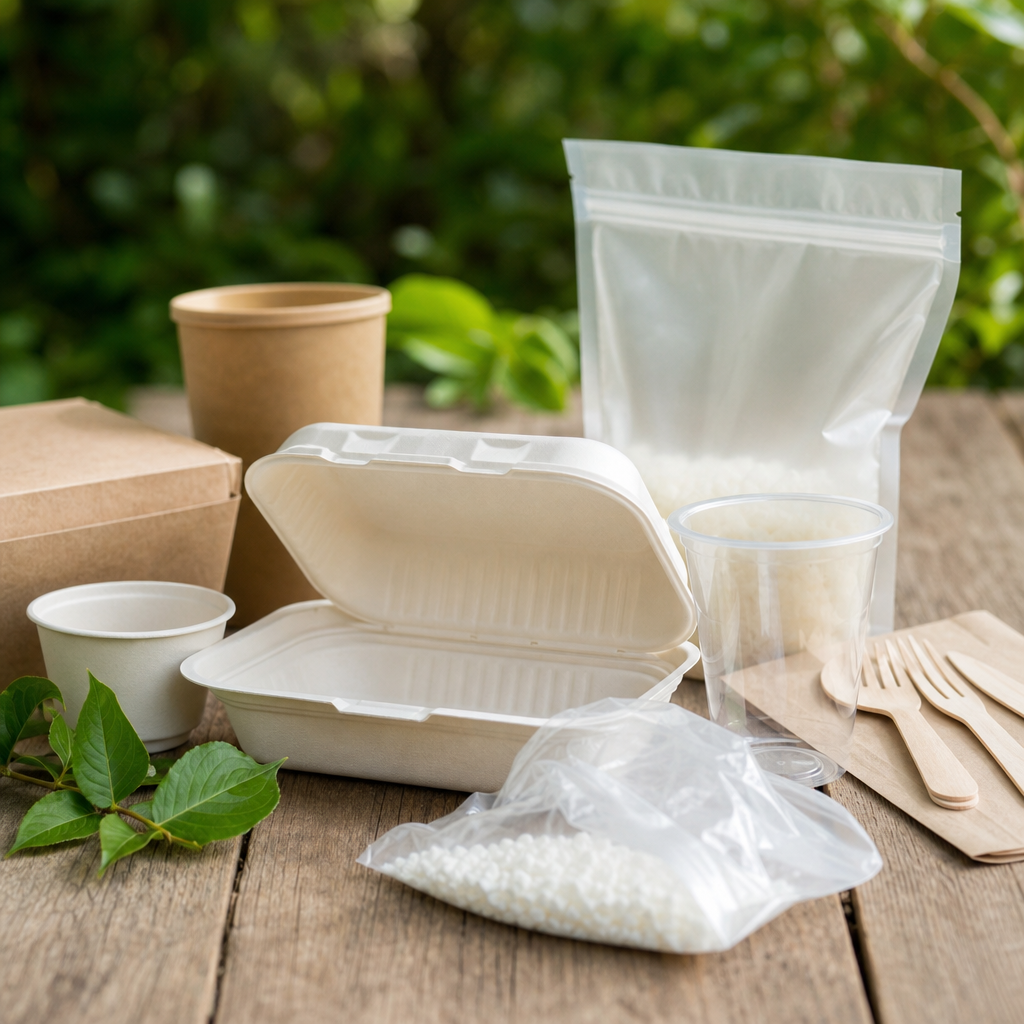
Biodegradable polymers are reshaping packaging because they address a problem conventional plastics were never designed to solve: what happens after use. In packaging, the term refers to polymer materials that can be broken down by microorganisms into water, carbon dioxide, methane under anaerobic conditions, and biomass under specific environmental conditions. That definition matters because not every material marketed as green is truly biodegradable, and not every biodegradable material performs well enough for food packs, mailers, films, bottles, trays, or protective inserts. After working with packaging teams evaluating these materials, I have seen the same pattern repeatedly: success depends less on slogans and more on matching polymer chemistry, barrier needs, conversion methods, disposal routes, and regulations.
Packaging is the most visible application for biodegradable polymers because packaging has short service life and high waste volume. Global plastic packaging demand remains enormous, while consumers, brands, and regulators are pushing for lower fossil dependence and lower end-of-life burden. Biodegradable packaging is one response, alongside recycling, lightweighting, reuse systems, and paper substitution. It matters most where contamination with food, agricultural residues, or mixed materials makes mechanical recycling difficult. In those situations, compostable food-service items, produce films, coffee capsules, bin liners, and certain cushioning formats can offer practical advantages. However, biodegradable polymers are not universal replacements. Their value depends on whether they fit the product, protect it adequately, and enter a waste system that can process them correctly.
Several key terms guide this category. Biodegradable means microorganisms can metabolize the material, but the rate and completeness depend on conditions such as temperature, oxygen, moisture, and microbial activity. Compostable is narrower: standards such as EN 13432 in Europe and ASTM D6400 or D6868 in the United States define disintegration, biodegradation, and ecotoxicity criteria for industrial composting. Bio-based means derived partly or fully from renewable feedstocks, but a bio-based polymer may not be biodegradable, and a fossil-based polymer may be biodegradable. Packaging professionals therefore evaluate both origin and end-of-life. This hub article covers the main biodegradable polymers used in packaging, how they perform, where they fit, what standards apply, and how companies can choose them responsibly across flexible, rigid, and protective packaging formats.
Core biodegradable polymers used in packaging
The biodegradable polymers most often discussed in packaging are PLA, PHA, starch blends, cellulose-based materials, PBS, PBAT, and specialty aliphatic polyesters. Each behaves differently on processing lines and in use. Polylactic acid, or PLA, is produced from fermented plant sugars and is widely used in clear cups, thermoformed trays, blister packs, and films. It offers good stiffness, gloss, and printability, which is why many converters use it for premium retail presentation. Its main limitations are modest heat resistance, brittleness in some grades, and dependence on industrial composting conditions for effective biodegradation. Crystallized PLA and heat-resistant formulations improve performance, but they add complexity.
Polyhydroxyalkanoates, or PHAs, are a family of biopolyesters produced by microorganisms. In packaging, PHAs are valuable because some grades can biodegrade in a broader range of environments than PLA, including marine or soil conditions, although claims still depend on specific grade and certification. They can be used in films, coatings, and molded articles. Their challenge has long been cost and supply scale, but commercial momentum is improving. Starch blends are another important class, especially for compostable bags, loose-fill foams, and agricultural films. Pure starch is difficult to process alone, so it is typically blended with biodegradable polyesters such as PBAT to improve flexibility and toughness. Cellulose films and regenerated cellulose offer excellent renewable content and good dead-fold properties, making them attractive for confectionery, bakery, and specialty wraps.
PBS and PBAT often appear in practical packaging formulations. Polybutylene succinate, or PBS, provides better heat resistance and toughness than PLA in some uses, while PBAT contributes flexibility and sealability. Neither should be treated as a simple drop-in answer, but both are useful in compostable film structures and blends. In real packaging development work, many commercially successful products are blends rather than single-polymer systems because no one polymer optimizes stiffness, toughness, barrier, seal initiation temperature, processability, and compostability all at once. Material selection therefore starts with the package function: if the job is a salad bowl lid, clarity and anti-fog matter; if it is an e-commerce mailer, puncture resistance and tear propagation matter more.
Performance requirements in packaging applications
Packaging succeeds only if it protects the product through filling, shipping, retail handling, and use. For biodegradable polymers, the first technical question is not whether the material is sustainable, but whether it meets required performance. Mechanical properties include tensile strength, elongation, modulus, impact resistance, puncture resistance, and creep. Barrier properties include oxygen transmission rate, water vapor transmission rate, aroma barrier, grease resistance, and light protection. Thermal behavior affects hot-fill capability, freezer durability, seal window, dimensional stability, and microwave suitability. Converters also assess runnability on blown film, cast film, sheet extrusion, thermoforming, injection molding, blow molding, coating, or lamination equipment.
Food packaging makes these requirements especially strict. Fresh produce packs may need anti-fog films and controlled gas exchange. Snack packaging usually needs much stronger moisture barrier than standard compostable films can provide. Coffee packaging requires high aroma and oxygen barrier, which is why many biodegradable mono-material solutions still struggle in this segment without coatings or multilayer structures. For takeaway foodservice, heat distortion and grease resistance often determine success. I have seen compostable trays perform well in chilled prepared foods but fail in hot cabinets because the grade was chosen for clarity rather than thermal stability. Matching application temperature profile to polymer glass transition and crystallinity is essential.
Packaging designers also need to consider shelf life in plain terms. A biodegradable polymer should remain stable throughout intended storage and use; biodegradation should start after disposal under the right conditions, not on the shelf. Additives, copolymers, and coatings can tune this balance, but they may affect certification or recyclability. Ink adhesion, sealing through contamination, coefficient of friction, and tear direction are everyday converting details that often decide commercial viability. When brands pilot biodegradable packaging, the strongest launches usually happen in applications with short shelf life, low barrier demand, and a clear composting or organics collection route, such as produce bags, caddy liners, coffee grounds bags, and selected foodservice formats.
Where biodegradable polymers fit best across packaging formats
Biodegradable polymers fit some packaging formats far better than others. Flexible packaging is the largest opportunity, but it is also technically demanding. Compostable shopping bags, produce bags, and organic waste liners are established uses because flexibility and compostability align with the collection system. Film structures for bakery items, fresh produce, and dry goods can also work where barrier demands are moderate. Rigid packaging is another practical area. PLA and related blends are common in transparent cups, clamshells, deli containers, and thermoformed trays used in fresh foods. Protective packaging includes starch loose fill, molded fiber with biopolymer coatings, and biodegradable air-pillows or foams in niche applications.
The right fit depends on product sensitivity, disposal pathway, and economics. The table below summarizes where each polymer family most often fits in packaging programs.
| Polymer family | Typical packaging uses | Strengths | Main limitations |
|---|---|---|---|
| PLA | Clear cups, trays, clamshells, films, labels | Clarity, stiffness, printability, renewable feedstock | Heat sensitivity, brittleness, industrial composting dependence |
| PHA | Films, coatings, molded packs, specialty foodservice | Broad biodegradation potential, grease resistance in some grades | Higher cost, variable supply, processing complexity |
| Starch blends | Compostable bags, loose fill, produce films | Flexibility, compostability, useful for organics collection | Moisture sensitivity, lower strength in some applications |
| Cellulose-based materials | Wraps, windows, confectionery, bakery packaging | Renewable content, good appearance, dead-fold | Barrier often needs coatings, cost can be higher |
| PBS/PBAT blends | Films, mailers, foodservice items, laminations | Toughness, sealability, flexibility | Feedstock mix varies, end-of-life messaging must be precise |
For a sub-pillar hub on packaging, one practical way to think about the topic is by application families. Fresh food packaging focuses on breathability, visibility, and contamination issues. Dry food packaging emphasizes moisture and oxygen barrier. E-commerce packaging prioritizes cushioning, puncture resistance, and branding. Personal care and household packaging often need chemical resistance and premium finish. Medical and pharmaceutical packaging remain difficult because sterility, long shelf life, and strict compliance generally exceed what many biodegradable polymers can deliver today. The best near-term opportunities are therefore not the most regulated packs, but the highest-volume short-life formats with clear disposal logic.
Standards, labeling, and disposal realities
Claims around biodegradable packaging are heavily regulated for good reason. If a package says compostable, that statement should be backed by recognized testing and certification. EN 13432 remains the benchmark in Europe for packaging recoverable through composting and biodegradation. In the United States, ASTM D6400 covers compostable plastics and ASTM D6868 addresses compostable coatings or additives on substrates such as paper. Certification bodies including TÜV Austria, DIN CERTCO, and the Biodegradable Products Institute help verify compliance. These standards assess disintegration, biodegradation percentage, heavy metal limits, and effects on compost quality. They do not simply accept a marketing statement that the package disappears eventually.
Disposal conditions are the central issue consumers often misunderstand. Most certified compostable packaging is designed for industrial composting, where temperatures commonly reach around 58 degrees Celsius with managed aeration and moisture. Home compost systems are colder and less consistent, so only materials specifically certified for home composting should carry that claim. If compostable packaging ends up in conventional plastic recycling, it can create contamination concerns; if it goes to landfill, degradation may be limited or produce methane depending on conditions and gas capture. That is why labeling must be specific and local waste infrastructure matters as much as material science.
Brands should also avoid confusing biodegradable with litter-safe. No packaging belongs in the environment. Even materials with favorable biodegradation profiles break down at different rates under different conditions, and unmanaged disposal still harms ecosystems. Clear on-pack instructions, standardized logos, and retailer education help reduce misuse. In projects I have supported, the most effective communications were simple: identify whether the pack belongs in organics collection, home compost, store drop-off, or residual waste based on the local system. Precision builds trust, and trust is essential in a category where consumers have already seen too many vague environmental claims.
Business case, design strategy, and future direction
The business case for biodegradable polymers in packaging rests on more than consumer preference. Companies adopt them to meet packaging reduction targets, respond to single-use plastic rules, improve organics diversion, and differentiate in categories where sustainability influences purchase. Cost remains a constraint, especially compared with commodity polyethylene or polypropylene, but total system cost can be favorable when compostable packaging simplifies food-soiled waste handling. A common example is foodservice venues that collect scraps and compostable serviceware together, reducing sorting friction. In e-commerce, biodegradable protective packaging can strengthen brand perception, though it must still meet drop-test and storage requirements.
Design strategy matters more than material substitution alone. Start with the package function, map the likely end-of-life route, then choose the simplest structure that meets performance. Mono-material designs are generally easier to certify and communicate than complex laminates. Life cycle assessment should compare realistic scenarios, including agricultural inputs, resin production, transport, food waste prevention, and disposal. Preventing food waste often delivers larger environmental benefit than reducing package mass, so a compostable pack that shortens shelf life may be a poor trade. Leading teams use pilot trials, seal testing, migration testing, and shelf-life studies before scaling. They also involve waste operators early, because a package no composter accepts is not a successful packaging solution.
Biodegradable polymers will keep expanding in packaging, but intelligently, not universally. The strongest applications are food-contact items contaminated after use, flexible films linked to organics collection, selected rigid fresh-food packs, and protective formats where recovery is difficult. The weakest are high-barrier, long-shelf-life packs without composting access. For brands building an applications roadmap, the practical next step is clear: audit your packaging portfolio, identify short-life formats with poor recycling outcomes, and test certified biodegradable alternatives against real performance and disposal conditions. That disciplined approach turns biodegradable packaging from a trend into a measurable packaging strategy.
Frequently Asked Questions
What are biodegradable polymers in packaging, and how are they different from conventional plastics?
Biodegradable polymers used in packaging are materials designed to break down through the action of microorganisms into natural end products such as water, carbon dioxide, biomass, and, in oxygen-free environments, methane. What makes this important is that biodegradability is not simply about a package fragmenting or disappearing from view. True biodegradation means the material is metabolized by microbes under specific environmental conditions. By contrast, most conventional plastics were engineered for durability and long-term stability, not for safe biological breakdown after disposal. They may persist for decades or centuries, even when exposed to sunlight, moisture, or mechanical wear.
In practical packaging terms, biodegradable polymers can be made from renewable or fossil-based feedstocks, and that distinction often surprises people. A material can be bio-based without being biodegradable, and it can also be biodegradable without being fully plant-derived. That is why clear terminology matters. For packaging professionals, the real question is not whether a material sounds eco-friendly, but whether it performs as required during use and then biodegrades in the disposal system it is most likely to enter. Understanding that difference helps businesses avoid greenwashing, select better materials, and communicate more accurately with consumers.
Are all packaging materials labeled “green” or “eco-friendly” actually biodegradable?
No, and this is one of the most common sources of confusion in sustainable packaging. Terms like “green,” “eco-friendly,” “natural,” and even “compostable” are often used loosely in marketing, but they do not always mean a package will biodegrade in a meaningful or verified way. Some materials contain additives that help plastics break into smaller pieces, but that is not the same as full microbial biodegradation. Fragmentation can create microplastics rather than solving the end-of-life problem. Likewise, recyclable, recycled-content, and bio-based packaging may offer environmental benefits, but those characteristics alone do not make a material biodegradable.
To evaluate whether a packaging polymer is truly biodegradable, it is important to look for recognized standards, certifications, and test conditions. These usually specify the environment in which degradation occurs, such as industrial composting, home composting, soil, marine settings, or anaerobic digestion. A package that biodegrades in an industrial composting facility with controlled temperature and humidity may not break down effectively in a backyard compost pile or in the open environment. For that reason, businesses and consumers should rely on precise claims backed by testing rather than broad sustainability language. Accurate labeling is essential because the environmental value of biodegradable packaging depends heavily on where and how it is disposed of.
Under what conditions do biodegradable polymers in packaging actually break down?
Biodegradable polymers do not break down uniformly everywhere. Their degradation depends on a combination of temperature, moisture, oxygen levels, microbial activity, and time. In packaging applications, this is a critical point because many materials are designed to biodegrade only under managed conditions, such as those found in industrial composting systems. These facilities typically maintain elevated temperatures, controlled humidity, aeration, and active microbial populations, all of which accelerate breakdown. In anaerobic environments, different microbial pathways may produce methane along with carbon dioxide and biomass. Without the right conditions, even certified biodegradable materials can persist much longer than expected.
This is why disposal infrastructure matters just as much as material selection. A biodegradable food-service item, for example, may perform well if it reaches an appropriate composting or organic waste treatment system, but if it ends up in a landfill, roadside litter stream, or conventional recycling bin, its environmental outcome changes significantly. Landfills are especially complex because conditions can vary, and biodegradation may be slow or incomplete. From a packaging strategy perspective, the best results come when the polymer, the product application, and the waste management pathway are aligned. In other words, biodegradability is not a universal guarantee of rapid disappearance; it is a property that depends on a specific real-world end-of-life context.
What are the main benefits of using biodegradable polymers in packaging?
The main benefit is that biodegradable polymers address an end-of-life challenge conventional plastics were never built to solve. In packaging, where many products are used only briefly before disposal, materials that can break down biologically can help reduce long-term persistence when they are matched with suitable collection and treatment systems. This can be especially valuable for items that are difficult to clean, separate, or recycle, such as food-contaminated packaging, produce films, compostable liners, and certain single-use serviceware. In these cases, biodegradable polymers can support organic waste diversion and simplify handling of materials that would otherwise be discarded as mixed waste.
There are also broader strategic advantages. Biodegradable packaging can help companies diversify away from purely conventional plastics, respond to consumer demand for more responsible materials, and align packaging design with circular or regenerative waste systems where composting or biological treatment is part of the infrastructure. Some biodegradable polymers are also derived in part from renewable feedstocks, which may contribute to reduced dependence on fossil resources, depending on sourcing and lifecycle performance. That said, the strongest environmental case comes not from the label alone but from using the right biodegradable polymer in the right application with clear disposal instructions. When thoughtfully deployed, these materials can be a practical tool in reducing packaging’s post-use burden.
What are the limitations and challenges of biodegradable polymers in packaging?
Biodegradable polymers offer real promise, but they are not a universal replacement for conventional plastics. One major challenge is performance. Packaging must protect products from moisture, oxygen, grease, mechanical stress, and contamination, and not all biodegradable polymers match the barrier properties, heat resistance, sealability, or shelf-life performance of traditional materials. That means material selection must be application-specific. Another challenge is cost, as biodegradable options can be more expensive depending on resin availability, processing requirements, and scale. Converters and brand owners may also need to adapt equipment, formulations, or package designs to use these materials effectively.
End-of-life management is another critical limitation. A biodegradable polymer only delivers its intended environmental benefit when the disposal route supports actual biodegradation. In many regions, composting and organic waste infrastructure remains limited, and consumer confusion about labels can lead to contamination of recycling streams or improper disposal. There are also policy and certification issues, since claims must be carefully worded to avoid misleading users about where the material will break down. Finally, biodegradable packaging should not be treated as permission for littering; even materials designed to biodegrade may require controlled conditions and time. The most balanced view is that biodegradable polymers are a valuable part of the packaging toolkit, but they work best when combined with honest labeling, strong waste systems, and thoughtful product-by-product design decisions.