Innovations in polymer-based beverage packaging are reshaping how drinks are protected, transported, marketed, and recycled across global supply chains. In packaging, polymers are long-chain materials such as PET, HDPE, PP, EVOH, and bioplastics that can be molded into bottles, caps, films, pouches, labels, and multilayer barriers. Beverage packaging includes water bottles, carbonated soft drink containers, aseptic juice packs, dairy drink closures, shrink sleeves, dispensing fitments, and refill formats. I have worked on packaging evaluations where a one-gram reduction in bottle weight changed pallet efficiency, top-load performance, and annual resin spend, so the stakes are never theoretical. The topic matters because beverage brands face simultaneous pressure to reduce cost, cut carbon emissions, preserve flavor, meet food-contact rules, and satisfy recycling targets. A strong packaging system must manage oxygen ingress, carbon dioxide retention, light exposure, stress cracking, sealing integrity, and line speed without compromising consumer convenience. That challenge has driven a wave of innovation in material science, container design, digital manufacturing, and circular systems. This hub article explains the core technologies, where each polymer format performs best, and how packaging teams evaluate tradeoffs in performance, sustainability, and scalability.
Core polymers and why each is used in beverages
The foundation of polymer-based beverage packaging is material selection. Polyethylene terephthalate, or PET, remains the dominant bottle resin for water, carbonated soft drinks, ready-to-drink teas, sports beverages, and many juices because it combines clarity, mechanical strength, processability, and relatively low weight. PET also offers good carbon dioxide retention, which is why it displaced glass in many soft drink categories. High-density polyethylene, or HDPE, is common in milk, nutritional shakes, and some juices because it provides stiffness, impact resistance, and strong stress-crack performance, though it is less transparent and offers lower gas barrier than PET. Polypropylene is used heavily in caps, closures, hot-fill containers, and microwaveable or retort-adjacent applications because of its higher heat resistance. Ethylene vinyl alcohol, or EVOH, appears as a thin barrier layer in structures where oxygen sensitivity is critical, including dairy drinks and certain shelf-stable products.
Material choice always follows product sensitivity and filling conditions. Carbonated beverages need carbon dioxide retention and creep resistance under internal pressure. Oxygen-sensitive juices and teas need low transmission rates to maintain flavor, color, and vitamin stability. Hot-fill products require heat-set geometry or polymers that tolerate elevated temperatures without paneling or distortion. Aseptic beverages often depend on multilayer structures and sterilizable closures. In practical packaging development, the “best” polymer is almost never universal. It is the polymer that achieves shelf life, machinability, and economics at the target distribution temperature and abuse profile.
Lightweighting, design optimization, and finite element engineering
One of the most important packaging innovations of the past two decades is lightweighting: reducing resin use while preserving performance. Lightweighting sounds simple, but in development it requires careful redesign of preforms, base cups, shoulder geometry, sidewall distribution, and closure interfaces. Beverage bottle engineers use finite element analysis to model top-load, burst, squeeze response, drop impact, and vacuum deformation before cutting production tooling. Stretch blow molding has become more precise, allowing improved material distribution in high-stress areas like the gate, heel, and base. For still water, gram reductions have been dramatic, especially in single-serve formats sold through high-volume retail channels.
I have seen projects where lowering bottle weight by less than ten percent reduced annual material cost significantly but created new instability on air conveyors and depalletizers. That is the central rule of lightweighting: every gram removed changes system behavior. New rib patterns, vacuum panels, petaloid bases for carbonated drinks, and neck-finish optimization help compensate for lower mass. Closure lightweighting has followed the same path, with shorter cap skirts and tethered designs now engineered to meet emerging regulations while controlling opening torque and seal reliability. Done well, lightweighting cuts resin use, transport emissions, and line cost. Done poorly, it increases denting, leakage, and consumer complaints.
Barrier technologies that extend shelf life
Barrier performance is the hidden engine of beverage packaging innovation. Oxygen ingress causes flavor scalping, color changes, aroma loss, and nutrient degradation. Carbon dioxide loss flattens sparkling drinks. Ultraviolet and visible light can degrade dairy and vitamin-fortified beverages. To address this, converters use multilayer structures, plasma coatings, oxygen scavengers, and passive barrier resins. PET bottles for beer historically struggled because oxygen pickup and light exposure damaged taste quickly. Solutions included amber PET, active scavenger additives, multilayer preforms, and surface treatments that lowered transmission rates. Similar approaches are now used in functional beverages with sensitive ingredients.
EVOH is among the most effective oxygen barriers used in multilayer bottles and cartons, though its performance drops when exposed to high humidity, so structure design matters. Nylon layers can improve toughness and gas performance in some formats. Silicon oxide and carbon-based coatings have been explored for high-barrier PET, especially where a monomaterial appearance is desired. For aseptic and extended-shelf-life beverages, packaging teams measure oxygen transmission rate, water vapor transmission rate, and package oxygen over time, not just resin datasheet values. Shelf-life testing under realistic storage conditions remains mandatory because flavor systems, headspace, fill temperature, and closure liner selection all interact with barrier performance.
Recycling-ready packaging and the shift toward circular design
The biggest strategic change in beverage packaging is the move from single-use optimization to circular design. Packaging is now judged not only by cost and shelf life, but also by whether it works inside existing collection, sorting, washing, and reprocessing systems. For PET bottles, that means prioritizing clear bottles over heavily tinted ones, using washable adhesives for labels, limiting full-body shrink sleeves unless they are perforated or detectable, and selecting caps and tether systems that do not contaminate flake. The Association of Plastic Recyclers and RecyClass have published practical design guidance that many brand owners now treat as baseline requirements.
Recycled content is also changing package design. Beverage companies increasingly specify rPET in bottles to reduce dependence on virgin resin and cut greenhouse gas emissions. Yet high rPET levels can alter color, acetaldehyde profile, and processing consistency, especially in high-clarity applications like premium water. That has led to better decontamination technology, solid-state polycondensation upgrades, and more sophisticated resin blending. Circular design also includes refillable PET and HDPE systems in some markets, where bottles are built for multiple trips and caustic wash durability. Reuse lowers material intensity per fill, but requires reverse logistics, standardized bottle pools, and robust inspection systems.
| Packaging focus | Primary innovation | Main benefit | Key limitation |
|---|---|---|---|
| Lightweight PET bottles | Optimized preforms and bottle geometry | Lower resin use and transport weight | Higher risk of denting and line instability |
| Multilayer barrier bottles | EVOH or scavenger layers | Longer shelf life for sensitive drinks | More difficult recycling in some systems |
| High-rPET containers | Food-grade recycled resin integration | Lower virgin plastic demand | Color and supply variability |
| Refillable formats | Durable bottle and reverse logistics design | Reduced material use per serving | Operational complexity |
Biobased and compostable polymers: promise and limits
Biobased packaging attracts attention because it appears to offer a direct path away from fossil feedstocks. In reality, the category includes very different materials with very different end-of-life outcomes. Bio-PET uses renewable feedstock for part of the polymer chain but remains chemically compatible with conventional PET recycling. That compatibility makes it more practical for beverage packaging than many compostable alternatives. Polylactic acid, or PLA, has been used in cups and some niche cold-fill applications, but its heat resistance, gas barrier, and recycling incompatibility with PET streams limit broad bottled beverage use. Polyhydroxyalkanoates are promising in research and selected applications, yet scale and cost remain barriers.
Compostability is often misunderstood by consumers and marketers. Industrially compostable does not mean suitable for litter, home compost, or marine environments. For beverage packaging, especially bottles sold through mainstream retail, compostable polymers can create contamination risks if they enter PET or polyolefin recycling streams. That is why many large beverage brands have prioritized recyclable structures with recycled content over compostable bottles. The better question is not whether a polymer is biobased, but whether it delivers a lower-life-cycle impact within the waste infrastructure actually available in the target market.
Smart packaging, digital printing, and connected supply chains
Polymer beverage packaging is becoming more intelligent. Digital watermarking, laser coding, RFID trials, and printed QR experiences allow packs to carry traceability, authentication, and consumer engagement functions. On production lines, high-resolution vision systems inspect bottle finish dimensions, cap application, fill level, label registration, and contamination. For brands, connected packaging supports recalls, batch verification, and location-specific marketing. For recyclers, invisible markers may eventually improve automated sorting by distinguishing food-grade PET from nonfood PET or identifying specific multilayer structures.
Digital printing is another important development. Conventional sleeve and label production is efficient at scale, but digital presses allow shorter runs, rapid artwork changes, regional customization, and variable data without excessive inventory. Beverage brands launching seasonal flavors or test-market SKUs benefit from this flexibility. The tradeoff is that inks, sleeves, and adhesives must still be evaluated for recycling compatibility and line performance. Smart packaging succeeds when it solves a clear operational problem, not when it simply adds novelty.
Alternative formats: pouches, paper-polymer hybrids, and dispensing systems
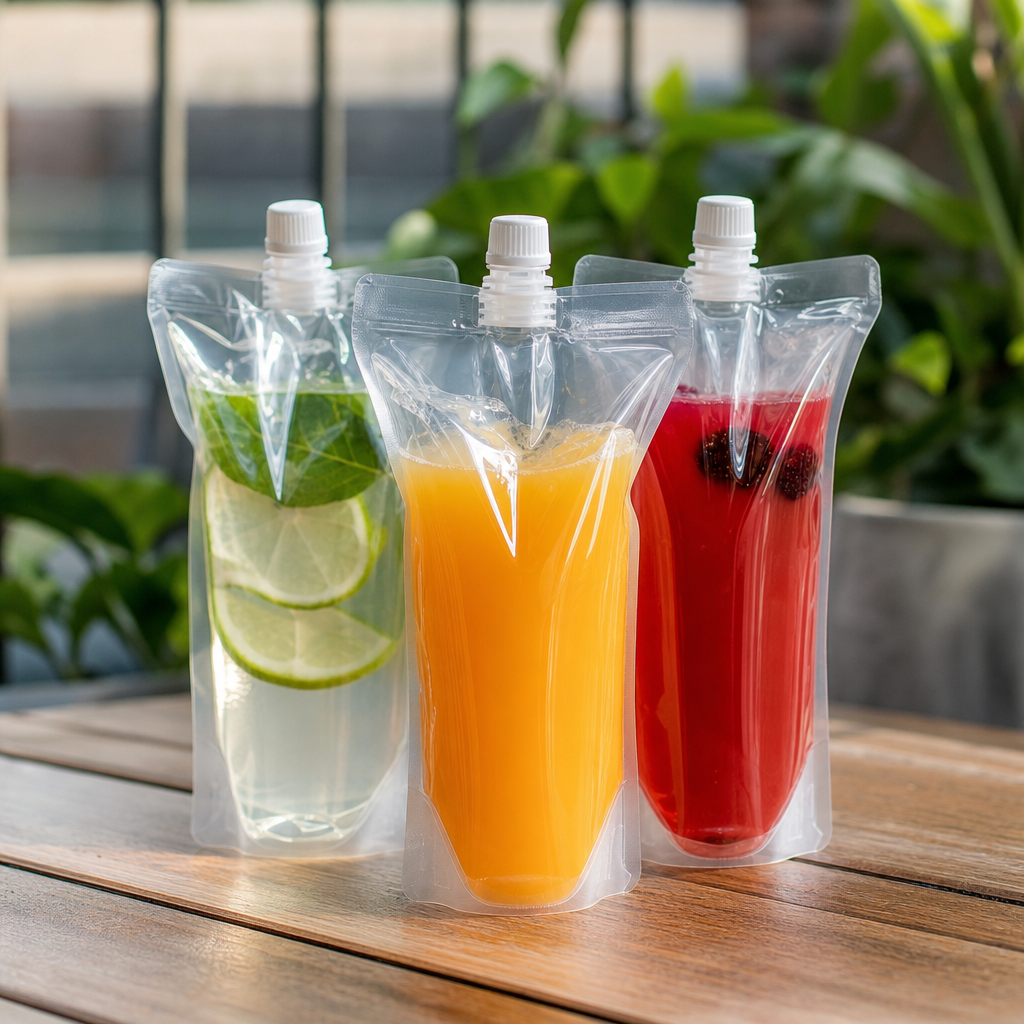
Bottle innovation gets most of the attention, but important growth is happening in flexible and hybrid beverage packaging. Spouted pouches reduce material use sharply compared with rigid bottles and can improve shipping efficiency because unfilled packs occupy less space. They are used for concentrates, children’s drinks, and on-the-go nutrition. Their weakness is recovery: most are multilayer laminates combining polyethylene, polyester, nylon, aluminum, or barrier coatings, which makes them difficult to recycle at scale. Paper-based beverage packs with polymer barriers and closures offer another route, particularly in shelf-stable dairy and juice. These systems perform well logistically, but recycling depends on specialized pulping and material separation infrastructure.
Dispensing systems are also evolving. Bag-in-box remains highly efficient for fountain syrup, wine, and foodservice beverages because it minimizes package-to-product ratio and supports bulk handling. Refillable kegs and home carbonation cylinders show how polymer components can support durable beverage ecosystems rather than disposable ones. As a packaging hub topic, the key point is that no single format wins every category. Selection depends on channel, product sensitivity, serving size, and what recovery pathway is genuinely available after use.
How beverage companies choose the right polymer packaging strategy
Effective packaging strategy starts with a disciplined specification process. Teams define product chemistry, required shelf life, filling method, distribution temperature, regulatory region, branding needs, and target cost before discussing materials. They then test candidate packages for top load, burst, drop, environmental stress cracking, seal integrity, and migration compliance under relevant standards. Carbonated soft drinks may emphasize pressure retention and creep. Cold-chain dairy may prioritize light barrier and impact resistance. Premium juice may require oxygen control and hot-fill compatibility. Sustainability goals then refine the shortlist by considering recycled content, sorting compatibility, carbon footprint, and refill potential.
The best beverage packaging programs treat packaging as a system, not an isolated container. Bottle, cap, label, secondary pack, pallet pattern, and warehouse handling all influence final performance. Brands that want durable results should audit current formats against recyclability guidance, identify lightweighting opportunities that do not undermine line efficiency, and pilot recycled-content increases with real process data rather than assumptions. If you are building or updating a packaging portfolio, use this hub as your starting point and then map each beverage type to the barrier, durability, and circularity requirements that matter most. That approach produces packaging that protects the drink, supports brand growth, and stands up to the next decade of regulatory and sustainability pressure.
Frequently Asked Questions
What are the most important polymer innovations currently shaping beverage packaging?
Some of the most important innovations in polymer-based beverage packaging involve lightweighting, barrier improvement, recyclability, and material diversification. Traditional polymers such as PET, HDPE, and PP are still central to beverage packaging, but they are now being engineered with much greater precision to meet performance and sustainability goals at the same time. For example, lightweight PET bottles use less resin while maintaining top-load strength, carbonation retention, and shelf appeal. This reduces raw material consumption, lowers transportation weight, and can improve supply chain efficiency without sacrificing package integrity.
Another major area of innovation is advanced barrier design. Beverage products are highly sensitive to oxygen ingress, carbon dioxide loss, moisture transfer, aroma scalping, and light exposure. To address this, packaging developers are using polymers like EVOH in multilayer structures, as well as plasma coatings, oxygen scavengers, and improved closure liners to extend shelf life. These technologies are especially valuable for juices, dairy beverages, functional drinks, and carbonated products, where product quality can decline quickly if packaging performance is inadequate.
Innovation is also happening in flexible and hybrid formats. Stand-up pouches, spouted pouches, refill packs, dispensing fitments, and multilayer films are expanding beyond traditional rigid bottles in certain beverage categories. At the same time, bio-based and compostable polymers are being explored for selected applications, although their use depends heavily on processing requirements, cost, product compatibility, and end-of-life infrastructure. Overall, the biggest shift is that polymer packaging is no longer being designed only for containment. It is now being engineered as a high-performance system that balances product protection, branding, manufacturing speed, consumer convenience, and circular economy expectations.
How do polymer materials like PET, HDPE, PP, and EVOH differ in beverage packaging applications?
Each polymer brings a different set of strengths, which is why material selection in beverage packaging is highly application-specific. PET, or polyethylene terephthalate, is one of the most widely used materials for beverage bottles because it offers excellent clarity, strong mechanical performance, good gas barrier properties, and compatibility with high-speed bottle manufacturing. It is especially common in water, carbonated soft drinks, ready-to-drink teas, juices, and many single-serve formats. PET also has an established recycling stream in many regions, which makes it attractive from both a performance and recovery standpoint.
HDPE, or high-density polyethylene, is often used where opacity, toughness, and chemical resistance are important. It is common in dairy drink bottles, some juice containers, and closure systems. HDPE is less transparent than PET, but it performs well in applications where light protection or a more robust feel is needed. PP, or polypropylene, is frequently used for caps, closures, dispensing components, hot-fill applications, and rigid containers that require heat resistance and hinge performance. It plays a major role in fitments, reclosable systems, and specialty beverage packaging components.
EVOH, or ethylene vinyl alcohol, is typically not used alone as a primary bottle material but as a barrier layer in multilayer packaging. Its value lies in its exceptional oxygen barrier properties, which help protect oxygen-sensitive beverages such as dairy drinks, smoothies, juices, and nutritionally enhanced products. Because EVOH can be sensitive to moisture, it is usually sandwiched between other polymer layers that protect it while preserving barrier performance. In practice, many beverage packages combine multiple polymers to achieve a target mix of shelf life, durability, cost, processability, appearance, and recyclability. That is why polymer packaging innovation often focuses less on a single material and more on smart material architecture.
How are sustainability goals influencing the development of polymer-based beverage packaging?
Sustainability is one of the strongest forces driving packaging innovation today. Beverage brands, converters, and resin suppliers are under pressure to reduce virgin plastic use, improve recyclability, incorporate recycled content, and lower the overall carbon footprint of packaging systems. As a result, many polymer packaging developments now begin with circularity targets rather than treating sustainability as a secondary design consideration. This has led to lighter bottles, tethered caps, mono-material structures, label systems designed for easier sorting, and packaging formats optimized for collection and reprocessing.
Recycled content is a particularly important area of progress. Recycled PET, or rPET, is increasingly being used in beverage bottles where regulations, food-contact approvals, and supply availability allow. Incorporating rPET helps reduce reliance on fossil-based virgin resin and supports bottle-to-bottle recycling models. At the same time, packaging designers must ensure that aesthetics, processing behavior, and mechanical properties remain within acceptable ranges. Similar attention is being given to HDPE and PP recycling streams, especially for caps, closures, and secondary beverage packaging components.
Bioplastics and bio-based polymers are also part of the conversation, but they are not a universal solution. Their environmental value depends on how the material is sourced, whether it can run on existing production lines, how it behaves in use, and what disposal or recovery systems are available in the target market. In many cases, the most sustainable packaging is not the newest polymer, but the one that delivers strong product protection with the least material, fits established recycling systems, and minimizes food or beverage waste. That is an important point, because sustainability in beverage packaging is ultimately about system performance. A package that fails to protect the beverage can create a larger environmental burden than the packaging material alone.
Why are barrier properties so critical in polymer-based beverage packaging?
Barrier properties are critical because beverages are often highly sensitive to their environment. Exposure to oxygen can degrade flavor, color, nutrients, and freshness. Loss of carbon dioxide can flatten carbonated drinks. Moisture transfer can affect powders and concentrated beverage formats, while ultraviolet light can damage sensitive ingredients in juices, dairy drinks, and fortified products. Even aroma migration can change how a beverage tastes and smells over time. Polymer packaging must therefore do much more than hold liquid. It must actively preserve product quality from filling line to consumer use.
This is where polymer engineering becomes especially important. Single-material bottles may be sufficient for some beverages, such as short-shelf-life water or rapidly distributed products, but other beverages require more sophisticated barrier systems. Multilayer structures can combine PET or PP with EVOH or other specialty materials to significantly reduce oxygen ingress. Closures may include liners or sealing technologies that improve hermetic performance. Shrink sleeves, labels, and outer wraps can also contribute to protection from light or handling damage, depending on the package design.
The required barrier level depends on the product, filling method, distribution conditions, and intended shelf life. For example, aseptic juice packs and dairy beverages often require a much higher barrier profile than still water. Carbonated soft drink packaging must retain internal pressure and minimize CO2 loss. Functional beverages with vitamins, probiotics, or plant-based ingredients may need even more controlled packaging environments. That is why barrier performance is one of the defining factors in beverage packaging innovation. It directly affects shelf stability, sensory quality, safety perception, and commercial viability.
What challenges do manufacturers face when making polymer beverage packaging more recyclable and high-performing at the same time?
The main challenge is that performance and recyclability do not always point in the same direction. High-performance beverage packaging often relies on multilayer structures, specialty additives, colored resins, full-body shrink sleeves, complex closure systems, and adhesive combinations that improve shelf life, durability, or branding impact. However, these same features can complicate sorting, washing, identification, and reprocessing in recycling systems. A package that performs extremely well during use may be harder to recover efficiently after disposal if it was not designed with end-of-life compatibility in mind.
Manufacturers therefore have to balance multiple technical priorities at once. They must protect the beverage, meet filling-line requirements, withstand transportation stresses, achieve consumer convenience, support attractive branding, comply with food-contact regulations, and still align with recycling guidelines in key markets. For example, reducing the weight of a bottle can improve sustainability metrics, but it can also affect rigidity and top-load performance. Adding barrier layers can extend shelf life, but may reduce compatibility with mono-material recycling streams. Increasing recycled content can lower virgin resin demand, but may introduce processing and color-consistency challenges if the input stream varies.
Another major challenge is infrastructure variation across regions. A package designed to be recyclable in one market may not be effectively collected or processed in another due to differences in sorting technology, deposit systems, material demand, or regulatory standards. That is why the next phase of innovation is focused on design-for-recycling at scale: clearer resin choices, detachable or wash-off labels, compatible closures, improved sorting recognition, and package architectures that preserve performance while simplifying recovery. The companies succeeding in this space are treating recyclability as an engineering requirement from the beginning, not as an afterthought added once the package design is complete.