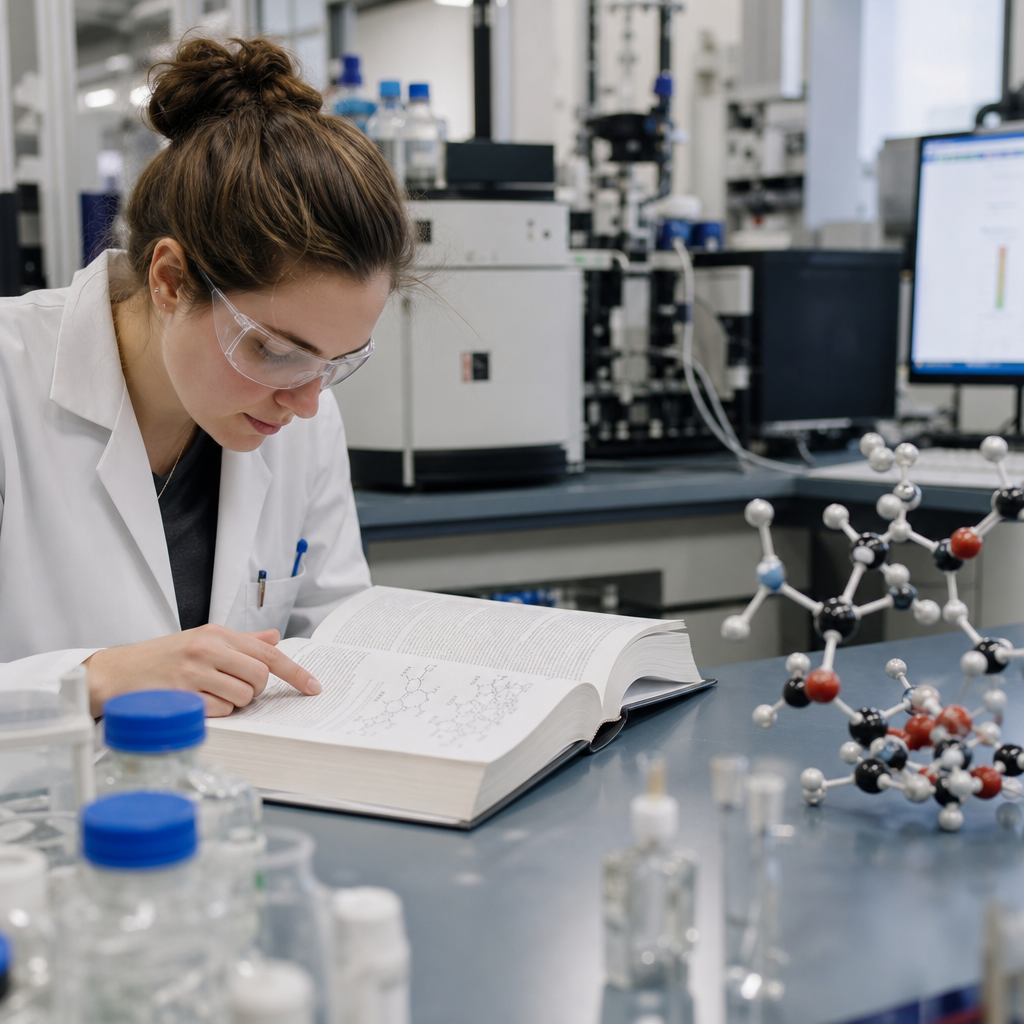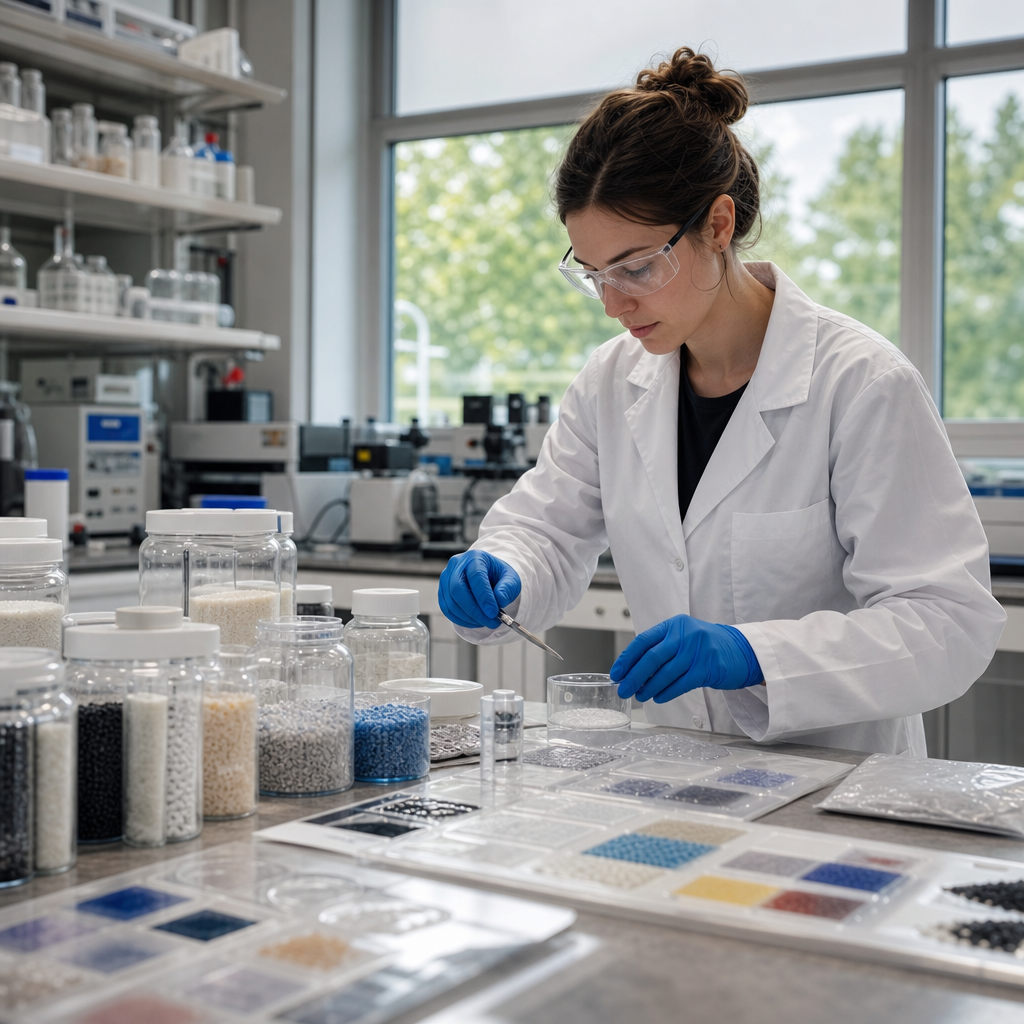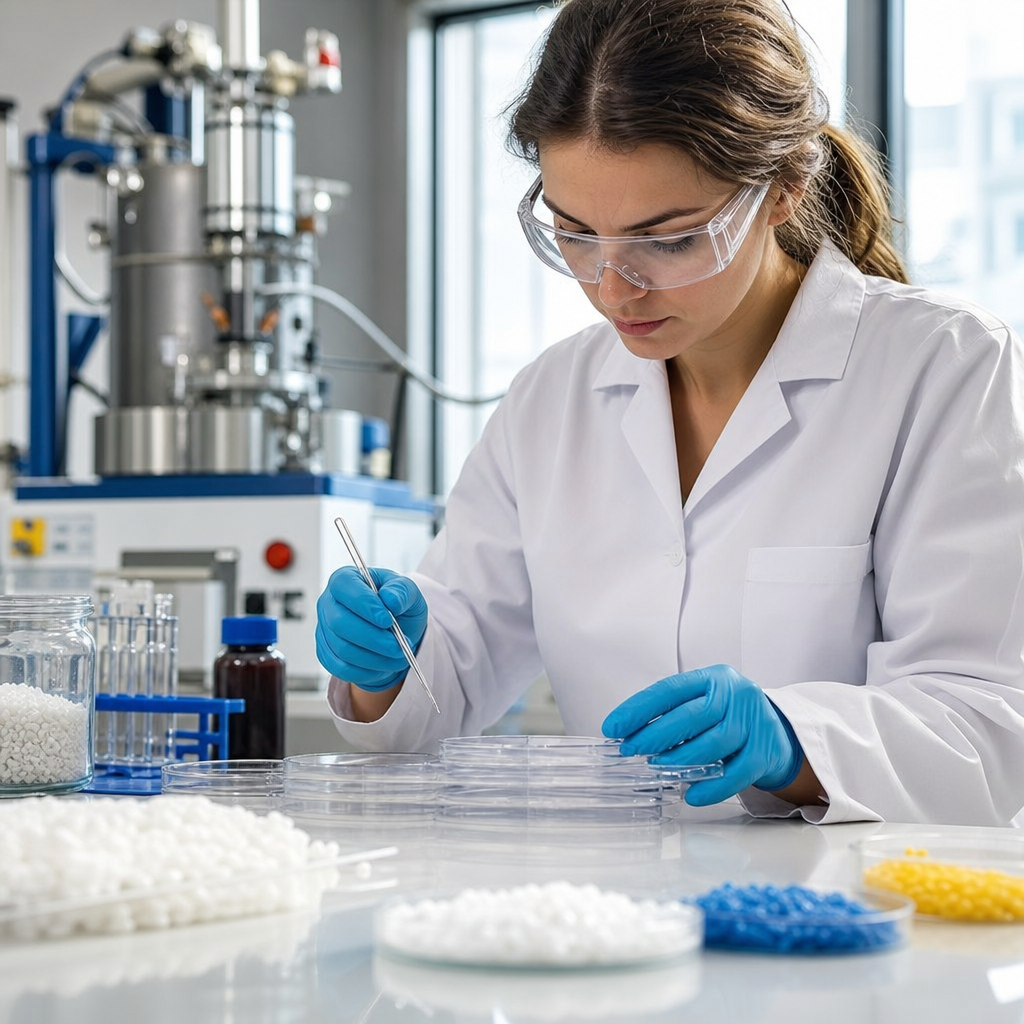
Developing a research methodology for polymer studies starts with a clear question, a defensible experimental plan, and a realistic path from raw material selection to reproducible conclusions. In polymer science, methodology means more than listing tests. It is the structured logic that connects a hypothesis about structure, processing, properties, or performance to the exact materials, instruments, controls, statistics, and reporting practices needed to answer that hypothesis credibly. Because polymers can be sensitive to molecular weight distribution, thermal history, moisture uptake, additives, and processing conditions, weak methodology produces misleading data quickly. Strong methodology, by contrast, lets a researcher distinguish signal from noise, compare formulations fairly, and publish results that other laboratories can repeat.
I have seen this difference repeatedly in academic and industrial projects. Teams often begin with a broad idea such as improving toughness, biodegradability, conductivity, barrier performance, or recyclability. The project moves faster when the methodology is built before the first sample is compounded. That planning step matters across the full research and publications workflow covered by this Educational Resources hub: literature review, question framing, experimental design, characterization, data analysis, manuscript preparation, and data stewardship. A good polymer research methodology also supports downstream articles on spectroscopy, rheology, thermal analysis, mechanical testing, microscopy, sustainability assessment, and scientific writing because it establishes the decision rules that hold the whole study together.
At its core, polymer research asks how chemistry, morphology, and processing interact. Key terms should be defined early. Structure refers to composition, architecture, tacticity, copolymer sequence, crystallinity, crosslink density, and molecular weight characteristics. Processing includes synthesis, blending, extrusion, molding, curing, annealing, solvent casting, electrospinning, and printing. Properties include modulus, strength, elongation, viscosity, glass transition temperature, melting behavior, permeability, dielectric response, and degradation rate. Performance means how those properties behave in an intended application, such as packaging, biomedical devices, coatings, membranes, structural parts, or energy storage. A sound methodology aligns all four terms rather than treating them as separate checklists.
Start with a focused research question and a testable hypothesis
The first step is narrowing the problem to one question that can be answered with available materials and instruments. “Can a nanoclay improve PLA packaging performance?” is too broad. “How does 1 to 5 weight percent organomodified montmorillonite affect oxygen transmission rate, tensile modulus, and crystallization behavior in injection-molded PLA conditioned at 23 degrees Celsius and 50 percent relative humidity?” is methodologically useful because it identifies the polymer system, additive range, sample state, response variables, and environmental condition. A related hypothesis might be that moderate nanoclay loading increases barrier performance by creating a tortuous diffusion path, while excessive loading causes agglomeration that reduces ductility.
Useful hypotheses in polymer studies are mechanistic, not merely descriptive. They explain why a change should occur. For example, if a chain extender is added to recycled PET, the hypothesis should address melt viscosity recovery through molecular weight rebuilding, not simply predict “better properties.” If a compatibilizer is used in a polypropylene and polyamide blend, the hypothesis should cite interfacial tension reduction and finer dispersed phase morphology. This level of specificity determines which characterization methods are essential. A morphology-driven hypothesis requires microscopy and rheology; a degradation hypothesis requires molecular weight analysis, mass loss tracking, and chemical spectroscopy.
The question should also define boundaries. Are you studying neat polymers, composites, blends, or networks? Is the goal screening, mechanism, optimization, or validation for application? Screening studies can tolerate broader variable ranges and lower replication at the earliest stage. Mechanistic and publication-grade studies need tighter controls, formal replication, and enough detail to separate competing explanations. When I scope a polymer project, I write one primary question, three secondary questions, and one sentence stating what evidence would falsify the hypothesis. That discipline prevents drift once data collection begins.
Build the methodology from a rigorous literature review
A polymer methodology should emerge from what is already known and what remains uncertain. Start by mapping the literature across four levels: foundational theory, standard methods, recent application papers, and conflicting results. Foundational sources include textbooks on polymer physics, viscoelasticity, crystallization, and transport phenomena. Standard methods come from ASTM, ISO, and in some biomedical contexts USP or ISO 10993. Recent papers reveal current formulations, processing windows, and characterization trends. Conflicting results are especially valuable because they often expose hidden variables such as drying conditions, residence time, or specimen orientation.
Use databases strategically. Scopus, Web of Science, PubMed for biomaterials, and Google Scholar help identify citation networks. Mendeley, Zotero, or EndNote can organize references and notes by material system, property, and test method. In practice, the strongest review matrix has columns for polymer grade, additive chemistry, processing route, sample conditioning, key instruments, standards used, statistical approach, and main findings. After building such matrices for blend compatibilization and barrier studies, I have often found that papers claiming contradictory results used entirely different molecular weights or humidity conditions. Without that context, a new study can repeat old confusion.
The review should end with a gap statement. A good gap is not “few studies exist.” It is “few studies isolate the effect of screw speed on the dispersion and elongational rheology of recycled polyethylene filled with cellulose nanofibers while holding residence time and moisture content constant.” That statement directly shapes methodology because it highlights variables that must be controlled. It also guides internal linking across this research and publications hub: one article may support citation searching, another may explain how to evaluate standards, and another may cover manuscript positioning against prior art.
Select materials, variables, controls, and analytical methods
Material definition is the backbone of reproducibility. Report the polymer trade name, supplier, grade, melt flow index or intrinsic viscosity where relevant, molecular weight information if available, filler size, surface treatment, additive package, and lot numbers when possible. Drying history matters enormously for hygroscopic polymers such as nylon, PET, PLA, and TPU. If moisture is uncontrolled, hydrolysis can change molecular weight before testing begins. Processing history matters as well. Two samples with identical chemistry but different cooling rates can show very different crystallinity, shrinkage, and impact performance.
Choose independent variables deliberately. In polymer studies these commonly include composition, molecular architecture, temperature, shear rate, cure time, orientation, humidity, UV exposure, or aging duration. Limit the number of variables unless you are using a formal design of experiments approach. The dependent variables should map directly to the hypothesis. A barrier study may require oxygen transmission rate, water vapor transmission rate, DSC for crystallinity, XRD for platelet alignment, and SEM for dispersion. A conductivity study may require four-point probe data, percolation analysis, DMA, and microstructure imaging. Avoid collecting fashionable data that do not answer the research question.
Controls are nonnegotiable. Use a neat polymer control, a processing control, and when relevant a benchmark commercial grade. For degradation work, include unaged specimens and aged blanks. For synthesis, include reactions without catalyst or crosslinker where mechanistically meaningful. Replication should occur at the specimen level and, for stronger evidence, at the batch level. Many polymer papers report five tensile bars from one batch and call that robust replication. It is not. True methodological strength comes from independent batches because compounding and molding variability can exceed specimen-to-specimen variability.
| Methodology element | What to define | Polymer example |
|---|---|---|
| Material identity | Grade, supplier, additive chemistry, moisture history | PLA 4032D dried 4 hours at 60°C before extrusion |
| Independent variable | Composition, process setting, aging condition | 0, 1, 3, and 5 wt% nanoclay |
| Control | Baseline and benchmark samples | Neat PLA and commercial high-barrier PLA tray stock |
| Characterization | Tests linked to mechanism | DSC, SEM, OTR, tensile testing |
| Replication | Specimen count and independent batches | Two compounded batches, five specimens each |
| Statistics | Comparisons, uncertainty, significance threshold | ANOVA with Tukey test at p < 0.05 |
Method selection should follow established standards whenever possible. Tensile testing often uses ASTM D638 or ISO 527. DSC procedures depend on the thermal question and must define heating and cooling rates, atmosphere, sample mass, and erase-history steps. Rheology must specify geometry, gap, strain amplitude, frequency range, and whether measurements are in the linear viscoelastic region. Microscopy requires sample preparation details, especially for cryo-fracture surfaces, conductive coatings, or staining techniques. The rule is simple: if another researcher cannot reproduce the sample state and instrument settings, the methodology is incomplete.
Design experiments, manage data quality, and plan analysis
Experimental design determines whether conclusions will be credible or merely suggestive. For one-factor studies, full replication with randomized testing order may be enough. For multivariable problems, factorial or fractional factorial designs identify main effects and interactions efficiently. Response surface methodology is useful when optimizing extrusion temperature, screw speed, and additive loading together. Mixture designs are especially relevant for ternary blends, coatings, and formulations where component fractions sum to a fixed total. These approaches reduce trial-and-error and make publication claims much stronger because effects are separated statistically rather than inferred casually.
Randomization and blocking are often overlooked in polymer labs. If all low-filler samples are molded in the morning and all high-filler samples in the afternoon, machine drift can masquerade as a composition effect. Blocking by day, operator, or instrument run can prevent that problem. Calibration should be documented for balances, universal testing machines, DSC cells, rheometers, and gas permeability instruments. Reference materials and repeat measurements help verify stability. In my own work, weekly rheometer checks with a standard oil have caught temperature-control issues before entire datasets were compromised.
Data quality starts at sample labeling and ends with version-controlled analysis files. Use consistent specimen IDs that encode batch, formulation, process condition, and test date. Store raw instrument files, not just exported spreadsheets. Keep a processing log with screw configuration, residence time estimate, melt pressure, torque, and any anomalies such as surging or die buildup. For spectroscopy and thermal analysis, save baseline and calibration information. These habits may seem administrative, but they become decisive when reviewers ask why one batch behaved differently or when months later you need to trace an outlier to an unnoticed drying failure.
Statistical planning should happen before testing. Decide whether the study aims to compare means, model a response surface, establish equivalence, or correlate structure with performance. Use confidence intervals, not only p values. Check assumptions such as normality and variance homogeneity, especially with small polymer datasets. For property correlations, avoid claiming causation from simple linear fits when the mechanism is multivariate. Sometimes principal component analysis or partial least squares regression can reveal relationships among composition, thermal transitions, rheology, and final properties more honestly. The best analysis explains uncertainty clearly and ties every statistical result back to physical meaning.
Connect methodology to publication, ethics, and reproducibility
A publishable polymer methodology does not end with experiments. It includes the reporting framework that will allow peer review and future reuse. Methods sections should follow the chronology of material preparation, processing, conditioning, characterization, and analysis. Report negative results when they affect interpretation, such as brittle fracture caused by moisture damage or void formation from solvent removal. Figures should show representative curves as well as summary statistics. If microscopy images are selected, explain why they are representative and how many fields of view were examined. Reviewers in polymer journals quickly recognize when visual evidence is anecdotal.
Reproducibility also depends on ethical publication practices. Cite standards and prior protocols accurately. Do not reuse text from earlier papers without attribution, even in routine methods. If a method was adapted, state what changed and why. For collaborative projects, define authorship based on substantial contributions to conception, experiments, analysis, or writing. Data availability statements are increasingly expected, and they are valuable. Depositing raw spectra, rheology files, or supplementary processing tables can increase trust and help other researchers benchmark their own systems. This hub’s broader research and publications guidance should therefore be treated as connected, not separate from experimental planning.
Finally, align the methodology with the practical limits of time, budget, and instrument access. An elegant plan that requires twenty characterization techniques but only two are available will fail. Prioritize methods that test the hypothesis directly, verify sample integrity, and support publication claims. For many polymer studies, a strong core set might include controlled processing, one thermal method, one mechanical method, one morphology method, and one application-specific performance test. Build from there only when the added technique answers a real question. If you are designing your next polymer project, draft the question, map the variables, select standards, and create a replication plan before making the first sample.
Frequently Asked Questions
What is the first step in developing a research methodology for polymer studies?
The first step is defining a precise research question that can be tested with measurable outcomes. In polymer studies, broad goals such as “improve strength” or “understand degradation” are not enough on their own. A strong methodology begins by narrowing the problem into a focused question tied to polymer structure, processing conditions, material composition, or end-use performance. For example, instead of asking whether a polymer blend performs better, a stronger question would ask how a specific compatibilizer concentration affects phase morphology and tensile properties under controlled extrusion conditions. This level of precision determines everything that follows, including which materials to select, which variables to control, which instruments to use, and how to interpret the results.
From there, the methodology should translate the question into a testable hypothesis and a logical experimental pathway. That means identifying independent variables, dependent variables, control conditions, and possible confounding factors such as moisture content, molecular weight distribution, thermal history, or sample preparation differences. In polymer science, small procedural changes can strongly influence outcomes, so the research plan must clearly connect the scientific question to reproducible experimental steps. A good starting point also includes a literature review to confirm what is already known, what methods are accepted in the field, and where a meaningful knowledge gap exists. When the question is clear and grounded in prior evidence, the entire methodology becomes more defensible, efficient, and scientifically credible.
How do you choose the right materials and sample preparation methods for a polymer research study?
Choosing materials and sample preparation methods requires aligning every decision with the purpose of the study. The selected polymer, additives, fillers, solvents, curing agents, or reinforcement phases should directly support the hypothesis being tested. Researchers should document material grade, supplier, batch information, molecular characteristics, purity, and any known processing sensitivities. In polymer work, these details are not minor background information; they often explain performance differences and are essential for reproducibility. If the study compares virgin and recycled polymers, thermoplastics and thermosets, or neat polymers and composites, the rationale for each material must be explicit and scientifically justified.
Sample preparation is equally important because polymer properties are highly sensitive to thermal, mechanical, and environmental history. The methodology should explain how materials are stored, dried, mixed, compounded, molded, cast, printed, or cured before testing. Parameters such as temperature profile, mixing speed, residence time, cooling rate, pressure, and specimen geometry can all affect crystallinity, orientation, residual stress, dispersion quality, and defect formation. If a study includes films, fibers, pellets, molded bars, or porous scaffolds, each preparation route should be described in enough detail that another researcher could reproduce it without guessing. Consistency matters as much as selection: using standardized conditioning procedures, minimizing contamination, and applying the same preparation logic across all sample groups helps ensure that the observed differences come from the experimental variables rather than uncontrolled handling effects.
Which characterization techniques should be included in a polymer research methodology?
The right characterization techniques depend on the exact research question, but a strong polymer methodology usually combines multiple methods to connect composition, structure, processing, and performance. If the study focuses on chemical identity or functionalization, techniques such as FTIR, NMR, or XPS may be central. If thermal behavior is important, DSC, TGA, and DMA can provide insight into glass transition, melting behavior, degradation, and viscoelastic response. For morphology and dispersion, SEM, TEM, AFM, optical microscopy, or X-ray-based methods may be needed. Mechanical performance may require tensile, flexural, impact, hardness, fatigue, or creep testing. The key is not to include every available test, but to select methods that directly answer the research question and support one another logically.
An effective methodology also explains why each technique was chosen, what standards or protocols will be followed, and how measurements will be interpreted. For instance, if a researcher claims improved interfacial adhesion in a polymer composite, it is not enough to report tensile strength alone. The methodology may need fracture surface imaging, thermal analysis, and statistical comparison to support that conclusion convincingly. Instrument settings, calibration steps, sample dimensions, test environment, scan rates, loading conditions, and replication strategy should all be reported clearly. In polymer studies, conclusions are strongest when characterization is integrated rather than isolated, meaning each test contributes to a larger evidence chain that links molecular or morphological changes to practical material behavior.
How can researchers ensure reproducibility and reliability in polymer experiments?
Reproducibility and reliability come from disciplined control of variables, transparent documentation, and sound experimental design. Polymer systems are often sensitive to humidity, temperature, shear history, impurity levels, and processing fluctuations, so researchers must identify and manage these sources of variation early. A reliable methodology includes control samples, standardized operating procedures, calibrated instruments, and consistent specimen conditioning before testing. It also defines how many replicates will be run, how outliers will be handled, and whether experiments will be repeated across different batches or days to assess stability. Reproducibility improves when each stage of the workflow, from material preparation to final analysis, is recorded with enough detail to be independently repeated.
Reliability also depends on designing experiments that separate true effects from noise. Randomization, blocking, factorial design, and controlled parameter ranges can help reduce bias and reveal interactions between variables such as filler loading, processing temperature, and cooling rate. Statistical methods should be chosen before data collection whenever possible, especially in comparative studies. Reporting averages without variability measures is rarely sufficient in serious polymer research. Standard deviations, confidence intervals, significance testing, and sample-size justification strengthen the credibility of the findings. Researchers should also acknowledge limitations openly, such as equipment constraints, narrow composition ranges, or short-term aging data. In practice, a trustworthy polymer methodology is one that produces results that are not only interesting once, but believable when repeated by the same team or by others in the field.
What should be included when reporting and justifying a polymer research methodology in an article?
A well-reported polymer research methodology should explain not just what was done, but why it was done that way. That includes the research objective, hypothesis, material selection logic, formulation details, processing route, characterization methods, control conditions, and statistical approach. Readers should be able to follow a clear chain of reasoning from the scientific problem to the final measurements. Important reporting details include polymer grade and source, additive concentrations, processing temperatures, pressures, residence times, specimen dimensions, conditioning environment, instrument models, test standards, calibration procedures, and the number of replicates. If custom methods were used, those procedures should be described fully enough to allow replication.
Justification is especially important in polymer studies because many methodological choices can influence the outcome. Authors should explain why certain processing conditions were selected, why specific tests were prioritized, and how the chosen metrics relate to the underlying hypothesis. For example, if the goal is to study barrier performance, it helps to explain how morphology, crystallinity, and permeability measurements work together to address the question. If the study aims to compare formulations, the basis for selecting composition ranges and statistical comparisons should be stated clearly. Strong reporting also includes limitations, assumptions, and any deviations from standard methods. An authoritative methodology section makes the research more than a sequence of lab steps; it shows that the study was designed thoughtfully, executed consistently, and interpreted with scientific discipline.