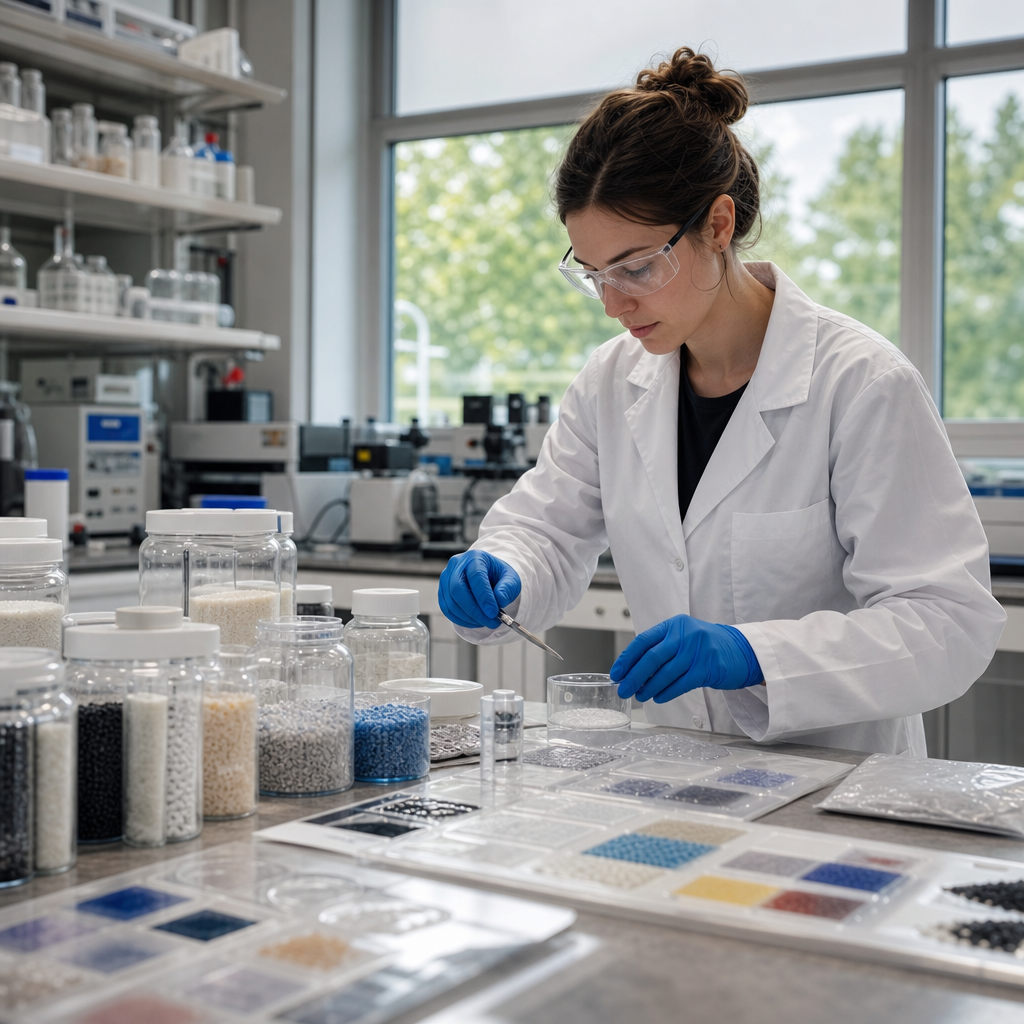
How to find job opportunities in polymer manufacturing starts with understanding how the industry is structured, which employers hire at each stage of the value chain, and what skills signal immediate value to recruiters. Polymer manufacturing includes the production, compounding, processing, testing, and commercialization of plastics, elastomers, thermosets, films, fibers, foams, adhesives, and advanced composites. It matters because polymers sit inside packaging, medical devices, cars, electronics, building materials, consumer goods, and clean-energy systems, creating a wide range of roles beyond the familiar plant-floor operator job. In my work with manufacturing teams, I have seen strong candidates miss good openings simply because they searched too narrowly, used the wrong job titles, or failed to translate lab, maintenance, quality, and safety experience into language employers recognize.
Career development in this field depends on knowing where hiring demand lives and how employers evaluate readiness. A polymer manufacturer may recruit process engineers, extrusion technicians, quality specialists, resin sales representatives, maintenance planners, EH&S coordinators, procurement analysts, R&D chemists, tooling experts, and production supervisors at the same time. Searchers who only look for “polymer engineer jobs” overlook many of these routes. This hub article explains where to search, how to read job descriptions, which certifications and skills improve your odds, and how to position yourself whether you are a student, a career changer, or an experienced professional moving into a higher-value role within the broader career development path.
Understand the polymer manufacturing job market
The polymer manufacturing job market is broad because the industry spans raw material production, formulation, conversion, finished-part manufacturing, and recycling. Large resin producers such as Dow, BASF, SABIC, LyondellBasell, Covestro, Eastman, and ExxonMobil hire chemists, process engineers, operators, and reliability specialists. Compounders and masterbatch companies need formulation technicians, color specialists, and application development staff. Converters using extrusion, injection molding, blow molding, thermoforming, calendaring, or rotational molding hire setup technicians, tooling engineers, quality leads, and plant managers. End-use manufacturers in automotive, aerospace, medical, packaging, and consumer products then recruit downstream talent who understand polymer behavior in production environments.
Geography also shapes opportunity. Gulf Coast states remain strong for petrochemicals and resin production because feedstocks, pipelines, and export infrastructure support large-scale operations. The Midwest has deep demand in automotive molding, compounding, and industrial manufacturing. The Southeast continues to grow in packaging, films, nonwovens, and appliance components. Medical polymer processing is concentrated around established life-sciences corridors, while aerospace composites cluster near major airframe and defense suppliers. If you broaden your search by region and process, the number of realistic leads increases quickly. In practice, many candidates improve their hit rate by searching for specific production methods, materials, and industries rather than relying on one generic location-based query.
Hiring demand also tracks business cycles and regulation. Packaging and essential consumer products tend to be steadier than some discretionary sectors. Automotive may fluctuate with model launches and capital spending. Sustainability initiatives are creating new roles in mechanical recycling, chemical recycling, life-cycle analysis, and circular materials sourcing. Companies facing stricter customer requirements around food contact, medical validation, traceability, and post-consumer recycled content often expand quality, compliance, and technical service teams. When you understand these drivers, you can target employers whose hiring patterns match your background and risk tolerance.
Target the right roles, titles, and employers
One of the most effective ways to find job opportunities in polymer manufacturing is to build a title map. Similar work appears under different names. A process engineer may also be listed as manufacturing engineer, operations engineer, continuous improvement engineer, or extrusion engineer. A polymer scientist may appear as materials scientist, formulation chemist, application development scientist, or product development engineer. Maintenance work may be posted as reliability technician, E&I technician, millwright, planner, or CMMS coordinator. Quality positions can include QC technician, QA engineer, metrology specialist, validation engineer, or supplier quality engineer.
Employer type matters just as much as title. Resin producers value chemical process knowledge, process safety management awareness, and large-scale continuous operations experience. Custom molders often prioritize cycle-time reduction, tool changeovers, scrap reduction, and customer responsiveness. Medical manufacturers care about validation, documentation discipline, cleanroom behavior, and familiarity with ISO 13485. Automotive suppliers lean on APQP, PPAP, PFMEA, MSA, and SPC. Packaging companies look for film structures, barrier performance, sealing behavior, printing compatibility, and line efficiency. When candidates align their applications with the employer’s operating reality, interviews improve because hiring managers can picture them solving current problems.
| Career area | Common titles | Core skills employers expect | Typical employers |
|---|---|---|---|
| Production and processing | Extrusion technician, molding technician, production supervisor | Setup, troubleshooting, OEE, scrap reduction, safety compliance | Converters, molders, film plants, packaging manufacturers |
| Engineering | Process engineer, manufacturing engineer, controls engineer | DOE, root cause analysis, scale-up, Lean, automation, validation | Resin producers, compounders, automotive and medical manufacturers |
| Quality and compliance | QA engineer, QC technician, validation engineer | SPC, CAPA, audits, MSA, documentation, standards knowledge | Medical, automotive, food packaging, regulated manufacturers |
| Research and product development | Polymer scientist, formulation chemist, applications engineer | Thermal analysis, rheology, material selection, testing, reporting | Material suppliers, additive firms, adhesives, coatings, composites companies |
| Commercial and technical service | Technical sales, account manager, field applications engineer | Customer support, product knowledge, pricing, problem solving, CRM use | Distributors, resin suppliers, equipment makers, compounders |
Use effective job search channels and industry networks
The best job search channels in polymer manufacturing combine mainstream platforms with industry-specific sources. LinkedIn is valuable for recruiter visibility, alumni connections, and following target employers. Indeed aggregates high volumes, which helps for technician and supervisor roles. Company career pages often show openings before job boards fully index them. Trade associations and technical societies can be even more useful. The Society of Plastics Engineers, American Chemical Society, SME, and regional manufacturing associations regularly expose members to events, postings, and contacts that never become broad public searches.
Industry events are still underrated. Trade shows such as NPE, Fakuma, K Show, MD&M, CAMX, and Pack Expo are not only sales venues; they are talent markets where engineers, processors, suppliers, recruiters, and hiring managers talk openly about expansion plans and hard-to-fill roles. I have seen candidates generate interviews simply by discussing a troubleshooting project at a booth with an applications manager. Plant tours, supplier open houses, university career fairs, and local SPE section meetings create lower-pressure conversations than formal interviews and often reveal which plants are adding lines, struggling with turnover, or launching new materials programs.
Recruiting firms can help, especially for midcareer technical and leadership positions. Specialized recruiters in plastics, chemicals, composites, and packaging understand salary bands, relocation realities, and which employers are serious buyers of talent. That said, do not outsource your search. Use recruiters selectively, keep a clean record of submissions, and avoid having your resume sprayed to multiple employers without context. A focused search built on direct applications, warm introductions, and credible networking usually produces stronger results than passive waiting.
Build a resume that matches manufacturing hiring signals
A strong polymer manufacturing resume is evidence-based, process-specific, and measurable. Employers want proof that you can improve throughput, quality, cost, safety, or customer satisfaction. Replace generic statements like “responsible for production support” with results such as “reduced extrusion scrap from 6.2% to 3.8% by adjusting barrel temperature profile, screen change intervals, and resin drying controls.” If you worked in a lab, specify instruments and methods: DSC, TGA, DMA, FTIR, GPC, MFI, tensile testing, Izod impact, haze, gloss, rheometry, or color measurement using CIELAB. If you worked in operations, name presses, tonnage, dies, twinscrew equipment, gravimetric blenders, chill rolls, dryers, robots, or vision systems.
Keywords matter because many employers use applicant tracking systems. Include exact terminology from the job description when truthful: injection molding, extrusion, compounding, polyurethane, PVC, PET, PP, PE, nylon, thermoset, composite layup, DOE, SPC, 5 Why, fishbone, Kaizen, Six Sigma, CAPA, IQ/OQ/PQ, OSHA, PSM, GMP, ERP, SAP, MES, and CMMS. For students and career changers, relevant projects count. A capstone on recycled polypropylene, a co-op in quality, military maintenance experience, or a food manufacturing process-improvement project can all translate if framed around equipment discipline, root cause work, documentation, and safety.
Your profile should also reflect advancement potential. Manufacturing leaders look for signs that a candidate can move from task execution to judgment. Mention cross-functional work with tooling, maintenance, procurement, quality, EHS, customer service, and suppliers. Show how you handled deviations, startup instability, customer complaints, line trials, audits, or training. These details tell employers you understand how a plant actually runs, not just how a process looks on paper.
Develop skills, certifications, and proof of readiness
Career development in polymer manufacturing is accelerated by visible competence, not just formal education. Degrees in chemical engineering, materials science, polymer science, mechanical engineering, chemistry, and industrial technology are common, but employers also hire strong candidates from community college process technology, mechatronics, and maintenance programs. For many roles, the most convincing evidence is a combination of hands-on experience and recognized methods. Lean manufacturing, Six Sigma, GD&T, PLC fundamentals, statistical process control, root cause analysis, and preventive maintenance planning all transfer well across polymer environments.
Certifications help when they signal practical capability. OSHA training supports safety credibility. ASQ certifications can strengthen quality candidates. Autodesk or SolidWorks credentials may help tooling or product-development paths. NIMS can support machining-related roles. For maintenance and controls, vendor training on Allen-Bradley or Siemens platforms is often more persuasive than a generic certificate. Lab and development candidates benefit from demonstrated instrument familiarity and strong technical writing because managers need data that can survive customer scrutiny, internal design reviews, and audits.
If you are entering the field, build a portfolio even if you are not in design. Document process experiments, troubleshooting logic, validation summaries, test methods, and improvement results. A one-page project brief explaining a warpage reduction trial, a regrind study, or a drying optimization project can make interviews much easier. It gives you something concrete to discuss and proves you can think in hypotheses, variables, controls, and outcomes.
Prepare for interviews, compensation, and long-term growth
Interviews in polymer manufacturing usually test practical reasoning. Expect questions about defects, process drift, downtime, safety incidents, and customer urgency. For injection molding, you may be asked about sink, flash, short shots, splay, warpage, or gate blush. In extrusion, questions may cover die lines, gauge variation, gels, surging, melt fracture, or poor layer adhesion. For quality roles, interviewers often want your response to an out-of-control process, an internal audit finding, or a customer complaint requiring containment and corrective action. Strong answers are structured: define the symptom, isolate variables, verify data, test causes, implement corrective action, and standardize the fix.
Compensation depends on region, shift, hazard exposure, industry, and scarcity of skills. Technicians with strong troubleshooting ability often out-earn less practical degree holders. Medical, aerospace, and advanced materials roles may pay more because documentation, validation, and customer requirements are heavier. Resin producers and large chemical sites can offer strong total rewards but may demand rotating shifts, stricter safety expectations, or relocation. Evaluate base pay alongside overtime, bonus plans, 401(k) match, health coverage, tuition support, tool allowances, and promotion pathways. A slightly lower starting salary at a well-run plant with structured development can outperform a higher salary at a chaotic site with weak leadership and constant firefighting.
Long-term growth usually comes from stacking process depth with business awareness. The most resilient careers in polymer manufacturing belong to people who can connect material behavior, equipment capability, cost, quality, and customer expectations. That can lead from operator to lead technician, from engineer to plant manager, or from technical service to commercial leadership. If you want better job opportunities in polymer manufacturing, build a target list of employers, search by process and material, tailor each application, and start conversations with people already doing the work. Consistent, informed action is what turns this industry’s hidden openings into a real career path.
Frequently Asked Questions
1. Where should I look first for job opportunities in polymer manufacturing?
The best place to start is by mapping the polymer industry by function instead of searching only by job title. Polymer manufacturing is a broad field that includes resin production, compounding, converting, extrusion, injection molding, blow molding, thermoforming, film and fiber production, rubber and elastomer processing, adhesives and coatings, composites, quality testing, product development, and technical sales. That means jobs may be posted by raw material suppliers, compounders, processors, OEM suppliers, medical device manufacturers, packaging companies, automotive manufacturers, electronics firms, and specialty materials companies. If you only search for “polymer manufacturing jobs,” you will miss many openings that are listed under production engineer, process engineer, quality engineer, materials engineer, lab technician, extrusion operator, compounding specialist, applications engineer, or R&D scientist.
A practical search strategy is to build a target list of employers across the value chain. Start with major resin and chemical producers, then add contract manufacturers, plastics processors, rubber manufacturers, composites fabricators, packaging companies, and testing laboratories. Review company career pages directly because many specialized manufacturing employers receive strong applicants through their own sites before roles spread widely across general job boards. Industry-specific associations, manufacturing directories, trade show exhibitor lists, and supplier databases are also useful because they reveal companies you may not find through broad online searches alone. This is especially important in polymer manufacturing, where many excellent employers are mid-sized regional firms with strong technical operations but relatively low consumer visibility.
You should also tailor your search by product category and process. For example, if you have experience in extrusion, target film, sheet, pipe, tubing, and profile manufacturers. If your background is in formulation, focus on compounding houses, adhesives producers, sealant manufacturers, coatings companies, and thermoset or elastomer businesses. If you want a lab-focused role, look for employers with polymer characterization, failure analysis, quality assurance, or materials validation teams. In short, the fastest route to finding real opportunities is to understand where polymer work happens, identify which segment matches your skills, and search the language employers actually use when they hire.
2. What skills do recruiters and hiring managers value most in polymer manufacturing candidates?
Recruiters in polymer manufacturing typically prioritize candidates who can show immediate relevance to production, quality, technical problem-solving, and safety. The industry values practical skills because many roles directly affect uptime, scrap rates, product consistency, compliance, and customer satisfaction. That means hiring managers often look for experience with manufacturing processes such as extrusion, injection molding, compression molding, blow molding, compounding, mixing, curing, lamination, thermoforming, coating, or fiber spinning. Even if your experience comes from a different materials environment, being able to explain how you improved process stability, reduced defects, supported scale-up, or worked cross-functionally with production and quality teams can make your background highly transferable.
Technical knowledge matters as well. Candidates stand out when they understand polymer families and how material properties relate to processing and end-use performance. Familiarity with thermoplastics, thermosets, elastomers, additives, fillers, reinforcements, rheology, thermal behavior, mechanical testing, moisture sensitivity, degradation, and compatibility can be a major advantage. Employers also pay close attention to experience with quality systems, root cause analysis, statistical process control, design of experiments, documentation, and regulated manufacturing environments, especially in medical, automotive, aerospace, electrical, and food-contact applications. Software exposure can help too, including ERP or MES systems, quality reporting tools, and in some roles CAD, simulation, or data analysis platforms.
Just as important are the skills that prove you can work effectively on a manufacturing floor or in a technical operations environment. Employers want people who communicate clearly with operators, engineers, maintenance staff, suppliers, and customers. They value candidates who can troubleshoot under pressure, follow safety protocols, manage process changes carefully, and turn technical observations into practical action. When presenting your background, focus less on generic phrases like “team player” and more on measurable outcomes such as cycle time reduction, scrap reduction, successful product launches, improved first-pass yield, faster line startups, stronger audit results, or successful transfer from lab development to production. Those concrete signals are what make recruiters confident you can add value quickly.
3. How can I tailor my resume for jobs in polymer manufacturing?
A strong resume for polymer manufacturing should be built around process relevance, materials knowledge, and business impact. Many candidates make the mistake of listing their education and responsibilities without showing how their work connects to manufacturing performance. Instead, your resume should clearly demonstrate what processes you supported, what materials you worked with, what equipment or test methods you used, and what outcomes you helped achieve. If you have polymer-specific experience, name it directly: extrusion, injection molding, compounding, rheology, DSC, TGA, tensile testing, DMA, FTIR, molding trials, formulation development, scale-up, CAPA, SPC, DOE, ISO environments, or validation support. This helps both recruiters and applicant tracking systems identify your fit quickly.
It is also important to customize your resume to the segment of the industry you are targeting. A resume aimed at a packaging film manufacturer should emphasize film extrusion, barrier materials, process optimization, gauge consistency, and quality control. A resume for medical polymers should highlight validation, clean manufacturing discipline, documentation quality, traceability, compliance awareness, and test method rigor. A resume for composites or advanced materials should feature reinforcement systems, curing behavior, structural performance, and applications knowledge. The core principle is simple: align your resume language with the employer’s materials, processes, customer requirements, and production environment.
Use bullet points that lead with action and end with results. For example, instead of saying “responsible for polymer testing,” say “performed thermal and mechanical characterization on thermoplastic compounds to support formulation changes, reducing off-spec batches and accelerating customer approvals.” If you are early in your career, academic projects, co-ops, internships, lab work, and capstone projects can be framed the same way, provided you describe them in practical, industry-oriented terms. Include certifications, safety training, lean or Six Sigma experience, and any cross-functional work with operations, maintenance, suppliers, or customers. The goal is to make your resume read like someone who understands how polymer manufacturing works in the real world, not just in theory.
4. What types of employers hire in polymer manufacturing, and how do the roles differ?
Polymer manufacturing jobs exist at every stage of the value chain, and the employer type strongly shapes the work you will do. Upstream employers include petrochemical and resin producers that manufacture base polymers such as polyethylene, polypropylene, PVC, engineering resins, and specialty materials. These companies often hire chemical engineers, polymer scientists, process engineers, plant engineers, reliability professionals, product stewards, and technical service specialists. The work can be highly process-intensive and focused on large-scale production, resin performance, safety, and supply continuity. Midstream employers include compounders, masterbatch producers, elastomer mixers, adhesive formulators, and specialty materials companies. Their roles often revolve around formulation, blending, additive performance, customer customization, and process consistency.
Downstream employers include plastics converters and component manufacturers that turn polymers into finished or semi-finished products. These may be injection molders, extrusion companies, film and sheet processors, thermoformers, blow molders, fiber producers, foam manufacturers, rubber goods makers, and composites fabricators. Here, common jobs include production supervisor, process engineer, tooling engineer, manufacturing engineer, quality engineer, lab technician, maintenance leader, plant manager, and applications engineer. The pace can be fast, and the work often ties directly to production efficiency, customer specifications, scrap reduction, tooling performance, and troubleshooting. Companies that serve automotive, packaging, healthcare, construction, electronics, and consumer goods may each emphasize different standards, tolerances, and product performance expectations.
There are also career paths in supporting organizations. Independent testing labs, certification firms, equipment manufacturers, raw material distributors, and technical consulting businesses hire people with polymer expertise. These roles may involve failure analysis, customer support, field troubleshooting, product trials, sales engineering, regulatory support, or process improvement across multiple client sites. For job seekers, this means you are not limited to working only in a plant that produces plastics or rubber. If you enjoy customer interaction, problem-solving, and variety, adjacent employers can offer excellent careers. Understanding these employer categories helps you target the right opportunities and choose the environment that best matches your strengths, whether that is deep process control, formulation science, quality systems, commercialization, or technical service.
5. How can networking help me break into polymer manufacturing or move up within it?
Networking is especially valuable in polymer manufacturing because many of the best opportunities are filled through industry relationships, referrals, supplier connections, former colleagues, and local manufacturing networks. This sector is more specialized than many job seekers realize. People tend to move between resin producers, processors, OEM suppliers, testing labs, machinery companies, and customer-facing technical roles, which means a strong professional network can uncover openings before they are widely advertised. It also helps you understand how different companies operate, what skills are in demand, and which employers are investing in growth, automation, product development, or new capacity.
The most effective networking starts with specificity. Instead of broadly asking people if they know of “any jobs in