Organizing a polymer science symposium requires equal parts scientific judgment, event operations, and community building. A successful meeting does more than reserve lecture halls and invite speakers; it creates a structured environment where researchers, students, suppliers, and industry partners can exchange results, compare methods, and form collaborations that outlast the closing session. In polymer science, that challenge is unusually complex because the field spans synthesis, characterization, rheology, processing, biomaterials, sustainability, composites, coatings, membranes, and data-driven materials discovery. A symposium that feels coherent to attendees must still accommodate this breadth.
In practice, a polymer science symposium is a focused academic or professional event built around presentations, poster sessions, panel discussions, workshops, and networking activities related to polymer research and application. It may be a standalone meeting, a specialized track within a larger materials conference, or a department-led workshop series. The “science” side includes technical rigor, peer review, and topical relevance. The “symposium” side includes scheduling, budgeting, registration, sponsorship, abstract handling, audiovisual coordination, and attendee experience. When these elements are aligned, the event becomes a platform for real knowledge transfer rather than a sequence of disconnected talks.
This guide serves as a hub for conferences and workshops within educational resources because symposium planning sits at the intersection of teaching, research development, professional training, and outreach. I have seen excellent scientific programs undermined by vague session themes, weak moderation, inaccessible poster layouts, and unrealistic budgets. I have also seen modestly funded events perform exceptionally well because organizers were disciplined about audience definition, program architecture, speaker communication, and follow-up. Whether you are planning a university symposium on polymer characterization, an industry workshop on extrusion and compounding, or a regional event on sustainable plastics, the same framework applies: set a clear purpose, design a program around attendee needs, and execute the logistics with enough detail that science remains the focus.
Define the symposium’s purpose, audience, and scope
The first decision is not venue or keynote selection. It is purpose. Ask what the symposium must accomplish that existing conferences do not. Strong answers are specific: highlight advances in recyclable thermosets, connect graduate students with polymer processing employers, train attendees on scattering methods, or create a cross-sector discussion on PFAS alternatives in coatings. Weak answers such as “bring people together” lead to unfocused agendas and low engagement because they do not guide topic selection or marketing.
Audience definition comes next. Polymer science meetings often fail when organizers assume one program can serve everyone equally. A room of synthetic chemists has different expectations from a room of mechanical engineers, analytical scientists, and medical device developers. Identify primary and secondary audiences early. Primary audiences could include principal investigators, postdoctoral researchers, graduate students, undergraduates, quality engineers, product developers, or technical sales specialists. Secondary audiences might include instrumentation vendors, funding bodies, professional societies, and technology transfer offices. Once you know who is most important, write session descriptions in language they recognize.
Scope should be broad enough to attract attendance and narrow enough to feel curated. A useful structure for a hub symposium within conferences and workshops is to organize around several recurring pillars: polymer synthesis and design, structure-property relationships, characterization methods, processing and manufacturing, sustainability and circularity, biomaterials and healthcare, and industrial applications. Those pillars help future internal resource planning as well. They allow spin-off articles, workshops, and archived recordings to connect naturally, strengthening the educational value of the event long after it ends.
Build a scientific program that balances depth and breadth
Program design is the core of symposium quality. Start with two or three anchor questions attendees urgently want answered. For example: Which analytical methods best quantify polymer degradation? How can laboratories compare rheology data across instruments? What processing decisions most affect recycled polyolefin performance? Anchor questions make abstract selection easier because each accepted contribution should clearly help answer one of them.
Session architecture matters more than many new organizers realize. In polymer science, a practical sequence often works best: begin with foundational or keynote talks, move into method-specific sessions, then application case studies, and end with a forward-looking panel. That progression lets early-career attendees build context before hearing highly specialized results. It also increases the chance that industrial participants stay engaged, because application relevance becomes explicit rather than implied.
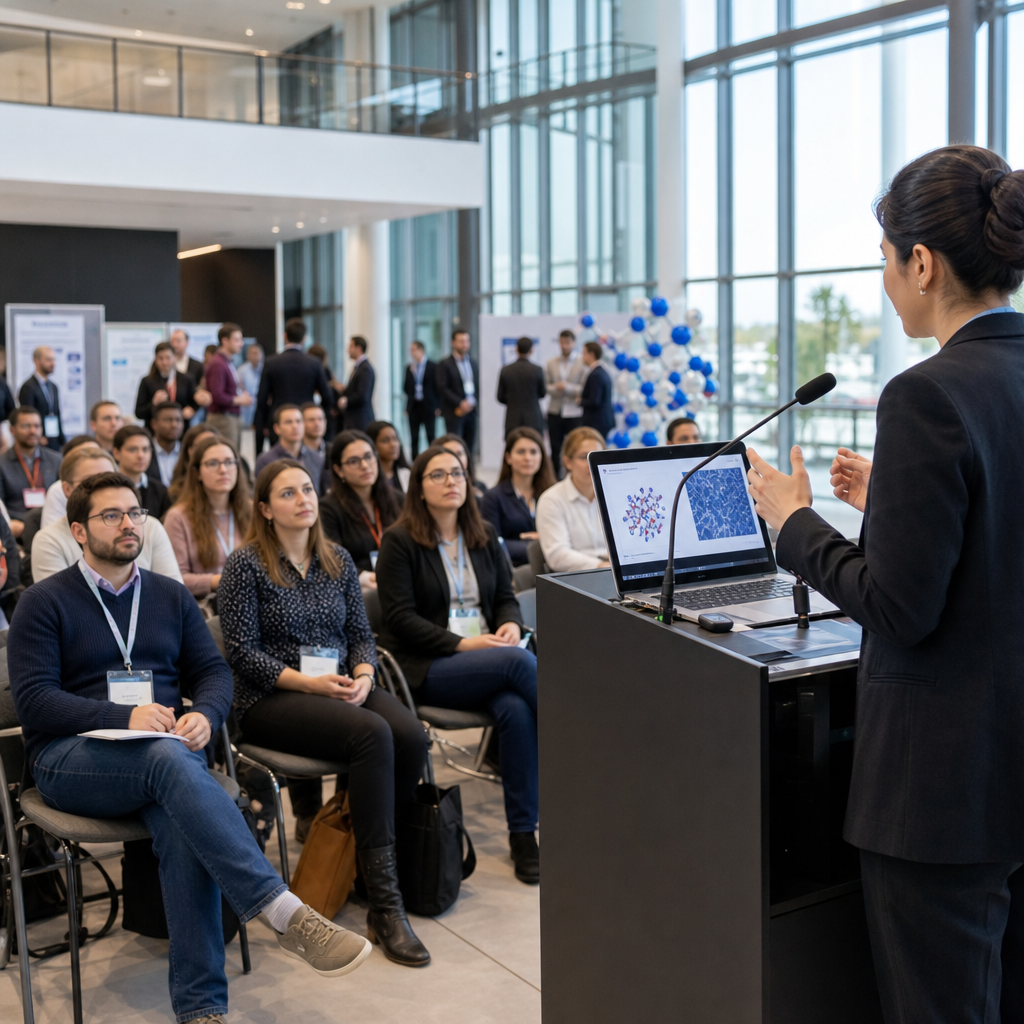
Poster sessions deserve the same care as oral sessions. They are often where students receive the most direct feedback and where interdisciplinary conversations happen naturally. Group posters by theme, provide generous viewing time without competing talks, and ask judges or session chairs to circulate intentionally. If possible, include poster flash talks of two to three minutes. In my experience, these short previews substantially improve poster traffic because attendees can quickly identify work relevant to emulsion polymerization, additive manufacturing feedstocks, membrane selectivity, or fracture behavior in elastomers.
Hands-on workshops can elevate the symposium from informative to genuinely educational. A pre-conference workshop on differential scanning calorimetry, gel permeation chromatography, dynamic mechanical analysis, or design of experiments gives attendees practical value and strengthens the event’s role as a learning hub. Workshops should have explicit learning outcomes, maximum enrollment, required prior knowledge, and clearly stated software or instrumentation needs.
| Program element | Best use in a polymer science symposium | Typical duration | Key planning note |
|---|---|---|---|
| Keynote lecture | Set field context and attract registrations | 45–60 minutes | Choose recognized experts with cross-disciplinary relevance |
| Technical session | Present focused research findings | 90–120 minutes | Group talks by method or application, not only by material class |
| Poster session | Show emerging work and support student participation | 60–120 minutes | Avoid scheduling against headline speakers |
| Panel discussion | Address controversy, standards, or future directions | 45–75 minutes | Use a moderator who can manage time and draw out disagreement |
| Workshop | Teach tools, techniques, or analysis workflows | 2–4 hours | Limit capacity and define prerequisites in advance |
Select speakers, reviewers, and moderators strategically
Speaker selection should reflect scientific merit, topical fit, and audience value. A common mistake is overloading the program with senior academics from closely related departments while neglecting industrial researchers, instrument specialists, standards experts, and rising early-career scientists. Polymer science benefits from mixed perspectives because the path from monomer selection to product performance often crosses chemistry, physics, engineering, toxicology, and regulation. A session on sustainable packaging, for instance, is stronger when it includes a polymer chemist, a converting or processing expert, a brand-owner perspective, and a researcher working on end-of-life assessment.
Abstract review should use a transparent rubric. I recommend scoring for relevance to session theme, novelty, technical rigor, clarity of methods, and likely audience interest. If student abstracts are accepted, make expectations explicit about data quality and presentation readiness. Fair review processes matter because they shape the event’s reputation. When people trust the selection criteria, they are more likely to submit stronger work next year.
Moderators are often treated as an afterthought, yet they heavily influence attendee experience. Brief them carefully. Good moderators keep talks on time, frame questions clearly, and create psychological space for junior attendees to participate. In specialized polymer sessions, they should also know enough technical background to connect talks. A moderator who can link small-angle X-ray scattering results to melt rheology or relate copolymer architecture to mechanical performance makes the session feel designed rather than accidental.
Plan logistics, budget, and sponsorship with scientific priorities in mind
Operational planning should protect scientific quality, not compete with it. Build the budget early using realistic categories: venue, catering, audiovisual, poster boards, abstract platform fees, registration processing, travel support, signage, insurance, speaker gifts, workshop supplies, recording, and contingency. Many university teams underestimate printing, labor, and last-minute equipment rentals. A contingency line of at least 10 percent is prudent.
Registration pricing should match audience segments. Students usually need lower rates and, where possible, travel awards. Industry attendees may accept higher fees if the program clearly addresses processing challenges, testing standards, scale-up issues, and vendor access. If you offer hybrid participation, price it intentionally rather than treating streaming as free to run. Reliable hybrid delivery requires microphones, cameras, moderation of remote questions, platform support, and rehearsal time.
Sponsorship works best when it is tied to defined value. Instrument companies, software providers, publishers, and materials suppliers often support polymer science events, but they respond better to concrete packages than generic requests. Offer options such as poster prizes, coffee breaks, workshop support, exhibitor tables, branded lanyards, or sponsored student travel. Protect program independence by separating sponsorship from abstract acceptance or speaking decisions. That boundary preserves credibility with attendees.
Venue selection should serve the program. Poster areas need circulation space. Workshop rooms need power, bench space, or computer access. Oral rooms need projection reliability, clear sightlines, and acoustics that support technical discussion. If your event includes demonstrations of microscopy, rheometry, thermal analysis, or extrusion-related software, confirm facility compatibility before contracts are signed. Accessibility should be nonnegotiable: step-free routes, readable signage, dietary accommodations, captioning where feasible, and schedules that allow movement between sessions without unnecessary stress.
Market the symposium as an educational hub, not just a date on a calendar
Promotion should explain why this symposium is worth attending now. The most effective event pages answer core questions directly: Who is this for? What topics will be covered? What skills or insights will attendees gain? Who is speaking? What format is offered? Clear answers improve registration decisions and help search visibility because they mirror how people actually look for conferences and workshops.
As a hub under educational resources, this page should connect visitors to related materials before and after the event. Useful linked assets include guides to writing abstracts, presenting posters, chairing technical sessions, finding travel funding, evaluating polymer characterization techniques, and choosing between conferences, workshops, and webinars for professional development. That structure turns a single symposium page into a durable reference point for the broader subtopic.
Email remains one of the highest-converting channels for scientific events, especially when messages are segmented. Send different versions to faculty, graduate students, alumni, corporate contacts, and vendors. Social promotion should feature specific session themes, named speakers, and deadlines rather than generic attendance invitations. Short clips from prior events, sample poster sessions, or testimonials from attendees in areas like coatings, biomedical polymers, or recycling technology help potential registrants picture the experience.
Run the event professionally and capture value after it ends
Execution starts weeks before opening remarks. Confirm slides, biographies, conflict disclosures, room assignments, signage, chair scripts, Wi-Fi instructions, emergency contacts, and poster numbers. Build a run-of-show document detailed enough that another organizer could step in if needed. Onsite, use a check-in system that reduces queues and a staffed help point for speaker questions, receipts, and schedule changes. Small operational improvements noticeably affect how professional the symposium feels.
During the event, monitor what attendees are experiencing, not just whether the schedule is intact. Are sessions starting late because discussion runs over? Are posters too crowded to read? Are workshop instructors moving too quickly for students? Quick interventions matter. Add overflow chairs, extend a break, move a discussion to a larger room, or remind moderators to reserve time for questions. In technical meetings, responsiveness is often remembered as strongly as the content itself.
Post-event follow-up is where a symposium becomes a true educational asset. Send slides or recordings when permissions allow. Share poster prize results, key takeaways, and links to future workshops. Collect feedback with questions tied to decisions you can actually change, such as session balance, workshop usefulness, networking quality, and registration value. Review metrics including attendance by segment, no-show rate, sponsor retention, abstract volume, and session engagement. Those data points make the next symposium better and help justify institutional support.
Organizing a polymer science symposium well means designing an environment where scientific exchange is easier, sharper, and more useful for everyone involved. Start with a clear purpose, define the audience precisely, and build sessions around real questions in polymer research and practice. Select speakers and moderators strategically, fund the event realistically, and communicate its educational value with specificity. Then execute the logistics so smoothly that attendees can focus on synthesis routes, characterization data, processing variables, and application outcomes instead of avoidable distractions.
The main benefit of a well-run symposium is not simply attendance. It is accelerated learning. Students gain exposure and feedback, researchers discover methods they can adopt immediately, industry participants identify partners, and institutions strengthen their scientific communities. When conferences and workshops are organized with this level of care, they become engines for collaboration and practical progress across the polymer field.
If you are planning your next polymer science symposium, begin by drafting the event purpose, audience segments, and three to five core session themes. Those decisions will guide every other choice and give your conference a structure people will remember for the right reasons.
Frequently Asked Questions
1. What are the first steps in planning a polymer science symposium?
The strongest polymer science symposia begin with a clearly defined purpose. Before choosing a venue or sending invitations, determine what the meeting is meant to accomplish. Some symposia are designed to highlight a fast-moving research area such as sustainable polymers, biomaterials, rheology, recycling, additive manufacturing, or advanced characterization. Others are built to connect academic researchers with industrial scientists, support student development, or create a regional networking platform. That central goal should guide every later decision, including program design, budget, audience, sponsorship strategy, and speaker selection.
Once the purpose is established, build an organizing committee with complementary expertise. In polymer science, this usually means including people who understand synthesis, processing, characterization, modeling, and application areas, along with members who can handle logistics, finance, marketing, sponsor relations, and student engagement. A symposium that is scientifically strong but operationally weak will frustrate attendees; one that is well managed but poorly curated will fail to earn credibility. The committee should define timelines early, assign clear responsibilities, and meet regularly enough to catch problems before they become expensive or public.
Next, identify the target audience with precision. A polymer science symposium may attract faculty, postdoctoral researchers, graduate students, instrument specialists, materials engineers, suppliers, and R&D teams from industry, but not every event should try to serve all groups equally. Decide whether the program is primarily research-oriented, translational, educational, or partnership-driven. That choice influences registration pricing, session formats, exhibitor opportunities, abstract policies, and even the ideal venue layout.
Finally, create a realistic planning framework. Set the date with awareness of major scientific conferences, academic calendars, grant cycles, and travel patterns. Draft a budget that includes venue costs, audiovisual support, catering, poster boards, website and registration tools, speaker travel, student awards, signage, and contingency funds. At the same time, sketch the scientific architecture of the symposium: keynote lectures, technical sessions, posters, panels, workshops, sponsor exhibits, and networking periods. When these foundational steps are done carefully, later planning becomes far more efficient and the symposium is much more likely to feel cohesive, useful, and professionally run.
2. How do you choose the right scientific themes and speakers for a polymer science symposium?
Selecting themes and speakers is one of the most important decisions in organizing a polymer science symposium because the program defines the event’s value. Start by mapping the field broadly enough to reflect polymer science as an interdisciplinary area. Depending on the event’s scope, that may include polymer synthesis, structure-property relationships, spectroscopy and microscopy, rheology, processing, composites, membranes, soft matter, biomedical polymers, sustainability, recycling, computational modeling, and commercialization. The goal is not simply to cover many topics, but to build a program that feels intellectually connected and relevant to the intended audience.
A useful approach is to identify three to six core themes rather than an unfocused list of topics. For example, a well-designed symposium might organize around circular polymer systems, advanced functional materials, scalable processing methods, and high-resolution characterization. These themes give attendees a reason to register because they can immediately see what scientific conversations the event will support. They also help potential sponsors understand whether the audience aligns with their instruments, materials, software, or services.
Speaker selection should balance scientific reputation, communication skill, topical fit, and diversity of perspective. In polymer science, a program is stronger when it includes both established leaders and emerging voices. Senior researchers can draw attendance and provide broad insight, while early-career scientists often present cutting-edge work and energize discussion. It is also wise to include a mix of academia, national laboratories, and industry. Industrial speakers are especially valuable because they bring practical constraints, scale-up experience, regulatory considerations, and manufacturing perspectives that academic audiences may not regularly hear.
Beyond scientific credentials, pay attention to representation across institutions, career stages, geographies, and backgrounds. A symposium should reflect the community it hopes to build, not just the most visible names in a narrow network. Create transparent criteria for invitations and abstract selection, and avoid clustering similar speakers in ways that make the program repetitive. Strong moderation also matters. Session chairs should be able to keep time, ask informed questions, and encourage useful discussion. In the best polymer science symposia, attendees leave feeling that the program was not only impressive, but intentionally curated to advance the field and spark new collaborations.
3. How can organizers balance scientific quality with event logistics and budget constraints?
Balancing scientific quality with logistics and budget is where symposium planning becomes most practical. A high-level polymer science event does not need to be extravagant, but it does need to be reliable, comfortable, and thoughtfully structured. Begin with a budget that separates essential expenses from optional enhancements. Essential costs typically include venue rental, audiovisual equipment, registration software, catering, signage, poster infrastructure, staffing, and basic speaker support. Optional items might include printed materials, premium receptions, branded merchandise, or upgraded décor. Knowing the difference helps organizers protect the scientific mission when costs rise unexpectedly.
Venue choice is especially important. Polymer science symposia often require more than a lecture hall. You may need poster areas with strong traffic flow, exhibitor tables with power access, rooms for parallel sessions, spaces for informal networking, and technical support for detailed presentations containing spectra, microscopy images, processing data, and videos. A cheaper venue can become expensive if it lacks connectivity, projection quality, accessibility, or the layout needed for smooth movement between sessions. In many cases, a slightly higher venue cost produces a better attendee experience and reduces operational stress.
Budget control also improves when the program is designed strategically. Instead of overloading the schedule with too many invited talks, consider a structure that combines a few high-impact keynote lectures with contributed talks, poster sessions, and moderated panels. Poster sessions are particularly valuable in polymer science because they allow deep technical exchange and give students and early-career researchers visibility. They are also cost-effective compared with expanding the number of plenary-style presentations. Similarly, networking breaks should not be seen as wasted time; they often deliver some of the greatest value of the meeting by encouraging scientific conversations and sponsor interaction.
Sponsorship can help close budget gaps, but it works best when approached as a partnership rather than a request for funds. Instrument manufacturers, materials suppliers, publishers, software companies, and testing service providers often support polymer-focused events when they can access a relevant audience in a professional setting. Offer clear sponsor packages that include visibility, exhibit space, acknowledgment in promotional materials, and opportunities to engage appropriately with attendees. At the same time, maintain scientific independence. Sponsors should support the event, not control the content. When organizers preserve that balance, they can protect credibility while still building a financially sustainable symposium.
4. What makes networking and community building effective at a polymer science symposium?
Effective networking at a polymer science symposium does not happen automatically just because smart people are in the same building. It requires intentional design. Polymer science is a broad field that includes synthetic chemists, materials scientists, chemical engineers, physicists, application specialists, and commercial partners, all of whom may use different terminology and approach similar problems from different angles. A good symposium creates repeated, low-friction opportunities for these groups to interact in meaningful ways rather than limiting contact to brief hallway exchanges.
One of the best ways to support community building is to design the schedule so that conversation is not squeezed out. If sessions run continuously without breaks, attendees rush from room to room and miss the informal discussions that often lead to collaboration. Well-timed coffee breaks, poster sessions, lunches, and evening receptions give people space to compare methods, discuss data, ask follow-up questions, and make introductions. In polymer science, those moments are especially useful because collaborations often depend on complementary expertise, such as pairing synthesis capabilities with advanced characterization tools or linking academic discovery to processing and scale-up knowledge in industry.
Structured networking formats can be even more effective than open mingling alone. Consider student-mentor roundtables, topic-based discussion tables, early-career meetups, or short moderated sessions that connect researchers around themes such as sustainable materials, biomaterials, rheological analysis, or industrial translation. These formats reduce social barriers and make it easier for first-time attendees, students, and international participants to engage. They also help prevent the event from becoming too insular, where only established colleagues speak to each other.
Community building also depends on culture. Organizers should set clear expectations for professionalism, inclusion, and respectful discussion. Session chairs can model this by inviting questions from a range of participants and ensuring that discussions remain constructive. Recognition matters too. Highlighting student posters, emerging investigators, and collaborative projects signals that the symposium values future contributors, not just senior experts. When attendees feel welcomed, seen, and able to participate, the symposium becomes more than a sequence of talks. It becomes a place where the polymer science community strengthens itself and lays the groundwork for ongoing partnerships.
5. How do you measure the success of a polymer science symposium after it ends?
Measuring success requires looking beyond attendance numbers. A polymer science symposium can have a full room and still fall short if the scientific program lacked coherence, the logistics created frustration, or attendees left without meaningful connections. Start with quantitative indicators such as registration totals, attendance by sector, abstract submissions, poster participation, sponsor retention, budget performance,