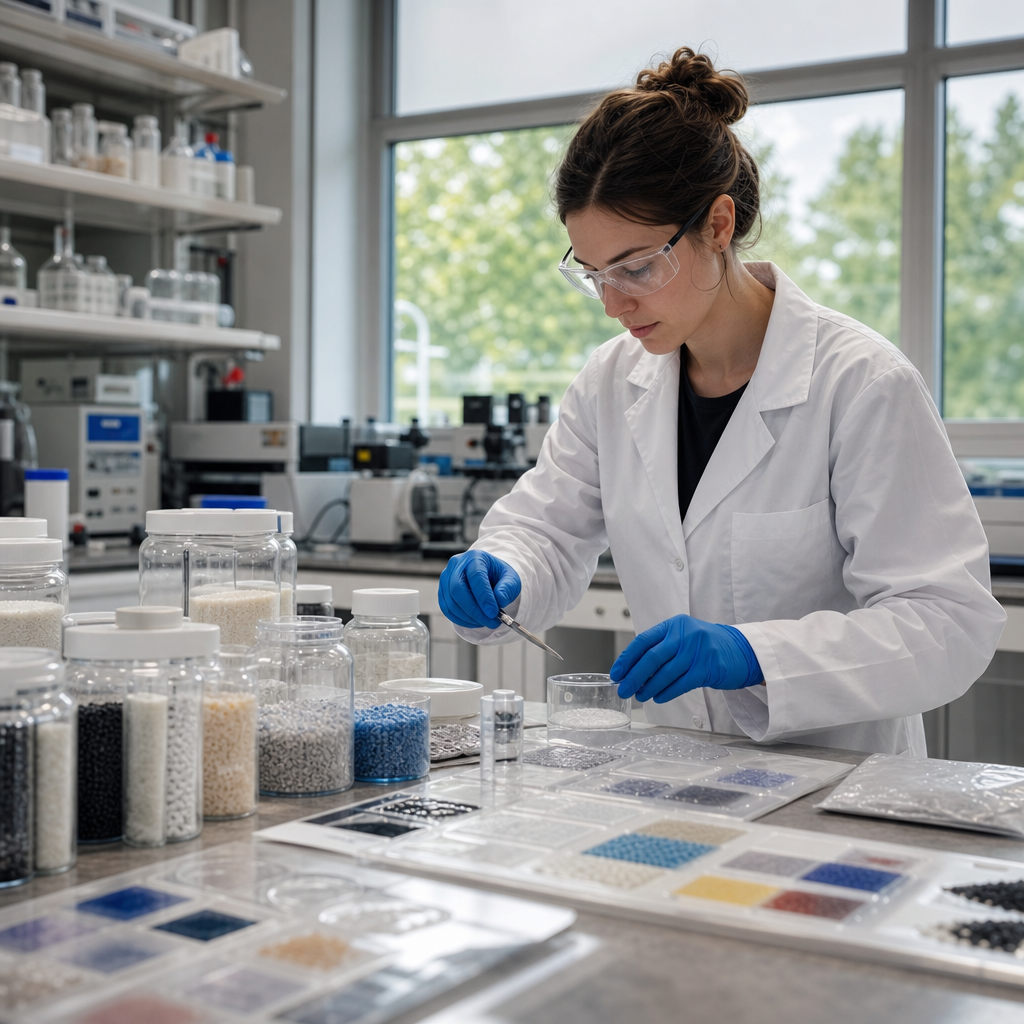
Staying current with polymer research trends is essential for scientists, engineers, product developers, and technical leaders because polymer science changes quickly across materials, processing, sustainability, and regulation. In practice, “staying current” means more than scanning headlines or reading a few abstracts. It means building a repeatable system for tracking new publications, understanding which findings matter, separating durable advances from short-term noise, and translating research into better decisions in the lab, classroom, and manufacturing environment. Polymer research trends include emerging monomer chemistries, improved characterization methods, additive manufacturing feedstocks, bio-based materials, circular design strategies, recycling pathways, and performance models that connect structure, processing, and properties. This matters because polymers sit at the center of packaging, medical devices, automotive lightweighting, electronics, energy storage, membranes, coatings, adhesives, and countless consumer products. A researcher who misses a major shift in catalyst design, rheology measurement, or end-of-life policy can lose time, funding, and competitive advantage. I have seen teams spend months optimizing formulations that had already been superseded by better approaches published in specialized journals and conference proceedings. The opposite is also true: teams that follow the literature well identify promising directions earlier, ask sharper questions, and avoid repeating known dead ends. This article serves as a hub for research and publications within educational resources, showing how to monitor the right sources, evaluate evidence, organize information, and turn new polymer knowledge into practical action.
Start with the Core Sources That Shape Polymer Research
The most reliable way to stay current with polymer research trends is to begin with the sources that consistently publish primary findings and authoritative reviews. For polymers, that means peer-reviewed journals, conference proceedings, society publications, preprint servers where appropriate, government and standards bodies, patent databases, and technical newsletters from respected institutions. Researchers often start with broad publishers such as ACS Publications, Wiley, Elsevier, Springer Nature, and the Royal Society of Chemistry, then narrow into journals such as Macromolecules, Polymer, Progress in Polymer Science, Biomacromolecules, Journal of Applied Polymer Science, and Polymer Degradation and Stability. If your work touches composites, membranes, biomedical materials, or rheology, you also need adjacent journals because important polymer advances frequently appear outside polymer-only titles.
Society and conference channels matter just as much as journals. The American Chemical Society, the Materials Research Society, SPE, and the American Physical Society all host meetings where new data appears months before final journal publication. In my own monitoring workflow, conference programs are often early warning systems. A cluster of sessions on chemical recycling, vitrimer networks, solid-state batteries with polymer electrolytes, or machine learning for polymer design usually signals a trend before citation counts catch up. Standards organizations also influence research direction. ASTM and ISO methods shape how materials are tested, compared, and accepted by industry, while agencies such as the EPA, FDA, ECHA, and NIST can change what problems researchers prioritize. For a sub-pillar hub focused on research and publications, these source categories form the backbone of any serious current-awareness strategy.
Use a Structured Monitoring System Instead of Casual Reading
Most people fall behind not because information is unavailable, but because they rely on memory and occasional browsing. A better approach is a layered monitoring system with weekly, monthly, and quarterly habits. Weekly, review journal alerts, keyword alerts, and saved searches in databases such as Scopus, Web of Science, Google Scholar, and SciFinder. Monthly, read at least one high-quality review article or perspective that synthesizes a fast-moving topic. Quarterly, step back and map what has changed: which subfields are accelerating, which methods are becoming standard, and which claims are being repeated without strong replication. This cadence keeps you informed without drowning in papers.
Keyword strategy is critical. Generic alerts for “polymer” produce noise, while carefully designed search strings surface useful work. Effective terms combine material class, process, property, and application. For example: “reprocessable epoxy vitrimer rheology,” “polyolefin compatibilization reactive extrusion,” “bio-based polyamide barrier properties,” or “solid polymer electrolyte ionic conductivity interface stability.” Include synonyms and abbreviations because terminology varies across chemistry, chemical engineering, and materials science. I also recommend maintaining separate alert buckets for frontier topics, methods, and regulations. A regulation alert on PFAS, food contact compliance, or packaging recyclability can be just as important as a new synthesis paper because external constraints often redirect research faster than purely academic trends.
| Monitoring Layer | What to Track | Recommended Tools | Best Frequency |
|---|---|---|---|
| Primary literature | New experimental papers, reviews, perspectives | Scopus, Web of Science, Google Scholar, journal alerts | Weekly |
| Conferences | Programs, abstracts, keynote themes, award sessions | ACS, MRS, SPE, Gordon Conferences | Monthly in season |
| Patents | Applied formulations, process claims, competitive direction | Google Patents, Espacenet, WIPO | Monthly |
| Standards and regulation | Test methods, compliance shifts, environmental requirements | ASTM, ISO, EPA, FDA, ECHA | Monthly |
| Trend synthesis | Citation growth, recurring keywords, emerging consensus | VOSviewer, Dimensions, Connected Papers | Quarterly |
Know Which Polymer Research Trends Deserve Attention
Not every active topic is equally important. The strongest polymer research trends usually sit where scientific novelty, industrial need, and regulatory pressure intersect. Sustainability is the clearest example. Research on mechanical recycling, chemical recycling, design for disassembly, compostable materials, and bio-based feedstocks is expanding because packaging mandates, corporate targets, and consumer scrutiny all demand better material lifecycles. However, serious readers should distinguish between truly circular solutions and narrow demonstrations. A depolymerization study on a clean model polymer under ideal conditions may be scientifically interesting but commercially distant. A paper showing compatibility with mixed waste streams, realistic contamination, energy balance, and property retention is usually far more consequential.
Another high-value trend area is advanced structure-property-processing relationships. Polymer science has always depended on the connection between molecular architecture, morphology, and performance, but the tools are becoming more powerful. Researchers now combine DSC, TGA, DMA, FTIR, NMR, SAXS, WAXS, rheometry, and microscopy with statistical modeling or machine learning to predict outcomes faster. In practical terms, this means better control of crystallinity, phase separation, viscoelastic response, barrier behavior, and long-term durability. In industry, I have seen enormous gains when teams stop chasing formulation changes blindly and instead use a tighter characterization framework tied to processing conditions. Additive manufacturing, polymer electrolytes, self-healing networks, high-performance thermoplastics, and low-carbon feedstocks are also worth close attention because they are influencing both publications and investment decisions.
Read Papers Critically and Extract What Actually Matters
Staying current is not the same as reading more papers. It means reading papers well. Start with the question the paper is trying to answer, then evaluate whether the methods, controls, and comparisons support the conclusion. In polymer research, many impressive claims weaken under closer inspection because processing history, moisture content, molecular weight distribution, residual solvent, specimen conditioning, or test geometry are not adequately controlled. A tensile strength improvement means little if the baseline is poorly defined. A recycling study is incomplete if it reports one reprocessing cycle without tracking discoloration, chain scission, melt flow, or impact resistance over repeated loops. A biodegradation claim is not enough unless the environment, standard, timeframe, and degradation metrics are explicit.
I advise students and technical teams to extract five items from every important paper: the material system, the key method, the benchmark used for comparison, the main limitation, and the practical implication. This prevents passive reading. It also helps when discussing papers with colleagues across disciplines. For instance, a chemist may focus on functionalization yield, while a processing engineer cares more about melt stability and throughput. A good current-awareness practice turns each paper into an actionable note. If a paper cannot tell you what changed, how it was measured, and why it matters, it should not drive a strategic decision. Reviews are useful for orientation, but primary papers remain essential because they reveal experimental detail, caveats, and data quality that summaries often flatten.
Use Citation Networks, Patents, and Reviews to See Where the Field Is Moving
Trend detection improves when you look beyond isolated papers and examine how ideas spread. Citation networks show whether a topic is deepening into a durable field or fading after initial excitement. Tools such as VOSviewer, Connected Papers, and Dimensions can reveal clusters around specific materials, methods, or applications. If you see repeated connections between dynamic covalent networks, reprocessability, stress relaxation, and industrial thermosets, that signals a coherent area rather than a one-off novelty. Citation growth also helps identify influential review articles that define terminology and frame the next wave of research questions.
Patents provide a different but equally valuable lens. In polymers, patents often expose where companies believe scale-up or market relevance is realistic. A surge in patents around multilayer barrier films, compatibilizers for recycled polyolefins, flame-retardant formulations, or battery binders suggests commercial pressure. The key is to compare patent claims with journal claims. If academic papers promise a major advance but patents remain sparse, commercialization may still be immature. Conversely, heavy patenting with modest publication activity can indicate a strategically important area developing behind corporate walls. Reviews, roadmaps, and agency reports help connect these signals. They answer practical questions: Is this chemistry scalable? Are the feedstocks available? Does it align with existing equipment? Are there toxicity, cost, or regulatory constraints? That broader context keeps your interpretation grounded.
Build a Personal Knowledge System That Turns Information into Decisions
The final step in staying current with polymer research trends is creating a knowledge system you will actually use. I recommend a searchable reference manager such as Zotero, Mendeley, or EndNote paired with a notes database in Notion, Obsidian, or OneNote. Organize entries by topic, polymer family, method, property, and application rather than by journal alone. Tag papers with terms such as “recycling,” “rheology,” “barrier,” “crosslinking,” “lithium battery,” or “food contact.” Add a short plain-language summary and one sentence on why the paper matters. This sounds basic, but it is the difference between collecting PDFs and building working intelligence.
Make your system collaborative when possible. Journal clubs, lab meetings, cross-functional technical reviews, and annotated reading lists help knowledge spread faster. In one development program I supported, a monthly polymer research digest reduced duplicate experiments because chemists, analysts, and process engineers were all seeing the same curated evidence. Internal linking across related educational resources also strengthens understanding. A hub page on research and publications should connect readers to focused articles on literature searching, patent analysis, conference strategy, peer review, and citation mapping. The main benefit is clarity: you stop reacting to scattered information and start recognizing patterns early. Stay disciplined, review your sources regularly, and refine your tracking method as the field evolves. If you want to stay relevant in polymer science, build your monitoring system this week and use it consistently.
Frequently Asked Questions
What is the most effective way to stay current with polymer research trends without getting overwhelmed?
The most effective approach is to build a structured monitoring system instead of relying on occasional reading. Polymer science moves across multiple fronts at once, including synthesis, characterization, processing, recycling, bio-based feedstocks, additive manufacturing, composites, regulatory change, and application-specific performance. Because of that, trying to “keep up with everything” usually leads to information overload. A better strategy is to divide your tracking into tiers. In the first tier, follow a small group of core journals, major conference proceedings, and trusted professional societies that consistently publish high-value polymer research. In the second tier, monitor adjacent areas such as coatings, elastomers, biomaterials, packaging, energy materials, and sustainability, depending on your work. In the third tier, scan broader signals such as patents, standards updates, government funding priorities, and industrial announcements.
It also helps to create a weekly and monthly routine. Weekly, review alerts, saved searches, and selected newsletters for new papers or regulatory developments. Monthly, step back and ask what themes are repeating. Are more researchers focusing on circularity, PFAS alternatives, chemical recycling, high-barrier materials, or AI-assisted materials discovery? That pattern recognition is where real trend awareness begins. To keep the process manageable, use filters based on material family, end-use sector, processing method, or performance property. For example, a packaging scientist may prioritize barrier performance, food-contact compliance, and recyclability, while an automotive engineer may prioritize thermal stability, lightweighting, and manufacturability. Staying current is not about consuming the most information. It is about consistently capturing the most relevant signals and revisiting them often enough to recognize meaningful change.
Which sources should I rely on to track important developments in polymer science and engineering?
The strongest source mix includes peer-reviewed journals, conference activity, patent literature, standards organizations, regulatory agencies, and industry-facing technical media. Peer-reviewed journals remain the foundation because they provide the most rigorous documentation of new polymer chemistry, processing methods, structure-property relationships, and analytical techniques. However, journals alone are not enough. Many commercially important developments appear first in patents, conference presentations, or supplier technical bulletins before they become widely discussed in academic literature. If your goal is to understand where polymer research is heading in practice, not just in theory, you need visibility into both scientific and market-facing channels.
Professional societies and conference organizers are especially valuable because they reveal what the field is discussing in real time. Session topics, keynote themes, and workshop agendas often show emerging priorities before they are obvious from published papers. Standards bodies and regulatory agencies are equally important because polymer innovation is increasingly shaped by compliance requirements involving recyclability, chemical restrictions, emissions, product safety, and end-of-life management. Technical newsletters, market reports, and specialized publications can also help interpret developments through an application lens, which matters when you need to connect laboratory findings to manufacturing or product development decisions.
The key is not to treat all sources as equal. A peer-reviewed article may be scientifically credible but commercially distant. A patent may indicate strategic intent but not practical performance. A conference abstract may be timely but incomplete. A regulatory proposal may not be final but can still reshape research priorities immediately. The most reliable trend tracking comes from triangulation. When the same theme appears in published research, conference programming, patent filings, and regulatory discussion, it is usually a signal worth paying attention to.
How can I tell whether a new polymer research trend is truly important or just short-term hype?
This is one of the most important skills in staying current. Not every highly visible topic becomes a durable trend, and not every meaningful advance receives immediate attention. To separate real momentum from hype, start by asking whether the research solves a persistent problem that matters technically, economically, or environmentally. In polymer science, durable trends usually address clear needs such as improved recyclability, lower carbon footprint, better heat resistance, faster processing, reduced additive migration, improved compatibility in blends, or compliance with tightening regulations. If a research topic has strong relevance to one or more of those pressures, it is more likely to matter over time.
Next, look for repeatability across sources and institutions. A single paper with impressive performance claims may be interesting, but a true trend usually shows up in multiple labs, with different methods, across different application areas. Pay close attention to whether the reported gains hold up under realistic conditions. For example, a new polymer formulation may perform well in controlled laboratory testing but fail when exposed to scale-up constraints, cost targets, moisture sensitivity, processing windows, or recycling streams. You should also evaluate whether the work depends on scarce raw materials, expensive catalysts, complex purification steps, or difficult manufacturing conditions. Those factors often determine whether a result can move from publication to use.
Another useful test is timeline relevance. Some trends are strategically important even if they are not immediately commercial. Others are overpromoted because they are easy to communicate but hard to implement. A practical framework is to sort developments into short-term, medium-term, and long-term categories. Short-term trends may affect material selection or formulation decisions now. Medium-term trends may shape pilot programs, supplier strategy, or R&D investment over the next few years. Long-term trends may matter for exploratory research, partnerships, or technology scouting. By classifying research this way, you avoid dismissing promising work too early while also resisting the urge to overreact to every headline.
How do I turn polymer research updates into useful decisions for product development, manufacturing, or strategy?
Research only becomes valuable when it is translated into decisions, experiments, or strategic action. The best way to do that is to create a simple evaluation framework that connects each new development to your organization’s goals. When you review a paper, conference presentation, or patent, do not just ask whether it is interesting. Ask what problem it addresses, what properties it improves, what tradeoffs it introduces, how mature the technology appears to be, and where it might fit in your current projects or future roadmap. In polymer work, tradeoffs are often decisive. A material may improve toughness but reduce clarity. A processing aid may boost throughput but complicate recycling. A bio-based resin may support sustainability goals but create supply or performance challenges. Useful tracking means documenting those tradeoffs clearly.
It is also smart to maintain a searchable internal trend log. For each item, record the source, date, material system, application area, claimed benefit, known limitations, and possible implications for your work. Over time, this creates an institutional memory that is far more useful than scattered bookmarks or unread PDFs. It allows teams to revisit topics as business priorities shift. A development that seems irrelevant today may become highly relevant once a customer asks for lower environmental impact, a regulation changes, or a manufacturing bottleneck appears. Technical leaders can use this log to identify recurring themes, decide where to invest test resources, and determine when a topic has moved from early curiosity to serious evaluation.
Cross-functional discussion is equally important. Polymer trends should not stay confined to scientists alone. Engineers, quality teams, regulatory specialists, procurement professionals, and product managers often see different implications in the same research update. A new flame-retardant approach, for instance, may have formulation promise, but its real significance depends on cost, supply continuity, toxicological profile, and compatibility with production equipment. Turning research awareness into business value requires regular review sessions where technical findings are translated into application, risk, and opportunity language that decision-makers can act on.
How often should I review polymer research trends, and what should a sustainable long-term process look like?
A sustainable process is one you can maintain consistently for months and years, not just during a burst of enthusiasm. For most professionals, a layered cadence works best. A light weekly review helps you stay aware of new publications, conference announcements, and regulatory updates without interrupting core responsibilities. A deeper monthly review allows you to group signals into themes, compare claims across sources, and update priority areas. A quarterly strategic review is useful for identifying which topics deserve closer experimentation, partnership outreach, supplier conversations, or leadership attention. This rhythm keeps you informed while creating enough distance to recognize which developments are truly gaining momentum.
Your process should also evolve with your role. A bench scientist may need detailed awareness of methods, data quality, and mechanisms. A product developer may focus more on application relevance, manufacturability, and performance tradeoffs. A technical leader may spend less time on individual papers and more time on directional trends, competitive implications, and risk exposure. The underlying principle is the same for all three: define what matters, monitor it systematically, document what you learn, and revisit your assumptions regularly. Polymer research is too dynamic for passive tracking. A repeatable process creates continuity and helps prevent important developments from being missed simply because they arrived at a busy moment.
Finally, remember that staying current is not a one-person activity forever. The strongest organizations distribute the responsibility. Different team members can monitor different subtopics such as sustainable materials, processing innovations, additives, durability testing, or compliance trends, then share concise summaries internally. This not only reduces workload but also improves interpretation because polymer advances often have implications that cut across specialties. Over time, a disciplined review process becomes a competitive advantage. It helps teams spot meaningful changes earlier, make better R&D choices, reduce reaction time to regulatory or market shifts, and turn scientific awareness into smarter materials decisions.