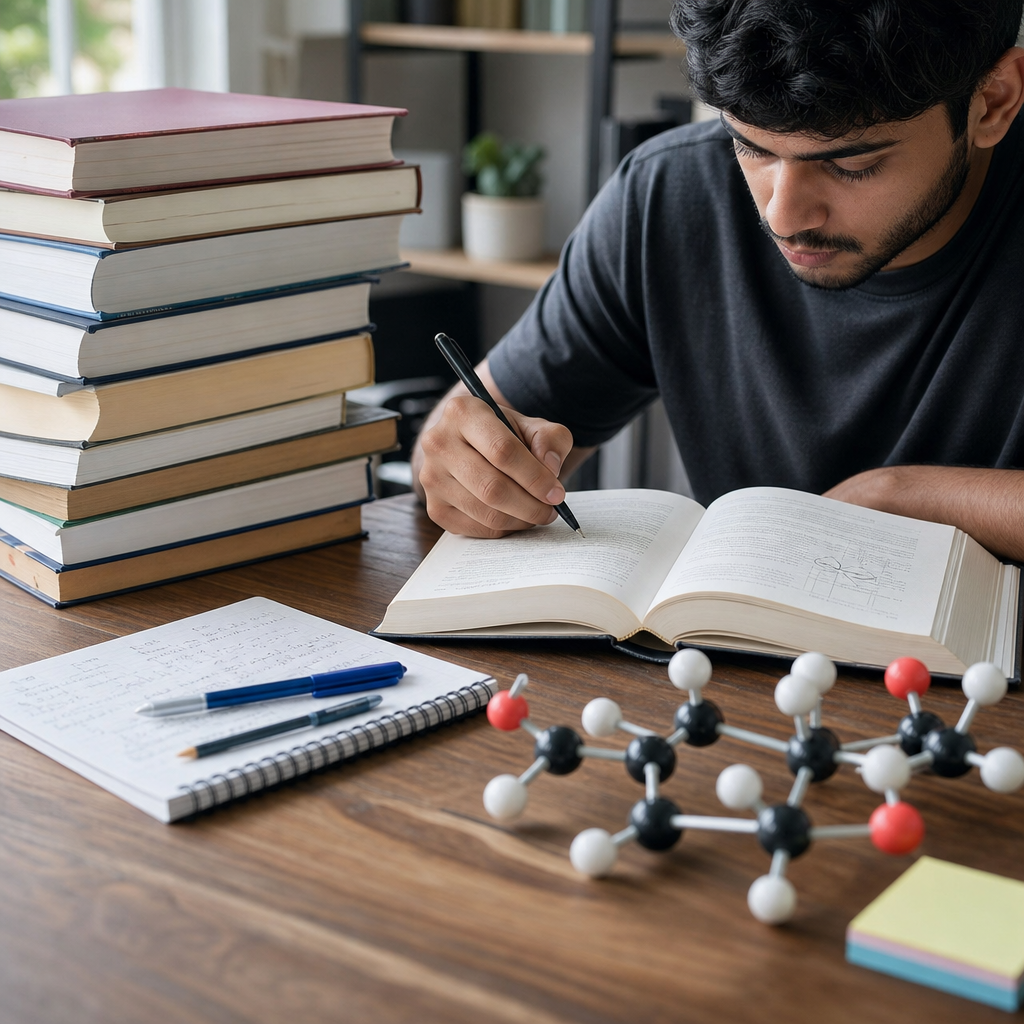
Books remain one of the most reliable tools for polymer test preparation because they organize concepts, formulas, reactions, and problem types in a way scattered notes and short videos rarely can. In polymer science, test preparation means more than memorizing definitions. It requires understanding chain-growth and step-growth polymerization, molecular weight averages, thermal transitions, viscoelastic behavior, crystallinity, morphology, degradation, rheology, and characterization methods such as DSC, TGA, FTIR, NMR, GPC, and DMA. A strong book-based study plan matters because polymer exams often test layered reasoning: you may need to connect structure to processing, processing to properties, and properties to application in one answer. I have coached students and early-career engineers through polymer qualifying exams, materials midterms, and certification-style assessments, and the consistent pattern is clear: students who use books strategically retain concepts longer and solve unfamiliar questions better. This hub page explains how to use books and journals for polymer test preparation, how to choose the right titles, how to read efficiently, and how to turn reading into higher scores. It also serves as the central guide for the broader Books and Journals resource set within Educational Resources, so every section is designed to answer a practical question directly and point your study process toward dependable, high-value sources.
Choose the right polymer books for the exam you are actually taking
The first rule of effective polymer test preparation is alignment. Do not start with the biggest or most famous polymer textbook unless it matches the exam scope. A polymer chemistry course exam usually emphasizes reaction mechanisms, functionality, Carothers equation, copolymer composition, kinetics, and molecular weight development. A polymer physics or materials exam often focuses on glass transition, crystallization, rubber elasticity, chain conformation, diffusion, permeability, and viscoelastic models. A processing exam may stress extrusion, injection molding, rheometry, heat transfer, die swell, residence time, and melt behavior. Using the wrong book creates false confidence because you are learning useful information that may not appear on the test.
For foundational coverage, many students benefit from texts such as Malcolm P. Stevens’ Polymer Chemistry: An Introduction, Joel R. Fried’s Polymer Science and Technology, and Charles E. Carraher Jr.’s Introduction to Polymer Chemistry. For deeper physical understanding, I often recommend M. Rubinstein and Ralph H. Colby’s Polymer Physics, because it explains chain statistics, entanglement, and viscoelasticity with more rigor than survey texts. For thermal and mechanical behavior, texts that discuss time-temperature superposition, storage modulus, creep, and relaxation are especially valuable if your instructor writes applied questions. If the exam includes analysis methods, look for books or handbook chapters covering spectroscopy, chromatography, microscopy, and thermal analysis rather than relying only on lecture slides.
Selection should also reflect the test format. For closed-book exams, prioritize textbooks with end-of-chapter conceptual questions and worked numerical examples. For open-book exams, choose books with strong indexing, clear equations, and concise tables, because retrieval speed becomes part of your performance. If you are preparing for a cumulative final, one primary textbook plus one problem-oriented companion is usually more effective than juggling five broad references. A hub approach works best: one core text for theory, one applications text for examples, and recent review articles for current terminology and edge cases.
Build a study system around chapters, not around pages
Students often read polymer books passively and then wonder why they cannot solve exam questions. The fix is to study by chapter objective. Before reading, list the chapter outcomes in your own words: for example, “calculate number-average and weight-average molecular weight,” “explain why Tg rises with restricted chain mobility,” or “compare amorphous and semicrystalline polymer behavior under tensile load.” That short list becomes your retrieval target. As you read, extract only what helps you answer those outcomes: definitions, equations, assumptions, exceptions, and representative materials such as polyethylene, polystyrene, PET, nylon, epoxy, PMMA, and silicone.
In my own test-preparation work, I ask students to convert each chapter into a one-page map. A useful map includes five boxes: key terms, governing equations, structure-property links, named experimental methods, and common exam traps. One trap, for instance, is confusing glass transition with melting temperature. Tg marks segmental mobility onset in amorphous regions; Tm is associated with crystalline melting. Another trap is treating molecular weight averages as interchangeable. Number-average molecular weight, weight-average molecular weight, and dispersity answer different questions and arise from different measurement methods. Books explain these distinctions more carefully than quick summaries do, which is exactly why they are valuable.
Reading sequence matters too. Start with the chapter summary, then inspect headings, figures, and equation lists before reading paragraphs. This pre-reading creates a scaffold for memory. During the main read, annotate margins with cause-and-effect notes rather than highlighting entire passages. Instead of marking “crystallinity affects stiffness,” write “higher crystallinity -> tighter packing -> higher modulus/barrier, lower transparency/impact.” That style mirrors how polymer exam answers are graded: not for copied language, but for clear reasoning chains.
Use journals to strengthen weak spots and modernize your understanding
Textbooks give structure; journals give precision, current examples, and depth where textbooks stay broad. For polymer test preparation, journals are most useful when you already know the chapter basics and need to clarify a difficult concept or see how it appears in real research and industry. Good sources include Polymer, Macromolecules, Journal of Applied Polymer Science, Polymer Testing, and Progress in Polymer Science. Review articles are especially efficient because they synthesize terminology, mechanisms, and trends across many studies.
Suppose you are struggling with nanocomposites, biodegradable polymers, conductive polymers, or self-healing materials. A recent review can show how the textbook principle appears in current systems. If your course covers barrier properties, a paper on EVOH or multilayer packaging can make diffusion concepts concrete. If you are learning rheology, a journal article comparing shear thinning in linear versus branched polymers can help you see why processing behavior differs in the extruder. These details improve your ability to answer application-based test questions.
Journals also help when textbooks disagree in emphasis. Polymer science spans chemistry, physics, and engineering, so one book may treat free volume extensively while another leans on empirical observations. Reading a well-cited review resolves those gaps. However, journals should not replace textbooks during early preparation. Primary papers assume background knowledge, use narrow conditions, and often compress methods. Use them as targeted reinforcement: one paper to understand a technique, one review to update a topic, or one application article to connect theory to product performance.
Turn reading into answer-ready notes and retrieval practice
Effective polymer test preparation depends on converting reading into recall. The highest-performing students I have worked with do not reread entire chapters repeatedly. They extract exam-ready prompts. After every reading session, write five to ten questions the instructor could ask. Good prompts include “Why does increasing crosslink density change modulus and solvent resistance?” “How does branching influence crystallinity and density in polyethylene?” and “What information do DSC and DMA each provide about thermal behavior?” Then answer those questions from memory before checking the book.
For numerical topics, build a formula sheet by concept rather than by chapter. Group molecular weight relations, copolymerization expressions, viscosity models, diffusion equations, and viscoelastic relationships together. Under each equation, note variable definitions, units, assumptions, and one use case. This matters because polymer exams often penalize not just wrong arithmetic but wrong model choice. A student may remember an equation for intrinsic viscosity yet fail to identify when a melt rheology relation is required instead. Books usually show context around formulas, which is why they outperform isolated equation sheets.
Flashcards can work, but only if they contain relationships, not isolated words. A card that asks “Define thermoset” is less useful than one that asks “Why can’t a fully cured thermoset be remelted, and how does that affect recycling options?” Likewise, a card about FTIR should ask what functional groups or reaction progress it can verify in a polymerization system. Use spaced repetition for these prompts, but keep the source grounded in your books so definitions remain accurate and complete.
| Resource type | Best use in polymer test preparation | Example tasks | Main limitation |
|---|---|---|---|
| Core textbook | Build fundamentals and chapter structure | Learn Tg vs Tm, polymerization routes, molecular weight averages | May be broad rather than exam-specific |
| Problem-solving book | Practice calculations and applied questions | Solve Carothers equation, viscosity, copolymer composition problems | Sometimes light on theory |
| Review article | Clarify difficult topics and current applications | Understand nanocomposites, biodegradable polymers, advanced rheology | Can assume prior knowledge |
| Handbook/reference | Check properties, standards, and processing data | Compare resin families, thermal ranges, test methods | Dense and not ideal for first learning |
Match books to the major polymer exam domains
Most polymer tests draw from recurring domains, and your books should map cleanly to them. The first domain is polymer chemistry: monomers, mechanisms, kinetics, tacticity, copolymerization, network formation, and degradation. Here, textbooks with reaction schemes and worked examples are essential. The second domain is structure and morphology: chain architecture, amorphous versus crystalline regions, lamellae, spherulites, orientation, and phase behavior. Books with strong diagrams help because morphology questions often require visual reasoning. The third domain is properties: thermal, mechanical, optical, electrical, and barrier behavior. This is where many students lose points by memorizing trends without understanding the molecular basis.
The fourth domain is processing. If your test includes injection molding, extrusion, blow molding, compression molding, thermoforming, or curing, choose books that connect rheology to manufacturability. For example, understanding why shear thinning reduces apparent viscosity under processing conditions can help you explain filling behavior or die pressure changes. The fifth domain is characterization. You should be able to state what each technique measures, what sample conditions matter, and how to interpret the output. A polymer book that merely lists FTIR, XRD, DSC, TGA, SEM, and GPC is not enough; you need examples of what each method proves in practice.
The sixth domain is applications and material selection. Some instructors ask case-based questions: choose a polymer for a medical device, packaging film, automotive under-hood part, or wire coating. Books and journals that discuss tradeoffs are valuable here. Nylon may offer strength and wear resistance but absorbs moisture. Polycarbonate provides toughness and optical clarity but can be sensitive to certain chemicals. Polypropylene is inexpensive and chemically resistant yet has lower low-temperature impact performance than some engineering plastics. These contrasts make exam answers specific and credible.
Use standards, handbooks, and reference texts for high-scoring detail
When students move from average answers to excellent ones, the difference is often reference-grade specificity. Handbooks and standards-oriented resources help you add that detail. The Polymer Handbook, ASTM test method references, and manufacturer technical datasheets can clarify typical values, definitions, and testing conditions. If a question asks how tensile properties are measured, it helps to know that reported modulus and strength can vary with specimen geometry, strain rate, conditioning, and temperature. That is not trivia; it shows you understand why polymer data must be interpreted within test conditions.
Standards also matter in characterization. ASTM and ISO methods define procedures for melt flow index, tensile testing, impact testing, heat deflection temperature, and other common measurements. Even if your exam does not require method numbers, books that reference standard practice teach you to think like a materials professional. In industry, no one accepts “the polymer is strong” as a useful statement. They ask: strong under what temperature, loading rate, humidity, and geometry? Test preparation improves when your books train you to ask the same question.
Reference texts are also excellent for confirming property trends. If one source says increasing crystallinity improves barrier performance, verify whether that applies across the polymer family you are studying and under what conditions. This avoids overgeneralization, a common exam mistake. Books and handbooks are especially useful for semicrystalline polymers, elastomers, thermosets, and composites, where processing history strongly affects final performance.
Create a weekly books-and-journals study workflow that actually works
A practical workflow keeps polymer test preparation from turning into unstructured reading. Start each week by listing the syllabus topics and assigning one core chapter to each. Day one: preview the chapter and write learning targets. Day two: read actively and extract equations, mechanisms, and examples. Day three: solve end-of-chapter problems without notes. Day four: review mistakes and consult one journal article or review paper on the weakest topic. Day five: produce a one-page summary from memory. Day six: take a mixed quiz using old exams, class questions, or self-written prompts. Day seven: light review and indexing of important pages for quick return.
This workflow works because it balances depth with retrieval. It also lets books and journals play different roles. Books establish the conceptual spine; journals sharpen modern examples and ambiguities. If you are short on time, do not cut the retrieval steps first. Reading feels productive, but recalled knowledge is what raises scores. Another practical method is tagging your books with sticky tabs by category: definitions, equations, case studies, and lab methods. On open-book tests, this can save critical minutes.
As the hub for Books and Journals within Educational Resources, this page should anchor your next steps: build a core reading list, pair each exam domain with one trusted source, use journals only to reinforce specific gaps, and turn every chapter into answer-ready notes. The main benefit is simple: books help you think in connected polymer systems, not isolated facts. That is how strong exam performance is built. Choose your sources carefully, read with purpose, practice retrieval every week, and use this hub to guide the rest of your study resources.
Frequently Asked Questions
1. Why are books so effective for polymer test preparation compared with short notes or videos?
Books are especially effective for polymer test preparation because polymer science is a connected subject, not a collection of isolated facts. A strong textbook or review book helps you see how one topic leads into another, such as how polymerization mechanism affects molecular architecture, how architecture influences crystallinity and morphology, and how those structural features control thermal, mechanical, and rheological behavior. Short notes and videos can be useful for revision, but they often present information in fragments. Books provide sequence, depth, and continuity, which is exactly what students need when preparing for tests that include theory, calculations, interpretation, and application-based questions.
Another major advantage is that books usually explain formulas and concepts in context. For example, when you study number-average molecular weight, weight-average molecular weight, or polydispersity index, a good book does more than list equations. It explains what those values mean physically, how they are measured, why they matter in processing and properties, and which kinds of exam questions are commonly built around them. That deeper treatment helps you answer both direct and indirect questions, including conceptual comparisons, derivations, and numerical problems.
Books also tend to present diagrams, reaction schemes, solved examples, and end-of-chapter questions in a structured way. This is important in polymer test preparation because many topics, such as chain-growth versus step-growth polymerization, glass transition versus melting transition, amorphous versus crystalline behavior, and elastic versus viscoelastic response, are easiest to master through repeated comparison. A reliable book lets you revisit these frameworks systematically until they become intuitive. In short, books support not only memorization but also understanding, retention, and problem-solving confidence.
2. How should I use polymer science books strategically instead of just reading them passively?
The most effective way to use books for polymer test preparation is to treat them as active study tools rather than reading material. Start by identifying the core topics likely to appear on your exam, such as polymerization mechanisms, molecular weight averages, thermal transitions, viscoelasticity, crystallinity, morphology, degradation, rheology, and characterization methods. Then map those topics to chapters in your main textbook or reference book. This gives your preparation a clear structure and prevents random studying.
As you read, focus on extracting three kinds of information from each section: key definitions, governing principles, and common problem patterns. For example, in a chapter on polymerization, note the distinctions between initiation, propagation, and termination in chain-growth systems, then compare them with the functional group reactions and conversion behavior seen in step-growth systems. In a chapter on thermal properties, make sure you understand not only the definitions of glass transition temperature and melting temperature but also what changes physically at each transition and how those changes appear in real materials and test data.
It is also important to annotate your book-based study with your own summaries. After finishing a section, close the book and write a short explanation in your own words. If you cannot explain a concept clearly, that usually means you need to revisit it. Turn important comparisons into tables, convert mechanisms into flowcharts, and collect formulas into a dedicated sheet with units, assumptions, and typical uses. Then solve the worked examples without looking at the answers. This transforms reading into active recall and application, which are far more effective for exam performance than passive highlighting.
Finally, use chapter-end questions and examples to simulate test conditions. Books are valuable because they often mirror how instructors think about the subject. If a chapter repeatedly emphasizes a relationship between structure and property, there is a strong chance that relationship matters for assessment. Strategic use of books means reading for patterns, practicing with purpose, and repeatedly connecting theory to likely exam questions.
3. Which polymer topics should I focus on most when studying from books for an exam?
The highest-priority topics usually include polymerization mechanisms, molecular weight concepts, thermal behavior, morphology, viscoelasticity, degradation, rheology, and characterization methods. These areas form the backbone of polymer science and appear frequently because they connect fundamental chemistry with material performance. When studying from books, begin with polymer classification and polymerization pathways, especially the differences between chain-growth and step-growth polymerization. You should understand monomers, repeat units, functionality, conversion, kinetics at a basic level, and how reaction mechanism influences molecular weight development and polymer structure.
Next, give special attention to molecular weight averages and distributions. Many exams test number-average molecular weight, weight-average molecular weight, and polydispersity because these concepts are central to understanding polymer behavior. A good book will also help you see why distribution matters, not just the average value. From there, move into thermal properties, especially glass transition, melting, crystallization, and thermal stability. These topics are commonly tested because they explain how polymers behave during processing and service.
Viscoelastic behavior is another essential area. Books are particularly helpful here because they can explain time-dependent mechanical response more carefully than short summaries. Make sure you understand creep, stress relaxation, storage modulus, loss modulus, and the practical meaning of temperature and frequency effects. Morphology and crystallinity should also be studied closely, including lamellae, spherulites, amorphous regions, and how structure affects stiffness, toughness, transparency, and barrier properties.
You should also review degradation and stability, including thermal, oxidative, mechanical, and environmental degradation mechanisms. Finally, spend time on characterization techniques such as DSC, TGA, DMA, GPC, FTIR, NMR, XRD, and microscopy methods if they are part of your course. The key is not only to memorize what each method stands for, but to know what information it provides, why it is used, and how to interpret typical results. Books are ideal for this because they often connect techniques directly to the properties and structures being measured.
4. How can books help me prepare for polymer calculations and numerical questions?
Books are one of the best resources for numerical preparation because they usually present formulas alongside derivations, assumptions, and worked examples. In polymer science, calculations often become much easier once you understand what the variables mean physically. For example, when calculating number-average or weight-average molecular weight, it is not enough to memorize equations. You need to understand why one average counts molecules differently from the other and why broader distributions shift the result. Books generally explain this progression carefully, which makes formulas easier to remember and apply correctly during an exam.
To use books effectively for calculations, first identify all recurring equation-based topics in your syllabus. These may include degree of polymerization, molecular weight averages, conversion relationships, crystallinity calculations, kinetic expressions at an introductory level, and rheological or thermal data interpretation depending on the course. Create a formula sheet directly from your book, but do not stop there. For each formula, write what each symbol means, the units involved, when the equation can be used, and what kinds of mistakes commonly occur. This builds the conceptual foundation that prevents calculation errors.
Worked examples in books are especially valuable because they reveal method, not just result. Pay attention to how the problem is interpreted, how data are organized, and how the answer is checked for reasonableness. Then redo the problem without looking. If the book includes end-of-chapter exercises, solve them in increasing order of difficulty. When you get a question wrong, go back to the relevant section and identify whether the problem came from weak concept knowledge, formula confusion, unit handling, or misreading the question. That feedback loop is where real improvement happens.
Another advantage of books is that they often include mixed conceptual-numerical problems, which are common in polymer exams. For example, you may be asked not only to calculate crystallinity but also to explain how increasing crystallinity changes stiffness or permeability. Books train you for this style by integrating quantitative and qualitative thinking. If you study calculations through a strong textbook, you are much more likely to develop the accuracy, speed, and confidence needed for test day.
5. What is the best way to build a complete polymer test-preparation plan around books?
The best plan begins with choosing one primary textbook and, if needed, one supporting reference or problem-focused book. The primary book gives you consistency in terminology and explanation, while the secondary source helps clarify difficult topics or provide extra practice. Once you have your materials, break your preparation into stages: content review, concept consolidation, problem practice, and final revision. Books support all four stages when used intentionally.
During content review, read the highest-priority chapters first and aim to understand the logic of the subject. Do not try to memorize everything immediately. Focus on major frameworks, such as polymerization routes, structure-property relationships, and the distinction between thermal, mechanical, and morphological behavior. In the concept consolidation stage, build summary notes from the book. These should include definition lists, comparison tables, mechanism outlines, and formula sheets. Keep these summaries short enough to revise quickly later.
In the problem-practice stage, use worked examples and chapter questions to test yourself under timed conditions. Mix topics rather than studying one chapter in isolation forever. For example, combine a molecular weight problem with a thermal properties concept question and a characterization-method interpretation question. This reflects how real exams often require flexible thinking across topics. If you notice weak areas, return to the relevant book sections and review them with targeted attention.</