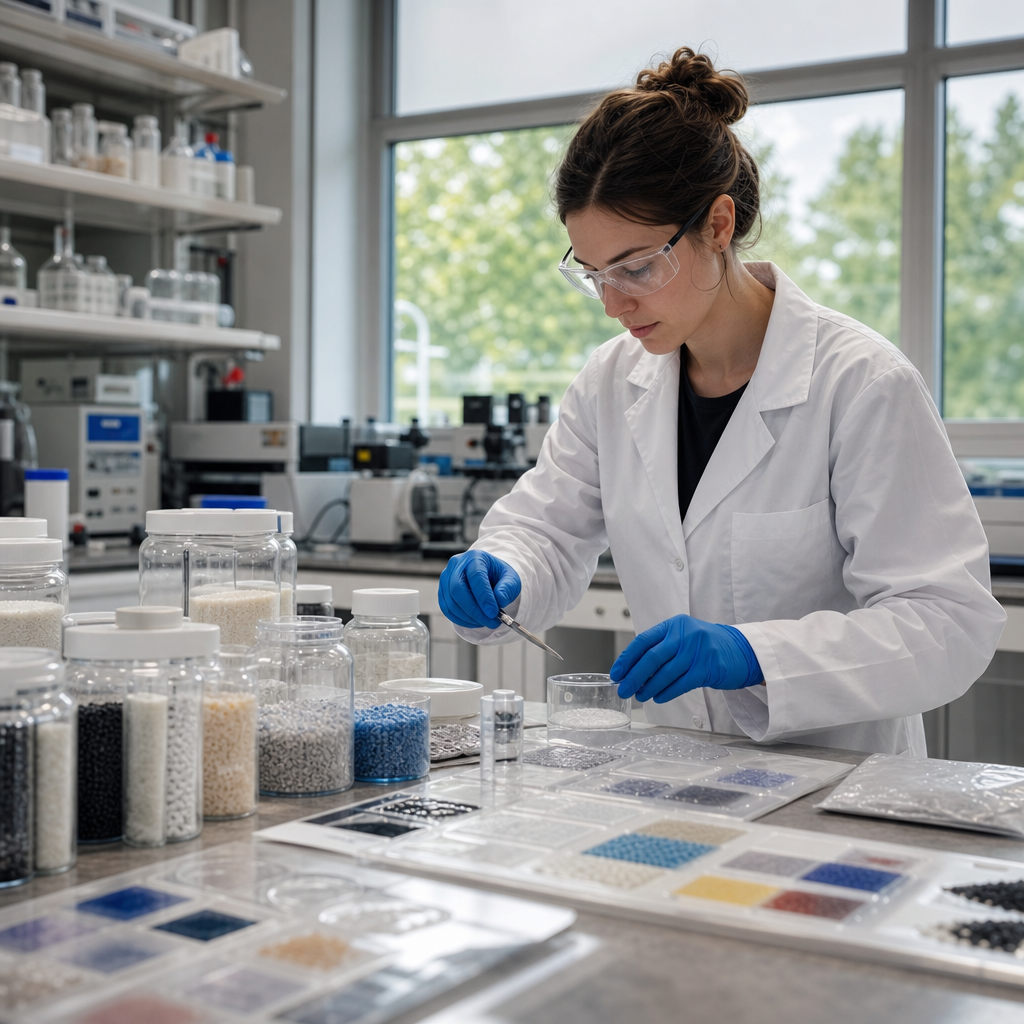
Writing a resume for polymer engineering jobs requires more than listing degrees, lab techniques, and software tools. Employers in plastics, elastomers, composites, coatings, adhesives, biomedical materials, and sustainable packaging want evidence that you can solve material performance problems, communicate across R&D and manufacturing teams, and contribute to commercial results. A strong polymer engineering resume does exactly that. It translates technical work into hiring-relevant proof: formulation improvements, processing optimization, failure analysis, scale-up support, test method selection, regulatory awareness, and measurable outcomes.
In career development terms, this article serves as a hub because resume writing sits at the center of the polymer engineering job search. Your resume influences whether you get interviews, which projects you are asked about, how recruiters classify your experience, and whether hiring managers see you as a lab researcher, process engineer, product developer, quality specialist, or technical leader. I have reviewed polymer resumes for entry-level graduates, PhD researchers, and experienced engineers moving from extrusion to medical devices, and the same pattern appears repeatedly: candidates undersell impact, bury relevant keywords, and fail to explain why their work mattered to production, cost, reliability, or compliance.
Before building the document, define the terms employers care about. A polymer engineering resume is a targeted career marketing document tailored to roles involving polymer materials design, processing, characterization, application development, manufacturing support, or materials failure investigation. It is not a full curriculum vitae unless the employer specifically requests one for research-heavy or academic positions. The goal is selective relevance. Every line should help an employer answer four questions quickly: What materials have you worked with? What processes and test methods do you know? What business or technical results did you achieve? Where can you add value immediately?
This matters because polymer engineering hiring is highly contextual. A packaging company values barrier properties, resin selection, and line efficiency. An automotive supplier may prioritize PP, PA, PBT, TPEs, injection molding, and APQP familiarity. A biomedical manufacturer will care about ISO 10993 awareness, validation, documentation discipline, and controlled change processes. If your resume looks generic, you lose to candidates whose documents mirror the language of the job description. The sections below show how to write a resume that is specific, credible, and effective for polymer engineering jobs across career stages.
Start with job targeting and a clear professional profile
The best polymer engineering resumes are written for a defined job family, not for “any engineering role.” Start by identifying the role type: polymer R&D engineer, materials engineer, process engineer, product development engineer, applications engineer, quality engineer, failure analysis engineer, or technical service engineer. Then identify the environment: thermoplastics compounding, thermoset composites, film extrusion, injection molding, blow molding, additive manufacturing, coatings, adhesives, sealants, membranes, or medical polymers. That targeting decision should shape your summary, skills, bullets, and keyword choices.
Your professional profile should be three to five lines and should state your specialty, years of experience, key material domains, and strongest value proposition. Good example: “Polymer engineer with 4 years of experience in thermoplastic compounding, injection molding support, and materials characterization for automotive applications. Hands-on background in PP, ABS, PA6, PA66, and glass-filled systems, with proven results in reducing scrap, improving impact performance, and supporting PPAP documentation.” That summary tells a recruiter what you do, where you have done it, and why to keep reading.
Avoid summaries that are purely aspirational, such as “seeking a challenging role where I can grow.” Hiring managers already know you want the job. They need evidence of fit. If you are a new graduate, replace years of experience with focus areas, senior design work, internships, and lab strengths. If you hold an MS or PhD, mention thesis relevance only if it connects directly to the target role, such as polymer rheology, nanocomposites, membrane transport, degradation, or biomaterials processing.
Build a skills section that matches polymer hiring language
The skills section should function as a quick index of your technical fit. Group skills by category so they are easy to scan and easy for applicant tracking systems to parse. I usually recommend categories such as Materials, Processing, Characterization, Design and Analysis Tools, Quality and Regulatory, and Data or Programming. This structure is clearer than a long unformatted keyword block and helps employers confirm capability fast.
Include specific materials families and techniques. For materials, list examples like polyethylene, polypropylene, PET, PVC, polycarbonate, nylon, PEEK, epoxy, polyurethane, silicone, fluoropolymers, or natural fiber composites if they are genuinely part of your background. For processing, include extrusion, twin-screw compounding, injection molding, blow molding, thermoforming, compression molding, rotational molding, resin transfer molding, filament winding, or 3D printing as appropriate. For characterization, include DSC, TGA, DMA, FTIR, rheometry, tensile testing, impact testing, hardness, melt flow index, SEM, optical microscopy, and weathering or aging methods.
Use judgment. Listing every instrument you touched once dilutes credibility. Prioritize tools you can discuss confidently in an interview and that align with the role. If a job description mentions ASTM D638, DSC, and design of experiments, your resume should surface those terms naturally where relevant. If you know Minitab, JMP, MATLAB, Python, SolidWorks, or ANSYS, include them only when they support actual project outcomes.
Write experience bullets that prove technical and business impact
Experience bullets are where most polymer resumes either win or fail. Strong bullets begin with an action, identify the technical problem, describe the method, and end with a measurable result. Weak bullets simply list responsibilities. Compare “Performed polymer testing” with “Developed DSC, TGA, and FTIR characterization workflow to identify thermal degradation in recycled PET feedstock, enabling supplier correction and reducing off-spec batches by 18%.” The second version shows reasoning, methods, and outcome.
Quantify wherever possible. In polymer engineering, useful metrics include scrap reduction, cycle time improvement, cost savings, modulus increase, impact strength improvement, defect reduction, line uptime, yield, test turnaround time, customer complaint reduction, validation completion, and time-to-scale-up. If confidentiality limits exact numbers, use percentages, ranges, or directional results such as “cut drying time by 20%” or “supported launch of three medical tubing SKUs.”
Use plain language even when the science is advanced. A hiring manager may be an engineering leader, not a specialist in your exact chemistry. Explain enough context to show why your work mattered. For example, if you optimized a coupling agent in a glass-filled polypropylene system, say what property improved and why that mattered in the end use, such as better stiffness retention or fewer field failures. If you conducted root cause analysis on brittle fracture, mention the evidence used, such as low-temperature impact data, microscopy, contamination checks, or processing history review.
| Resume Area | Weak Version | Strong Version |
|---|---|---|
| Process support | Assisted with extrusion line operations | Adjusted barrel temperature profile and screw speed on blown film line to stabilize gauge variation, reducing film thickness deviation by 12% |
| Materials testing | Conducted lab tests on samples | Executed ASTM tensile, impact, and DSC testing on nylon compounds to correlate moisture conditioning with mechanical performance and release production hold |
| Product development | Worked on new formulations | Screened flame-retardant additive packages for ABS housing application, achieving UL 94 V-0 target without exceeding cost threshold |
| Quality improvement | Helped reduce defects | Led root cause study on sink marks in injection-molded PP parts using DOE and gate design review, lowering cosmetic rejects by 25% |
Present education, research, and projects strategically
For early-career candidates, education carries more weight, so place it above experience if your internships are limited. Include degree, university, graduation date, and relevant concentrations such as polymer science, materials engineering, chemical engineering, mechanical engineering with plastics focus, or biomedical materials. If your GPA is strong, generally 3.5 or higher, include it. Relevant coursework can help when it is directly tied to the target job: polymer processing, rheology, composites, transport phenomena, statistical quality control, materials characterization, and design of experiments are worth listing early in a career.
Projects often differentiate new graduates. A senior capstone on recycled polymer blends, a thesis on hydrogel crosslinking, or a lab project involving DMA and creep can make your resume far stronger if described well. Use the same accomplishment structure as work experience: problem, method, result. For example: “Designed and tested carbon fiber/epoxy laminate layups for impact resistance; used ASTM test methods and microscopy to compare delamination behavior, informing final layup selection.” That reads like engineering work, not homework.
For MS and PhD candidates, include thesis title only if it is relevant and understandable. Then summarize the practical contribution beneath it. Recruiters may not know your niche, but they will recognize transferable value such as rheological modeling, polymer degradation analysis, membrane performance testing, or scale-up of synthesis routes. Publications and conference presentations can be included selectively, especially for R&D roles, but keep them concise on a resume. A separate CV can hold full citation detail.
Adapt the resume for different polymer engineering career paths
Polymer engineering is broad, so one resume version rarely fits all applications. If you are targeting manufacturing or process roles, emphasize throughput, scrap, cycle time, machine settings, troubleshooting, tooling interactions, SPC, and production support. If you are pursuing R&D or product development, emphasize formulation, material selection, DOE, characterization, prototype evaluation, and cross-functional collaboration with marketing, regulatory, and customers. If quality or reliability is your path, lead with CAPA support, root cause analysis, nonconformance investigation, supplier quality, validation, and standards compliance.
This article also works as a hub for broader career development because resume strategy connects to interviewing, networking, job search positioning, and specialization choices. Your resume should align with your LinkedIn profile, your elevator pitch, and the stories you tell in interviews. If you want to move from academia into industry, the document must reframe research into deliverables, timelines, equipment ownership, troubleshooting, and stakeholder communication. If you want to pivot from plastics processing into medical devices, highlight documentation discipline, change control familiarity, clean manufacturing awareness, and any exposure to validation or regulated environments.
Finally, edit ruthlessly. Keep formatting simple, use standard section headings, and favor one page for new graduates or two pages for experienced engineers with genuinely relevant history. Save as PDF unless instructed otherwise. Proofread chemical names, acronyms, standards, and units carefully; polymer employers notice technical sloppiness immediately. Then ask a practicing engineer or recruiter to review it against a target posting. A resume for polymer engineering jobs should not just describe your background. It should make the hiring case clearly, quickly, and specifically. Use this guide to revise your document, tailor each application, and build a stronger career development foundation for every next step in the field.
Frequently Asked Questions
What should a polymer engineering resume emphasize beyond technical skills and lab experience?
A strong polymer engineering resume should go well beyond a list of degrees, characterization methods, and software platforms. Hiring managers already expect candidates in this field to understand polymer fundamentals, testing protocols, and common engineering tools. What makes a resume stand out is clear evidence that you used that knowledge to solve material performance problems, support product development, improve manufacturing outcomes, or contribute to business goals. In other words, employers want to see how your technical background created value.
That means your resume should highlight outcomes such as improving tensile strength, reducing cycle time, solving adhesion failures, increasing thermal stability, optimizing formulations, lowering scrap rates, supporting scale-up, or helping a product meet regulatory or customer requirements. If you worked on plastics, elastomers, composites, coatings, adhesives, biomedical materials, or sustainable packaging, connect your work to practical results. For example, instead of writing that you “performed DSC, TGA, and rheology testing,” explain that you used those methods to identify degradation behavior, validate processing windows, or guide material selection decisions.
It is also important to show collaboration. Polymer engineers rarely work in isolation. Employers value candidates who can communicate with R&D teams, process engineers, quality teams, suppliers, customers, and manufacturing personnel. Your resume should reflect cross-functional work, especially if you translated technical findings into process changes, production improvements, or customer-facing recommendations. This demonstrates that you are not just technically capable, but also effective in a real industrial environment where materials decisions affect cost, performance, compliance, and commercial success.
How do I describe polymer engineering projects in a way that appeals to employers?
The best way to describe polymer engineering projects is to present them as problem-solution-impact stories. Start with the challenge, explain your role, briefly mention the methods or tools you used, and then state the measurable or practical result. This approach helps employers quickly understand both your technical depth and your business relevance. It also prevents your resume from reading like a lab notebook or a course transcript.
For example, if you worked on a composite materials project, do not stop at saying you “developed composite formulations and conducted mechanical testing.” A stronger version would explain that you “developed and screened fiber-reinforced composite formulations to improve stiffness-to-weight ratio, then used mechanical and thermal testing data to recommend a formulation for prototype evaluation.” If possible, add a result such as improved modulus, reduced component weight, or successful progression to pilot production. The same principle applies to coatings, adhesives, elastomers, biomedical polymers, and packaging materials. Employers want to know what problem you addressed, how you approached it, and what changed because of your work.
If you are early in your career and your experience comes mostly from academic research, capstone work, or internships, the same structure still works. Frame projects around research objectives, material constraints, processing variables, and outcomes. Mention relevant techniques such as extrusion, injection molding, rheology, FTIR, SEM, DMA, tensile testing, or design of experiments only when they support the story. The goal is not to impress readers with a list of tools alone, but to show that you know how to use those tools to make engineering decisions and advance a project.
Which achievements and metrics are most effective on a polymer engineering resume?
The most effective achievements are the ones that show technical contribution tied to measurable impact. In polymer engineering, that often includes property improvements, process gains, quality improvements, cost savings, scale-up success, product validation, or timeline acceleration. Specific metrics make your work more credible and easier for employers to evaluate. When possible, quantify improvements in strength, elongation, barrier performance, thermal resistance, cure time, viscosity control, yield, throughput, defect reduction, scrap reduction, material cost, or development speed.
For example, strong resume bullets might mention that you reduced part warpage by a certain percentage, improved coating adhesion after reformulation, supported a packaging material transition that lowered resin usage, or optimized molding parameters to reduce defects and improve consistency. If exact numbers are confidential, use directional language that still communicates impact, such as “reduced scrap,” “improved batch consistency,” “shortened validation timeline,” or “supported successful pilot-scale implementation.” Even approximate or relative metrics can strengthen your resume when they are honest and grounded in your actual work.
It is also valuable to include achievements related to collaboration, documentation, and commercialization. For instance, if you wrote test reports that influenced supplier selection, helped troubleshoot production issues, or contributed to customer qualification, those are important accomplishments. Polymer engineering roles often sit at the intersection of materials science and product performance, so employers appreciate candidates who can connect bench work to manufacturing and market needs. Metrics do not have to be limited to the lab; they can also reflect project delivery, cross-functional support, and business contribution.
How should I tailor my resume for different polymer engineering sectors like plastics, composites, coatings, or biomedical materials?
You should tailor your polymer engineering resume by aligning your experience, terminology, and priorities with the specific sector and job description. Although the fundamentals of polymer science carry across industries, each sector emphasizes different performance requirements, processing methods, regulations, and commercial drivers. A resume that works for a plastics processing role may need a different focus than one targeting coatings development, medical polymers, or sustainable packaging.
For plastics and manufacturing-focused positions, emphasize processing knowledge, troubleshooting, scale-up, molding or extrusion experience, quality improvement, and production support. For composites roles, highlight reinforcement systems, resin selection, cure behavior, structural performance, and lightweighting applications. In coatings and adhesives, focus on formulation work, surface interactions, adhesion mechanisms, cure systems, durability, and application testing. For biomedical materials, bring forward biocompatibility considerations, sterilization effects, regulatory awareness, documentation discipline, and precision in validation work. In sustainable packaging or circular materials roles, stress barrier properties, recyclability, downgauging, lifecycle thinking, and material substitution efforts.
Tailoring also means adjusting your keywords and examples. Use the language employers use in the posting, provided it accurately reflects your background. If a role prioritizes rheology, compounding, DOE, polymer blends, failure analysis, or process optimization, make sure those themes are visible in your summary and experience sections. The goal is not to rewrite your history, but to select the most relevant parts of it. A targeted resume makes it easier for hiring managers to see that your polymer engineering experience matches their technical environment and business needs.
What are the most common mistakes to avoid when writing a resume for polymer engineering jobs?
One of the most common mistakes is turning the resume into a dense inventory of coursework, instruments, and software without explaining why any of it mattered. A long technical skills section may look impressive at first glance, but it does not tell employers whether you can improve a formulation, solve a processing problem, support manufacturing, or contribute to a product launch. Another common issue is using overly academic language that obscures practical impact. Even if your background is research-heavy, your resume should still communicate engineering relevance, decision-making, and results.
Another mistake is being too vague. Statements like “assisted with material testing” or “worked on polymer development” are too general to be persuasive. Employers need to know what you tested, what challenge the team faced, what your role was, and what happened because of your work. Lack of tailoring is also a frequent problem. Sending the same resume to every polymer engineering opening can weaken your chances because different employers care about different material systems, processes, and business priorities. A resume for an elastomer development role should not read exactly like one for a packaging scale-up position.
Formatting and organization matter as well. If important achievements are buried in paragraphs, if section headings are unclear, or if the document is overloaded with jargon, readers may miss your strongest qualifications. Keep the layout clean and make your bullets easy to scan. Prioritize recent and relevant work. Finally, never underestimate the importance of showing communication and cross-functional collaboration. Polymer engineering is not just about understanding materials; it is about applying that understanding in environments where product teams, manufacturing groups, suppliers, and customers all need clear, actionable information. A resume that reflects both technical expertise and real-world contribution will be much more effective.