Biodegradable polymer products are moving from niche experiments to mainstream commercial launches, reshaping how brands design packaging, consumer goods, medical devices, and agricultural materials. In practical terms, a biodegradable polymer is a plastic-like material engineered to break down through the action of microorganisms, moisture, heat, or composting conditions into simpler compounds such as carbon dioxide, water, methane, and biomass. That definition matters because not every plant-based plastic is biodegradable, and not every biodegradable plastic will decompose in a backyard compost pile. The market is crowded with claims, certifications, and new product launches, so buyers need a clear map of what is actually innovative, what performs well, and where the limitations still sit.
I have worked with packaging teams evaluating compostable films, molded fiber alternatives, and biopolymer resin substitutions, and the same questions always come up. Which products are commercially available now? What standards prove biodegradability? Can these materials survive real supply chains, humidity shifts, seal integrity tests, and consumer use? Those questions are central to this hub because biodegradable polymer products now influence regulatory compliance, brand reputation, waste reduction strategies, and procurement decisions across sectors. Europe’s Single-Use Plastics Directive, extended producer responsibility schemes, and growing retailer scorecards are pushing companies to replace conventional petroleum plastics in highly visible product categories.
This article serves as a hub for new product launches within innovative products and solutions, covering the categories, technologies, standards, and buying criteria that matter most. You will see where polylactic acid, polyhydroxyalkanoates, starch blends, cellulose films, PBS, and PBAT-based formulations fit; which launched products are leading adoption; how companies balance barrier performance with compostability; and why medical, foodservice, fashion, and agriculture are becoming the fastest moving launch segments. The goal is straightforward: help decision-makers identify revolutionary biodegradable polymer products worth tracking, testing, and scaling, while understanding the tradeoffs that determine whether a launch succeeds outside a press release.
What Counts as a Revolutionary Biodegradable Polymer Product
A product deserves the label revolutionary when it solves a performance problem that previously blocked adoption. In this category, that usually means delivering one or more of the following without sacrificing certified end-of-life performance: oxygen and moisture barrier, heat resistance, toughness, processability on existing converting lines, food-contact compliance, or price stability at larger volumes. The strongest launches are not just “green versions” of old products. They open applications where conventional compostables struggled, such as high-clarity food packaging, durable mailers, 3D printing filaments, absorbable medical implants, or mulch films that reduce retrieval labor at the end of a growing season.
Material chemistry explains why the latest launches matter. Polylactic acid, commonly called PLA, offers good clarity and stiffness and is widely used in cups, trays, thermoforms, and filament, but standard grades can be brittle and require industrial composting conditions. Polyhydroxyalkanoates, or PHAs, are microbially produced polymers that biodegrade in more environments, including marine and soil conditions in some tested formulations, though properties vary by copolymer composition and cost remains higher. Starch blends lower material cost and improve biodegradability but can struggle with moisture sensitivity. Cellulose-based films provide excellent renewable content and strong printability. PBS and PBAT are often blended to add flexibility and seal performance in films and bags.
The most important standards behind these launches include ASTM D6400, EN 13432, ASTM D6866 for biobased content, ISO 17088, and certification marks from TÜV Austria, BPI, and Din Certco. These standards do not all mean the same thing. A bag certified for industrial composting is not automatically suitable for home compost. A polymer with high renewable content is not necessarily biodegradable. Brands that communicate these differences clearly tend to avoid the backlash that follows vague sustainability marketing. For procurement teams, revolutionary means measurable: certified claims, documented performance data, machine compatibility, and disposal instructions consumers can actually follow.
Breakthrough Packaging Launches Leading the Market
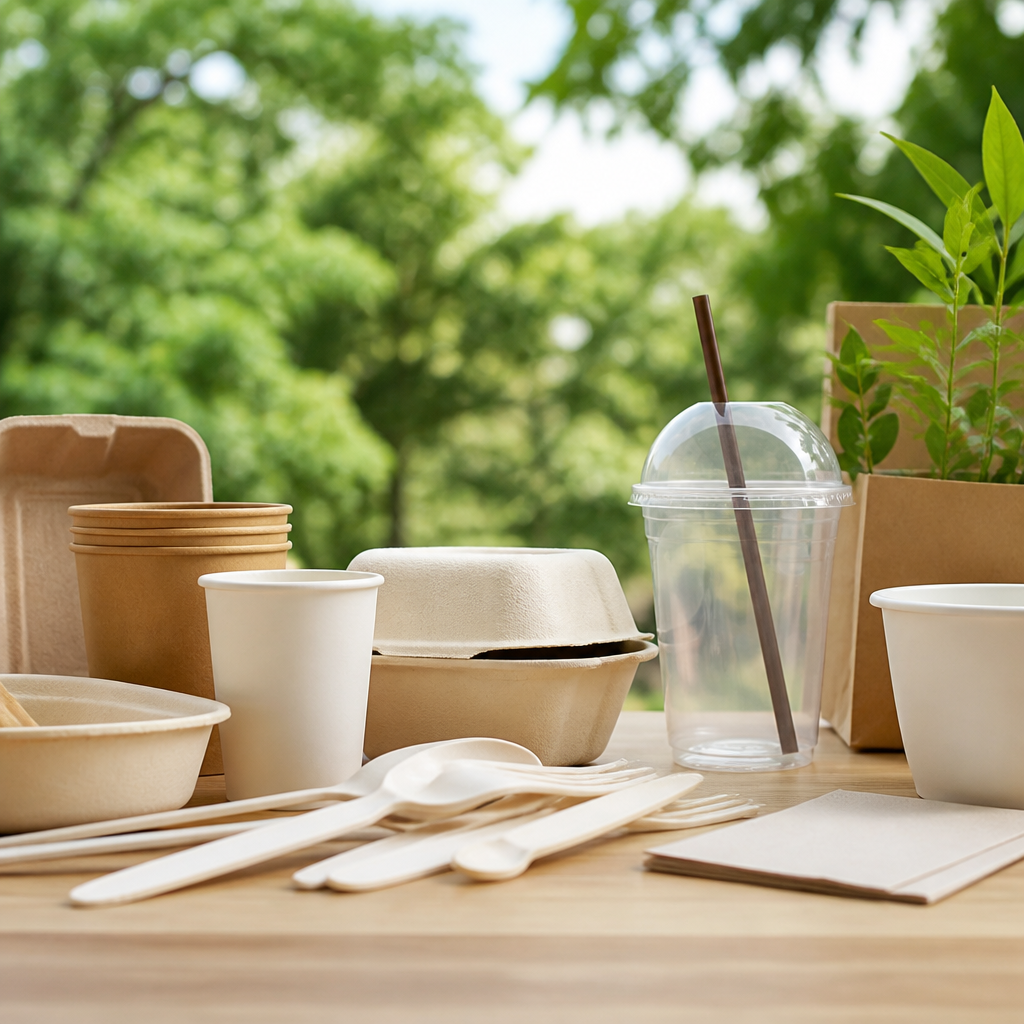
Packaging is where biodegradable polymer innovation is most visible, and recent launches show how quickly the category is maturing. Compostable coffee capsules, fresh produce films, snack wrappers, takeaway containers, and e-commerce mailers have all moved beyond pilot scale. Novamont has expanded Mater-Bi applications in shopping bags, organic waste liners, and foodservice items across Europe. NatureWorks has advanced Ingeo PLA grades for thermoforming, shrink labels, and coffee pods. Danimer Scientific has worked with PHA-based formulations for straws and flexible packaging. TIPA has launched compostable multilayer packaging intended to mimic the feel and barrier behavior of conventional plastic film for baked goods, snacks, and apparel mailers.
What separates the leaders from early attempts is packaging engineering. A compostable snack wrapper must manage oxygen ingress, seal through contamination, run at production speeds, and still survive warehousing. One retailer project I reviewed failed not because the polymer was uncertified, but because the laminate curled under fluctuating humidity and jammed filling equipment. New launches now target those failure points directly. Improved heat-seal windows, coextruded structures, and mineral-modified biopolymer blends have reduced line disruptions. Some brands also redesign pack formats altogether, moving from complex metallized laminates to mono-material or simpler compostable structures that better match the chemistry of biodegradable polymers.
| Product category | Common polymer systems | Main advantage | Key limitation |
|---|---|---|---|
| Foodservice cups and lids | PLA, CPLA | Clarity, commercial scale, food-contact familiarity | Often requires industrial composting |
| Flexible snack and bakery packaging | Cellulose films, PBAT blends, PLA blends | Good printability and improved barrier options | Performance depends on humidity and seal design |
| Organic waste bags | Starch blends, Mater-Bi type formulations | Strong fit with compost collection systems | Tear strength varies by thickness and storage conditions |
| Mailers and e-commerce bags | PBAT blends, PLA blends | Brand visibility and reduced fossil plastic use | Need careful messaging on disposal routes |
| Agricultural mulch films | PBS, PBAT, starch blends, PHA blends | Reduced field retrieval labor | Biodegradation rates depend on soil conditions |
For brands launching biodegradable polymer packaging, the decisive question is not whether the material is innovative but whether the waste system around it exists. A compostable coffee pod can be genuinely useful in a city with organics collection and contamination controls. In an area where all flexible waste goes to landfill, the environmental value case becomes more conditional. That is why the best product launches pair material innovation with on-pack instructions, retailer education, and municipal partnerships rather than treating material substitution as a standalone fix.
New Product Launches Beyond Packaging
The biodegradable polymer story extends well beyond packaging, and some of the most impressive new product launches are appearing in medicine, agriculture, textiles, and additive manufacturing. In healthcare, absorbable sutures, drug-delivery systems, wound dressings, and temporary fixation devices have long used biodegradable polymers such as PGA, PLA, PLGA, and PCL. What is changing now is product sophistication: 3D-printed scaffolds, controlled-release implants, and bioresorbable components designed to match tissue healing timelines more precisely. These products matter because they can eliminate second surgeries for removal, reduce infection risk, and improve patient recovery pathways when properly selected.
In agriculture, biodegradable mulch films are a practical breakthrough. Conventional polyethylene mulch improves weed control and soil temperature but creates a disposal problem after harvest because dirty film is costly to collect and recycle. Certified biodegradable mulch films can be tilled into soil after use, reducing labor and waste handling. Field performance still depends on climate, crop cycle, film thickness, and microbial activity, but launches from specialized agricultural material suppliers have steadily improved durability through the growing season. For growers, the value proposition is operational as much as environmental: fewer truckloads of plastic waste and less post-season cleanup.
Textiles and consumer goods are also seeing credible launches. PHA-coated paper hygiene products, biodegradable phone cases, compostable 3D-printing filaments, and footwear components made with biopolymer foams are moving into retail channels. Here, the challenge is durability during use followed by reliable degradation after disposal. I have seen successful product teams solve this by narrowing the use case. A biodegradable mailer only needs to survive shipping and storage, not five years of outdoor exposure. A compostable event badge holder can prioritize short-life utility. Product-market fit improves when designers stop forcing biodegradable polymers into applications that fundamentally require decades-long persistence.
How to Evaluate Performance, Compliance, and Commercial Readiness
If you are reviewing new biodegradable polymer products, start with a disciplined checklist. First, verify the claim type: biodegradable, compostable, home compostable, soil biodegradable, marine biodegradable, or biobased. These are distinct technical and legal statements. Second, ask for certification documents, not summary icons from a sales sheet. Third, match the disposal environment to the product’s actual use geography. Fourth, request processing data, shelf-life data, migration or food-contact documentation where relevant, and mechanical test results. Fifth, examine whether inks, adhesives, zippers, valves, and labels are compatible with the claimed end-of-life route. A certified film can lose credibility fast when a non-compostable closure is added.
Commercial readiness depends on converting and supply chain realities. Can the resin run on cast film, blown film, injection molding, thermoforming, or fiber spinning equipment already in place? Does it need tighter drying control? How does it respond to elevated summer warehouse temperatures? What is the lead time for commercial volumes? Are there dual-source options? One launch I supported looked impressive in lab trials but stalled because the supplier could not guarantee color consistency and resin availability across regions. Buyers should treat material innovation like any strategic input: test for scale, process variation, and business continuity, not just sustainability positioning.
Cost remains the hardest question, but it should be framed correctly. Biodegradable polymer products often carry a resin premium versus commodity polyethylene or polypropylene. However, total system cost can narrow when brands avoid plastic taxes, reduce disposal fees, gain retailer acceptance, or simplify package structures. In agriculture, labor savings from not retrieving mulch can outweigh higher material prices. In medical applications, reduced follow-up procedures can justify advanced biodegradable devices. The strongest launch decisions come from lifecycle thinking tied to a specific business case, not from comparing resin price per kilogram in isolation.
Where the Next Wave of Innovation Is Heading
The next generation of revolutionary biodegradable polymer products will be shaped by better feedstocks, smarter formulations, and tighter alignment with waste infrastructure. Expect more products based on non-food biomass, methane fermentation, side-stream valorization, and microbial production pathways that reduce dependence on virgin fossil inputs. PHA innovation is especially important because it expands the discussion beyond industrial composting and into broader biodegradation scenarios, though claims must remain evidence-based and application-specific. Barrier coatings, nanocellulose reinforcement, reactive extrusion, and tailored copolymers are also improving toughness, heat resistance, and processability without abandoning end-of-life performance.
Regulation will accelerate this shift, but regulation alone will not guarantee good products. The market will reward launches that are honest about disposal conditions, validated by standards, and engineered for the real world. As a hub for new product launches in innovative products and solutions, this page should guide your next steps: compare material families, scrutinize certifications, and connect each product to the collection or composting system that will handle it. The main benefit of biodegradable polymer products is not symbolic sustainability. It is the chance to design useful products that perform well and create less persistent waste in the right applications. Track the launches that prove that standard, and test them rigorously before you scale.
Frequently Asked Questions
1. What are biodegradable polymer products, and how are they different from regular plastics?
Biodegradable polymer products are materials designed to perform like conventional plastics while also being capable of breaking down into simpler natural compounds through biological activity. In the right conditions, microorganisms such as bacteria and fungi can digest these polymers, converting them into substances like carbon dioxide, water, methane in anaerobic environments, and biomass. This is a major distinction from traditional petroleum-based plastics, which can persist in landfills, waterways, and natural ecosystems for decades or even centuries without meaningfully decomposing.
The difference is not just about what a product is made from, but also how it behaves at the end of its life. Many people assume that anything labeled plant-based is automatically biodegradable, but that is not always true. A polymer can be derived from renewable feedstocks and still behave much like conventional plastic in disposal settings. On the other hand, some biodegradable polymers may be made partly from fossil-based inputs yet still be engineered to break down under composting or biologically active conditions. That is why it is important to evaluate both the source material and the certified degradation pathway.
In practical commercial terms, revolutionary biodegradable polymer products now appear in packaging films, disposable food-service items, mailers, agricultural mulch films, hygiene products, medical sutures, and specialty consumer goods. What makes them especially important today is that they are no longer confined to small pilot programs. Brands and manufacturers are increasingly adopting them to reduce persistent plastic waste, meet regulatory requirements, and respond to consumer demand for more sustainable materials without sacrificing usability, appearance, or performance.
2. What kinds of biodegradable polymer products are becoming mainstream right now?
Some of the most visible biodegradable polymer products entering the mainstream are in packaging. Compostable food containers, flexible packaging films, shopping bags, produce bags, coffee capsules, cutlery, straws, and e-commerce mailers are becoming much more common because they address high-volume, short-use applications where waste reduction matters most. In these categories, biodegradable polymers can offer a practical end-of-life advantage, especially when the products are contaminated with food and therefore harder to recycle through conventional systems.
Agriculture is another category seeing major innovation. Biodegradable mulch films are replacing conventional plastic films that historically had to be collected and disposed of after use, often at significant cost and with incomplete recovery. With biodegradable alternatives, farmers may be able to till the material into the soil under specified conditions, reducing labor and plastic residue issues. Seed coatings, plant pots, and controlled-release agricultural materials are also benefiting from biodegradable polymer development.
Medical and healthcare applications are especially important because biodegradable polymers can serve a functional purpose inside or around the body. Absorbable sutures, drug-delivery systems, wound-care materials, tissue scaffolds, and certain implantable devices use biodegradable polymers that safely degrade over time, reducing the need for removal procedures. This category demonstrates that biodegradable polymers are not just a packaging trend; they are advanced engineered materials with highly specialized uses.
Consumer goods are evolving as well. Manufacturers are exploring biodegradable phone accessories, hygiene items, textiles, 3D printing filaments, and home-compostable household products. The real shift is that companies are beginning to tailor polymer choice to product lifespan. Rather than using long-persistence plastics for every application, they are asking a smarter question: does this item need to last for decades, or just for weeks or months? That design mindset is helping biodegradable polymer products move from novelty to serious industrial strategy.
3. Do biodegradable polymer products break down anywhere, or do they require specific conditions?
This is one of the most important questions consumers and businesses can ask, because the answer is usually: biodegradable polymer products require specific conditions to break down properly. The term “biodegradable” does not mean a product will quickly disappear if it is tossed into a backyard, left on a roadside, or discarded into the ocean. Most biodegradable polymers are engineered to degrade under defined environments such as industrial composting, home composting, soil exposure, or controlled anaerobic digestion, and those environments vary widely in temperature, moisture, oxygen levels, and microbial activity.
For example, many compostable packaging products are designed for industrial composting facilities, where heat, humidity, and microbial populations are carefully managed. In those systems, materials may break down efficiently within a standardized time frame. However, the same item placed in a cool, dry landfill may degrade much more slowly because the conditions are not favorable. Similarly, a product certified for industrial composting may not perform the same way in a backyard compost pile, where temperatures are lower and conditions fluctuate more.
That is why certifications and disposal instructions matter so much. Labels such as industrially compostable, home compostable, soil biodegradable, or marine biodegradable should not be treated as interchangeable. Each claim refers to a different testing standard and degradation environment. Without the right infrastructure or user guidance, even well-designed biodegradable polymer products may not achieve their intended environmental benefit. The most responsible approach is to match the product to a realistic waste-management pathway and communicate that pathway clearly to users, retailers, and waste handlers.
4. What are the biggest benefits of biodegradable polymer products for brands, consumers, and the environment?
The biggest benefit is that biodegradable polymer products can help reduce the accumulation of long-lasting plastic waste in applications where reuse or recycling is difficult. For packaging contaminated with food, agricultural films exposed to soil, or short-use products that often escape formal collection systems, biodegradable materials can provide a better end-of-life option than conventional plastics. When used appropriately and disposed of through the correct channel, they can support waste diversion, reduce persistence in certain waste streams, and contribute to a more circular material strategy.
For brands, biodegradable polymers offer both strategic and reputational advantages. Companies are under growing pressure from regulators, investors, retailers, and consumers to cut plastic waste and improve packaging sustainability. Using advanced biodegradable materials can help companies redesign product lines, differentiate themselves in crowded markets, and align with evolving environmental policies. In some sectors, it can also improve operational efficiency, especially where collecting used plastic is expensive or impractical. Agriculture and food service are good examples, because contamination and recovery challenges often limit conventional recycling options.
Consumers benefit when biodegradable polymer products make sustainability simpler and more intuitive, particularly in use cases involving organics collection or composting systems. Items like compostable food scraps liners or food-soiled service ware can fit into a streamlined disposal routine when local composting infrastructure exists. That said, the environmental benefit depends heavily on correct use, accurate labeling, and honest claims. The strongest value comes not from treating biodegradability as a magic solution, but from using it where it solves a specific waste problem better than traditional plastic, paper, or recyclable alternatives.
5. What should you look for before buying or specifying biodegradable polymer products?
Start by looking beyond the word “biodegradable” on its own. That term can be too vague to be useful unless it is supported by clear technical information. The most reliable products will identify the specific disposal environment they are designed for, such as industrial composting or home composting, and reference recognized certifications or testing standards. This matters because a product that biodegrades in one setting may not do so effectively in another, and vague marketing language can easily lead to contamination of recycling or composting streams.
It is also important to evaluate whether the product makes sense for the application. A biodegradable polymer is not automatically the best choice in every scenario. If a product is durable, clean, and easily recyclable many times over, a recyclable conventional or bio-based plastic may still be more appropriate. Biodegradable polymers are often most valuable in applications that are short-lived, contaminated, difficult to recover, or intended for biological systems such as composting, agriculture, or medicine. In other words, the material should fit the product’s function and realistic end-of-life pathway.
Buyers and procurement teams should also consider performance, shelf life, storage requirements, cost, and supply consistency. Revolutionary biodegradable polymer products have improved dramatically in strength, barrier performance, processability, and appearance, but they still vary widely by formulation. Asking suppliers about degradation conditions, certification status, expected lifespan, compatibility with local waste systems, and environmental claims verification can prevent expensive mistakes. The smartest decision is not simply choosing a biodegradable product, but choosing one that is scientifically credible, operationally practical, and aligned with how the product will actually be used and discarded.