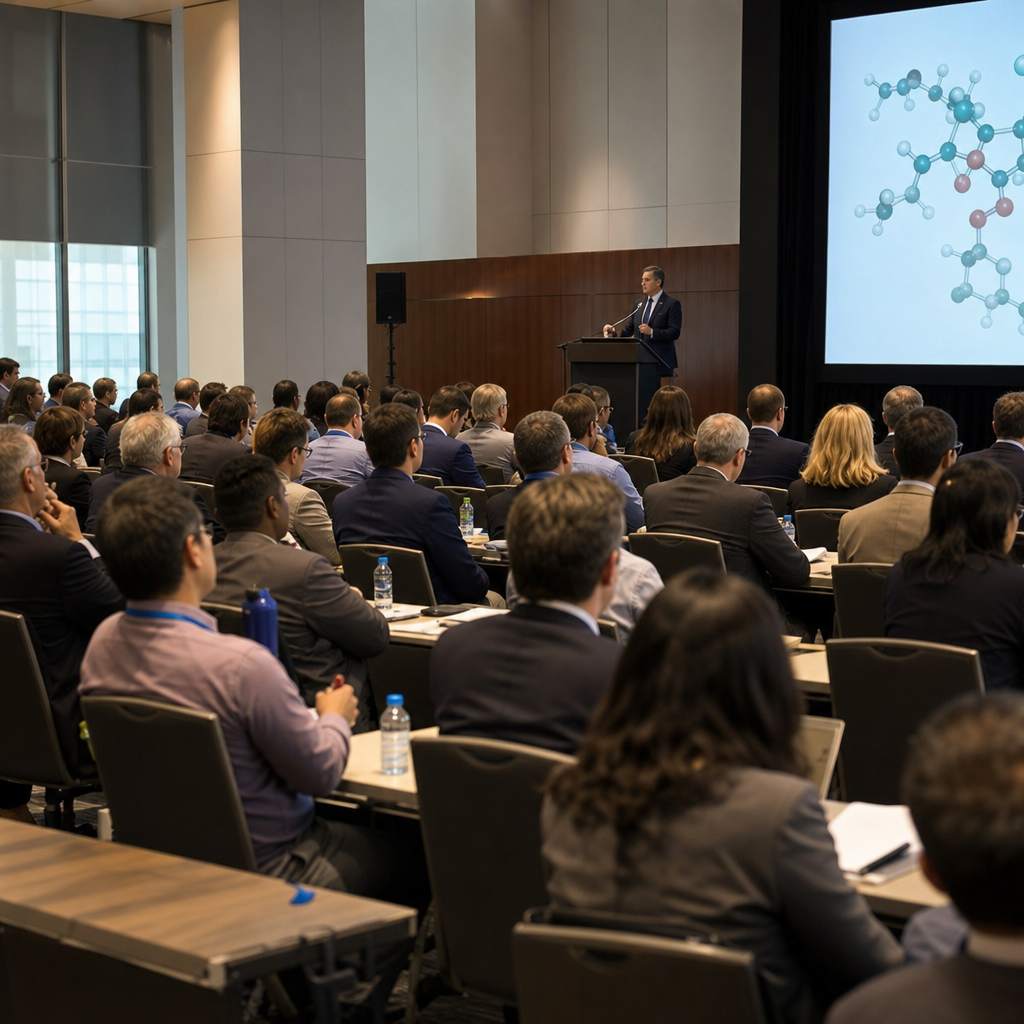
Polymer science and technology conferences are where the field moves from journal pages into working practice, and anyone building expertise in materials, processing, sustainability, or commercialization should treat them as core educational resources rather than optional travel. In practical terms, a polymer science conference is a structured event where researchers, engineers, suppliers, equipment makers, and end users share new data, debate methods, and build partnerships; workshops add a hands-on training layer focused on instruments, standards, or processing skills. I have used conferences to validate formulation ideas, compare characterization methods, and meet vendors who solved production problems faster than another month of internal testing could have. That is why a hub page on top conferences for polymer science and technology matters: the best events help attendees track advances in polymer chemistry, rheology, additive manufacturing, recycling, biopolymers, composites, extrusion, injection molding, and regulatory compliance while also revealing where the industry is actually investing. For students, conferences clarify career paths and introduce doctoral networks; for industrial scientists, they compress market intelligence, technical benchmarking, and supplier discovery into a few days. The strongest meetings also create durable learning pathways through tutorials, short courses, poster sessions, exhibitions, and standards-focused workshops tied to organizations such as ACS, MRS, SPE, ANTEC, TAPPI, SAMPE, and major regional societies.
What Makes a Polymer Science and Technology Conference Worth Attending
The best polymer conferences do three things well: they deliver current technical content, they attract the right mix of participants, and they offer useful formats beyond keynote talks. A strong program balances fundamental science with applied engineering. That means seeing sessions on polymerization kinetics, morphology control, spectroscopy, and simulation alongside practical presentations on compounding, process optimization, failure analysis, and scale-up. In my experience, events become far more valuable when speakers discuss test conditions, sample preparation, instrument settings, and limitations, rather than broad claims about performance. Good conferences also separate hype from durable progress. If a sustainability session discusses chemical recycling, for example, it should address feedstock contamination, energy intensity, and product quality, not just the idea of circularity.
Audience composition matters just as much as program quality. Academic meetings are ideal for emerging science, but mixed events with industry exhibitors often generate better problem-solving because equipment manufacturers, resin suppliers, and processors can speak directly to implementation. Workshops are especially useful when tied to real methods such as DSC, TGA, DMA, FTIR, GPC, tensile testing, melt flow analysis, and rheometry. These formats help attendees understand not only what a method measures but when results can be misleading. For a hub article on conferences and workshops, the central principle is simple: choose events that match your technical questions, career stage, and sector focus, then use each event to gather information you can apply within six months.
Leading Global Conferences for Broad Polymer Science Coverage
Several conferences consistently stand out for broad, high-value coverage across polymer science and technology. The ACS meetings remain among the most important because the POLY division and related symposia span synthesis, characterization, soft matter, biomaterials, sustainable polymers, and advanced applications. These meetings are useful for anyone who wants exposure to both foundational chemistry and translational work. The Materials Research Society meetings are similarly important when your interests overlap with electronic materials, nanostructured polymers, flexible devices, membranes, and interfaces. MRS programs often highlight cross-disciplinary work that later influences commercial materials design.
For applied polymer engineering, ANTEC, organized by the Society of Plastics Engineers, remains a central event. It is especially relevant for processing, product development, manufacturing economics, tooling, additives, and end-use performance. The exhibition and practitioner presence make ANTEC effective for understanding what plants are changing now, not just what laboratories hope to prove later. I have found ANTEC sessions particularly valuable when comparing extrusion screw design approaches, mold flow considerations, and troubleshooting strategies for warpage, shrinkage, or inconsistent melt behavior. European events anchored by major polymer federations and national societies also carry weight, particularly for sustainability regulation, automotive lightweighting, and circular materials policy, areas where regional requirements often shape global product strategy.
Specialized Conferences by Technical Focus
Not every attendee needs a general conference. Polymer science has matured enough that specialized meetings often produce the most actionable learning. If your work centers on composites, SAMPE events deserve close attention because they connect materials science, structural performance, processing, and aerospace-grade qualification practices. For packaging and paper-related polymer applications, TAPPI conferences are important because they examine coatings, barrier materials, fiber-polymer interactions, and sustainability metrics in market context. Biomaterials and biomedical polymer researchers often benefit more from targeted societies and medical materials meetings where sterilization, biocompatibility, degradation behavior, and regulatory pathways receive proper attention.
Sustainability-focused conferences have become indispensable as polymer producers face pressure to reduce carbon intensity, increase recycled content, and design for reuse or recovery. The most useful meetings in this area move beyond slogans and examine life cycle assessment, mass balance accounting, mechanical versus chemical recycling tradeoffs, compatibilizer use, sorting technology, and legislation such as extended producer responsibility schemes. Additive manufacturing events are another distinct category, especially for high-performance thermoplastics, photopolymers, and process-property relationships. When selecting specialized conferences and workshops, look for detailed technical tracks, standards references, and a history of peer-reviewed abstracts. Those signals usually indicate that the event prioritizes substance over promotional messaging.
Best Conferences and Workshops by Goal
Different conference goals require different event choices. Students should prioritize meetings with poster-heavy programs, career panels, and affordable short courses, because these features create low-barrier networking and practical skill building. Early-career researchers benefit from events where they can present preliminary data and receive feedback on methods, controls, and future experiments. Industrial scientists and process engineers should favor conferences with supplier exhibitions, troubleshooting workshops, and application case studies, since these provide direct routes to solving manufacturing issues. Product managers and business development teams often gain more from end-market focused events where customer requirements, regulations, and pricing trends are discussed alongside technology.
| Goal | Best Event Type | Why It Works |
|---|---|---|
| Learn core polymer science | Large society meeting | Broad coverage across synthesis, characterization, and applications |
| Improve plant or lab practice | Workshop or applied engineering conference | Hands-on methods, troubleshooting, vendor access, implementation detail |
| Build an academic network | Research-focused symposium | Poster sessions, collaborations, future funding and publication links |
| Track market direction | Industry conference with exhibition | End-user demand, regulation, supply chain insight, commercialization signals |
| Advance sustainability strategy | Circular materials or recycling conference | Policy, LCA, collection, sorting, feedstock quality, recovery economics |
Workshops deserve special emphasis because they often deliver the highest educational return per hour. A good rheology workshop, for example, can clarify the practical difference between shear thinning behavior observed in rotational measurements and extensional flow issues that appear during film blowing or fiber spinning. A characterization workshop can sharpen understanding of why a broad molecular weight distribution affects processability, impact resistance, or weld line strength. These are not abstract insights. They influence formulation choices, quality protocols, and equipment settings the next day.
How to Evaluate Conference Quality Before You Register
Before registering, review the technical program with the same rigor you would use to assess a literature source. Start with the agenda: are the talks grouped into coherent tracks, and do session titles reflect real technical depth? Then examine the speaker list. A healthy program includes university labs, national institutes, resin producers, converters, OEMs, and end users. If every speaker is a sponsor, expect a sales conference rather than a learning environment. Abstract quality is another strong signal. Useful abstracts state material systems, methods, and outcomes. Weak abstracts promise transformation without naming data.
Also check whether the conference offers proceedings, recorded sessions, workshop outlines, or standards references. Events tied to recognized organizations tend to maintain better review practices and stronger continuity from year to year. Costs should be evaluated honestly. Registration price alone is misleading; travel, lodging, time away from the lab, and missed production support all matter. I recommend setting objectives before attending: three technical questions to answer, five people to meet, and one benchmark to gather on equipment, material performance, or test methodology. That discipline turns a conference from a passive experience into a targeted research sprint. For educational resources pages, this is the most practical advice to give readers: the right conference is the one that closes a specific knowledge gap, not simply the one with the biggest name.
How Conferences and Workshops Support Continuous Learning
Conferences and workshops function best when they are part of a broader professional development system. Reading journals gives depth, but live events reveal where consensus is weak, where methods are changing, and where commercialization barriers remain. In polymer science, that distinction is crucial because measured properties depend heavily on processing history, environmental exposure, specimen geometry, and test standards. A paper may report tensile strength under ASTM D638 conditions, yet a conference discussion can expose why the same formulation fails in humid service, weld lines, or recycled-content blends. Those practical insights often surface in question periods, poster conversations, and corridor debates rather than formal publications.
This is why a conferences and workshops hub should connect readers to related educational resources such as guides on polymer characterization techniques, processing methods, sustainability frameworks, and career development. Conferences generate the map; workshops teach the route. If you attend regularly, patterns become visible. You notice when a once-niche topic like mono-material packaging becomes mainstream, or when attention shifts from virgin resin optimization to feedstock variability management. You also see which claims survive repeated scrutiny. Over time, that makes you better at distinguishing robust technology from fashionable language. The educational payoff is cumulative: sharper experimental design, better vendor selection, stronger professional networks, and faster translation from concept to application.
How to Get More Value During and After the Event
Attendees often underuse conferences by treating them as dense schedules instead of structured opportunities. The best approach is to plan around outcomes. Before the event, identify sessions relevant to your projects and read recent papers from key speakers. During the conference, take notes in a consistent format: problem addressed, method used, result claimed, limitation mentioned, and follow-up contact. That structure makes post-event synthesis far easier. Ask direct questions. If a speaker reports improved impact strength in a recycled polypropylene blend, ask about compatibilizer loading, contamination tolerance, and test standard. Specific questions usually lead to specific answers.
After the conference, convert notes into action within one week. Share a summary with your team, including methods worth testing, suppliers worth contacting, and assumptions that need verification. If you collected slides or proceedings, link them to internal project files so the learning remains searchable. In my own work, the most valuable conference outcomes have rarely been the headline talks. They have been the small, precise details gathered from workshops, poster sessions, and side conversations: which desiccant drying condition prevented hydrolysis in a polyester line, which capillary rheometer setup matched plant behavior, which recycling stream introduced odor that standard filtration could not remove. Those details are why top conferences for polymer science and technology remain essential educational resources. Choose carefully, attend with purpose, and use each event to turn information into better materials, better processes, and better decisions.
Frequently Asked Questions
What makes polymer science and technology conferences so important for researchers, engineers, and industry professionals?
Polymer science and technology conferences matter because they turn theory into practice. Journal articles are essential for documenting results, but conferences are often where those results are first challenged, refined, demonstrated, and translated into real-world use. At a strong polymer conference, you are not just reading finished conclusions on a page. You are hearing how materials behaved under different processing conditions, what failed during scale-up, which characterization methods produced the clearest data, and how researchers and manufacturers are responding to sustainability, performance, and cost pressures at the same time.
These events also bring together the full polymer ecosystem in one place. That usually includes academic scientists, product developers, process engineers, resin suppliers, additive manufacturers, instrument companies, molders, recyclers, converters, and end users. Because of that mix, a conference becomes much more than a speaking program. It becomes a working environment for comparing methods, validating assumptions, and identifying where a promising idea fits in the market. Someone focused on polymer chemistry may gain a better understanding of downstream processing limits, while a manufacturing team may discover a new material system that solves a persistent performance problem.
Another major benefit is speed. Conferences let professionals absorb a large amount of current information in a short time. Instead of spending months piecing together separate papers, product announcements, and market signals, attendees can quickly identify emerging priorities such as advanced recycling, bio-based polymers, lightweighting, barrier materials, smart polymers, additive manufacturing feedstocks, or digital tools for process optimization. For anyone building expertise or making technical decisions, that concentration of insight makes conferences a core educational resource, not an optional trip.
What should attendees look for when choosing the best polymer science conference to attend?
The best conference depends on your goals, because polymer science and technology is broad. Some events are highly academic and focus on fundamental polymer chemistry, chain architecture, rheology, crystallization, and characterization. Others are more applied, centered on compounding, extrusion, injection molding, film production, composites, recycling systems, packaging performance, medical materials, electronics, or commercialization. The first thing to evaluate is whether the conference agenda matches the decisions you need to make or the knowledge gap you want to close.
It is also important to study the speaker list and attendee profile. A conference with respected researchers, experienced industrial practitioners, and a strong mix of suppliers and end users usually offers deeper value than one built mostly around promotional presentations. Look for sessions that include case studies, technical data, panel discussions, and workshops rather than only broad trend talks. Workshops can be especially useful because they provide hands-on or method-focused learning in areas like polymer testing, processing optimization, sustainability metrics, and material selection.
Another sign of quality is whether the event encourages interaction. Poster sessions, roundtables, exhibitor demonstrations, networking receptions, and small-group technical forums often create the best opportunities for practical learning. In polymer fields, some of the most useful information comes from informal conversations about failure modes, machine settings, additive interactions, regulatory constraints, or supply chain realities that are not fully captured in published literature. If the event also attracts international participation, that can add perspective on regional regulations, feedstock availability, recycling infrastructure, and manufacturing trends.
Finally, consider the conference’s reputation for delivering current, credible information. Established events tied to leading professional societies, respected industry associations, or well-known technical publishers often maintain higher standards for program quality. When choosing among top conferences for polymer science and technology, prioritize relevance, technical depth, attendee quality, and opportunities for direct engagement over the size of the venue or the marketing around the event.
How can attending a polymer science conference help with career growth and professional development?
Attending a polymer science conference can accelerate career growth because it expands both technical competence and professional visibility. From a knowledge standpoint, conferences expose attendees to new materials, processing techniques, analytical tools, and application trends far faster than routine workplace learning usually allows. Whether you work in R&D, product development, quality, manufacturing, technical sales, or sustainability, that exposure helps you make better decisions and speak more confidently about the direction of the field.
Conferences are also one of the best environments for building a credible professional network. In polymer science and technology, careers often advance through collaborative research, supplier partnerships, pilot trials, shared testing resources, and introductions across academia and industry. Meeting people face-to-face makes those relationships much stronger. A short conversation after a presentation can lead to a future collaboration, a job opportunity, access to specialized equipment, or a clearer understanding of how another organization solved a problem similar to yours.
For early-career professionals and graduate students, conferences are especially valuable because they provide visibility. Presenting a poster, giving a talk, asking thoughtful questions, or participating in technical workshops helps others associate your name with a specific area of expertise. That matters in a competitive field where employers and collaborators want evidence of both technical depth and engagement with the wider polymer community. For mid-career and senior professionals, conferences support leadership development by creating opportunities to chair sessions, mentor younger attendees, contribute to panels, and stay informed about shifts in regulation, sustainability expectations, and commercial demand.
In short, conferences support professional development on multiple levels: they sharpen technical understanding, improve communication skills, expand networks, and help attendees stay relevant in a field that evolves quickly across materials science, processing technology, and industrial application.
Which topics are usually covered at top polymer science and technology conferences?
Top polymer science and technology conferences typically cover a wide range of subjects because the field connects fundamental science with large-scale industrial use. On the scientific side, common themes include polymer synthesis, macromolecular design, copolymers, blends, nanocomposites, rheology, morphology, crystallization, surface behavior, thermal properties, and advanced characterization techniques. These sessions are important because they explain why a material behaves the way it does, which is the foundation for improving performance in real applications.
On the engineering and manufacturing side, conferences often include substantial coverage of processing technologies such as extrusion, injection molding, blow molding, thermoforming, fiber spinning, coating, compounding, and additive manufacturing. Attendees learn how material formulation interacts with machine settings, tooling, throughput, product geometry, and quality outcomes. This is where polymer conferences become especially practical, because discussions often move beyond laboratory-scale performance and into manufacturability, consistency, cost efficiency, and troubleshooting.
Sustainability has become one of the most prominent conference themes in recent years. Many top events now devote major programming to mechanical recycling, chemical recycling, circular material design, bio-based feedstocks, biodegradability, life-cycle assessment, regulatory compliance, and strategies for reducing waste and carbon impact. These sessions are increasingly important because polymer professionals are under pressure to balance environmental goals with performance, safety, and economics.
Commercialization topics are also common. Conferences frequently address market adoption, intellectual property, supply chain resilience, standards, regulatory approval, and end-use requirements in packaging, automotive, aerospace, healthcare, construction, electronics, and consumer products. The strongest events bring these areas together so attendees can see the full pathway from molecular design to processing to product launch. That integrated view is exactly why leading polymer conferences are so useful for anyone trying to understand where the industry is headed and how to contribute effectively.
How can someone get the most value from attending a polymer science and technology conference?
Getting the most value from a polymer science conference starts well before the event begins. Review the agenda in advance and identify the sessions, speakers, exhibitors, and workshops most relevant to your goals. If your focus is sustainability, for example, prioritize talks on recycling technologies, circular design, life-cycle metrics, and policy developments. If you work in processing, target sessions on compounding, rheology, scale-up, tooling, and production efficiency. A clear plan helps you avoid spending the conference passively and ensures that your time is aligned with your technical or business objectives.
During the conference, take an active approach. Attend keynote talks for broad industry direction, but also make time for technical sessions, poster presentations, and smaller discussions where detailed learning often happens. Ask questions when a speaker presents data relevant to your work. Visit exhibitors strategically, especially if they offer materials, instruments, software, or equipment connected to current challenges in your organization. In polymer technology, supplier conversations can be highly educational because they often reveal practical limitations, processing windows, and implementation lessons that are not obvious from product literature alone.
Networking should be treated as part of the learning process, not as a separate activity. Talk with researchers about methods, ask engineers about process constraints, and speak with commercial teams about adoption barriers in different industries. Those conversations can help you connect technical innovation with market reality. It is also smart to document your takeaways in a structured way, such as notes organized by materials, processes, sustainability insights, potential contacts, and follow-up actions. That makes it easier to convert conference information into usable knowledge once you return to work.
After the event, the real value is created through follow-through. Reach out to new contacts, review your notes, share key insights with colleagues, and identify one or two ideas worth exploring immediately. That might mean testing a new additive package, evaluating a characterization method, scheduling a supplier meeting, or reading papers from presenters whose work stood out. The professionals who