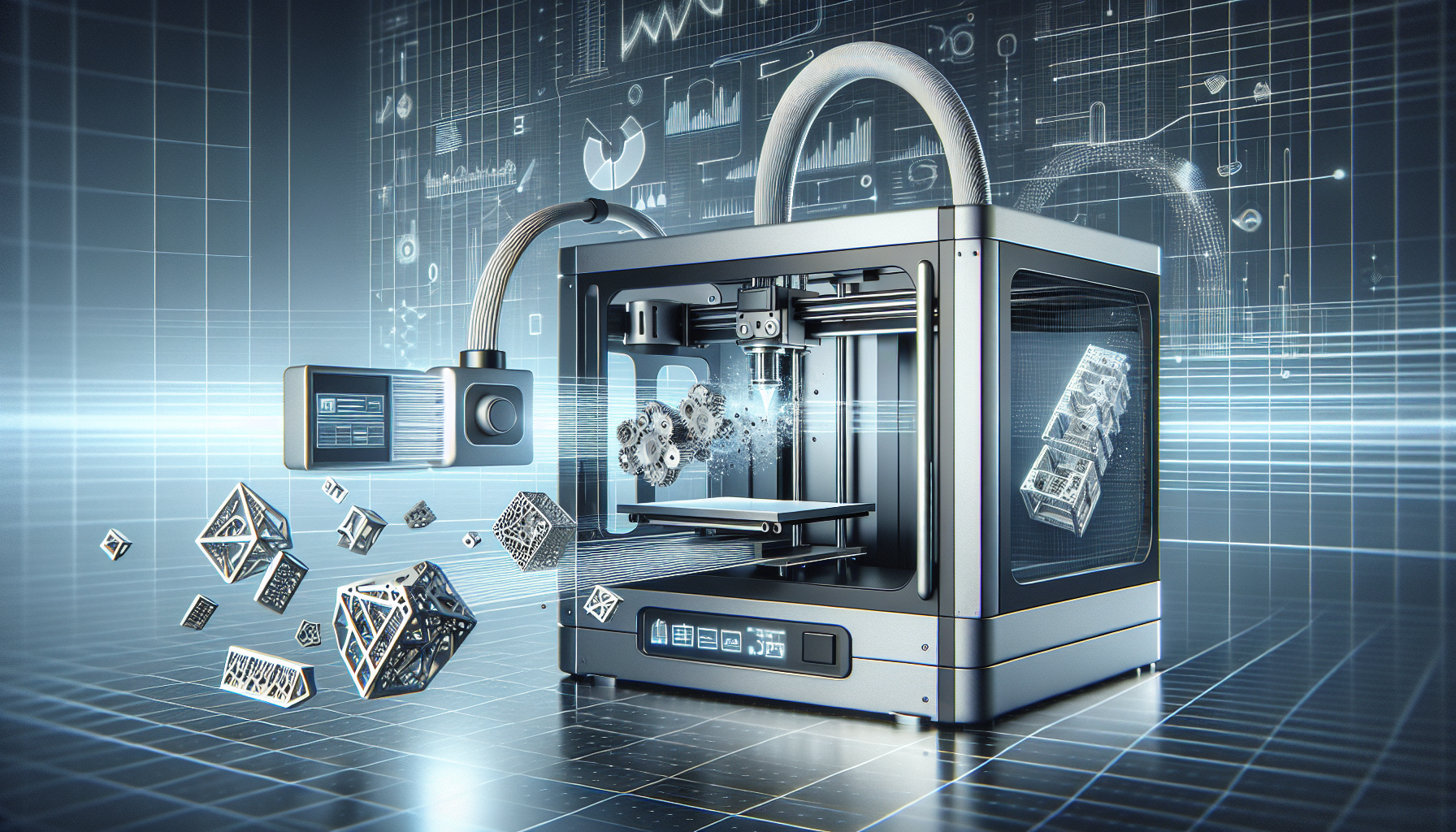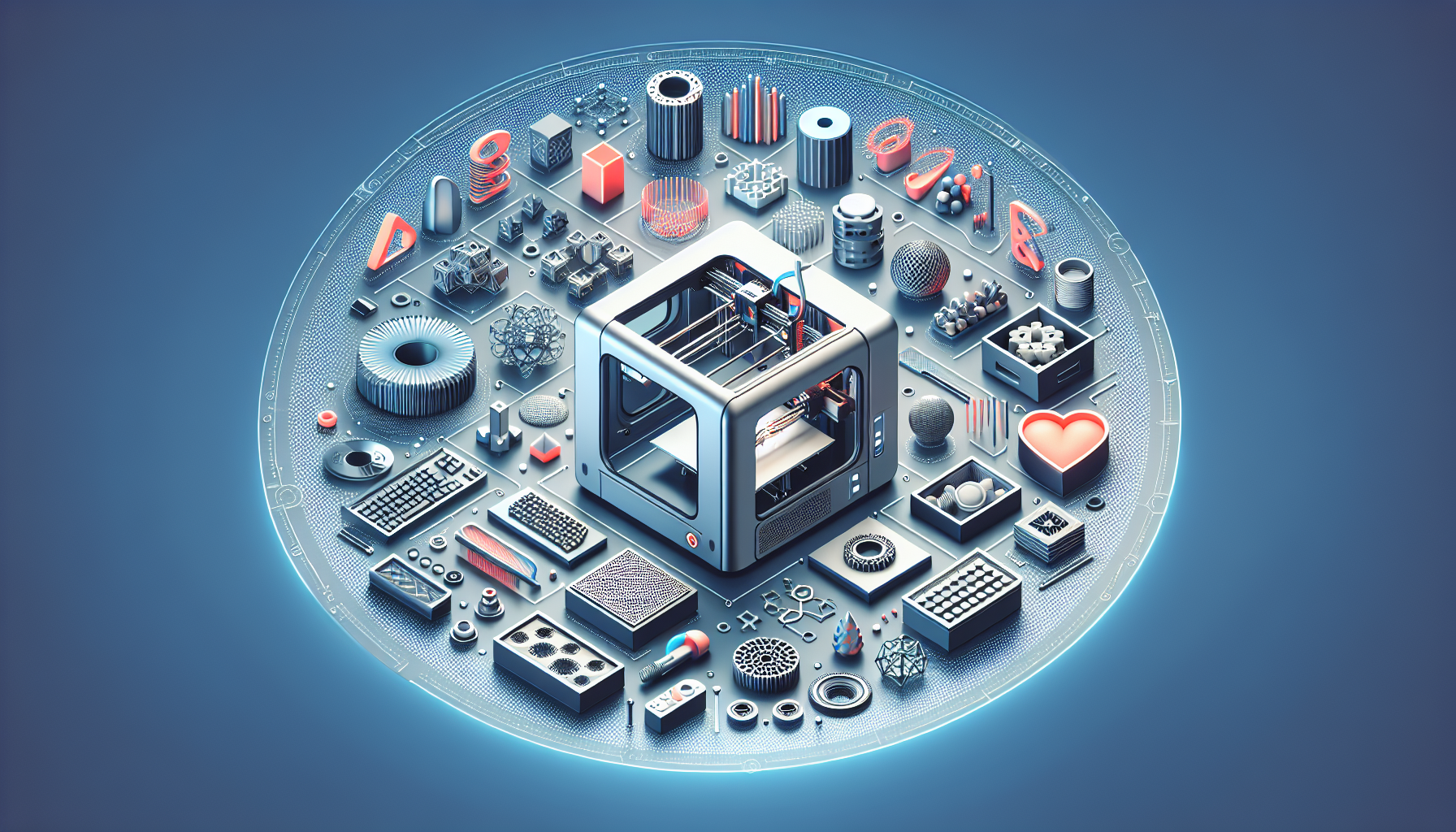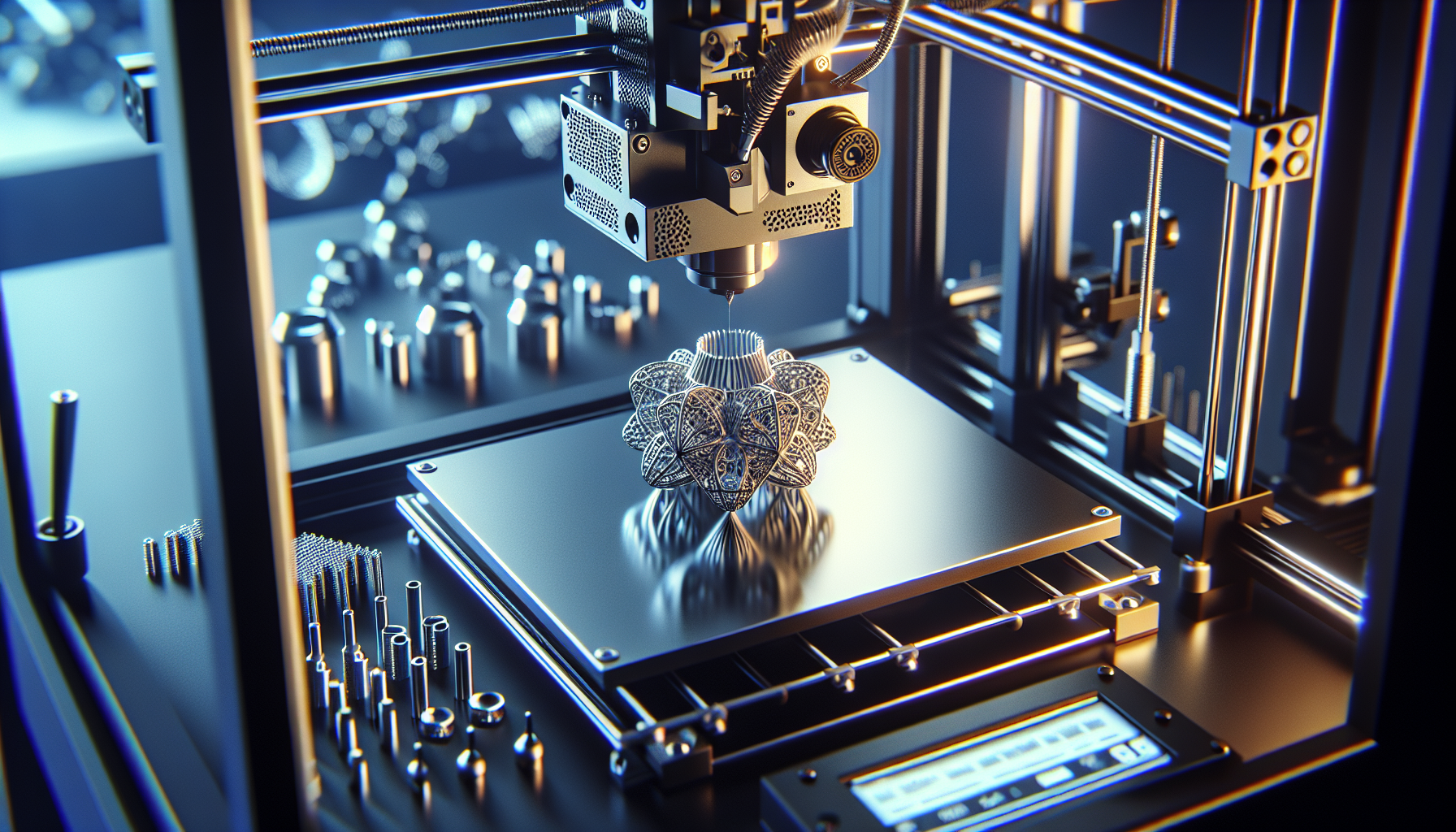
Additive manufacturing, commonly called 3D printing, is a manufacturing process that builds parts layer by layer from a digital model instead of cutting material away or shaping it with molds and dies. In practical terms, that difference changes almost everything: design freedom, tooling needs, lead times, inventory strategy, and the economics of low-volume production. I have worked with teams evaluating printers for prototyping, jigs, fixtures, and end-use parts, and the same first question always comes up: when does additive manufacturing make technical and financial sense? The short answer is that additive manufacturing excels when geometry is complex, iteration speed matters, customization is valuable, or conventional tooling is too expensive for the required volume. Understanding the basics and benefits matters because manufacturers now use additive methods not only in research labs but also on production floors in aerospace, medical devices, automotive, consumer goods, and industrial maintenance. Standards bodies such as ASTM International and ISO classify additive manufacturing into seven major categories, giving the field a formal structure beyond the popular hobbyist image. For a Manufacturing Processes hub, this topic is essential because it connects design, materials, production planning, quality assurance, and supply chain decisions. It also complements related process families such as machining, casting, molding, and forming. To evaluate additive manufacturing correctly, readers need clear definitions of feedstock, build orientation, support structures, post-processing, and process capability. They also need a balanced view of benefits and limitations. 3D printing is not a universal replacement for conventional manufacturing, but it is a powerful, mature set of technologies that solves specific production problems better than traditional methods in many real-world scenarios.
What Additive Manufacturing Is and How It Works
Additive manufacturing is the controlled deposition or solidification of material in successive layers to create a three-dimensional object directly from CAD data. The workflow is straightforward in principle. A part is designed in CAD, exported to a printable file format such as STL or 3MF, prepared in slicing software, and then built by a machine using polymer, metal, resin, powder, wire, or another feedstock. After the build, the part is removed, cleaned, cured, sintered, machined, or otherwise finished depending on the process. Those steps sound simple, but process settings, orientation, support strategy, and thermal behavior determine whether the part meets requirements for strength, surface finish, and dimensional accuracy.
The seven ASTM and ISO categories are material extrusion, vat photopolymerization, powder bed fusion, binder jetting, material jetting, directed energy deposition, and sheet lamination. Material extrusion, including fused filament fabrication, pushes thermoplastic through a heated nozzle. Vat photopolymerization cures liquid resin with light, as in SLA and DLP systems. Powder bed fusion uses lasers or electron beams to melt polymer or metal powder. Binder jetting selectively deposits a binder onto powder, followed by curing and often sintering. Material jetting deposits droplets of build material, often photopolymers, and cures them. Directed energy deposition feeds wire or powder into a melt pool created by a focused heat source. Sheet lamination bonds sheets of material and cuts them to shape. Each category has distinct strengths, costs, and use cases.
Compared with subtractive manufacturing, additive manufacturing wastes less material for many geometries because it places material only where needed. Compared with casting or injection molding, it requires far less dedicated tooling, which is why it is so valuable for prototypes, service parts, and customized products. However, additive processes often require slower build times per part, more post-processing, and tighter process control than newcomers expect. Build orientation can affect anisotropy, meaning strength may differ by direction. Support structures can improve build success but add removal time and surface marks. Thermal gradients can cause warping in polymers and residual stress in metals. In other words, additive manufacturing works best when engineers design for the process rather than treating it as a direct substitute for every conventional method.
Major Additive Manufacturing Technologies and Typical Applications
The best way to understand additive manufacturing basics is to connect each technology to real use cases. Material extrusion is widely used for low-cost prototypes, assembly aids, fixtures, and educational applications. On factory floors, I have seen extrusion printers produce drill guides, ergonomic handles, and end-of-arm tooling that replaced machined plastic components in days rather than weeks. Vat photopolymerization is chosen when teams need high detail, smooth surfaces, and fine features, such as dental models, hearing aid shells, fluidic prototypes, and casting patterns. Powder bed fusion, especially selective laser sintering for polymers and selective laser melting or direct metal laser sintering for metals, is used for complex functional parts. Aerospace brackets, lightweight ducts, orthopedic implants, and motorsport components are common examples because the process can produce intricate internal channels and lattice structures.
Binder jetting is gaining attention for production because it can build many parts quickly and can work with metals, sand, or ceramics. Foundries use binder-jetted sand molds and cores to accelerate casting development. Material jetting is useful when visual realism, multi-material output, or fine detail is critical, making it popular for medical models, design mockups, and complex prototypes. Directed energy deposition is often selected for repairing high-value components or adding features to existing metal parts. In heavy industry and aerospace maintenance, repairing turbine or tooling surfaces with deposited metal can be more economical than replacing a large component. Sheet lamination is less discussed but remains relevant for certain composite and paper-based applications.
| Process | Typical Materials | Main Strength | Common Applications |
|---|---|---|---|
| Material Extrusion | PLA, ABS, PETG, Nylon, filled polymers | Low cost and accessibility | Prototypes, jigs, fixtures, tooling aids |
| Vat Photopolymerization | Photopolymer resins | High detail and smooth finish | Dental models, patterns, visual prototypes |
| Powder Bed Fusion | Nylon, TPU, aluminum, titanium, stainless steel | Complex functional geometry | End-use parts, implants, aerospace brackets |
| Binder Jetting | Metal, sand, ceramics | High throughput potential | Casting molds, metal part production |
| Directed Energy Deposition | Metal wire or powder | Repair and feature addition | Component repair, near-net-shape builds |
No single process is universally best. For example, if the priority is a cosmetic concept model, material jetting may outperform extrusion. If the priority is a heat-resistant aerospace component, metal powder bed fusion may be the only realistic option. If the priority is low-cost bridge production for a plastic enclosure, selective laser sintering or multi-jet fusion may beat injection molding until volumes justify a mold. Good process selection starts with function, tolerance, environment, regulatory requirements, and expected annual volume.
Core Benefits of Additive Manufacturing for Modern Industry
The most important benefit of additive manufacturing is design freedom. Engineers can create internal channels, topology-optimized forms, lattice structures, conformal cooling paths, and consolidated assemblies that are difficult or impossible to make conventionally. In injection molding tools, conformal cooling inserts produced by metal additive manufacturing can reduce cycle time by cooling parts more evenly. In aerospace, reducing a bracket from multiple assembled pieces to one printed component can cut weight and eliminate fasteners. In medical manufacturing, patient-specific implants and surgical guides can be tailored directly from imaging data, improving fit and clinical workflow.
A second major benefit is speed. Additive manufacturing shortens the path from design to physical part because no dedicated hard tooling is required. During product development, that means more design iterations in less time. I have seen teams move from a CAD revision in the morning to a test-fit fixture by the next day, which materially improved launch schedules. The business value is not only faster prototyping; it is faster learning. Errors in ergonomics, assembly clearance, airflow, and serviceability appear earlier, when they are still inexpensive to fix.
A third benefit is economic flexibility at low to medium volumes. Traditional processes often have attractive piece-part pricing only after tooling investment is spread across enough units. Additive manufacturing flips that equation. Unit cost is relatively stable because setup is mostly digital, making it ideal for short runs, spare parts, custom products, and bridge manufacturing. This is especially useful when demand is uncertain. Rather than commit capital to molds and large inventories, a company can produce on demand or in smaller batches.
The fourth benefit is supply chain resilience. Distributed manufacturing allows digital files to move instead of physical inventory. Spare parts can be printed nearer to the point of use, reducing warehousing and obsolescence. Rail operators, defense organizations, and remote industrial sites increasingly evaluate digital inventories for hard-to-source components. The model is not simple, because qualification and version control are critical, but the strategic advantage is real. Additive manufacturing can reduce dependence on long lead-time tooling and single-source suppliers.
Design, Materials, Quality, and Limitations
Effective additive manufacturing depends on design for additive manufacturing, often shortened to DfAM. The basic principle is to exploit the process rather than merely copy a conventionally designed part. That can mean reducing support requirements, orienting critical surfaces for better quality, thickening thin walls, adding escape holes for powder removal, or consolidating assemblies. It can also mean using topology optimization or lattices where stiffness-to-weight matters. Engineers who ignore DfAM often produce expensive printed parts with no meaningful advantage over machined or molded alternatives.
Material choice is equally important. Common polymer materials include PLA, ABS, PETG, nylon, polycarbonate, and high-performance polymers such as PEEK and PEKK. Metal systems commonly use stainless steel, aluminum alloys, tool steels, titanium, Inconel, and cobalt chrome. Material data should be reviewed carefully because printed properties depend on machine settings, orientation, density, and post-processing. A nylon powder bed fusion part may offer excellent toughness for a duct or housing, while a resin part with sharp detail may be unsuitable for long-term UV exposure or high heat. Metal parts often require stress relief, hot isostatic pressing, machining, and surface finishing to meet final specifications.
Quality assurance in additive manufacturing combines dimensional inspection, material verification, machine calibration, and process monitoring. In regulated industries, traceability is mandatory. Aerospace and medical manufacturers rely on documented parameters, qualification builds, and standards-based validation. Surface finish, porosity, anisotropy, and residual stress are recurring concerns. So are powder handling safety, resin management, and environmental controls. Additive manufacturing is powerful, but the quality system around it must be mature.
The limitations are clear. Build speed can be slow for large volumes. Surface finish may require significant post-processing. Large parts may exceed machine envelopes or become uneconomical. Tolerances can be less predictable than precision machining without secondary operations. Material options, though improving, are still narrower than conventional manufacturing in some categories. Those tradeoffs do not weaken the case for additive manufacturing; they define where it performs best.
How to Evaluate Additive Manufacturing in a Manufacturing Strategy
A practical evaluation starts with five questions. First, what problem are you solving: prototype speed, part consolidation, lightweighting, customization, tooling reduction, repair, or supply chain risk? Second, what are the performance requirements for strength, temperature, chemical resistance, certification, and dimensional tolerance? Third, what annual volume is realistic? Fourth, what post-processing and inspection capability do you have in-house or through a service bureau? Fifth, does the design truly benefit from additive geometry, or would machining, molding, or casting deliver a lower total cost?
For many companies, the smart first step is not buying a machine but qualifying a few representative parts with an experienced service provider. That approach reveals actual lead times, finishing requirements, and unit economics before capital is committed. It also helps teams compare additive manufacturing with other manufacturing processes on a total-cost basis rather than on machine price alone. If parts are repeatedly ordered, geometrically complex, and hard to source conventionally, then bringing capability in-house may be justified. As this sub-pillar hub develops, related articles should dive deeper into DfAM, metal 3D printing, polymer printing, post-processing, additive quality control, and cost analysis. Understanding additive manufacturing begins with one core insight: it is a strategic manufacturing capability, not just a machine. Use it where its strengths are structural, economic, and operational, and it can deliver faster development, smarter production, and more resilient supply chains.
Additive manufacturing has moved from a prototyping novelty to a serious production method because it solves specific manufacturing problems better than conventional approaches. Its basics are straightforward: build parts layer by layer from digital data using processes such as material extrusion, vat photopolymerization, powder bed fusion, binder jetting, material jetting, directed energy deposition, and sheet lamination. Its benefits are equally clear: greater design freedom, shorter development cycles, economical low-volume production, customization, and stronger supply chain flexibility. The most successful implementations come from matching the right technology and material to the right application, then designing for the process and validating quality with discipline. That balanced view matters for any Manufacturing Processes resource because additive manufacturing works best alongside machining, molding, casting, and forming rather than in isolation. If you are assessing where 3D printing fits in your operation, start with a part family that suffers from long lead times, expensive tooling, frequent redesigns, or complex geometry. Then compare additive manufacturing against current methods using total cost, lead time, performance, and risk. Done correctly, additive manufacturing becomes more than a faster way to prototype. It becomes a practical way to make better products, reduce waste, and build a more responsive manufacturing strategy. Explore the related articles in this additive manufacturing hub to go deeper into process selection, materials, design rules, and implementation planning.
Frequently Asked Questions
What is additive manufacturing, and how is it different from traditional manufacturing?
Additive manufacturing is a production method that creates parts by adding material layer by layer from a digital 3D model. That is the core difference from traditional manufacturing methods such as machining, casting, or injection molding. In machining, material is removed from a solid block to achieve the final shape. In molding and casting, material is formed using tooling such as molds, dies, or patterns. With additive manufacturing, the part is built only where material is needed, which changes both the design process and the production economics.
In practical terms, this means additive manufacturing often allows far more geometric freedom. Internal channels, lattice structures, complex curves, and consolidated assemblies can often be produced much more easily than they can with conventional methods. It also reduces or eliminates the need for custom tooling, which is one of the biggest barriers to speed and affordability in low-volume production. Instead of waiting weeks or months for molds or fixtures, teams can move directly from a CAD file to a physical part.
That said, additive manufacturing is not simply a replacement for every traditional process. It is most valuable when complexity is high, customization matters, tooling costs are hard to justify, or speed is critical. Traditional manufacturing still tends to be more cost-effective for very high production volumes and for parts with simple geometries that can be made efficiently with established tooling. The most accurate way to think about additive manufacturing is as a powerful addition to the manufacturing toolkit, not a one-size-fits-all substitute.
What are the main benefits of additive manufacturing for businesses?
The biggest benefits usually fall into five categories: design freedom, faster lead times, reduced tooling requirements, lower waste, and more flexible production. Design freedom matters because engineers are no longer forced to simplify a part just to make it manufacturable with cutting tools or molds. They can optimize for performance, weight, fit, or function instead. This often leads to stronger product performance and fewer design compromises.
Faster lead times are another major advantage. Once a digital design is ready, production can begin quickly without waiting for dedicated tooling. That makes additive manufacturing especially useful for prototypes, engineering revisions, custom fixtures, and urgent replacement parts. In many cases, teams can test, revise, and reprint within days rather than waiting through long supplier cycles.
Reduced tooling needs can significantly improve the economics of low-volume or customized production. If a company only needs a small batch of specialized parts, building an expensive mold or die may not make financial sense. Additive manufacturing allows those parts to be produced on demand, which can also reduce inventory costs. Rather than storing large quantities of slow-moving items, organizations can keep digital files and manufacture parts when needed.
There is also a sustainability and material-efficiency angle. Because additive manufacturing places material where it is needed, it can reduce scrap compared with subtractive methods in certain applications. Finally, it supports production flexibility. Businesses can switch between part designs more easily, respond faster to changes, and support mass customization without completely restructuring their operations. For companies trying to become more agile, that is a meaningful competitive advantage.
What are the most common applications of additive manufacturing?
One of the most common uses is rapid prototyping. This is often where companies first adopt additive manufacturing because it lets product teams evaluate shapes, fit, ergonomics, and assembly concepts quickly. Instead of reviewing designs only on a screen, engineers and stakeholders can hold a physical model, identify problems earlier, and make improvements before committing to more expensive production methods.
Beyond prototyping, additive manufacturing is widely used for jigs, fixtures, tooling aids, and manufacturing supports. These applications are often overlooked, but they can deliver excellent return on investment. A custom fixture that improves operator efficiency, reduces setup time, or makes a production step safer can often be printed faster and more affordably than it can be machined. That is why many operations teams adopt 3D printing even before using it for customer-facing products.
End-use parts are another growing area. In industries such as aerospace, medical, dental, automotive, and industrial equipment, additive manufacturing is used for lightweight components, patient-specific devices, replacement parts, and specialized low-volume assemblies. It is particularly useful when parts need to be customized, produced in small quantities, or optimized for performance rather than just ease of manufacturing. Spare parts and legacy components are also strong use cases because digital files can replace the need for large physical inventories. Overall, the range of applications keeps expanding as materials, printer capabilities, and process controls continue to improve.
Is additive manufacturing only useful for prototypes, or can it be used for final production parts?
Additive manufacturing is absolutely useful for more than prototypes. While prototyping remains one of its most accessible and common applications, many organizations now use it for functional, end-use parts in real production environments. The key is understanding that success depends on matching the right additive process and material to the specific performance requirements of the part.
For example, some polymer-based additive processes are well suited for housings, brackets, ducting, custom enclosures, and tooling components. Metal additive manufacturing can produce high-performance parts for aerospace, medical, and industrial applications where complex geometry and weight reduction are important. In these cases, additive manufacturing may enable designs that would be difficult or impossible to produce conventionally, such as internal cooling channels or consolidated multi-part assemblies.
However, not every part should be printed. Production suitability depends on factors like mechanical strength, surface finish, dimensional tolerance, regulatory requirements, build size, repeatability, and total cost at the intended production volume. For low-volume, high-value, or highly customized parts, additive manufacturing can be an excellent production method. For very high-volume runs of simple components, injection molding or machining may still be the better choice. The most practical approach is to evaluate additive manufacturing based on the part’s function, lifecycle needs, and economics rather than assuming it is limited to early-stage prototyping.
What should companies consider before adopting additive manufacturing?
Before adopting additive manufacturing, companies should start with the business case, not the machine itself. The first question should be what problem the technology is expected to solve. Is the goal faster prototyping, lower tooling costs, improved manufacturing support, spare-parts availability, product customization, or end-use production? Clear objectives help determine whether additive manufacturing is the right fit and prevent organizations from investing in equipment without a realistic plan for value creation.
Next, companies need to assess materials, part requirements, and process capabilities. Different additive technologies have very different strengths. Some are optimized for speed and concept modeling, while others focus on stronger engineering materials, tighter tolerances, or metal production. Teams should evaluate required mechanical properties, thermal resistance, accuracy, surface finish, post-processing needs, and certification demands. It is also important to consider workflow issues such as software compatibility, operator training, quality assurance, and maintenance.
Cost should be analyzed across the full process, not just printer purchase price. Material costs, labor, machine utilization, post-processing, failed builds, and inspection all affect the total economics. In many cases, outsourcing is a smart first step because it allows a company to test applications before bringing production in-house. Finally, organizations should think strategically about design. Additive manufacturing delivers the greatest value when teams design specifically for it rather than simply printing parts originally created for traditional processes. When companies combine a clear use case, the right technology, and a design-for-additive mindset, adoption tends to be far more successful.