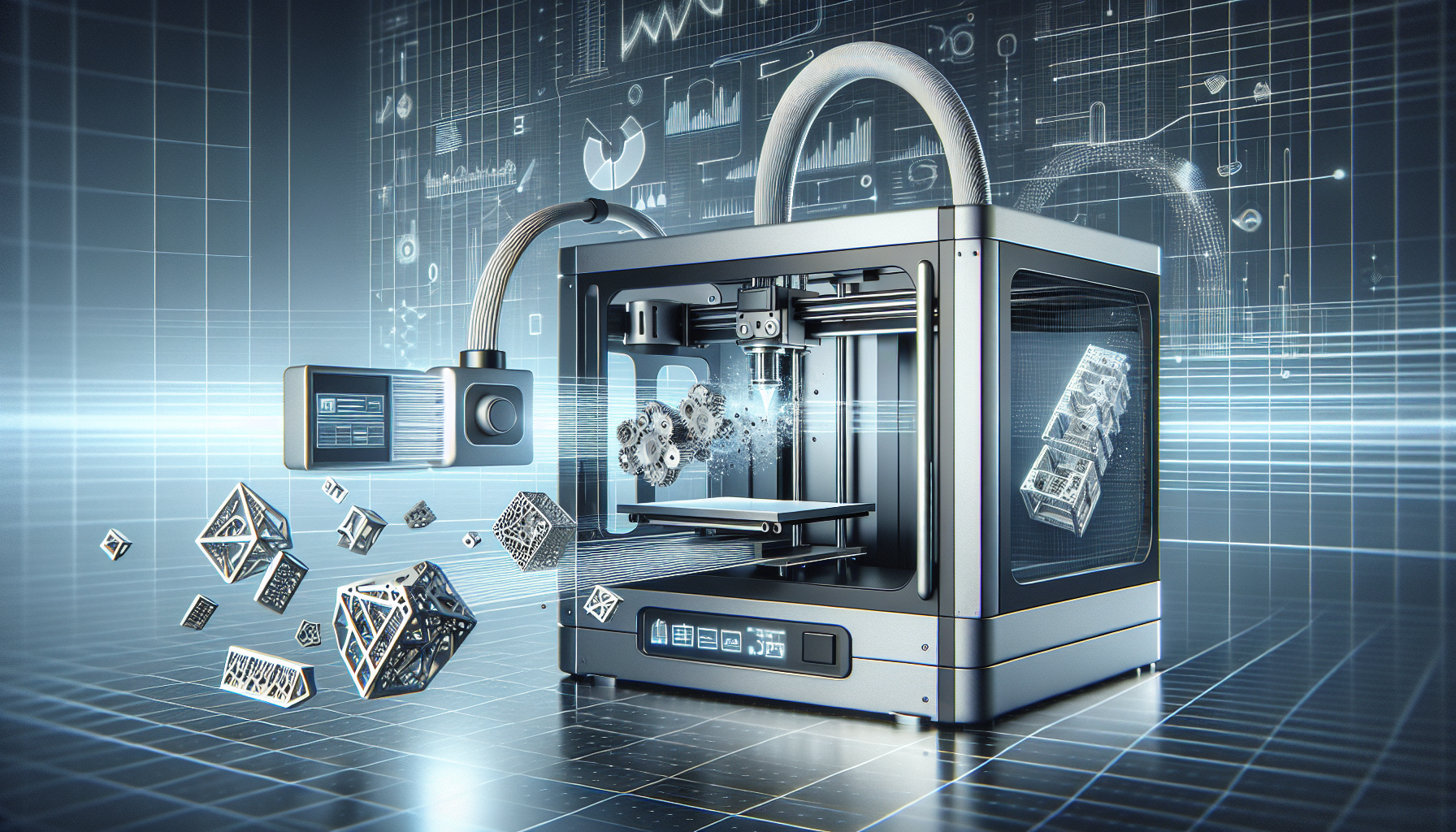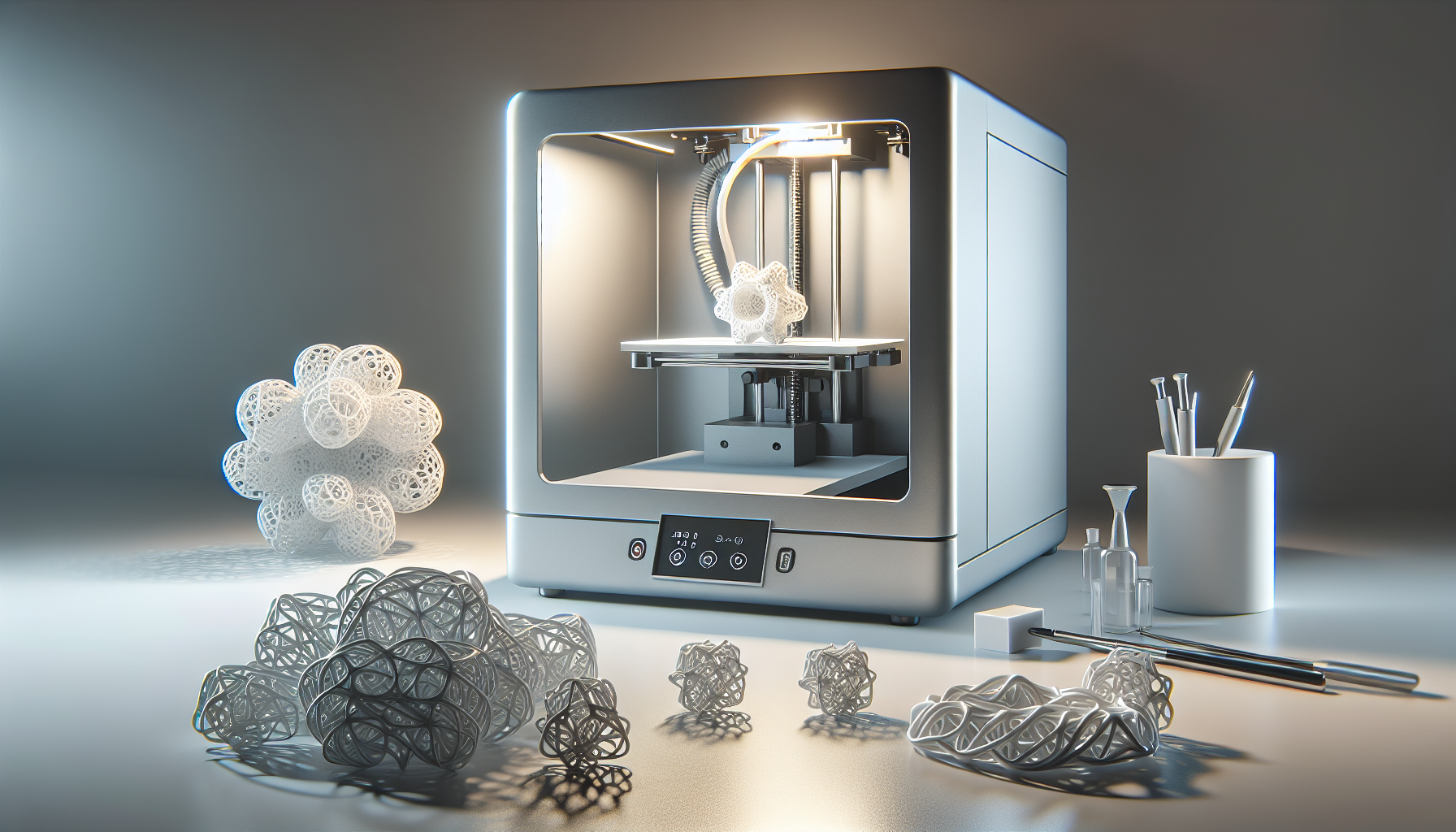
3D printing has become one of the most important technologies in modern polymer manufacturing because it changes how plastic parts are designed, tested, produced, and improved across the full product lifecycle. In manufacturing terms, 3D printing is additive manufacturing: a process that builds parts layer by layer from digital files rather than removing material through machining or shaping molten polymer in fixed tooling. In polymer manufacturing, the term includes several process families, most notably fused filament fabrication, stereolithography, selective laser sintering, material jetting, binder jetting for polymer systems, and powder bed fusion methods tailored to thermoplastics. I have used these processes in prototyping programs and low-volume production environments, and the practical value is consistent: faster iteration, lower upfront tooling cost, and design freedom that conventional methods often cannot match.
As a hub topic under manufacturing processes, additive manufacturing matters because it connects material science, digital design, production planning, quality control, and supply chain strategy. It is not simply a prototyping tool anymore. Companies now use polymer 3D printing for jigs and fixtures, bridge production, custom medical devices, lightweight ducting, consumer goods, spare parts, and end-use components in aerospace and automotive programs. The technology also raises important questions searchers commonly ask: what kinds of polymer 3D printing exist, how do they compare, when should manufacturers choose them, what materials are available, what quality standards apply, and where are the limitations. This article answers those questions directly and positions additive manufacturing within the wider polymer manufacturing landscape so readers can evaluate it realistically and use it effectively.
What additive manufacturing means in polymer manufacturing
In polymer manufacturing, additive manufacturing refers to digitally controlled processes that create a part by depositing, curing, fusing, or sintering polymer feedstock in successive layers. The feedstock may be filament, pellets, liquid photopolymer resin, or powder. The workflow usually begins with a CAD model, continues through slicing software that converts geometry into toolpaths and process parameters, and ends with printing, post-processing, inspection, and validation. Unlike injection molding, which requires a mold, or CNC machining, which removes material from stock, additive manufacturing can produce complex internal channels, lattice structures, and highly customized geometries without dedicated tooling.
The central reason manufacturers adopt polymer 3D printing is economic flexibility. Traditional processes excel at scale, but they require capital, lead time, and design commitment. A mold for a complex plastic part can take weeks or months and may cost thousands to hundreds of thousands of dollars depending on part size, tolerances, and tool complexity. By contrast, a printed polymer prototype can often be produced the same day. That speed compresses development cycles, reduces engineering risk, and allows teams to validate form, fit, and function before committing to production tooling. In my experience, the biggest savings rarely come from the print itself; they come from avoiding late design changes after a tool has already been cut.
Polymer additive manufacturing also supports distributed manufacturing. Digital part files can be stored, revised, and sent to qualified printers near the point of use, reducing inventory for slow-moving service parts. This is especially useful when demand is intermittent or geometries change frequently. However, distributed production only works when process control, material traceability, and quality requirements are clearly defined. That is why mature adoption depends as much on manufacturing discipline as on printer capability.
Main 3D printing technologies used for polymers
Different additive processes solve different manufacturing problems. Fused filament fabrication, often called FFF or FDM, melts thermoplastic filament and extrudes it through a nozzle. It is widely used because machines are accessible and materials such as PLA, ABS, PETG, nylon, TPU, polycarbonate, and fiber-filled compounds are readily available. It is ideal for fixtures, concept models, housings, and some end-use parts, but layer adhesion, anisotropy, and surface finish must be managed carefully. Industrial systems with heated chambers perform far better with engineering polymers than desktop machines.
Stereolithography, or SLA, uses light to cure liquid photopolymer resin. It delivers excellent detail, smooth surface finish, and fine feature resolution, which makes it useful for medical models, casting patterns, microfluidic features, and appearance prototypes. Digital light processing and masked stereolithography are related variants. The tradeoff is that photopolymers often have more limited thermal and long-term mechanical performance than molded thermoplastics, although newer tough, high-temperature, elastomeric, and biocompatible resins have expanded the range significantly.
Selective laser sintering, commonly called SLS, fuses polymer powder layer by layer, usually nylon 11 or nylon 12. SLS is one of the most important polymer manufacturing technologies for functional parts because it does not require support structures in the same way extrusion and vat photopolymerization do. That allows nested builds, complex geometries, snap fits, ducts, enclosures, and living-hinge-like forms. Surface finish is grainier than SLA, but design freedom is high and mechanical properties can be strong when parts are designed for the process.
Material jetting deposits droplets of photopolymer and cures them with light, enabling high resolution, smooth surfaces, and in some systems multiple materials or colors in one build. It is useful for visual prototypes, ergonomic studies, and medical planning models. Polymer powder bed fusion systems beyond classical SLS, along with high-speed sintering and related technologies, continue to improve throughput for production-oriented applications.
| Process | Common feedstock | Main strength | Typical limitation | Common manufacturing use |
|---|---|---|---|---|
| FFF/FDM | Thermoplastic filament | Low cost and material variety | Visible layers and anisotropy | Fixtures, housings, prototypes |
| SLA/DLP | Photopolymer resin | Fine detail and smooth finish | Resin aging and post-curing needs | Medical models, patterns, appearance parts |
| SLS | Nylon powder | No support structures, functional geometry | Powder handling and rougher finish | End-use parts, ducts, enclosures |
| Material Jetting | Photopolymer droplets | Multi-material accuracy | Higher cost and resin constraints | Complex prototypes, anatomical models |
Materials used in polymer additive manufacturing
Material selection determines whether a printed part succeeds in service. Commodity polymers such as PLA are useful for concept models but rarely belong in demanding industrial environments because heat resistance and impact durability are limited. ABS and ASA offer better toughness, with ASA adding UV resistance for outdoor use. PETG balances printability, chemical resistance, and toughness for general-purpose components. Nylon is one of the workhorse materials for functional parts because it offers good toughness, fatigue resistance, and wear performance, though moisture absorption must be controlled before and after printing.
Engineering and high-performance polymers expand the role of 3D printing in production. Polycarbonate supports impact-resistant applications. TPU enables flexible seals, grips, and energy-absorbing features. PEI, often sold under Ultem grades, and PEEK or PEKK address high-temperature and aerospace applications on specialized equipment with tightly controlled process windows. Carbon-fiber-filled or glass-filled thermoplastics improve stiffness, but they also change flow behavior, nozzle wear, and interlayer bonding, so they are not automatic upgrades. In several programs I have seen teams over-specify filled materials when geometry changes would have delivered better performance at lower cost.
Resin systems deserve equal attention. Tough, rigid, castable, dental, biocompatible, and elastomeric photopolymers enable applications that once belonged only to conventional molding or machining. Still, manufacturers must verify aging behavior under UV exposure, humidity, sterilization cycles, and chemical contact. Material data sheets often present ideal values; actual performance depends on orientation, post-cure, wall thickness, and environmental conditions.
For powder processes, refresh rate, particle size distribution, thermal history, and reclaimed powder management affect quality and economics. A manufacturer choosing SLS or related systems must monitor powder reuse carefully because degraded material can reduce part consistency. That operational detail is easy to overlook, yet it strongly influences tensile performance, elongation, and surface appearance across production runs.
Where 3D printing fits in the polymer manufacturing workflow
The most effective use of additive manufacturing is not to replace every traditional process but to fit it where it creates the most value. In product development, 3D printing accelerates iteration. Engineers can print multiple design variants overnight, test assemblies the next day, and refine dimensions before tooling release. This shortens time to market and improves communication between design, manufacturing, quality, and sales teams because everyone can evaluate a physical part early.
In factory operations, polymer 3D printing supports manufacturing indirectly through custom tooling. Jigs, fixtures, robotic grippers, drill guides, gauges, and assembly aids are among the best applications because they require fast turnaround, customization, and frequent revision. Automotive plants and consumer product factories use printed tooling to reduce weight, improve ergonomics, and shorten maintenance lead times. A printed end-effector for a robot can replace a machined metal version in days, especially when loads and temperatures are moderate.
Bridge manufacturing is another key role. When a design is validated but production tooling is not ready, additive manufacturing can supply low volumes for pilot runs, customer trials, or field testing. This is especially valuable in medical devices, industrial equipment, and aftermarket parts. Spare parts are also a strong use case when annual demand is low and warehousing molded inventory is inefficient. Instead of storing thousands of components for years, manufacturers can maintain approved files, process parameters, and material specifications, then produce parts on demand.
For end-use production, 3D printing works best when the product benefits from customization, geometric complexity, low to medium volume, or weight reduction. Orthotics, hearing devices, dental aligner workflows, drone parts, aerospace cabin components, and performance footwear all demonstrate where polymer additive manufacturing can compete. The common thread is not novelty; it is a clear business case built on speed, customization, or functional geometry.
Design rules, quality control, and standards
Design for additive manufacturing, often shortened to DfAM, is essential. Parts that are merely converted from molded or machined geometry often underperform because they ignore process-specific constraints. Wall thickness, overhangs, support strategy, build orientation, shrinkage, drainage for hollow sections, lattice selection, and anisotropic mechanical behavior all affect results. A strong DfAM approach simplifies assemblies, consolidates parts, places material only where loads require it, and designs around post-processing realities. That is why additive manufacturing can reduce assembly count dramatically in fluid handling, medical, and aerospace components.
Quality control in polymer 3D printing must go beyond visual inspection. Manufacturers need incoming material controls, machine calibration, environment monitoring, build records, post-processing instructions, and dimensional inspection plans. Mechanical validation should reflect actual print orientation and process settings rather than generic data sheet numbers. In regulated or high-reliability sectors, traceability is mandatory: lot numbers, operator records, machine IDs, parameter versions, and post-cure or heat-treatment conditions must all be documented.
Recognized standards provide structure. ISO/ASTM 52900 establishes additive manufacturing terminology. Other ISO/ASTM 52900 family standards address process categories, test artifacts, data requirements, and quality guidance. ASTM test methods for tensile, flexural, impact, and thermal behavior remain relevant, but test coupons must represent printed reality. For medical and aerospace applications, validation extends into biocompatibility, sterilization compatibility, flammability, smoke and toxicity, and process qualification. The lesson is straightforward: a polymer part is not production-ready because it printed successfully once. It is production-ready when the full process is repeatable.
Advantages, limitations, and the future of polymer 3D printing
The advantages of polymer additive manufacturing are clear. It reduces tooling dependence, shortens development cycles, enables mass customization, supports lightweight and complex designs, and improves supply chain resilience for low-volume parts. It also lowers material waste compared with subtractive machining in many applications, although waste claims should be made carefully because supports, failed builds, purge material, and powder refresh all affect sustainability calculations. When used well, 3D printing improves engineering agility more than any single machine metric can show.
The limitations are equally real. Unit cost remains high at scale compared with injection molding. Surface finish and dimensional consistency can require significant post-processing. Mechanical properties may vary by orientation and machine platform. Resin handling introduces safety and disposal obligations. Print speeds, while improving, still constrain high-volume production. In practical terms, additive manufacturing is not a universal replacement for molding, extrusion, thermoforming, or machining. It is a strategic complement.
Looking ahead, the strongest growth areas are better materials, tighter process monitoring, automation, and software integration. In-line sensing, closed-loop control, digital inventories, and simulation-driven DfAM will make polymer 3D printing more predictable and easier to qualify. Multi-material printing, recyclable feedstocks, and pellet-based systems may improve economics for certain applications. For manufacturers building a broader manufacturing processes strategy, the main benefit is flexibility: the ability to move from idea to validated part with less delay and less tooling risk. To go deeper into additive manufacturing, review related process pages, compare technologies against your application, and build a qualification plan before you scale.
Frequently Asked Questions
What is the role of 3D printing in polymer manufacturing?
3D printing plays a central role in modern polymer manufacturing because it changes how plastic parts are conceived, developed, and produced from start to finish. Unlike conventional manufacturing methods that often rely on molds, dies, or subtractive machining, 3D printing builds polymer parts layer by layer directly from a digital design. This gives manufacturers much greater flexibility during product development and production, especially when speed, customization, and design complexity matter.
In practical terms, 3D printing supports several stages of the polymer product lifecycle. It is widely used for rapid prototyping, allowing engineers to quickly evaluate a part’s shape, fit, and function before committing to full-scale production. It is also used for bridge manufacturing, custom components, jigs and fixtures, tooling aids, and increasingly for low-volume end-use parts. Because changes can be made in the CAD file rather than through expensive tooling modifications, product iterations happen faster and with less cost.
Its broader role is strategic as well. 3D printing helps polymer manufacturers shorten development cycles, reduce material waste, test multiple design options, and respond more quickly to customer demands. It also enables geometries that are difficult or impossible to produce with traditional methods, such as internal channels, lattice structures, and highly customized features. As a result, 3D printing is not just a prototyping tool anymore; it is an important manufacturing technology that complements and, in some cases, reshapes established polymer processing methods.
How does 3D printing differ from traditional polymer manufacturing methods like injection molding?
The biggest difference is the way parts are made. Traditional polymer manufacturing methods such as injection molding, extrusion, and thermoforming typically depend on tooling, molds, or dies to shape material into a final form. These methods are highly efficient for large production runs because once the tooling is created, parts can be produced quickly and consistently at low unit cost. However, the upfront investment in tooling can be substantial, and design changes after tooling is built can be expensive and time-consuming.
3D printing works differently because it is an additive process. Instead of shaping molten polymer in a fixed mold or cutting material away from a block, it creates the part directly from a digital file by depositing, curing, or fusing material layer by layer. This tool-free approach eliminates many setup barriers, making 3D printing especially useful for prototypes, small batches, customized parts, and applications where frequent design revisions are expected.
There are also important differences in speed, economics, and design freedom. Injection molding is usually the better choice for high-volume, repeatable production where cycle time and per-part cost are critical. 3D printing is often the better choice when complexity is high, lead times must be short, or production quantities are low to medium. It can produce intricate features without additional tooling complexity, which is a major advantage in polymer engineering. In many operations, the two methods are not competitors so much as complementary technologies: 3D printing accelerates development and supports specialized production, while traditional methods dominate mass manufacturing.
What types of 3D printing processes are used in polymer manufacturing?
Polymer manufacturing uses several major 3D printing process families, each suited to different materials, performance requirements, and production goals. One of the most common is material extrusion, often associated with fused filament fabrication or fused deposition modeling. In this process, thermoplastic filament is heated and extruded through a nozzle to build parts layer by layer. It is popular for concept models, functional prototypes, manufacturing aids, and some end-use applications because it is accessible and versatile.
Another important category is vat photopolymerization, which includes processes such as stereolithography and digital light processing. These systems use light to cure liquid photopolymer resin into solid layers. They are known for excellent surface finish, fine detail, and high dimensional accuracy, making them valuable for intricate prototypes, medical models, and applications that require precision. However, the available material properties and long-term performance depend heavily on the specific resin chemistry.
Powder bed fusion is also used for polymers, especially in the form of selective laser sintering. This process uses heat or laser energy to fuse polymer powder into solid parts. It is well suited for complex geometries, batch production, and functional components because it does not always require support structures in the same way as some other technologies. Additional methods include material jetting, which can offer high detail and multi-material capability, and binder jetting in specialized cases. Each process has tradeoffs involving cost, speed, mechanical properties, finish, accuracy, and throughput, so manufacturers select a technology based on the intended application rather than assuming one method fits every polymer product.
What are the main benefits of 3D printing for polymer product development and production?
The most immediate benefit is speed. 3D printing allows manufacturers to go from digital design to physical part in a fraction of the time required by conventional tooling-based methods. That speed is extremely valuable during product development, where teams need to validate concepts, test assemblies, and improve designs quickly. Instead of waiting weeks for molds or machined samples, companies can often produce prototype parts within hours or days, which shortens development cycles and accelerates time to market.
Another major benefit is design freedom. Because 3D printing builds parts layer by layer rather than forcing them into a mold-defined geometry, engineers can create more complex shapes with fewer manufacturing constraints. This opens the door to lightweight structures, internal passages, part consolidation, and customized designs tailored to specific user needs. In polymer manufacturing, that flexibility can improve functionality while reducing assembly steps and inventory complexity.
3D printing also supports cost efficiency in the right use cases. While it is not always the lowest-cost option for mass production, it can dramatically reduce costs for prototypes, short runs, replacement parts, and customized components because there is little or no tooling expense. It also reduces material waste compared with some subtractive methods and allows companies to produce parts on demand rather than carrying large inventories. For manufacturers trying to become more agile, responsive, and digitally connected, these advantages make 3D printing a powerful addition to the polymer manufacturing toolkit.
What are the limitations and future outlook of 3D printing in polymer manufacturing?
Despite its advantages, 3D printing has clear limitations that manufacturers need to understand. One of the most important is production scale. For very high-volume manufacturing, traditional polymer processes such as injection molding are usually faster and more economical on a per-part basis. 3D printing can also present challenges related to surface finish, dimensional consistency, build speed, and post-processing requirements, depending on the process used. In addition, not all printable polymers deliver the same mechanical, thermal, or chemical performance as materials used in conventional manufacturing, so material selection and qualification remain critical.
Quality assurance is another important consideration. Because 3D-printed parts are built layer by layer, their properties can be influenced by print orientation, process parameters, machine calibration, and environmental conditions. That means manufacturers must pay close attention to process control, repeatability, and inspection, especially for regulated or performance-critical applications. Integrating 3D printing into a serious manufacturing environment often requires new workflows for design, testing, traceability, and operator expertise.
Looking ahead, the outlook is very strong. Advances in printable polymer materials, machine reliability, software-driven optimization, and hybrid production systems are making 3D printing more capable and more practical for industrial use. As the technology matures, it is expected to play an even larger role in distributed manufacturing, digital inventory, mass customization, tooling, and end-use part production. The future of polymer manufacturing is unlikely to be defined by 3D printing alone, but by how effectively it works alongside established methods to create faster, smarter, and more flexible production systems.