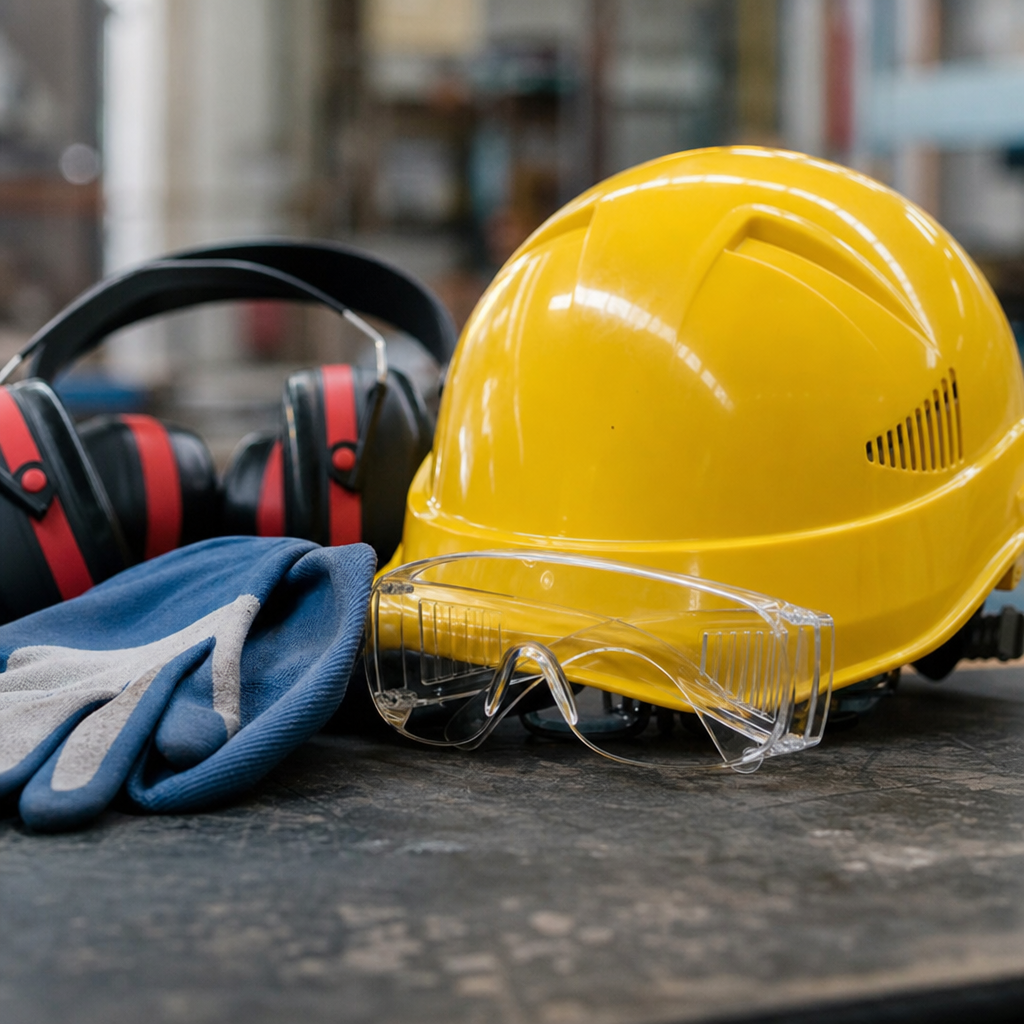
Polymers sit at the center of modern industrial safety equipment because they combine impact resistance, chemical stability, low weight, electrical insulation, and process flexibility in ways metals, ceramics, and natural fibers rarely can. In plants, mines, warehouses, laboratories, offshore platforms, and construction sites, safety equipment must do more than meet a specification sheet; it has to protect workers through repeated exposure to abrasion, solvents, heat, moisture, UV light, and mechanical shock. When I have evaluated protective products for industrial environments, the difference between a well-chosen polymer and a poorly chosen one has often meant the difference between reliable protection and rapid failure.
In practical terms, polymers are large-chain molecules engineered into plastics, elastomers, foams, films, coatings, and composites. Industrial safety equipment includes personal protective equipment such as helmets, gloves, respirators, goggles, face shields, footwear, and high-visibility apparel, as well as site protection systems like barriers, insulation, machine guards, spill containment liners, and fire-resistant components. The role of polymers in industrial applications is therefore broad: they are not one material category solving one problem, but a design platform enabling multiple safety functions at once. That matters because industry increasingly demands lighter gear, better ergonomics, higher compliance from workers, and performance aligned with standards such as OSHA requirements in the United States, ANSI testing methods, and ISO performance benchmarks used globally.
This hub article explains how polymers improve industrial safety equipment, which materials are most commonly used, where they succeed, where they fail, and how manufacturers make material choices. It also serves as a foundation for deeper case studies across the wider topic of polymers in industrial applications. If you want to understand why a hard hat shell uses HDPE instead of ABS in one facility, why chemical gloves rely on nitrile, neoprene, or butyl rubber in another, or why flame-resistant garments increasingly use engineered fibers and coatings, the answer usually comes down to balancing protection, durability, comfort, cost, and regulatory compliance.
Why polymers are essential in industrial safety design
Polymers improve safety equipment by enabling targeted performance properties that would be difficult to achieve with traditional materials alone. A hard hat must absorb and distribute impact energy while remaining light enough to wear for a full shift. Safety eyewear must be optically clear, shatter resistant, scratch resistant, and compatible with anti-fog coatings. Gloves must allow dexterity while resisting puncture, cuts, oils, acids, or solvents. Electrical protective products must isolate current without cracking under environmental stress. Across these use cases, polymers offer tunable molecular structure, controllable additive packages, and scalable manufacturing methods such as injection molding, extrusion, blow molding, calendaring, dip molding, thermoforming, and fiber spinning.
Weight reduction is one of the most immediate safety benefits. A lighter helmet, face shield, or protective boot reduces fatigue, and fatigue directly affects compliance and injury risk. Polycarbonate visors, for example, provide high impact resistance at much lower weight than glass. Expanded polymer foams in kneepads and helmet liners absorb energy while improving comfort. Thermoplastic elastomers in grips and seals improve fit, reducing slippage and leaks. In my experience reviewing field equipment, workers consistently prefer lighter polymer-based designs, and usage rates improve when comfort improves. A technically superior product does little if workers remove it halfway through a shift.
Another key advantage is resistance to corrosion and chemicals. Metals can rust, and natural materials degrade quickly in aggressive environments. Many polymers, by contrast, perform well against moisture, salts, oils, weak acids, and a range of industrial chemicals. That is why polyethylene and polypropylene appear in chemical splash gear, why fluoropolymers are selected for highly aggressive exposure, and why PVC remains common in certain aprons, boots, and barriers despite sustainability concerns. The right polymer can dramatically extend service life, reduce replacement frequency, and maintain protective integrity in conditions where untreated traditional materials would fail.
Core polymer families used in safety equipment
Understanding polymers in industrial applications starts with the major material families. Polyethylene, including HDPE and UHMWPE, is valued for impact strength, low density, and chemical resistance. HDPE is common in hard hats and containers. UHMWPE appears in high-cut-resistance gloves and ballistic-style reinforcement because of its very high molecular weight and excellent energy absorption. Polypropylene offers low density, good fatigue resistance, and broad chemical resistance, making it useful in molded parts, fibers, and housings.
Polycarbonate is the workhorse material for lenses, face shields, and machine guards because of its exceptional impact resistance and optical clarity. ABS is often used where toughness, dimensional stability, and ease of molding are needed, including helmet shells and equipment housings. Nylon, or polyamide, contributes strength, abrasion resistance, and flexibility in components such as fasteners, straps, and textile fibers. Polyester is widely used in high-visibility clothing, harness webbing blends, and coated fabrics. Polyurethane appears in foams, coatings, footwear midsoles, and abrasion-resistant surfaces.
Elastomers are equally important. Nitrile rubber resists oils, fuels, and puncture better than natural latex in many glove applications. Neoprene provides balanced chemical and temperature performance. Butyl rubber delivers strong resistance to gas permeation and certain aggressive chemicals, making it valuable in specialized gloves. Silicone remains useful in seals and high-temperature components. Fluoropolymers such as PTFE and FEP are chosen when chemical inertness, low friction, or high-temperature resistance is critical, although cost limits widespread use.
| Polymer | Typical safety equipment use | Main advantage | Main limitation |
|---|---|---|---|
| HDPE | Hard hats, containers, barriers | Low weight and impact resistance | Moderate heat tolerance |
| Polycarbonate | Goggles, visors, guards | High impact strength and clarity | Needs coatings for scratch resistance |
| UHMWPE | Cut-resistant gloves, reinforcement | Excellent cut and energy absorption performance | Can be heat sensitive |
| Nitrile rubber | Disposable and reusable gloves | Oil and puncture resistance | Not universal against all solvents |
| PVC | Boots, aprons, coated fabrics | Chemical resistance and low cost | Stiffness and environmental concerns |
| Polyurethane | Footwear, coatings, foams | Abrasion resistance and cushioning | Hydrolysis risk in some grades |
How polymers improve specific categories of protective equipment
Head protection is a clear example of polymer engineering in action. Most industrial helmets use shells made from HDPE, ABS, or polycarbonate blends. The shell disperses impact, while internal suspension systems often use woven polyester or nylon straps and polymer clips. Newer climbing-style industrial helmets add expanded polypropylene or expanded polystyrene liners to manage side impacts and improve energy absorption. Material choice depends on environment: electrical work may require nonconductive performance, outdoor work demands UV stability, and foundry operations need elevated heat resistance. Additives such as UV stabilizers and pigments become as important as the base resin.
Eye and face protection rely heavily on polycarbonate. The reason is straightforward: polycarbonate can withstand high-velocity impact while remaining transparent, a combination glass cannot match safely in many industrial conditions. However, raw polycarbonate scratches relatively easily and can fog under humidity changes, so premium products add hard coats and anti-fog treatments. Face shields for grinding or chemical handling often use curved polycarbonate sheets to improve coverage without excessive weight. Machine guards also use polycarbonate because it lets supervisors visually inspect operations while preserving a protective barrier.
Hand protection demonstrates that no single polymer is best for all hazards. Disposable nitrile gloves dominate many industrial and laboratory tasks because they resist oils, offer good tactile sensitivity, and avoid latex allergy concerns. For chemical handling, glove selection charts from manufacturers such as Ansell and Honeywell matter more than general assumptions, since permeation rates vary widely by chemical and polymer thickness. For cut resistance, glove shells often blend UHMWPE, glass fiber, steel, nylon, and spandex, then add nitrile or polyurethane palm coatings for grip. In welding or high-heat work, polymer use narrows because thermal limits become stricter, so hybrid constructions are common.
Foot protection also depends on polymers more than many buyers realize. Safety boots frequently use TPU or PU outsoles for abrasion resistance, slip resistance, and cushioning. EVA and polyurethane foams reduce impact stress during long shifts. Chemical-resistant boots may use PVC or nitrile compounds. Composite toe caps, often made from reinforced polymers or polymer-matrix composites, provide a lighter alternative to steel while avoiding metal detection issues and reducing thermal conductivity. That lower thermal transfer can improve comfort in both cold and hot settings.
Performance tradeoffs, testing, and compliance
The role of polymers in improving industrial safety equipment is not simply to maximize one property. Real product development is about tradeoffs. A stiffer polymer may improve puncture resistance but reduce comfort. A softer elastomer may seal better against the face in a respirator but age faster under ozone or oils. A crystal-clear visor may still fail prematurely if coatings are poor or cleaning chemicals attack the surface. Engineers therefore evaluate not just initial performance but retention of performance over time.
Testing standards provide the practical framework for those decisions. Hard hats are commonly evaluated under ANSI/ISEA Z89.1 in the United States, while eye protection often aligns with ANSI/ISEA Z87.1. Gloves may be tested for chemical permeation, cut resistance, abrasion, tear, and puncture under ASTM or EN methods depending on market. Footwear can be assessed against ASTM F2413 and other regional standards. Flame-resistant apparel may reference NFPA performance requirements or ISO methods. The material itself does not earn compliance in isolation; the finished product, thickness, design geometry, and manufacturing quality determine whether safety equipment passes.
Aging behavior is especially important. UV radiation can embrittle some plastics. Plasticizers can migrate. Repeated flexing can create microcracks. Polyurethane can degrade through hydrolysis if formulation and storage conditions are poor. Nitrile gloves can lose performance after exposure to ketones or aromatic solvents that exceed their chemical resistance envelope. This is why service life guidance, inspection routines, and storage conditions matter. In audits, I have repeatedly seen equipment failures traced not to the original material selection but to misuse, improper cleaning, excessive shelf age, or a mismatch between actual hazard and assumed hazard.
Manufacturing, sustainability, and future innovation
Manufacturing method strongly influences polymer safety performance. Injection molding can create hard hat shells with controlled wall thickness and rib geometry. Extrusion and calendaring produce films, sheets, and coated fabrics for protective garments and barriers. Dip molding forms seamless gloves with tightly managed thickness. Additive manufacturing is beginning to support custom-fit respirator components, exoskeleton interfaces, and rapid prototyping of guards, although certified high-volume safety products still depend on established processes. Quality control tools such as DSC for thermal behavior, FTIR for material verification, and accelerated weathering tests help ensure consistency across production lots.
Sustainability now shapes polymer choices in industrial applications, but safety remains the nonnegotiable requirement. Recycled content is increasing in noncritical components and packaging, yet many high-risk products still rely on virgin resin for consistency, traceability, and certified performance. Manufacturers are also reducing hazardous additives, designing mono-material assemblies where practical, and improving take-back programs for helmets, eyewear, and protective clothing. Bio-based polymers are gaining attention, but adoption depends on proving equal durability, flame behavior, and chemical resistance under real operating conditions. A greener material that degrades early or cannot pass impact testing is not a safety improvement.
Future gains will come from smarter polymer systems rather than simple material substitution. Expect more self-decontaminating coatings, conductive and antistatic polymer blends for explosive environments, sensor-integrated wearables, graphene or nanofiller-reinforced composites, and phase-change materials that improve thermal comfort. Better data will also drive better selection. Digital chemical resistance databases, embedded RFID tracking for equipment age, and AI-assisted product matching are already helping safety managers choose the right polymer-based equipment for specific hazards. For companies building out a broader strategy around polymers in industrial applications, the lesson is clear: material science is no longer a background detail. It is a frontline safety decision.
Polymers have transformed industrial safety equipment by making protection lighter, more durable, more specialized, and easier for workers to wear consistently. From HDPE helmet shells and polycarbonate visors to nitrile gloves, polyurethane soles, and UHMWPE cut-resistant fibers, these materials solve real safety problems through engineered performance. Their value lies not in being universally superior, but in being adaptable. Each polymer family brings a different balance of impact resistance, chemical compatibility, thermal behavior, flexibility, weight, and cost, which is why careful selection always matters.
The most effective approach is hazard-specific rather than material-specific. Start with the exposure: impact, splash, arc flash, cut, crush, heat, cold, static, or contamination. Then match the equipment to verified standards, manufacturer data, expected service life, and worker comfort. That process prevents common mistakes such as assuming one glove works for all chemicals or one visor coating will survive every cleaning method. In my experience, organizations improve outcomes fastest when procurement, safety, operations, and maintenance teams evaluate polymer-based equipment together instead of treating PPE as a commodity purchase.
As the hub for this subtopic, this article provides the framework for deeper case studies on helmets, gloves, barriers, flame-resistant textiles, chemical handling systems, and emerging smart protective gear. Use it as a reference point when comparing materials, reviewing specifications, or planning upgrades across industrial sites. The next step is simple: audit the safety equipment you use today, identify where polymer selection affects performance most, and build your replacement strategy around evidence rather than habit.
Frequently Asked Questions
Why are polymers so important in modern industrial safety equipment?
Polymers are essential to modern industrial safety equipment because they offer a rare combination of properties that directly improve worker protection in demanding environments. Unlike many traditional materials, polymers can be engineered to deliver high impact resistance, chemical resistance, low weight, electrical insulation, flexibility, and durability all in the same component or system. That matters in industrial settings where equipment is exposed to repeated stress from abrasion, solvents, moisture, ultraviolet radiation, temperature swings, and mechanical shock. A hard hat, face shield, glove coating, respirator housing, or insulated tool handle cannot simply perform well on day one; it has to continue protecting users after repeated exposure to real-world hazards.
Another major advantage is design versatility. Polymers can be molded, extruded, laminated, foamed, coated, or reinforced to create very specific performance profiles. Manufacturers can adjust stiffness, transparency, grip, flame resistance, elasticity, and chemical tolerance based on the intended application. This allows safety equipment to be optimized for environments as different as offshore drilling platforms, laboratory cleanrooms, mining operations, and heavy construction sites. In practice, that means better fit, better comfort, and more reliable protective performance.
Weight reduction is also a critical reason polymers are widely used. Lighter personal protective equipment helps reduce worker fatigue over long shifts, improving compliance and lowering the likelihood that gear will be removed or worn incorrectly. When workers are more comfortable, they are more likely to keep helmets, goggles, gloves, and protective footwear on for the full duration required. In short, polymers improve industrial safety not just because they are strong, but because they help equipment stay protective, wearable, and manufacturable at scale.
What types of safety equipment commonly use polymers, and what benefits do they provide?
Polymers are found across nearly every category of industrial safety equipment. In head protection, hard hats often use high-performance thermoplastics because they can absorb and distribute impact energy while remaining lightweight and weather-resistant. In eye and face protection, clear polymer lenses and visors are valued for optical clarity, shatter resistance, and the ability to accept coatings for scratch resistance, anti-fog performance, or chemical splash protection. Respirators and hearing protection devices often use polymers in housings, seals, and flexible components because they can form effective barriers while maintaining comfort and dimensional stability.
Hand protection is another major area where polymers make a measurable difference. Gloves may include polymer coatings or full polymer constructions to improve grip, puncture resistance, cut resistance support, liquid resistance, and chemical compatibility. Footwear also relies heavily on polymer materials in outsoles, midsoles, toe cap systems, insulative barriers, and waterproof layers. These materials help combine slip resistance, cushioning, impact protection, and environmental durability in a way that would be difficult to achieve using heavier conventional materials alone.
Beyond personal protective equipment, polymers are widely used in guarding systems, safety barriers, cable insulation, protective covers, chemical containment components, and arc-flash related protective assemblies. Their electrical insulating properties are especially important in environments with energized systems, while their corrosion resistance provides long service life in wet, salty, or chemically aggressive conditions. The broad use of polymers in safety products reflects a simple reality: they enable designers to build equipment that is protective, durable, ergonomic, and adaptable to highly specific industrial hazards.
How do polymers improve worker comfort without compromising protection?
Comfort is not a secondary issue in industrial safety; it is directly tied to whether protective equipment is worn correctly and consistently. Polymers improve comfort because they can be made lightweight, flexible, cushioned, breathable, and ergonomically shaped without losing the protective characteristics required for industrial use. A lighter helmet reduces neck strain, a flexible glove improves dexterity, and a soft sealing material in a respirator can increase face comfort while maintaining an effective seal. When gear is less bulky and less fatiguing, workers can concentrate better and maintain safe performance over longer periods.
Material engineering plays a major role here. Different polymer formulations can be selected to manage hardness, rebound, thermal behavior, surface feel, and flexibility. Foamed polymers can provide energy absorption in knee pads, helmet liners, and anti-fatigue footwear. Elastomeric polymers can create snug but comfortable fits in goggles, masks, and hearing protection. Rigid polymers can supply structural protection where shape retention is critical, while softer polymer layers add grip and reduce pressure points. This layered approach allows manufacturers to balance comfort and protection rather than treating them as trade-offs.
Polymers also support better environmental comfort. Some materials resist water uptake, making equipment less heavy in wet conditions. Others maintain useful performance in cold temperatures or under prolonged UV exposure. In hot environments, lightweight polymer designs can lessen heat burden compared with heavier alternatives. The result is safer equipment that workers are more willing to wear as intended. That is one of the biggest practical safety benefits polymers bring to industrial applications: they help close the gap between protective design and everyday human use.
Are polymers durable enough for harsh industrial environments like mines, chemical plants, and offshore sites?
Yes, many polymers are specifically chosen because they perform exceptionally well in harsh industrial environments, provided the right material is matched to the right hazard profile. Industrial settings can involve abrasive dust, salt spray, oils, acids, alkalis, solvents, intense sunlight, heavy impacts, and constant moisture. Not every polymer performs well under all of those conditions, but modern material selection is highly advanced. Engineers can choose from a wide range of commodity, engineering, and high-performance polymers to deliver the necessary resistance to chemicals, wear, UV degradation, hydrolysis, cracking, or thermal stress.
For example, a polymer used in chemical splash protection may be selected for broad chemical inertness, while a material used in impact protection may be optimized for toughness and energy absorption. Offshore equipment may require polymer systems that resist saltwater corrosion and ultraviolet exposure, while mining applications may prioritize abrasion resistance and low-temperature toughness. In many cases, polymers outperform metals because they do not rust, and they outperform natural materials because they offer far greater consistency and environmental resistance. Additives, reinforcements, stabilizers, and protective surface treatments can further extend service life.
That said, durability depends on correct specification, regular inspection, and adherence to manufacturer guidelines. Safety equipment is not made safer simply by being polymer-based; it becomes safer when the polymer is properly engineered for the mechanical, chemical, and environmental demands it will face. Reputable manufacturers test for impact retention, aging performance, chemical exposure, flammability, electrical properties, and other application-specific criteria. When these factors are managed correctly, polymer-based safety equipment can provide long-lasting and highly reliable protection in some of the toughest industrial conditions.
What should companies consider when selecting polymer-based industrial safety equipment?
Companies should begin by evaluating the specific hazards present in the work environment rather than focusing only on generic material claims. The right polymer for one application may be unsuitable for another. Decision-makers should consider impact exposure, chemical contact, temperature range, UV intensity, moisture conditions, electrical hazards, abrasion level, and expected service life. They should also evaluate whether the equipment will be used continuously or intermittently, indoors or outdoors, and in clean or contaminated areas. These conditions determine whether the best solution is a rigid thermoplastic shell, a flexible elastomeric seal, a reinforced composite, a coated textile, or a multi-material system.
Compliance and certification are equally important. Safety equipment should meet the relevant standards for the industry and region in which it will be used. Buyers should verify test data, resistance ratings, compatibility with cleaning and disinfection procedures, and any limitations related to storage or exposure. Fit, ergonomics, and worker acceptance should also be treated as core selection criteria. Even the most technically advanced polymer-based equipment will underperform if it is uncomfortable, difficult to maintain, or poorly suited to the user’s tasks.
Finally, companies should look at lifecycle performance, not just purchase price. High-quality polymer safety equipment often delivers value through lower weight, better corrosion resistance, easier manufacturing consistency, reduced maintenance, and longer useful life in aggressive environments. Training workers to inspect for cracks, discoloration, swelling, loss of flexibility, or surface degradation is also essential, since these can signal that a polymer component has reached the end of its safe service window. A thoughtful selection process ensures that polymer-based safety equipment does what it is meant to do: provide dependable, repeatable protection in the real conditions workers face every day.