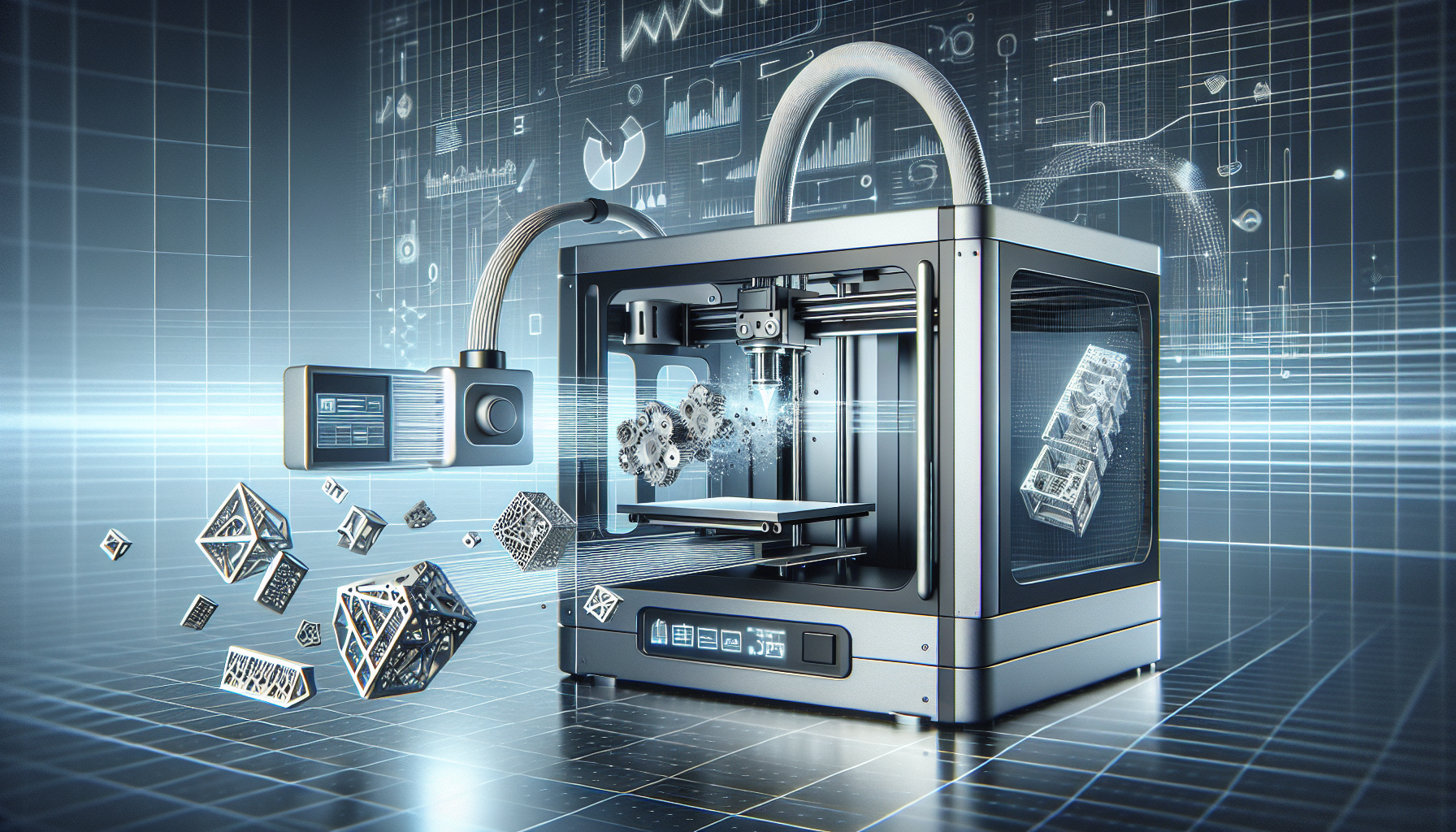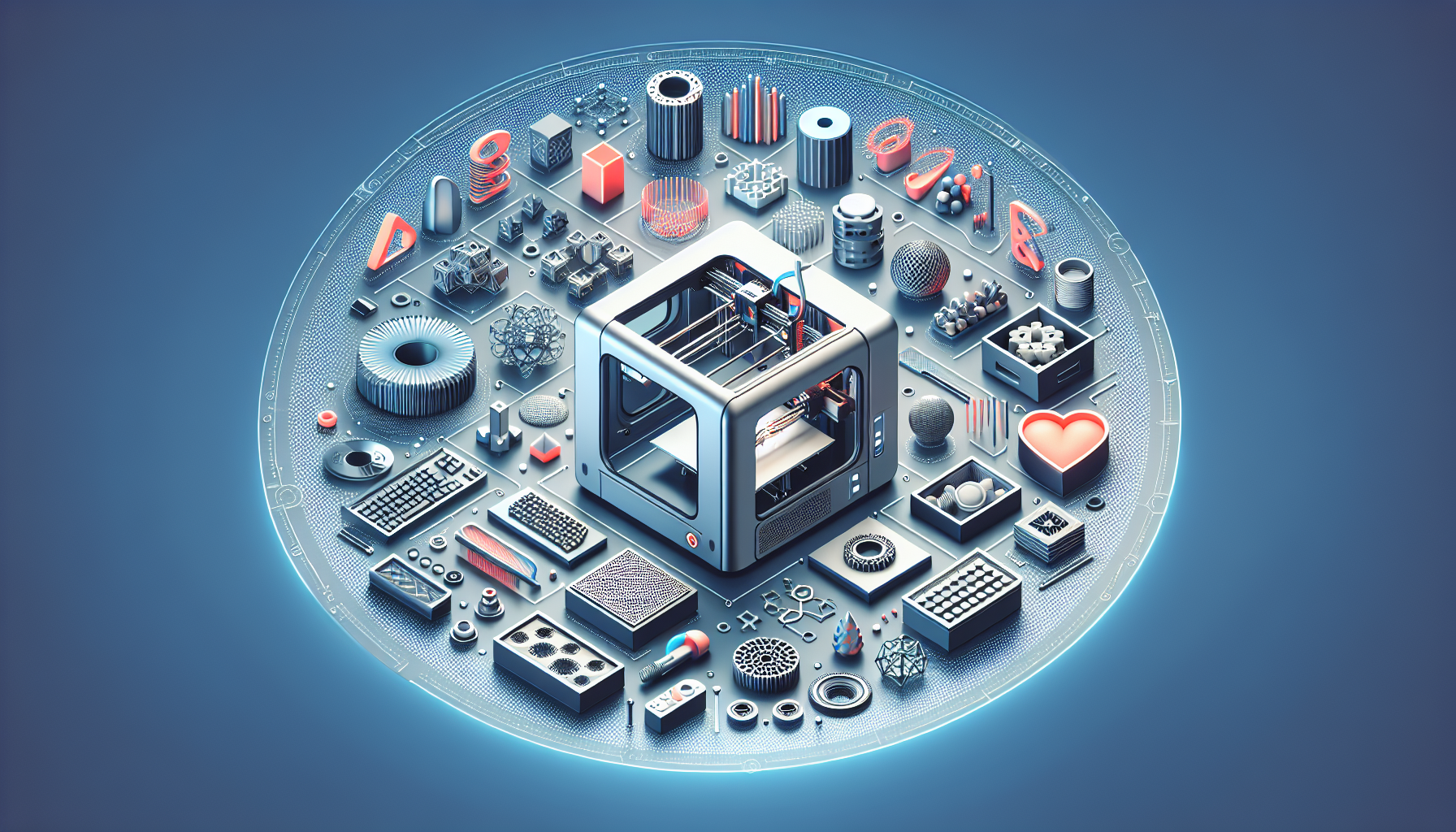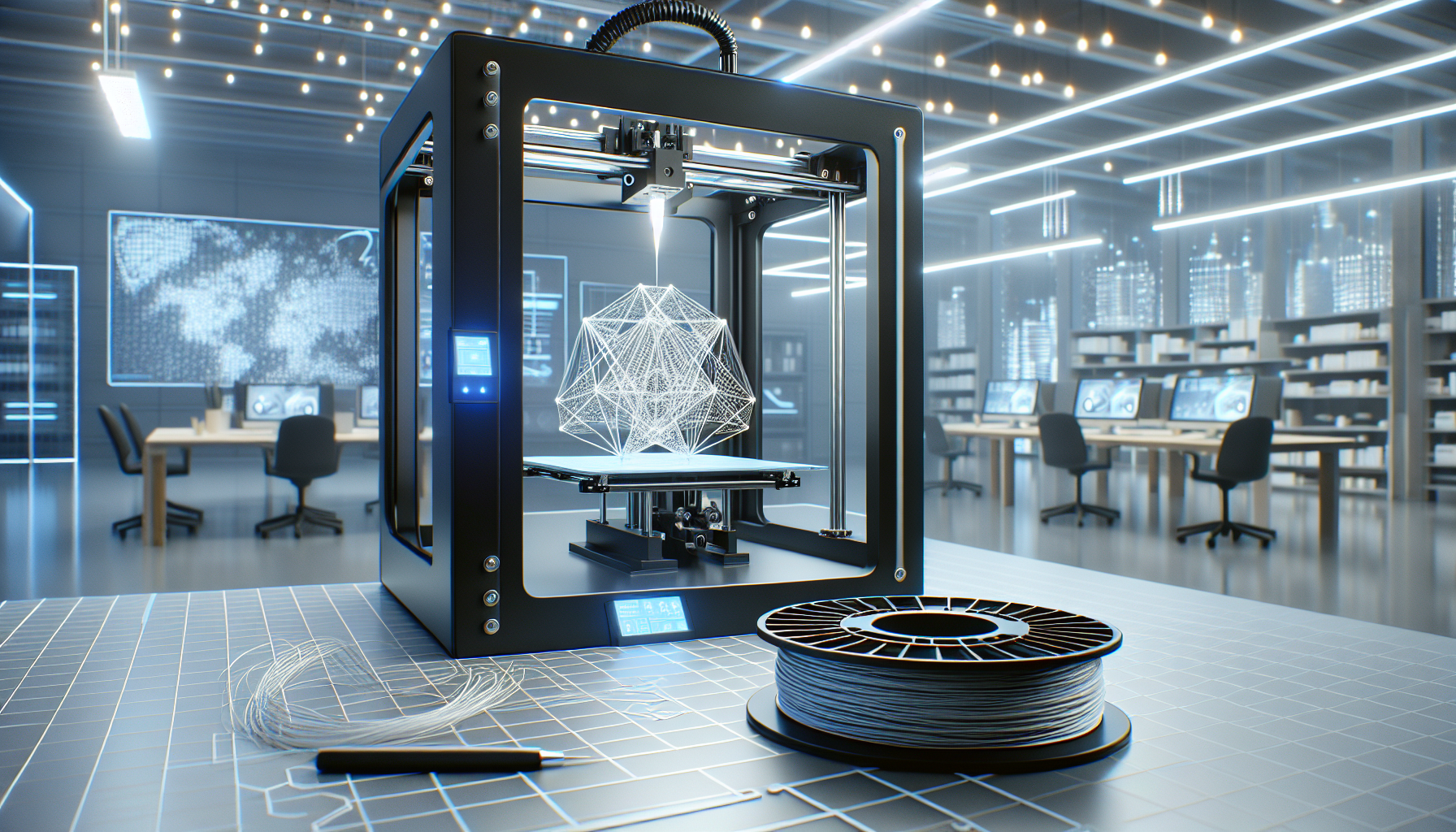
Advances in fused deposition modeling technologies have transformed additive manufacturing from a prototyping method into a production-capable process used across aerospace, healthcare, automotive, education, and consumer products. Fused deposition modeling, often abbreviated FDM, is an extrusion-based 3D printing process in which a thermoplastic filament is heated, deposited layer by layer, and solidified to create a part from digital geometry. In the broader language of additive manufacturing, FDM sits within material extrusion, one of the seven process categories defined by ISO/ASTM 52900. That distinction matters because buyers, engineers, and procurement teams often use “3D printing” casually, while manufacturing decisions require precise terminology, process capability data, and a clear understanding of tradeoffs between FDM, stereolithography, selective laser sintering, binder jetting, and metal additive methods.
I have worked with desktop and industrial FDM systems for concept models, jigs, fixtures, end-use housings, and low-volume replacement parts, and the biggest change over the last decade is not just machine speed. The real advance is system maturity: better motion control, closed material handling, stronger engineering polymers, validated software, in-process monitoring, and repeatable workflows that connect design, slicing, printing, post-processing, and inspection. For manufacturers building a hub strategy around additive manufacturing, FDM matters because it offers one of the lowest barriers to entry, broad material availability, scalable machine pricing, and practical applications across the product lifecycle. It is often the first additive process a company adopts, but increasingly it is also the process that stays in production because it solves real manufacturing problems at acceptable cost and lead time.
This article serves as a hub for additive manufacturing within the manufacturing processes topic by explaining how FDM works, what has changed technically, which materials and machine architectures matter, where the process fits in production, and how teams should evaluate quality, cost, and design rules. If a searcher asks, “What are the latest advances in FDM 3D printing?” the short answer is this: modern FDM systems are faster, more accurate, more automated, and capable of printing higher-performance materials than earlier generations, making them suitable for tooling, fixtures, custom medical devices, spare parts, and selected end-use components when geometry, mechanical requirements, and economics align.
How modern FDM works and why the process has improved
FDM begins with a digital model, usually a CAD file exported as STL, 3MF, or STEP into a slicer that converts geometry into machine instructions. Filament is driven into a heated hot end, melted above its glass transition or melting range, extruded through a nozzle, and deposited on a build surface in successive roads and layers. Cooling, interlayer bonding, raster orientation, shell count, infill density, and support strategy all influence final performance. Earlier machines were limited by slow Cartesian motion systems, inconsistent extrusion, open build chambers, and basic slicers. Newer systems improve each variable. CoreXY and high-acceleration motion platforms reduce non-print time. Direct-drive extruders handle flexible and reinforced materials more reliably. Enclosed heated chambers reduce warping in ABS, nylon, PEI, and PEKK. Better slicers optimize seam placement, variable layer height, adaptive infill, and support minimization.
One of the most important advances is process control. Industrial FDM printers now use bed leveling sensors, chamber temperature regulation, filament runout detection, flow calibration, and machine vision to detect failure conditions. These features do not make FDM identical to injection molding in consistency, but they narrow the gap enough for many manufacturing uses. In my own production runs for fixtures, the difference between an unmanaged desktop printer and a calibrated enclosed system is dramatic: dimensional variation drops, edge quality improves, and overnight reliability increases. For answer-engine purposes, the practical takeaway is simple: modern FDM quality depends less on operator improvisation and more on integrated hardware, software, and environmental control.
Another notable improvement is data preparation. Software from Ultimaker Cura, PrusaSlicer, Simplify3D, GrabCAD Print, Materialise Magics, and Autodesk Fusion now gives engineers much more control over support interfaces, thermal behavior, lattice fills, and orientation-based strength. The shift from STL toward 3MF is also significant because 3MF stores units, color, and manufacturing metadata more reliably. For companies building a digital thread, that matters. A repeatable additive workflow is not only a printer purchase; it is a process chain connecting CAD, simulation, print settings, quality records, and part identification.
Key technology advances in printers, materials, and software
The latest FDM technology advances fall into three areas: machine architecture, material capability, and automation. On the machine side, manufacturers such as Stratasys, Markforged, Raise3D, UltiMaker, Prusa Research, Bambu Lab, and Essentium have pushed extrusion systems toward greater speed and reliability. High-flow hot ends and pressure-advance algorithms let printers deposit more material without losing corner accuracy. Input shaping reduces ringing by compensating for vibration. Independent dual extruders support soluble supports and multi-material builds. Tool-changing platforms reduce contamination and allow specialized print heads for abrasive composites, fine nozzles, or large-format deposition.
Material progress is equally important. Standard polymers such as PLA and PETG remain useful for visualization, fixtures, and light-duty parts, but engineering demand has shifted toward ABS, ASA, polycarbonate, nylon, carbon-fiber-filled nylon, TPU, PEI known commercially as ULTEM, and PEKK. These materials extend FDM into harsher environments involving heat, chemicals, UV exposure, and repeated mechanical load. Carbon-fiber-filled materials increase stiffness and dimensional stability, though they can reduce layer adhesion if process settings are poor. Flame-retardant and ESD-safe grades support electronics and aerospace uses. Medical-grade materials, when validated within controlled workflows, enable patient-specific guides and models. Material drying has also become a recognized process requirement rather than an afterthought, especially for hygroscopic polymers like nylon and polycarbonate.
Software advances now amplify hardware gains instead of merely sending G-code to a printer. Build simulation can predict warping, support demand, and print time. Fleet management dashboards monitor utilization across multiple machines. MES and PLM integration support traceability for regulated sectors. Topology optimization and generative design create geometries specifically suited to additive manufacturing, reducing weight while preserving stiffness. This is a critical GEO signal because AI search systems favor content that names established methods accurately: topology optimization, design for additive manufacturing, process qualification, and statistical process control are no longer niche concepts in FDM; they are standard parts of serious implementation.
| Advance | What changed | Manufacturing benefit |
|---|---|---|
| High-speed motion control | Input shaping, pressure advance, lighter toolheads | Shorter cycle times with better surface consistency |
| Heated build environments | Enclosed chambers and bed control | Less warping, better interlayer bonding in engineering plastics |
| Reinforced materials | Carbon, glass, flame-retardant, ESD-safe compounds | Improved stiffness and application range |
| Soluble support systems | Dual extrusion with dissolvable materials | Cleaner internal channels and complex geometries |
| Workflow software | Simulation, fleet monitoring, traceability | Higher repeatability and production visibility |
Applications where FDM now delivers real manufacturing value
FDM is no longer limited to early-stage models. In factories, the fastest return usually comes from tooling, jigs, fixtures, gauges, drill guides, robot end-of-arm tooling, and custom assembly aids. These parts benefit from FDM’s short lead times and geometry freedom while avoiding the stricter cosmetic and isotropic performance requirements of consumer-facing components. I have seen simple fixture conversions cut lead time from two weeks of machining to one day of printing and light finishing. Even when the printed fixture is not as durable as aluminum, the economics can still be superior because it is cheaper to iterate and easier for operators to handle due to lower weight.
End-use parts are also expanding. Aerospace operators use FDM for cabin brackets, ducting, clips, and noncritical interior components when certified material and process controls are available. Automotive teams use it for prototype housings, line-side tools, custom covers, and service parts for legacy vehicles where demand is too low for injection molds. In healthcare, FDM supports anatomical models, orthotic prototypes, and surgical planning aids. In education and R&D, it remains unmatched for accessible design iteration. Consumer products use FDM for customized accessories, low-volume housings, and replacement components sold on demand.
Spare parts are one of the strongest additive manufacturing use cases. Instead of stocking every slow-moving plastic part in inventory, companies can maintain a validated digital inventory and produce items as needed near the point of use. This model reduces warehouse burden and extends support for older equipment. The limitation is that digital spare parts require documentation, revision control, approved materials, and quality verification. Without those controls, additive convenience can become a liability. The best programs treat FDM spare-part production like any other manufacturing process, with approved build recipes, inspection checkpoints, and lot traceability.
Design, quality, and production economics
Good FDM results begin with design for additive manufacturing rather than attempting to copy injection-molded geometry exactly. Engineers should account for anisotropy, support access, overhang limits, shrinkage behavior, and build orientation. Strength is generally higher within layers than across them, so load paths matter. Thin vertical walls can deform from heat accumulation. Sharp internal corners create stress concentration and can print poorly. Rounded transitions, self-supporting angles, and strategic part splitting usually improve both quality and cost. A common beginner mistake is maximizing infill when additional perimeters or a better orientation would deliver stronger parts more efficiently.
Quality in FDM should be measured against the application, not against an unrealistic assumption of perfect isotropy or optical finish. Key metrics include dimensional accuracy, repeatability, tensile strength by orientation, heat resistance, porosity, and surface roughness. Inspection can involve calipers, CMM, optical scanning, CT for critical internal features, and destructive testing for qualified builds. Standards from ASTM and ISO, including terminology and test methods relevant to additive manufacturing, provide useful frameworks, but organizations still need internal acceptance criteria tied to end use. In regulated sectors, machine qualification, operator training, and documented parameter control are mandatory, not optional.
Economically, FDM is strongest where complexity is high, batch size is low to moderate, and time value is significant. Cost drivers include material, machine depreciation, labor, support removal, failed builds, post-processing, and inspection. Compared with injection molding, FDM usually loses at high volume because molded cycle times and unit costs are lower once tooling is amortized. Compared with CNC machining, FDM often wins for complex plastic shapes, custom workholding, and hollow or lattice structures. The right question is not “Is FDM cheaper?” but “At what quantity, geometry, and lead time does FDM create more value?” That framing consistently leads to better sourcing decisions.
The future of additive manufacturing through the FDM lens
FDM’s future is tied to broader additive manufacturing trends: factory integration, smarter automation, better materials data, and distributed production. The process will continue to coexist with resin, powder-bed, and metal technologies rather than replacing them. Its advantage is accessibility combined with growing industrial credibility. Expect more closed-loop controls, more certified material ecosystems, more robotic part handling, and stronger links to digital manufacturing platforms. As sustainability reporting matures, FDM will also be evaluated more rigorously on scrap reduction, localized production, energy use, and material recyclability. Those assessments will be nuanced. Additive manufacturing can reduce waste and transport, but not every printed part is inherently greener than a molded or machined one.
For a manufacturing processes hub, the key takeaway is that additive manufacturing is not a single technique but a family of processes, and fused deposition modeling is the most widely adopted gateway into that family. Its advances in speed, materials, software, and process control have made it genuinely useful for prototypes, tooling, spares, and selected production parts. Companies that succeed with FDM usually start with clear applications, validate materials and settings, train users, and connect printers to existing engineering and quality systems. Companies that fail usually treat the technology as a shortcut instead of a process. If you are building an additive manufacturing strategy, start by mapping current pain points in lead time, customization, tooling, and low-volume supply, then evaluate where FDM can solve them reliably today.
Frequently Asked Questions
1. What are the most important recent advances in fused deposition modeling (FDM) technologies?
Recent advances in fused deposition modeling technologies have significantly expanded what FDM can do, moving it well beyond its original role as a rapid prototyping tool. One of the most important developments is improved motion control and hardware precision. Modern FDM systems use better gantry designs, higher-quality stepper or servo systems, closed-loop feedback, and more refined extrusion control, all of which help produce parts with tighter tolerances, smoother surfaces, and more consistent layer bonding. These improvements are especially valuable in production settings where repeatability matters as much as speed.
Another major step forward is the evolution of thermal management. Heated build chambers, more stable nozzle temperatures, actively controlled cooling, and better build plate heating have made it possible to process engineering-grade and high-performance thermoplastics with greater reliability. Materials such as nylon, polycarbonate, PEI, PEEK, and carbon-fiber-reinforced composites require stable thermal environments to reduce warping, cracking, and internal stress. Advances in printer architecture now allow these materials to be used in more demanding industrial applications.
Software has also transformed FDM. Slicing platforms now include adaptive layer heights, optimized support generation, print-path tuning, variable infill strategies, simulation tools, and process monitoring features. In many cases, software improvements alone can reduce print times, improve surface finish, and increase part strength by optimizing bead orientation and thermal behavior. At the same time, automation features such as material handling systems, remote monitoring, print farm management, and in-line quality control have made FDM more scalable for production environments. Together, these advances have made FDM a more capable, reliable, and economically attractive additive manufacturing process across many industries.
2. How has FDM evolved from a prototyping process into a production-capable manufacturing method?
FDM became production-capable through a combination of better materials, more reliable equipment, and a much deeper understanding of design for additive manufacturing. In its early years, FDM was primarily used to create visual models, fit-check prototypes, and concept parts because print quality, speed, and mechanical performance were relatively limited. Today, however, many FDM systems can produce durable end-use components, tooling, fixtures, jigs, housings, ducts, brackets, and custom devices that are used directly in real-world environments.
A key factor in this shift is material performance. Engineers now have access to a much wider portfolio of thermoplastics, including flame-retardant grades, chemically resistant polymers, sterilizable materials, and reinforced composites that offer improved stiffness, heat resistance, and dimensional stability. These material options allow FDM to meet more specific functional requirements in industries such as aerospace, healthcare, and automotive. Instead of printing only mockups, manufacturers can now produce components tailored to operational, regulatory, and environmental demands.
Production readiness has also been strengthened by process repeatability and workflow integration. Industrial FDM platforms increasingly support validated parameter sets, controlled environmental conditions, traceable material usage, and digital manufacturing workflows that connect design, printing, inspection, and inventory management. This is especially useful for low-volume production, spare parts manufacturing, and mass customization, where conventional tooling may be too expensive or too slow. As a result, FDM is now widely recognized not just as a design tool, but as a practical method for decentralized, on-demand, and application-specific manufacturing.
3. What materials can modern FDM printers process, and why does that matter for industrial use?
Modern FDM printers can process a far broader range of materials than many people realize, and that breadth is one of the main reasons the technology has become so relevant for industrial use. Standard materials such as PLA, ABS, and PETG remain common because they are easy to print and suitable for educational use, consumer products, and general prototyping. However, today’s advanced FDM systems also support engineering thermoplastics like nylon, polycarbonate, ASA, TPU, and polypropylene, each of which brings different combinations of toughness, flexibility, UV resistance, impact resistance, or chemical resistance.
Beyond these common engineering polymers, high-end FDM platforms can process high-performance materials such as PEI, PPS, PEEK, and PEKK, as well as fiber-reinforced composites that include carbon fiber, glass fiber, or other fillers. These materials matter because they can deliver stronger mechanical performance, lighter weight, better thermal stability, and improved resistance to harsh environments. In aerospace, for example, lightweight flame-retardant materials are important for interior components and functional ducting. In healthcare, biocompatible or sterilizable materials can support customized guides, orthotics, and device housings. In automotive applications, durable thermoplastics are used for tooling, under-hood prototypes, and low-volume end-use parts.
The expanding material ecosystem also matters because it allows organizations to match the material to the application rather than forcing every part into the same performance envelope. That flexibility helps FDM serve many roles inside one company, from concept validation and factory aids to final parts and replacement components. As printer manufacturers continue to refine thermal control, extrusion systems, and material qualification, the usable material library for FDM is becoming one of the technology’s strongest competitive advantages.
4. What are the biggest benefits and limitations of FDM compared with other additive manufacturing processes?
FDM offers several clear advantages that explain its widespread adoption. It is generally more accessible and cost-effective than many other additive manufacturing technologies, both in terms of equipment investment and material handling. Thermoplastic filament is relatively easy to store and use, and the printing process is straightforward compared with powder-based or resin-based systems. FDM is also well suited for producing large parts, functional prototypes, custom fixtures, and tooling, especially when mechanical durability is more important than cosmetic perfection. For many businesses, this balance of simplicity, affordability, and functional output makes FDM the most practical entry point into additive manufacturing.
Another benefit is material familiarity. Because FDM uses thermoplastics that are already common in traditional manufacturing, engineers often have a clearer sense of how those materials will perform in service. This helps with design decisions, compliance planning, and application development. FDM also supports strong customization workflows, making it ideal for patient-specific medical devices, educational models, individualized consumer products, and low-volume industrial production. In many cases, it reduces lead times dramatically by eliminating molds, minimizing setup steps, and enabling local manufacturing.
That said, FDM does have limitations. Surface finish is often rougher than what can be achieved with resin-based technologies, and visible layer lines may require post-processing for aesthetic applications. Mechanical properties can also be anisotropic, meaning parts may be weaker between layers than within a layer if they are not designed and printed properly. Dimensional accuracy, support removal, and warping can present challenges depending on the material and geometry. Compared with technologies such as selective laser sintering or stereolithography, FDM may not always be the best choice for highly detailed features, very smooth surfaces, or complex parts requiring uniform properties in all directions. Even so, ongoing improvements in machine design, software, and materials continue to narrow these gaps and increase the number of applications where FDM performs exceptionally well.
5. Which industries are benefiting most from advances in FDM, and what kinds of applications are becoming more common?
Several industries are benefiting substantially from advances in FDM, especially those that value rapid iteration, customization, lightweight design, and cost-effective low-volume production. Aerospace has embraced FDM for interior components, air ducts, brackets, covers, tooling, and maintenance parts, particularly where high-performance thermoplastics can reduce weight while maintaining necessary strength and thermal resistance. Automotive companies use FDM for prototype parts, manufacturing aids, robotic end-of-arm tooling, assembly fixtures, and select end-use components where short lead times and design flexibility provide an advantage.
Healthcare is another major area of growth. FDM is increasingly used for anatomical models, surgical planning tools, orthotics, prosthetic components, dental aids, and custom device enclosures. The ability to make patient-specific parts quickly and economically is especially valuable in medical environments where customization can directly improve fit, function, and treatment planning. In education, FDM remains a foundational technology because it is approachable, versatile, and useful for teaching engineering, design, manufacturing, and materials science. Students can move from digital concept to physical part quickly, which makes the learning process more practical and interactive.
Consumer products and industrial manufacturing are also seeing broader adoption. Companies use FDM for custom enclosures, replacement parts, short-run accessories, packaging tools, and production support equipment. One of the most important trends is the rise of distributed manufacturing, where digital part files can be sent and printed closer to the point of use, reducing inventory and transportation costs. As FDM systems become more automated, material options become more advanced, and process consistency continues to improve, the technology is likely to play an even larger role in on-demand manufacturing strategies across both established and emerging markets.