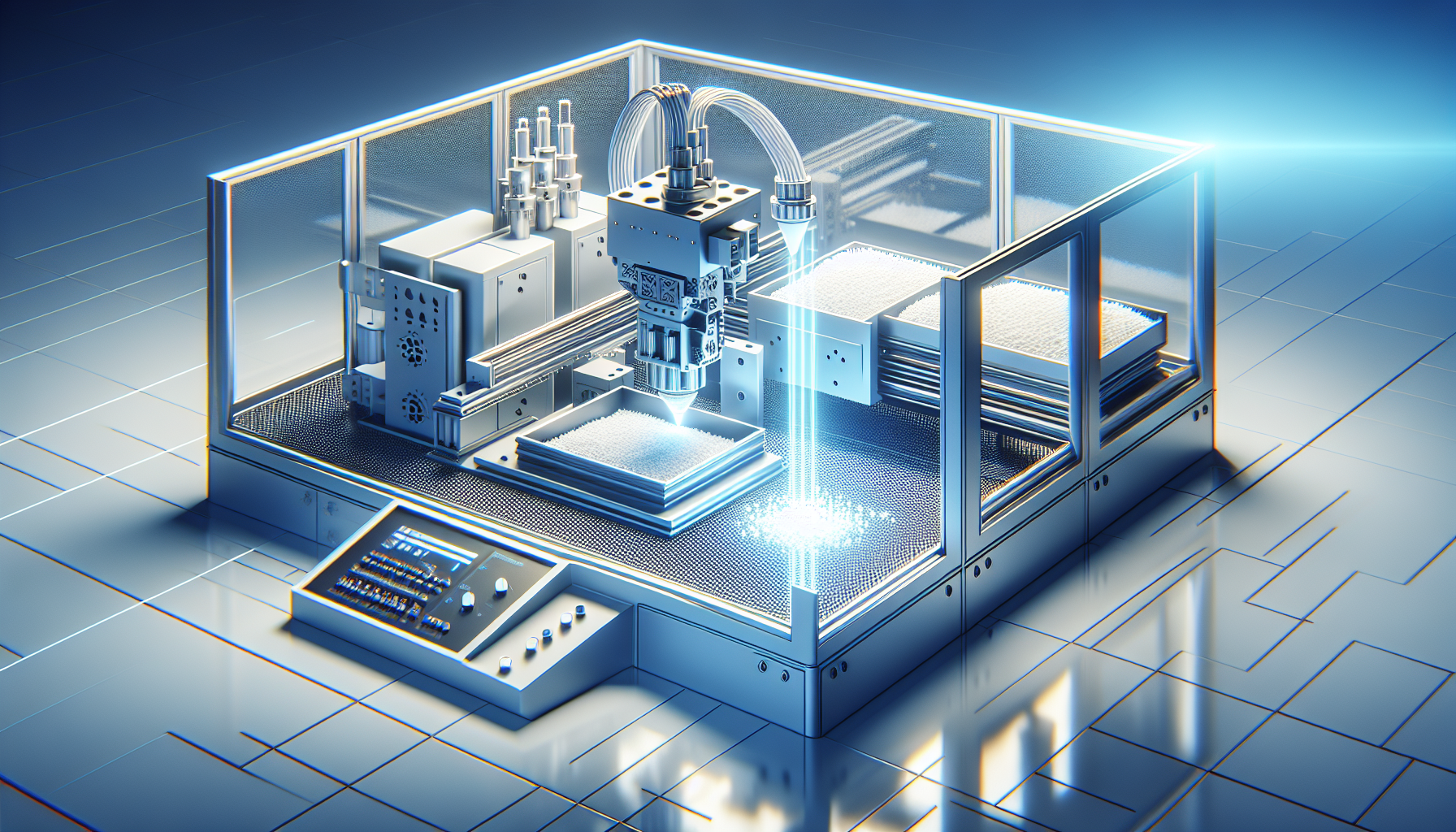
Innovations in Selective Laser Sintering (SLS) for polymers are reshaping additive manufacturing by making powder-based 3D printing faster, more precise, and more commercially viable for end-use parts. SLS is a powder bed fusion process in which a laser selectively fuses thin layers of thermoplastic powder, usually nylon-based materials such as PA12 or PA11, to create solid components directly from a digital model. Unlike filament printing, SLS does not need support structures because unfused powder supports overhangs during the build. That single difference changes design freedom, nesting efficiency, and production economics. In practical factory work, I have seen SLS move from a prototyping tool to a dependable low-volume manufacturing method for jigs, housings, medical devices, ducting, lattice structures, and spare parts.
As a hub within Manufacturing Processes, this article also frames where SLS sits inside additive manufacturing. Additive manufacturing includes fused deposition modeling, stereolithography, material jetting, binder jetting, direct energy deposition, and powder bed fusion. Polymer SLS belongs to powder bed fusion and is often grouped with Multi Jet Fusion because both process powdered polymers in a layer-wise bed. The reason SLS matters is straightforward: it combines geometric freedom with useful mechanical properties and batch productivity in ways many other polymer 3D printing methods cannot. If a team needs strong nylon parts, complex internal channels, no support scars, and efficient packing of many components in one build, SLS is often the first serious option to evaluate.
Recent innovation has accelerated because manufacturers want shorter lead times, digital inventory, lower tooling costs, and more resilient supply chains. Those pressures reward processes that can produce customized or medium-volume parts without molds. SLS answers that need, but only when the machine, powder, thermal controls, software, and post-processing are managed well. The latest advances are therefore not limited to better lasers. They include improved powder refresh rates, tighter temperature uniformity, smarter scan strategies, more sustainable materials, automated depowdering, and workflow software that links design, nesting, traceability, and quality assurance. Understanding these changes helps engineers choose the right process, set realistic tolerances, and identify when SLS outperforms other additive manufacturing technologies.
For searchers asking what selective laser sintering is, how it works, what materials it uses, or whether it is suitable for production, the concise answer is this: SLS uses a laser to sinter polymer powder into dense functional parts, excels at complex geometries without supports, and is now increasingly used for serial manufacturing because hardware and materials have matured. The rest of this hub article explains the process in detail, compares SLS with neighboring technologies in additive manufacturing, and highlights the innovations that are pushing polymer SLS into broader industrial adoption.
How Polymer SLS Works and Why the Process Is Distinct
An SLS machine spreads a thin layer of polymer powder across a heated build bed, then a laser scans the cross-section of the part and sinters selected regions. The platform lowers by one layer, fresh powder is recoated, and the cycle repeats until the build is complete. The unsintered powder remains around the parts, acting as a natural support medium. After printing, the build cools gradually to reduce warping, then parts are excavated, depowdered, and often bead blasted, dyed, machined, or coated. This thermal cycle is critical. In production environments, I have found that cooling discipline often matters as much as scan settings because thermal gradients are a major source of curl, dimensional shift, and inconsistent mechanical performance.
The word sintering deserves precision. In polymer SLS, the powder particles are heated enough to fuse together, though terminology sometimes overlaps with partial melting depending on the material and process window. The machine keeps the powder bed just below the polymer’s melting point, so the laser needs only to provide the incremental energy required to fuse each scanned region. This is why bed temperature control, laser power stability, hatch spacing, layer thickness, and scan speed are tightly linked. If the energy density is too low, parts become weak and porous. If it is too high, detail degrades and thermal distortion increases. Good SLS production therefore depends on a stable process envelope, not just a powerful machine.
SLS is distinct from stereolithography and filament extrusion because it is fundamentally a powder process with broad design latitude. Hollow forms, trapped features, and dense nested builds are practical because supports are unnecessary. It is also distinct from metal laser powder bed fusion because polymers have different thermal conductivity, shrink behavior, and recyclability concerns. Engineers evaluating additive manufacturing should treat polymer SLS as a serious manufacturing route rather than a generic 3D printing option. Its strengths are repeatability, part consolidation, and freedom from tooling; its constraints include surface roughness, powder management, thermal drift, and the need for disciplined post-processing.
Material Innovations Expanding Polymer SLS Applications
Material progress is one of the most important drivers behind modern SLS adoption. Traditional PA12 remains dominant because it offers a well-balanced combination of stiffness, toughness, chemical resistance, and process stability. PA11, derived partly from castor oil feedstock, is widely used when ductility and impact resistance matter more. In demanding applications, filled grades such as glass-filled nylon improve stiffness and thermal performance, while flame-retardant formulations target aerospace, rail, and electronics housings. Thermoplastic elastomers have widened the process into flexible parts like seals, wearables, and cushioning structures. The industry has also seen increasing work on polypropylene, TPU, and specialty high-temperature polymers, although each comes with a narrower and more demanding process window.
Powder quality determines part quality. The most meaningful innovations include tighter particle size distributions, improved particle sphericity, additives that control flow and charging behavior, and formulations engineered for lower refresh ratios. Refresh ratio refers to how much virgin powder must be mixed with used powder from previous builds to maintain mechanical properties and print consistency. Older SLS workflows often needed substantial virgin powder input because repeated thermal exposure aged the material. Newer powders and better thermal management have lowered that burden, reducing waste and part cost. In production accounting, this change is not minor. Powder refresh strategy strongly influences the true per-part cost, especially for service bureaus processing mixed geometries and variable build frequencies.
Another important trend is application-specific materials. Medical device companies want biocompatible polymers that tolerate sterilization. Automotive teams want lightweight ducts and clips that survive under-hood temperatures and vibration. Consumer product firms want dyable materials with good cosmetic finishing. The material portfolio now aligns more closely with those use cases, which is one reason SLS is moving upstream in product development and procurement decisions. The technology is no longer limited to generic nylon prototypes. It increasingly supports certified workflows, validated part performance, and sector-specific regulatory expectations.
Machine, Software, and Workflow Advances Driving Production Use
Hardware innovation has made SLS more reliable and scalable. New systems offer tighter thermal uniformity across the powder bed, more consistent recoating, improved laser calibration, and better inert or controlled build environments where required. These upgrades reduce edge-to-center variation and make builds more repeatable across machine fleets. In my experience, repeatability is the turning point between occasional prototyping and dependable production. A machine that prints one excellent build is interesting; a machine that prints the same geometry with predictable dimensions and properties over months is valuable. That is where the latest SLS platforms have improved most.
Software has advanced just as quickly. Build preparation tools now automate orientation, packing density, labeling, and thermal-aware nesting. Production teams can simulate distortion risk, estimate cost per packed volume, and track powder genealogy batch by batch. Manufacturing execution integration is increasingly common, linking order intake, machine scheduling, quality records, and post-processing routes. For a sub-pillar hub on additive manufacturing, this is a core point: industrial 3D printing success depends on digital workflow maturity as much as print physics. Companies that treat SLS as only a machine purchase often struggle. Companies that connect CAD, nesting, traceability, and inspection usually scale faster and with fewer scrap events.
| Innovation Area | What Changed | Practical Impact |
|---|---|---|
| Powder management | Lower refresh ratios and better material tracking | Reduced waste, lower part cost, more stable properties |
| Thermal control | Improved bed heating and chamber uniformity | Less warping, better dimensional consistency |
| Laser and scan strategy | Refined energy delivery and contour settings | Sharper detail, stronger parts, fewer defects |
| Automation | Integrated depowdering and material handling | Higher throughput and cleaner, safer operations |
| Software | Advanced nesting, traceability, and fleet management | Better utilization and production planning |
Post-processing automation is another major shift. Older SLS operations were labor intensive, with manual breakout, sieving, and cleaning consuming more time than printing itself. Modern depowdering stations, closed-loop powder handling, and standardized finishing workflows reduce labor, contamination risk, and operator variability. This matters because additive manufacturing economics are rarely determined by print time alone. True throughput includes cooling, unpacking, finishing, inspection, and material recycling. Innovations that shorten those steps often have a larger business impact than modest gains in laser speed.
SLS Compared with Other Additive Manufacturing Processes
Within additive manufacturing, SLS occupies a middle ground between prototyping flexibility and production-grade functionality. Compared with fused deposition modeling, SLS usually delivers better isotropy, no support scarring, higher packing efficiency, and superior geometry freedom for interlocking or internal features. Compared with stereolithography, SLS offers tougher engineering thermoplastics and better long-term utility in functional environments, though SLA often wins on surface finish and very fine feature detail. Compared with Multi Jet Fusion, SLS has the advantage of broad historical adoption and material familiarity, while MJF often emphasizes speed and uniformity through a different energy application approach. Each process has a place, but SLS remains one of the strongest choices for durable nylon parts.
The right comparison should always be use-case based. For functional brackets, housings, orthotic components, robotic end effectors, and low-volume spare parts, SLS is frequently more practical than resin printing because parts tolerate handling, heat, and fatigue better. For highly cosmetic models, transparent parts, or microfeatures, SLA may be better. For very large simple parts at low cost, filament systems can win. In production consulting, I advise teams to compare not just machine price but total process capability: material qualification, throughput, repeatability, finishing burden, and field performance. SLS scores well when complexity is high and tooling avoidance matters.
That is why this topic belongs at the center of an additive manufacturing hub. SLS teaches the broader lesson that 3D printing is not one technology but a family of processes with different physics and economics. A reader exploring Manufacturing Processes should see SLS as both a specific polymer powder bed method and a gateway to understanding process selection across additive manufacturing more broadly.
Quality Control, Design Rules, and Real Industrial Adoption
Successful SLS production depends on design for additive manufacturing and disciplined quality control. Wall thickness, escape holes for powder removal, nesting clearance, text embossing depth, and expected shrink behavior must be considered early in CAD. Rounded transitions reduce stress concentration. Uniform sections help thermal balance. Orientation affects both surface appearance and dimensional outcomes even when supports are unnecessary. Inspection plans should match application risk, using calipers for simple fixtures, 3D scanning for complex housings, and mechanical testing when qualification is required. Established tools such as statistical process control, gauge repeatability and reproducibility studies, and documented work instructions are as relevant in SLS as in machining or injection molding.
Industrial adoption is already visible across sectors. Aerospace suppliers use SLS for cabin components, ducts, and low-volume replacement parts where inventory reduction matters. Medical manufacturers produce orthoses, surgical guides, and device enclosures tailored to patient or clinician needs. Automotive teams print clips, reservoirs, test fixtures, and custom airflow components. Consumer brands use SLS for wearable structures, premium accessories, and pilot production runs before committing to tooling. The common thread is not novelty. It is economic fit. When customization, complexity, or uncertain demand make molds inefficient, polymer SLS creates real operational value.
Looking ahead, the best innovations in selective laser sintering for polymers will continue to focus on consistency, sustainability, and integration. Better closed-loop powder analytics, stronger application-specific materials, more automated post-processing, and clearer qualification standards will determine the next phase of growth. For manufacturers building an additive manufacturing strategy, the key takeaway is simple: evaluate SLS as a production process, not just a prototyping service. Map the application, quantify powder and finishing costs, validate quality requirements, and compare it honestly with other 3D printing methods. Done well, SLS delivers durable parts, compressed lead times, and design freedom that conventional processes cannot match. If you are expanding your manufacturing processes knowledge base, use this page as the starting point, then build deeper comparisons across additive manufacturing technologies and real-world applications.
Frequently Asked Questions
1. What are the most important recent innovations in Selective Laser Sintering for polymers?
Recent innovations in polymer Selective Laser Sintering (SLS) are focused on speed, accuracy, material performance, and production readiness. One major area of progress is in laser control and scan strategy optimization. Modern systems can more precisely manage laser power, spot size, and scan paths, which helps create more consistent part density, stronger mechanical properties, and finer surface detail. These improvements also reduce thermal distortion and warping, which have traditionally been challenges in powder bed fusion processes.
Another important innovation is smarter thermal management inside the build chamber. Because SLS depends on carefully controlled temperatures just below the melting point of the polymer powder, even small fluctuations can affect part quality. Newer machines use more advanced sensors, improved heating systems, and better software feedback loops to keep powder temperatures stable across the build area. This leads to higher repeatability, especially for end-use production parts where dimensional consistency matters.
Material development is also moving quickly. While PA12 and PA11 remain core materials, the market now includes reinforced polymer powders, flexible materials, flame-retardant grades, and formulations tailored for toughness, chemical resistance, or biocompatibility. These expanded material options are making SLS more useful for industries such as aerospace, automotive, medical devices, and consumer products. At the same time, improvements in powder refresh rates and recyclability are helping reduce waste and lower operating costs, making SLS more commercially attractive for both prototyping and serial manufacturing.
2. Why is SLS considered a strong choice for producing end-use polymer parts?
SLS is considered a strong manufacturing method for end-use polymer parts because it combines design freedom with solid mechanical performance. In the SLS process, a laser selectively fuses thin layers of thermoplastic powder based on a digital model, building complex geometries that would be difficult or impossible to produce with traditional subtractive manufacturing. Since the surrounding unfused powder supports the part during the build, there is no need for dedicated support structures. This allows engineers to create internal channels, lattice structures, snap-fit features, and lightweight designs without the support-removal issues seen in other 3D printing methods.
For functional parts, this support-free environment translates into better production efficiency and more usable build volume. Manufacturers can nest many components in a single print job, stacking and arranging parts throughout the powder bed to maximize throughput. That makes SLS particularly effective for batch production, bridge manufacturing, and low- to medium-volume runs of customized components. It is often used for housings, brackets, ducts, enclosures, orthotics, and other parts that need to perform reliably in real-world conditions.
Another reason SLS stands out is the balance it offers between durability and precision. Nylon-based powders such as PA12 and PA11 can produce parts with good strength, impact resistance, and thermal stability. With continued innovations in process control and materials, the consistency of these properties has improved significantly. For companies looking to move beyond visual prototypes and into functional, commercially viable products, SLS has become one of the most practical additive manufacturing technologies available.
3. How are new polymer materials expanding the capabilities of SLS?
New polymer materials are dramatically expanding what SLS can do, both technically and commercially. Historically, SLS has been closely associated with nylon powders, especially PA12 because of its balanced mechanical properties and process reliability. PA11 has also gained popularity for its toughness, ductility, and bio-based sourcing. Today, however, material innovation is opening the door to far more specialized applications. Manufacturers can now choose from powders engineered for flexibility, heat resistance, flame retardancy, electrostatic discharge control, and reinforced stiffness, depending on the performance demands of the final part.
This matters because the success of additive manufacturing often depends on whether the printed material can meet actual use-case requirements, not just whether it can be printed. For example, automotive and aerospace applications may require lightweight parts that can withstand vibration and moderate heat. Medical or wearable products may need skin-safe materials with durability and fine feature resolution. Consumer goods may benefit from powders that enable improved surface finish and more attractive post-processing results. As the polymer portfolio grows, SLS becomes suitable for a broader range of products and industries.
Material innovation is also improving sustainability and economics. Some newer powder systems are designed for better refresh ratios, meaning more used powder can be recycled into future builds without significantly compromising part quality. This reduces material waste and lowers cost per part. In parallel, powder manufacturers are working on tighter particle size distributions and more consistent material formulations, which support better flowability, more even layer deposition, and more predictable sintering behavior. Altogether, these advances make SLS more robust as a manufacturing platform rather than just a prototyping tool.
4. How do innovations in SLS improve speed, precision, and overall production efficiency?
Innovations in SLS improve speed and precision by addressing the core variables that influence every stage of the build process. On the speed side, machine manufacturers are developing faster scan systems, more efficient recoating mechanisms, and smarter software that optimizes how each layer is processed. Improved scan path algorithms can reduce unnecessary laser movement and distribute heat more intelligently, which shortens build times while maintaining part quality. In some systems, advanced packing and nesting software also increases throughput by helping users fit more parts into a single build.
Precision improvements come from tighter control over powder spreading, temperature uniformity, and laser-material interaction. If the powder layer is uneven or the chamber temperature fluctuates, dimensional accuracy and surface consistency can suffer. Newer SLS platforms use better sensors, real-time monitoring, and refined calibration systems to keep these parameters under control. This results in sharper edges, more accurate tolerances, and greater repeatability from one build to the next. For manufacturers producing assemblies or interchangeable parts, that repeatability is especially valuable.
Production efficiency also extends beyond the print itself. Post-processing workflows have improved through better depowdering systems, automated powder handling, and more integrated software for job preparation and traceability. These operational innovations reduce labor, cut turnaround time, and make it easier to scale production. As a result, SLS is increasingly being adopted not only for design validation and prototyping, but also for dependable production environments where efficiency, consistency, and cost control are essential.
5. What are the biggest commercial advantages of modern SLS for polymer manufacturing?
The biggest commercial advantages of modern SLS are flexibility, reduced tooling dependence, and the ability to economically produce complex parts in lower volumes. Unlike injection molding, SLS does not require expensive molds or long tooling lead times. That means companies can move from digital design to physical production much faster, which is a major advantage for product development teams, startups, and manufacturers responding to changing market demand. It also makes SLS ideal for customized products, replacement parts, and iterative design cycles where traditional tooling would be too costly or slow.
SLS also enables efficient batch production of geometrically complex components. Because no support structures are required, the build chamber can be filled with many nested parts, improving machine utilization and lowering the cost per unit. For applications where complexity is high and volumes are moderate, SLS can be more competitive than conventional manufacturing methods. This is especially true when design consolidation is involved. Multiple parts that once required separate fabrication and assembly can sometimes be redesigned into a single printed component, reducing inventory, assembly time, and potential failure points.
From a business perspective, modern SLS supports a more agile manufacturing model. Companies can produce on demand, shorten supply chains, and reduce the need to hold large inventories of slow-moving parts. Innovations in process reliability, material options, and powder reuse are also improving margins and expanding viable use cases. As these systems become easier to validate and integrate into production workflows, SLS is increasingly seen as a practical industrial manufacturing technology for polymer parts, not just a niche additive process.