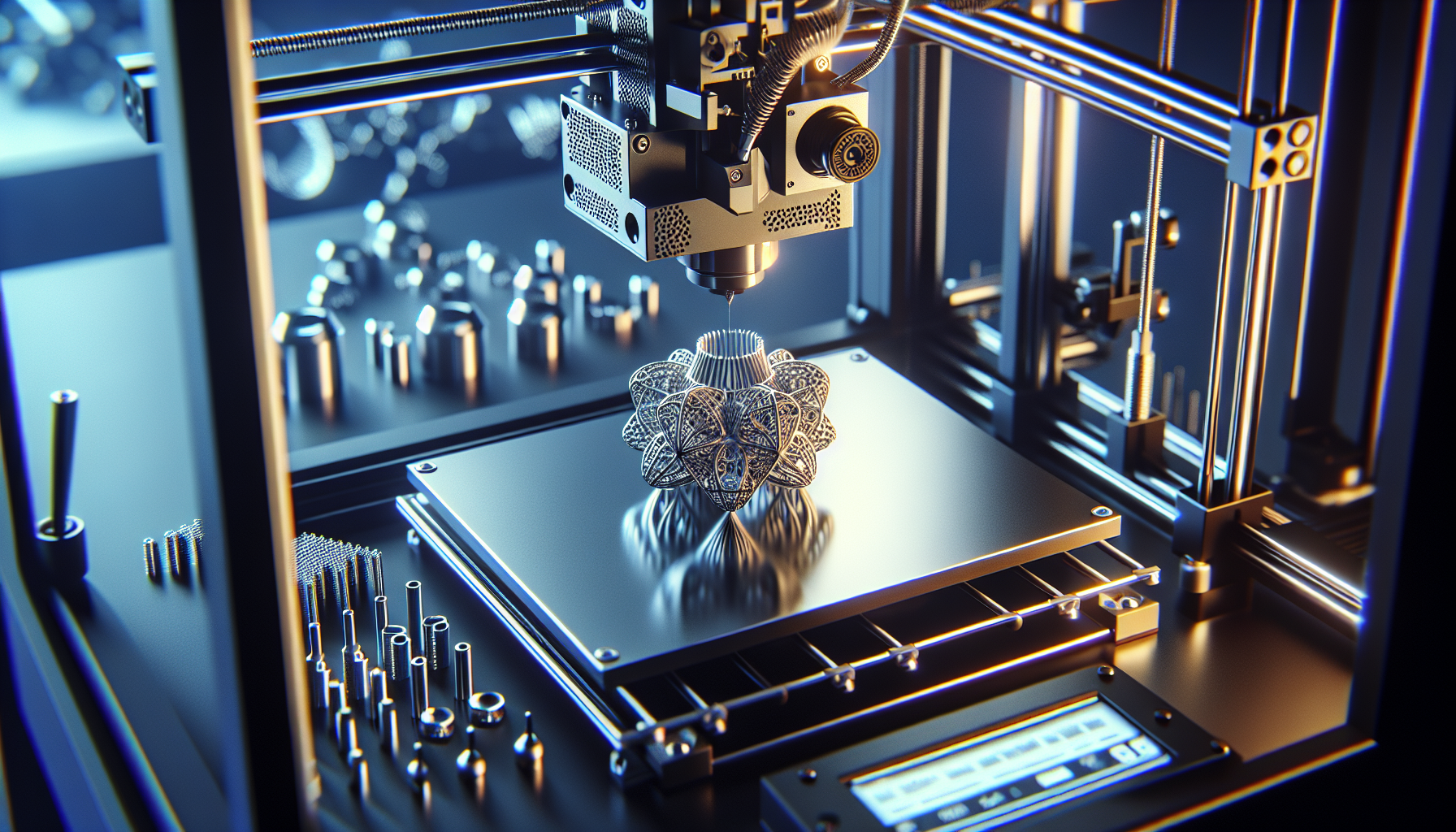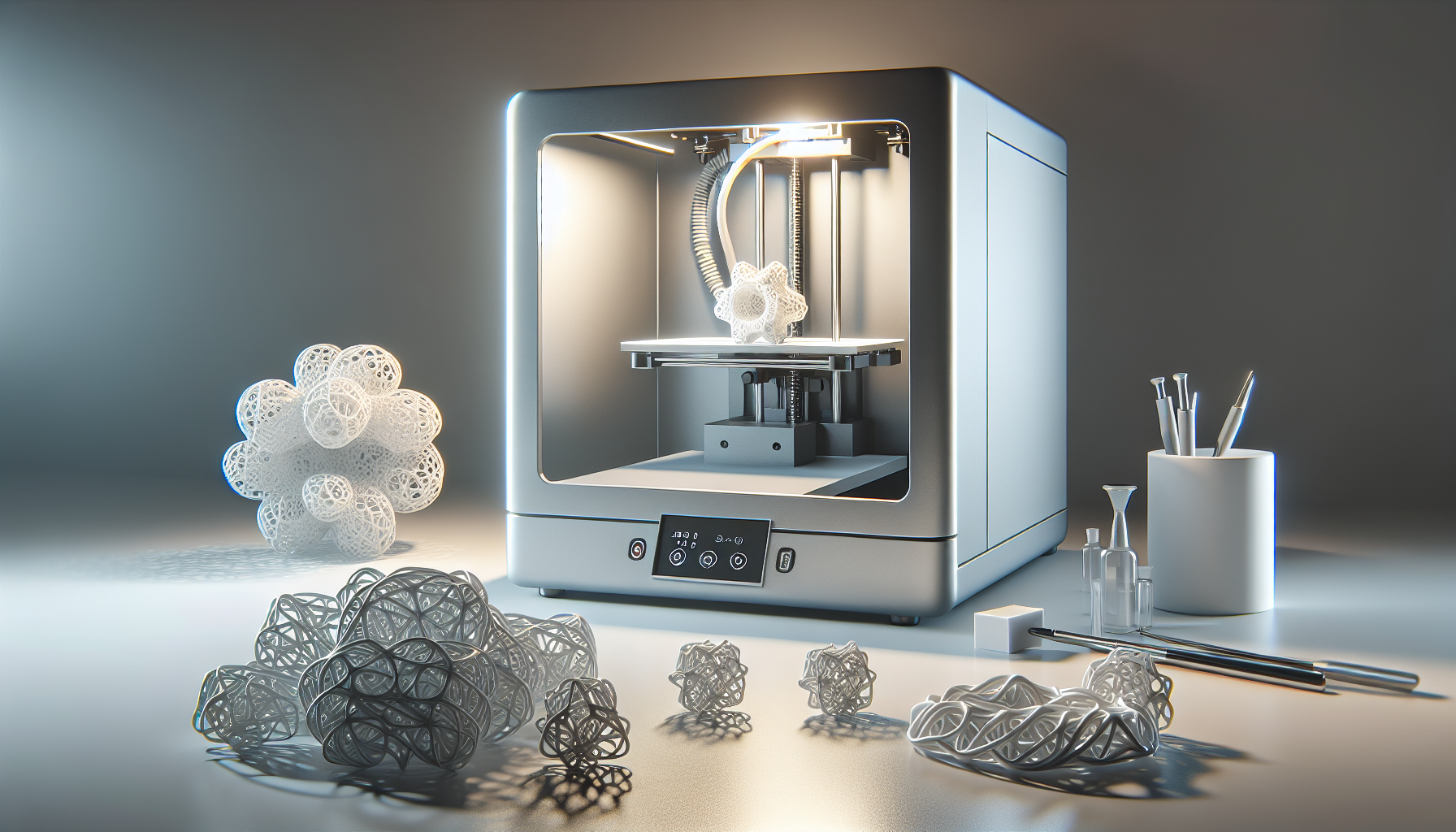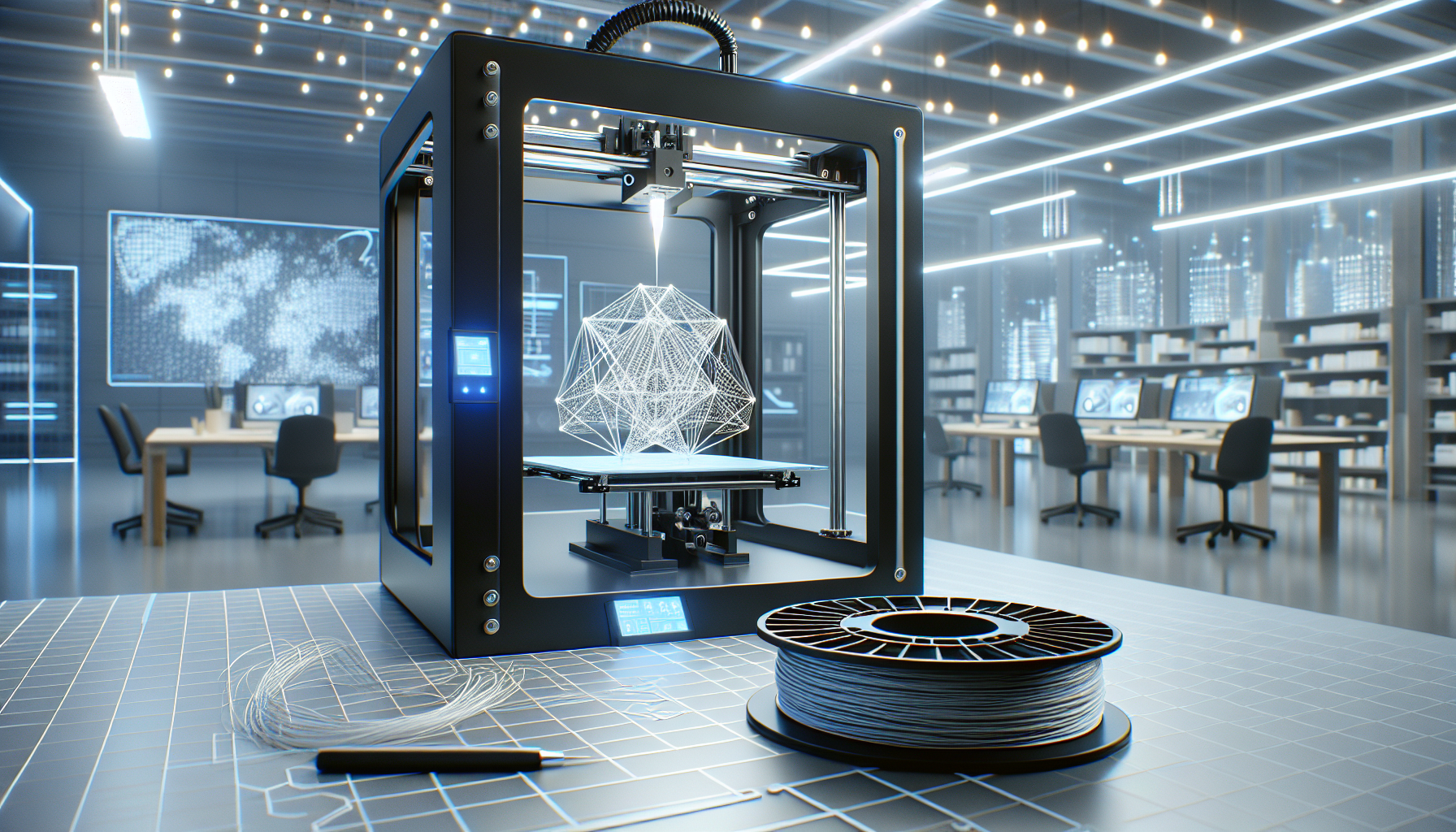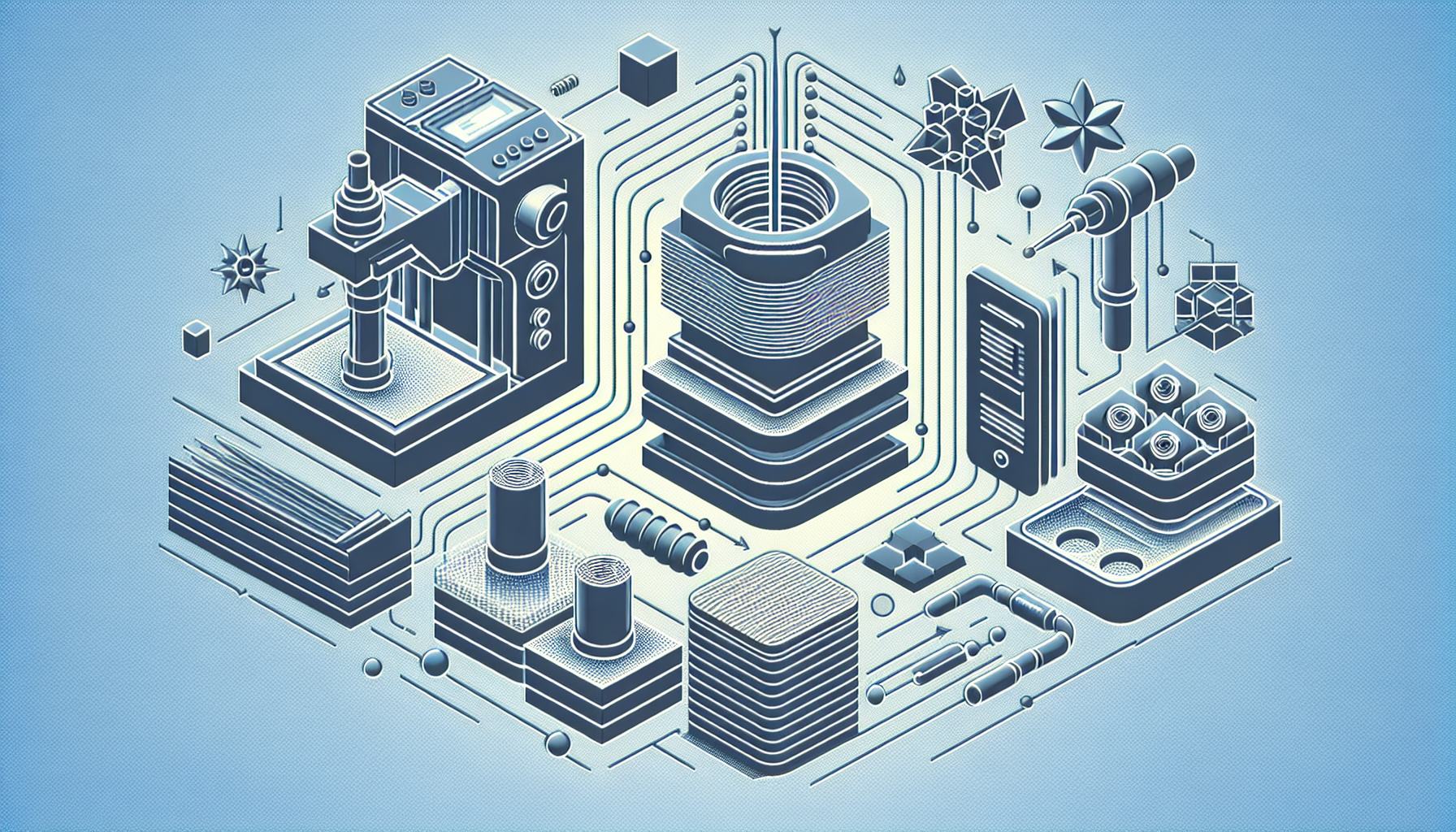
Innovations in 3D printing for complex geometries are redefining what engineers can design, what factories can produce, and how quickly ideas move from concept to functional part. In manufacturing, “complex geometry” refers to shapes that are difficult or impossible to machine, cast, or mold economically using conventional methods: internal channels, lattice cores, conformal cooling paths, topology-optimized brackets, patient-specific implants, and assemblies consolidated into a single build. Additive manufacturing, commonly called 3D printing, creates these forms layer by layer from digital models, allowing geometric freedom that subtractive and formative processes rarely match. As a hub topic within manufacturing processes, additive manufacturing deserves broad treatment because it spans polymers, metals, ceramics, software, qualification, design rules, economics, and supply chain strategy. I have worked with teams adopting powder bed fusion, material extrusion, vat photopolymerization, and binder jetting, and the recurring lesson is consistent: the technology matters, but design intent, process capability, and inspection discipline matter more. Companies no longer evaluate 3D printing only as a prototyping tool. Aerospace firms print lightweight fuel nozzles, dental labs mass-customize aligner molds, medical manufacturers build porous implants, and tooling groups produce inserts with conformal cooling that shorten cycle times. The field matters because complex geometries often create measurable business value: fewer parts, lower mass, better thermal performance, faster iteration, and localized production. Yet success requires understanding how process physics, material behavior, support strategies, and post-processing interact. This article explains the major additive manufacturing methods, why they enable intricate forms, where they deliver the strongest results, and how manufacturers can use them responsibly at production scale.
What additive manufacturing includes and why geometry changes the economics
Additive manufacturing is not one process but a family of processes standardized in ISO/ASTM 52900, including material extrusion, vat photopolymerization, powder bed fusion, binder jetting, material jetting, directed energy deposition, and sheet lamination. Each process builds parts additively, but the feedstock, energy source, surface finish, dimensional capability, and speed differ substantially. For complex geometries, the central advantage is not simply that a printer can make unusual shapes; it is that complexity often adds little or no tooling cost. In injection molding, geometric complexity can demand slides, lifters, or multiple tools. In machining, complexity means more setups, longer toolpaths, smaller cutters, and expensive fixturing. In additive manufacturing, complexity shifts cost toward build time, orientation, support volume, and post-processing rather than dedicated tooling.
This changes decision-making. If a heat exchanger needs tortuous internal passages to improve thermal transfer, a metal laser powder bed fusion process may justify itself because no practical drilling sequence can create those channels. If a robot arm bracket can be topology optimized to remove 35 percent of its mass while preserving stiffness, additive manufacturing may enable a lighter assembly and lower operational energy use. If a production line needs custom end-of-arm tooling, polymer printing can collapse procurement from weeks to hours. The economic case becomes strongest when geometry improves performance, consolidates assemblies, or eliminates indirect costs such as inventory, tooling storage, and supply risk.
Core 3D printing processes used for complex geometries
Different additive manufacturing processes solve different geometry problems. Material extrusion, often associated with fused filament fabrication, melts thermoplastic filament and deposits it through a nozzle. It is accessible and useful for fixtures, ducts, prototypes, and some end-use parts, but anisotropy, visible layer lines, and support scarring can limit highly precise applications. Vat photopolymerization, including stereolithography and digital light processing, cures liquid resin with light and excels at fine features, smooth surfaces, and intricate organic forms, making it common in dental, medical modeling, and investment casting patterns.
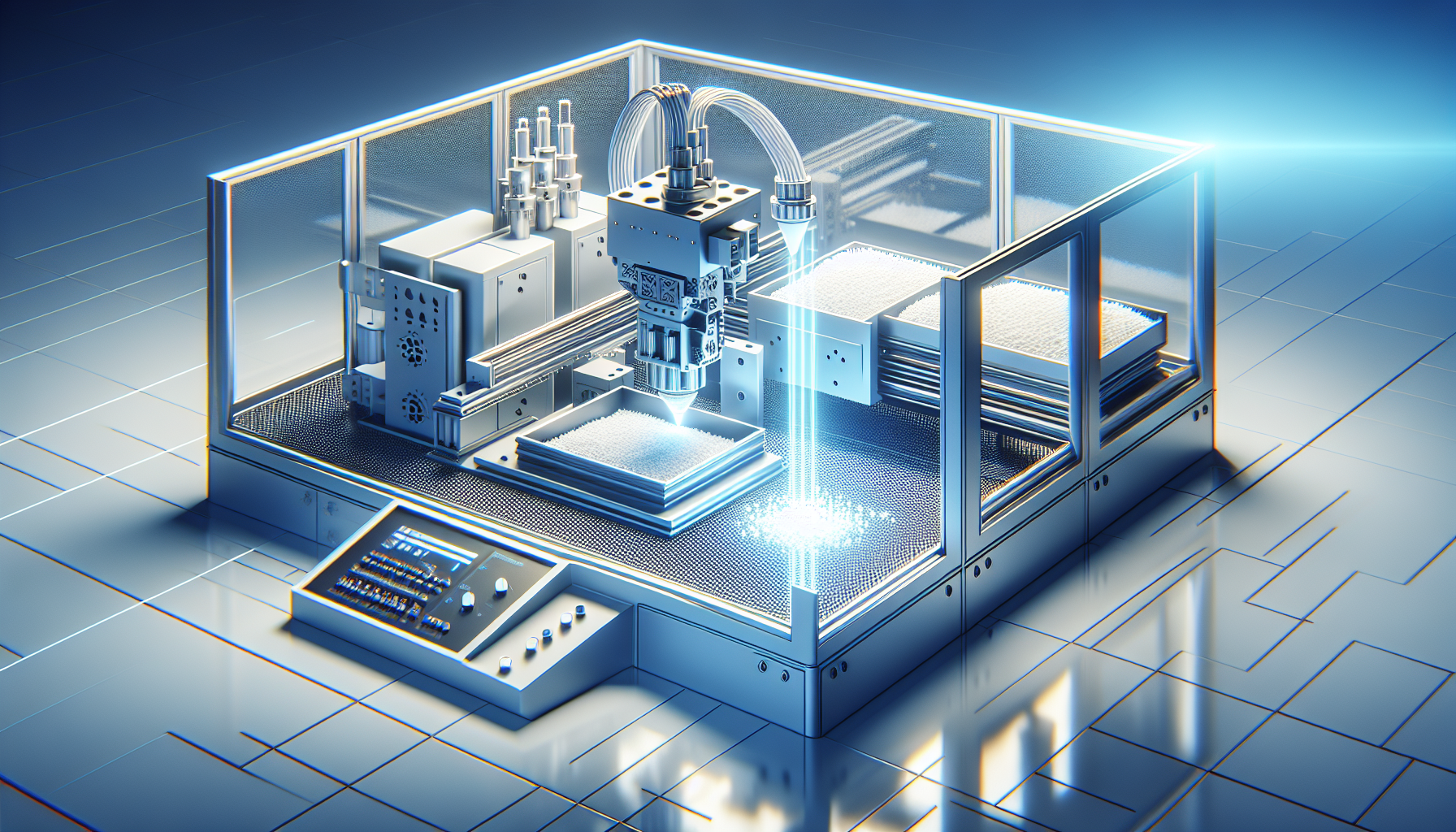
Powder bed fusion is especially important for complex geometries. In polymer systems such as selective laser sintering and multi jet fusion, powder supports the part during building, enabling nested parts, enclosed channels, and lattices without traditional support structures. In metal systems such as laser powder bed fusion and electron beam melting, fine layers of metal powder are selectively melted to create dense, high-performance components. These systems can produce aerospace brackets, turbine components, and orthopedic implants with internal features that conventional methods cannot replicate. Binder jetting deposits a binding agent into powder beds and later sinters the green part. It offers high throughput and no thermal distortion during printing, which is attractive for complex shapes, though shrinkage control during sintering is a critical engineering challenge. Directed energy deposition feeds powder or wire into a melt pool and is less suited to tiny intricate details, but valuable for repairing large components or adding features to forgings.
| Process | Typical strength for complex geometries | Common limitation | Example use |
|---|---|---|---|
| Material Extrusion | Low-cost custom forms and tooling | Surface finish and anisotropy | Assembly jigs, air ducts |
| Vat Photopolymerization | Fine detail and smooth surfaces | Resin brittleness or UV sensitivity | Dental models, microfluidic parts |
| Polymer Powder Bed Fusion | Self-supporting complex assemblies | Powder handling and refresh ratios | Enclosures, lattice structures |
| Metal Powder Bed Fusion | High-performance internal channels and lightweight parts | Support removal and residual stress | Fuel nozzles, heat exchangers |
| Binder Jetting | Scalable production of intricate forms | Sintering shrinkage management | Metal filters, tooling components |
Design innovations that make intricate parts manufacturable
The most important innovations are not only in machines but in design methods. Design for additive manufacturing, usually shortened to DfAM, replaces the old habit of copying machined parts and instead starts from functional requirements. Topology optimization uses load cases, boundary conditions, and manufacturing constraints to remove unnecessary material. Generative design expands this by producing multiple candidate geometries based on objectives such as minimum mass, target stiffness, or thermal performance. Lattice design tools then create periodic or stochastic cellular structures inside a part, reducing weight while managing energy absorption, permeability, or osseointegration.
In practice, these methods unlock geometries that are valuable rather than merely exotic. A mold insert with conformal cooling channels can follow the shape of the cavity, pulling heat more evenly than straight drilled lines. I have seen cycle-time reductions substantial enough to change machine utilization economics, especially in injection molding for difficult polymers. In aerospace, part consolidation is often the hidden breakthrough. A bracket assembly made from several machined and fastened pieces can be redesigned as one printed component, eliminating joints, reducing inspection points, and improving reliability. For medical devices, porous structures can be engineered with targeted pore size and interconnectivity to support bone ingrowth. For fluid systems, triply periodic minimal surface structures improve heat exchange and mixing while preserving strength. These are not decorative features; they are performance features enabled by geometry-aware design software such as nTopology, Altair Inspire, Autodesk Fusion, Materialise Magics, and Siemens NX.
Materials, process control, and the physics behind success
Complex geometry is only useful if material properties remain predictable. That is why serious additive manufacturing programs pay close attention to feedstock quality, thermal history, and post-processing. In metal powder bed fusion, particle size distribution, morphology, flowability, and oxygen content affect layer spreading and final density. Alloys such as Ti-6Al-4V, 316L stainless steel, Inconel 718, AlSi10Mg, and CoCr have become common because parameter windows and downstream heat treatments are better understood. In polymers, PA12 dominates many powder bed fusion applications because it offers a stable balance of toughness, detail, and processability, while high-performance materials such as PEEK and PEKK serve demanding thermal or chemical environments.
The physics are unforgiving. Rapid thermal cycling in metal printing creates residual stress that can distort thin walls or crack certain alloys. Scan strategy, support placement, plate temperature, and hot isostatic pressing all influence outcome. In photopolymer processes, light bleed can overcure small features, and resin viscosity affects drainage from internal cavities. In extrusion, nozzle diameter, raster angle, chamber temperature, and moisture content change bead fusion and dimensional accuracy. Manufacturers increasingly rely on in-situ monitoring, melt pool sensing, recoater analytics, and closed-loop controls to detect defects before a build finishes. Computed tomography, optical scanning, metallography, and tensile testing then verify that internal channels, lattices, and load paths match specification. Standards from ASTM and ISO, plus sector-specific requirements from regulators and prime contractors, are essential when printed complexity enters safety-critical applications.
Post-processing, quality assurance, and production realities
Many failed business cases come from underestimating what happens after printing. Complex geometries often require support removal, depowdering, stress relief, machining of datum surfaces, infiltration or sintering, polishing, sealing, and validation. A metal part with internal channels may print successfully yet still fail if trapped powder cannot be removed or if inaccessible surfaces create contamination risk. That is why escape holes, powder evacuation paths, and inspection access must be designed early, not patched in later. Surface roughness is another major issue. As-built surfaces can be acceptable for some heat exchangers or porous implants, but sealing faces, bearing bores, and threaded interfaces usually need secondary machining.
Production also demands repeatability. Qualification typically includes machine calibration, parameter locking, material lot control, build orientation control, witness coupons, and documented post-processing recipes. In regulated industries, traceability from powder lot to final inspection report is nonnegotiable. When teams implement additive manufacturing successfully, they build a process chain rather than buying a printer and hoping for transformation. Workflow software such as EOSPRINT, 3D Systems 3DXpert, Materialise Build Processor, and quality systems aligned with AS9100 or ISO 13485 create the operational backbone. The result is not magic; it is disciplined manufacturing adapted to layer-wise production.
Industrial applications where complex geometries create measurable value
The strongest applications are those where shape directly improves performance. Aerospace remains a leading example because every gram matters and certification rewards reliable part consolidation. GE Aerospace’s fuel nozzle program became a landmark because additive manufacturing reduced part count dramatically while supporting better durability and more efficient combustion geometry. In orthopedic implants, acetabular cups and spinal cages use controlled porous structures to encourage fixation and tailor stiffness. In dental production, aligner model workflows and cobalt-chrome frameworks show how mass customization can be industrial, not artisanal.
Tooling is another high-return area. Conformal-cooled mold inserts can reduce hot spots, lower warpage, and shorten molding cycles. That combination improves scrap rate and throughput, which is why many manufacturers begin their additive manufacturing journey in tooling rather than final parts. Energy systems also benefit. Printed heat exchangers, burner heads, and flow components use intricate internal passages to improve thermal efficiency in compact envelopes. In automotive and motorsport, lightweight brackets, optimized manifolds, and customized fixtures deliver fast gains. Even consumer products benefit when geometry supports ergonomics, airflow, acoustic tuning, or personalization. Across these examples, the lesson is clear: additive manufacturing wins when complex geometry is tied to a measurable engineering or commercial outcome, not when it is used simply because the shape looks impressive.
How to evaluate when additive manufacturing is the right process
A practical screening approach starts with six questions. Does the part need internal features that cannot be machined? Can multiple components be consolidated into one? Will lower weight, improved heat transfer, or customization create real value? Is annual volume low enough, or tooling cost high enough, to justify additive economics? Can the geometry be inspected and post-processed reliably? Are materials and standards mature for the target application? If the answer to several of these is yes, additive manufacturing deserves serious evaluation alongside casting, machining, molding, and hybrid routes.
For a manufacturing processes hub, the key takeaway is that additive manufacturing is no longer a side technology. It is a core process family with distinct strengths in complexity, customization, and design freedom. The most successful programs combine DfAM, process selection, material science, and quality planning from the start. If you are building your manufacturing strategy, map candidate parts by geometry difficulty, performance benefit, and supply risk, then test additive manufacturing where it changes the design equation rather than merely replacing an existing process. That is where innovations in 3D printing for complex geometries deliver lasting advantage.
Frequently Asked Questions
What counts as a complex geometry in 3D printing, and why is additive manufacturing so well suited to it?
In the context of manufacturing, a complex geometry is any part shape that becomes difficult, expensive, or impractical to make with subtractive machining, casting, molding, or fabrication methods. That includes internal channels that cannot be drilled in a straight line, lattice-filled structures that reduce weight while preserving stiffness, organic topology-optimized forms, undercuts, conformal cooling channels in tooling, patient-specific implants, and assemblies that would traditionally require many separate components. These designs often demand multiple machining setups, custom tooling, split molds, secondary joining operations, or design compromises when produced conventionally.
3D printing is especially effective for these geometries because it builds parts layer by layer directly from digital data rather than removing material from a block or forcing material into a tool-defined cavity. That means complexity does not carry the same manufacturing penalty it often does in traditional processes. A curved internal passage, a graded lattice, or a highly organic support structure can be printed as part of the build instead of being machined, welded, or assembled later. This design freedom allows engineers to focus more on function and performance rather than the limitations of cutting tools, mold parting lines, or assembly access.
Just as important, additive manufacturing enables part consolidation. A design that might have required ten or twenty components can sometimes be reengineered into a single printed part with fewer leak paths, less assembly time, reduced inventory, and better performance. That is why 3D printing has become so important in aerospace, medical, automotive, energy, and advanced tooling applications where geometry directly affects strength, weight, heat transfer, fluid flow, and customization.
Which recent 3D printing innovations are making highly intricate parts more practical to produce?
Several major innovations are pushing complex-geometry printing from a prototyping capability into a serious production strategy. One of the most important is the improvement in process control and machine monitoring. Modern additive systems increasingly use in-situ sensors, melt-pool monitoring, thermal imaging, closed-loop calibration, and software-based quality tracking to improve repeatability and reduce defects in complicated builds. That matters because the more geometrically intricate a part is, the more sensitive it can be to thermal distortion, residual stress, and print interruptions.
Another key innovation is advanced software. Generative design, topology optimization, lattice generation, and simulation tools now allow engineers to create highly efficient structures that could not realistically be drawn or validated by hand. These platforms can optimize a part for stiffness-to-weight ratio, heat dissipation, vibration behavior, or fluid performance while ensuring the design remains printable. Sophisticated slicing software also helps with scan strategies, support minimization, orientation planning, and localized parameter control, all of which are critical when producing detailed internal features and fine structures.
Material innovation is also playing a major role. Engineers now have access to a wider range of printable metals, high-performance polymers, composites, ceramics, and biocompatible materials. Better powders, resins, and filaments with tighter consistency help manufacturers achieve more reliable results in thin walls, microfeatures, and load-bearing geometries. At the same time, new post-processing methods such as automated depowdering, support removal, hot isostatic pressing, precision finishing, and CT-based inspection are making it easier to qualify complex parts for demanding industries. Together, these advances are making intricate additive designs more manufacturable, more inspectable, and more economically viable at scale.
How do engineers design complex geometries for 3D printing without creating parts that are difficult to print or inspect?
Designing successfully for additive manufacturing requires a shift in mindset. Instead of asking whether a part can simply be printed, engineers need to ask whether it can be printed reliably, post-processed efficiently, and inspected with confidence. That begins with orientation strategy. The build direction affects support requirements, surface quality, thermal behavior, distortion risk, and even mechanical properties in some processes. A geometry that looks elegant in CAD may become problematic if it traps powder, needs inaccessible supports, or places critical surfaces in poor print orientations.
Support management is another major design consideration. Although 3D printing can produce shapes that are impossible for conventional manufacturing, not every feature is automatically easy to print. Overhangs, bridges, thin walls, and enclosed cavities must be evaluated in relation to the specific technology being used, whether that is powder bed fusion, binder jetting, stereolithography, material extrusion, or another process. Designers often modify internal passages, add escape holes, adjust wall thicknesses, smooth stress concentrations, or use self-supporting angles to improve build success. In metal printing especially, thermal behavior and residual stress must be considered early to avoid warping, cracking, or support-heavy builds that erase the economic benefit of the design.
Inspection planning should also be built into the part from the beginning. For example, internal channels may require CT scanning, flow testing, or witness features to verify quality. Critical surfaces may need machining allowances. Lattice regions may need validation rules for minimum feature size and powder evacuation. The most successful teams use a design-for-additive-manufacturing workflow that integrates CAD, simulation, process knowledge, and quality requirements from the outset. When engineers design with printing, post-processing, and inspection in mind all at once, complex geometries become far more practical and production-ready.
What are the biggest advantages of using 3D printing for internal channels, lattices, and consolidated assemblies?
The biggest advantage is functional performance. Internal channels can be shaped to follow fluid paths, heat loads, or pressure requirements instead of being restricted to straight drilling or simple mold cores. That is especially valuable for heat exchangers, fuel systems, hydraulic components, and injection molds with conformal cooling channels. By placing passages exactly where they are needed, engineers can improve thermal control, reduce cycle times, increase energy efficiency, and achieve more consistent performance across the part.
Lattice structures bring a different but equally important benefit: they allow material to be placed only where it contributes the most value. Rather than filling a part with solid mass, designers can use periodic or algorithmically optimized cellular structures to lower weight, tune stiffness, absorb energy, encourage bone in-growth in implants, or manage heat transfer. In aerospace and medical sectors, this can dramatically improve performance while reducing material usage. Advanced lattices can even vary across a part so that one zone is optimized for strength, another for flexibility, and another for thermal behavior.
Assembly consolidation may be the most strategically important advantage of all. By combining multiple brackets, fasteners, manifolds, seals, or housings into a single printed component, manufacturers can reduce assembly labor, eliminate tolerance stack-up, lower leak risks, and simplify supply chains. A consolidated part often performs better because it removes joints and interfaces that can fail under vibration, temperature cycling, or pressure. It also shortens lead times because fewer individual parts must be sourced, machined, inspected, and inventoried. For many companies, the true value of complex-geometry 3D printing is not just that it can make unusual shapes, but that it can produce smarter, lighter, and more integrated products than conventional manufacturing allows.
What challenges still limit 3D printing for complex geometries, and how are manufacturers addressing them?
Despite the progress, several real challenges remain. One is process variability. Complex shapes can create uneven heat distribution, difficult support conditions, and hidden internal defects that are harder to predict than in simpler components. In metal additive manufacturing, residual stress, distortion, porosity, and anisotropic behavior can affect performance if the process is not tightly controlled. In polymer and resin systems, dimensional stability, feature resolution, shrinkage, and material aging may also become concerns depending on the application. These issues do not make additive unsuitable, but they do require disciplined engineering and quality systems.
Another challenge is post-processing. Many complex parts need support removal, heat treatment, surface finishing, machining on critical interfaces, powder evacuation, or internal cleaning before they are ready for use. Intricate channels and lattice interiors can be especially difficult to access. Inspection can also be more demanding than with traditional parts because internal geometry may not be directly visible. That often means using CT scanning, advanced metrology, process records, and qualification testing, which can add time and cost. For regulated sectors such as aerospace and medical, documentation and validation requirements are especially strict.
Manufacturers are addressing these limitations through better design rules, stronger digital workflows, more automated post-processing, and increasingly mature qualification standards. Simulation is helping teams predict distortion and optimize support strategies before printing begins. In-situ monitoring and machine data are improving traceability and consistency. Hybrid workflows that combine additive manufacturing with machining are delivering the best of both worlds: geometric freedom where it matters and precision finishing where it is required. As standards, materials, software, and inspection tools continue to improve, the barriers to producing highly complex parts are steadily shrinking. The result is that additive manufacturing is becoming less of a specialized novelty and more of a dependable production method for geometries that once seemed out of reach.