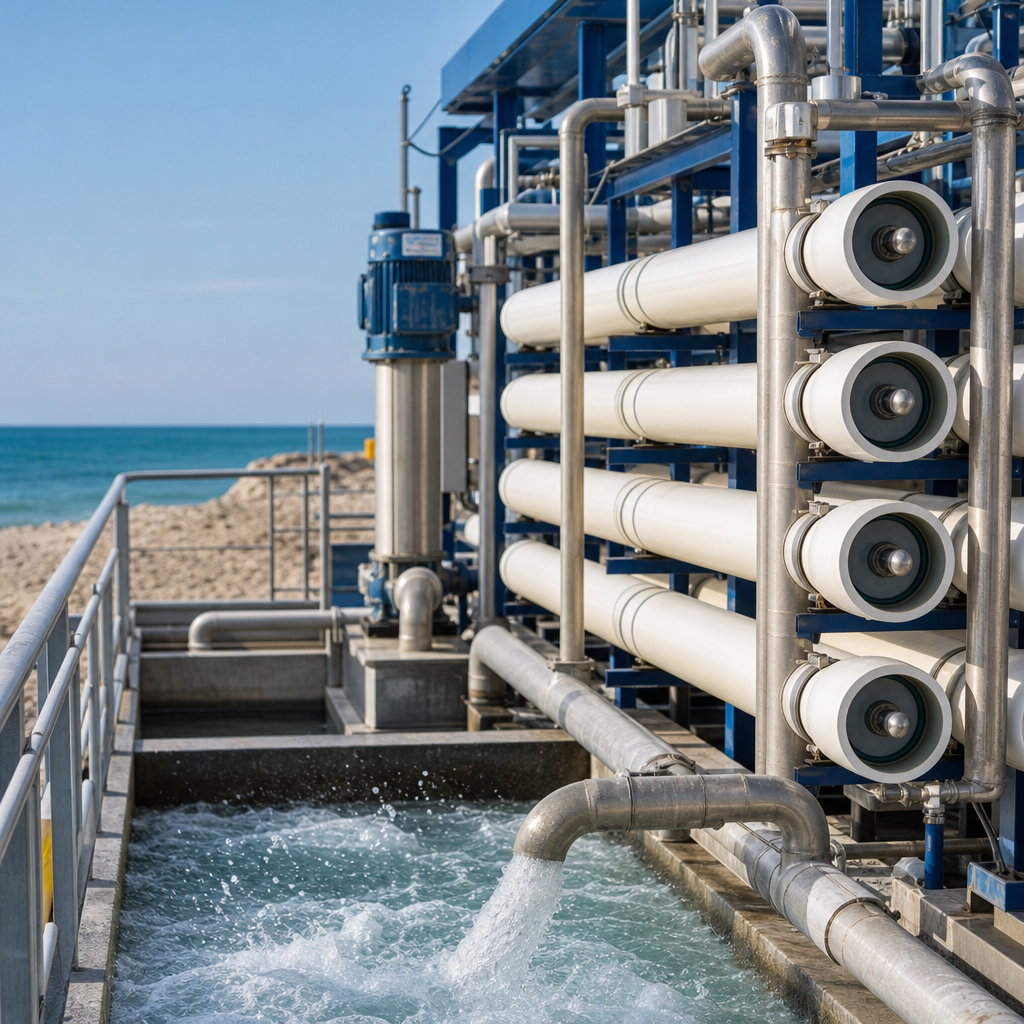
Water desalination has moved from a niche engineering solution to a strategic necessity, and polymers are at the center of that shift. In practical terms, desalination is the removal of dissolved salts and other impurities from seawater, brackish water, or industrial wastewater to produce water suitable for drinking, agriculture, or manufacturing. Polymers, a broad class of materials made of repeating molecular units, enhance desalination by forming selective membranes, preventing fouling, improving energy recovery devices, stabilizing pretreatment chemicals, and extending equipment life. When I have evaluated desalination systems in municipal and industrial settings, the strongest performance gains rarely came from bigger pumps or more aggressive operating pressures alone; they came from smarter materials choices, especially polymer-based components engineered for selectivity, durability, and chemical resistance.
The reason this matters is straightforward. Freshwater demand continues to rise while accessible surface water and groundwater supplies become more stressed by drought, contamination, and overuse. According to widely cited global assessments, billions of people face water scarcity for at least part of the year, and coastal regions increasingly rely on reverse osmosis plants to secure supply. Yet desalination remains energy intensive and operationally sensitive. Membranes foul, scaling reduces flux, pretreatment chemistry can drift, and maintenance costs can erode project economics. Polymers help solve these bottlenecks because they can be tailored at the molecular level. Engineers can adjust pore structure, surface charge, hydrophilicity, thermal stability, and mechanical strength to target specific feedwater conditions. That tunability is what makes innovative polymer applications so important across the full desalination process chain.
As a hub for innovative polymer applications, this article explains where polymers are used, how they improve desalination performance, what tradeoffs operators must manage, and why material selection determines whether a plant achieves stable long-term output. It covers the key membrane chemistries, pretreatment aids, fouling-control coatings, and emerging technologies that are shaping the next generation of seawater and brackish water treatment systems.
Polymer membranes are the core technology in modern desalination
The most important polymer application in desalination is the membrane itself. Reverse osmosis, now the dominant desalination method worldwide, depends on semi-permeable polymer membranes that allow water molecules to pass while rejecting most dissolved salts. The industry standard is a thin-film composite membrane, usually built on a porous polysulfone support with an ultrathin polyamide selective layer formed by interfacial polymerization. This structure matters because each layer serves a different purpose. The support provides mechanical integrity and flow distribution, while the polyamide skin delivers high salt rejection. In seawater reverse osmosis, a well-performing membrane can reject more than 99 percent of sodium chloride while maintaining useful permeate flux under high pressure.
These polymer membranes have transformed desalination economics. Earlier cellulose acetate membranes were important historically and are still used in some niche applications, but thin-film composite polyamide membranes offer higher flux, better salt rejection, and wider operating flexibility. In practice, that translates into lower specific energy consumption per cubic meter of water produced, particularly when paired with modern energy recovery systems. Major manufacturers such as DuPont FilmTec, Toray, Hydranautics, and LG Water Solutions compete by refining polymer chemistry and module design to resist chlorine damage, compact fouling layers, and hydrolysis under variable pH conditions. Plant operators usually focus on recovery rate and permeate quality, but those outcomes depend directly on polymer surface properties that govern transport and contaminant interaction.
Forward osmosis and nanofiltration also rely heavily on specialized polymers. Nanofiltration membranes, often based on modified polyamide chemistry, are useful where partial desalination or selective ion removal is needed, such as hardness reduction or sulfate removal before downstream treatment. Forward osmosis, while not yet as commercially dominant, uses osmotic gradients rather than hydraulic pressure and has attracted interest for difficult industrial waste streams. In both cases, the polymer matrix determines whether a membrane achieves the right balance between permeability and selectivity, the central design challenge in membrane science.
Advanced polymer surface engineering reduces fouling and scaling
Any serious discussion of how polymers enhance water desalination processes must address fouling. Fouling occurs when suspended solids, organic matter, microorganisms, or inorganic precipitates accumulate on membrane surfaces and restrict water flow. It raises pressure requirements, increases cleaning frequency, and shortens membrane life. Polymer innovation has produced some of the most effective fouling-control tools available. By modifying membrane surfaces with hydrophilic polymers such as polyethylene glycol derivatives, zwitterionic coatings, or grafted acrylic functionalities, manufacturers can reduce adhesion of proteins, oils, and microbial films. A more hydrophilic surface tends to bind water molecules strongly, creating a hydration layer that makes it harder for foulants to attach.
I have seen the operational difference this makes in feedwaters with high organic load. Two membranes may have similar initial salt rejection, yet the one with better polymer surface treatment can maintain normalized flux significantly longer between clean-in-place cycles. That stability is often more valuable than a small gain in day-one permeability. Anti-scaling performance also benefits from polymer chemistry. Some membranes incorporate smoother surface morphology or charge-controlled layers that reduce nucleation sites for calcium sulfate, barium sulfate, or silica-related deposits. While no membrane is immune to poor pretreatment, polymer surface engineering can widen the operating window and make the plant more forgiving under fluctuating conditions.
Outside the membrane itself, polymeric antiscalants play a major role. These formulations, often based on polyacrylates, phosphonated polymers, or maleic acid copolymers, interfere with crystal growth and dispersion in the feed stream before salts precipitate on membranes. Their effectiveness depends on dose control, feedwater chemistry, and compatibility with downstream membranes, but when selected properly they enable higher recoveries without immediate scaling failure.
| Polymer application | Where it is used | Main benefit | Typical example |
|---|---|---|---|
| Thin-film composite membrane | Reverse osmosis modules | High salt rejection with strong water flux | Polyamide on polysulfone support |
| Hydrophilic surface coating | Membrane active surface | Reduced organic and biofouling attachment | PEG-like or zwitterionic layer |
| Polymeric antiscalant | Pretreatment chemical dosing | Higher recovery before mineral precipitation | Polyacrylate copolymer |
| Ion-exchange resin | Pretreatment and polishing | Selective ion removal and polishing | Styrene-divinylbenzene resin |
| Protective lining | Pipes, tanks, vessels | Corrosion resistance and longer asset life | Epoxy or fluoropolymer coating |
Polymers strengthen pretreatment, cleaning, and system reliability
Desalination performance starts before water reaches the membrane rack. Pretreatment determines silt density index, turbidity, biological loading, and the concentration of colloids that can blind membrane surfaces. Polymers are essential here in both membrane and non-membrane roles. Coagulants and flocculant aids based on cationic or anionic polymers help aggregate fine suspended particles into larger flocs that can be removed in dissolved air flotation, sedimentation, or media filtration. In seawater plants exposed to algal blooms, this step is critical because untreated organics can trigger rapid biofouling downstream. Polymeric ultrafiltration and microfiltration membranes are also widely used as pretreatment barriers. Polyvinylidene fluoride, polyethersulfone, and polypropylene modules remove particulates, bacteria, and some colloidal material before reverse osmosis, giving operators a more stable feed profile.
Chemical cleaning also depends on polymer compatibility. Membranes must tolerate acidic and alkaline cleaning agents, surfactants, chelants such as EDTA, and biocidal strategies used cautiously in upstream steps. Polyamide membranes, for example, are sensitive to free chlorine, so dechlorination with sodium bisulfite is standard ahead of reverse osmosis. That single limitation has shaped pretreatment design across the industry. Engineers must choose polymer materials with a realistic understanding of what the plant can expose them to over years of operation. A membrane that performs well on paper but degrades under common cleaning conditions is not a durable solution.
Reliability extends beyond membranes and chemicals. Polymer linings, fiber-reinforced plastics, elastomeric seals, and composite pressure vessels protect desalination plants from corrosion in saline and chemically aggressive environments. Glass-reinforced epoxy pressure vessels are standard in reverse osmosis skids because they combine strength with corrosion resistance at lower weight than many metal alternatives. High-performance thermoplastics and elastomers are used in pumps, valves, cartridge filters, and dosing systems where metal corrosion or scaling would otherwise increase maintenance burden. These are not secondary details. In lifecycle cost analysis, the cumulative value of corrosion-resistant polymer components is substantial because downtime in a large desalination plant is expensive and difficult to recover from during demand peaks.
Emerging polymer innovations are expanding what desalination can do
The next wave of desalination improvement is coming from more sophisticated polymer design. Researchers and commercial developers are working on membranes with embedded nanomaterials, aquaporin-inspired transport pathways, molecularly tailored charge distributions, and improved resistance to chlorine and oxidants. The goal is not novelty for its own sake. It is to break the long-standing tradeoff between permeability and selectivity while reducing fouling and energy demand. For example, thin-film nanocomposite membranes can incorporate nanoparticles into the polymer selective layer or support structure to enhance water transport or alter surface properties. Results vary by formulation, but the concept is technically important because it uses polymer chemistry as a platform for multifunctional performance.
Electrodialysis and capacitive deionization also benefit from polymer advances. In electrodialysis, ion-exchange membranes made from charged polymers selectively transport cations or anions under an electric field. These systems are particularly useful for brackish water, selective ion removal, and industrial process streams where full seawater reverse osmosis may not be the best fit. Improvements in polymer backbone stability and ion-exchange capacity have made these membranes more durable and more selective. In membrane distillation, hydrophobic polymer membranes such as PTFE, PVDF, and polypropylene create a vapor transport pathway driven by temperature difference rather than pressure. This can be advantageous for treating high-salinity brines or using low-grade waste heat, though wetting and heat management remain practical constraints.
Another promising area is circularity. Conventional membrane disposal creates waste, so manufacturers and researchers are exploring recyclable module designs, solvent recovery in membrane fabrication, and methods to upcycle end-of-life reverse osmosis membranes into nanofiltration or low-pressure treatment assets. There is also growing interest in bio-based polymers and greener solvents, although these alternatives must meet the same rigorous mechanical and chemical performance standards as petroleum-derived materials. In desalination, sustainability claims mean little unless the polymer survives pressure cycling, cleaning chemistry, and years of saline exposure.
Choosing the right polymer solution depends on feedwater, recovery, and risk
No single polymer is best for every desalination plant. Seawater reverse osmosis, brackish water treatment, zero liquid discharge systems, and industrial reuse trains all place different demands on materials. Feedwater composition is the first decision driver. High boron, silica, natural organic matter, oil contamination, or seasonal biological variability each point to different membrane chemistries and pretreatment strategies. Recovery target is the second. Higher recovery improves water yield but increases concentration polarization and scaling risk, which can require stronger antiscalant programs, more robust pretreatment membranes, or staged membrane arrays. The third factor is operational risk tolerance. A municipal utility may prioritize predictable long-term performance and conservative cleaning windows, while an industrial operator may accept more aggressive optimization if it reduces discharge volume or freshwater purchases.
The best projects treat polymers as strategic assets, not interchangeable consumables. That means validating membrane autopsy findings, tracking normalized permeate flow and differential pressure, testing cleaning effectiveness, and reviewing polymer compatibility with actual feedwater excursions rather than ideal design values. It also means linking this hub topic to adjacent case studies on membrane fouling, industrial reuse, brine concentration, and pretreatment optimization, because polymer performance only makes sense in full process context. When those connections are made, the benefit is clear: polymers enable desalination plants to produce more reliable water, at lower energy and maintenance cost, from feed sources that would otherwise be too saline, too variable, or too contaminated to use.
Polymers enhance water desalination processes by doing far more than acting as passive construction materials. They form the selective barriers that separate salt from water, create anti-fouling surfaces that preserve flux, support pretreatment systems that stabilize feed quality, and protect plant infrastructure from corrosion and chemical wear. Advanced polymer science has already made modern desalination practical at scale, and ongoing innovation is pushing membranes and related materials toward higher efficiency, better resilience, and broader applicability across seawater, brackish water, and industrial reuse settings.
For decision-makers, the main lesson is simple: desalination performance is inseparable from polymer selection. If you want lower energy use, longer membrane life, fewer cleaning events, and more dependable water quality, start by evaluating the polymer technologies embedded throughout the system. Use this hub as a foundation, then examine the linked case studies and application articles in this subtopic to match specific polymer solutions to your feedwater, recovery goals, and operating constraints.
Frequently Asked Questions
1. What role do polymers play in modern water desalination systems?
Polymers are fundamental to modern desalination because they make the core separation technologies practical, efficient, and scalable. In most membrane-based desalination systems, especially reverse osmosis, polymers are used to create thin, highly selective barrier layers that allow water molecules to pass while rejecting dissolved salts, organic contaminants, and many other impurities. This selectivity is what makes it possible to turn seawater or brackish water into usable fresh water on a large scale.
Beyond simple salt rejection, polymers contribute to the overall durability and performance of desalination equipment. They are engineered to withstand pressure, chemical exposure, and continuous operation in demanding environments. Polymer-based membranes can also be tailored for different feed waters, whether the source is seawater, brackish groundwater, or industrial wastewater. That flexibility is one reason polymers have become so important as desalination expands beyond emergency use and into long-term water security planning.
Polymers also support pretreatment and system protection. They are used in coatings, filtration media, and specialty chemicals that help reduce fouling, scaling, and membrane degradation. In other words, polymers do not just sit at the center of the filtration step; they improve the reliability of the entire desalination process. Their role spans separation efficiency, system longevity, operating cost control, and water quality consistency, which is why they are considered a key enabling material in advanced desalination.
2. How do polymer membranes remove salt and other impurities from water?
Polymer membranes remove salt and impurities by acting as selective barriers. In reverse osmosis, pressure is applied to saline water and forces water molecules through a dense polymer membrane while most dissolved salts, ions, and larger contaminants are left behind. The membrane’s microscopic structure and surface chemistry determine what can pass through and what is rejected. This is not a simple straining process like a kitchen sieve; it is a molecular-scale separation driven by diffusion, pressure, and solubility effects within the polymer layer.
The most widely used desalination membranes are often made with polyamide thin-film composite structures. These membranes combine different polymer layers, each with a distinct purpose. One layer provides the ultra-selective separation, another offers mechanical support, and another may help with flow or adhesion. This layered design allows engineers to balance permeability and salt rejection. High permeability means water moves through more easily, which can reduce energy demand, while high rejection ensures the treated water meets strict quality standards.
Polymer membranes can also help remove suspended particles, bacteria, natural organic matter, and certain industrial contaminants when integrated into broader treatment trains that include ultrafiltration, nanofiltration, or specialty membrane stages. The exact removal profile depends on the membrane type and operating conditions. What makes polymers so powerful in this setting is that they can be chemically modified to improve hydrophilicity, charge characteristics, pore structure, and fouling resistance. That tunability allows desalination systems to be optimized for both performance and real-world operating challenges.
3. Why are anti-fouling polymer technologies so important in desalination?
Anti-fouling polymer technologies are critical because fouling is one of the biggest operational problems in desalination. Fouling occurs when salts, microorganisms, oils, suspended solids, or organic materials build up on membrane surfaces. As that buildup increases, water flow declines, pressure requirements rise, cleaning frequency goes up, and membrane lifespan can shorten. All of those issues increase operating costs and can reduce plant reliability. In large-scale desalination facilities, even modest fouling can have a major effect on energy consumption and overall output.
Polymers help address this challenge in several ways. Membrane surfaces can be engineered with polymer coatings or modified chemistries that make it harder for contaminants to stick. For example, more hydrophilic polymer surfaces can attract a thin layer of water that acts as a protective interface, reducing adhesion by oils, proteins, and biological material. Some advanced polymer materials are designed to resist biofilm formation, which is especially important in seawater applications where microbial growth can be persistent and costly to control.
Anti-fouling polymers also improve cleaning efficiency and membrane stability. If foulants are less tightly bound to the membrane surface, operators can restore performance more effectively with less aggressive cleaning. That can reduce chemical use and help preserve membrane integrity over time. From a practical standpoint, anti-fouling polymer technology supports lower maintenance requirements, more consistent permeate quality, longer membrane service intervals, and better long-term economics. In desalination, performance is not just about how well a new membrane works on day one; it is about how well it keeps working after months and years of exposure, and anti-fouling polymers are central to that goal.
4. How do polymers improve the efficiency and cost-effectiveness of desalination plants?
Polymers improve efficiency and cost-effectiveness mainly by enabling membranes that produce more water with less energy and less downtime. In desalination, energy use is a major cost driver, especially in reverse osmosis systems that operate at high pressure. When polymer membranes are designed for higher permeability, water can pass through more readily without sacrificing salt rejection. That means the system can often achieve target production rates with lower energy input or reduced pressure demand, which translates into meaningful savings over time.
Another major advantage is lifespan and reliability. High-performance polymers are selected and engineered to resist chemical degradation, mechanical stress, and repeated cleaning cycles. This durability reduces replacement frequency and helps plants maintain stable output. When combined with anti-fouling properties, polymer-based components can also reduce operational interruptions caused by cleaning, shutdowns, and performance decline. For plant operators, that means better asset utilization and more predictable maintenance planning.
Polymers also create opportunities for process optimization. Different membrane chemistries and module designs can be matched to the salinity level and contamination profile of the source water. A brackish water system may prioritize energy efficiency, while a seawater system may require stronger rejection and tougher fouling control. Because polymers are so adaptable, manufacturers can develop application-specific solutions rather than relying on one generic material. The result is better overall process economics, from pretreatment through final polishing. In short, polymers help desalination plants lower energy use, extend equipment life, improve productivity, and deliver treated water more affordably at scale.
5. What are the future innovations in polymer-based desalination technology?
The future of polymer-based desalination is focused on making systems more selective, more energy-efficient, more resilient, and easier to operate in difficult water conditions. Researchers are developing next-generation polymer membranes with improved nanoscale architectures that can increase water flux while maintaining or even improving salt rejection. This matters because one of the long-standing engineering challenges in desalination is balancing permeability and selectivity. Better polymer design could reduce that tradeoff and allow plants to produce fresh water with lower energy demand.
Another important direction is the development of advanced surface chemistries and smart polymer materials that actively resist fouling, scaling, and biofilm growth. Instead of simply tolerating contamination, future membranes may be designed to repel specific foulants or recover performance more easily during cleaning. There is also growing interest in hybrid materials that combine polymers with nanoparticles, functional additives, or biomimetic structures to enhance transport properties and stability. These composite approaches could improve desalination performance in applications ranging from municipal drinking water production to industrial water reuse.
Sustainability is also shaping polymer innovation. Manufacturers and researchers are looking for ways to reduce the environmental footprint of membrane production, extend membrane lifespan, and improve end-of-life management. At the same time, polymer advances are supporting emerging desalination strategies such as low-pressure separations, forward osmosis, membrane distillation support materials, and more efficient pretreatment systems. Taken together, these innovations suggest that polymers will remain at the center of desalination progress, not just as passive materials, but as highly engineered tools that help make clean water production more accessible, reliable, and economically viable worldwide.