Laboratory Information Management Systems, usually called LIMS, are software platforms that organize samples, workflows, data, instruments, users, and records inside a laboratory. In polymer research, a LIMS does more than store test results. It connects formulation work, raw material tracking, instrument output, quality controls, compliance records, and project decisions in one governed system. When teams are developing thermoplastics, thermosets, elastomers, coatings, composites, adhesives, membranes, or biomedical polymers, that central control becomes essential because polymer programs generate varied data types across long timelines.
Polymer research is unusually data dense. A single development project may include monomer sourcing records, batch recipes, extrusion conditions, rheology curves, differential scanning calorimetry data, gel permeation chromatography distributions, tensile testing results, microscopy images, weathering studies, and customer application notes. I have seen labs try to manage this mix with spreadsheets, shared drives, instrument PCs, and paper notebooks. It works briefly, then breaks under version confusion, missing metadata, duplicated experiments, and weak traceability. A LIMS solves that operational problem by creating structured records for samples, tests, methods, approvals, and reports.
Why does this matter now? Polymer R&D is under pressure to move faster while meeting stricter technical, regulatory, and sustainability requirements. Teams must compare virgin and recycled feedstocks, document additives of concern, support ISO aligned quality systems, and preserve defensible data for customers and auditors. At the same time, many labs are expected to support digital transformation, connect with enterprise resource planning systems, and make data usable for modeling and machine learning. A well implemented LIMS becomes the foundation for those goals because it standardizes how polymer data is captured and retrieved.
This article serves as a hub for software and tools used in polymer laboratories. It explains how to use LIMS in daily research, what capabilities matter most, how to connect the system to instruments and other applications, and where limitations still exist. If you are evaluating platforms, replacing manual processes, or trying to make polymer data searchable and reusable, the sections below give a practical framework.
What a LIMS does in a polymer research environment
A LIMS manages the lifecycle of laboratory information from sample registration to final reporting. In polymer research, that usually begins with a request: a new resin formulation, a competitor benchmark, a failure analysis sample, or a stability study pull. The system assigns a unique sample ID, captures metadata such as polymer family, lot number, composition targets, processing history, hazard class, storage conditions, and requested test panel, then routes work to the appropriate analysts or instruments.
The key value is structure. Polymer labs often handle hierarchical relationships: a monomer becomes a prepolymer, a prepolymer becomes a formulated batch, the batch is molded into plaques, and the plaques generate multiple specimens for thermal, mechanical, chemical, and aging tests. A good LIMS preserves parent child links among all those materials. That means a researcher can trace a poor impact result back to a compounding batch, then back again to a specific stabilizer lot or mixing temperature excursion. Without that lineage, root cause analysis is slower and less reliable.
Modern LIMS platforms also manage methods and specifications. For example, a polyethylene development sample might require melt flow index by ASTM D1238, density by ASTM D1505, DSC for crystallinity, and tensile properties by ASTM D638. The LIMS can assign the correct method version, record acceptance limits, prompt required calculations, and enforce review steps before release. In regulated or customer facing environments, audit trails and electronic signatures are especially important because they document who entered, changed, reviewed, and approved each result.
Core workflows for samples, formulations, and test data
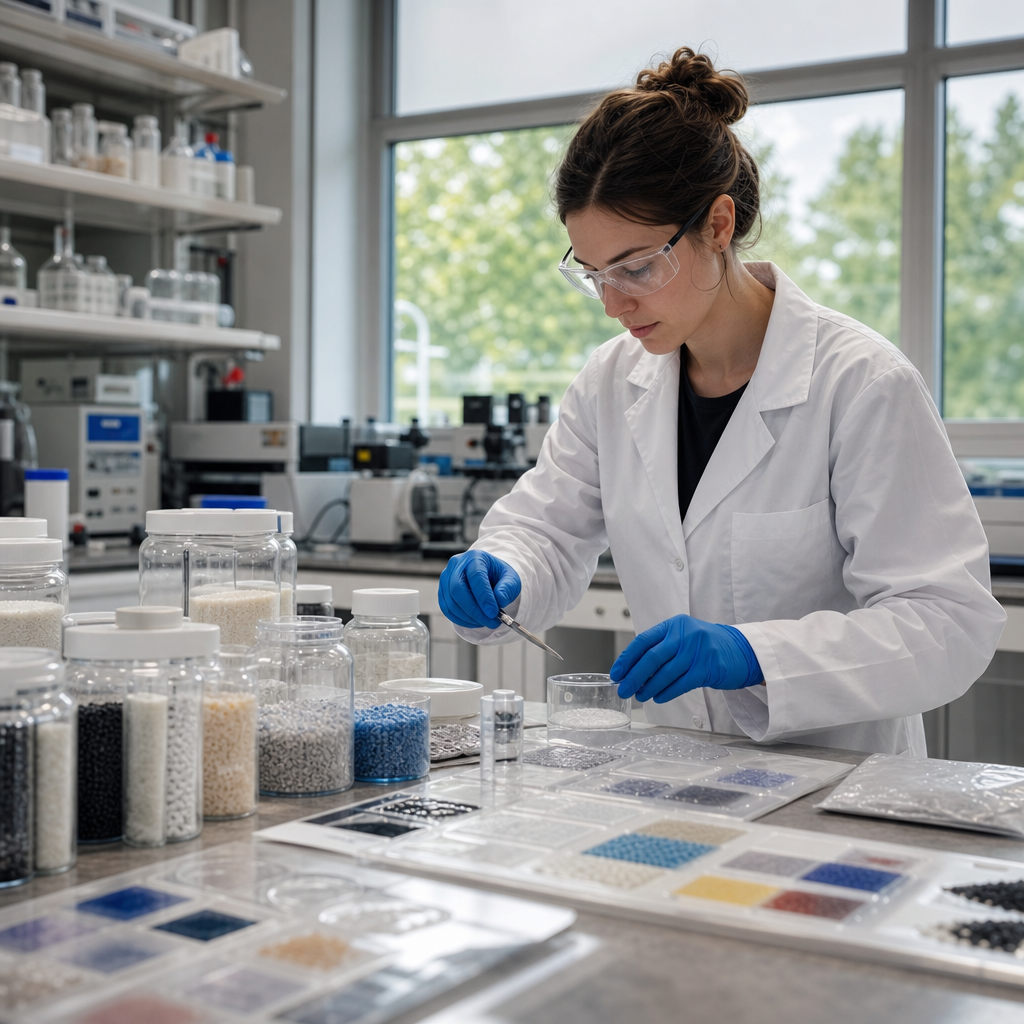
Using LIMS effectively starts with designing workflows around how polymer research actually happens, not how generic laboratory software assumes it happens. The first workflow is sample intake. Every incoming resin, additive, plaque, pellet, film, fiber, or environmental exposure set should enter through a standardized template. Required fields typically include project code, material class, supplier, lot, receipt date, storage location, intended use, and chain of custody. For internal batches, include reactor ID, compounding line, screw configuration, residence time, and cooling conditions where relevant.
The second workflow is formulation management. Many polymer groups use separate electronic lab notebooks or product lifecycle tools for recipes, but the LIMS should still store the approved composition snapshot tied to each tested sample. This can include target weight percentages, actual weighed quantities, additive package identifiers, and process deviations. In my experience, this is where labs either gain or lose reproducibility. If a formulation record only says “antioxidant added,” future teams cannot interpret aging data. If it states Irganox 1010 at 0.15 phr from supplier lot X, the data remains useful years later.
The third workflow is test execution and result capture. Polymer testing spans numeric data, spectra, chromatograms, and images, so the LIMS needs both manual entry forms and automated import options. Common result fields include units, instrument ID, calibration status, analyst, replicate count, environmental conditions, and calculation formulas. Labs should configure exception handling for outliers, failed controls, and retest reasons. That discipline prevents silent data quality problems and makes trend analysis trustworthy.
| Workflow area | What to capture in LIMS | Polymer research example |
|---|---|---|
| Sample registration | Unique ID, material type, lot, project, storage, hazards | Recycled PET pellet lot linked to supplier certificate and moisture sensitivity |
| Formulation record | Composition, target and actual weights, additive lots, process notes | PP impact copolymer with talc, peroxide modifier, and UV stabilizer package |
| Test assignment | Method version, due date, analyst, instrument, specification | ASTM D790 flexural test and DSC scheduled for molded plaques |
| Result capture | Replicates, units, calculations, raw file links, review status | GPC molecular weight distribution with chromatogram attachment |
| Reporting | Approved values, deviations, comments, customer format | Certificate summarizing melt flow, tensile strength, and Vicat softening point |
Instrument integration and data integrity
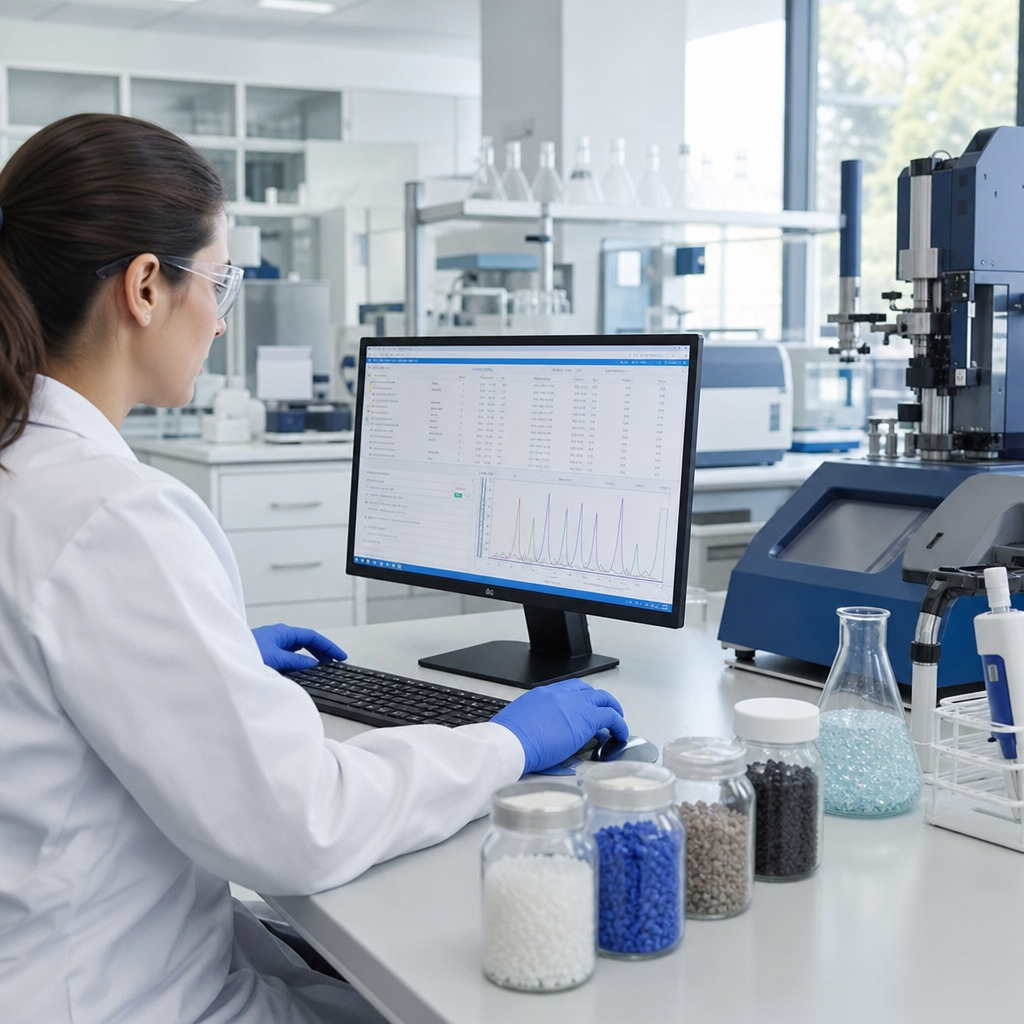
Instrument integration is where a polymer LIMS becomes truly valuable. Many polymer labs rely on DSC, TGA, DMA, FTIR, Raman, GPC or SEC, universal testing machines, rheometers, capillary viscometers, microtomes, weathering chambers, and gas permeability systems. If analysts transcribe results manually from each instrument computer, errors and delays are inevitable. Direct integration or controlled file import reduces transcription risk and preserves raw data context.
Not every instrument can connect the same way. Some vendors provide APIs or database access; others export CSV, XML, or proprietary files. Middleware tools such as instrument managers, OPC connectors, or custom parsers can bridge the gap. The goal is straightforward: map sample identifiers, method names, and result fields consistently so the correct record receives the correct data. In one lab migration, the biggest problem was not software capability but inconsistent naming conventions across instruments. Standardized sample IDs solved more than half the integration issues.
Data integrity depends on more than connectivity. Labs need role based access, time stamped audit trails, controlled master data, method versioning, and clear rules for corrections. For organizations operating under FDA 21 CFR Part 11 expectations, ISO 17025 accreditation, or customer audit programs, these controls are not optional. Even in nonregulated research, they matter because polymer development often revisits data years later when a product failure, sustainability review, or patent question arises. A result with no traceable source is operationally weak and legally vulnerable.
Choosing the right LIMS for polymer R&D and quality labs
The best LIMS for polymer research is rarely the one with the longest feature list. It is the one that fits polymer workflows without excessive customization. Start by defining your operating model: exploratory R&D, pilot plant support, manufacturing quality control, customer technical service, or a combination. An exploratory materials discovery group may prioritize flexible metadata and notebook adjacency, while a QC lab may prioritize specifications, stability, and release workflows.
Evaluate sample hierarchy support carefully. Polymer work involves raw materials, intermediates, formulations, molded articles, aged specimens, and test coupons. The platform must relate those entities cleanly. Also assess support for complex units and calculations, such as intrinsic viscosity conversions, crystallinity calculations from DSC enthalpy, rheology model fitting, or molecular weight averages from GPC. If these calculations remain outside the system in personal spreadsheets, governance is weakened.
Known vendors in this space include LabVantage, Thermo Fisher SampleManager, STARLIMS, LabWare, Benchling for adjacent R&D data management, and industry specific configurations built on broader informatics stacks. Ask vendors to demonstrate polymer use cases, not generic clinical or environmental examples. A strong demo should show batch lineage, method assignment, instrument import, certificate generation, and trend reporting for properties like melt flow, modulus, and thermal transitions. Total cost should include validation, integrations, training, support, and change management, not only license fees.
Implementation strategy, governance, and adoption
LIMS implementations fail when teams treat them as IT projects instead of laboratory operating model changes. Begin with process mapping. Document current state sample flow, approval points, pain points, and data handoffs. Then define future state workflows and decide what must be standardized before configuration starts. Trying to automate inconsistent methods simply hardens inconsistency into software.
Master data governance deserves special attention. Create controlled lists for polymer families, test methods, instruments, suppliers, units, storage locations, and specification templates. Decide who owns each list and how changes are approved. In polymer research, nomenclature can drift quickly; one team writes “PA66 GF30,” another writes “Nylon 6,6 30% glass.” A governed vocabulary improves search, dashboards, and machine learning readiness.
Training should be role specific. Analysts need efficient screens for entry and review. Scientists need search, comparison, and reporting. Managers need dashboards showing turnaround time, backlog, retests, instrument utilization, and stability due dates. Superusers need enough understanding to maintain workflows without constant vendor dependence. Adoption improves when the system removes work rather than adding formality for its own sake. Prepopulated templates, barcode labels, and automated imports are practical wins that make users trust the platform.
Using LIMS data for decisions, compliance, and future tools
Once polymer data is structured in LIMS, the benefit extends beyond recordkeeping. Teams can compare formulations by additive package, correlate processing conditions with mechanical performance, monitor drift in recycled feedstock properties, and identify which methods generate the most retests. Trend charts become credible because the underlying metadata is standardized. That is especially useful for shelf life studies, weathering programs, and design of experiments where small changes in moisture, temperature, or molecular weight can alter results significantly.
LIMS also strengthens compliance and customer communication. Certificates of analysis, technical data summaries, and investigation reports can pull approved data directly from governed records. During audits, labs can show calibration status, method revisions, analyst training, and chain of custody without searching across folders. For companies selling into automotive, medical, electronics, food contact, or aerospace markets, that retrieval speed has real commercial value.
Finally, LIMS creates the data foundation for adjacent tools. Electronic lab notebooks capture experimental reasoning, scientific data platforms support advanced analytics, and enterprise systems handle inventory, purchasing, and product lifecycle control. A polymer lab does not need one application to do everything. It needs a dependable system of record for samples and test data, with integrations to surrounding tools. If your laboratory still relies on spreadsheets and disconnected instruments, start with a workflow assessment and build a LIMS roadmap that matches your polymer research priorities.
Frequently Asked Questions
What is a LIMS, and why is it especially useful in polymer research?
A Laboratory Information Management System, or LIMS, is a software platform used to manage the core operational and data activities of a laboratory. In polymer research, its value goes far beyond basic sample logging. A well-configured LIMS can connect formulations, incoming raw materials, batch records, sample preparation steps, analytical test results, instrument files, approvals, deviations, and final reports in one controlled environment. That matters because polymer development is rarely a simple one-variable experiment. Teams often need to compare resin grades, additive packages, filler loadings, cure conditions, extrusion settings, rheology behavior, thermal performance, mechanical properties, and aging outcomes across many iterations.
Without a LIMS, that information is often spread across spreadsheets, notebooks, instrument software, email threads, and file folders, which makes traceability difficult and slows decision-making. With a LIMS, researchers can track exactly which formulation was tested, what lot numbers were used, which instruments generated the results, who reviewed the data, and whether the methods followed internal or regulatory requirements. This is especially important in polymer research because performance is highly sensitive to formulation history and process conditions. Even small variations in mixing, compounding, curing, or environmental exposure can change final properties. A LIMS provides structure, consistency, and visibility, helping teams reduce errors, improve reproducibility, accelerate development cycles, and maintain stronger compliance and documentation practices.
How can a LIMS help manage polymer formulations, raw materials, and sample traceability?
One of the most important uses of a LIMS in polymer research is creating full traceability from raw material through final test result. Polymer labs work with complex material systems that may include base polymers, plasticizers, stabilizers, catalysts, pigments, fillers, reinforcements, solvents, curing agents, and processing aids. A LIMS can assign each material a unique identity, store supplier details, certificate information, lot numbers, expiration dates, handling requirements, and approval status, and then link those records directly to formulation batches and test samples.
That means when a researcher creates a new adhesive, coating, elastomer, composite, or thermoplastic blend, the LIMS can capture the exact composition and material source for each batch. It can also record process details such as mixing time, temperature profile, shear conditions, extrusion parameters, cure schedule, and molding settings. From there, every derived specimen can be logged and tied back to the parent batch. If a tensile result, DSC curve, TGA profile, viscosity measurement, or weathering outcome looks unusual, the team can investigate quickly by tracing the sample history. This level of control is extremely useful for root-cause analysis, scale-up planning, customer inquiries, and quality investigations.
Traceability is also valuable for comparing developmental iterations over time. Researchers can search for all formulations that used a specific resin grade, all batches containing a certain filler percentage, or all test programs associated with a particular customer project. Instead of manually reconstructing a sample’s history, the LIMS provides a governed, searchable record. That makes development more efficient and also strengthens confidence in the conclusions drawn from the data.
What types of polymer testing and instrument data can be integrated into a LIMS?
A LIMS can support a wide range of polymer testing workflows and can often be configured to receive, organize, and report data from many common laboratory instruments. In polymer research, that may include mechanical testing such as tensile, flexural, compression, impact, hardness, peel, lap shear, and tear resistance; thermal testing such as DSC, TGA, DMA, HDT, and Vicat; rheology and flow characterization such as melt flow index, rotational rheometry, capillary rheometry, and viscosity testing; and chemical or structural analysis such as FTIR, NMR, GPC, microscopy, spectroscopy, and elemental testing. It can also support environmental and durability studies, including UV exposure, humidity aging, thermal cycling, chemical resistance, and weathering.
The exact integration depends on the lab’s instruments and software environment, but the goal is the same: reduce manual transcription and create a reliable chain between the sample, the method, and the result. Instead of copying instrument readings into spreadsheets, a LIMS can import result files directly, apply calculations, flag out-of-spec values, and route data for review. For polymer teams, this is particularly helpful because one development program may generate data from multiple methods over weeks or months. A LIMS can consolidate those results into a single sample or project record, making it easier to compare performance across formulations and processing conditions.
Many laboratories also use a LIMS to standardize test methods and result reporting. That supports consistency when multiple analysts are running the same procedures or when data must be compared across sites, projects, or time periods. By integrating instrument output with sample metadata and workflow controls, the system becomes a central source of truth for polymer characterization and development decisions.
How does a LIMS improve quality control, compliance, and data integrity in polymer laboratories?
Quality control and data integrity are major reasons polymer laboratories adopt a LIMS. In research and production-support environments alike, teams need confidence that samples are handled correctly, methods are current, results are reviewed appropriately, and records are complete. A LIMS helps enforce that structure by controlling sample registration, assigning workflows, documenting test execution, managing specifications, and maintaining audit trails. It can show who entered data, who modified a record, when a result was approved, and whether any deviation or retest occurred. That creates a much more defensible record than disconnected spreadsheets and informal file storage.
For polymer organizations working under internal quality systems, ISO frameworks, customer-specific requirements, or regulated environments, these controls can be critical. The LIMS can support version-controlled methods, approval hierarchies, electronic signatures, access permissions, calibration links, and retention policies. It can also manage certificates of analysis, stability records, and nonconformance investigations. In practical terms, that means if a coating batch fails adhesion testing or a thermoset formulation shows inconsistent cure behavior, the lab can review the complete record in a structured way and document the investigation properly.
Data integrity is especially important in polymer research because decisions often involve subtle differences in test performance. If sample identities are mixed up, methods are inconsistent, or raw data is hard to verify, teams may move forward with the wrong formulation or waste time repeating work. A LIMS reduces those risks by standardizing data capture and preserving context around every result. That leads to better science, smoother audits, and more reliable quality oversight.
What should polymer research teams consider when implementing a LIMS successfully?
Successful LIMS implementation starts with process design, not software alone. Polymer research teams should first map how samples, formulations, experiments, instruments, specifications, and approvals currently move through the lab. That includes understanding formulation development, compounding or synthesis steps, test scheduling, instrument data handling, reporting needs, and any quality or regulatory obligations. Polymer workflows often differ significantly from standard analytical labs because a single “sample” may represent a formulation concept, a process trial, a compounded batch, multiple molded plaques, and many downstream specimens. The LIMS should reflect that hierarchy clearly.
It is also important to define what the lab wants to achieve. Common goals include better sample traceability, reduced manual entry, faster reporting, stronger version control for formulations and methods, integration with instruments, or improved collaboration between R&D, quality, and manufacturing. Once those priorities are clear, teams can configure the LIMS to match real laboratory use rather than forcing researchers into awkward workarounds. Good master data design is essential as well. Naming conventions, material catalogs, test templates, specification structures, and project metadata should be planned carefully so the system remains searchable and scalable as research programs grow.
Training and user adoption are just as important as technical setup. Scientists, technicians, and managers need to understand not only how to use the LIMS, but why consistent data entry and workflow discipline matter. A phased rollout often works well, starting with sample login and core testing, then expanding into formulation management, instrument integration, quality records, and reporting automation. When implemented thoughtfully, a LIMS becomes more than a database. It becomes the operational backbone of polymer research, helping teams connect experiments to evidence and decisions to traceable data.