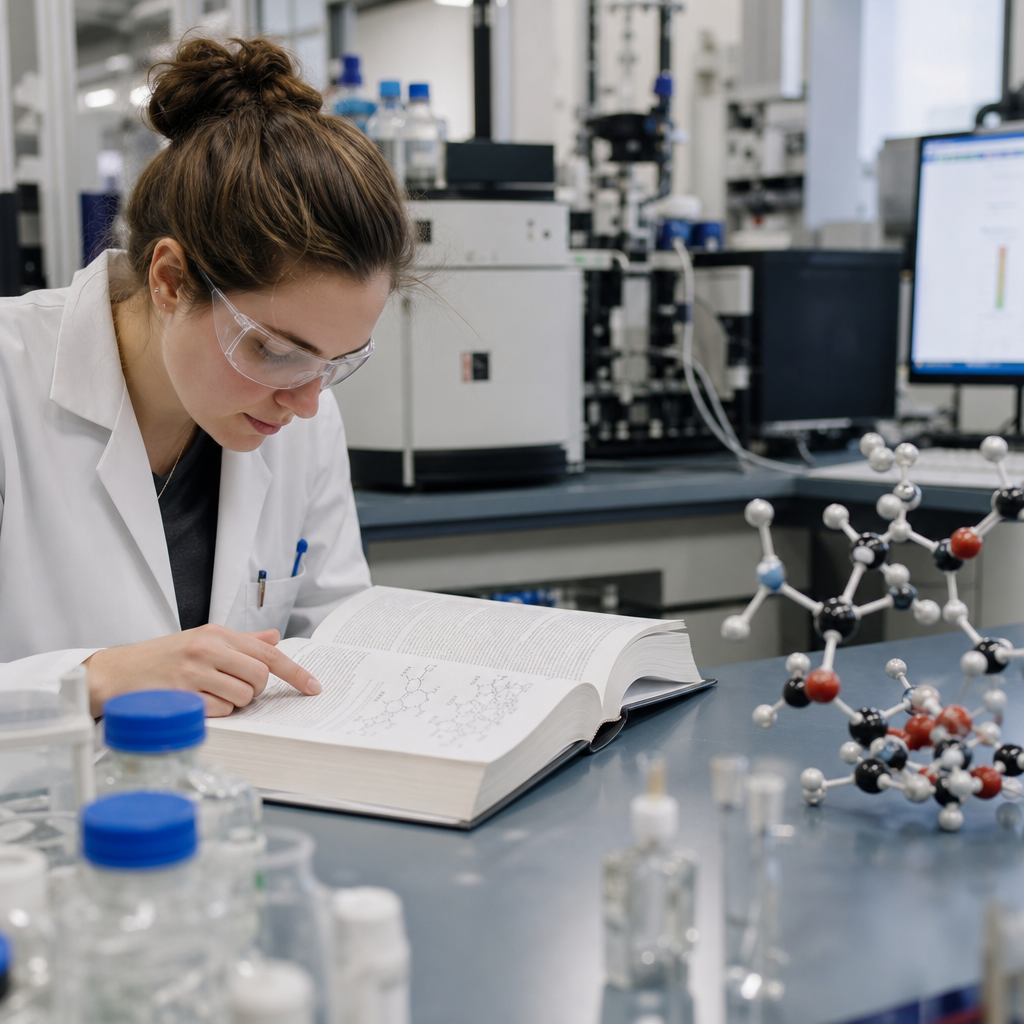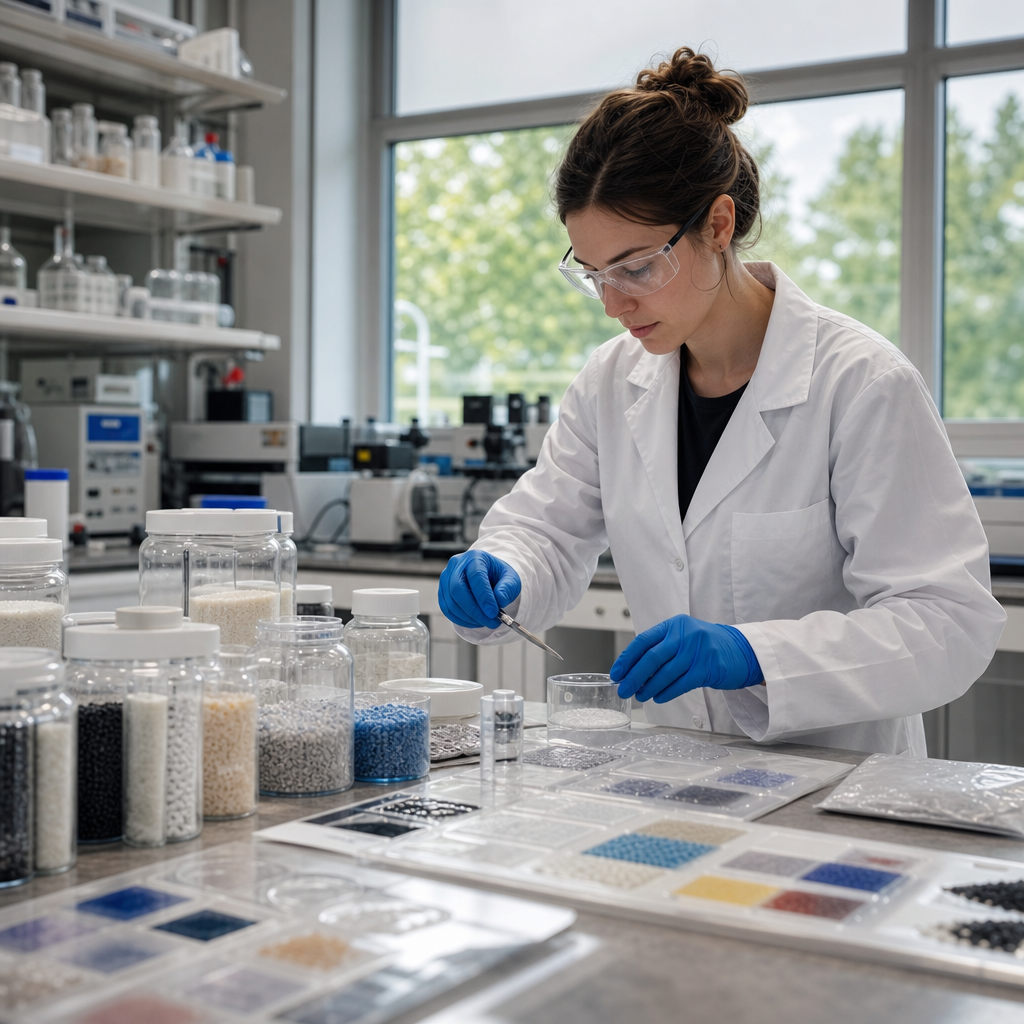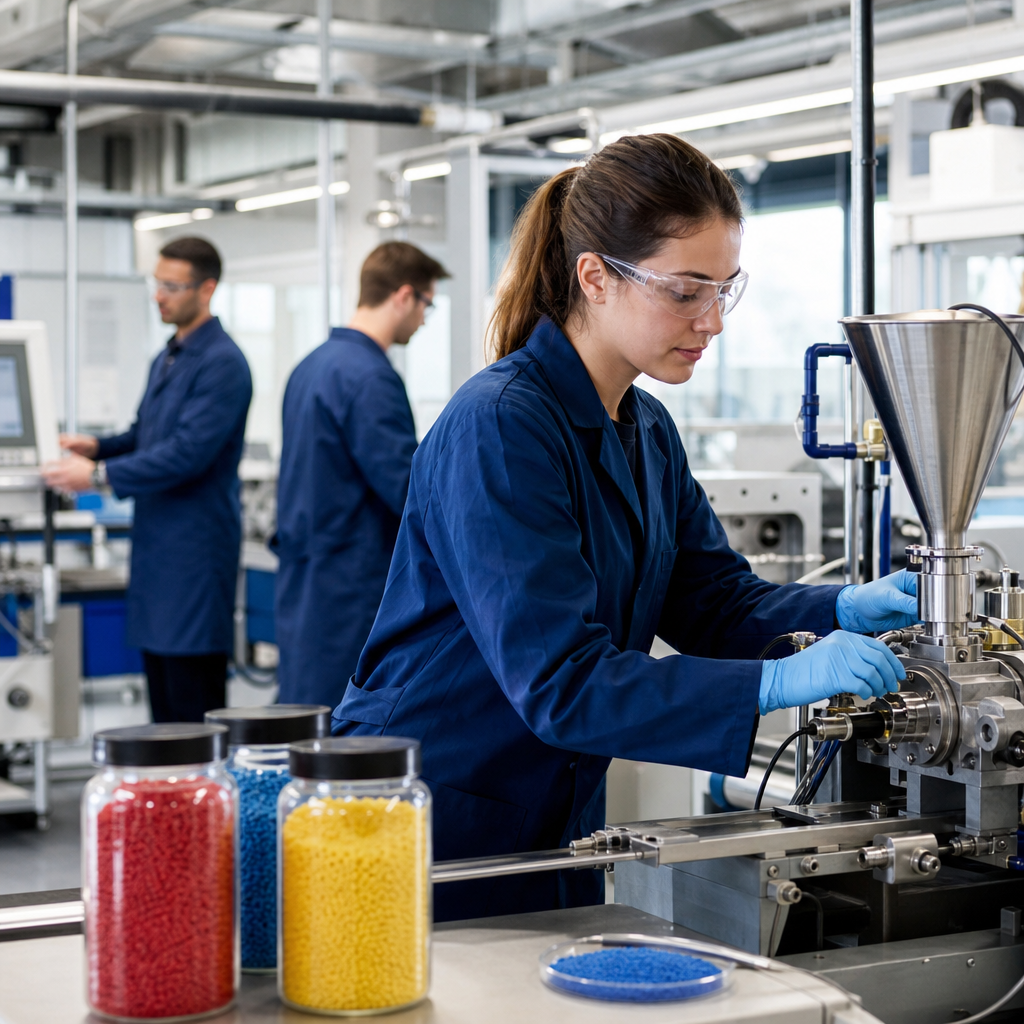
Polymer engineering training programs prepare students and working professionals to design, process, test, and improve plastics, elastomers, composites, adhesives, coatings, and emerging bio-based materials. In practice, the field connects chemistry, mechanical engineering, manufacturing, quality systems, and product development, which is why good training must cover both molecular behavior and plant-floor reality. When I evaluate programs for teams in manufacturing and R&D, I look for one basic outcome: can the learner move from resin data sheets and lab results to stable production, compliant products, and lower failure rates.
Polymer engineering itself is the application of engineering principles to polymeric materials. That includes polymer structure-property relationships, rheology, compounding, extrusion, injection molding, blow molding, thermoforming, additive manufacturing, failure analysis, and recycling. Training programs vary widely. Some are short operator courses focused on machine setup and process windows. Others are university certificates, diploma programs, or master’s degrees that teach kinetics, viscoelasticity, finite element analysis, and design for manufacturability. Because the term covers such a broad range, learners need a map that separates foundational education from specialized courses and role-specific training paths.
This topic matters because polymer products sit inside nearly every industry: automotive, medical devices, aerospace, consumer goods, packaging, electronics, construction, and energy. A poor material choice or weak process-control skill can trigger warpage, environmental stress cracking, delamination, noncompliance, or field failure. A strong training program reduces those risks. It also helps employers close a persistent skills gap. Manufacturers often invest heavily in equipment yet underinvest in structured education, even though overall equipment effectiveness, scrap rate, validation speed, and customer complaints are directly influenced by operator knowledge, tooling discipline, and material handling standards.
As a hub for courses and training programs, this guide explains what polymer engineering training includes, who each program type serves, how to compare options, and what outcomes you should expect. It also points readers toward the broader educational resources ecosystem by clarifying where short courses, university pathways, certifications, vendor-led instruction, and self-paced modules fit together. Whether you are a student choosing a first specialization, an engineer shifting into plastics, or a manager building a workforce development plan, the right training path should be practical, progressive, and tied to measurable performance in design, processing, testing, and regulatory compliance.
What Polymer Engineering Training Programs Typically Cover
The best polymer engineering training programs start with fundamentals before moving into process-specific and industry-specific content. Foundational modules usually include polymer chemistry, morphology, crystallinity, glass transition temperature, melting behavior, molecular weight distribution, and structure-property relationships. Learners need these concepts to understand why polyethylene behaves differently from polycarbonate, why nylon absorbs moisture, or why a thermoset curing cycle cannot be treated like a thermoplastic cooling profile. Without that grounding, troubleshooting becomes guesswork.
From there, strong programs move into characterization and testing. Common topics include differential scanning calorimetry, thermogravimetric analysis, dynamic mechanical analysis, melt flow index, rheometry, tensile testing, impact testing, hardness, weathering, and microscopy. In applied settings, these tools answer practical questions: has a recycled blend drifted out of specification, did a molded part fail because of poor knit-line strength, or is a coating undercured. Programs that explain how test results inform process changes are consistently more valuable than those that teach instruments in isolation.
Processing content is the core of many courses and training programs. Extrusion modules cover screw design, die swell, melt temperature control, residence time, venting, output optimization, and gauge control. Injection molding courses should teach fill, pack, hold, cooling, and ejection as a linked system, not as disconnected machine settings. Better programs also address scientific molding principles, cavity pressure monitoring, gate freeze, sink, short shots, flash, and dimensional stability. For thermosets and composites, expect content on cure kinetics, resin transfer molding, prepreg handling, autoclave cycles, and void reduction.
Design and application training is equally important. Learners should study wall thickness transitions, rib and boss design, tolerancing, anisotropy, creep, fatigue, chemical compatibility, and joining methods such as welding, adhesive bonding, and insert molding. In my experience, teams improve fastest when design engineers and process engineers share at least part of the same training sequence. Many failures blamed on production actually begin as avoidable design decisions, especially around sharp corners, unsupported snap fits, gate locations, or unrealistic cosmetic requirements.
Program Formats: Degrees, Certificates, Short Courses, and Employer Training
Polymer engineering education exists on a spectrum, and the right format depends on career stage, budget, and technical depth required. University degrees provide the broadest foundation. Bachelor’s and master’s programs typically include chemistry, mechanics, materials science, transport phenomena, design, and lab work. These routes suit students targeting long-term careers in product development, materials engineering, or advanced process roles. They also carry the strongest signaling value for employers hiring into regulated or research-intensive environments.
Certificate programs are more targeted and often better for working professionals. A university or technical institute may offer a polymer science certificate, plastics processing certificate, composites manufacturing credential, or quality-focused specialization. These programs usually compress the most relevant concepts into a shorter sequence and may blend online lectures with in-person labs. For someone moving from metal manufacturing into plastics, or from quality assurance into product engineering, certificates can deliver rapid competence without requiring a full degree commitment.
Short courses are common across the plastics industry and are often the fastest way to solve immediate skills gaps. Equipment makers, resin suppliers, trade associations, and specialized training firms offer one-day to two-week programs on topics such as injection molding optimization, extrusion troubleshooting, resin drying, part design, tool maintenance, statistical process control, and root-cause analysis. The quality difference is significant. The best short courses use production samples, machine data, defect libraries, and case studies rather than generic slide decks.
Employer training programs fill the final category and are frequently overlooked. Internal academies, apprenticeship tracks, operator qualification systems, and train-the-trainer models can outperform external courses when they are structured well. A medical device molder, for example, may combine cleanroom behavior, validation protocols, IQ/OQ/PQ documentation, and scientific molding into a site-specific curriculum. An automotive supplier may prioritize PPAP, dimensional capability, color control, and recycled-content variability. The advantage of employer-led training is context. The limitation is that it can become narrow if it ignores fundamentals and broader industry standards.
Core Topics That Separate Strong Programs from Weak Ones
Not all courses and training programs in polymer engineering are equally useful. Strong programs teach material behavior in a way that connects directly to design and manufacturing decisions. Weak programs stay abstract, overfocus on vocabulary, or rely on supplier marketing content. When I compare curricula, I look for clear treatment of rheology, because melt viscosity, shear thinning, elasticity, and temperature sensitivity explain a large share of processing outcomes. If a program discusses extrusion or molding without serious rheology, it is leaving out a major part of the discipline.
Another differentiator is process-data literacy. Modern polymer manufacturing depends on interpreting machine curves, cavity pressure, torque, temperature profiles, moisture readings, and statistical variation. A credible training path should teach how to set process windows, define control limits, separate common-cause from special-cause variation, and document trials so that improvements are repeatable. This matters just as much as hands-on machine familiarity. Plants often struggle not because no one can start the line, but because settings drift and no one has a disciplined method for understanding why.
Quality and compliance content is also essential. Good programs address ASTM and ISO test methods, material traceability, lot control, change management, and sector-specific expectations. In medical applications, that may include biocompatibility screening, sterilization effects, and validation documentation. In automotive, it may include customer-specific requirements, appearance standards, and durability testing. In packaging, barrier performance, migration, and recyclability can be central. Training that ignores compliance leaves learners unprepared for real product release decisions.
Finally, sustainability can no longer be optional. The strongest programs now include mechanical recycling, design for recyclability, life-cycle thinking, regrind control, contamination risks, and the tradeoffs involved in bio-based and biodegradable polymers. They should also address what sustainability does not mean. A material marketed as compostable may be unsuitable for a durable application. Recycled content may affect color, odor, molecular weight, or consistency. Engineers need balanced training that treats sustainability as a design and process constraint, not a slogan.
How to Evaluate and Compare Polymer Engineering Training Programs
Choosing among polymer engineering training programs is easier when you compare them against practical criteria rather than reputation alone. Start with learning objectives. A good course should say exactly what a learner will be able to do afterward: select a resin for chemical resistance, interpret a DSC thermogram, optimize a molding cycle, diagnose splay versus burn marks, or build a design of experiments plan. Vague objectives such as “understand plastics” are a warning sign that the material may be too shallow.
Next, examine the instructional balance between theory and application. Programs that include labs, simulation, capstone projects, plant demonstrations, or troubleshooting workshops usually create better retention than lecture-only formats. Named tools matter here. If a design course includes Moldflow or similar simulation platforms, if a quality course teaches Minitab for capability and DOE, or if a materials module demonstrates DSC and DMA data interpretation, learners gain skills they can use immediately. Applied assessment is far more valuable than a multiple-choice quiz alone.
| Evaluation Criterion | What to Look For | Why It Matters |
|---|---|---|
| Curriculum depth | Rheology, testing, processing, design, quality, sustainability | Prevents narrow training that fails in real production settings |
| Hands-on learning | Labs, machine time, case studies, troubleshooting exercises | Builds transfer from classroom concepts to plant decisions |
| Instructor credibility | Industry experience, publications, plant or R&D background | Improves practical relevance and technical accuracy |
| Industry alignment | ASTM, ISO, sector requirements, current software and methods | Ensures training matches employer expectations and compliance needs |
| Outcome tracking | Projects, portfolios, certifications, measurable skill assessments | Gives learners proof of competence and employers evidence of value |
Instructor quality deserves special attention. The best polymer engineering instructors combine academic rigor with production experience. They can explain entanglement density and also tell you why a dryer dew point problem created brittleness in the field. Look for faculty who have worked in compounding, molding, extrusion, testing, or product development, and who can discuss failures honestly. Programs built entirely around theory may impress on paper yet fall short when learners try to solve real defects, yield loss, or validation delays.
Cost, scheduling, and recognition matter too. Some learners need asynchronous online modules; others need a cohort model with direct feedback. Employers may value university-branded certificates, while a plant supervisor may care more about whether scrap fell after training. Compare total cost, required prerequisites, software access, lab access, and whether course content remains available for review. A training program is worthwhile when it produces durable capability, not merely completion badges.
Training Pathways for Students, Engineers, Technicians, and Managers
Different roles need different polymer engineering training pathways. Students entering the field usually benefit from a broad base before specializing. A solid path starts with polymer science fundamentals, materials characterization, and core processing methods, then branches into product design, composites, biomedical polymers, packaging, or recycling. Internships are especially valuable because they expose students to the mismatch between textbook assumptions and actual plant constraints such as cycle time, tooling wear, resin variability, and customer change requests.
Mechanical, chemical, or manufacturing engineers transitioning into plastics need accelerated bridge training. In these cases, I usually recommend a sequence that starts with structure-property relationships and processing fundamentals, then moves quickly into defect analysis, material selection, and process optimization. Engineers coming from metals often underestimate shrinkage, anisotropy, viscoelasticity, and moisture sensitivity. Focused courses can correct that fast, especially when they include side-by-side examples of redesigning a metal part into an injection-molded polymer component.
Technicians and operators need practical mastery more than broad theory, but they still need enough science to make informed adjustments. Effective training for this audience covers machine components, setup discipline, startup and shutdown procedures, drying requirements, safe material handling, process documentation, and defect recognition. The strongest programs teach why a parameter matters, not just what button to press. When technicians understand, for example, how excessive shear can degrade a resin or how improper regrind ratios affect impact strength, troubleshooting becomes far more consistent.
Managers, sourcing teams, and quality leaders need a different lens. They may not set machine conditions themselves, but they make decisions about staffing, vendor selection, tooling budgets, validation timelines, and risk tolerance. Their training should include supplier communication, specification writing, capability metrics, lifecycle cost, and failure prevention. A manager who understands polymer engineering basics is more likely to approve proper material trials, realistic tolerance stacks, and preventive maintenance rather than forcing rushed launches that create expensive downstream problems.
Building a Long-Term Learning Plan in Polymer Engineering
The most effective approach to polymer engineering education is not a single course but a staged learning plan. Start by defining the job outcome you need: better material selection, stronger processing capability, improved quality systems, or readiness for an advanced design role. Then map training in layers. Foundation first, application second, specialization third. This sequence prevents a common mistake in courses and training programs: sending learners into advanced troubleshooting before they understand the behavior of the material they are processing.
For individuals, a durable plan might begin with fundamentals, add one process-specific course such as extrusion or injection molding, then include testing, design, and a project portfolio. For employers, the plan should tie training to operational metrics. Track scrap, first-pass yield, cycle time stability, customer complaints, and changeover performance before and after instruction. In every plant where I have seen training produce lasting value, leaders treated education as part of process control, not as an isolated HR event.
This hub article should help you navigate the full landscape of polymer engineering training programs and identify the next resource worth exploring within educational resources. The right program builds technical judgment, not just terminology. It helps learners make better material choices, run more stable processes, interpret data correctly, and communicate across design, manufacturing, quality, and suppliers. Use this guide to compare courses and training programs, identify your role-specific path, and choose learning that leads to measurable performance improvements. Then move to the next article in this subtopic and build a training roadmap with clear milestones.
Frequently Asked Questions
What should a high-quality polymer engineering training program include?
A strong polymer engineering training program should cover far more than basic plastics terminology or a narrow processing overview. The best programs build a complete understanding of how polymers behave from the molecular level all the way to finished product performance in real manufacturing environments. That means students and working professionals should learn polymer chemistry fundamentals, structure-property relationships, rheology, thermal behavior, mechanical performance, degradation mechanisms, and material selection. If a program only explains what materials are called without teaching why they behave the way they do, it is missing an essential part of polymer engineering education.
Equally important, the curriculum should connect theory to plant-floor reality. In practice, polymer engineers work across extrusion, injection molding, blow molding, thermoforming, compounding, mixing, curing, coating, lamination, and composite processing, depending on the industry. A useful program should explain how variables such as temperature, pressure, residence time, shear, moisture, cooling rate, tool design, and line speed affect quality, consistency, and cost. Learners should come away able to troubleshoot common defects, understand processing windows, and evaluate tradeoffs among throughput, dimensional stability, appearance, and mechanical performance.
Another key indicator of quality is whether the program includes testing and quality systems. Polymer engineering is not just about making parts; it is also about verifying that those parts meet performance, safety, and regulatory requirements. Training should introduce mechanical testing, thermal analysis, spectroscopy, microscopy, rheological characterization, failure analysis, and statistical process control. In addition, good programs discuss documentation, standards, root-cause analysis, and design-for-manufacturing principles. The most valuable training programs also include case studies, lab work, simulations, or real production examples so learners can apply concepts instead of only memorizing them.
Who benefits most from polymer engineering training programs?
Polymer engineering training programs are valuable for a surprisingly broad range of professionals, not just materials scientists. Manufacturing engineers, process engineers, quality specialists, product designers, technicians, R&D teams, supplier development professionals, and operations leaders can all benefit because polymers sit at the intersection of chemistry, mechanics, processing, and commercial performance. In many companies, recurring defects or product failures happen not because people lack effort, but because teams do not share a common understanding of how material behavior and processing conditions interact. A good training program helps create that shared technical language.
For early-career students and recent graduates, these programs provide foundational knowledge that makes them much more effective in industrial settings. Many new engineers understand general mechanics or chemistry but have limited exposure to how polymers actually flow, crystallize, cure, age, shrink, or fail in production. Formal training helps bridge that gap and makes onboarding into plastics, elastomers, composites, adhesives, and coatings roles much smoother. It also gives learners a better framework for material selection, test interpretation, and communication with suppliers, customers, and internal cross-functional teams.
For experienced professionals, polymer engineering training is often just as useful, especially when responsibilities expand into new materials, new product categories, or new manufacturing technologies. A process engineer moving into bio-based materials, for example, may need updated knowledge on moisture sensitivity, thermal stability, or sustainability tradeoffs. A quality manager may want stronger skills in failure analysis and data interpretation. An R&D engineer may need deeper insight into scale-up and manufacturability. In all of these cases, targeted training improves technical judgment, speeds problem solving, and reduces the risk of expensive trial-and-error decisions.
How do polymer engineering training programs support careers in manufacturing and R&D?
Polymer engineering training programs support career growth by building practical expertise that employers consistently value: the ability to understand materials, improve processes, and solve product performance issues. In manufacturing, this often translates into better troubleshooting, faster startup and changeover performance, lower scrap rates, improved cycle times, and more stable quality outcomes. Professionals who can connect part defects to resin behavior, moisture control, mold design, cure conditions, or compounding variables quickly become trusted problem solvers. That kind of capability is highly transferable across industries such as packaging, automotive, medical devices, consumer goods, aerospace, electronics, and industrial products.
In R&D environments, polymer engineering training strengthens the ability to move from formulation ideas to manufacturable products. It helps engineers and scientists assess how a material will process, how it may age in service, what test methods are relevant, and what performance tradeoffs must be managed. For example, improving stiffness may affect impact strength, clarity, processability, or weld line behavior. Training gives professionals the framework to evaluate these competing factors systematically rather than treating development as a series of isolated experiments. That leads to more efficient product development and better collaboration with manufacturing, quality, and procurement teams.
From a career perspective, these programs also help professionals become more versatile. Polymer engineering sits between multiple functions, so people with cross-disciplinary knowledge are often well positioned for advancement into technical leadership, operations support, new product introduction, supplier management, or specialized materials roles. Employers value individuals who not only understand formulations or machines, but can translate between lab data, production constraints, customer requirements, and business goals. A well-designed training program accelerates that broader perspective and makes career progression more achievable.
What is the difference between learning polymer science and learning polymer engineering?
Polymer science and polymer engineering are closely related, but they are not the same thing. Polymer science focuses primarily on understanding materials at a fundamental level: polymerization, molecular structure, morphology, crystallinity, viscoelasticity, thermal transitions, degradation, and other core behaviors. It answers questions such as why a polymer exhibits certain mechanical properties, how additives change behavior, or what chemical mechanisms drive aging and failure. This scientific foundation is essential because it explains the origins of material performance.
Polymer engineering takes that knowledge and applies it to products, processes, and industrial systems. It deals with how to select the right material for an application, how to process it reliably, how to design parts and tooling around its limitations, how to test it appropriately, and how to balance performance, cost, manufacturability, and compliance. In other words, polymer engineering asks practical questions: Can this resin run on the existing line? Will this adhesive hold under thermal cycling? How will shrinkage affect dimensional tolerances? What processing changes will reduce warpage or brittleness? These are the issues that determine whether a concept succeeds in production.
The best training programs include both perspectives because one without the other creates gaps. A learner who understands polymer science but not engineering may struggle with real-world production and product development constraints. A learner who understands only processing shortcuts without the underlying science may solve one problem while unintentionally creating another. Comprehensive polymer engineering education connects molecular behavior to machine settings, quality metrics, test results, and end-use performance. That integrated approach is what makes training genuinely useful in modern manufacturing and R&D settings.
How can you evaluate whether a polymer engineering training program is worth the investment?
The most effective way to evaluate a polymer engineering training program is to look at depth, relevance, and applicability. Start by reviewing whether the curriculum covers the full chain from materials fundamentals to processing, testing, troubleshooting, and product performance. Programs that focus only on broad theory may be too academic for industrial needs, while programs that concentrate only on equipment operation may not build lasting technical judgment. A worthwhile program should help learners understand not just what to do, but why certain materials and process decisions produce specific outcomes.
Next, examine how well the training aligns with the needs of your industry or team. A program may be excellent in general but still be a poor fit if it does not address the processes, materials, or product types your organization actually uses. For example, a team working with thermosets, elastomers, or composites should confirm that the coursework goes beyond commodity thermoplastics. Likewise, organizations involved in medical, automotive, aerospace, or packaging applications should look for relevant standards, regulatory considerations, and case examples. Relevance matters because the best return on training comes when participants can apply concepts immediately to real projects and recurring technical problems.
Finally, assess the learning format and evidence of practical value. Strong programs often include labs, simulations, defect analysis, processing data interpretation, and real-world case studies rather than passive lectures alone. Instructor experience also matters greatly; trainers with direct industry backgrounds tend to be better at explaining how theory translates into production decisions and failure prevention. If possible, look for testimonials, sample modules, completion outcomes, or internal performance improvements tied to past training efforts. When a polymer engineering program is well chosen, the payoff can be substantial: better troubleshooting, improved product quality, faster development cycles, stronger cross-functional communication, and more confident technical decision-making across the organization.