Developing a curriculum for polymer science starts with a simple truth: the field is too broad, too applied, and too fast-moving for a generic chemistry sequence to cover it well. A strong polymer science curriculum must connect molecular structure, synthesis, processing, characterization, performance, sustainability, and industry practice in a coherent learning pathway. When I have helped map programs in materials departments and interdisciplinary chemistry tracks, the most successful plans were built backward from graduate capabilities rather than forward from faculty preferences. That means defining what learners should be able to design, analyze, make, test, and communicate by the end of the program, then aligning courses, laboratories, projects, and assessment to those outcomes.
Polymer science sits at the intersection of chemistry, physics, engineering, and manufacturing. Students encounter core terms early: monomer, polymerization, molecular weight distribution, glass transition temperature, crystallinity, viscoelasticity, rheology, copolymer, thermoplastic, thermoset, elastomer, and composite. A curriculum must teach these concepts not as isolated definitions but as linked ideas that explain why polyethylene films stretch, why epoxy resins cure, why hydrogels swell, and why medical devices demand strict biocompatibility standards. Because the subject supports industries from packaging to aerospace, curriculum design also matters economically. Employers need graduates who can move between the lab bench, pilot line, analytical instrument suite, and technical report without long retraining periods.
This article serves as a hub for courses and training programs within educational resources for polymer science. It explains how to structure a curriculum, which modules to include, how to balance theory with practice, what tools and standards matter, and where specialized training fits. Whether you are designing an undergraduate concentration, a master’s pathway, a workforce certificate, or an internal company training program, the goal is the same: build a sequence that teaches foundational science, develops technical judgment, and prepares learners for real materials problems. The best curriculum does not merely describe polymers. It trains students to solve formulation, processing, testing, failure, and sustainability challenges with discipline and confidence.
Start with program outcomes and industry roles
The first step in developing a polymer science curriculum is identifying the roles graduates are expected to fill. A curriculum for research chemists differs from one for process engineers, quality specialists, technical sales teams, or product development scientists. In practice, I begin by listing target functions: polymer synthesis, compounding, additive formulation, processing, characterization, simulation, product testing, regulatory support, and scale-up. Then I convert those functions into measurable learning outcomes. For example, a learner should be able to explain step-growth and chain-growth mechanisms, select a processing method based on rheological behavior, interpret differential scanning calorimetry and gel permeation chromatography data, and recommend a material for a specified service environment.
Industry signals should shape those outcomes. Job postings from companies such as Dow, BASF, SABIC, DuPont, Covestro, Celanese, and Arkema consistently mention analytical instrumentation, root-cause analysis, experimental design, and cross-functional communication. Professional societies reinforce this picture. The American Chemical Society, Materials Research Society, and Society of Plastics Engineers all point to strong foundations plus applied competence. A curriculum hub under courses and training programs should therefore include pathways for academic preparation and workforce readiness. The sequence should also reflect whether the institution emphasizes polymer chemistry, materials science, or plastics engineering, because each emphasis changes the proportion of reaction mechanisms, physical characterization, and manufacturing content.
Build the curriculum spine: foundations first, then integration
A durable curriculum has a spine of prerequisite knowledge. Students need general chemistry, organic chemistry, calculus, physics, and introductory materials science before advanced polymer topics can make sense. In many programs, physical chemistry and transport phenomena are also essential because polymer behavior is governed by thermodynamics, kinetics, diffusion, and flow. Once these foundations are in place, the curriculum should introduce a dedicated polymer core. That core usually begins with an overview course covering classification, structure-property relationships, major families of materials, and common applications.
The next layer should move into polymer chemistry and polymer physics. Polymer chemistry covers free-radical, ionic, coordination, ring-opening, condensation, and controlled or living polymerization methods, along with kinetics, initiators, catalysts, and architecture control. Polymer physics covers chain conformation, entanglement, amorphous and semicrystalline morphology, transitions, elasticity, diffusion, and viscoelasticity. Teaching these subjects in parallel works well because students can immediately see how molecular architecture affects modulus, permeability, toughness, and thermal behavior. A curriculum hub article should make clear that sequencing matters. Students struggle when asked to analyze rheology before they understand molecular weight distribution or to troubleshoot injection molding before they know crystallization behavior.
Integration should happen early and repeatedly. For instance, after learning copolymerization, students can compare styrene-butadiene rubber, ABS, and EVA in terms of phase behavior and end use. After learning glass transition, they can explain why PMMA is brittle at room temperature while elastomers remain flexible. These moments turn abstract content into engineering judgment, which is exactly what good courses and training programs are supposed to build.
Define the essential course set for a complete program
A comprehensive polymer science curriculum usually needs six academic components: introductory survey, polymer chemistry, polymer physics, polymer characterization, polymer processing, and a capstone or research experience. Electives then extend the hub into specialized training programs. The introductory survey gives shared vocabulary and a map of the field. Polymer chemistry teaches synthesis routes and reaction control. Polymer physics connects molecular behavior to mechanical and thermal properties. Characterization trains students to use spectroscopy, thermal methods, chromatography, microscopy, and mechanical testing. Processing explains extrusion, injection molding, compression molding, blow molding, thermoforming, fiber spinning, and additive manufacturing. The capstone asks students to integrate all of it in a realistic problem.
Specialized electives should reflect the sectors your learners will enter. Strong options include biomaterials, polymer composites, coatings and adhesives, rubber technology, packaging materials, membrane science, sustainable polymers, recycling systems, and computational materials design. In workforce settings, shorter modules can cover resin selection, failure analysis, design of experiments, statistical process control, and regulatory basics such as FDA considerations for medical polymers or REACH compliance in Europe. Not every institution can offer every elective every year, so the hub structure should also include recommendations for rotating topics, partner courses in chemical engineering, and external short courses from recognized providers.
| Curriculum Component | Primary Skills Built | Typical Tools or Methods | Example Outcome |
|---|---|---|---|
| Polymer Chemistry | Synthesis planning, mechanism analysis, architecture control | NMR, FTIR, reaction kinetics, catalyst selection | Design a copolymer route for target flexibility and solvent resistance |
| Polymer Physics | Structure-property interpretation, thermal and mechanical reasoning | DSC, DMA, tensile testing, morphology models | Explain how crystallinity changes stiffness and barrier performance |
| Characterization | Data interpretation, quality assessment, failure investigation | GPC, TGA, SEM, XRD, rheometry | Diagnose molecular weight loss after processing |
| Processing | Manufacturing judgment, parameter selection, scale-up awareness | Extrusion, injection molding, mixing, curing profiles | Recommend process windows for a filled polypropylene compound |
| Capstone or Research | Problem solving, teamwork, communication | Project management, literature review, reporting | Develop and justify a material choice for a packaging application |
Make laboratory training central, not optional
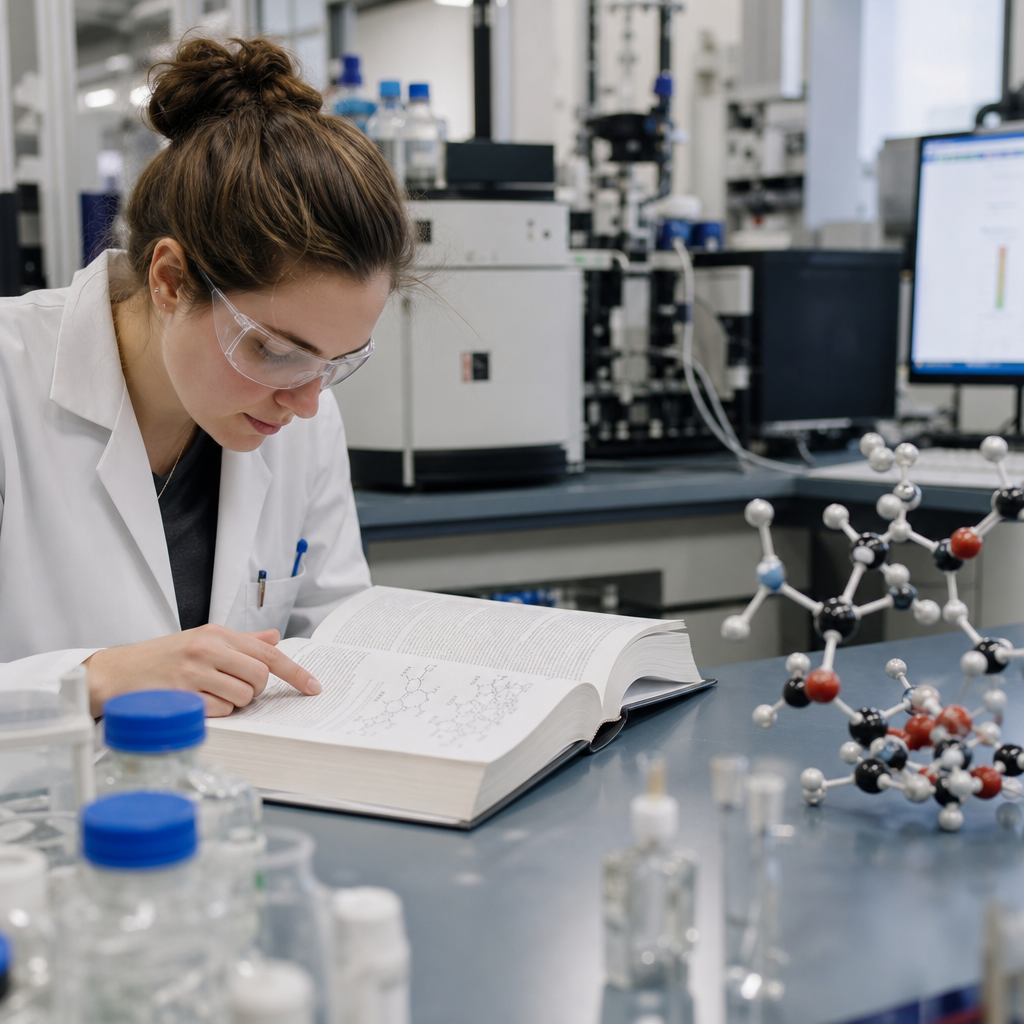
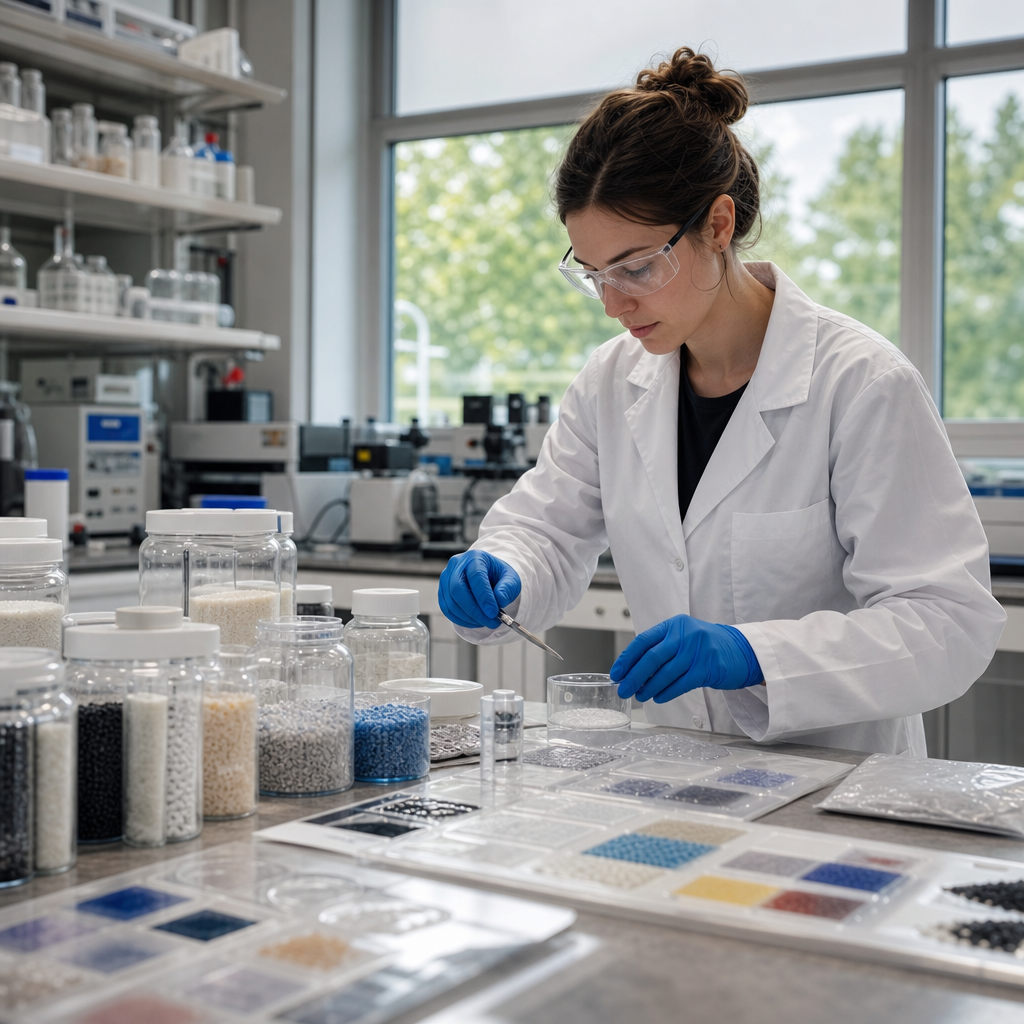
Polymer science is learned by doing. Lectures alone do not teach what melt fracture looks like, how a poorly dried resin behaves, why a DSC baseline drifts, or how specimen preparation can distort tensile results. Laboratory training should be threaded through the curriculum rather than isolated in one advanced course. Early labs might include basic polymerization, density measurement, solvent swelling, and thermal transitions. Intermediate labs should add GPC, FTIR, DSC, TGA, DMA, rheometry, tensile testing, impact testing, and optical microscopy. Advanced labs can include SEM, AFM, XRD, permeation testing, weathering, flammability, and compounding trials.
Good labs are built around decisions, not recipes. Instead of telling students exactly how to run a characterization sequence, ask them to choose which methods can distinguish between branching, degradation, plasticization, or filler effects. A useful example is comparing virgin and reprocessed PET. Students can measure intrinsic viscosity or molecular weight distribution, examine DSC traces for crystallization changes, and relate the data to processing history and mechanical performance. Another effective project is adhesive formulation, where small changes in tackifier level or cure conditions produce noticeable shifts in peel strength and shear resistance. These experiences build the kind of technical intuition that employers value immediately.
Teach characterization as a decision framework
Many curricula list instruments but fail to teach when and why each one matters. Students should learn characterization as a decision framework tied to a question. If the question concerns composition, tools such as FTIR, Raman spectroscopy, NMR, and elemental analysis are relevant. If the question concerns molecular size, GPC or SEC is the standard choice. If the issue is thermal stability or transitions, DSC and TGA come first. If performance under load matters, tensile testing, flexural testing, impact methods, creep, stress relaxation, and DMA are necessary. If morphology is suspected, microscopy and diffraction methods become central.
This framing mirrors real polymer work. When I have supported failure analysis, the useful path was never “run every test.” It was “define the failure mode, then choose the shortest defensible test plan.” For example, environmental stress cracking in HDPE containers may require fractography, chemical exposure review, and crack growth analysis rather than only basic tensile testing. Warpage in injection-molded nylon parts may point to moisture content, mold temperature, orientation, or crystallinity, so the curriculum should teach students to connect processing records with analytical data. Courses and training programs become far more effective when characterization is taught as evidence-based reasoning instead of instrument memorization.
Include processing, manufacturing, and quality systems
A polymer science curriculum is incomplete if students understand synthesis and properties but not manufacturing reality. Processing changes morphology, residual stress, orientation, and final performance. Students should learn the fundamentals of mixing, heat transfer, shear, residence time, drying, cooling rates, and shrinkage. They should also understand common defects: sink marks, weld lines, voids, burn marks, die swell, short shots, fiber breakage, poor dispersion, and incomplete cure. These topics belong not only in engineering programs but also in science-focused tracks because product performance is inseparable from process history.
Quality systems deserve explicit coverage. Statistical process control, gauge repeatability and reproducibility, design of experiments, and basic root-cause analysis should appear in advanced undergraduate or professional training modules. Named methods such as DMAIC, FMEA, and control charts are useful because graduates will encounter them immediately in plant and product environments. Standards matter too. ASTM and ISO test methods provide a common language for tensile properties, melt flow, impact resistance, hardness, and environmental conditioning. Teaching students to read and apply these standards is practical preparation, not administrative detail. It prevents the common mistake of comparing data generated under incompatible conditions.
Address sustainability, regulation, and emerging technologies
Modern polymer education must cover sustainability in technical rather than purely rhetorical terms. Students should analyze mechanical recycling, chemical recycling, bio-based feedstocks, biodegradation limits, life cycle assessment, and design for disassembly. They need to know why multilayer packaging performs well yet complicates recycling, why contamination matters in post-consumer streams, and why not all bio-based polymers are biodegradable. Concrete cases help. PET bottle recycling, polyolefin film recovery, polyurethane chemical recycling, and PLA compostability each reveal different tradeoffs between performance, infrastructure, and economics.
Regulation and emerging technologies belong in the curriculum hub because they shape careers and research priorities. Medical polymer programs should include sterilization effects, extractables and leachables, and ISO 10993 concepts. Packaging tracks should address food-contact compliance. Electronics-related pathways should cover dielectric behavior, flame retardancy, and thermal management. Emerging topics worth rotating into seminars or advanced electives include self-healing polymers, vitrimer networks, conductive composites, polymer informatics, machine learning for formulation, and advanced recycling catalysts. The curriculum should not chase every trend, but it should give learners a framework for evaluating new materials claims critically and scientifically.
Use capstones, partnerships, and stackable training pathways
The strongest programs end with integrative experiences tied to external stakeholders. Capstones can involve selecting a replacement resin for a consumer product, reducing haze in a film line, formulating a coating with VOC constraints, or validating a recyclable package structure. Industry partnerships improve these projects because they supply real specifications, cost constraints, and imperfect data. Internships, co-ops, plant visits, and guest lectures also strengthen the curriculum by exposing students to compounding lines, quality labs, and customer-facing technical work. In my experience, students become more serious about fundamentals after seeing how often a missing concept causes costly production delays.
Because this page is a hub for courses and training programs, it should also support stackable pathways. A learner might begin with a short course in polymer basics, continue into characterization and processing certificates, and later enter a degree program with credit recognition. That model works well for technicians, incumbent workers, and career changers. Digital modules can support theory, but practical competencies should still be checked in person where possible. Clear mapping between introductory, intermediate, and advanced offerings helps readers navigate the full educational resources ecosystem and choose training that matches their goals.
A well-designed polymer science curriculum prepares students to move from molecule to manufactured part with clarity and competence. The essential elements are clear outcomes, a sequenced foundation, strong core courses, laboratory practice, applied characterization, processing knowledge, quality methods, and current content on sustainability and regulation. Programs that integrate these pieces produce graduates who can interpret data, troubleshoot processes, communicate decisions, and keep learning as materials technology evolves.
For educators, the main benefit of building the curriculum deliberately is alignment: every course, lab, and project contributes to job-ready understanding rather than disconnected coverage. For learners, the benefit is confidence. They can explain why a material behaves the way it does, choose the right test, and connect scientific evidence to industrial action. If you are developing educational resources for courses and training programs, use this hub as the starting framework, then expand each section into detailed syllabi, lab plans, and specialty pathways that fit your institution and audience.
Frequently Asked Questions
What are the core topics every polymer science curriculum should include?
A well-designed polymer science curriculum should cover the full pathway from molecular design to real-world performance. At a minimum, students need a strong foundation in polymer chemistry, polymer physics, materials characterization, processing, and applications. Polymer chemistry should introduce step-growth, chain-growth, coordination, and living polymerization methods, while also explaining how monomer structure, reaction conditions, and architecture influence final material properties. Polymer physics should help students understand chain conformation, viscoelasticity, glass transition, crystallinity, diffusion, and mechanical behavior, since these concepts are essential for explaining why polymers behave differently from small-molecule systems or traditional inorganic materials.
Beyond these fundamentals, the curriculum should include analytical and characterization methods such as spectroscopy, thermal analysis, rheology, microscopy, molecular weight determination, and mechanical testing. Students must learn not only how these tools work, but when to use them and how to interpret data in the context of structure-property relationships. Processing is equally important. Topics such as extrusion, injection molding, film formation, additive manufacturing, fiber spinning, and curing should be treated as central rather than optional, because polymers are shaped and used through processing in ways that directly affect performance.
A strong curriculum also includes sustainability, recycling, degradation, life-cycle thinking, and industrial context. Polymer science is no longer just about making new materials; it is also about designing them responsibly. Students should understand biobased feedstocks, circular materials design, compatibilization in recycling streams, and the environmental tradeoffs associated with different polymer systems. Finally, the best curricula tie everything together through case studies, laboratories, and design projects so students can connect synthesis, characterization, processing, and application into one coherent framework.
How should a polymer science curriculum be structured so students build knowledge in a logical sequence?
The most effective structure is a staged learning pathway rather than a loose collection of electives. Students should begin with prerequisites in general chemistry, organic chemistry, physical chemistry, and introductory materials science or physics. These courses provide the language needed to discuss bonding, thermodynamics, kinetics, phase behavior, and molecular interactions. From there, the curriculum should introduce an entry-level polymer course that gives a broad overview of polymer types, terminology, structure, synthesis routes, and major application classes. This early exposure helps students understand the scope of the field before diving into specialization.
After the introductory course, the next layer should focus on the two major intellectual pillars of the subject: polymer synthesis and polymer physics. These can be separate courses or tightly coordinated modules, but they should be sequenced so students can connect how polymers are made with how they behave. Once students understand chain architecture, molecular weight, copolymer design, morphology, and thermal transitions, they are ready for more applied work in characterization and processing. Courses in analytical methods, rheology, thermal behavior, and microscopy should ideally be linked to laboratory instruction, because polymer science is highly empirical and students learn deeply by seeing how measurements support theory.
The final stage should emphasize integration and professional readiness. This is where capstone design, application-focused electives, industrial projects, research experiences, and sustainability modules are most valuable. A senior or graduate-level experience might ask students to select a target application, choose a polymer system, justify a synthesis route, predict processing constraints, characterize the material, and evaluate environmental impact and cost. That kind of sequencing mirrors actual practice in polymer development and ensures students leave the program with connected knowledge rather than isolated facts.
What role should laboratory and hands-on learning play in a polymer science program?
Laboratory and hands-on learning should be central to the curriculum, not treated as an accessory. Polymer science is a field where theory and practice constantly inform each other. Students may understand polymerization mechanisms on paper, but they gain a far more durable understanding when they synthesize a material, observe conversion and molecular weight changes, process the sample, and then measure how its thermal or mechanical properties respond. This direct experience teaches the practical realities that textbooks often compress, such as sensitivity to impurities, processing windows, batch variation, instrument limitations, and the gap between idealized models and real materials.
An effective laboratory sequence should expose students to synthesis, characterization, and processing in an integrated way. For synthesis, that may include free-radical polymerization, step-growth reactions, crosslinking systems, or controlled polymerization methods depending on program level and resources. For characterization, students should work with tools such as FTIR, NMR, DSC, TGA, GPC or SEC, DMA, tensile testing, rheometry, and microscopy. For processing, even modest exposure to techniques like casting, extrusion, molding, or 3D printing can be transformative because students begin to see how thermal history, shear, cooling rate, and formulation influence morphology and performance.
Project-based laboratory work is especially powerful. Instead of isolated experiments, students can be asked to solve a materials problem, such as improving toughness, controlling degradation, optimizing barrier performance, or increasing recyclability. This format develops experimental design, teamwork, technical communication, and critical interpretation of data. It also better reflects how polymer scientists work in industry and research settings. If instrumentation access is limited, departments can still create strong hands-on experiences through shared facilities, partnerships with engineering programs, virtual data analysis modules, and industry-supported demonstrations. The key is ensuring students do more than memorize methods; they should learn how to use evidence to make materials decisions.
How can a polymer science curriculum stay current with industry needs and emerging trends?
Keeping the curriculum current requires intentional design and regular revision. Polymer science changes quickly because advances in sustainability, biomaterials, electronics, manufacturing, and data-driven materials development continue to reshape the field. A curriculum that remains fixed for too long can become disconnected from how polymers are actually developed and deployed. The best programs address this by identifying enduring fundamentals that should remain stable, such as structure-property relationships and polymerization principles, while updating application examples, laboratory modules, and electives to reflect emerging technologies and market needs.
Industry engagement is one of the most effective ways to maintain relevance. Advisory boards, alumni feedback, employer interviews, internship data, and collaborative projects can reveal which skills are most valuable, whether that means rheology, failure analysis, formulation science, regulatory awareness, scale-up, or sustainability assessment. Programs should also pay attention to sectors that increasingly rely on polymer expertise, including energy storage, medical devices, coatings, packaging, composites, semiconductors, and circular materials systems. This does not mean chasing every trend. Instead, it means teaching students adaptable frameworks they can apply to new materials challenges.
Current topics worth incorporating include chemical and mechanical recycling, biodegradable and compostable polymers, life-cycle assessment, polymer informatics, advanced manufacturing, smart materials, and interface engineering. These areas can appear as dedicated electives, rotating seminar topics, updated case studies, or capstone project themes. Faculty should also review course content regularly to remove material that no longer serves program goals and make room for emerging priorities. In practice, the strongest curricula are not the ones that try to cover everything, but the ones that teach core concepts deeply while building flexibility, interdisciplinary awareness, and familiarity with modern tools and constraints.
How do you balance scientific depth, interdisciplinary breadth, and sustainability in a polymer science curriculum?
Balancing these priorities starts with recognizing that they are not competing goals when the curriculum is designed well. Scientific depth is essential because students need rigorous understanding of polymer structure, thermodynamics, kinetics, mechanics, and characterization. Without that foundation, interdisciplinary work becomes superficial. At the same time, polymer science naturally intersects with chemistry, chemical engineering, materials science, mechanical engineering, environmental science, and product design. A successful curriculum should preserve disciplinary rigor while showing students how polymer decisions play out across processing, manufacturing, regulation, use conditions, and end-of-life management.
One practical approach is to build depth in required core courses and breadth through structured integration. Core classes should teach the science thoroughly: synthesis mechanisms, phase behavior, chain dynamics, morphology, rheology, and analytical methods. Then, interdisciplinary modules, labs, and case studies can connect that knowledge to product design, biomedical use, energy systems, coatings, packaging, or composites. For example, students might study crystallinity and barrier properties in the context of food packaging, or viscoelasticity and fatigue in the context of elastomer applications. This helps students see that the science is not separate from the application; it is what makes good decisions possible.
Sustainability should be embedded throughout the curriculum rather than confined to a single elective. Students should repeatedly encounter questions about feedstocks, additive choice, durability, reparability, recyclability, degradation, toxicity, and life-cycle tradeoffs. A polymer that performs well in one metric may create downstream processing or disposal challenges, and students need practice evaluating those tradeoffs. Embedding sustainability into synthesis courses, processing labs, materials selection projects, and capstone design encourages a more mature professional mindset. The end goal is to graduate students who can think like polymer scientists and also act like responsible materials professionals, able to design systems that are technically sound, economically realistic, and environmentally informed.