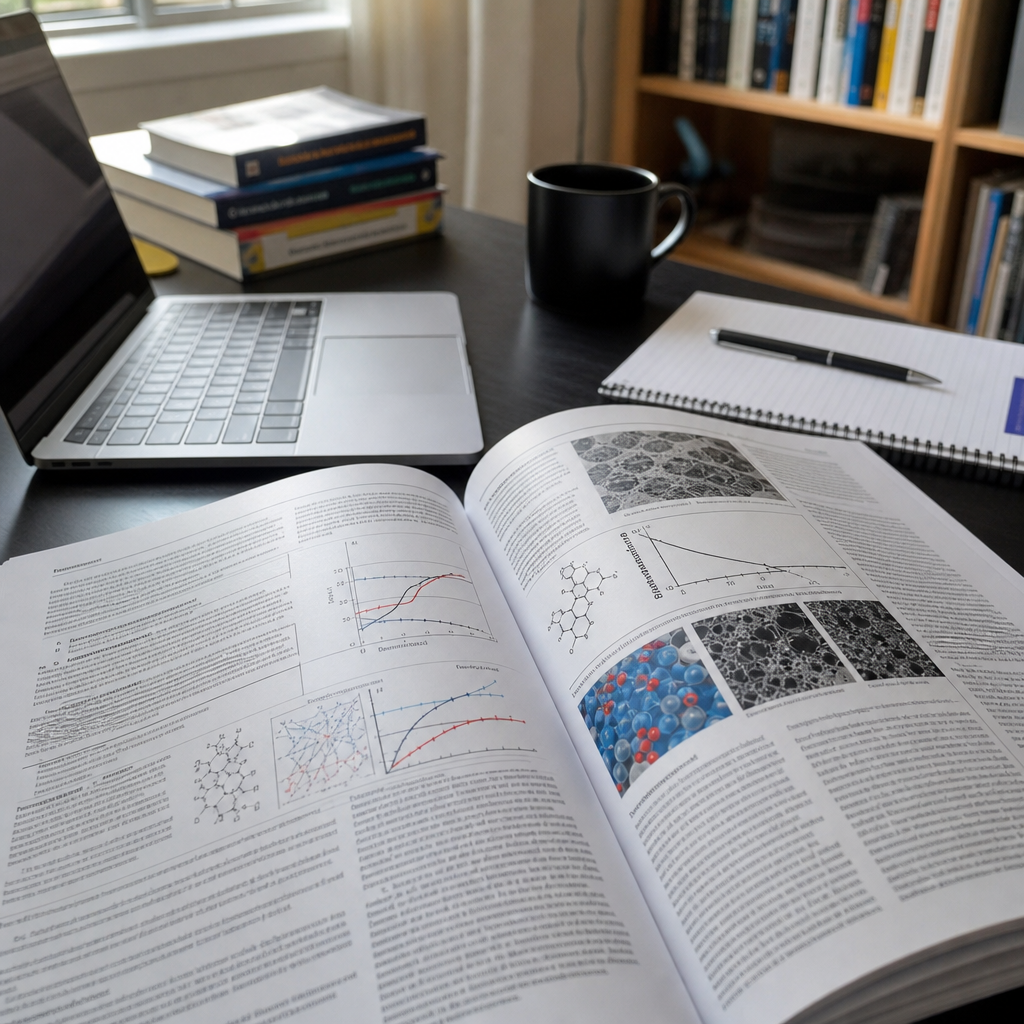
Polymer science MOOCs give learners flexible, low-cost access to a field that shapes packaging, medicine, electronics, energy storage, textiles, and advanced manufacturing. A MOOC, or massive open online course, is an online class built for broad enrollment, usually delivered through platforms such as Coursera, edX, FutureLearn, and NPTEL. Polymer science studies macromolecules: how polymers are synthesized, processed, characterized, and used in real products. In practice, that means understanding chain structure, molecular weight, crystallinity, viscoelasticity, rheology, degradation, additives, and manufacturing methods ranging from extrusion to injection molding. I have used online courses to onboard interns, refresh my own understanding of thermal analysis, and help materials teams bridge gaps between chemistry and processing, so I know where these courses help and where they fall short.
This topic matters because polymer science sits at the intersection of chemistry, physics, and engineering, yet many learners enter from only one side. A chemistry student may know step-growth and chain-growth polymerization but not melt flow index or die swell. A mechanical engineer may understand tensile testing but not glass transition temperature or tacticity. Well-designed online resources can close those gaps quickly. They also support working professionals who need targeted knowledge without committing to a full degree. As a hub page under Educational Resources, this guide covers the major types of online resources, explains how to evaluate course quality, maps options to different career goals, and highlights practical strategies for learning polymer science effectively through MOOCs and related digital materials.
What Polymer Science MOOCs Usually Cover
Most polymer science MOOCs fall into four categories: foundational science, processing and manufacturing, characterization, and applications. Foundational courses explain monomers, polymerization mechanisms, molecular architecture, and structure-property relationships. Expect core topics such as number-average and weight-average molecular weight, polydispersity index, copolymer types, crosslinking, amorphous versus semicrystalline behavior, and thermal transitions like Tg and Tm. Good courses connect those ideas to familiar materials: polyethylene’s crystallinity affects stiffness and density, polystyrene’s glassy nature makes it dimensionally stable but brittle, and elastomers achieve recoverable deformation through network structure.
Processing-focused courses move from molecules to plant-floor decisions. They typically cover extrusion, injection molding, blow molding, thermoforming, fiber spinning, and additive manufacturing with polymers. The strongest classes explain why processing changes properties. For example, shear and cooling history affect orientation and crystallization, which then influence shrinkage, warpage, barrier performance, and impact strength. When I evaluate these courses, I look for direct discussion of rheology, residence time, screw design, drying requirements for hygroscopic polymers like nylon and PET, and common defects such as sink marks, weld lines, voids, and delamination.
Characterization MOOCs are especially valuable because they teach how to interpret data rather than memorize terms. A serious course should explain DSC, TGA, DMA, FTIR, GPC or SEC, NMR, XRD, SEM, and tensile or impact testing. Learners need to know not only what each method measures, but also what decisions it supports. DSC can reveal crystallinity and thermal history. GPC estimates molecular weight distribution. DMA clarifies viscoelastic behavior across temperature and frequency. FTIR helps confirm functional groups or oxidation during aging. When a course uses case studies, such as identifying contamination in recycled polypropylene or explaining brittleness in an over-dried polycarbonate, the knowledge becomes immediately useful.
How to Evaluate Online Resources for Polymer Science
Not all online resources are equal, and polymer science is technical enough that weak instruction causes confusion fast. Start with the instructor and institution. Courses from established departments in materials science, chemical engineering, chemistry, or polymer engineering usually have stronger technical grounding. Look for instructors who publish or teach in areas such as polymer synthesis, rheology, biomaterials, composites, or sustainable plastics. University-backed MOOCs often provide clearer learning objectives, graded assessments, reading lists, and consistent terminology than informal video channels.
Next, examine scope and depth. A good beginner course defines terms carefully and builds from bonding and molecular structure to properties and processing. An intermediate course should include equations and interpretation, not just vocabulary. For example, a lesson on viscosity should distinguish Newtonian and non-Newtonian behavior, explain shear thinning in polymer melts, and connect the concept to pump sizing or mold filling. If a course claims to cover polymer characterization, check whether it explains sample preparation, instrumental limitations, and data interpretation. Surface-level overviews are fine for orientation, but they do not replace robust technical training.
Assessment quality matters more than platform branding. Quizzes that only test recall are weak signals of understanding. Better resources ask learners to compare thermograms, choose a resin for a barrier application, interpret stress-strain curves, or explain why processing changes morphology. Discussion forums can also be a strong indicator. In good cohorts, learners post troubleshooting questions about yellowing in nylon, inconsistent MFI values, or incompatibility in polymer blends, and instructors or peers respond with technically sound reasoning. That kind of interaction mirrors real engineering work.
| Resource Type | Best For | Typical Strength | Main Limitation |
|---|---|---|---|
| University MOOC | Structured learning | Clear syllabus and assessments | May be theory-heavy |
| Recorded lecture series | Topic refreshers | Depth from academic instructors | Limited feedback |
| Industry webinars | Current applications | Practical examples and tools | Can be vendor-biased |
| Professional society resources | Standards and networking | Credible technical context | Often less beginner-friendly |
| Simulation tutorials | Processing insight | Hands-on workflow exposure | Software access may be costly |
Best Types of Online Resources Beyond MOOCs
A strong polymer learning plan rarely relies on one course alone. Recorded lecture libraries from universities can deepen specific topics, especially polymer physics and characterization. Many excellent instructors publish semester lectures covering Flory-Huggins theory, rubber elasticity, crystallization kinetics, diffusion, and transport in membranes. These are often more mathematically rigorous than mainstream MOOCs, making them ideal once the basics are in place.
Professional societies and standards organizations are another essential layer. Resources connected to the American Chemical Society, the Society of Plastics Engineers, ASTM, and ISO help learners understand how polymer knowledge is used in practice. ASTM test methods are especially important because property data only make sense when the testing standard is known. A tensile modulus value without specimen geometry, strain rate, and conditioning details can mislead. Learners moving toward quality, product development, or supplier management should spend time with standards-based materials early.
Industry webinars add current relevance. Resin suppliers, instrument companies, and software vendors often publish sessions on topics like recycled content qualification, DSC method development, screw design for compounding, moisture analysis, or failure analysis of medical polymers. These can be excellent, particularly when they include real datasets or processing windows. The tradeoff is bias: a webinar from a thermal analysis vendor may overemphasize the technique it sells. Use these resources to see how problems are framed in industry, then verify claims against textbooks, standards, or independent course material.
Simulation and data tools round out the hub of online resources. Tutorials from Autodesk Moldflow, Moldex3D, COMSOL, ANSYS, or materials databases like CAMPUS and MatWeb help learners connect theory to design decisions. Even simple datasheet comparison exercises teach valuable habits: checking whether impact data are notched Izod or Charpy, whether DSC values are first or second heating curves, and whether flame ratings apply to a specific thickness. In hiring and mentoring, I have seen learners stand out when they can move comfortably between theory, standards, datasheets, and process simulations.
Matching Courses to Career Goals
The right polymer science MOOC depends on what you want to do with the knowledge. Students preparing for graduate study should prioritize fundamentals: thermodynamics, kinetics, polymer physics, and characterization. These learners need comfort with concepts such as entropy-driven elasticity, time-temperature superposition, diffusion, phase separation, and molecular weight effects on viscosity and toughness. A broad introductory course paired with a deeper lecture series often works better than many short, disconnected classes.
Manufacturing engineers and technicians should focus on processing, troubleshooting, and testing. The most valuable online resources for this group explain drying, residence time, thermal degradation, mold temperature control, regrind limits, filler effects, and process-property relationships. For example, understanding why excessive shear can reduce molecular weight in PET or why moisture causes splay in hygroscopic materials leads directly to fewer defects and better cycle times. Courses that include case-based troubleshooting are far more useful than abstract introductions.
Product designers and materials selectors need application-focused learning. They should look for courses that compare commodity, engineering, and high-performance polymers; explain creep, chemical resistance, weatherability, biocompatibility, and flame retardance; and teach tradeoff analysis. Choosing between ABS, PC, PC/ABS, nylon, POM, or polypropylene involves cost, stiffness, impact behavior, dimensional stability, regulatory requirements, and processing compatibility. Good resources show how to narrow those choices systematically rather than by habit or brand preference.
Professionals entering sustainability or recycling need courses that address collection realities, contamination, compatibilization, mechanical versus chemical recycling, life-cycle thinking, and design for recyclability. This area is full of oversimplified claims. A rigorous resource will distinguish technically recyclable from economically recyclable, explain why multilayer structures are difficult to recover, and discuss how repeated thermal history affects color, odor, molecular weight, and mechanical performance. That depth is now essential across packaging, consumer goods, and automotive sectors.
How to Build an Effective Self-Study Path
Start with a foundation course, then layer resources in a deliberate sequence. First learn terminology and the big picture: polymer classes, bonding, morphology, transitions, and basic processing. Next, add one characterization course so you can read data intelligently. After that, choose an application track such as packaging, biomaterials, composites, elastomers, or plastics processing. This progression mirrors how effective onboarding works in real teams because it moves from language to evidence to decision-making.
Use active study methods. Build a resin comparison sheet for ten common materials. Read actual technical datasheets from BASF, SABIC, Covestro, Dow, DuPont, or Solvay and summarize density, Tg, tensile modulus, impact strength, HDT, shrinkage, and drying requirements. Compare those values with what your courses teach. If a MOOC covers DSC, find example thermograms and practice identifying Tg, cold crystallization, and melting peaks. If it covers rheology, sketch how viscosity changes with shear rate for a polymer melt. This kind of repetition turns passive watching into usable skill.
Finally, connect learning to projects. Analyze why a polypropylene hinge survives repeated flexing, why PET bottles need biaxial orientation, or why TPU behaves differently from a crosslinked rubber. Join technical forums, local society chapters, or webinar Q and A sessions. Keep a glossary of terms that frequently cause confusion, such as yield stress versus modulus or branching versus crosslinking. Online resources work best when they support problem solving, not just content consumption. Choose one strong course, add targeted reference materials, and build a study routine that ends with practical application.
Polymer science MOOCs are most valuable when treated as part of a broader online learning system rather than a standalone shortcut. The best resources define core concepts clearly, connect molecular structure to properties and processing, and use real measurements, standards, and case studies to show how decisions are made. Learners should evaluate instructor credibility, technical depth, assessment quality, and practical relevance before committing time. A chemistry student, manufacturing engineer, product designer, or sustainability specialist will each need a different mix of foundational courses, characterization training, application examples, and standards-based references.
As the hub page for Online Resources within Educational Resources, this guide points to the central truth: success in polymer learning comes from combining structured MOOCs with lecture libraries, professional society materials, vendor webinars, simulation tutorials, and direct work with datasheets and test methods. That combination builds fluency faster than any single platform can. If you want stronger materials knowledge, fewer trial-and-error decisions, and better conversations with suppliers, labs, and manufacturing teams, start with one well-scoped polymer science course this week and build outward with purpose.
Frequently Asked Questions
1. What is a polymer science MOOC, and what topics does it usually cover?
A polymer science MOOC is a large-scale online course designed to introduce learners to the science and engineering of polymers in a flexible, accessible format. These courses are usually hosted on platforms such as Coursera, edX, FutureLearn, or NPTEL and can often be audited for free or taken at relatively low cost compared with traditional university study. The main appeal is that learners can study from anywhere while gaining structured exposure to a field that influences everything from food packaging and medical devices to electronics, batteries, textiles, coatings, and additive manufacturing.
Most polymer science MOOCs cover the core ideas that define the discipline. That often includes polymer chemistry, such as addition and condensation polymerization, copolymer formation, molecular weight, and chain structure. Many courses also address polymer physics, including crystallinity, viscoelasticity, glass transition temperature, melting behavior, and the relationship between molecular architecture and material properties. Beyond theory, learners are commonly introduced to processing methods such as extrusion, injection molding, blow molding, fiber spinning, and film formation. Characterization topics may include spectroscopy, thermal analysis, rheology, microscopy, tensile testing, and methods used to evaluate mechanical, optical, and barrier properties.
Depending on the course level, a MOOC may also explore advanced applications such as biomaterials, composites, biodegradable plastics, conductive polymers, membranes, nanostructured materials, and polymers for energy storage. Some courses are broad overviews, while others focus on a niche topic like polymer synthesis, materials characterization, sustainability, or industrial processing. As a result, polymer science MOOCs can serve both as entry points for beginners and as useful upskilling tools for professionals who want targeted knowledge in a specific area.
2. Do I need a chemistry or engineering background before taking a polymer science MOOC?
Not necessarily. Many introductory polymer science MOOCs are designed for broad enrollment, which means they often assume curiosity and commitment more than formal prior training. If you have a basic understanding of high school chemistry, physics, or math, you can often follow an entry-level course successfully, especially if the instructor explains concepts clearly and the platform provides support materials. These beginner-friendly courses usually define key terms, walk through fundamental ideas step by step, and use real-world examples to connect theory with everyday materials.
That said, your background will affect how easily you move through the content. Learners with experience in chemistry, chemical engineering, materials science, mechanical engineering, biomedical engineering, or industrial manufacturing may find it easier to understand reaction mechanisms, thermodynamics, structure-property relationships, and processing concepts. If a course includes topics such as polymerization kinetics, rheological modeling, spectroscopy interpretation, or crystallization behavior, some prior familiarity with science and engineering fundamentals can be helpful. Advanced MOOCs may also expect comfort with equations, laboratory concepts, or scientific notation.
A practical approach is to read the course description carefully before enrolling. Look for prerequisites, learning outcomes, and weekly modules. If the course seems too advanced, start with a foundation course in general chemistry, materials science, or introductory engineering. You can also bridge knowledge gaps by reviewing topics like chemical bonding, organic functional groups, stress-strain behavior, phase transitions, and basic data analysis. In many cases, motivated beginners do very well in polymer science MOOCs because the format allows them to pause lectures, replay explanations, and learn at their own pace.
3. What skills can I gain from a polymer science MOOC, and how are they useful in real careers?
A good polymer science MOOC can help you develop both conceptual understanding and practical industry awareness. On the technical side, you may learn how polymer structure affects performance, why some plastics are rigid while others are flexible, how processing changes final properties, and how scientists select materials for specific applications. You may also build familiarity with terms and tools used across industry, including molecular weight distribution, thermal stability, crystallinity, rheology, tensile properties, barrier performance, degradation, and common analytical methods. Even if the course is theoretical, it can sharpen the way you think about materials selection, product design, and manufacturing trade-offs.
These skills translate well into a range of careers. In packaging, polymer knowledge helps professionals evaluate film strength, permeability, sealing behavior, and recyclability. In medicine, it supports understanding of biocompatibility, sterilization resistance, and controlled-release materials. In electronics and energy storage, it can inform decisions about insulation, flexible substrates, membranes, electrolytes, and thermal management. In textiles and consumer products, polymer science connects directly to durability, comfort, elasticity, wear resistance, and sustainability. For those in manufacturing, quality control, R&D, procurement, technical sales, or product development, even a solid introductory understanding of polymers can improve communication and decision-making.
MOOCs can also help learners strengthen transferable skills. These may include reading technical graphs, interpreting materials data, comparing performance criteria, and understanding how laboratory characterization supports product claims. Professionals changing fields often use polymer science MOOCs to build vocabulary and confidence before applying for materials-related roles. Students can use them to supplement formal coursework, while engineers already in industry may use them to expand into plastics, composites, coatings, adhesives, or sustainable materials. In short, the knowledge gained is highly relevant because polymers are embedded in so many modern technologies and products.
4. How do I choose the best polymer science MOOC for my goals?
The best polymer science MOOC depends on what you want to achieve. If you are completely new to the subject, look for a course that emphasizes fundamentals, clear explanations, and broad applications rather than highly specialized theory. A beginner course should ideally cover basic polymer classification, synthesis methods, structure-property relationships, processing, and common uses. If you are already working in a technical field, you may benefit more from a focused MOOC on polymer characterization, rheology, biomaterials, sustainable plastics, composites, or industrial processing. Matching the course level to your background and objective is the most important step.
You should also evaluate the course provider, instructor credentials, and syllabus. University-led courses or industry-informed programs often offer stronger academic depth and more reliable content. Review the weekly modules to see whether the course includes topics relevant to your interests, such as recycling, biodegradable materials, medical polymers, electronics, or advanced manufacturing. It is also worth checking whether the course uses quizzes, assignments, case studies, discussion forums, or project-based learning. These features can make a major difference in how well you retain the material.
Finally, think about practical considerations such as time commitment, pacing, certificate options, and learning format. Some MOOCs are self-paced and ideal for working professionals, while others follow a more structured schedule. If you want a credential for your resume or LinkedIn profile, verify whether a paid certificate is available and whether it is issued by a recognized institution. Reading learner reviews can also be useful, especially for judging clarity, depth, workload, and instructor engagement. A strong course is not just informative; it should also fit your schedule, support your learning style, and move you closer to your academic or professional goals.
5. Are polymer science MOOCs enough to build expertise, or do I need additional study and hands-on experience?
Polymer science MOOCs are an excellent starting point, but they are usually one part of a broader learning journey rather than a complete substitute for formal education or laboratory experience. They are especially effective for building foundational knowledge, understanding terminology, exploring applications, and gaining exposure to major concepts in synthesis, processing, and characterization. For many learners, a MOOC can clarify whether they want to pursue deeper study in materials science, chemical engineering, plastics engineering, or related industrial fields. It can also provide immediate value for professionals who need working knowledge rather than specialist-level expertise.
However, true expertise in polymer science often requires more than online lectures. Laboratory skills matter because polymers are highly sensitive to formulation, processing conditions, testing methods, and environmental exposure. Hands-on experience helps you understand how real materials behave during mixing, molding, curing, stretching, heating, and long-term use. It also teaches practical challenges that are difficult to capture fully in a purely online course, such as contamination issues, moisture sensitivity, equipment limitations, scale-up problems, and variability in test data. If your goal is research, advanced product development, or specialized engineering work, you will likely need deeper coursework, technical reading, software tools, and direct experimentation.
The most effective approach is to use MOOCs as a foundation and then build outward. You can reinforce your learning by reading textbooks, reviewing scientific papers, joining materials science communities, attending webinars, or completing related courses in chemistry, mechanics, processing, or sustainability. If possible, seek internships, lab projects, maker-space activities, or workplace exposure involving plastics, coatings, composites, fibers, adhesives, or elastomers. This combination of online learning and practical experience gives you a much stronger command of the field. In other words, a polymer science MOOC can open the door, but continued study and application are what turn introductory knowledge into real expertise.