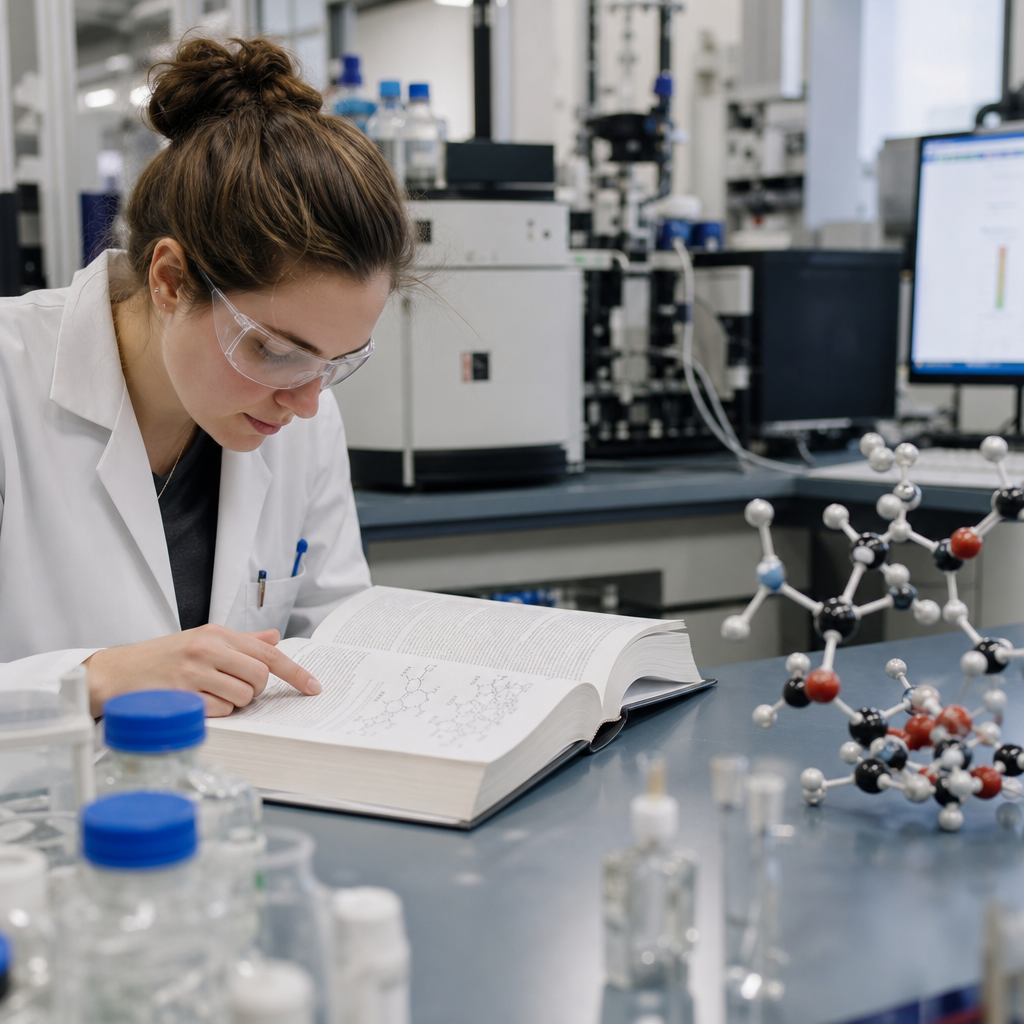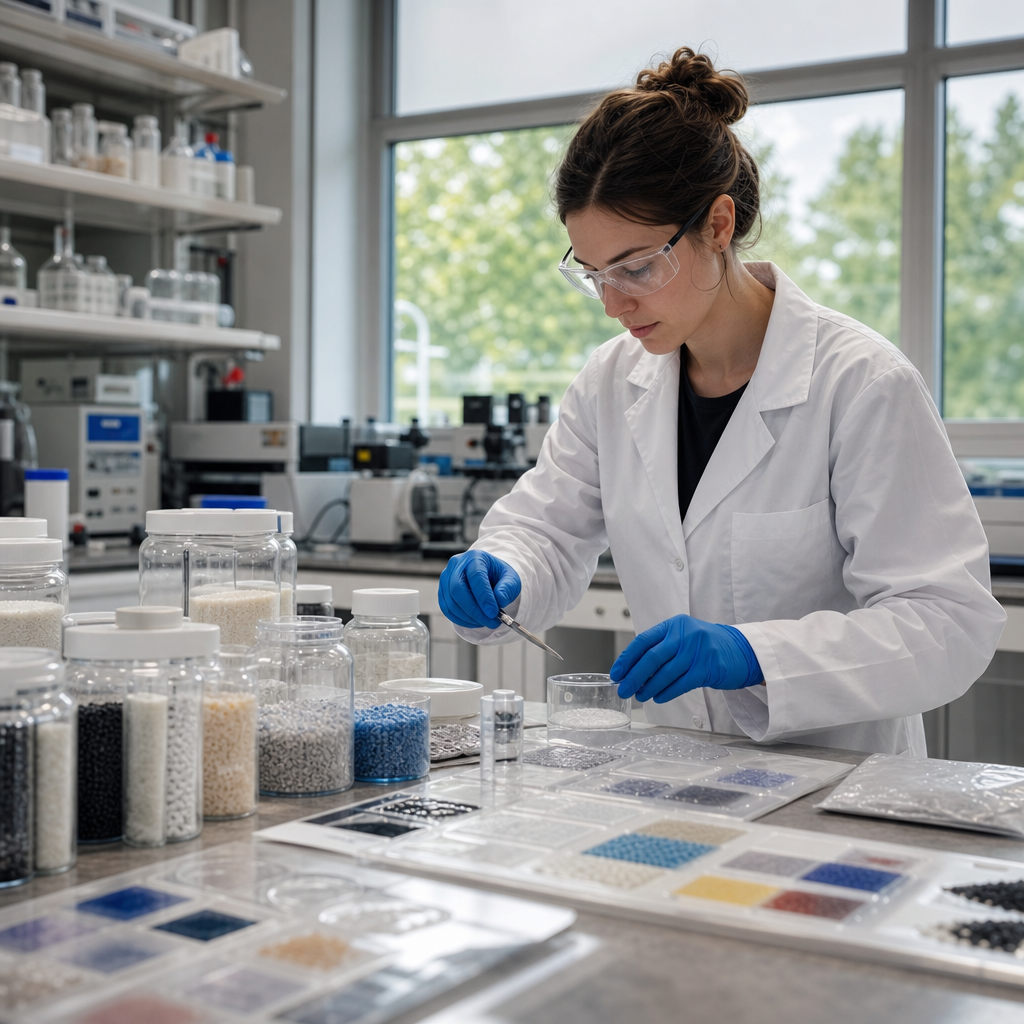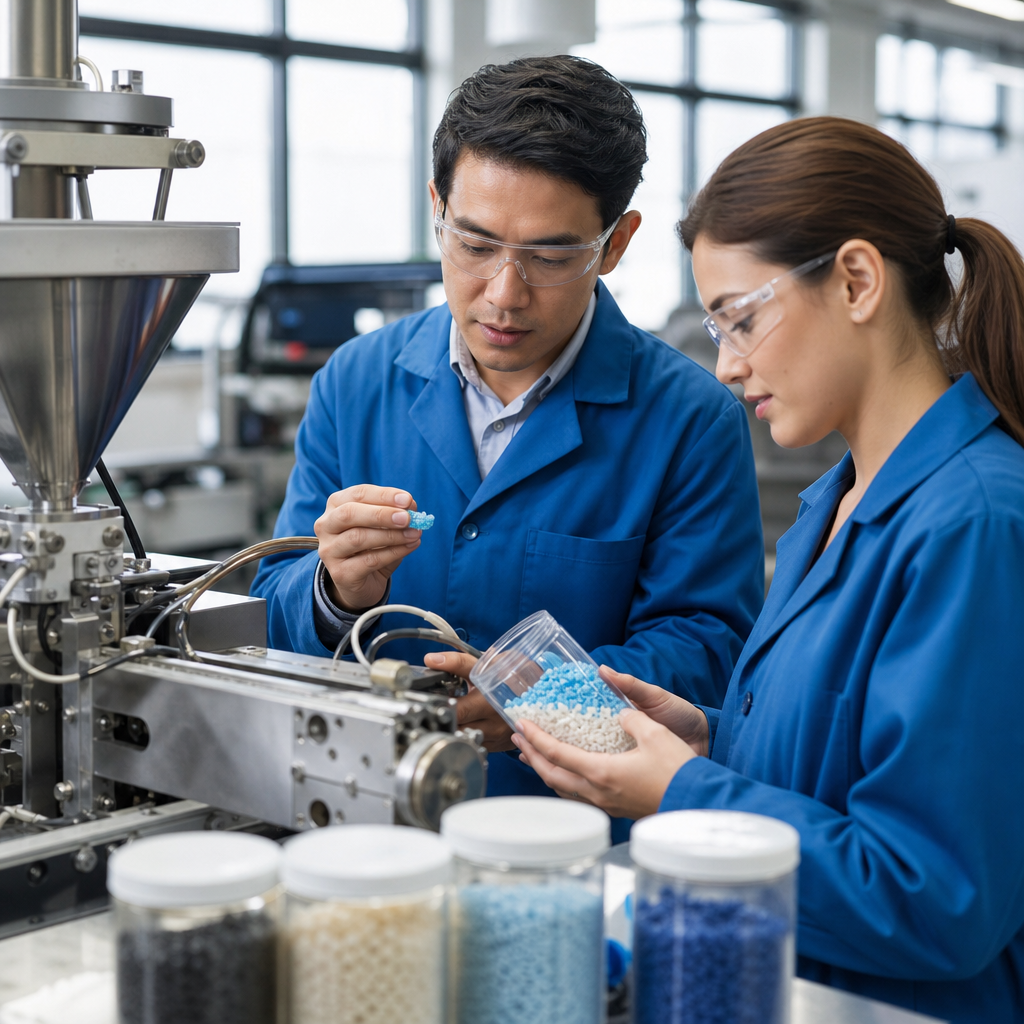
Professional development in polymer technology is the structured process of building the scientific knowledge, processing skill, quality awareness, and regulatory understanding needed to work effectively with plastics, elastomers, composites, films, coatings, and advanced polymer systems. In practice, it includes formal education, short courses, vendor training, certification programs, laboratory experience, and continuous learning on topics such as polymer chemistry, extrusion, injection molding, compounding, rheology, failure analysis, and sustainability. I have seen teams improve productivity and reduce scrap not because they bought a new machine first, but because they invested in better training for operators, technicians, engineers, and quality specialists.
That is why courses and training programs matter so much in this field. Polymer technology sits at the intersection of chemistry, materials science, manufacturing, data, and compliance. A process engineer may need to understand melt flow index, screw design, drying conditions, and statistical process control in the same week. A quality manager may need to connect DSC results, customer specifications, and ISO documentation. A product developer may need to choose between polyethylene, polypropylene, nylon, TPU, or PEEK while balancing cost, temperature resistance, chemical compatibility, and recyclability. Good professional development helps people make those decisions faster and with fewer costly errors.
This hub article explains how to approach professional development in polymer technology through courses and training programs. It defines the main learning paths, shows which formats fit different career stages, and outlines how to evaluate providers. It also highlights the most important subject areas, from foundational polymer science to advanced processing and sustainability. If you are planning your own learning roadmap, managing technical staff, or comparing educational resources for a plant or lab, this guide will help you identify practical options and build a training plan that delivers measurable value.
Why Polymer Technology Training Needs a Structured Plan
Polymer technology training works best when it is treated as a skills system rather than a collection of isolated classes. In many organizations, training starts reactively after a line problem, customer complaint, or failed launch. That approach leaves major gaps. I have worked with operations where an extrusion team understood machine settings but not resin moisture sensitivity, or where a materials team knew polymer chemistry but lacked process troubleshooting skills. A structured plan closes those gaps by mapping job roles to required competencies, then matching each competency to the right course or training method.
A complete plan usually includes four layers. First is foundational knowledge: polymer structure, crystallinity, thermal transitions, viscosity, fillers, additives, and degradation mechanisms. Second is process knowledge: injection molding, extrusion, blow molding, thermoforming, rotational molding, and compounding. Third is application knowledge: packaging, automotive, medical devices, wire and cable, consumer goods, adhesives, and coatings. Fourth is cross-functional knowledge: quality systems, test methods, safety, environmental compliance, and technical communication. When companies organize training across these layers, they build stronger judgment at every level.
The benefits are measurable. Better trained staff can reduce startup time, identify root causes more accurately, improve first-pass yield, and communicate more clearly with suppliers and customers. For example, understanding shear heating and residence time can prevent unnecessary material degradation in extrusion. Knowing the difference between amorphous and semi-crystalline shrink behavior can improve mold design discussions. Familiarity with ASTM and ISO test methods can reduce confusion when comparing supplier datasheets. Training is not overhead in polymer manufacturing; it is a control lever for quality, throughput, and risk reduction.
Core Types of Courses and Training Programs
The best courses and training programs in polymer technology fall into several clear categories. University-based programs provide the strongest scientific grounding. These include degree courses in polymer science, materials engineering, chemical engineering, and plastics engineering. They are ideal for people who need deep theory, research capability, or formal credentials for long-term advancement. For example, a materials engineer developing high-performance compounds benefits from coursework in polymer physics, spectroscopy, and structure-property relationships.
Industry short courses are often the fastest way to build practical skills. These programs typically focus on a specific process or technical problem, such as injection molding optimization, extrusion troubleshooting, resin drying, mold design basics, or failure analysis. Because they are narrow and applied, they are useful for operators, technicians, supervisors, and engineers who need immediate improvement in plant performance. Vendor-led seminars from machine manufacturers, hot runner suppliers, resin producers, and testing equipment companies can also be valuable when the content is technical rather than promotional.
Online learning has expanded access considerably. Many professionals now use modular digital courses for polymer chemistry fundamentals, processing theory, CAD for tooling, data analysis, and quality control. The strongest online options include assessments, demonstrations, case studies, and instructor interaction. In-house training remains important as well, especially for standard operating procedures, line-specific troubleshooting, EHS requirements, and customer-specific quality expectations. Finally, professional associations and technical conferences add another layer by exposing learners to emerging materials, processing innovations, and best practices from across the industry.
| Training format | Best for | Main strengths | Typical limitation |
|---|---|---|---|
| University programs | Engineers, researchers, long-term career builders | Strong theory, recognized credentials, laboratory depth | Higher cost and longer time commitment |
| Industry short courses | Technicians, engineers, supervisors | Immediate application, focused troubleshooting, practical examples | Narrow scope if not part of a wider plan |
| Vendor training | Machine users, maintenance, process teams | Equipment-specific knowledge, setup guidance, service insight | May emphasize one platform or product line |
| Online programs | Busy professionals, distributed teams | Flexible scheduling, scalable access, repeatable modules | Less hands-on practice without lab or shop support |
| In-house training | Entire production and quality teams | Tailored to plant conditions, SOPs, and customer needs | Quality depends on internal expertise and documentation |
Essential Subjects to Cover in Polymer Technology Education
Any serious hub for courses and training programs should start with the subjects that matter most on the job. Polymer chemistry is foundational. Learners need to understand monomers, polymerization mechanisms, molecular weight, copolymers, branching, crosslinking, and additive packages. Without that base, many processing decisions become guesswork. For example, a technician who understands hydrolysis risk in polyesters will take drying and residence time more seriously than someone who only memorized a machine setting.
Processing education is the next priority. Injection molding courses should cover fill, pack, hold, cooling, venting, gate design, shrinkage, warpage, and common defects such as splay, flash, sinks, short shots, and burn marks. Extrusion training should address screw geometry, melt pressure, die swell, barrel temperature profiles, output stability, and gauge control. Blow molding, thermoforming, compounding, and additive manufacturing each require dedicated instruction because their process windows and failure modes differ significantly.
Testing and analysis deserve equal attention. Professionals in polymer technology should know when to use DSC, TGA, FTIR, DMA, rheometry, tensile testing, impact testing, hardness, density, and microscopy. They should also understand the difference between material characterization and product qualification. In real projects, this distinction matters. A compound can show acceptable tensile strength on a standard plaque yet fail in a molded part because weld lines, residual stress, or environmental exposure change performance. Courses that connect test data to actual processing and field outcomes are far more useful than programs that present laboratory methods in isolation.
Choosing the Right Training Path by Career Stage
Beginners need broad fundamentals and vocabulary. For a new operator or lab technician, the right starting point is often an introductory plastics or polymer course paired with supervised hands-on practice. They should learn basic resin families, safe material handling, machine zones, drying principles, common defects, and core quality checks. Early training should also emphasize documentation discipline, because accurate records are essential for process consistency and traceability.
Mid-career professionals benefit most from specialized courses that solve recurring business problems. A process engineer might take advanced injection molding, scientific molding, or extrusion troubleshooting. A quality professional may focus on root cause analysis, MSA, SPC, and polymer failure analysis. A product designer may need training in design for manufacturability, material selection, tolerance stack-up, and environmental testing. At this stage, the most effective programs combine theory, data interpretation, and plant or lab examples. Generic content is rarely enough.
Senior professionals and managers need a broader strategic view. Their training should cover supply chain risk, sustainability regulations, lifecycle thinking, customer requirements, cost modeling, and technology scouting. Leaders in polymer technology must understand not only how materials behave, but how training, equipment capability, and process control interact across the organization. In my experience, managers who take technical refresher courses make better capital decisions because they can challenge assumptions about cycle time, scrap rates, automation, and resin substitution with more confidence.
How to Evaluate Course Quality and Provider Credibility
Not all polymer technology courses are equal, and credentials alone do not guarantee practical value. Start by reviewing the instructor profile carefully. Strong instructors usually have both technical depth and applied experience in manufacturing, testing, product development, or troubleshooting. Look for evidence that they have worked with actual materials, tooling, lines, and failure cases rather than teaching only from slides. In this field, details matter. An instructor who can explain why nylon moisture content affects dimensions, or why PVC thermal stability changes processing strategy, is usually speaking from real practice.
Next, examine the curriculum. The best programs define learning outcomes clearly, use accurate terminology, and connect concepts to recognized standards and methods. Good signs include references to ASTM, ISO, DSC, FTIR, rheology, DOE, FMEA, and SPC where relevant. A credible processing course should address parameter interactions, not just ideal settings. A credible materials course should discuss tradeoffs, not just datasheet advantages. If a provider promises universal solutions for all polymers or all defects, that is a warning sign.
Finally, verify whether the course creates usable outcomes. These may include improved setup sheets, better troubleshooting logic, reduced variation, stronger CAPA documentation, or clearer material selection criteria. Ask for sample materials, lab components, case studies, and post-course support. The most effective providers treat training as capability building, not content delivery. When possible, compare course content with your plant scrap patterns, complaint history, audit findings, and upcoming product launches. Relevance is the difference between education that is interesting and education that changes performance.
Building a Professional Development Roadmap for Teams
A professional development roadmap in polymer technology should begin with a skills matrix. List roles such as operator, setup technician, process engineer, tooling engineer, quality technician, laboratory analyst, maintenance specialist, and production supervisor. Then define required competencies for each role, including material handling, machine setup, process monitoring, test methods, problem solving, and documentation. I have used this approach to identify hidden gaps, especially where experienced employees knew how to keep lines running but could not transfer their knowledge consistently to new staff.
Once the matrix is in place, sequence training by business impact. Start with areas linked to scrap, downtime, customer complaints, and safety. For one team, that might mean dryer management and regrind control. For another, it might mean mold venting, cavity balance, or film thickness variation. Blend learning formats instead of relying on one method. A strong roadmap often combines an online theory module, an instructor-led workshop, supervised machine trials, and a follow-up review using actual plant data.
Measurement is essential. Track results such as defect reduction, changeover consistency, test repeatability, audit findings, and time to independent performance for new hires. Use pre- and post-training assessments where possible. Training budgets are easier to defend when managers can tie a scientific molding class to lower short-shot rates or a polymer testing course to fewer false material rejections. Professional development should be visible in operations, not just recorded in HR files.
Emerging Topics Shaping Future Training Needs
Courses and training programs in polymer technology are changing because the industry itself is changing. Sustainability is now a core subject, not an elective. Professionals need training in mechanical recycling, design for recyclability, post-consumer resin variability, additive compatibility, and mass-balance claims. They also need to understand the practical limits of recycled content in demanding applications. A packaging engineer, for instance, must evaluate odor, color stability, contamination risk, and regulatory suitability before specifying recycled material.
Digitalization is another major shift. Modern plants increasingly use MES platforms, machine sensors, cavity pressure monitoring, data historians, and predictive maintenance tools. Training now needs to cover data interpretation alongside traditional processing knowledge. If a team cannot connect pressure curves, temperature trends, and output variation to material behavior, data collection alone will not improve performance. The same applies to laboratory automation and digital quality systems.
Advanced materials are expanding the skills required across the sector. High-temperature polymers, conductive compounds, bio-based resins, thermoplastic composites, and materials for additive manufacturing each introduce new processing windows and qualification demands. Regulatory pressure is also growing in medical, food contact, automotive, and electronics applications. The strongest professional development plans recognize that polymer technology is not static. They create a habit of learning so staff can adapt to new materials, stricter specifications, and faster product cycles without losing control of quality.
Professional development in polymer technology succeeds when courses and training programs are chosen with purpose, not simply assigned because they are available. The most effective learning paths start with role requirements, cover essential scientific and processing fundamentals, and then build toward specialized skills in testing, troubleshooting, quality, design, and sustainability. Whether the learner is a new technician, an experienced process engineer, or a manufacturing manager, the right education reduces costly mistakes and improves technical judgment.
This hub under Educational Resources should serve as a practical starting point for every related article in the Courses and Training Programs subtopic. From university pathways and online modules to hands-on short courses and internal capability building, the central lesson is consistent: polymer technology rewards structured learning. Materials are complex, process windows are narrow, and customer expectations are unforgiving. Training turns that complexity into repeatable performance.
If you are planning your next step, begin by identifying the skill gaps that affect your work most today. Then choose courses and training programs that combine accurate theory, hands-on relevance, and measurable outcomes. Build a roadmap, review results, and keep learning. In polymer technology, professional growth is one of the most reliable ways to improve quality, confidence, and career opportunity.
Frequently Asked Questions
What does professional development in polymer technology typically include?
Professional development in polymer technology usually combines formal education, practical training, and ongoing industry learning. At its core, it is a structured effort to build a strong understanding of polymer chemistry, material behavior, processing methods, product performance, and compliance requirements. Depending on a person’s role, this may start with a degree or technical program in polymer science, materials engineering, chemical engineering, plastics technology, or a related field. From there, professionals often expand their knowledge through short courses, workshops, equipment-specific training, and certification programs focused on manufacturing, testing, quality systems, or safety.
In day-to-day industry practice, development also includes hands-on exposure to processes such as extrusion, injection molding, blow molding, thermoforming, compounding, coating, and film production. Laboratory experience is equally important because it helps professionals connect theory to measurable properties like melt flow, tensile strength, impact resistance, thermal stability, chemical resistance, and dimensional performance. Many employers also expect growing familiarity with advanced materials such as elastomers, composites, engineering thermoplastics, barrier films, biopolymers, and specialty additives.
Another major component is regulatory and quality awareness. Professionals in polymer technology often need to understand standards, testing protocols, traceability, documentation, and industry-specific requirements related to packaging, automotive, construction, electronics, or medical applications. In other words, professional development is not only about learning how to process polymers, but also about understanding how to select the right material, control variation, troubleshoot defects, meet customer requirements, and support continuous improvement over time.
Why is continuous learning so important in polymer technology?
Continuous learning matters in polymer technology because the field changes quickly and the consequences of outdated knowledge can be costly. New resins, additives, fillers, reinforcement systems, recycling methods, and processing technologies are introduced regularly. At the same time, manufacturers are under pressure to improve product performance, reduce waste, lower cycle times, meet sustainability goals, and comply with increasingly strict regulations. A professional who stops learning may still understand legacy materials and established processes, but can easily fall behind when newer formulations, automation systems, simulation tools, or quality expectations become standard.
There is also a strong technical reason for ongoing development: polymers are highly sensitive to processing conditions and end-use demands. Small changes in temperature profile, moisture content, screw design, mold conditions, cooling rates, or additive loading can significantly affect final properties. Continuous learning helps professionals interpret these relationships more accurately, make better decisions on the production floor, and solve problems faster when defects appear. It also improves communication across departments, since effective polymer work often requires coordination between R&D, manufacturing, quality, maintenance, sourcing, and customers.
Beyond technical performance, continuous learning supports career growth. Employers value people who can adapt to new equipment, understand root-cause analysis, evaluate data, and contribute to innovation. Professionals who keep their skills current are typically better positioned for advancement into senior technical, supervisory, quality, applications, or product development roles. In a field where materials, processes, and regulations are always evolving, continuous learning is not optional—it is one of the main drivers of long-term competence and credibility.
What skills are most important for building a successful career in polymer technology?
A successful career in polymer technology rests on a combination of scientific knowledge, process understanding, practical troubleshooting ability, and strong professional habits. Scientifically, it is important to understand polymer structure, molecular weight, crystallinity, rheology, thermal behavior, degradation mechanisms, and how additives influence performance. This foundation helps professionals predict how a material will behave during processing and in service. Without that knowledge, it is difficult to make informed choices about resin selection, stabilization, reinforcement, barrier performance, flexibility, toughness, or durability.
Process skills are equally important. Professionals should develop a working knowledge of the manufacturing methods most relevant to their industry, such as extrusion, injection molding, compression molding, rotational molding, calendering, coating, lamination, or compounding. It is not enough to know the names of these processes; strong professionals understand how machine settings, tooling, residence time, shear, pressure, and cooling conditions influence part quality and consistency. They also learn how to identify and correct common defects such as warpage, sink, splay, burn marks, poor dispersion, gels, delamination, and inconsistent dimensions.
Analytical and quality-related skills are another major differentiator. The ability to read data, interpret test results, follow specifications, and perform root-cause analysis is critical. Familiarity with laboratory methods, statistical thinking, documentation practices, and relevant standards improves both problem-solving and decision-making. Just as important are communication and teamwork. Polymer technology is collaborative by nature, so professionals must be able to explain technical issues clearly to operators, managers, suppliers, auditors, and customers. The most effective people in the field combine technical depth with curiosity, discipline, safety awareness, and a willingness to keep learning.
How can someone gain practical experience in polymer processing and materials testing?
Practical experience in polymer technology is best gained through a mix of supervised hands-on work, laboratory exposure, and targeted training. For students or early-career professionals, internships, co-op placements, technician roles, and entry-level manufacturing positions are often the fastest way to build real-world understanding. These settings provide direct exposure to production equipment, material handling procedures, startup and shutdown routines, quality checks, tooling considerations, and troubleshooting under actual operating conditions. Even basic shop-floor involvement can teach lessons about process stability, contamination control, moisture management, and operator decision-making that are difficult to fully appreciate in a classroom alone.
Laboratory work is another essential pathway. Experience with testing methods helps professionals connect observable defects and performance outcomes to measurable data. This may include learning how to prepare specimens, condition samples, run physical and thermal tests, document results, and compare findings against specifications or historical trends. Working with quality teams or materials laboratories can also build familiarity with failure analysis, incoming material verification, formulation comparisons, and process validation. These experiences are especially valuable because they strengthen both technical judgment and confidence when making recommendations.
Short courses and vendor training can accelerate practical learning as well. Equipment manufacturers, resin suppliers, and industry associations often provide focused instruction on machinery operation, resin behavior, additive packages, maintenance basics, and process optimization. When possible, professionals should pair these learning opportunities with observation and application in the plant or lab. Asking to support trials, assist with new product introductions, document process windows, or participate in corrective action efforts can quickly deepen experience. In polymer technology, practical skill grows fastest when theory, measurement, and hands-on production work are developed together.
Which certifications, courses, or learning paths are most useful in polymer technology?
The most useful learning path in polymer technology depends on career goals, but the strongest options usually combine broad fundamentals with specialized training tied to a specific role or process. For someone building a foundation, coursework in polymer chemistry, materials science, processing principles, quality systems, and manufacturing fundamentals is highly valuable. These subjects create the technical base needed to understand how plastics, elastomers, composites, films, and coatings behave from formulation through final product performance. Professionals who are newer to the field often benefit from structured programs offered by universities, technical institutes, and industry training organizations.
After fundamentals, specialized courses become more important. A processing engineer may prioritize extrusion, injection molding, tooling, process optimization, and troubleshooting. A quality professional may focus more on testing methods, statistical process control, documentation, corrective action systems, and regulatory compliance. Someone working in product development may need deeper knowledge of formulation, additive interactions, failure analysis, design for manufacturability, and customer application requirements. Vendor-led training can be especially useful when learning specific machinery, instrumentation, software, or resin systems, because it often provides practical, immediately applicable knowledge.
Certifications can add credibility when they align with job responsibilities and are supported by real experience. Quality, manufacturing, safety, and industry-specific compliance certifications may be helpful in many polymer-related roles, particularly in regulated or highly performance-driven sectors. However, employers typically value demonstrated competence more than credentials alone. The best approach is to choose courses and certifications that solve real technical gaps, improve on-the-job performance, and support a clear professional direction. In polymer technology, the most effective development plan is usually a layered one: strong technical fundamentals, process-specific training, hands-on experience, and regular updates as materials, equipment, and standards evolve.