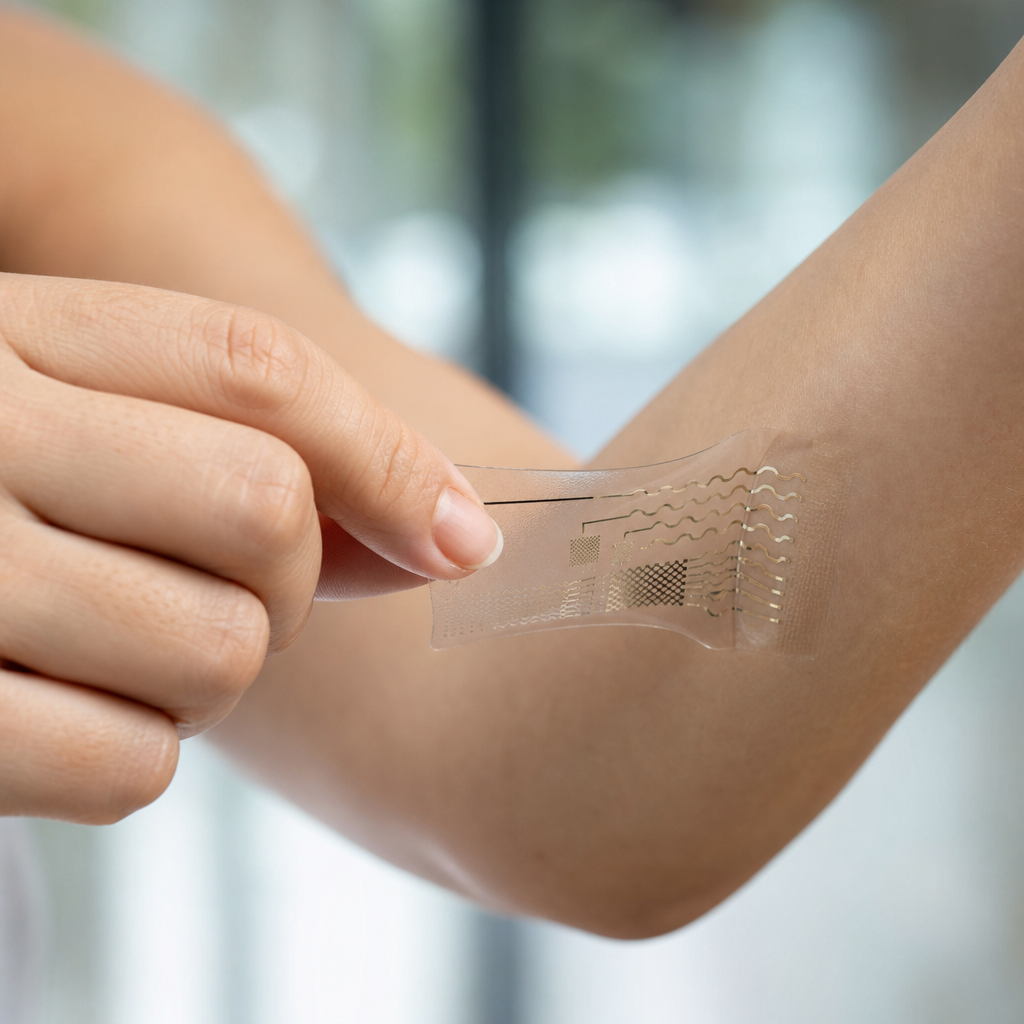
Polymers are transforming wearable electronics by solving the core engineering problem that held the category back for years: rigid electronics do not naturally conform to moving human bodies. In practical product development, I have seen the same failure pattern repeatedly with early wearable prototypes. A sensor may function well on a benchtop, yet lose accuracy, delaminate, or crack once it is bent around a wrist, stitched into a sleeve, or exposed to sweat and repeated washing. Polymer science changes that equation because polymers can be engineered for flexibility, stretchability, light weight, biocompatibility, moisture resistance, and low temperature processing, all of which matter in devices people actually wear.
Wearable electronics include smartwatches, fitness bands, electronic skin, connected medical patches, smart textiles, hearing devices, and flexible human machine interfaces. In this context, polymers are not just plastic housings. They serve as substrates, encapsulants, dielectric layers, conductive composites, adhesives, membranes, and even active sensing materials. Common examples include polydimethylsiloxane, polyurethane, polyethylene terephthalate, polyimide, PEDOT:PSS, and thermoplastic elastomers. Each brings a different balance of elasticity, durability, breathability, and process compatibility. The reason this matters is simple: the commercial future of wearable technology depends on comfort, reliability, and manufacturability as much as on chip performance.
This hub article on innovative polymer applications explains how polymers enable next generation wearables and where the field is moving. It covers materials selection, conductive polymer systems, electronic textiles, medical wearables, power components, manufacturing methods, and design tradeoffs. If you are evaluating wearable electronics materials, building a smart textile roadmap, or researching flexible medical devices, this overview gives you the conceptual framework and practical examples needed to understand the market. It also provides the foundation for deeper case studies across this subtopic, since nearly every successful wearable platform now depends on one or more advanced polymer systems to bridge the gap between electronics and the body.
Why polymers are foundational to wearable electronics design
The primary reason polymers dominate wearable electronics is mechanical compliance. Silicon chips, ceramic components, and metal interconnects are inherently stiff. Human skin, by contrast, stretches, wrinkles, heats, cools, and sheds moisture continuously. A wearable that ignores this mismatch becomes uncomfortable and unreliable. Engineers therefore use polymer layers to absorb strain, distribute stress, and protect fragile electrical pathways. Polyimide and PET are widely used as flexible substrates in circuits because they can support thin conductive traces while bending repeatedly. Elastomers such as silicone and TPU add stretch and cushioning in patches, chest straps, and soft robotics interfaces.
Another reason polymers matter is process flexibility. Many wearable devices are fabricated using printing, coating, lamination, screen printing, inkjet deposition, or roll to roll conversion rather than traditional rigid board assembly alone. Polymers are well suited to these processes because they can be supplied as films, fibers, inks, foams, and molded parts. In manufacturing reviews, this is often where feasibility improves: instead of forcing a rigid architecture into a wearable form factor, teams build the product around polymer compatible processing from the start. That can reduce thickness, weight, part count, and assembly complexity.
Comfort and user adoption are equally critical. A medical patch that irritates skin or a smart garment that feels clammy will fail no matter how advanced its electronics are. Polymer selection influences softness, breathability, coefficient of friction, thermal feel, and moisture vapor transmission rate. Medical grade silicones, hydrogels, and breathable polyurethane films are especially important in long wear applications. Standards such as ISO 10993 guide biocompatibility evaluation, while laundering, abrasion, and ingress tests help validate everyday durability. In short, polymers are foundational because they shape how a wearable performs electrically, mechanically, and humanly.
Conductive polymers and stretchable circuits
One of the most important innovative polymer applications is the use of conductive and semiconductive polymer systems to create circuits that bend or stretch without immediate failure. PEDOT:PSS is the most cited example. It is a conductive polymer blend used in flexible electrodes, biosignal acquisition interfaces, antistatic coatings, and printed devices. Its appeal comes from optical transparency, solution processability, and relatively low modulus compared with brittle transparent conductors such as indium tin oxide. Researchers and product teams often improve its conductivity by adding secondary dopants like dimethyl sulfoxide or ethylene glycol, then stabilize it with crosslinkers or composite structures.
Conductive polymers alone are not always enough for high current paths, so many wearable systems rely on polymer composites filled with silver flakes, carbon nanotubes, graphene, or carbon black. These materials can be screen printed as stretchable traces onto TPU films or textiles. A well designed trace uses geometry as much as chemistry; serpentine patterns, neutral strain placement, and encapsulation layers can dramatically extend fatigue life. In one development program I worked on, changing trace layout and substrate modulus improved bend endurance more than changing the conductive ink formulation, which is a useful reminder that materials and mechanical design must be optimized together.
Stretchable circuit performance is typically judged by sheet resistance, gauge factor for strain sensing, hysteresis, adhesion, and resistance drift after repeated cycles. Tradeoffs are unavoidable. Silver based inks offer excellent conductivity but can crack under severe strain and raise cost. Carbon based systems stretch better but usually have higher resistivity. Conductive hydrogels provide exceptional skin contact for electrophysiology, yet dehydration can limit wear time unless encapsulation is carefully engineered. The best wearable electronics designs therefore match the polymer conductor to the exact use case rather than chasing a single universal material.
Smart textiles and fiber level polymer innovation
Smart textiles are where polymer science becomes especially visible to consumers. Instead of attaching electronics onto clothing as an afterthought, developers integrate function into fibers, yarns, coatings, and fabric structures. Polyester, nylon, acrylic, spandex, and polyurethane already dominate textile manufacturing, so the most scalable wearable solutions often build on those existing polymer platforms. Conductive yarns can be knitted into sensing zones for respiration, posture, or muscle activity. Polyurethane based coatings can seal conductive traces against moisture while preserving softness. Elastomeric fibers maintain garment fit, which is essential for obtaining repeatable sensor readings.
Fiber level innovation is advancing quickly. Melt spinning and wet spinning can produce composite fibers with conductive fillers dispersed in a polymer matrix. Core sheath architectures allow one material to provide conductivity while another provides insulation or mechanical protection. Electrospinning creates nanofiber webs with high surface area, useful in filtration masks, pressure sensing layers, and biointerface scaffolds. In practice, the winning textile designs are usually those that survive ordinary use: stretching during dressing, abrasion at seams, detergent exposure, and dozens of wash cycles. Wash durability remains a central barrier to mass adoption, and polymer encapsulation chemistry is one of the main levers for improvement.
| Polymer system | Typical wearable use | Main advantage | Key limitation |
|---|---|---|---|
| Polyimide | Flexible circuit substrates | High thermal stability | Limited stretch |
| TPU | Stretchable films and encapsulation | Elastic and durable | Moisture and heat aging vary by grade |
| Silicone elastomer | Skin patches and soft interfaces | Comfort and biocompatibility | Can be difficult to bond |
| PEDOT:PSS | Printed electrodes and coatings | Flexible and processable | Environmental stability needs tuning |
| Polyurethane fibers | Smart garments | Stretch and fit retention | Laundering can degrade performance |
For companies building smart apparel, interoperability between textile production and electronics assembly is decisive. Knitting machines, embroidery systems, and heat lamination lines all impose different constraints on polymer choice. The most effective development teams work backward from wear conditions and garment care requirements, then choose polymer systems that fit industrial textile workflows rather than laboratory demonstrations alone.
Medical wearables and skin mounted devices
Medical wearable electronics have arguably benefited most from polymer innovation because skin mounted devices must be gentle, stable, and accurate at the same time. Continuous glucose monitors, ECG patches, temperature sensors, wound monitoring systems, and drug delivery wearables all depend on polymer layers that control adhesion, hydration, and barrier performance. Acrylic adhesives are common for secure attachment, but silicone adhesives often provide better skin friendliness during extended wear. Hydrogels are widely used at the electrode skin interface because their ionic conductivity lowers contact impedance and improves signal quality for ECG and EEG applications.
Polymer mechanics directly affect data quality. If a patch lifts slightly during motion, signal noise increases. If the material traps too much sweat, skin maceration or irritation can occur. Breathable polyurethane films, soft silicones, and microperforated constructions help reduce these issues. Advanced epidermal electronics go even further by matching the modulus of skin and using ultrathin polymer substrates so the device moves almost imperceptibly with the body. That improves comfort and can maintain intimate contact over long periods, which is vital for remote patient monitoring and athletic recovery assessment.
Regulatory and validation demands are higher in healthcare, so material claims must be backed by evidence. Biocompatibility testing, cytotoxicity screening, sensitization studies, and shelf life analysis are standard. Sterilization compatibility may also matter. Some polymers yellow, embrittle, or lose adhesion after gamma, ethylene oxide, or heat exposure, so the selection process must include downstream packaging and sterilization considerations. In real product reviews, the best medical wearable teams treat the polymer stack as a clinical interface, not a packaging detail.
Polymers in wearable batteries, energy harvesting, and protection
Power systems are often the limiting factor in wearable design, and polymers play a major role here too. Flexible batteries use polymer separators, binders, packaging films, and gel polymer electrolytes to create thinner, safer, more conformable energy storage. While conventional lithium ion chemistry still dominates, there is strong interest in solid state and quasi solid systems that reduce leakage risk. Polymer electrolytes can improve flexibility and simplify packaging, though ionic conductivity and cycle life remain active areas of development. For devices that must bend around a wrist or integrate into a garment, these improvements are not incremental; they can determine whether the product is viable.
Energy harvesting also relies on polymers. Piezoelectric polymers such as PVDF and its copolymers can convert motion or pressure into electrical signals, making them useful in self powered sensors, gait monitoring inserts, and touch interfaces. Triboelectric nanogenerators frequently pair polymers with different electron affinities to capture energy from friction or movement. Organic photovoltaic layers, built partly from conductive and semiconductive polymers, are being explored for lightweight wearable charging surfaces. These technologies are not yet replacing batteries in most commercial products, but they are increasingly practical for extending runtime or powering low energy sensing nodes.
Encapsulation is another overlooked polymer application. Sweat contains salts that corrode conductors, while daily wear exposes devices to UV, oils, detergents, and impact. Barrier films, conformal coatings, potting compounds, and overmolded elastomers protect the electronics. The challenge is balancing protection with breathability, flexibility, and repairability. A fully sealed device may resist water but feel hot and uncomfortable. A breathable package may improve comfort yet shorten electronic life. Skilled engineering means choosing the correct barrier strategy for the actual environment rather than maximizing every protection metric blindly.
Manufacturing realities, tradeoffs, and where the field is heading
Innovative polymer applications only matter if they can scale beyond prototypes. The most common failure I see in wearable programs is assuming a laboratory material will transfer cleanly to manufacturing. Many do not. Solvent systems may be unsafe at production volumes, adhesion may vary with humidity, and printed layers may drift outside tolerance during roll to roll processing. Successful teams define qualification criteria early: bend radius, cyclic strain count, wash durability, skin compatibility, electrical drift, and assembly yield. They also use established tools such as finite element analysis, dynamic mechanical analysis, peel testing, impedance spectroscopy, and environmental chambers to understand how polymer behavior changes over time.
The field is heading toward multimaterial stacks that combine rigid chips with soft polymer islands, printed sensors, textile conductors, and low profile power modules in one architecture. This hybrid approach is realistic because it accepts that not every function should be stretchable. Chips remain rigid; the surrounding polymer system manages strain and comfort. Recyclability is also becoming more important. Wearables are difficult to disassemble, and mixed material construction can complicate waste handling. Designers are starting to consider thermoplastic systems, detachable modules, and lower impact chemistries to reduce end of life problems.
Looking ahead, expect progress in self healing elastomers, bioresorbable polymers for temporary medical wearables, printable semiconducting polymers, and smarter textile finishes that retain conductivity after laundering. The central lesson is already clear. Polymers are not peripheral to wearable electronics; they are the enabling platform that makes body conforming, durable, and commercially manufacturable devices possible. If you are exploring case studies and applications in this area, start by mapping each product requirement to a polymer function: structure, sensing, conduction, adhesion, protection, or comfort. That framework will help you evaluate technologies faster, ask better supplier questions, and identify the most promising wearable innovations before they reach the mainstream market.
Frequently Asked Questions
Why are polymers so important in wearable electronics?
Polymers are important in wearable electronics because they address the biggest mismatch between traditional electronics and the human body: rigidity. Conventional electronic materials and board-level assemblies are typically designed for flat, stable environments, but wearable devices must bend, stretch, twist, and move constantly with skin, clothing, and joints. Polymers make that possible by introducing flexibility, softness, and mechanical compliance into sensors, conductive layers, encapsulation systems, and structural components.
In real-world use, this matters far more than lab performance alone. A sensor that works perfectly on a bench can fail quickly when wrapped around a wrist, integrated into fabric, or exposed to perspiration and repeated motion. Polymers help reduce those failures by improving adhesion, absorbing strain, and protecting delicate electronic features from cracking or delaminating. They can also be engineered for breathability, wash resistance, moisture tolerance, and skin compatibility, which are all essential for products meant to be worn for hours or days at a time.
Just as important, polymers enable entirely new form factors. Instead of forcing the body to adapt to a rigid device, designers can build electronics that conform to the body. That leads to better comfort, more reliable signal capture, and greater user acceptance. In short, polymers are not just a packaging material in wearables; they are a foundational enabler of durable, body-compatible electronic design.
How do polymers improve the durability and reliability of wearable devices?
Polymers improve durability and reliability by helping wearable electronics survive the exact conditions that normally cause early failure: bending, stretching, compression, sweat exposure, washing, and repeated daily handling. In many early wearable prototypes, performance degradation does not happen because the sensing principle is flawed, but because the materials stack cannot tolerate real mechanical use. A conductive trace may fracture, a sensing film may peel away from its substrate, or a protective layer may allow moisture to penetrate and damage the device. Properly selected polymers help prevent each of these issues.
One of their main advantages is strain management. Soft and elastomeric polymers can deform with body motion rather than concentrating stress in one brittle area. That reduces cracking and fatigue in conductive networks and sensor layers. Polymers also play a key role in lamination and encapsulation, where they hold multilayer systems together and shield them from environmental exposure. When a device must be worn against skin, this protection becomes even more critical because sweat contains salts and moisture that can interfere with signal quality, corrode components, and weaken interfaces over time.
Another major benefit is process adaptability. Polymer systems can be tuned for different manufacturing methods, including printing, coating, molding, fiber integration, and textile bonding. This makes it easier to build devices that remain intact not just in a prototype setting, but through real production and use cycles. When engineers choose the right polymer for flexibility, adhesion, chemical resistance, and washability, they significantly increase the odds that a wearable will remain accurate and functional over repeated wear instead of failing after a short trial period.
What types of polymers are used in wearable electronics?
Wearable electronics use a wide range of polymers, and each category serves a different purpose depending on the design goals. Elastomers such as silicone and thermoplastic polyurethane are commonly used when stretchability, softness, and skin-contact comfort are priorities. These materials are especially valuable in patches, flexible bands, and strain-tolerant housings because they can deform repeatedly without losing integrity. Other polymers are used as substrates for printed circuits and sensors, where the goal is to provide a lightweight, flexible platform that supports conductive inks, electrodes, and functional coatings.
Conductive polymers are another important class. Unlike traditional insulating plastics, these materials can transport electrical charge and are used in some sensors, electrodes, and bioelectronic interfaces. They are particularly attractive in applications where a softer, more conformable electrical interface is needed. In addition, encapsulation polymers protect devices from sweat, abrasion, and mechanical damage, while adhesive polymers help bond layers together and maintain device integrity through motion and washing. Textile-integrated wearables may also incorporate polymer fibers, coatings, or membranes to embed electronic functionality directly into garments.
The key point is that there is no single “wearable polymer.” Engineers select polymer systems based on a combination of mechanical, electrical, chemical, and user-experience requirements. A polymer used for comfort against skin may not be the best choice for moisture barrier performance, and a polymer ideal for printing may not be durable enough for repeated laundering. Successful wearable design usually depends on combining multiple polymers into a carefully engineered stack that balances flexibility, conductivity, adhesion, durability, and manufacturability.
Can polymer-based wearable electronics be comfortable and still deliver accurate data?
Yes, and in many cases comfort is directly linked to measurement accuracy. Wearable devices only produce good data when they maintain stable, consistent contact with the body or garment location they are designed to monitor. If a device is stiff, bulky, or irritating, users adjust it, wear it loosely, or stop using it altogether. Even small shifts in placement can introduce motion artifacts, signal drift, or intermittent readings. Polymer-based designs help solve this by creating devices that are softer, lighter, and more conformal, which improves both wearability and signal consistency.
For example, a polymer-based sensor patch can contour more naturally to the skin, reducing gaps and maintaining better electrode contact during movement. A flexible polymer substrate in a textile sensor can move with the fabric rather than resisting it, which helps preserve calibration and repeatability. Polymers can also be engineered for breathability and skin-friendliness, which matters in long-duration applications where heat buildup, moisture retention, and irritation can all degrade the user experience. When users forget they are wearing the device, long-term adherence usually improves, and that leads to better real-world data collection.
That said, comfort alone is not enough. The polymer system must be matched to the sensing mechanism. If a material is too soft, it may introduce unwanted mechanical noise or allow components to shift. If it absorbs too much moisture, it may alter electrical behavior. The most effective wearable products are built around a balanced design approach in which polymers provide comfort and conformity without compromising sensor stability, electrical performance, or environmental resistance. When done well, polymer-based wearables can absolutely be both comfortable and highly accurate.
What challenges still remain when using polymers in wearable electronics?
Although polymers have dramatically advanced wearable electronics, they are not a perfect solution on their own. One ongoing challenge is long-term material stability. A polymer may perform well initially but change over time when exposed to ultraviolet light, body oils, detergents, sweat, heat, or repeated mechanical cycling. Those changes can affect flexibility, adhesion, electrical behavior, or barrier performance. In wearable systems, even gradual shifts can become serious because the device is expected to function reliably under highly variable day-to-day conditions.
Another challenge is balancing competing requirements. A polymer that is very soft and comfortable may not provide the moisture protection needed for sensitive electronics. A highly durable encapsulant may reduce breathability or make the device feel less natural on skin. Washability is particularly difficult for textile-integrated wearables because laundering introduces mechanical agitation, water, temperature changes, and chemical exposure all at once. Engineers also have to consider manufacturing repeatability, since some polymer-based processes behave differently at lab scale versus production scale, especially in printing, coating, and multilayer lamination workflows.
There are also broader issues related to sustainability, recyclability, and end-of-life design. Many advanced wearable systems use multilayer polymer structures that are difficult to separate and recover. As the market grows, designers will face increasing pressure to improve not only performance but also environmental responsibility. Even with these challenges, the trajectory is clear: polymers remain central to the future of wearable electronics. The field is now moving beyond simply making devices flexible and toward creating systems that are durable, washable, comfortable, scalable, and practical for everyday use.