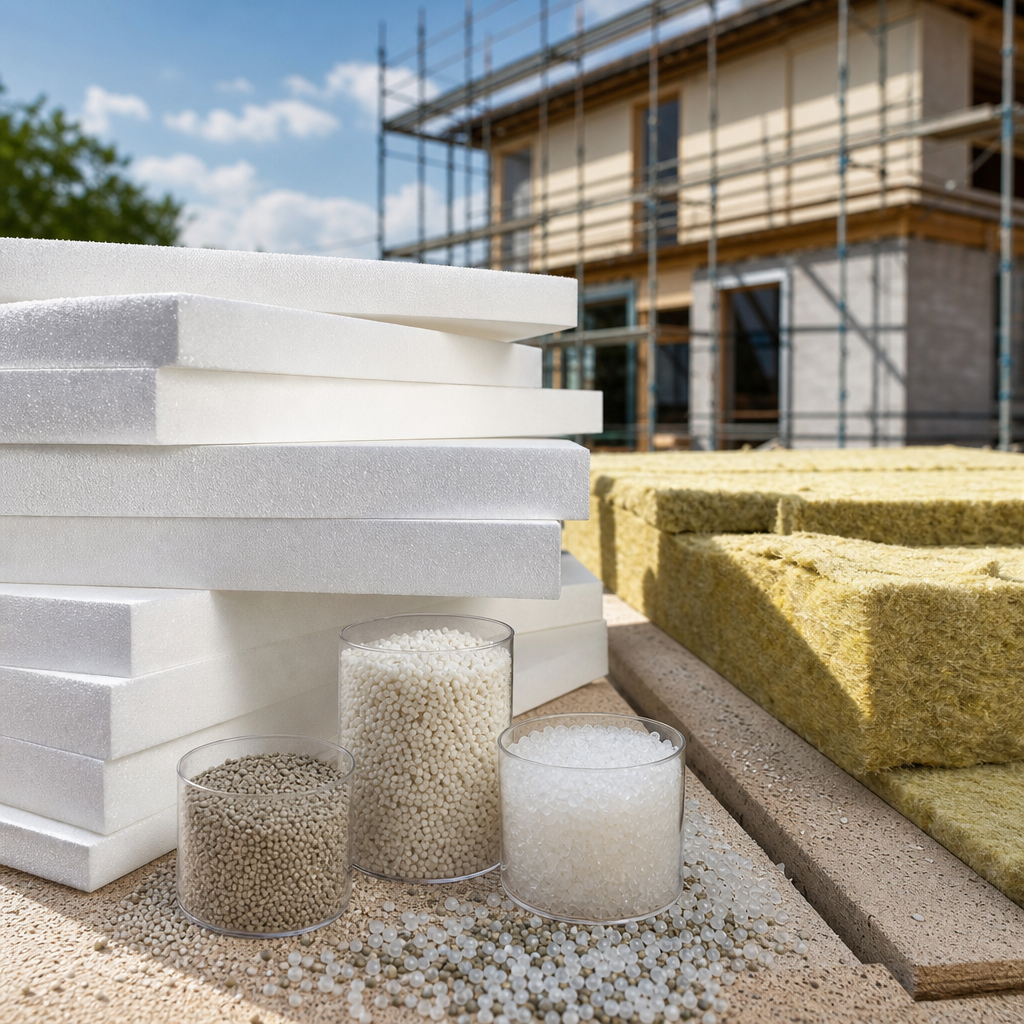
Polymers have become central to energy-efficient building materials because they let designers reduce heat loss, control moisture, lower structural weight, and extend service life in ways that traditional materials alone often cannot. In construction, a polymer is a large-chain molecule engineered into plastics, foams, films, sealants, coatings, composites, and elastomers. Energy-efficient building materials are products that cut the energy required to heat, cool, light, and operate a building over its full life cycle. When these two ideas meet, the result is a broad family of high-performance systems: insulated panels, low-emissivity window interlayers, reflective roof membranes, airtight sealants, thermal break components, piping, and fiber-reinforced facades.
I have worked with polymer-based envelopes on retrofits and new builds, and the same pattern appears repeatedly: buildings rarely waste energy through one dramatic failure. They lose performance through dozens of small weaknesses such as leaky joints, thermal bridging, wet insulation, degraded coatings, and short-lived components that force early replacement. Polymers matter because they address these weaknesses at multiple scales. A spray foam closes irregular gaps. A vapor-permeable membrane manages moisture. A polyamide thermal break interrupts conductive heat flow in aluminum framing. A silicone sealant preserves airtightness through years of movement and weather exposure. Used well, these materials improve the actual operating performance of a building, not just the design intent shown in drawings.
This topic matters more now because energy codes are tightening, operational carbon targets are rising, and owners want lower utility costs without sacrificing comfort or durability. Programs such as ASHRAE 90.1, the International Energy Conservation Code, Passive House standards, and green building rating systems all push teams toward better envelopes and more efficient systems. Polymers help projects meet these goals by enabling higher R-values, lower air leakage, solar control, corrosion resistance, and lighter prefabricated assemblies. They also support renovation, which is where much of the market is heading. Existing buildings can gain major efficiency improvements through polymer-based air barriers, insulated cladding systems, high-performance glazing components, and advanced sealants without complete structural replacement.
As a hub for innovative polymer applications, this article explains where polymers deliver the biggest energy benefits, how they are used in real buildings, what tradeoffs to evaluate, and which product categories deserve deeper study. It covers insulation, windows and facades, roofing, moisture management, composites, smart materials, and life-cycle considerations so readers can connect product choices to measurable building performance.
Polymer Insulation Systems and Thermal Control
The most direct way polymers improve energy-efficient building materials is through insulation. Expanded polystyrene, extruded polystyrene, polyisocyanurate, polyurethane, and phenolic foam all trap gas within a cellular structure, slowing heat transfer. In practical terms, that means thinner assemblies can deliver high thermal resistance compared with mineral or concrete-based alternatives. Polyisocyanurate board, for example, is widely used on commercial roofs because it provides high R-value per inch and integrates cleanly with cover boards and membranes. Closed-cell spray polyurethane foam is valuable in irregular cavities because it combines insulation with air sealing, reducing convective heat loss that conventional batt insulation often leaves untouched.
In field work, I have seen the difference between nominal and delivered performance most clearly in roof and wall retrofits. A cavity may be specified at a certain R-value, but if air loops, compression, or gaps exist, the assembly underperforms. Polymer foams reduce these installation penalties. Structural insulated panels, typically made with OSB skins and an EPS or polyurethane core, speed enclosure and create continuous insulation across large surfaces. Insulated concrete forms use foam shells left in place after the pour, improving thermal performance while simplifying construction sequencing. Vacuum insulated panels, though more specialized and expensive, also rely on polymer barrier films to preserve low-pressure cores, allowing extremely high insulation values in slim profiles for space-constrained retrofits.
The limitations are important. Some foams can lose thermal performance as blowing agents diffuse. Fire performance requires careful detailing, protective layers, and code compliance. Long-term moisture exposure can also affect certain products. Good specifications account for aged R-value, water absorption, dimensional stability, and compatibility with adjacent air and vapor control layers rather than relying on brochure claims alone.
Windows, Facades, and Thermal Break Technology
Windows are often the weakest thermal element in a building envelope, so polymer innovation here has an outsized energy impact. Modern glazing systems use polymer spacers, interlayers, gaskets, and thermal break components to reduce conductive, convective, and radiative heat transfer. Warm-edge spacers made from polymer-metal hybrids lower heat flow around insulated glass edges compared with older all-aluminum spacers, reducing condensation risk and improving whole-window U-values. Polyvinyl butyral and ionoplast interlayers in laminated glass can improve safety while also supporting solar control configurations. In framing, polyamide thermal breaks separate interior and exterior aluminum, dramatically reducing heat transfer without giving up the structural and fabrication benefits of metal curtain wall systems.
Facade engineers increasingly combine these components with polymer-based sealants and air barrier transitions to create high-performance assemblies. Silicone glazing sealants accommodate movement and maintain weather resistance over long service periods. EPDM gaskets preserve compression seals through thermal cycling. Fiberglass-reinforced polymer window frames and curtain wall elements offer lower conductivity than aluminum and resist corrosion in coastal or industrial environments. In one school retrofit I reviewed, replacing thermally unbroken storefront framing with thermally broken systems and better edge spacers cut winter perimeter discomfort enough to reduce reliance on supplemental electric heaters near classrooms.
For residential projects, vinyl window frames remain common because PVC is cost-effective, low maintenance, and thermally better than bare metal. The tradeoff is expansion behavior, aesthetics, and end-of-life recycling complexity. For premium projects, composite frames using fiberglass and engineered polymers can provide tighter tolerances, lower thermal movement, and stronger profiles suited for large openings.
Roofing Membranes, Cool Surfaces, and Weatherproofing
Roof assemblies influence both peak cooling loads and long-term enclosure durability. Polymer roofing membranes such as TPO, PVC, and EPDM have transformed low-slope roof design by combining weatherproofing with solar reflectance, flexibility, and compatibility with continuous insulation. A white TPO or PVC roof can reflect a significant share of incoming solar radiation, lowering roof surface temperatures and reducing heat gain into conditioned space. In hot climates, this translates directly into lower cooling demand and less stress on rooftop equipment. Even where annual savings are moderate, lower membrane temperatures can slow thermal aging of roof components and improve service life.
Polymers also matter below the visible surface. Adhesives, vapor retarders, cover board facers, and liquid-applied flashing systems help create continuous, durable roof assemblies. On occupied retrofit projects, fluid-applied polymer coatings can extend an existing roof’s life and restore reflectivity with less disruption than tear-off replacement. Elastomeric acrylic and silicone coatings are common examples. Silicone performs well in ponding-water conditions; acrylic often provides lower cost and good reflectance in suitable assemblies. The best choice depends on substrate condition, drainage, climate, and maintenance capacity, not just initial material price.
| Application | Common Polymer Material | Primary Energy Benefit | Typical Consideration |
|---|---|---|---|
| Continuous insulation | Polyisocyanurate, XPS, EPS | Reduces conductive heat loss through walls and roofs | Aged R-value and moisture exposure |
| Air sealing | Polyurethane foam, silicone, acrylic membranes | Lowers infiltration and HVAC loads | Substrate preparation and detailing |
| Window systems | Polyamide breaks, EPDM gaskets, PVB interlayers | Improves U-value and condensation resistance | Movement, edge durability, fabrication quality |
| Cool roofing | TPO, PVC, silicone coatings | Reduces solar heat gain and peak cooling demand | Climate suitability and roof cleanliness |
| Composite structures | FRP panels and profiles | Cuts weight and thermal bridging | Fire design and connection detailing |
Air Barriers, Sealants, and Moisture Management
If I had to identify the most undervalued polymer contribution to energy-efficient building materials, it would be air control. Uncontrolled air leakage can bypass insulation, carry moisture into assemblies, create drafts, and increase heating and cooling loads. Polymer-based air barriers, tapes, gaskets, and sealants make it possible to build continuity across dissimilar substrates and complex geometry. Fluid-applied acrylic, silyl-terminated polymer, and polyurethane membranes are common in wall systems because they bridge small gaps and conform around fasteners and transitions. Self-adhered membranes based on modified bitumen or advanced synthetic adhesives are equally important around openings and interfaces.
Moisture management is inseparable from energy performance. Wet insulation loses effectiveness, and repeated wetting can trigger mold, corrosion, and rot that shorten assembly life. Breathable polymer housewraps and monolithic membranes allow water vapor diffusion while resisting bulk water and air leakage. This balance matters in mixed and cold climates where outward or inward drying potential can determine whether a wall remains durable. The correct membrane depends on climate zone, wall composition, interior humidity, and exposure. A highly impermeable layer in the wrong location can trap moisture just as effectively as a missing barrier can admit it.
Blower door testing has made these benefits easier to verify. On multifamily projects, the difference between a carefully detailed air barrier package and a fragmented approach routinely shows up in lower ACH50 results, steadier indoor temperatures, and fewer comfort complaints near façade transitions. Good polymer products enable that outcome, but only if sequencing, adhesion testing, and quality control are treated as construction tasks rather than paperwork items.
Composites, Lightweight Construction, and Retrofit Efficiency
Fiber-reinforced polymer composites improve energy-efficient building materials in a less obvious but increasingly important way: they make building components lighter, more precise, and less conductive than many traditional options. Glass-fiber-reinforced polymer panels, pultruded profiles, and sandwich panels can replace heavier metal or cementitious elements in façades, shading systems, pedestrian bridges, and rooftop structures. Lower weight reduces transport energy, crane time, and structural demands, which can matter significantly in deep retrofits where existing buildings have limited load reserve. Because many FRP components are manufactured with high dimensional accuracy, they also support prefabrication and tighter envelope tolerances, reducing gaps that undermine thermal performance.
Thermal bridging is another key advantage. Metal brackets, shelf angles, and cladding supports can create direct conductive paths through insulation. Replacing selected metal components with structural polymer or composite alternatives lowers point transmittance and helps preserve the effective R-value of continuous insulation systems. This is especially valuable in rainscreen assemblies and balcony connections. Europe has long advanced this approach, and North American projects increasingly use thermally broken clips and composite anchors to meet more demanding envelope targets.
Retrofit work benefits from polymers because installation often must occur quickly, with occupants in place and with limited tolerance for wet trades. Lightweight insulated panels, adhesive-applied membranes, and prefabricated composite façade modules allow faster enclosure upgrades with less disruption than masonry rebuilds or heavy curtain wall replacement. The practical result is not just energy savings but better project feasibility.
Smart Polymers, Phase Change Materials, and Emerging Applications
Beyond established products, innovative polymer applications are expanding into adaptive materials that respond to temperature, sunlight, and occupancy patterns. Phase change materials encapsulated in polymer matrices can absorb and release heat as they transition between solid and liquid states, smoothing indoor temperature swings and reducing peak HVAC demand. These materials are being integrated into wallboards, ceiling panels, and insulation products, especially in buildings with large daytime gains and nighttime cooling opportunities. While performance depends heavily on selecting the right transition temperature and ensuring repeated cycling, well-matched PCM systems can improve thermal stability without increasing mechanical complexity.
Electrochromic glazing also relies on polymer-related components in seals, laminates, and conductive layers that support dynamic solar control. By tinting in response to sunlight or control signals, these systems reduce glare and solar heat gain while preserving views better than static shading in some applications. Aerogels, often combined with polymer blankets or granules, provide another high-performance option for insulating translucent panels and difficult retrofit zones. Advanced coatings based on fluoropolymers, silicones, and nanostructured additives can improve self-cleaning, reflectivity, emissivity, or resistance to UV degradation.
These technologies are promising, but they should be evaluated with discipline. Emerging products often face higher upfront cost, fewer long-term field studies, and more limited installer familiarity. The right question is not whether a polymer innovation sounds advanced; it is whether it improves measured building performance, survives real weathering, and integrates cleanly with maintenance practices and code requirements.
Life-Cycle Performance, Fire Safety, and Material Selection
The best polymer-based energy-efficient building materials are chosen on life-cycle performance, not single-point metrics. A product with excellent thermal resistance can still be a poor choice if it degrades quickly, complicates repairs, or introduces fire and smoke risks the assembly cannot properly manage. Fire safety deserves explicit attention. Foam plastics usually require thermal barriers, tested assemblies, and careful detailing around cavities and façades. Standards from ASTM, NFPA, UL, and local building codes govern how these products can be used. Responsible design does not treat polymer efficiency gains as a reason to bypass fire engineering, especially in high-rise and high-occupancy buildings.
Environmental assessment also requires nuance. Some polymers reduce operational energy so effectively that they deliver substantial life-cycle carbon benefits despite petrochemical origins. Others raise concerns around blowing agents, additives, recyclability, or end-of-life disposal. Environmental product declarations, whole-building life-cycle assessment tools, and product transparency documents help teams compare options more rigorously. In practice, the strongest specifications balance operational savings, durability, maintenance, code compliance, embodied impacts, and local installation capability.
For a hub article on innovative polymer applications, the main lesson is clear: polymers improve building efficiency when they are part of a well-detailed system. Insulation, glazing components, roofing membranes, air barriers, composites, and smart materials each solve different energy problems, and the best results come from combining them thoughtfully. Start by identifying the dominant losses in your project—heat flow, air leakage, solar gain, moisture damage, or retrofit constraints—then match polymer technologies to those priorities. If you are planning a new build, renovation, or technical content strategy around advanced materials, use this page as your starting point and continue into the related application guides for deeper product-level decisions.
Frequently Asked Questions
What are polymers, and why are they so important in energy-efficient building materials?
Polymers are large-chain molecules that can be engineered into a wide range of construction products, including insulation foams, plastic piping, air and water barriers, sealants, coatings, window components, roofing membranes, flooring systems, and fiber-reinforced composites. Their importance in energy-efficient building materials comes from the fact that they can be tailored to deliver very specific performance characteristics that directly affect how a building uses energy. For example, polymers can be made lightweight yet durable, flexible yet airtight, moisture-resistant yet vapor-controlling, or thermally insulating while still being easy to install.
In practical building terms, polymers help reduce the amount of energy needed to heat and cool a space by limiting unwanted heat transfer and air leakage. Spray polyurethane foam, rigid foam board, elastomeric sealants, and polymer-based window frames all contribute to a tighter, better-insulated building envelope. That means HVAC systems do not have to work as hard to maintain indoor comfort. Polymers also support durability, which matters because energy efficiency is not only about initial performance but also about maintaining that performance over time. A high-performing material that resists cracking, water intrusion, UV exposure, and thermal cycling can help a building stay efficient for decades.
Another major advantage is design flexibility. Compared with many traditional materials, polymers can often be molded, layered, expanded, laminated, or combined with reinforcements to create products that solve multiple building challenges at once. A single polymer-based component may provide insulation, moisture control, and air sealing in one assembly. This ability to integrate functions is one reason polymers have become central to modern high-performance construction.
How do polymer-based materials reduce heat loss and improve insulation in buildings?
Polymer-based materials improve insulation primarily by slowing the movement of heat through walls, roofs, floors, and openings in the building envelope. One of the most common ways they do this is through foam insulation products such as expanded polystyrene, extruded polystyrene, polyisocyanurate, and spray polyurethane foam. These materials contain tiny cells filled with gases that resist heat flow, giving them strong insulating performance relative to their weight and thickness. By increasing thermal resistance, often described as R-value, they help keep indoor heat inside during winter and unwanted outdoor heat outside during summer.
Polymers also improve energy performance by reducing thermal bridging and air leakage. Heat loss does not occur only through poorly insulated surfaces; it also happens through gaps, joints, framing members, and penetrations around windows, doors, ducts, and utility lines. Polymer sealants, tapes, gaskets, and membranes are used to close these weak points and create a continuous air barrier. This is important because uncontrolled air movement can significantly increase heating and cooling loads, sometimes even more than conductive heat loss through materials alone.
In windows and glazing systems, polymers contribute in several ways. Vinyl and composite frames often provide better thermal performance than highly conductive materials because they do not transfer heat as easily. Polymer interlayers and films can also be used in advanced glazing assemblies to improve solar control, reduce drafts, and support overall window efficiency. In roofing and exterior wall systems, reflective polymer coatings and membranes can further improve thermal performance by reducing solar heat gain. Taken together, these applications show that polymers are not limited to insulation boards or foam products; they play a role across the entire building envelope in managing heat flow more effectively.
How do polymers help control moisture and air leakage, and why does that matter for energy efficiency?
Moisture control and air leakage management are essential to building energy efficiency, and polymers are especially valuable in both areas. Buildings lose energy when conditioned indoor air escapes through cracks and openings, and they also lose performance when moisture damages insulation or structural components. Polymer-based products such as housewraps, vapor retarders, fluid-applied membranes, sealants, tapes, flashing materials, and roofing membranes help create controlled layers that limit unwanted air and water movement while allowing assemblies to be designed for proper drying.
Air leakage matters because when warm or cool air escapes, the mechanical system has to replace that lost conditioned air, increasing energy consumption. Even small gaps around sheathing joints, windows, doors, pipes, and electrical penetrations can add up to significant losses over the life of a building. Polymer sealants and tapes are widely used because they remain flexible, adhere well to different substrates, and can accommodate small movements caused by temperature changes or settling. This flexibility is critical for maintaining airtightness over time rather than only at initial installation.
Moisture control is equally important because wet materials often perform worse thermally and may deteriorate faster. Insulation that becomes damp can lose effectiveness, while trapped moisture can lead to mold, corrosion, wood rot, and reduced indoor air quality. Polymer membranes and coatings help direct bulk water away from vulnerable areas and manage vapor diffusion in wall and roof assemblies. When moisture is controlled properly, insulation stays closer to its intended performance level, assemblies last longer, and the building avoids hidden damage that can undermine efficiency. In that sense, polymer-based air and moisture barriers do more than protect the building—they preserve the long-term energy performance of the entire envelope.
Are polymer building materials durable and sustainable enough for long-term energy-efficient construction?
Yes, when properly selected and installed, many polymer building materials are highly durable and well suited for long-term energy-efficient construction. Durability is one of the biggest reasons polymers are used so widely in high-performance building systems. Many polymer-based products resist corrosion, chemical exposure, moisture, biological degradation, and repeated expansion and contraction from changing temperatures. That resistance helps building assemblies maintain their intended performance over time, which is essential for preserving energy savings year after year.
From a sustainability perspective, the answer is more nuanced but still strong. The most meaningful sustainability advantage of many polymer materials is their contribution to operational energy reduction. If insulation, air barriers, sealants, cool roof membranes, and high-performance window components lower heating and cooling demand for decades, the cumulative reduction in energy use and associated emissions can be substantial. In building science, long service life and reduced operational loads are major sustainability benefits, especially in climates with heavy heating or cooling demands.
That said, sustainability also depends on factors such as raw material sourcing, manufacturing impacts, recyclability, end-of-life management, and whether the product contains additives of concern. The industry has been moving toward lower-impact formulations, improved recycling streams for certain plastics, and life-cycle assessment tools that help designers compare options more accurately. Some polymer composites and insulation products now incorporate recycled content or are designed to use less material while delivering the same or better performance. The key is not to view all polymers as identical. Their environmental value depends on product type, application, durability, maintenance needs, and total life-cycle performance. In many cases, a durable polymer-based system that sharply cuts energy demand can be a very responsible long-term choice.
Where are polymers most commonly used in energy-efficient buildings today?
Polymers are used throughout modern energy-efficient buildings, often in places that occupants never see but benefit from every day. One of the most common applications is insulation. Rigid foam boards, spray foam, insulated panels, and pipe insulation all rely heavily on polymer chemistry to reduce heat transfer. Another major use is in air sealing and weatherproofing systems, including sealants, tapes, gaskets, flashing, and air barrier membranes. These components are critical for controlling infiltration and protecting the continuity of the building envelope.
Polymers are also widely used in windows and doors. Vinyl frames, composite frames, glazing seals, spacers, and specialty films all contribute to better thermal performance and reduced leakage. In roofing, polymer membranes such as TPO, PVC, and elastomeric coatings are common in low-slope and reflective roof systems designed to limit heat absorption and extend roof life. Exterior cladding systems, waterproof coatings, and rainscreen components also frequently include polymers because of their resistance to moisture and environmental exposure.
Inside the building, polymers appear in HVAC duct insulation, piping, electrical insulation, flooring underlayments, and lightweight composite components that reduce structural loads. Lower structural weight can indirectly improve energy efficiency by reducing material demand, simplifying transport, and enabling designs that integrate more insulation or prefabricated high-performance assemblies. In advanced construction, polymers are also central to structural insulated panels, insulated concrete forms, smart glazing films, and composite reinforcement systems. Their widespread use reflects a simple reality: polymers are not a niche material category in efficient buildings. They are part of the core toolkit used to improve thermal performance, airtightness, durability, and overall building efficiency.