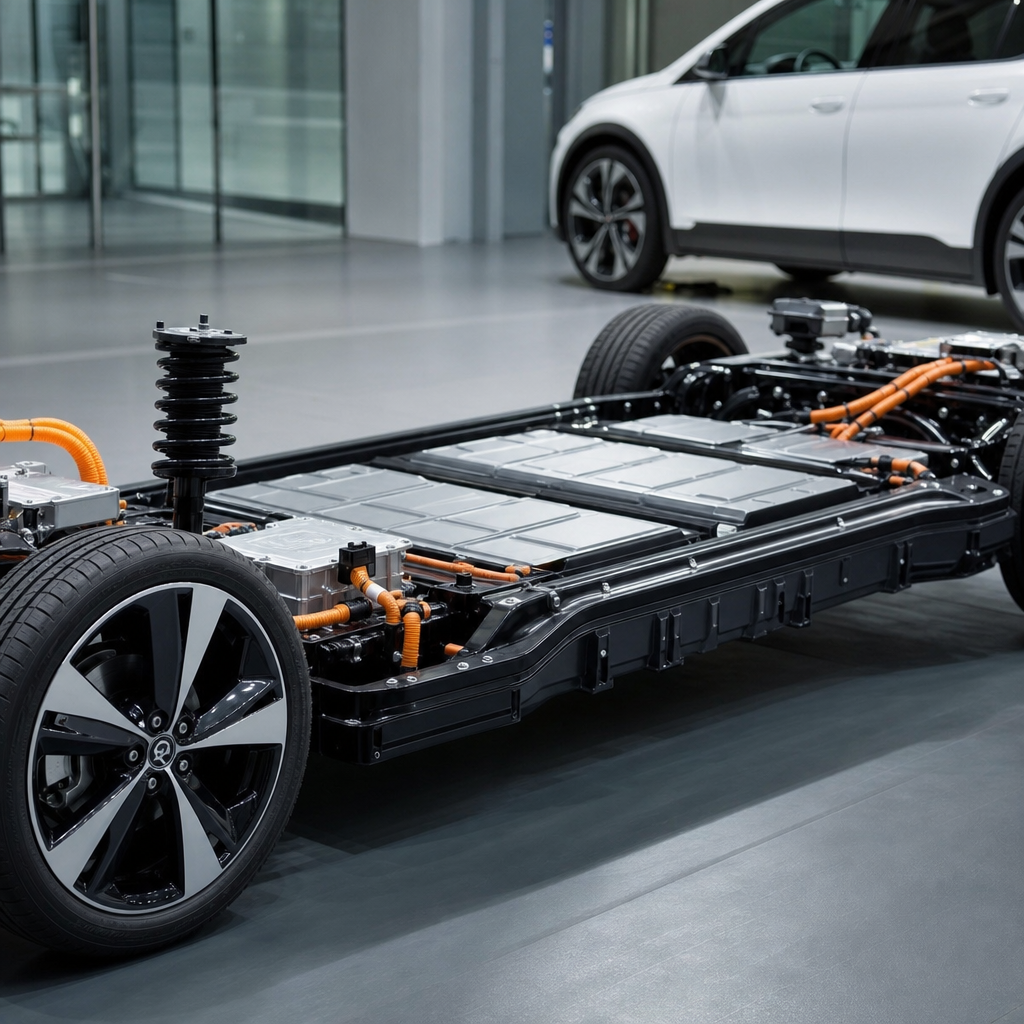
Electric vehicles depend on polymers far more than most buyers realize, and that dependence is growing as automakers push for longer range, faster charging, lower weight, better safety, and more durable interiors. In practical engineering terms, polymers are large molecules built from repeating units, including commodity plastics such as polypropylene, engineering thermoplastics such as polyamide and polycarbonate, high performance materials such as PEEK, elastomers, adhesives, foams, coatings, and fiber reinforced composites. In every electric vehicle program I have worked around, polymer selection has been tied directly to system level targets: reduce kilograms, isolate high voltage components, manage battery heat, lower cabin noise, simplify assembly, and meet crash and fire requirements without driving costs out of bounds.
This matters because electric vehicle performance is shaped by efficiency as much as by motor power. Cutting mass improves range. Better thermal management protects batteries and enables repeatable fast charging. Electrical insulation prevents shorts and supports high voltage architectures at 400 and 800 volts. Tough, chemically resistant polymers shield components from coolant, road salt, stones, vibration, humidity, and ultraviolet exposure. At the same time, polymers support design freedom that stamped metal often cannot match, allowing integrated parts, tighter packaging, and more aerodynamic forms. The result is not one isolated benefit but a chain reaction across the vehicle.
Innovative polymer applications now span battery packs, power electronics, charging systems, structural components, glazing, lighting, seating, underbody shields, cable insulation, sealing systems, and recycled interior trim. Understanding how polymers enhance electric vehicles means looking beyond the generic idea of plastic. Material class, filler content, processing route, flame rating, dielectric strength, creep resistance, thermal conductivity, and end of life strategy all affect performance. This hub article explains where polymers deliver the greatest value, which materials are most widely used, what tradeoffs engineers face, and how current case studies point toward the next generation of electric mobility.
Lightweighting and structural efficiency
The most visible contribution of polymers in electric vehicles is lightweighting. Battery packs are heavy, often adding several hundred kilograms compared with combustion vehicle fuel systems. To offset that penalty, automakers replace metal parts with polymer components wherever stiffness, heat resistance, and crash performance allow. Polypropylene, ABS, polyamide, polyurethane foams, glass fiber reinforced thermoplastics, sheet molding compound, and carbon fiber composites all appear in body, interior, and underhood zones. Even small weight reductions matter. A few kilograms removed from seats, instrument panels, cooling lines, wheel arch liners, and underbody panels can cascade into lighter brackets, smaller actuators, or reduced energy consumption over the vehicle life.
In practice, the biggest gains often come from part consolidation rather than one for one substitution. A molded polymer battery cover can integrate clips, ribs, ducts, sealing features, and attachment points into one component that would take several stamped and welded metal pieces to produce. Front end modules made from reinforced thermoplastics reduce assembly complexity and improve dimensional repeatability. Composite liftgates and thermoplastic tailgates cut mass high in the vehicle, helping the center of gravity. Underbody aerodynamic shields made from polypropylene or fiber filled materials are light, corrosion resistant, and easy to shape for drag reduction.
Real examples are now common. The BMW i3 used extensive carbon fiber reinforced plastic to reduce body mass and offset battery weight. Tesla and other manufacturers rely heavily on polymeric interiors, underbody shields, sealants, and adhesive bonding to support lightweight architectures. Suppliers such as BASF, Covestro, DuPont, SABIC, Solvay, and Celanese have all developed EV focused grades aimed at replacing die cast metal, aluminum, or thermoset parts with injection moldable solutions. The engineering lesson is consistent: the best polymer application improves the whole subsystem, not just the material line on a bill of materials.
Battery systems, thermal management, and electrical insulation
Battery systems are where innovative polymer applications become mission critical. Cells, modules, and packs operate in a narrow temperature window, and they must be isolated electrically while resisting flame, impact, coolant exposure, and long service cycles. Polymers handle separators inside cells, module frames, busbar carriers, cell holders, potting compounds, thermal interface materials, pack gaskets, vent components, and top covers. Materials like polyamide, polyphenylene sulfide, polycarbonate blends, silicone, epoxy, polyurethane, and specialty elastomers are chosen because they combine dielectric performance with processability and precise dimensional control.
Thermal management is especially important for charging speed and battery longevity. Coolant manifolds, connectors, and valve bodies are frequently made from glass reinforced polyamide because it tolerates heat, glycol based fluids, and pressure while remaining lighter than metal. Silicone gap fillers and thermally conductive polymer compounds move heat away from cells into cooling plates. Flame retardant polymer barriers help delay heat propagation between cells during a failure event. Engineers validate these materials against standards and abuse tests that examine flammability, dielectric breakdown, thermal aging, compression set, and chemical compatibility.
High voltage safety also depends on polymers. Cable insulation, connector housings, orange conduit systems, and inverter casings require reliable dielectric strength and tracking resistance. In 800 volt systems, clearances and creepage distances are tighter design constraints, so material selection becomes more stringent. A connector that performs well in a 12 volt accessory circuit may fail quickly in an EV powertrain environment if moisture, contamination, and temperature cycling are not properly accounted for. This is why specialized grades with CTI performance, laser weldability, and flame retardant packages have become central to battery electric vehicle design.
| EV application | Common polymer families | Primary performance benefit | Typical tradeoff |
|---|---|---|---|
| Battery module frames and carriers | Glass reinforced PA, PP, PC blends | Electrical insulation, low weight, integrated features | Need careful creep and heat aging validation |
| Thermal interface and gap fillers | Silicone, polyurethane, filled elastomers | Heat transfer and vibration damping | Added material cost and dispensing complexity |
| Charging connectors and HV housings | PBT, PA, PPS, LCP | Dielectric strength, dimensional stability, flame resistance | Moisture sensitivity or processing control requirements |
| Underbody shields and aero panels | PP, TPO, GMT, composites | Mass reduction, corrosion resistance, aerodynamic shaping | Stone impact and fastening design must be managed |
Power electronics, charging hardware, and sealing systems
Beyond the battery, polymers are essential in inverters, onboard chargers, DC DC converters, e axle assemblies, and charging hardware. These components run hot, see rapid thermal cycling, and are densely packaged. High temperature engineering thermoplastics such as PPS, PPA, PEEK, LCP, and specialized polyesters are widely used in connector bodies, bobbins, capacitor housings, sensor carriers, and insulation structures because they maintain dimensional stability near soldering and operating temperatures. Where electromagnetic shielding is needed, conductive coatings or hybrid metal polymer designs are used instead of assuming one material can solve every requirement.
Sealing systems deserve equal attention. Water ingress in an electric vehicle is not merely a corrosion issue; it can become a functional safety problem in high voltage components. Silicone, EPDM, fluorosilicone, polyurethane, and acrylic based sealants are used for pack lids, sensor interfaces, lamp assemblies, and cable pass through points. Battery pack gasketing must maintain compression over time despite vibration, temperature swings, and service opening events. In my experience, sealing failures often come from interface design, flange flatness, and assembly variation as much as from gasket chemistry, so good polymer performance depends on good mechanical design.
Charging infrastructure places similar demands on materials. DC fast charging connectors need insulation, impact toughness, weatherability, and low creep under load. Cable jackets must stay flexible in cold weather yet resist abrasion and oils. The move toward higher power charging has increased scrutiny of heat buildup in connector pins and housings, making thermal aging and contact retention more critical than they were in earlier, lower current systems. Polymers remain the enabling materials because metals alone cannot provide touch safety, insulation, and ergonomic housings in one manufacturable package.
Interior comfort, durability, and sustainable design
Consumers often judge quality by the cabin, and polymers dominate that environment. Instrument panels, door trims, center consoles, seat foams, synthetic leather, headliners, acoustic insulators, touch surfaces, and display housings are all polymer based. For electric vehicles, this matters even more because the quieter powertrain makes rattles, wind noise, and harsh surface reflections easier to notice. Polyurethane foams, thermoplastic olefins, PET nonwovens, PVC free skins, and engineered textile composites help create a refined cabin while controlling mass and cost.
Durability requirements are tougher than they look. Interior polymers must withstand ultraviolet light, skin oils, cleaners, sunscreen chemicals, abrasion, and temperature cycling from winter cold to summer heat. Screen bezels and optical covers often use polycarbonate or PMMA blends for scratch resistance and clarity. Soft touch surfaces may use thermoplastic elastomers instead of legacy coatings to simplify recycling. Acoustic foams and fiber mats in the floor and wheel areas reduce road noise that would otherwise stand out in an EV. In premium vehicles, recycled PET fabrics and bio based polymers are increasingly used, but only where they can meet odor, fogging, and wear standards.
Sustainable design is becoming a defining criterion in polymer selection. Automakers now ask not only whether a polymer improves performance, but also whether it can reduce embedded carbon, incorporate post consumer or post industrial recycled content, and support easier disassembly at end of life. Mass balance certified resins, recycled polyamides from industrial streams, and polypropylene compounds with recycled mineral filled content are already in commercial use. The caveat is that recycled polymers must be tightly controlled for contamination and property variation, particularly in safety relevant or high voltage applications. Sustainability gains are real, but they must be engineered, not assumed.
Manufacturing advantages, limitations, and future directions
Polymers improve electric vehicle manufacturing as much as they improve the finished product. Injection molding, blow molding, thermoforming, resin transfer molding, pultrusion, and overmolding allow intricate shapes, integrated fasteners, and rapid repeatability. Adhesive bonding and structural foams can reduce welding steps and distribute loads more evenly. For battery packs, polymer components often simplify routing of cooling lines, sensing harnesses, and vent paths. On the factory floor, fewer parts and fewer joining operations translate into lower takt time risk, less inventory complexity, and better dimensional consistency. That is why manufacturers evaluate polymers at the architecture stage, not as late substitutions.
There are limits, and serious engineers acknowledge them. Polymers can creep under sustained load, absorb moisture, lose stiffness at elevated temperature, or become brittle in certain cold conditions. Flame retardant additives may affect toughness or recyclability. Carbon fiber composites provide excellent stiffness to weight ratios, yet they remain expensive and slower to process than high volume thermoplastics. Repairability can also be harder with bonded multi material structures. During development, teams use finite element analysis, thermal simulation, dielectric testing, UL 94 flammability screening, ingress protection validation, and accelerated aging to ensure that a promising material will still perform after years of real use.
Future directions are clear. Expect broader adoption of thermally conductive yet electrically insulating polymers for battery enclosures and electronics, more recyclable thermoplastic composites in semi structural parts, smarter sealants with better serviceability, and more polymers designed specifically for 800 volt architectures and megawatt class charging. Cell to pack and cell to body designs will demand materials that combine structural contribution with thermal and fire management. As software defined vehicles add sensors and display surfaces, optical, haptic, and EMI aware polymer systems will expand. For anyone tracking case studies and applications, polymers are not support materials at the edge of innovation; they are central to how electric vehicles achieve range, safety, manufacturability, and user comfort.
Polymers enhance the performance of electric vehicles by solving multiple engineering problems at once. They reduce mass, enable part integration, insulate high voltage systems, manage heat in batteries and electronics, keep water and contaminants out, quiet the cabin, and support more sustainable material strategies. The strongest applications are not generic plastic substitutions. They are carefully matched material systems that balance dielectric properties, flame resistance, stiffness, impact behavior, thermal stability, processing method, cost, and end of life considerations. That is why polymer engineering now sits close to the center of EV product development rather than in a downstream materials role.
For readers using this page as a hub for innovative polymer applications, the key takeaway is straightforward: the performance gains come from understanding the full vehicle context. A battery cover, coolant connector, interior panel, or charging connector cannot be judged on one property alone. The right polymer improves the whole subsystem and often simplifies manufacturing at the same time. The wrong one can create creep, sealing, aging, or safety problems that offset any weight saving. Real case studies repeatedly show that the best results come from early collaboration among materials engineers, design teams, manufacturing specialists, and validation groups.
If you are building out expertise in electric vehicle materials, use this hub as your starting point and then go deeper into battery components, high voltage connectors, lightweight composites, recycled interior systems, and sealing technologies. Each subtopic reveals how polymer innovation is moving from incremental substitution to system level advantage. Review your current applications, compare material choices against actual duty cycles, and identify where a better polymer strategy can unlock measurable gains in range, safety, durability, or cost.
Frequently Asked Questions
1. Why are polymers so important in electric vehicles?
Polymers play a central role in modern electric vehicle design because they help engineers solve several competing challenges at once: reducing weight, improving safety, protecting sensitive electronics, increasing durability, and supporting more efficient manufacturing. In simple terms, polymers are large molecules made from repeating units, and they include a very broad family of materials such as polypropylene, polyamide, polycarbonate, PEEK, elastomers, adhesives, foams, and protective coatings. That range matters because electric vehicles are not built around one single plastic part or one isolated use case. They rely on an entire material ecosystem.
Compared with traditional metal-heavy designs, polymers can significantly lower vehicle mass. That is especially valuable in EVs, where every kilogram influences driving range, handling, and energy consumption. A lighter vehicle generally requires less energy to move, which can help extend range or allow automakers to balance weight added by large battery packs. At the same time, polymers are not used only because they are light. Many offer strong impact resistance, electrical insulation, corrosion resistance, chemical resistance, and design flexibility. Those properties make them ideal for battery housings, cable insulation, charging components, under-hood connectors, sensor enclosures, thermal management parts, interior panels, seating foams, and weather seals.
Another major reason polymers matter is integration. Engineers can often consolidate multiple functions into a single polymer component, reducing part count and simplifying assembly. For example, a molded part may combine structural features, attachment points, channels, insulation functions, and protective barriers all in one design. That can lower manufacturing complexity and improve consistency. In EVs, where packaging space is tight and systems are highly integrated, that kind of material versatility is extremely valuable.
In short, polymers are important not because they replace metal everywhere, but because they let EV designers build vehicles that are lighter, safer, quieter, more efficient, and more practical to produce at scale.
2. How do polymers help improve EV battery performance and safety?
Polymers contribute to EV battery systems in ways that are both visible and hidden. Some applications are easy to recognize, such as battery pack covers, seals, gaskets, connectors, cable jackets, and thermal interface materials. Others are more specialized, including cell spacers, insulating films, adhesive systems, flame-retardant components, and structural bonding materials. Together, these polymer-based materials help batteries operate more safely, more efficiently, and more reliably over time.
One of the biggest advantages polymers bring to battery systems is electrical insulation. Battery packs operate at high voltages, and preventing short circuits or unwanted current paths is critical. Engineering polymers such as polyamide and polycarbonate are often selected for their dielectric properties, meaning they can help isolate conductive parts and protect both vehicle systems and passengers. Polymers also resist corrosion better than many metals in demanding environments where moisture, road salt, vibration, and temperature cycling can degrade components over time.
Thermal management is another key area. Batteries perform best within a controlled temperature window, and polymers are used in cooling system components, housings, fluid connectors, and insulating barriers that help manage heat flow. Depending on the application, a polymer may be chosen either to resist heat, direct heat, or help isolate sensitive areas from thermal events. High-performance materials such as PEEK or specialized flame-retardant compounds may be used where heat resistance and long-term dimensional stability are essential.
Safety is also closely tied to sealing and structural performance. Elastomers and adhesive systems help protect battery packs from water, dust, and contaminants, while structural adhesives can improve pack rigidity and crash behavior. In a collision, well-designed polymer components can help absorb energy, maintain separation between cells and modules, and support enclosure integrity. Advanced foams and coatings may also be used to reduce vibration, suppress noise, and add another layer of environmental protection.
So while the battery may be thought of primarily as an electrochemical system, its real-world performance and safety depend heavily on the surrounding polymer materials that insulate it, protect it, manage heat around it, and help it survive years of use under demanding conditions.
3. Do polymers really help increase electric vehicle range?
Yes, polymers can have a meaningful effect on electric vehicle range, although the relationship is indirect rather than magical. Polymers themselves do not generate energy, but they allow automakers to reduce weight, improve aerodynamics, manage thermal systems more effectively, and package components more efficiently. All of those improvements can contribute to lower energy use per mile.
The most straightforward contribution is lightweighting. Electric vehicles carry large battery packs, and battery mass can quickly add up. Replacing certain metal parts with polymer-based alternatives can reduce overall vehicle weight without sacrificing functionality. This matters because a lighter vehicle typically requires less energy during acceleration and can achieve better efficiency in everyday driving. Even modest reductions in weight can be valuable when multiplied across many components, from interior panels and seat structures to cable channels, cooling parts, housings, and exterior trim.
Polymers also help in design optimization. Because many polymer components can be molded into complex geometries, engineers can create more aerodynamic shapes, integrated ducts, and compact assemblies that support airflow and reduce drag. Better packaging can free up space for batteries, cooling systems, or passenger comfort features without increasing vehicle size. In thermal management, polymers are used in components that support temperature control for batteries and power electronics, and keeping those systems in their ideal operating range helps maintain efficiency and performance.
There is also a system-level benefit. If automakers can lower vehicle mass with polymers, they may be able to use a slightly smaller battery to achieve the same target range, or use the same battery to deliver more range. That can reduce cost, improve charging characteristics, and help balance vehicle dynamics. In that sense, polymers can create a compounding effect across the vehicle rather than a one-part improvement.
So the answer is yes: polymers help increase range not by acting as a power source, but by enabling smarter, lighter, and more efficient vehicle design.
4. What types of polymers are commonly used in electric vehicles?
Electric vehicles use a wide spectrum of polymers, and each category serves a different purpose based on mechanical, thermal, electrical, and environmental requirements. Commodity plastics such as polypropylene are common because they are lightweight, cost-effective, and suitable for many interior and non-structural applications. Polypropylene often appears in trim panels, battery-adjacent covers, housings, and other molded parts where manufacturers want durability and low mass at a reasonable cost.
Engineering thermoplastics are especially important in EVs because they provide better strength, heat resistance, and dimensional stability than basic commodity plastics. Polyamide, often known as nylon, is widely used in connectors, brackets, fluid-handling components, and under-hood parts because it performs well in demanding thermal and mechanical conditions. Polycarbonate is valued for impact resistance and transparency, making it useful in lighting systems, covers, and protective enclosures. Blends such as PC/ABS can combine toughness, processability, and appearance for both interior and electronic applications.
High-performance polymers such as PEEK are used in more specialized locations where extreme heat resistance, chemical resistance, wear performance, and long-term reliability are required. These materials are typically more expensive, so they are chosen when lower-cost polymers cannot meet the engineering demands. In high-voltage, high-temperature, or highly loaded environments, premium materials may be necessary to ensure safety and durability.
Elastomers are another major category. They are used in seals, gaskets, bushings, hoses, vibration-isolating mounts, and weatherproofing systems. These flexible materials help keep moisture out, reduce noise and harshness, and maintain performance despite repeated compression, movement, and temperature changes. Adhesives and sealants are equally important because modern EVs often rely on structural bonding to join dissimilar materials, reinforce battery packs, and improve crash performance while reducing the need for mechanical fasteners.
Foams and coatings round out the picture. Foams improve comfort, acoustic control, and thermal insulation, while coatings protect surfaces from abrasion, UV exposure, chemicals, and corrosion. Taken together, these polymer families form an essential toolkit that allows EV engineers to tailor performance in nearly every part of the vehicle.
5. Are polymers durable enough for long-term EV use, including fast charging and harsh conditions?
When properly selected and engineered, polymers are absolutely durable enough for long-term electric vehicle use, including demanding environments that involve heat, cold, vibration, road debris, humidity, chemicals, and frequent charging cycles. The key is understanding that “polymer” is a broad material class, not a single material with one level of performance. The polymer used in a decorative interior panel is very different from the one used in a high-voltage connector, thermal management part, or battery sealing system.
EVs create challenging operating conditions. Fast charging can increase thermal stress on battery systems and associated electrical components. Underbody parts face water, salt, grit, and stone impact. Interior materials must handle UV exposure, wear, temperature swings, and cleaning chemicals. Electronics enclosures need long-term dimensional stability and moisture protection. To meet these demands, manufacturers use engineering-grade and high-performance polymers designed for exactly these types of environments. Many are reinforced with glass fibers or formulated with flame retardants,