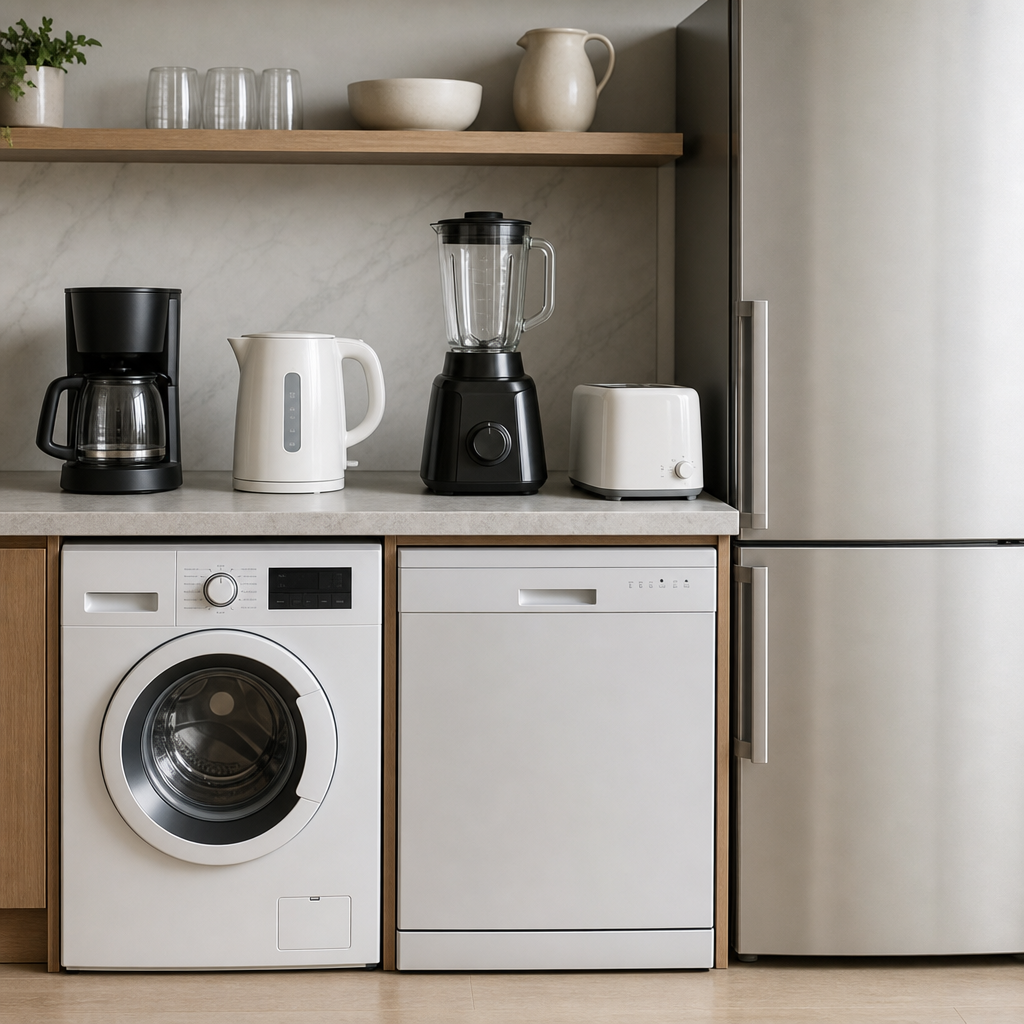
Home appliance design changed fundamentally when polymers moved from niche insulating materials to core structural, aesthetic, and functional components. In the consumer goods sector, polymers are long-chain synthetic or semi-synthetic materials engineered to deliver targeted properties such as impact resistance, heat tolerance, chemical stability, electrical insulation, transparency, flexibility, and low weight. In practical terms, they made it possible for refrigerators to have cleaner interiors, washing machines to run more quietly, vacuum cleaners to become portable, coffee makers to survive heat and moisture, and small kitchen devices to be affordable enough for mass adoption. As a hub for polymer innovations in consumer goods, this article explains how these materials reshaped appliance engineering, what specific polymers are used, why manufacturers choose them, and where the next wave of product development is heading.
I have worked on appliance material selection projects where a housing that looked like a simple plastic shell actually balanced flame ratings, drop performance, mold-flow constraints, gloss targets, detergent exposure, and cost per gram. That is the reality of modern home appliance design. Polymers are not merely replacements for metal or glass; they are design systems. They enable integrated clips instead of screws, molded channels instead of assembled ducts, transparent windows without heavy mineral glass, and overmolded grips that improve ergonomics. They also support compliance with safety standards, including UL 94 flammability classes, food-contact regulations, and appliance-specific electrical insulation requirements. Understanding polymer use in home appliances matters because material choice affects energy efficiency, durability, repairability, manufacturing speed, consumer safety, and environmental footprint across the product lifecycle.
The broad category of polymer innovations in consumer goods includes commodity plastics such as polypropylene, engineering polymers such as polycarbonate and nylon, elastomers used for seals and vibration control, and reinforced grades containing glass fiber, flame retardants, or mineral fillers. Each class serves a distinct role. Refrigerator bins often rely on transparent styrenics or polycarbonate blends for clarity and toughness. Dishwasher interiors increasingly use high-performance polymers in pump housings and spray arms because they resist hot water, alkaline detergent, and scale buildup. Vacuum cleaner bodies commonly use ABS or polypropylene for impact strength and colorability. The revolution happened because polymers let engineers tune properties with far more precision than legacy materials allowed. Instead of asking whether a material could simply survive, designers could ask whether it could damp noise, reduce mass, improve insulation, support snap-fits, and still hit a retail price target.
Why Polymers Became Essential in Home Appliances
Polymers became essential because they solved multiple appliance design problems at once. Metals offered strength and heat resistance, but they added weight, required secondary finishing, conducted electricity, and often needed multi-part assemblies. Wood, once common in early appliances, lacked moisture resistance and dimensional stability. Ceramics and glass worked in selective applications but were brittle, heavy, and harder to integrate into high-volume manufacturing. Polymers changed the economics and performance envelope of home appliances by enabling injection molding, blow molding, thermoforming, and extrusion at scale. These processes reduced part count, lowered assembly labor, and opened new industrial design possibilities, from curved vacuum housings to seamless refrigerator liners.
A clear example is the transition from enamel-coated steel refrigerator interiors to polymer liners, typically high-impact polystyrene or ABS variants. Polymer liners reduced weight, resisted chipping, simplified cleaning, and allowed complex geometries such as integrated shelves, lighting mounts, and airflow channels. In washing machines, polymer outer tubs replaced metal in many models because polypropylene-based systems resist corrosion from water, bleach residue, and detergent while lowering noise and vibration. In hair dryers and irons, heat-stabilized engineering plastics made it possible to place electrical systems inside compact housings with safe touch temperatures. These changes were not cosmetic. They improved manufacturing throughput, reduced shipping costs, and helped appliance brands introduce more features at lower consumer prices.
Polymers also fit the realities of global consumer markets. Appliance manufacturers need materials that can be sourced consistently, processed quickly, colored reliably, and adapted across product lines. A family of polypropylene compounds can serve washing machine components, food storage accessories, and small appliance housings with tailored fillers or additives. That platform effect matters. It reduces qualification time and speeds product refresh cycles. For companies competing on annual launches, polymers support modular engineering better than many traditional materials.
Key Polymers Used in Consumer Appliances
Several polymers dominate appliance design because their performance profiles align with common use conditions. Polypropylene is widely used for washing machine tubs, dishwasher components, food-contact containers, and hinge elements because it has good chemical resistance, low density, fatigue performance, and competitive cost. ABS, or acrylonitrile butadiene styrene, is favored for exterior housings in vacuum cleaners, blenders, and countertop appliances due to its impact resistance, surface finish, and ease of coloring. Polycarbonate is selected when clarity and toughness are critical, as in see-through lids, water reservoirs, and control covers. Polyamide, commonly called nylon, appears in gears, fan components, fasteners, and structural parts where wear resistance and thermal stability matter.
Higher-performance polymers enter the picture when appliances face more severe heat, steam, or electrical demands. PBT, or polybutylene terephthalate, is common in connectors, motor housings, and electrical assemblies because it has strong dimensional stability and insulation properties. PPS, polyphenylene sulfide, is used in demanding dishwasher and coffee machine components where elevated temperature, hot water, and aggressive chemicals combine. Thermoplastic elastomers provide seals, feet, gaskets, and soft-touch interfaces. Silicone remains crucial in bakeware-like appliance interfaces, steam seals, and high-temperature gaskets because it tolerates repeated thermal cycling better than many thermoplastics.
| Polymer | Typical Appliance Uses | Primary Advantage | Main Limitation |
|---|---|---|---|
| Polypropylene | Washer tubs, dishwasher parts, food-contact components | Chemical resistance and low weight | Lower stiffness than some engineering plastics |
| ABS | Vacuum housings, blender bases, control panels | Impact strength and good surface finish | Moderate heat resistance |
| Polycarbonate | Lids, reservoirs, transparent covers | High toughness and clarity | Can scratch without coating |
| Nylon | Gears, fans, structural internal parts | Wear resistance and strength | Moisture absorption affects dimensions |
| PBT | Electrical connectors, motor components | Electrical insulation and stability | Less suitable for transparent parts |
| Silicone | Seals, gaskets, thermal interfaces | High-temperature durability | Higher material cost |
In practice, selection rarely depends on one property alone. A vacuum cleaner wheel housing may need ABS for stiffness and appearance, but the bumper around it may use a thermoplastic elastomer for impact absorption. A coffee machine reservoir might use polycarbonate for clarity, yet the hot water path could require a more hydrolysis-resistant polymer. Good appliance engineering treats each polymer as part of an integrated material architecture rather than a standalone choice.
How Polymers Improved Performance, Safety, and User Experience
One reason polymers revolutionized home appliance design is that they improved the user experience in ways consumers could feel immediately. Lightweight housings made portable vacuums, hand mixers, and steam irons less tiring to handle. Better insulation reduced the need for hot external surfaces, improving touch safety. Molded textures and soft overmolds improved grip in wet kitchen environments. Transparent reservoirs on kettles, humidifiers, and coffee machines made water levels easier to monitor. Noise and vibration reduction also improved because polymer structures damp mechanical energy better than thin metal panels in many applications.
Safety gains were equally important. Electrical appliances need materials with reliable dielectric strength and predictable behavior near heat sources. Flame-retardant grades of PBT, polyamide, polycarbonate blends, and other engineering resins allow manufacturers to design safer control boards, connectors, and enclosures. Compliance often involves testing against standards such as UL 94 for flammability and IEC requirements for electrical clearances and insulation systems. In my experience, teams often discover that a visually attractive polymer fails not in aesthetics but in glow-wire or heat-aging tests. Material selection therefore becomes a risk management exercise, not just a styling decision.
Polymers also improved hygiene and maintenance. Smooth interior liners, molded drain features, and chemically resistant surfaces made refrigerators, dishwashers, and food processors easier to clean. Detergent dispensers, filter housings, and removable trays could be designed with living hinges, snap-locks, and dishwasher-safe materials, increasing convenience without adding hardware. For consumers, that translated into products that were easier to own, not merely easier to manufacture.
Manufacturing Innovation and Cost Transformation
The business case for polymers is as important as the engineering case. Injection molding allows manufacturers to produce complex parts with ribs, bosses, clips, living hinges, and decorative surfaces in a single cycle. That reduces assembly steps and lowers tolerance stack-up compared with multi-piece metal constructions. A molded fan shroud can incorporate airflow guides, motor mounts, and cable routing features that would require several stamped and fastened parts in metal. Tooling is capital intensive, but once amortized across large volumes, per-part economics become extremely attractive.
Polymers also support design for assembly. Snap-fits replace screws, ultrasonic welding seals water paths, insert molding captures metal contacts, and two-shot molding creates soft-touch interfaces without adhesive-backed pads. These methods are common in toothbrush chargers, food processors, air fryers, and robotic vacuum components. They shorten production time and improve consistency. For global appliance brands, consistency is critical because warranty exposure rises quickly when clips break, seals creep, or housings warp after shipment.
Cost transformation extends beyond the factory. Lower part weight cuts shipping expense and makes distribution more efficient. Corrosion resistance reduces field failures in humid climates. Pigmented polymers may eliminate painting, which lowers volatile organic compound emissions and removes a quality bottleneck. These savings can be reinvested into motors, controls, sensors, and software features that consumers notice more directly. That is one reason appliances became both more capable and more affordable over the last several decades.
Case Studies Across Major Appliance Categories
Refrigerators provide one of the clearest case studies in polymer innovation. Interior liners, drawers, door bins, insulation interfaces, fan housings, and dispenser assemblies all rely on polymers optimized for low-temperature toughness, food-contact safety, and visual cleanliness. High-impact polystyrene and ABS have been common interior choices, while polyurethane foam remains central to thermal insulation in walls and doors. That insulation layer is itself a polymer success story because it improved energy efficiency dramatically compared with older insulation systems. Better insulation supports thinner walls for a given performance target, increasing usable storage volume.
Washing machines show how polymers can replace metal in demanding mechanical environments. Polypropylene outer tubs resist corrosion and help reduce vibration, while reinforced polymers appear in pump housings, detergent drawers, and control fascia. Some high-end machines still use stainless steel for inner drums because abrasion and mechanical loads are severe, but the surrounding architecture increasingly depends on polymers for cost, noise, and durability reasons. Dishwashers extend the same logic under hotter and more chemically aggressive conditions, using specialized materials in racks, spray arms, filters, and circulation systems.
Small appliances highlight the design freedom polymers unlocked. Vacuum cleaners became lighter and more sculpted. Blenders gained transparent jars, impact-resistant bases, and quieter housings with internal airflow management. Coffee machines integrated water reservoirs, steam channels, and insulated outer shells in compact footprints. Air fryers combine high-heat polymers, nonstick interfaces, and elastomeric seals to manage temperature, user safety, and cleaning. Across these categories, polymers did not just replace older materials; they enabled product forms and feature sets that would have been impractical otherwise.
Sustainability, Repairability, and the Next Generation of Materials
The next phase of polymer innovations in consumer goods is shaped by sustainability, regulation, and circular design. Manufacturers are increasing the use of recycled polypropylene, recycled ABS, and bio-based polymers where performance permits. However, recycled content in appliances is more complex than in packaging because appliances face heat, electrical, mechanical, and cosmetic demands over many years. Post-consumer resin can vary in molecular weight, contamination level, odor, and color. As a result, leading programs rely on tight feedstock control, compounding, and validation testing rather than simple substitution.
Repairability is another major issue. Polymers enable snap-fits and sealed assemblies, but those same features can hinder disassembly. Better appliance design increasingly balances assembly efficiency with service access, using modular housings, separable material systems, and marked resin identification to support recycling streams. Standards and retailer pressure are pushing brands to document spare parts and extend product life, which changes how engineers think about creep resistance, UV stability, and cosmetic aging. Durable polymers support sustainability best when they keep appliances in use longer.
Looking ahead, expect growth in halogen-free flame-retardant systems, chemically recycled feedstocks, fiber-reinforced thermoplastics, antimicrobial surface technologies where justified, and digital material passports that improve traceability. Smart appliances will also need polymers compatible with antennas, sensors, touch interfaces, and thermal management. The winning materials will be those that combine processing efficiency with measurable lifecycle performance.
Polymers revolutionized home appliance design because they gave engineers a toolkit that could address structure, safety, cost, comfort, appearance, and manufacturability at the same time. They made appliances lighter, quieter, easier to clean, more energy efficient, and more affordable, while opening new possibilities in product styling and user interaction. From polypropylene washer tubs to polycarbonate reservoirs, nylon gears, PBT electrical components, and silicone seals, the modern home depends on carefully selected polymer systems working behind the scenes every day.
For anyone exploring polymer innovations in consumer goods, the main lesson is simple: material choice is product strategy. The right polymer can cut part count, improve compliance, extend service life, and sharpen the customer experience. The wrong one can create cracks, discoloration, odor, noise, or safety risk. Use this hub as your starting point for deeper case studies on appliance categories, resin families, manufacturing methods, and sustainability pathways, then evaluate each application with the full lifecycle in mind.
Frequently Asked Questions
1. How did polymers change home appliance design so dramatically?
Polymers transformed home appliance design by moving from a limited supporting role into the center of how products were engineered, manufactured, and styled. Early appliances relied heavily on metal, glass, ceramics, and rubber, which worked well in many cases but often imposed tradeoffs in weight, corrosion resistance, electrical safety, manufacturability, and design flexibility. Once manufacturers began using polymers as structural housings, liners, handles, knobs, seals, connectors, insulation systems, and decorative surfaces, they gained far more control over both performance and appearance.
One of the biggest shifts was the ability to design complex parts with multiple functions built into a single molded component. A polymer panel could be shaped to include mounting points, clips, ribs for stiffness, channels for wiring, textured surfaces, and aesthetic contours all at once. That reduced the number of separate parts, lowered assembly time, and improved consistency in mass production. It also helped manufacturers create appliances that looked cleaner, more modern, and more consumer-friendly.
Polymers also improved everyday usability. Their low weight made appliances easier to move, install, and handle during manufacturing and transport. Their natural electrical insulation properties made them valuable in products where consumer safety was essential. Their resistance to moisture, many household chemicals, and staining made them practical for kitchens, laundry rooms, and other demanding household environments. In short, polymers did not just replace older materials. They changed the design logic of appliances by enabling lighter, safer, more integrated, more affordable, and more visually refined products.
2. What properties make polymers especially useful in refrigerators, washing machines, microwaves, and other appliances?
Polymers are valuable in appliances because they can be engineered to deliver very specific performance characteristics. Instead of relying on a one-size-fits-all material, designers can select polymer families and formulations based on the exact demands of each component. For example, appliance interiors often need impact resistance, stain resistance, low-temperature durability, and easy-clean surfaces. Exterior housings may need scratch resistance, color stability, UV resistance, and an attractive finish. Electrical components often require flame retardancy and strong insulating properties. Flexible parts such as seals and gaskets need elasticity and long-term resistance to repeated compression.
In refrigerators, polymers made it possible to create smooth, hygienic interior liners, molded door bins, transparent drawers, and highly effective insulation systems. In washing machines, they are used in control panels, detergent dispensers, pump housings, tubs in certain designs, and vibration-managing components. In microwaves and small kitchen appliances, polymers support insulation, housing design, handle comfort, and safe separation between users and energized or heated parts. Dishwashers, vacuum cleaners, coffee makers, blenders, and air purifiers all benefit from polymers tailored for heat tolerance, chemical resistance, toughness, or transparency depending on the application.
Another major advantage is consistency in manufacturing. Polymers can be injection molded, extruded, thermoformed, or blow molded into precise shapes at scale. That gives manufacturers repeatable tolerances and broad design freedom while controlling production costs. The result is a class of materials that combines performance, processability, and aesthetics in a way that few traditional materials can match across so many appliance categories.
3. Did polymers only make appliances cheaper, or did they also improve performance and safety?
Polymers certainly helped reduce manufacturing costs in many cases, but their impact goes far beyond affordability. They improved appliance performance in ways that consumers notice every day, and they also contributed significantly to product safety. Cost savings came from lighter parts, fewer assembly steps, faster high-volume production, and lower shipping weight. But if polymers had only been cheaper substitutes, they would not have become so deeply embedded across nearly every category of home appliance.
From a performance standpoint, polymers brought advantages such as corrosion resistance, quieter operation, better ergonomics, improved thermal management in selected applications, and greater freedom to optimize component geometry. Designers could create more streamlined housings, more durable internal compartments, and more reliable interfaces between moving, electrical, and fluid-handling systems. Polymer-based components also helped reduce dents, chipping, rusting, and some forms of wear associated with older material combinations.
Safety is equally important. Many polymers are excellent electrical insulators, which makes them ideal around switches, plugs, connectors, wire routing systems, and user-accessible housings. In appliances exposed to heat, specially formulated engineering polymers can provide thermal stability and flame-retardant performance where required by standards and regulations. Soft-touch and low-conductivity surfaces can also reduce the risk of accidental burns or discomfort when consumers handle products. In wet environments like kitchens and laundry areas, moisture-resistant polymer components help maintain electrical separation and structural reliability. So while polymers often supported lower production costs, they also raised the bar for consumer safety, reliability, and overall appliance performance.
4. How did polymers influence the look, feel, and user experience of modern appliances?
Polymers had a profound effect on the visual language and tactile experience of home appliances. Before their widespread adoption, designers were often constrained by the shaping limits, weight, and surface characteristics of metal and other traditional materials. Polymers opened the door to softer edges, integrated handles, seamless panels, curved geometries, transparent windows, hidden fasteners, and more consistent color application. That allowed appliances to evolve from purely utilitarian machines into products that also reflected interior design trends, brand identity, and consumer lifestyle preferences.
Surface engineering is one of the key reasons. Polymer parts can be produced with glossy, matte, textured, satin, or soft-touch finishes. They can be molded in color, reducing the need for some post-finishing steps, and they can support a wide variety of visual effects, from minimalist white interiors to smoked transparent covers and high-contrast control interfaces. Because polymers can be shaped so precisely, buttons, dials, display surrounds, and grips can be designed for comfort as well as appearance. This helped make appliances feel more intuitive and approachable.
Polymers also improved the user experience in practical ways. Lighter doors, better-organized storage bins, quieter operation, easier-to-clean interiors, and more ergonomic controls all stem in part from polymer-enabled design. Refrigerator interiors became cleaner and more modular. Small appliances became easier to lift and store. Vacuum cleaners and food processors gained housings that were both durable and consumer-friendly. In many cases, the modern expectation that appliances should be sleek, quiet, safe, attractive, and easy to use is inseparable from the design flexibility polymers made possible.
5. Are polymers in home appliances still evolving today?
Yes, absolutely. The role of polymers in home appliances continues to expand as material science, manufacturing technology, sustainability goals, and smart-product design all advance. Today’s appliance manufacturers are not simply choosing between “plastic” and “metal.” They are evaluating highly specialized polymer systems, reinforced compounds, high-performance engineering resins, foams, elastomers, recycled-content materials, and multi-material assemblies designed for very specific functions.
One major area of evolution is durability under more demanding operating conditions. As appliances become more compact, more energy efficient, and more electronically sophisticated, internal components may be exposed to tighter thermal tolerances, more complex chemical environments, and higher expectations for long service life. Advanced polymers are being developed and refined to handle those conditions while still supporting lightweight design and manufacturability. Another important area is sustainability. Manufacturers are increasingly interested in recyclable polymers, post-consumer recycled content, bio-based feedstocks, and designs that simplify disassembly and material recovery at end of life.
Polymers are also central to the future of connected and premium appliances. Smart interfaces, integrated sensor housings, transparent covers, precision-molded airflow components, noise-control elements, and aesthetically refined user-facing surfaces all rely on polymer innovation. In other words, polymers are not just part of the history of appliance design; they are a major part of its future. As consumer expectations rise and appliance technology becomes more advanced, polymers will remain one of the most important material platforms enabling that progress.