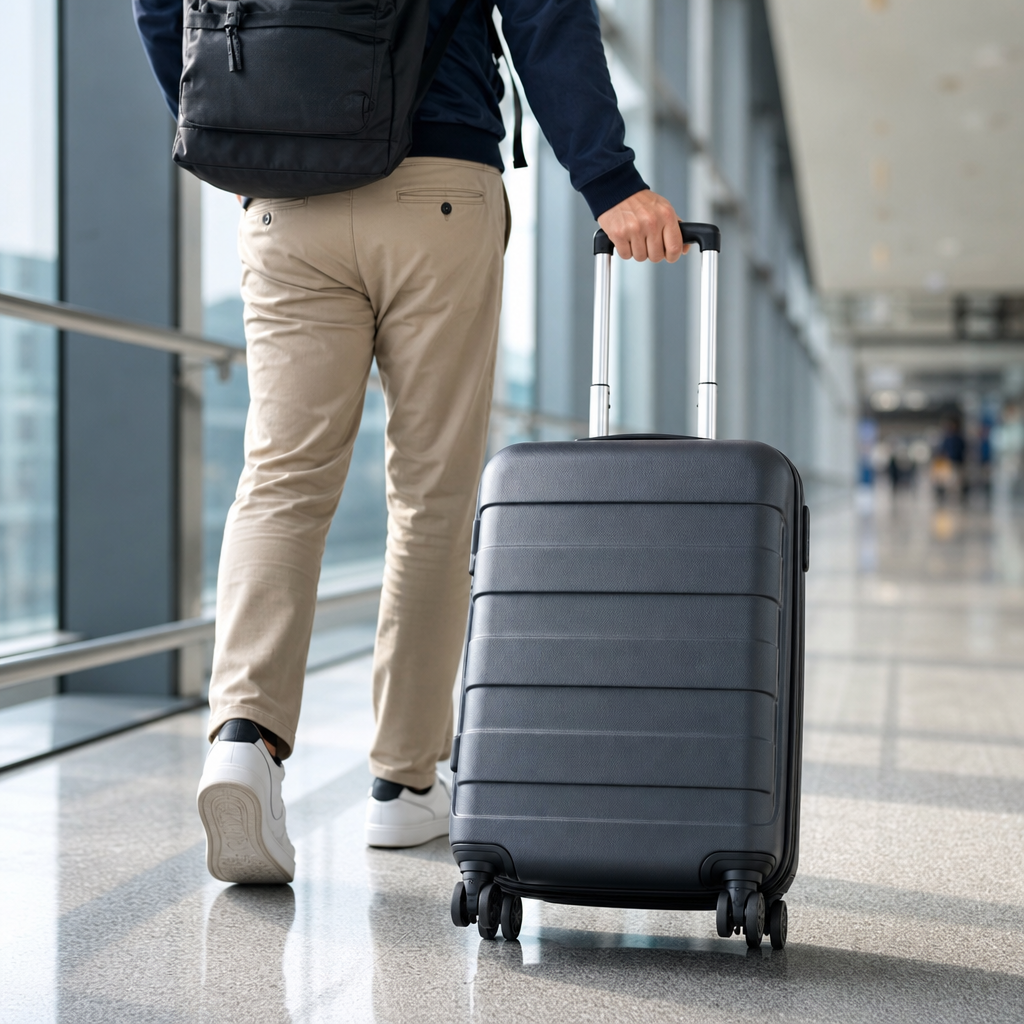
Lightweight luggage has become a defining example of how polymer science shapes everyday consumer goods, turning a once heavy, metal-framed travel essential into a durable, impact-resistant product engineered for mobility, airline handling, and mass-market affordability. In this context, polymers are large molecules made of repeating structural units, while luggage polymers typically include thermoplastics such as polycarbonate, polypropylene, ABS, PET blends, and elastomeric materials used for wheels, seals, handles, and protective trim. Their role matters because consumers now expect a suitcase to survive baggage systems, roll smoothly across uneven surfaces, comply with airline weight limits, and still remain attractive after years of use. I have worked with product teams evaluating hard-shell consumer products, and luggage is one of the clearest demonstrations of material selection affecting cost, performance, sustainability, and user satisfaction at the same time. As a hub topic within polymer innovations in consumer goods, lightweight luggage connects broader themes including impact modification, injection molding, thermoforming, recyclability, additive masterbatches, and design for repair. Understanding why one suitcase cracks in winter while another flexes and recovers requires a close look at resin chemistry, processing methods, reinforcement strategies, and end-use testing standards.
Why polymers became the dominant material in lightweight luggage
Traditional luggage relied on wood, vulcanized fiber, aluminum, steel frames, and thick textiles over rigid structures. Those materials delivered protection, but they also added mass and limited shape freedom. Polymers changed the category because they offered a rare combination of low density, formability, and tunable toughness. Polypropylene, for example, has a density around 0.90 g/cm³, making it one of the lightest widely used engineering thermoplastics for durable consumer shells. Polycarbonate is heavier, typically around 1.20 g/cm³, but its impact strength is significantly higher, which is why premium hard-shell luggage often uses it despite the weight increase.
The shift was not simply about making suitcases lighter. It was also about manufacturing efficiency. Injection molding can produce latches, wheel housings, corner protectors, telescopic handle grips, and interior fittings at high volume with tight dimensional control. Thermoforming allows thin sheets of polycarbonate or ABS blends to be heated and shaped into deep-draw shells with ribs, curves, and brand-specific styling. Compared with metal fabrication, these polymer processes reduce part count, enable integrated features, and lower finishing requirements. In real production programs, every eliminated fastener or reinforcement bracket saves labor, assembly time, and shipping cost.
Polymers also support a more consumer-friendly balance of rigidity and resilience. A hard shell should not behave like brittle ceramic; it needs controlled flex to distribute loads from drops and compression. That is why polymer grades for luggage are often selected with impact modifiers, copolymer structures, or layered constructions. A well-designed polymer suitcase deforms under stress, dissipates energy, and returns close to its original shape. This performance profile is difficult to achieve with many legacy materials without adding substantial weight.
Core polymer families used in modern luggage design
Polycarbonate remains the benchmark for premium hard-shell luggage because of its excellent impact resistance, dimensional stability, and transparent or high-gloss aesthetic potential. Brands favor it for shells expected to endure rough handling, especially in cold environments where lower-grade plastics can become brittle. However, pure polycarbonate is not always the lightest or least expensive choice. It is also more prone to visible scratching unless protected by texture, coatings, or multilayer sheet construction.
ABS, or acrylonitrile butadiene styrene, has long been used in value and midrange luggage. It is easier to process and usually cheaper than polycarbonate, with good stiffness and acceptable impact resistance for many travel scenarios. Yet ABS can crack under severe impact, especially in thin-wall designs or low temperatures. To improve this, manufacturers frequently use PC/ABS blends, which combine the toughness of polycarbonate with the processability and cost advantages of ABS. In many product teardowns I have reviewed, PC/ABS offers the best compromise for mainstream retail collections.
Polypropylene has gained ground because it is very light, chemically resistant, and capable of excellent living-hinge behavior in related applications. In luggage, its major value is low weight and robust fatigue performance. High-end polypropylene suitcases often use injection-molded shells rather than thermoformed ones, allowing complex rib patterns that compensate for the material’s lower stiffness. The downside is appearance: polypropylene can be harder to finish with the same clarity or premium feel as polycarbonate, and controlling warp in large molded parts requires careful tooling and cooling design.
PET and recycled PET blends are emerging in luggage, particularly for soft-sided fabrics, internal linings, webbing, and some structural panels. Thermoplastic elastomers are used in wheel treads, zipper pulls, bumpers, and handle overmolds to improve grip and reduce noise. Nylon appears in woven fabrics, wheel cages, and hardware where abrasion resistance matters. The final product is not one polymer but a system of polymers, each chosen for a specific performance need.
How processing methods determine strength, weight, and cost
The same polymer can produce very different luggage performance depending on processing. Thermoformed shells begin as extruded sheet, often multilayer, then are heated and drawn over tools. This approach is efficient for large shells and supports attractive surface textures, but wall thickness can thin out in corners or deep cavities if the draw ratio is not controlled. Thin corners are common failure points in low-cost luggage because stress concentrates there during drops and stacking.
Injection molding enables better control over local geometry. Ribs, bosses, wheel mounts, and handle reinforcements can be built into the shell, reducing the need for added metal structure. The tradeoff is tooling cost. Large injection molds for suitcase halves are expensive, require substantial press tonnage, and demand precise gate design to prevent weld lines and sink marks. For high-volume programs, though, injection molding can produce a stronger shell at similar or even lower lifecycle cost.
Processing also affects molecular orientation and residual stress. Polycarbonate that is over-dried or overheated during molding can lose toughness. ABS with poor cooling balance may warp, causing assembly issues and wheel misalignment. In one luggage validation project, a wheel mounting crack traced back not to bad resin but to aggressive screw insertion near a molded knit line. Material choice and manufacturing quality are inseparable in consumer goods.
| Material | Common Process | Main Advantage | Main Limitation | Typical Use in Luggage |
|---|---|---|---|---|
| Polycarbonate | Thermoforming or injection molding | High impact resistance | Higher cost, scratch visibility | Premium hard-shell exterior |
| ABS | Thermoforming | Good stiffness at lower cost | Lower cold-impact performance | Entry and midrange shells |
| PC/ABS blend | Thermoforming or injection molding | Balanced toughness and processability | Weight above polypropylene | Mainstream hard-shell cases |
| Polypropylene | Injection molding | Very low density | Lower stiffness without ribbing | Lightweight molded shells |
| TPE | Injection molding or overmolding | Grip, damping, quieter rolling | Can wear under heavy abrasion | Wheel treads, handles, bumpers |
Performance engineering: impact, fatigue, wheels, and handles
For luggage, low weight is only useful if the product survives repeated abuse. That is why polymer development focuses on impact resistance, creep resistance, fatigue life, abrasion behavior, and environmental durability. Hard-shell cases are commonly tested with drop protocols, tumble tests, loaded wheel-roll cycles, and handle jerk tests. Internationally recognized approaches draw from ASTM, ISO, and company-specific validation methods, though many brands also maintain internal standards stricter than published norms.
Impact resistance is the most visible criterion because consumers notice shell cracks immediately. Polycarbonate performs well here due to its ability to absorb energy through plastic deformation. Polypropylene can also excel if geometry is optimized, especially with corrugations or rib networks that spread loads. By contrast, a poorly formulated ABS shell may fail at corners, near zipper tracks, or around wheel screws. Cold weather makes these differences more dramatic, since many polymers lose ductility as temperature drops.
Wheel systems show how multiple polymers work together. A spinner wheel may include a nylon or glass-filled housing for stiffness, a polyurethane or TPE tread for quiet rolling and grip, and acetal bearings or cages for low friction. If any one polymer is mismatched to the load profile, performance suffers. Hard wheels can be noisy and transmit vibration; soft wheels are quieter but may wear faster. Handle systems face similar compromises. Polyamide or reinforced polypropylene can reduce weight, but poor creep resistance may cause wobble after repeated extension cycles.
Design details matter as much as resin selection. Generous radii reduce stress concentration. Floating wheel mounts can isolate impact. Snap-fit interiors can simplify repair. Textured surfaces hide scratches and improve perceived durability. The best luggage products are engineered as integrated polymer systems rather than as shells with hardware attached later.
Sustainability, recycled content, and design for longer product life
Sustainability in lightweight luggage is more complex than simply replacing virgin resin with recycled content. Travel products experience high impact, UV exposure, abrasion, and variable climates, so material substitutions must preserve safety margins. Recycled polycarbonate, recycled polypropylene, and recycled PET textiles are now common targets, but consistency remains a challenge. Post-consumer streams can vary in molecular weight, contamination level, color, and additive history, all of which affect processing and toughness.
The most credible sustainability gains often come from extending service life first. A suitcase that lasts ten years is generally a better environmental outcome than a lighter product that fails after two trips. That shifts attention toward replaceable wheels, standardized fasteners, modular handles, and repairable shells. Several leading luggage brands now sell replacement wheel kits or handle assemblies, which is a practical example of polymers enabling circularity through modular design. Using a durable polymer with localized replaceable components can reduce total material consumption over time.
Designers also use pigmentation and texture strategically to increase real-world longevity. Dark glossy shells may look premium at purchase but show scratches quickly, which drives premature replacement. Matte textures, micro-patterns, and in-mold color reduce the need for coatings and help retain acceptable appearance longer. Material passports and digital product records are also becoming more relevant as brands prepare for stricter disclosure requirements and extended producer responsibility rules in some markets.
There are limits. Multimaterial assemblies are harder to recycle than mono-material designs. Adhesive-bonded decorative films can interfere with reprocessing. Glass fiber reinforcement improves stiffness but complicates recovery and can reduce surface quality. The most forward-looking luggage programs treat sustainability as a systems engineering task, balancing lightweighting, durability, repairability, and material recovery.
What lightweight luggage teaches us about polymer innovations in consumer goods
Lightweight luggage is a strong hub example because it captures the broader direction of polymer innovations in consumer goods. The same principles used in suitcase development appear in appliance housings, sports gear, electronics casings, eyewear, and mobility products: reduce mass, control cost, improve aesthetics, and engineer durability through material-process-design integration. Consumer expectations are rising across all these categories. People want products that feel premium, survive real use, and align with sustainability goals without becoming prohibitively expensive.
Three lessons stand out. First, polymer choice alone never determines product quality; geometry, tooling, assembly, and testing are equally important. Second, the lightest material is not automatically the best material. An ultra-light shell that cracks, warps, or cannot be repaired fails both commercially and environmentally. Third, innovation increasingly comes from combinations: blends, multilayer sheets, recycled-virgin hybrids, overmolded elastomers, and modular architectures designed for maintenance.
For brands building out a consumer goods materials strategy, luggage offers a practical case study in balancing measurable properties with user experience. Travelers notice the force needed to lift a case into an overhead bin, the sound of wheels on tile, the flex of a telescopic handle, and the way a shell looks after baggage claim. Those user moments are direct outcomes of polymer engineering decisions. If you are exploring polymer innovations in consumer goods, use lightweight luggage as a benchmark category, then apply the same discipline to adjacent products where weight, toughness, manufacturability, and lifespan define value. Start by auditing current material choices, validating failure points, and redesigning around the full product lifecycle rather than the point of sale alone.
Frequently Asked Questions
Why are polymers so important in the development of lightweight luggage?
Polymers are central to lightweight luggage because they offer a rare combination of low weight, high durability, design flexibility, and cost-effective manufacturing. Traditional luggage often relied on metal frames, wood reinforcements, or thick rigid materials that added significant mass before the traveler even packed a single item. Polymer-based shells and components changed that model by allowing manufacturers to build cases that are substantially lighter while still maintaining the strength needed to withstand drops, stacking, conveyor systems, and repeated travel use.
From a materials science perspective, polymers are made of long chains of repeating molecular units, and that structure can be engineered to deliver specific performance characteristics. In luggage, that means the material can be tuned for impact resistance, stiffness, surface gloss, scratch behavior, flexibility, or cold-weather performance. This is one reason modern luggage can be molded into thin yet strong shells with integrated ribs, curves, and reinforcement zones that improve structural performance without adding unnecessary bulk.
Polymers also support mass-market affordability. Thermoplastics such as polycarbonate, polypropylene, ABS, and PET blends can be processed at scale using methods like injection molding, extrusion, and thermoforming. These manufacturing techniques make it possible to create consistent, repeatable parts with precise dimensions and attractive finishes. In practical terms, travelers benefit from luggage that is easier to lift, easier to maneuver, and more likely to stay within airline weight limits, while manufacturers benefit from a material platform that balances performance, aesthetics, and production efficiency.
Which polymers are most commonly used in lightweight luggage, and what does each one contribute?
Several thermoplastics dominate the lightweight luggage market, and each brings a distinct set of advantages. Polycarbonate is widely used in premium hard-shell luggage because it is known for excellent impact resistance, toughness, and the ability to flex under stress without cracking easily. When baggage is dropped or compressed, polycarbonate tends to absorb and distribute force effectively, which helps protect both the shell and the contents inside. It also supports sleek surface finishes and transparent or richly colored appearances, making it attractive for both performance and design.
Polypropylene is another major luggage polymer, especially in products that prioritize low weight and chemical resistance. It is generally lighter than many competing plastics and can perform very well in fatigue-prone applications. In luggage design, polypropylene is often appreciated for delivering a favorable balance of toughness, hinge performance, and affordability. It is frequently found in hard-shell cases intended for travelers who want practical durability without moving into the highest price category.
ABS, or acrylonitrile butadiene styrene, is common in budget and mid-range luggage. It offers good rigidity, attractive surface quality, and ease of processing, which helps keep manufacturing costs down. On its own, ABS may not match polycarbonate in impact toughness, but it remains popular because it is economical and easy to form. In many products, manufacturers use ABS/polycarbonate blends to combine the rigidity and cost advantages of ABS with the improved toughness of polycarbonate.
PET blends and related polymer systems are also used in some luggage structures, especially where manufacturers want a combination of stiffness, dimensional stability, and opportunities for recycled content. Beyond the main shell materials, elastomeric polymers play a major role in wheels, handles, seals, corner guards, and grip surfaces. These softer materials improve rolling comfort, reduce noise, absorb vibration, and create better user interaction. The final luggage product is usually not made from just one polymer, but from a carefully engineered combination of rigid and flexible polymer components designed to work together.
How do polymers help luggage stay durable while still remaining lightweight?
The key advantage of polymers in luggage is that they allow engineers to optimize strength-to-weight performance. Instead of depending on sheer material thickness or heavy framing, polymer luggage gains durability through material selection, geometry, and processing. A hard-shell suitcase, for example, often uses curved surfaces, molded ribs, reinforced corners, and controlled wall thickness to improve stiffness and impact handling. This means the shell can remain relatively light while still resisting dents, cracks, and deformation during travel.
Different polymers respond to stress in different ways, and that matters in luggage design. Polycarbonate can flex and recover, which helps it survive rough baggage handling. Polypropylene can deliver toughness with very low density, helping reduce total case weight. ABS provides shape stability and rigidity, especially in applications where cost and appearance are also important. Engineers select among these materials based on whether the product is intended for premium travel, everyday use, or budget-conscious buyers.
Durability also comes from the fact that polymers can be integrated into complex one-piece or multi-piece structures. Molded shells can include built-in reinforcement patterns that distribute force across a larger area rather than allowing stress to concentrate at a single weak point. In addition, elastomeric wheel treads and handle grips reduce wear and improve comfort, while polymer zippers, seals, and internal components contribute to long-term usability without adding much mass. Lightweight luggage is therefore not simply “made thinner”; it is carefully engineered so the polymer system delivers protection, resilience, and mobility with minimal weight penalty.
Are polymer-based suitcases environmentally friendly, or do they create sustainability concerns?
Polymer-based luggage presents both opportunities and challenges from a sustainability standpoint. On one hand, lightweight polymer luggage can reduce transportation-related energy use because lighter bags require less fuel to move through global shipping networks and air travel systems. Polymers also tend to be highly durable when properly designed, which can extend product life and reduce the frequency of replacement. A suitcase that survives years of travel has a better environmental profile than one that fails quickly and must be discarded early.
On the other hand, most luggage polymers are petroleum-derived, and multi-material construction can complicate recycling. A modern suitcase may contain polycarbonate or polypropylene shells, ABS trims, elastomeric wheels, textile linings, foams, metal fasteners, and adhesives. That combination makes end-of-life disassembly difficult. If the product is not designed for repair or material separation, recycling rates may be limited even when individual polymer types are technically recyclable.
That said, the industry is evolving. Many luggage brands are incorporating recycled polycarbonate, recycled PET-based fabrics, and more repairable modular designs. Some manufacturers now emphasize replaceable wheels, handles, and zipper systems so the suitcase can stay in service longer. Others are reducing virgin resin use, lowering production waste, or simplifying material choices to improve recoverability. The most sustainable polymer luggage is usually not just the one made from recycled content, but the one designed to last, be repaired, and remain functional over many travel cycles. For consumers, durability, reparability, and material transparency are often the best indicators of a more responsible product.
What should consumers look for when choosing lightweight luggage made from polymers?
Consumers should start by looking at the primary shell material and matching it to their travel habits. Frequent flyers and travelers who check bags often may benefit from polycarbonate or high-quality polypropylene shells because these materials generally offer strong impact performance and good long-term resilience. Travelers shopping on a tighter budget may encounter more ABS-based luggage, which can still perform well but may be better suited to lighter-duty use or occasional travel depending on the design and thickness.
It is also important to look beyond the shell itself. Wheels are a major performance factor, and polymer engineering plays a big role here. High-quality elastomer-coated wheels often roll more quietly, absorb shock better, and wear more evenly than cheaper plastic wheel assemblies. Handles should feel rigid and stable, with minimal wobble, and corner areas should show signs of reinforcement. Zippers, latches, and interior liners matter too, because luggage durability depends on the full system, not just the outer shell material listed on the tag.
Consumers should also consider weight in context. The lightest suitcase is not always the best suitcase if extreme weight reduction compromises structure or hardware quality. A well-designed polymer case should feel light but not flimsy. Surface texture can also be relevant: some finishes hide scratches better, while glossy shells may show wear more quickly. Finally, shoppers should pay attention to warranty coverage, repair options, and the availability of replacement parts. In a category shaped by polymer science, the best lightweight luggage is the product that balances material quality, engineering, comfort, and service life rather than simply advertising the lowest number on a scale.