Polymer science education has moved far beyond textbooks, and YouTube now serves as one of the most practical places to learn concepts that are difficult to visualize in print. From chain-growth polymerization to rheology, microscopy, recycling, and materials characterization, educational videos can compress hours of lecture time into focused explanations supported by animation, lab footage, and industry examples. For students, researchers, teachers, and engineers, the top YouTube channels for polymer science education offer something traditional reference materials often lack: repeated exposure to mechanisms, instruments, and applications in a format that is easy to revisit.
In my work reviewing materials education resources, I have found that the most useful channels do three things well. First, they explain core terms accurately. A polymer is a macromolecule made of repeating structural units called monomers. Polymer science studies synthesis, structure, properties, processing, and performance. Polymer engineering focuses on applying that science in manufacturing and product design. Materials science places polymers alongside metals, ceramics, and composites, comparing structure-property relationships across classes. Good educational videos make those boundaries clear while showing how they overlap in real labs and factories.
This matters because polymer literacy is no longer limited to chemists. Mechanical engineers need to understand creep and viscoelasticity. Product designers need to grasp thermoplastics versus thermosets. Sustainability professionals must evaluate chemical recycling, biodegradation claims, life-cycle tradeoffs, and contamination in waste streams. Even healthcare teams benefit from knowing why hydrogels, sutures, and implantable polymers behave as they do. YouTube has become a hub for educational videos and podcasts that answer these needs at different levels, from introductory lessons for undergraduates to advanced discussions suitable for graduate students and practicing scientists.
A strong hub article should also help readers choose the right format. Some channels function like mini-courses, using playlists that resemble a semester sequence. Others are best for instrumentation walkthroughs, conference talks, webinar archives, or interviews with polymer experts. Podcasts hosted on YouTube add another layer, giving viewers long-form discussions about industrial practice, academic careers, and emerging topics like bio-based polymers, additive manufacturing, and advanced recycling. The best strategy is not to find one perfect source, but to build a learning stack: one channel for fundamentals, one for lab methods, one for industry context, and one for current research interpretation.
What Makes a YouTube Channel Valuable for Polymer Science Education
The best polymer science YouTube channels are not necessarily the most entertaining or the most subscribed. They are the ones that consistently teach with technical accuracy, clear structure, and credible sourcing. When I evaluate channels for students or training teams, I look for several markers: correct use of nomenclature, diagrams that match accepted mechanisms, explanations of assumptions and limitations, and enough detail that a viewer can connect the lesson to coursework or lab practice. A video on differential scanning calorimetry, for example, should distinguish glass transition from melting and crystallization rather than treating all thermal events as interchangeable.
Production quality matters, but clarity matters more. In polymer education, poor visuals can create lasting confusion because many core concepts are abstract. Molecular weight distribution, tacticity, crosslink density, free volume, and entanglement are easier to understand when a creator uses repeatable visual language across episodes. Good channels also organize content with playlists, timestamps, and descriptive titles, which helps learners return to specific topics such as step-growth polymerization kinetics or the effect of branching on density and melt behavior.
Another mark of quality is whether the channel connects theory to application. A lecture on semicrystalline polymers becomes much more memorable when paired with examples from polyethylene packaging, polypropylene fibers, or polyamide mechanical parts. A discussion of viscoelasticity becomes practical when linked to damping materials, pressure-sensitive adhesives, or extrusion instabilities. The strongest educational video channels repeatedly answer the learner’s implicit question: where does this show up in real materials work?
Top YouTube Channels for Polymer Science Fundamentals
For core concepts, university-backed channels and materials science educators usually provide the strongest starting point. MIT OpenCourseWare remains valuable because its chemistry and materials lectures build rigorous foundations in thermodynamics, structure, kinetics, and mechanical behavior. While not dedicated only to polymers, its lecture archives help learners understand the scientific framework that polymer science rests on. NPTEL, supported by India’s leading engineering institutes, is another standout source. Its playlists often include entire courses on polymer science, polymer processing, and materials characterization taught by faculty who move carefully from first principles to examples.
LearnChemE, created by the University of Colorado Boulder, is especially useful for transport phenomena, phase behavior, and process concepts that polymer students often need but do not always see explained in plain language. Again, it is broader than polymers, yet highly relevant for understanding mixing, heat transfer, diffusion, and reactor design. For general chemistry support, channels such as The Organic Chemistry Tutor can help students reinforce bonding, reaction mechanisms, and stoichiometry that later appear in polymer synthesis courses.
When choosing among foundational channels, match the source to your level. Beginners usually benefit from channels that define monomer, copolymer, amorphous polymer, and degree of polymerization before introducing advanced subjects like living polymerization or small-angle scattering. More advanced learners can move directly into lecture series that assume prior chemistry knowledge.
| Learning need | Best channel type | What to expect |
|---|---|---|
| Introductory polymer concepts | University lecture playlists | Structured lessons on classification, synthesis, and properties |
| Lab instrumentation | Research facility or vendor channels | Demonstrations of DSC, FTIR, GPC, DMA, SEM, and sample prep |
| Industrial processing | Manufacturing and engineering channels | Extrusion, injection molding, compounding, and troubleshooting |
| Sustainability and recycling | Conference, nonprofit, or trade channels | Policy context, sorting systems, chemical recycling, and market limits |
| Career guidance and long-form discussion | Podcast and webinar channels | Interviews with scientists, educators, recruiters, and founders |
Best Channels for Polymer Characterization and Lab Skills
Students often ask where they can learn polymer characterization visually, and this is where YouTube is especially effective. Instrument vendors such as TA Instruments, Malvern Panalytical, Bruker, Waters, Agilent, Shimadzu, PerkinElmer, and Thermo Fisher Scientific publish webinars, application notes in video form, and method overviews. These channels are excellent for seeing how tools are actually operated and how data should be interpreted. A dynamic mechanical analysis video, for instance, can show sample mounting, frequency sweeps, storage modulus, loss modulus, and tan delta in a way a textbook image cannot.
That said, vendor channels should be used carefully. They are authoritative on instrument operation, but they may simplify competing methods or emphasize workflows aligned with their product line. I recommend pairing them with university lectures or peer-reviewed reading. If you are learning gel permeation chromatography, watch an instrumentation overview, then confirm concepts such as calibration standards, number-average molecular weight, weight-average molecular weight, and dispersity through course material.
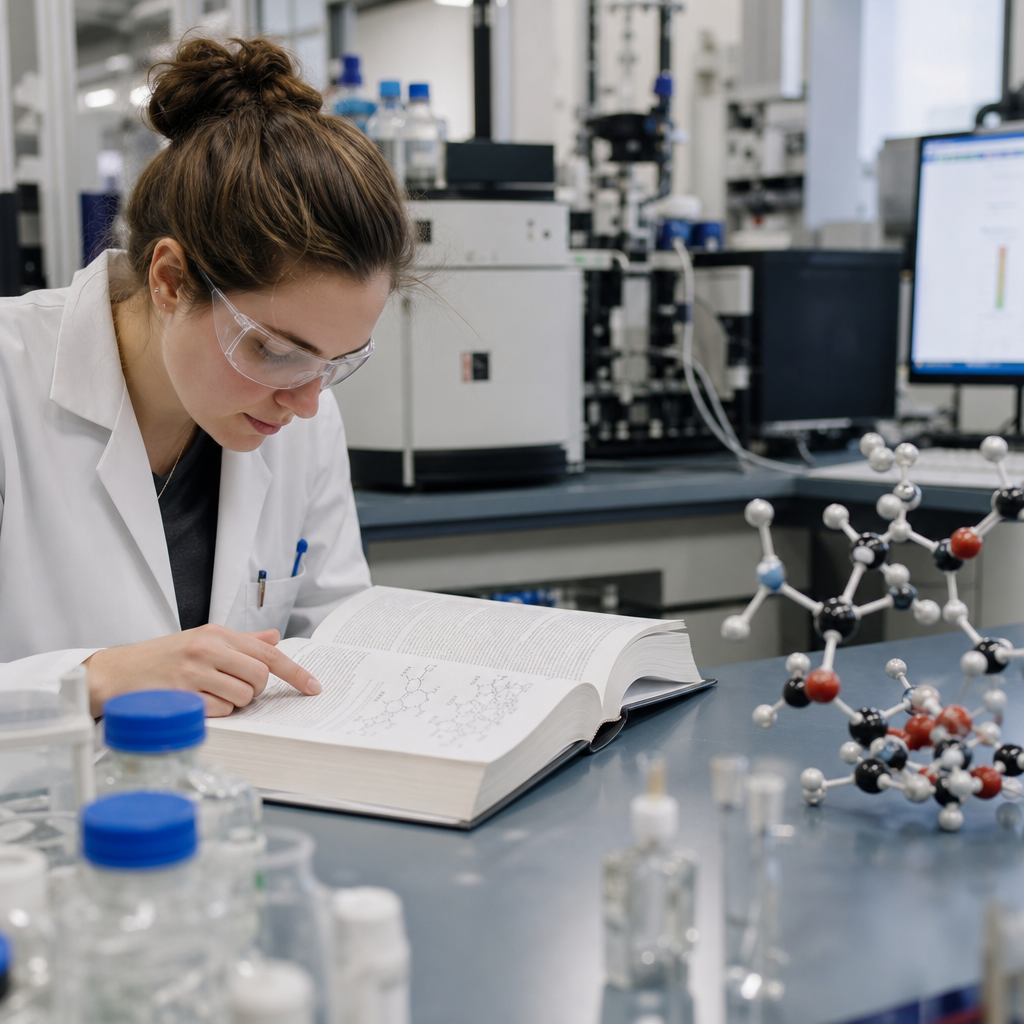
Shared research facility channels and microscopy centers are also useful. Many universities publish tutorials on scanning electron microscopy, atomic force microscopy, X-ray diffraction, and thermal analysis. For polymer students, these videos help answer practical questions: How dry must a sample be before DSC? Why does sample history matter? What artifacts appear in FTIR spectra? What does charging look like in SEM when imaging insulating polymers? These details are exactly where beginners tend to struggle in the lab.
Channels Covering Processing, Manufacturing, and Product Design
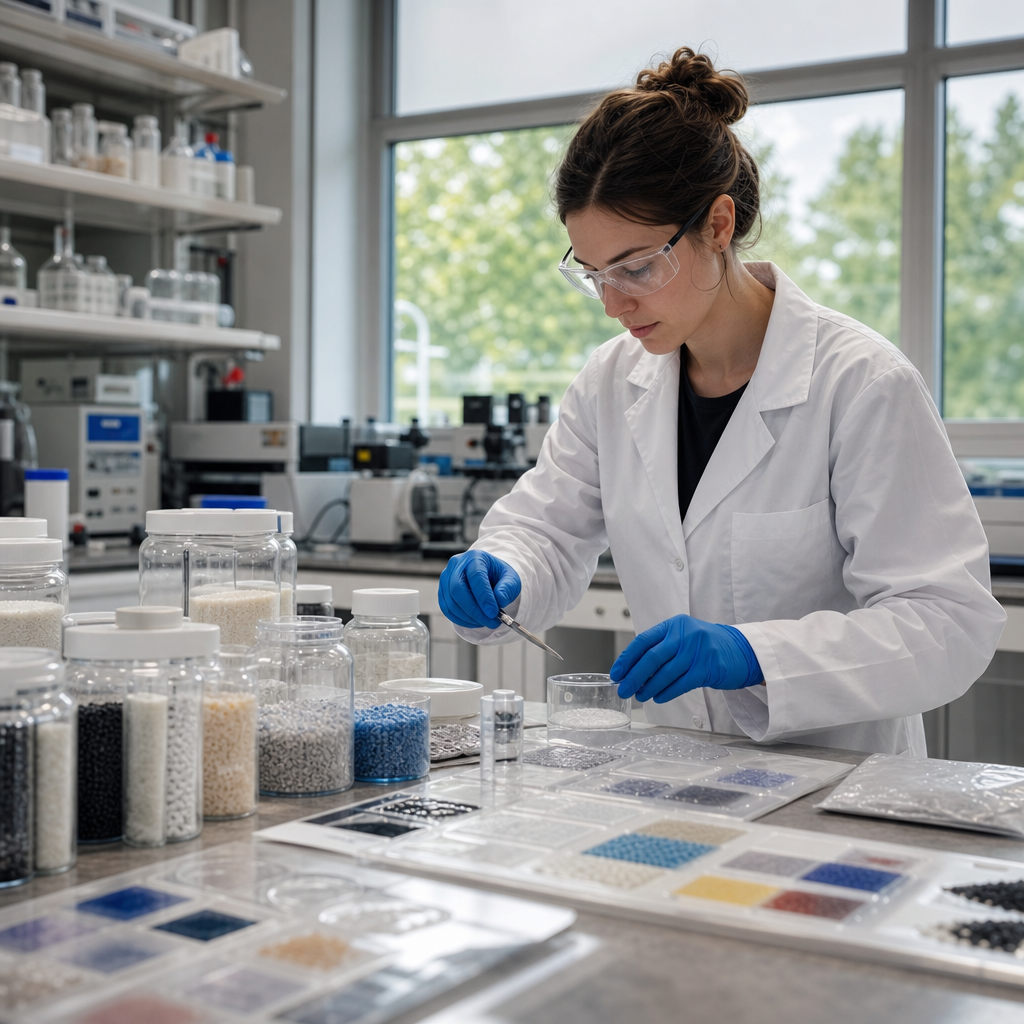
Polymer science education is incomplete without processing. Properties depend not only on composition but on thermal history, orientation, crystallization rate, filler dispersion, moisture content, and molding conditions. YouTube channels from plastics industry associations, processing companies, and equipment manufacturers can make these relationships concrete. Well-produced content on extrusion, blow molding, thermoforming, rotational molding, and injection molding helps students understand why nominally identical polymers can behave differently after processing.
For example, a video on injection molding that explains gate design, shrinkage, warpage, residence time, and cooling rate can illuminate several classroom concepts at once. It links rheology to manufacturability, crystallinity to dimensional stability, and degradation to color or odor defects. Similarly, compounding videos can show how additives such as plasticizers, flame retardants, stabilizers, impact modifiers, and glass fibers affect processing windows and final properties. This is especially valuable for engineers entering packaging, automotive, electronics, or medical device roles.
Look for channels associated with organizations such as SPE, plastics training providers, mold design educators, and resin producers that publish technical seminars. Even when a video is product-oriented, it may still teach useful principles if it explains why a material was selected, which tests were run, and what tradeoffs were accepted.
Educational Videos and Podcasts on Sustainability, Recycling, and Emerging Research
No current hub on educational videos and podcasts is complete without sustainability content. Polymer science learners now need fluency in mechanical recycling, compatibilization, collection systems, contamination limits, multilayer packaging challenges, depolymerization pathways, and the difference between compostable, biodegradable, and bio-based claims. The most reliable YouTube sources here often come from industry conferences, university sustainability centers, standards groups, and expert interview series rather than from broad consumer channels.
When evaluating sustainability videos, prioritize those that discuss constraints honestly. Mechanical recycling generally preserves more material value than many chemical routes, but it depends heavily on sorting purity and stable end markets. Chemical recycling can be important for mixed or contaminated streams, yet energy demand, scale, economics, and product quality must be scrutinized. Good channels explain these tradeoffs instead of presenting a single technology as a cure-all.
Podcast-style channels add context that short explainers cannot. Long-form interviews with polymer chemists, packaging engineers, recycling operators, and startup founders often reveal where research is succeeding and where hype exceeds evidence. These episodes are especially useful for graduate students and professionals because they expose the decision-making behind material choices, regulation, and commercialization timelines.
How to Build a Smart Polymer Learning Playlist
The most effective way to use YouTube for polymer science education is to assemble a deliberate sequence. Start with a fundamentals playlist covering polymer classification, molecular architecture, thermal transitions, crystallinity, and mechanical behavior. Follow that with synthesis topics such as free-radical polymerization, step-growth reactions, copolymerization, and living methods. Next, add characterization videos on FTIR, NMR, DSC, TGA, DMA, GPC, and microscopy. Then include processing content on extrusion and molding, ending with sustainability and market-focused interviews.
I also advise keeping a simple notes framework while watching: concept, method, key equation or metric, common error, and real-world example. This transforms passive viewing into active study. If a video explains why polystyrene is amorphous while polyethylene can crystallize, write down the structural reason and connect it to optical clarity, stiffness, and heat resistance. If a webinar covers rheometry, note which measurement applies to quality control versus formulation development.
Finally, treat YouTube as a gateway, not a complete substitute for formal literature. The strongest learning happens when videos are paired with textbooks, ASTM or ISO test standards, safety training, and peer-reviewed articles. Used this way, the top YouTube channels for polymer science education can accelerate understanding, reduce lab errors, and make advanced materials topics far more accessible.
The main advantage of this learning approach is efficiency without sacrificing depth. Educational videos and podcasts let learners see polymer concepts, instruments, and industrial processes in action, which shortens the gap between theory and practice. A well-chosen set of channels can support undergraduate study, research training, professional onboarding, and continuing education across chemistry, engineering, sustainability, and product development.
The key takeaway is simple: choose channels by purpose, not popularity. Use university lecture playlists for fundamentals, vendor and facility channels for characterization, industry educators for processing, and expert interviews for sustainability and emerging research. Watch critically, compare sources, and verify technical claims against recognized standards and literature. That combination produces durable understanding instead of fragmented facts.
If you are building your educational resources library, start by creating one polymer science playlist for fundamentals, one for lab methods, and one for industry and recycling trends. Revisit them regularly, add high-quality podcast episodes, and use each video to anchor further reading. Done well, YouTube becomes more than a convenience; it becomes a practical, credible hub for polymer science education.
Frequently Asked Questions
1. What makes a YouTube channel valuable for learning polymer science?
A valuable YouTube channel for polymer science education does more than simply define terms or repeat textbook material. The best channels explain difficult concepts in ways that are visually intuitive, scientifically accurate, and relevant to real research or industrial practice. Polymer science is full of processes that are hard to imagine from static diagrams alone, such as chain-growth polymerization, crystallization behavior, viscoelastic flow, phase separation, and degradation mechanisms. High-quality videos help bridge that gap by showing animations, reaction pathways, microscopy footage, processing equipment, and side-by-side comparisons of material behavior.
Another important quality is credibility. Strong channels are usually hosted by university educators, researchers, materials scientists, chemists, chemical engineers, or experienced science communicators who understand both the fundamentals and the practical implications of polymer behavior. They often cite established principles, use correct terminology, and connect introductory ideas to broader topics such as structure-property relationships, characterization methods, sustainability, and product performance.
Consistency and scope also matter. A useful channel should ideally cover a range of interconnected subjects rather than isolated facts. For example, a student learning polymerization mechanisms will benefit more if the same channel also explains molecular weight, glass transition temperature, rheology, processing, and mechanical testing. This creates a more complete learning path. In short, the most valuable YouTube channels combine clarity, technical accuracy, visual teaching strength, and real-world relevance, making them especially effective for learners at many different levels.
2. Which polymer science topics are easiest to learn through YouTube videos compared with textbooks alone?
YouTube is especially effective for polymer science topics that involve motion, scale, instrumentation, or process flow. Polymerization mechanisms are a good example. While textbooks can show reaction schemes, videos can animate initiation, propagation, termination, branching, crosslinking, and molecular growth in a way that makes the differences between step-growth and chain-growth systems much easier to understand. Learners often grasp these ideas faster when they can actually see a model of how chains form and interact over time.
Rheology and viscoelasticity are also much easier to learn through video. Concepts such as shear thinning, creep, stress relaxation, melt flow, and elastic recovery can feel abstract in print, but demonstrations with polymer melts, gels, elastomers, and processing equipment make the behavior immediately more tangible. The same is true for materials characterization. Videos that show DSC, TGA, FTIR, SEM, tensile testing, DMA, XRD, or microscopy workflows can help viewers understand not only what each technique measures, but also how samples are prepared, how data are generated, and why results matter in research and product development.
Processing topics are another major advantage of video-based learning. Extrusion, injection molding, blow molding, film formation, fiber spinning, compounding, and recycling streams all become clearer when learners can watch the sequence unfold. Even highly technical subjects such as polymer morphology, crystallinity, fracture behavior, and additive effects are more accessible when paired with images, diagrams, and practical examples. In many cases, videos do not replace textbooks, but they dramatically improve comprehension by making polymer science less abstract and more observable.
3. Are YouTube channels useful for advanced learners such as graduate students, researchers, and engineers?
Yes, YouTube channels can be very useful for advanced learners, provided they are used selectively and critically. Graduate students, researchers, and practicing engineers often turn to video content not because they need basic definitions, but because they want rapid conceptual refreshers, visual explanations of specialized techniques, or practical context outside their own narrow subfield. A researcher working in biodegradable polymers, for example, may use videos to better understand rheometry, extrusion behavior, microscopy interpretation, or recycling systems. Likewise, an engineer in plastics processing may benefit from concise overviews of crystallization, additives, barrier properties, or failure analysis.
Advanced learners often gain the most from channels that connect theory to application. Videos that explain why molecular architecture affects mechanical performance, how thermal history influences morphology, or how processing conditions change final part properties can be extremely valuable in both academic and industrial settings. Some channels also provide demonstrations of instruments, laboratory methods, pilot-scale equipment, or quality-control procedures that are difficult to access through reading alone.
That said, advanced users should not treat YouTube as a substitute for peer-reviewed literature, technical handbooks, patents, standards, or formal training. Instead, it works best as a complement. It can accelerate understanding, clarify a difficult concept before reading a paper, or provide a practical overview before entering the lab. For experienced learners, the strongest channels are those that maintain technical rigor while still explaining complex ideas efficiently and clearly.
4. How can students and professionals tell whether a polymer science YouTube channel is trustworthy?
Trustworthiness starts with the source. Viewers should look at who is presenting the material and what qualifications or experience they bring. Channels run by professors, researchers, universities, professional organizations, established science educators, or recognized industry experts generally offer more reliable content than anonymous channels with little technical background. A trustworthy channel usually provides clear explanations, uses accepted scientific language, and avoids sensational claims about materials, recycling, biodegradability, or “breakthrough” performance without evidence.
It also helps to evaluate how the content is structured. Reliable educational videos often explain assumptions, define terms carefully, distinguish between similar concepts, and acknowledge limitations. For instance, a strong video on polymer recycling should clarify the difference between mechanical recycling, chemical recycling, downcycling, contamination challenges, and economic feasibility. A weak or misleading video may oversimplify the topic or suggest that all plastics behave the same way, which is scientifically inaccurate.
Cross-checking is essential. If a channel discusses topics such as Tg, crystallinity, tacticity, biodegradation, copolymer design, or spectroscopy interpretation, viewers should compare those explanations against textbooks, lecture notes, journal articles, manufacturer technical documents, or standards where possible. Comments and engagement can also be informative, especially if knowledgeable viewers ask good technical questions and the channel responds thoughtfully. In general, the most trustworthy polymer science channels are transparent, precise, educationally focused, and consistent with established materials science and chemistry principles.
5. What is the best way to use YouTube as part of a polymer science learning plan?
The best approach is to use YouTube strategically rather than passively. Start by identifying your goal. If you are a student preparing for an exam, you might focus on foundational topics such as polymerization types, molecular weight averages, thermal transitions, mechanical behavior, and common characterization methods. If you are a researcher or engineer, your priorities may include processing, rheology, morphology, degradation, recycling, composites, or instrument-specific interpretation. Once you know your target, choose a few high-quality channels and build a structured viewing sequence instead of jumping randomly between videos.
It is also helpful to pair videos with active learning. Take notes, pause to sketch mechanisms, write down unfamiliar terms, and summarize the main structure-property relationships in your own words. After watching a video on FTIR or DSC, for example, review sample spectra or thermograms and try to interpret them independently. After a video on extrusion or injection molding, connect the process to material parameters such as viscosity, crystallization rate, or thermal stability. This reinforces the content and turns viewing into real study rather than background consumption.
Finally, combine YouTube with more formal resources. Use videos to visualize difficult ideas, then deepen your understanding through textbooks, papers, course materials, technical datasheets, and laboratory experience. That combination is especially powerful in polymer science because the field sits at the intersection of chemistry, physics, engineering, and manufacturing. The top YouTube channels are most valuable when they become part of a broader learning system, helping learners move faster from abstract concepts to practical understanding.