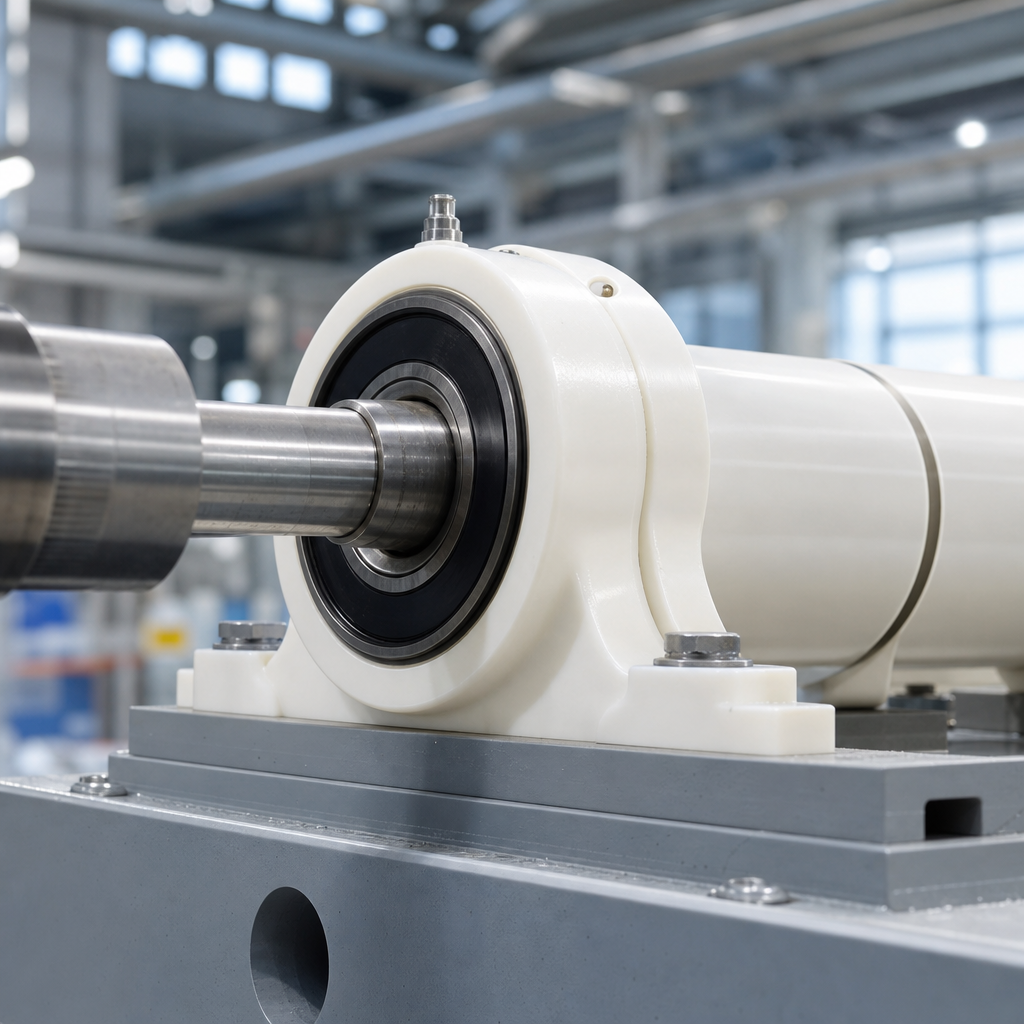
How polymers improved the efficiency of industrial machinery is ultimately a story about reducing friction, lowering weight, extending service life, and redesigning components around material performance rather than tradition. In industrial applications, polymers include commodity plastics, engineering plastics, elastomers, thermosets, fluoropolymers, and fiber-reinforced composites used in parts such as bearings, seals, gears, liners, housings, coatings, and conveyor elements. Machinery efficiency means more than energy consumption alone; it also includes uptime, maintenance intervals, throughput, noise, corrosion resistance, operator safety, and total cost of ownership. I have seen production lines gain measurable output simply by replacing metal wear parts with correctly specified polymer components that resisted abrasion and eliminated lubrication points. That practical impact is why polymers in industrial applications matter across manufacturing, food processing, mining, packaging, water treatment, agriculture, and logistics. As this hub article for case studies and applications, it explains where polymers deliver the biggest gains, which materials are commonly used, how engineers choose among them, and what limits must be respected to avoid expensive failures.
Why Polymers Changed Industrial Machinery Design
For decades, industrial machinery was built around steel, cast iron, bronze, and aluminum because those materials offered strength, stiffness, and familiarity. Polymers changed the design conversation by introducing a different set of advantages: low coefficient of friction, inherent corrosion resistance, chemical compatibility, vibration damping, electrical insulation, and substantial weight reduction. In rotating and sliding systems, these properties directly affect efficiency. A polymer plain bearing made from UHMW-PE, PTFE-filled acetal, or nylon can run with less friction than an unoptimized metal-to-metal interface, which lowers heat generation and often reduces power draw. A polymer chain guide or wear strip can cut noise and absorb impact better than metal, improving line stability at higher speeds.
The effect is not theoretical. In packaging plants, I have worked with conveyor systems where polymer wear strips reduced drag enough to stabilize motor loads during peak shifts. In corrosive washdown environments, stainless steel remains essential for structural frames, but polymer guides, seals, and rollers often last longer because they do not gall, seize, or pit the same way. In mining and bulk handling, polymer liners improve flow in chutes and hoppers by lowering material adhesion, which decreases blockages and the downtime required to clear them. In all of these examples, the machinery becomes more efficient because it spends less time fighting friction, corrosion, contamination, or repeated maintenance.
Key Polymer Families Used in Industrial Applications
Not all polymers perform alike, and efficiency gains depend on selecting the right family for the operating environment. Common industrial choices include acetal for dimensionally stable machined parts, nylon for toughness and wear resistance, UHMW-PE for low-friction liners and guides, PTFE for extreme chemical resistance and low surface energy, PEEK for high temperature and high-performance mechanical parts, polyurethane for abrasion-resistant wheels and rollers, and phenolic or epoxy composites for structural or electrical applications. Elastomers such as NBR, EPDM, FKM, and silicone are critical for seals, gaskets, dampers, and hoses, where leakage prevention directly influences system efficiency.
Fillers and reinforcements matter as much as the base polymer. Glass-filled nylon increases stiffness and reduces creep, carbon-filled PTFE improves wear behavior, and molybdenum disulfide or oil-filled grades can lower friction in dry-running applications. Engineers also use thermoset composites and fiber-reinforced thermoplastics when they need better dimensional stability and load-bearing performance than unfilled polymers can provide. Material data from suppliers should always be validated against actual operating conditions, because published values are often measured in controlled laboratory settings rather than under shock loads, contamination, or fluctuating temperatures found on factory floors.
Where Polymers Improve Efficiency Most Directly
The clearest efficiency gains appear in parts that move, slide, seal, or wear. Bearings and bushings made from engineered polymers can reduce or eliminate lubrication, which removes a maintenance task and prevents grease contamination in sectors such as food processing and pharmaceuticals. Seals and gaskets made from the correct elastomer reduce leakage in hydraulic, pneumatic, and fluid handling systems; every avoided leak protects pressure, energy, and cleanliness. Polymer gears, especially in light- to medium-duty systems, run quieter and can absorb shock loads, helping precision equipment maintain smoother operation.
Conveyor components are another major category. Side guides, wear strips, rollers, sprockets, and modular belt elements made from polymers reduce friction and noise while resisting corrosion and repeated washdown. In bulk handling, UHMW-PE liners often improve material flow for sticky solids such as coal, fertilizers, grain, or mineral concentrates. Pumps and valves also benefit from polymer seats, diaphragms, and corrosion-resistant internals, especially where aggressive chemicals would rapidly degrade metal components. These improvements are cumulative: lower friction reduces energy demand, lower wear extends replacement intervals, and fewer stoppages increase throughput.
| Component | Common Polymer | Efficiency Benefit | Typical Application |
|---|---|---|---|
| Bearing or bushing | Acetal, nylon, PTFE-filled grades | Lower friction, less lubrication, reduced heat | Packaging lines, automated assemblies |
| Wear liner | UHMW-PE | Better flow, less sticking, lower abrasion | Chutes, hoppers, bulk material handling |
| Seal or gasket | NBR, EPDM, FKM, PTFE | Leak prevention, pressure retention, chemical resistance | Pumps, valves, hydraulic systems |
| Gear or sprocket | Nylon, acetal | Noise reduction, weight reduction, smoother motion | Conveyors, light-duty drives |
| Roller or wheel | Polyurethane | Abrasion resistance, traction, impact damping | Material handling, guided transport |
Case Studies Across Major Industries
In food and beverage plants, hygiene and uptime usually drive material choices. Polymer conveyor components made from acetal, UHMW-PE, and food-contact-compliant grades have improved efficiency by reducing lubrication requirements and tolerating frequent washdown. On one packaging line I reviewed, switching from metallic chain guides to UHMW-PE guides reduced noise and visible wear, while operators reported fewer micro-stoppages caused by drag during product accumulation. The gain looked small at the component level, but line efficiency improved because the conveyor no longer introduced inconsistent resistance throughout the shift.
In mining and aggregates, the value of polymers becomes obvious in transfer points. Steel liners can be durable, but they often encourage material buildup and can produce severe wear and noise. Replacing selected liner sections with UHMW-PE or specialized abrasion-resistant polymer composites can improve flow and reduce carryback. Plants handling wet ore, coal, or sticky fines often see fewer blockages, which means less unplanned shutdown time and safer maintenance access. The efficiency improvement comes from flow reliability as much as from power savings.
In water and chemical processing, corrosion resistance is the decisive factor. Pump components, valve seats, diaphragms, and lined piping made from PTFE, PVDF, CPVC, or elastomer compounds extend service life where metals would corrode or require expensive alloys. I have seen facilities cut maintenance interventions substantially simply by replacing repeatedly failing seals with compounds matched to temperature, media, and cleaning chemistry. In these systems, efficiency is preserved when equipment holds pressure, maintains dosing accuracy, and avoids shutdowns caused by leaks or contamination.
In automotive and general manufacturing, polymers support robotics, fixtures, cable carriers, machine guards, and low-friction sliding elements. Here, weight reduction matters. A lighter moving assembly requires less actuation energy and can cycle faster without sacrificing precision. Polymer composite arms, covers, and cable management parts also reduce inertia and improve ergonomics during maintenance. Even small gains matter when multiplied across thousands of cycles per shift.
How Engineers Select the Right Polymer for Machinery
Choosing polymers for industrial machinery starts with the application, not the catalog. Engineers define load, speed, contact pressure, coefficient of friction, wear mode, operating temperature, chemical exposure, moisture absorption, UV exposure, electrical requirements, sanitation needs, and expected maintenance interval. Tribology is central for moving parts. A bearing material that performs well at low load and intermittent motion may fail quickly under continuous high PV conditions, where pressure multiplied by velocity exceeds the material’s limit. Creep, thermal expansion, and dimensional stability must also be checked, especially when replacing metal parts with polymers in tight-tolerance assemblies.
Standards and test methods provide a baseline. ASTM and ISO methods help compare tensile strength, hardness, wear, thermal properties, and chemical compatibility, but they do not replace field validation. Supplier data sheets are useful starting points, yet experienced engineers ask harder questions: What is the actual shaft finish? Is contamination present? Will cleaning chemicals attack the polymer over time? Does the component see impact loading at startup? Is there enough support to prevent deformation? In my experience, successful substitutions come from combining laboratory data, application-specific calculations, and pilot testing on the machine itself.
Manufacturing method also matters. Injection-molded parts are cost-effective at volume, machined stock shapes suit custom wear parts and quick retrofits, and additive manufacturing can accelerate prototyping for guards, ducts, jigs, or low-load components. However, printed polymers have anisotropic properties and are not drop-in replacements for machined engineering plastics in demanding service. The right choice balances performance, lead time, cost, compliance, and maintenance strategy.
Limits, Tradeoffs, and Failure Modes
Polymers improve efficiency only when used within their design envelope. The most common mistakes are overestimating load capacity, ignoring temperature spikes, overlooking creep, and assuming all plastics resist all chemicals. Many polymers soften or lose stiffness well below temperatures tolerated by metals. Some absorb moisture and change dimensions; nylon is a classic example. Others perform poorly under constant load unless properly supported. In abrasive environments, a polymer may resist sliding wear but fail under sharp particulate attack if the grade is wrong.
Failure analysis usually points to mismatched expectations rather than inherent material weakness. A polymer gear may wear prematurely because alignment is poor, not because polymer gears are unsuitable. A bushing may seize because the shaft finish is rough or contamination is embedded. A seal may crack because cleaning chemistry changed after installation. These cases are important because they show that polymer efficiency benefits depend on engineering discipline. Material selection, geometry, mating surface design, installation practices, and inspection routines all influence real-world performance.
Cost must also be evaluated correctly. Some high-performance polymers, especially PEEK and fluoropolymers, are expensive compared with standard metals or commodity plastics. Yet component price alone is the wrong metric if downtime, lubrication, contamination risk, and replacement frequency dominate lifecycle cost. The right analysis compares total cost of ownership, including labor and lost production.
The Future of Polymers in Industrial Applications
Industrial machinery is becoming more automated, more sensor-driven, and more specialized, which increases the value of advanced polymers. Engineers now specify materials for lightweight end-of-arm tooling, static-dissipative components, chemically resistant fluid handling, energy-efficient conveyors, and predictive-maintenance-friendly designs with lower wear debris and more stable performance. Composite materials are also expanding into structural roles once reserved for metal, especially where corrosion, electrical isolation, or mass reduction matter. In parallel, improved compounding techniques are producing grades with better wear resistance, tighter dimensional control, and more application-specific properties.
Sustainability is also shaping selection. Longer-lasting wear parts reduce material consumption and maintenance travel. Lower-friction components can reduce energy use, and recyclable thermoplastics are gaining attention where regulations and product design allow. For manufacturers building or upgrading equipment, the practical lesson is clear: polymers are no longer secondary materials used only for covers or handles. They are performance materials that can raise machinery efficiency when chosen with the same rigor applied to motors, controls, and bearings.
For anyone evaluating polymers in industrial applications, start with the highest-friction, highest-wear, or most corrosion-prone components in your equipment. Review failure history, operating conditions, and maintenance costs, then test qualified polymer alternatives in one controlled section of the machine. Done properly, that process often reveals faster payback than expected through reduced downtime, smoother operation, and longer service intervals. Use this hub as your starting point, then map each component category to deeper case studies and application guides to identify the best next upgrade.
Frequently Asked Questions
1. How do polymers make industrial machinery more efficient?
Polymers improve industrial machinery efficiency by addressing several of the biggest sources of energy loss and downtime at once. One of the most important benefits is friction reduction. Many polymer materials, including engineering plastics and fluoropolymers, have naturally low coefficients of friction or can be compounded with lubricating additives. When they are used in bearings, wear strips, liners, seals, or conveyor components, machinery can run with less resistance, less heat buildup, and lower power demand. That translates directly into improved operating efficiency and, in many cases, lower maintenance requirements.
Weight reduction is another major advantage. Replacing metal parts with polymer or composite components often reduces the mass of moving assemblies, which decreases inertia and allows motors, drives, and actuators to work less to achieve the same output. In systems with frequent starts, stops, or high-speed motion, this can make a measurable difference in energy consumption and cycle time. Lighter components can also reduce stress on shafts, supports, and adjacent parts, helping the entire machine operate more smoothly.
Polymers also improve efficiency by extending service life in difficult environments. Unlike many metals, polymers can resist corrosion, moisture, chemicals, and certain abrasive conditions without requiring heavy protective treatments. In applications such as food processing, packaging, chemical handling, mining, and bulk materials transport, this durability helps machinery maintain performance over longer intervals. Better dimensional stability in corrosive or wet environments can preserve sealing effectiveness, alignment, and smooth motion, all of which support efficient operation.
Perhaps most importantly, polymers allow engineers to redesign components around performance rather than simply copying traditional metal designs. A polymer part can often combine multiple functions into one component, reduce the need for lubrication, damp vibration, lower noise, and simplify assembly. This system-level design freedom is a major reason polymers have become so valuable in industrial equipment. Their contribution is not limited to replacing one material with another; they often enable a more efficient machine architecture overall.
2. Which types of polymers are commonly used in industrial machinery, and where are they applied?
Industrial machinery uses a wide range of polymers because no single material suits every operating condition. Commodity plastics may be used in non-critical covers, guards, reservoirs, and housings where cost efficiency and corrosion resistance are priorities. Engineering plastics, such as nylon, acetal, PEEK, UHMW-PE, PTFE-based materials, and polycarbonate blends, are frequently selected for more demanding mechanical applications because they offer better strength, wear resistance, dimensional stability, or temperature performance.
Elastomers are essential where flexibility, sealing, vibration isolation, and shock absorption matter. They are commonly found in gaskets, O-rings, dynamic seals, bushings, rollers, mounts, and dampers. Their ability to deform and recover helps maintain reliable contact under changing pressure, motion, and thermal conditions. Thermosets are often chosen for electrical insulation, structural components, adhesive systems, and heat-resistant parts because they retain shape well and perform reliably in environments where thermoplastics may soften.
Fluoropolymers play a particularly important role in machinery exposed to chemicals, high temperatures, or demanding low-friction conditions. They are used in seals, valve seats, liners, tubing, and specialty bearings. Fiber-reinforced composites, meanwhile, are used where high stiffness-to-weight ratio is important. These materials appear in panels, machine frames, covers, arms, structural supports, and rotating elements where reducing mass can improve responsiveness and efficiency without sacrificing performance.
In practical terms, polymers appear throughout industrial equipment in bearings, gears, chain guides, wear pads, scraper blades, conveyor elements, seals, liners, pump components, housings, electrical insulators, coatings, and fluid-handling parts. The exact material selection depends on load, speed, temperature, chemical exposure, expected wear, and regulatory requirements. What makes polymers so valuable is the breadth of this material family: engineers can choose from many polymer types and formulations to target very specific efficiency and reliability goals.
3. Why are polymer bearings, seals, and gears often preferred over traditional metal components?
Polymer bearings, seals, and gears are often preferred because they solve performance problems that metals do not always handle as efficiently. In bearings, polymers can provide low-friction sliding performance with reduced or even eliminated external lubrication in some applications. That lowers maintenance demands, reduces contamination risk, and simplifies machine design. In dusty, wet, or washdown environments, polymer bearing materials can continue to perform where grease-lubricated metal systems may become problematic. Their ability to embed small particles rather than score mating surfaces can also improve durability under less-than-ideal operating conditions.
Seals benefit from polymers because the material family includes both rigid and flexible options with excellent chemical resistance and wear characteristics. Elastomeric and fluoropolymer-based seals can maintain tight contact, absorb shaft movement, and resist aggressive fluids. Effective sealing improves efficiency by keeping lubricants where they belong and contaminants where they do not. This reduces friction increase, wear, leakage losses, and premature component failure. In industrial machinery, a well-selected polymer seal can have an outsized effect on uptime and energy performance.
Polymer gears are valued for their light weight, low noise, corrosion resistance, and in many cases their ability to run with lower lubrication demands than metal gears. They can damp vibration and reduce tooth impact noise, which is especially useful in packaging machinery, office equipment, light automation systems, and certain processing equipment. In suitable load and temperature ranges, polymer gears can deliver excellent efficiency while reducing system mass and simplifying maintenance. They are also easier to mold into complex shapes, which can improve gear geometry consistency in high-volume production.
That said, the preference for polymers is application-dependent rather than universal. Metals still dominate in extreme load, temperature, and shock conditions. However, when machinery designers need lower friction, quieter operation, corrosion resistance, weight savings, and lower maintenance, polymer bearings, seals, and gears often offer a better overall efficiency package than traditional metal alternatives. The real advantage is not that polymers replace metals everywhere, but that they outperform them in the right operating window.
4. Do polymer components last as long as metal parts in industrial machinery?
Polymer components can last as long as, and sometimes longer than, metal parts when they are properly selected for the application. Longevity depends less on whether a part is metal or polymer and more on how well the material matches the actual service conditions. In many industrial environments, polymers outperform metals because they are not vulnerable to rust, galvanic corrosion, or chemical attack in the same way. In wet, corrosive, abrasive, or washdown applications, that resistance can dramatically extend component life and reduce maintenance frequency.
Wear performance is one of the areas where polymers can be especially effective. Materials such as UHMW-PE, filled PTFE compounds, acetal, nylon, and high-performance engineering plastics are widely used in sliding contact applications because they manage friction and surface wear efficiently. Some polymer materials also absorb vibration and shock more effectively than metal, reducing stress concentrations and helping nearby machine components last longer as well. In addition, polymer parts can protect mating surfaces by being more forgiving in contact, which may reduce damage across the system.
However, service life depends on understanding limitations. Polymers generally have lower stiffness and different thermal behavior than metals, and some are sensitive to creep, moisture absorption, UV exposure, or elevated temperatures. If a polymer is chosen without considering load, speed, operating temperature, chemical exposure, and dimensional tolerances, its life may be shorter than expected. This is why proper engineering evaluation is essential. Material grade, reinforcement, additives, processing method, and part geometry all influence durability.
When polymer components are specified correctly, they can deliver excellent long-term value through lower lubrication needs, reduced corrosion-related failures, lighter moving masses, and less frequent replacement intervals. In many industries, the question is no longer whether polymer parts can match metal life, but where they can provide a better total-life performance profile. The strongest results come from designing with the material’s actual properties in mind rather than forcing it into a metal-style design approach.
5. What should manufacturers consider when selecting polymers for machinery efficiency upgrades?
Manufacturers should begin with the full operating profile of the machine, not just the basic function of the part being replaced. Load, speed, temperature range, duty cycle, chemical exposure, moisture, abrasion, impact, required tolerances, and expected maintenance intervals all matter. A polymer that works very well in a low-load dry bearing may fail quickly in a high-temperature, high-load gearbox, while another engineered polymer or composite may perform exceptionally in that same location. Efficiency upgrades are most successful when selection is tied to real conditions rather than assumptions based on broad material categories.
Tribological performance is especially important. If the goal is to reduce friction, wear, and energy use, manufacturers need to evaluate the interaction between the polymer and the mating surface, including lubrication conditions, contact pressure, and contamination risks. For seals and dynamic components, compression set, elasticity, thermal expansion, and chemical compatibility must be reviewed carefully. For structural or rotating parts, stiffness, fatigue resistance, and dimensional stability are just as important as simple tensile strength numbers. Material datasheets are useful starting points, but actual application testing often reveals the most meaningful performance differences.
Manufacturers should also consider design