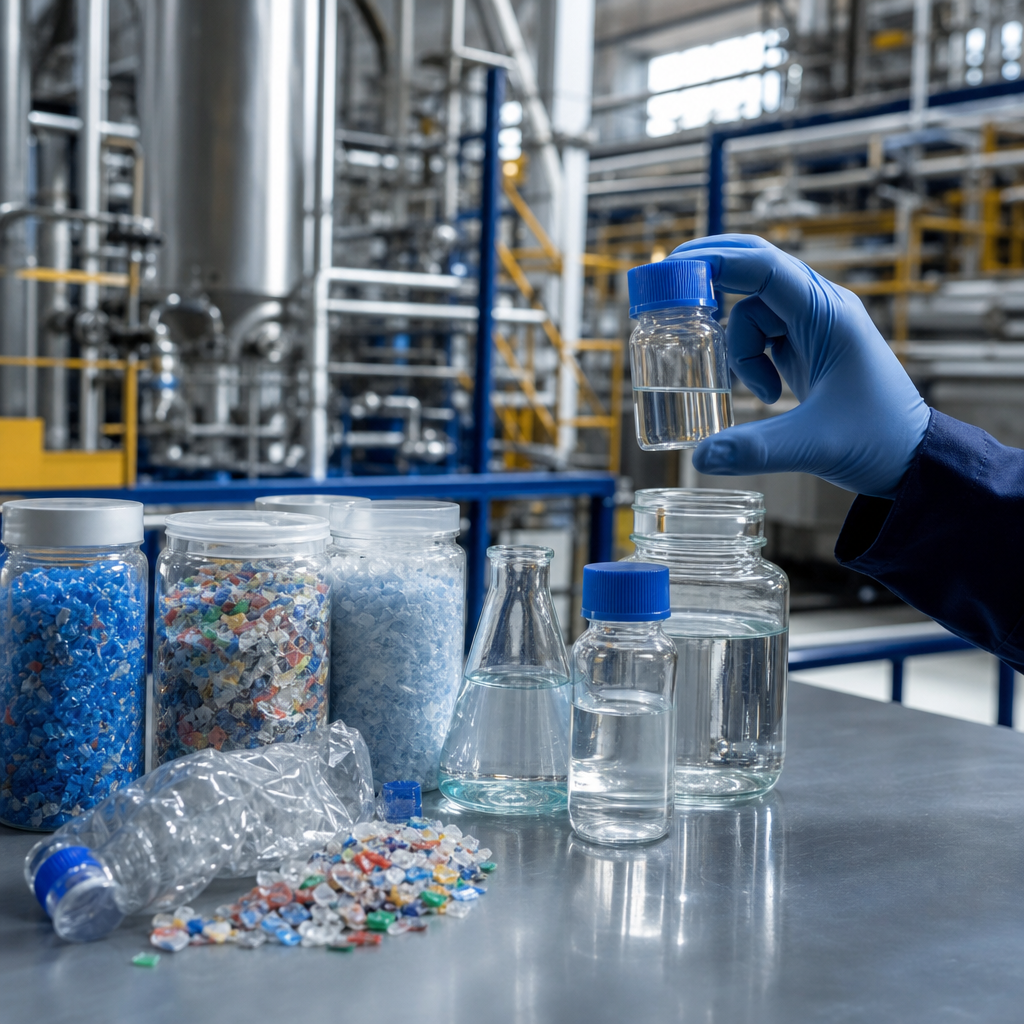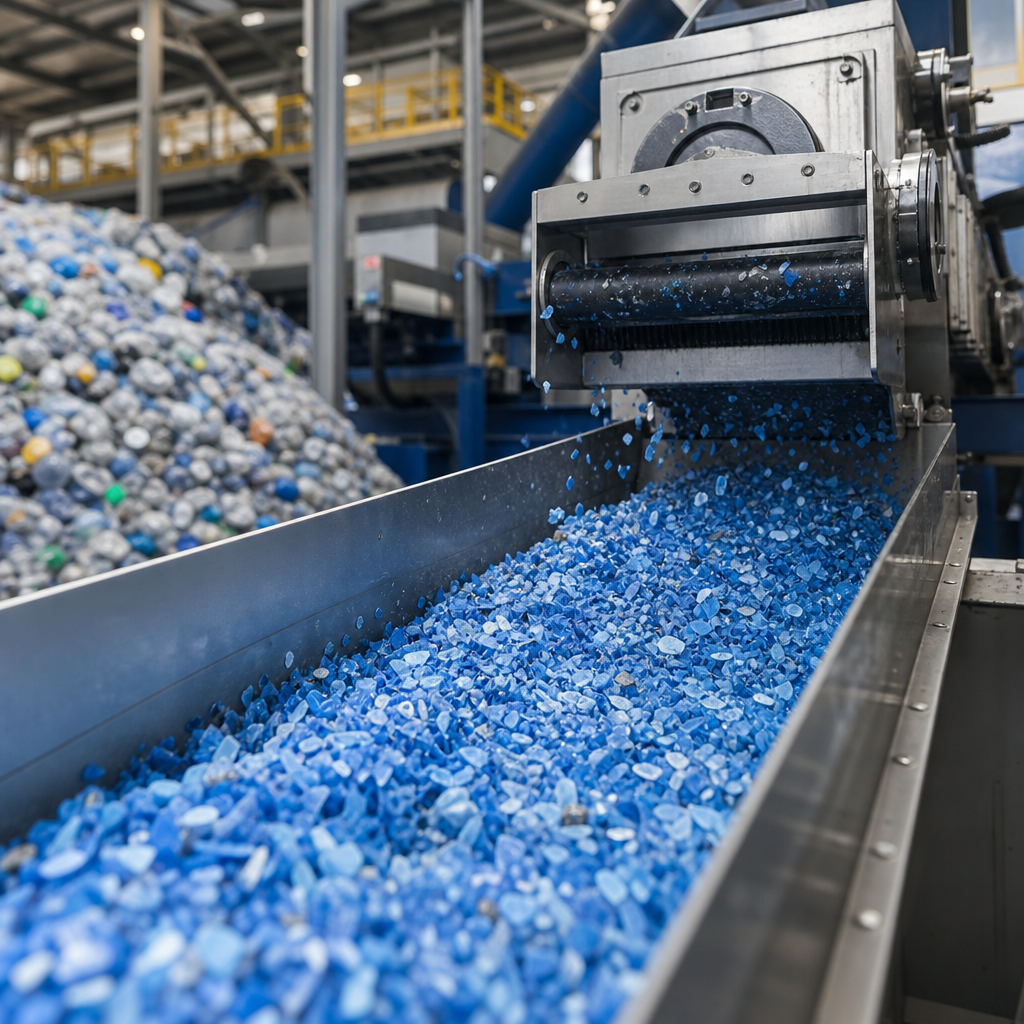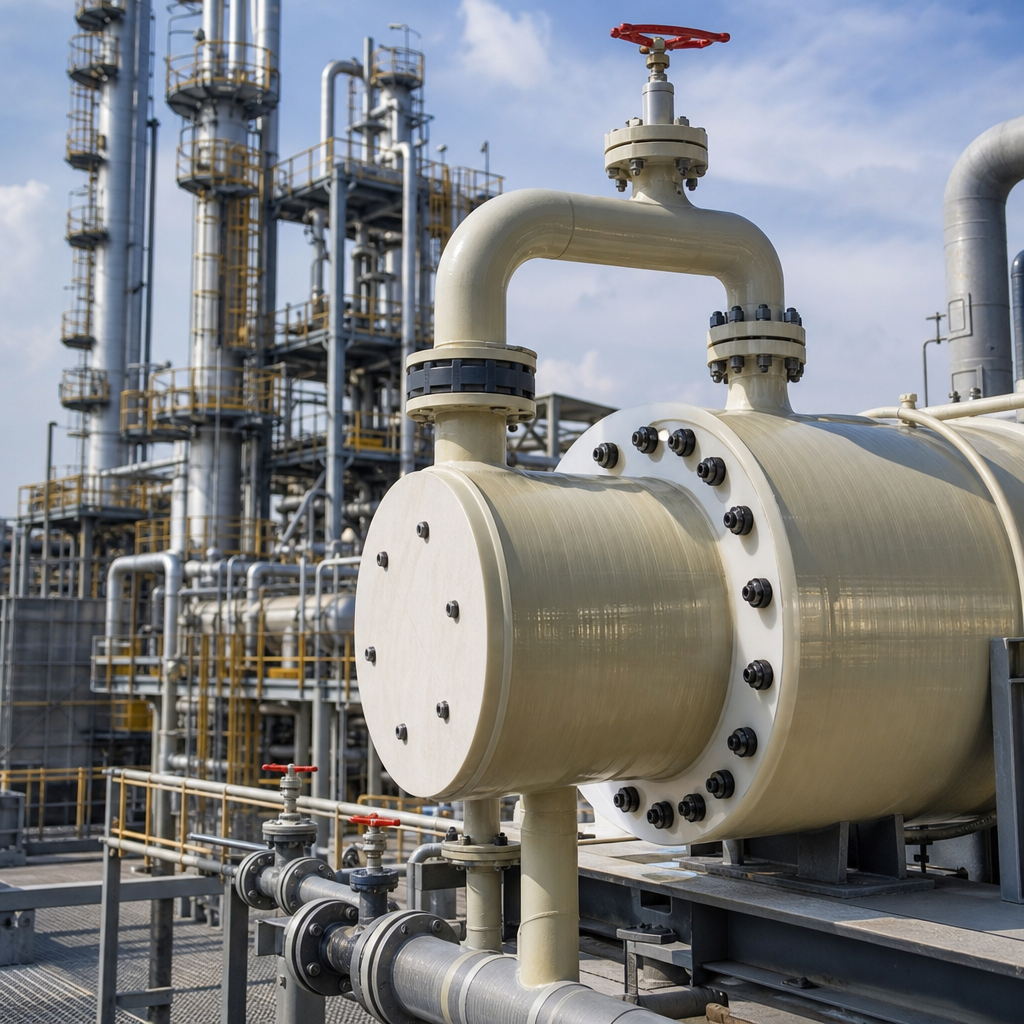
Polymers have become essential materials in modern chemical plants because they solve persistent equipment problems that metals, ceramics, and glass alone cannot address. In chemical process equipment, polymers include thermoplastics, thermosets, elastomers, fluoropolymers, and fiber-reinforced polymer composites engineered to resist corrosion, reduce fouling, improve sealing, and lower lifecycle cost. I have worked on equipment selection and failure reviews where a change from carbon steel to PTFE-lined pipe, FRP ducting, or UHMW-PE wear pads eliminated leaks, cut maintenance shutdowns, and extended service intervals by years. That practical reality explains why polymers in industrial applications now sit at the center of many case studies involving reactors, storage tanks, piping systems, filtration units, pumps, valves, and emissions-control hardware.
The importance of polymers in enhancing chemical process equipment starts with the operating environment. Chemical plants expose materials to acids, alkalis, solvents, abrasive slurries, elevated temperatures, ultraviolet radiation, pressure cycling, and mechanical stress. Traditional alloys offer strength, but they can pit in chloride service, suffer stress corrosion cracking, or become uneconomical when high-nickel grades are required. Polymers offer a different performance profile: broad chemical resistance, low weight, smooth surfaces, electrical insulation, and fabrication flexibility. Common examples include polypropylene tanks for caustic solutions, PVC piping for water treatment, PVDF components in ultrapure service, PTFE linings for aggressive acids, and epoxy or vinyl ester composites for scrubbers and ducts. Used correctly, these materials do more than survive exposure; they improve process reliability and safety.
For engineers, operators, and procurement teams, the key question is not whether polymers are useful, but where they create the greatest value and what limitations must be respected. Polymer selection depends on chemical compatibility, permeation resistance, pressure rating, operating temperature, fire performance, cleanability, dimensional stability, and compliance with standards such as ASME RTP-1, ASTM test methods, and manufacturer chemical resistance data. This hub article on polymers in industrial applications explains how polymers enhance chemical process equipment, where they are commonly deployed, how they compare across applications, and what lessons repeatedly emerge from field case studies. It is designed as the central reference point for deeper articles on linings, composites, seals, corrosion control, equipment retrofits, and material selection in demanding processing environments.
Why Polymers Improve Chemical Process Equipment Performance
Polymers improve chemical process equipment by addressing four recurring failure modes: corrosion, wear, leakage, and weight-driven installation complexity. In many plants, the most expensive equipment issue is not catastrophic rupture but gradual loss of containment or loss of performance from corrosion under insulation, scaling, erosion, or gasket degradation. A properly chosen polymer interrupts that chain. PTFE and PFA linings provide near-universal chemical resistance for many acid and solvent services. HDPE and PP resist a wide range of aqueous chemicals at moderate temperatures. Elastomers such as EPDM, FKM, and NBR provide sealing in valves, pumps, and expansion joints. FRP structures combine corrosion-resistant resin systems with fiberglass reinforcement to deliver stiffness without the mass of steel.
The benefits are measurable. Lower surface energy can reduce sticking and make cleanup easier. Reduced equipment weight cuts lifting requirements, simplifies support design, and speeds maintenance access. In wet scrubbers and fume-handling systems, FRP and thermoplastic ducting routinely outlast coated carbon steel because corrosion is not merely delayed by a paint layer; it is designed out of the wetted surface. In slurry handling, UHMW-PE liners and rubber-polymer systems protect chutes and hoppers from abrasion. In dosing and metering systems, polymer wetted parts prevent contamination and preserve chemical purity. These advantages matter most when evaluated over total cost of ownership rather than initial purchase price.
Core Polymer Families Used in Industrial Applications
Not all polymers perform alike, and the phrase polymers in industrial applications covers a broad material spectrum. Commodity thermoplastics such as PVC, CPVC, PP, and HDPE are widely used because they balance chemical resistance with reasonable cost and straightforward fabrication. PVC performs well in many water, acid, and salt solutions, while CPVC extends temperature capability. Polypropylene is common in tanks, ducts, and fabricated vessels handling caustics and general chemicals. HDPE is valued for impact resistance and is frequently used in storage, liners, and double-containment systems.
High-performance fluoropolymers are chosen where service becomes more severe. PTFE offers exceptional chemical inertness and low friction, making it the standard for lined pipe, gaskets, valve seats, and expansion joints. PFA and FEP provide similar resistance with different processing characteristics, and PVDF is widely used in semiconductor, pharmaceutical, and specialty chemical systems where purity and chemical resistance must coexist. Thermosets such as epoxy, phenolic, and vinyl ester resins dominate many composite systems. Vinyl ester FRP is especially important in bleach plants, scrubbers, stacks, and storage vessels because it combines corrosion resistance with structural utility. Elastomers complete the picture by providing flexibility and sealing performance tailored to media, temperature, and pressure.
| Polymer type | Common equipment uses | Key advantage | Main limitation |
|---|---|---|---|
| PVC/CPVC | Pipe, fittings, ducts, tanks | Low cost and corrosion resistance | Temperature and impact limits |
| PP/HDPE | Tanks, liners, sumps, scrubbers | Toughness and chemical resistance | Lower stiffness than metals |
| PTFE/PFA/PVDF | Linings, seals, valves, high-purity systems | Excellent chemical resistance | Higher material and fabrication cost |
| FRP with vinyl ester or epoxy | Vessels, ducting, stacks, covers | Corrosion resistance with structural strength | Design depends on resin and laminate quality |
| Elastomers | Gaskets, O-rings, hoses, expansion joints | Sealing and flexibility | Media-specific compatibility constraints |
Where Polymers Deliver the Greatest Value in Plant Equipment
Storage and handling systems are often the clearest success story. I have seen sulfuric acid transfer systems move from repeated maintenance on alloy components to stable service after the plant adopted PTFE-lined piping and fluoropolymer-lined valves. In bulk chemical storage, rotationally molded or fabricated thermoplastic tanks can outperform coated steel in moderate-temperature service because there is no coating holiday to expose substrate metal. Secondary containment systems made from HDPE geomembranes or polymer concrete help plants manage environmental risk and meet regulatory expectations.
Pumps, valves, and seals are another major area. Mechanical seal faces may be hard materials, but secondary seals and wetted internals frequently rely on engineered polymers. PTFE envelope gaskets, FKM O-rings, and polymer bearing components reduce leakage and improve resistance to aggressive media. Diaphragm pumps depend heavily on elastomer and PTFE diaphragms. Magnetic-drive pumps often use fluoropolymer-lined casings or polymer bushings to isolate corrosive liquids while avoiding seal leakage. In these applications, material mismatch is a frequent root cause of failure, so polymer selection must align with both chemical exposure and transient conditions such as startup, cleaning, and upset temperatures.
Air pollution control equipment also demonstrates the structural and corrosion advantages of polymers. FRP scrubbers, fans, and stacks are standard in many chlor-alkali, fertilizer, metal finishing, and specialty chemical plants. Compared with stainless steel, a properly specified FRP scrubber can offer longer service life in acidic vapor environments at lower installed weight. Thermoplastic-lined FRP combines a corrosion barrier liner, such as PP or PVC, with a fiberglass structural shell. That hybrid design is especially useful when pure thermoplastics lack stiffness or creep resistance at scale. Similar logic applies to ducts, hoods, and mist eliminator housings in highly corrosive exhaust systems.
Case Study Patterns Across Chemical Processing Environments
Across real facilities, successful polymer upgrades follow a repeatable pattern. First, the plant identifies a chronic failure mechanism: metal loss in acid service, rapid gasket degradation, abrasion in solids handling, or contamination from corroding internals. Second, engineers map the actual duty conditions instead of relying on nominal process descriptions. That means checking concentration swings, cleaning chemicals, thermal cycling, solids content, and pressure excursions. Third, they select a polymer system that addresses the dominant failure mode while preserving mechanical integrity. This disciplined process is why some retrofits produce ten-year improvements while others fail quickly.
Consider sodium hypochlorite service, a classic corrosion challenge. Carbon steel is generally unsuitable, and even some stainless grades can suffer damage under the wrong conditions. Plants commonly use HDPE, PVC, CPVC, FRP with suitable resin, or titanium in selected components. The winning choice depends on concentration, temperature, and contamination sensitivity. In hydrochloric acid unloading, PTFE-lined hose assemblies and lined valves frequently reduce corrosion risk compared with metallic alternatives. In flue gas desulfurization and fertilizer plants, FRP stacks and ducts resist acidic condensate that rapidly destroys ordinary steel. In abrasive mineral processing, elastomer-lined pipe and polymer wear liners protect against particle impingement better than many unlined hard-metal options.
Another pattern involves retrofit economics. Replacing an entire vessel with a high-alloy metal design may be technically sound but financially unnecessary when a polymer lining or composite rebuild can restore integrity at a fraction of the cost. However, retrofit success depends on substrate preparation, adhesion control, joint detailing, spark testing, and inspection discipline. I have seen lined systems fail not because the polymer was wrong, but because weld spatter, poor edge radius, or inadequate expansion allowance created stress points. The lesson from case studies is straightforward: polymers are not miracle materials; they are high-performance tools that reward precise engineering and installation.
Selection Criteria, Standards, and Design Limits
Choosing polymers for chemical process equipment requires more than checking a chemical resistance chart. Temperature is usually the first limiting factor because many polymers lose stiffness, creep under load, or experience accelerated permeation as temperature rises. Pressure, vacuum, support spacing, nozzle loads, and cyclic stress matter just as much. A PP tank suitable for ambient caustic storage may deform if exposed to elevated heat without adequate external reinforcement. A fluoropolymer liner may resist the process chemistry but still need vacuum support or anti-collapse features. For rotating equipment, dimensional stability and coefficient of thermal expansion directly affect fit, vibration, and sealing reliability.
Established standards guide these decisions. ASME RTP-1 governs reinforced thermoset plastic corrosion-resistant equipment, while ASTM methods support testing for tensile strength, impact, hardness, and chemical exposure. In piping, manufacturers rely on pressure-temperature ratings, joining procedures, and compatibility data that must be interpreted conservatively. Fire behavior is another consideration. Many polymers are combustible, generate smoke, or require additives to meet flame-spread expectations, so indoor installations, occupied areas, and hazardous environments demand careful review. Electrical properties can also matter; static accumulation in nonconductive systems handling flammable fluids may require grounding measures, conductive liners, or alternative materials.
Inspection and maintenance should be designed in from the start. Ultrasonic thickness testing works well on metals, but polymer and composite systems often need holiday testing, visual laminate inspection, spark testing of liners, torque checks, and periodic review for blistering, crazing, softening, or discoloration. Joining methods also shape reliability. Solvent cementing, butt fusion, extrusion welding, flanging, and lined fitting assembly each introduce distinct quality-control points. Plants that treat polymers with the same rigor used for pressure metals get the best results. Plants that assume plastic means simple often discover avoidable failures.
How This Hub Connects the Broader Topic of Polymers in Industrial Applications
As a sub-pillar within case studies and applications, this article serves as the hub for the wider subject of polymers in industrial applications. The most useful way to explore the topic is by following the equipment lifecycle. Start with material selection for tanks, piping, pumps, and valves. Then move into application-specific guidance for acids, alkalis, oxidizers, solvents, high-purity systems, slurry transport, and emissions control. From there, examine joining methods, liner systems, composite design, failure analysis, and maintenance planning. Each of those topics supports more specialized articles, but the central idea remains constant: polymers create value when their chemistry, mechanics, and fabrication methods are matched to the actual process duty.
The hub perspective also matters because plants rarely use a single polymer in isolation. A scrubber system might combine a thermoplastic liner, FRP structure, elastomer seals, and fluoropolymer valve seats. A dosing skid may pair PVDF tubing with PTFE diaphragms and EPDM gaskets. A bulk storage area can include HDPE tanks, PP sumps, FRP grating, and lined transfer piping. Understanding those combinations helps engineers avoid local optimization that creates system-level weakness. It also supports better procurement language, clearer inspection plans, and more realistic maintenance inventories. For organizations building a knowledge base around chemical process equipment, polymers deserve a dedicated center of gravity because they intersect corrosion engineering, mechanical design, process safety, and operations excellence.
Polymers enhance chemical process equipment by delivering corrosion resistance, sealing reliability, abrasion protection, lower weight, and flexible fabrication across a wide range of industrial services. The strongest applications are not accidental; they result from disciplined selection based on chemistry, temperature, pressure, mechanical load, fabrication method, and inspection requirements. From PTFE-lined acid transfer systems to FRP scrubbers, PP tanks, PVDF high-purity components, and elastomer sealing systems, the evidence from industrial practice is clear: well-chosen polymers can extend equipment life, reduce maintenance, and improve process safety.
The most important takeaway is balance. Polymers are not universal substitutes for metals, but in many chemical environments they are the most practical and economical engineering option. Their limitations, including temperature sensitivity, creep, permeability, fire behavior, and installation quality dependence, must be addressed upfront. When they are, the payoff is substantial: fewer leaks, less corrosion, lighter equipment, and better lifecycle economics. Use this hub as the starting point for deeper study into specific polymer materials, equipment categories, and case studies, and review your highest-maintenance assets to identify where a polymer-based upgrade can deliver the next measurable gain.
Frequently Asked Questions
Why are polymers so important in chemical process equipment?
Polymers are important in chemical process equipment because they address several operating problems that traditional materials often struggle to solve on their own. In many plants, metals provide strength and temperature capability, but they can suffer from corrosion, scaling, contamination, and high maintenance costs when exposed to aggressive chemicals. Ceramics and glass offer chemical resistance in some services, yet they can be brittle, difficult to fabricate, and less forgiving under impact or thermal shock. Polymers fill a critical gap by offering corrosion resistance, surface properties, flexibility, and design versatility that improve both reliability and lifecycle economics.
In practical terms, polymers are used in linings, piping, tanks, valve seats, pump components, gaskets, seals, expansion joints, sight glasses, filter elements, coatings, and structural composites. Depending on the chemistry and operating conditions, engineers may select thermoplastics such as polypropylene, PVDF, or HDPE; thermosets such as epoxy and vinyl ester; elastomers such as EPDM, FKM, or PTFE-based sealing materials; fluoropolymers such as PTFE, PFA, and FEP; or fiber-reinforced polymer composites for corrosion-resistant structures and vessels. Each category brings a different balance of chemical resistance, mechanical performance, temperature tolerance, and fabrication options.
Another major reason polymers matter is that they often reduce total ownership cost rather than simply lowering initial material cost. A polymer-lined system or a fluoropolymer seal may prevent repeated shutdowns, product loss, contamination, and unplanned maintenance caused by corrosion or leakage. In many chemical plants, the real value comes from longer equipment life, safer containment of hazardous media, improved uptime, and less frequent replacement. That is why polymers are now considered essential engineering materials rather than niche alternatives.
What types of polymers are commonly used in chemical plants, and how do they differ?
Chemical plants use several major classes of polymers, and the differences between them are important for proper equipment selection. Thermoplastics are among the most common. These materials soften when heated and can be formed into pipe, sheet, fittings, valves, and liners. Examples include PVC, CPVC, polypropylene, polyethylene, PVDF, and fluoropolymers. Thermoplastics are often chosen for their corrosion resistance, smooth internal surfaces, and relatively straightforward fabrication. They are especially useful in acid service, water treatment, and lower-to-moderate temperature chemical handling applications.
Thermosets behave differently. Once cured, they form a crosslinked structure and do not remelt like thermoplastics. Common examples include epoxy, phenolic, polyester, and vinyl ester resins. These materials are widely used in coatings, linings, adhesives, and fiber-reinforced composite systems. Thermosets are valued for dimensional stability, good chemical resistance, and compatibility with structural reinforcement. Vinyl ester and epoxy systems, for example, are often selected for corrosion-resistant tanks, ducts, stacks, scrubbers, and piping systems in demanding process environments.
Elastomers are flexible polymers used where sealing, vibration absorption, and dynamic movement are required. O-rings, valve seats, diaphragms, hose linings, and expansion joints often rely on elastomers such as EPDM, nitrile, neoprene, FKM, and perfluoroelastomers. Their strength lies in resilience and sealing performance, but compatibility must be checked carefully because swelling, hardening, or chemical attack can quickly lead to failure if the wrong material is selected.
Fluoropolymers deserve special attention because they are often the premium choice for severe chemical service. PTFE, PFA, FEP, and ETFE are known for outstanding chemical inertness, low friction, and anti-stick behavior. They are frequently used in linings, valve components, gaskets, pump internals, and high-purity process systems. Finally, fiber-reinforced polymer composites combine a polymer matrix with reinforcement such as glass or carbon fibers. These materials are used where engineers need both corrosion resistance and structural performance, particularly in tanks, pipes, covers, gratings, and custom process equipment. The right choice depends on chemistry, temperature, pressure, mechanical loading, fabrication method, and maintenance expectations.
How do polymers help reduce corrosion, fouling, and maintenance problems?
Polymers help reduce corrosion because many of them are inherently resistant to the acids, caustics, salts, solvents, and process fluids that rapidly attack unprotected metal surfaces. Instead of depending on a corrosion allowance, expensive alloy upgrade, or frequent replacement schedule, engineers can use polymer components, linings, or coatings to create a barrier between the process media and the substrate. This is especially valuable in equipment such as tanks, piping, pumps, scrubbers, and ductwork where chemical attack can lead to wall thinning, leaks, contamination, or structural failure.
They also help reduce fouling because many polymer surfaces are smoother and less reactive than untreated metal surfaces. Fluoropolymers in particular have low surface energy, which makes it harder for sticky residues, solids, and process byproducts to adhere. In services where scale, polymer buildup, crystal growth, or biofouling create operational problems, selecting a polymer with favorable surface characteristics can improve flow consistency and reduce cleaning frequency. Less fouling means more stable heat transfer, lower pressure drop, fewer shutdowns, and better process control.
Maintenance is often reduced because polymers can solve secondary failure mechanisms that are easy to overlook. For example, elastomeric and PTFE-based sealing materials can improve leak tightness in valves, pumps, and flanged joints. Composite materials can eliminate external corrosion on structures exposed to humid or chemically aggressive environments. Polymer linings can protect steel vessels while allowing the base metal to provide structural strength. In many cases, the shift is not from one bulk material to another, but from a conventional all-metal design to a hybrid system that uses polymers exactly where corrosion or wear is most severe.
That said, maintenance benefits only appear when the material is matched correctly to the service. A polymer that performs well in one acid concentration may fail in another. Temperature excursions, vacuum conditions, permeation, abrasion, and mechanical stress can all change the result. Good performance comes from disciplined material selection, realistic operating envelopes, proper fabrication, and inspection practices that account for how polymers age in service.
Are polymers strong enough and durable enough for demanding process applications?
Yes, polymers can be strong and durable enough for demanding process applications, but the answer depends entirely on how “strength” and “demanding” are defined. Polymers generally do not match metals in stiffness, load-bearing capacity, or high-temperature capability on a pound-for-pound basis in every situation. However, many chemical equipment applications are controlled less by ultimate strength and more by corrosion resistance, sealing performance, dimensional stability, impact behavior, and long-term durability in a specific chemical environment. In those cases, polymers can outperform traditional materials because they maintain integrity where metals corrode or where brittle materials crack.
For structural applications, engineers often turn to fiber-reinforced polymer composites rather than unreinforced plastics. By combining a chemically resistant resin with glass or carbon fiber reinforcement, these materials can achieve excellent strength-to-weight ratios and reliable service in tanks, piping, ducting, scrubbers, platforms, and covers. They are especially effective where corrosion is severe and where reducing weight simplifies installation or support requirements. Composite systems also allow tailored design, meaning reinforcement can be oriented to handle expected loads more efficiently.
Durability, however, is not just about initial strength. It includes creep resistance, fatigue behavior, permeation resistance, UV stability, thermal cycling performance, and compatibility with cleaning procedures and upset conditions. Some polymers can gradually deform under constant load, become brittle at low temperature, soften near their heat limit, or absorb chemicals that change their properties over time. That is why design codes, safety factors, liner attachment methods, and inspection plans are so important. Engineers must consider continuous and excursion temperatures, pressure, vacuum, nozzle loads, abrasion, and installation quality.
When selected intelligently, polymers are absolutely durable enough for many harsh chemical environments. The most successful projects treat polymers as engineered materials with specific advantages and limits, not as simple plastic substitutes. That mindset leads to better performance, safer equipment, and longer service life.
What should engineers consider when selecting a polymer for chemical process equipment?
Engineers should start with the complete service environment, not just the name of the chemical. Compatibility charts are useful screening tools, but they are not enough on their own. The actual decision should account for chemical concentration, impurities, operating and cleaning temperatures, pressure and vacuum conditions, flow regime, abrasion, solids content, exposure time, and the possibility of startup, shutdown, and upset conditions. A polymer that is excellent in room-temperature dilute acid may perform very differently in hot concentrated service or in a system that cycles frequently between temperatures.
Mechanical and design requirements are equally important. The selected material must tolerate the stresses imposed by the equipment geometry and process operation. This includes flange loads, bolt compression, gasket seating stress, thermal expansion mismatch, impact, creep under sustained load, and fatigue from cycling. For lined or composite equipment, engineers also need to consider bond quality, liner support, permeation, blistering risk, and inspection access. In rotating equipment or sealing applications, friction, wear, and dimensional stability may