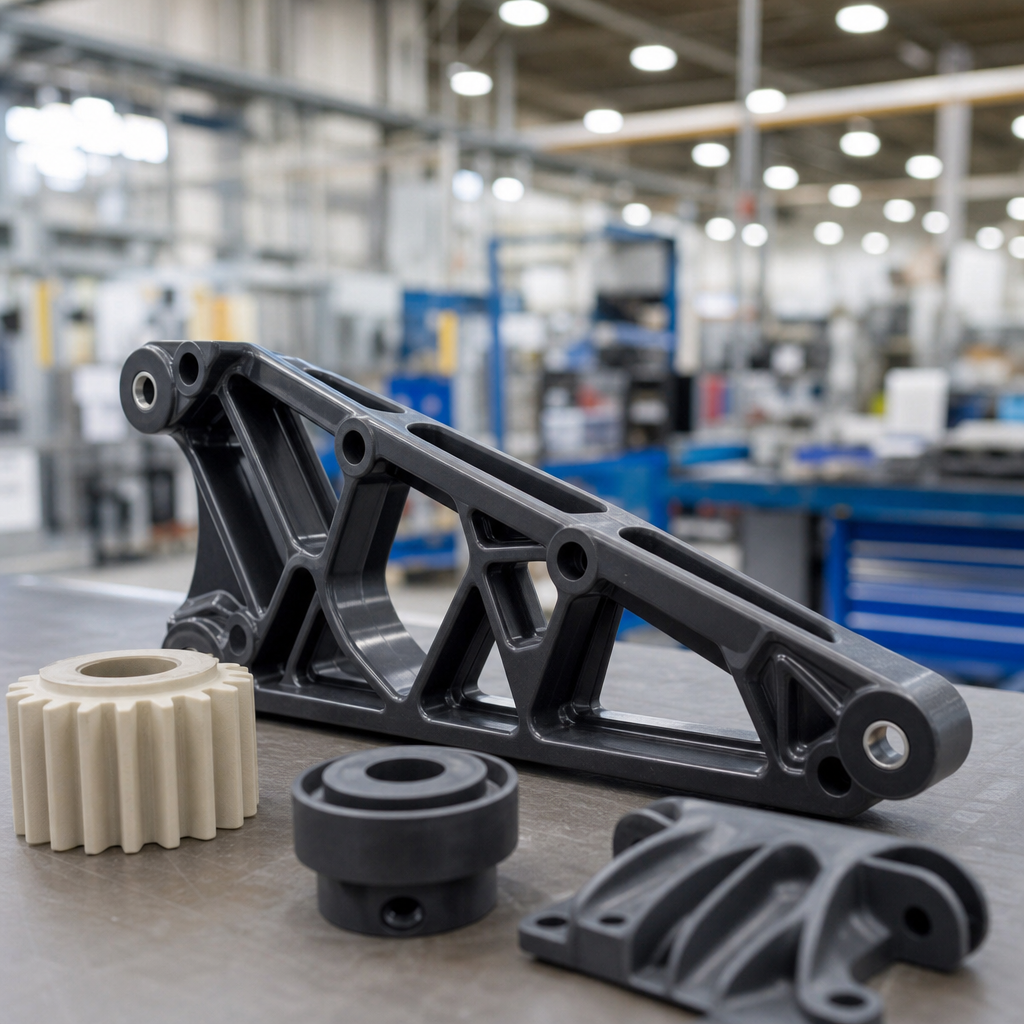
Polymers have become central to developing high-strength industrial components because they combine low weight, corrosion resistance, design flexibility, and increasingly impressive mechanical performance in demanding environments. In industrial applications, the term polymer covers a broad family of materials, including commodity plastics, engineering thermoplastics, thermosets, elastomers, and high-performance composites reinforced with glass, carbon, or aramid fibers. When manufacturers talk about high-strength components, they usually mean parts that must resist tensile loads, impact, fatigue, abrasion, heat, chemicals, or long-term creep while still meeting production, cost, and compliance targets. I have seen this shift firsthand in projects where metal brackets, housings, pump internals, and conveyor elements were redesigned with advanced polymers to reduce mass, extend service life, and simplify assembly. This matters because modern factories, vehicles, processing lines, and energy systems need materials that perform reliably under real operating conditions, not just in lab tests.
Polymers in industrial applications now support everything from gears and bearings to electrical connectors, pressure-resistant piping, structural panels, and precision machine components. Their rise is not based on marketing claims; it is driven by measurable gains in specific strength, corrosion performance, manufacturability, and lifecycle economics. Materials such as polyamide, polycarbonate, PEEK, PPS, UHMW-PE, epoxy composites, and glass-filled polypropylene each occupy a distinct role depending on stress, temperature, chemical exposure, and tolerances. The most successful industrial designs do not ask whether polymer can replace metal everywhere. They ask where a polymer system delivers the best balance of strength, stiffness, durability, processing speed, and total installed cost. As a hub for polymers in industrial applications, this article explains how high-strength polymer components are selected, where they are used, what performance limits matter, and how engineers turn material science into reliable production parts.
What Makes a Polymer Suitable for High-Strength Industrial Components
A polymer is suitable for a high-strength industrial component when its full property profile matches the actual service environment. Tensile strength is only one metric. Engineers also evaluate modulus, impact resistance, elongation, fatigue behavior, creep resistance, heat deflection temperature, coefficient of friction, moisture absorption, dimensional stability, dielectric performance, UV resistance, and chemical compatibility. In practice, failures often come from overlooking one of these secondary properties. A glass-filled nylon housing may test strong in dry conditions but lose dimensional accuracy after moisture uptake. A rigid thermoset may resist heat well yet crack under shock loading. A UHMW-PE liner may excel in abrasion but lack the stiffness needed for a structural mount.
Material architecture is equally important. Unfilled thermoplastics offer toughness and easier processing, while filled grades add stiffness, thermal stability, and load-bearing capacity. Fiber-reinforced polymers can dramatically increase specific strength, which is why they are widely used in industrial panels, machine frames, pressure vessels, and robotic structures. Processing method affects performance too. Injection molding can produce complex shapes with ribs and bosses, but fiber orientation can create anisotropic strength. Compression molding and filament winding can optimize reinforcement alignment for highly loaded parts. In real manufacturing programs, the strongest component is rarely the one with the highest brochure number; it is the one whose material, geometry, tooling, and operating environment were engineered together from the start.
Key Polymer Families Used Across Industrial Applications
Different polymer families solve different industrial problems. Polyamide, often called nylon, is widely used for gears, wear pads, cable ties, machine guards, and structural housings because it offers a useful combination of strength, toughness, and wear resistance. Acetal provides excellent dimensional stability and low friction, making it common in precision components, valves, and conveyor parts. Polycarbonate is chosen where impact strength and transparency matter, such as machine covers and protective enclosures. Polypropylene and polyethylene dominate chemical tanks, piping, and liners because they resist many corrosive substances while remaining relatively lightweight and economical.
For more demanding conditions, engineers move into engineering thermoplastics and specialty materials. PPS handles high temperatures and aggressive chemicals in pump, electrical, and automotive underhood applications. PEEK is one of the most capable high-performance thermoplastics, maintaining strength and stiffness at elevated temperatures while resisting steam, fuels, and many solvents; it appears in aerospace, semiconductor, medical, and oil and gas equipment. Thermosets such as epoxy and phenolic systems are used in laminates, electrical insulation, structural composites, and heat-resistant components. Elastomeric polymers, including polyurethane, support industrial rollers, seals, and impact-absorbing elements where resilience matters more than rigid stiffness. In practice, polymers in industrial applications should be matched by function first, then refined by grade, reinforcement, and processing route.
How Reinforcement Raises Strength, Stiffness, and Reliability
Reinforcement is the main reason polymers can compete with metals in many structural and semi-structural uses. Adding glass fiber to nylon, polypropylene, or PBT significantly increases tensile and flexural strength, raises stiffness, and improves heat resistance. Carbon fiber goes further, delivering very high specific stiffness and low thermal expansion, which is why carbon-reinforced polymers are used in robotic arms, lightweight machine structures, and precision handling systems. Mineral fillers, talc, and mica can improve dimensional stability and reduce warpage, though they usually do not deliver the same strength gain as fiber reinforcement. Aramid reinforcement can improve impact and fatigue response in selected composite systems.
There are tradeoffs. Reinforcement often reduces ductility, making a part less forgiving under sudden overload. Fiber-filled polymers can also abrade tooling and mating surfaces, which matters in gears and sliding assemblies. Orientation effects are critical: an injection-molded bracket may be strong along the principal flow direction but much weaker across weld lines. I have seen production parts pass qualification loads in one fixture orientation and fail in another because the mold gate location drove unfavorable fiber alignment. Good industrial polymer design therefore combines material selection with simulation, gate design, and structural testing. Reinforcement is powerful, but only when the engineer understands how the fibers will actually sit inside the finished component.
Manufacturing Methods and Their Effect on Component Performance
The performance of a polymer component is shaped as much by manufacturing as by chemistry. Injection molding is the dominant process for high-volume industrial parts because it delivers repeatability, complex geometry, and low per-part cost after tooling investment. It is ideal for housings, clips, electrical bodies, fan components, impellers, and fluid-handling parts. Extrusion supports pipes, profiles, and sheets. Blow molding is used for tanks and ducts. Compression molding and transfer molding are common for thermoset parts requiring heat resistance and electrical performance. Machining polymer stock shapes remains valuable for low-volume components, prototypes, and oversized wear parts.
Composite manufacturing expands the design space further. Filament winding is used for pressure vessels and pipes because it aligns fibers along hoop and axial stress paths. Pultrusion produces continuous profiles for ladders, cable trays, and structural members with high longitudinal strength. Resin transfer molding and autoclave processing support more demanding aerospace and high-precision industrial structures. Additive manufacturing also has an expanding role, especially with filled nylon, PEI, and PEEK in jigs, fixtures, and low-volume functional parts. The process choice determines fiber orientation, void content, crystallinity, residual stress, and surface finish. Those variables directly affect fatigue life, seal integrity, dimensional control, and field reliability, so process selection is never a downstream detail.
Where High-Strength Polymer Components Deliver the Greatest Industrial Value
The best applications are those where polymer properties solve multiple problems at once. In fluid handling systems, polymer valves, pump casings, impellers, seals, and piping components resist corrosion that would quickly attack carbon steel. In bulk material handling, UHMW-PE liners reduce friction and prevent sticking in chutes and hoppers. In automation systems, glass-filled engineering polymers help reduce moving mass in end effectors, guides, and covers, improving energy efficiency and cycle time. In electrical equipment, thermosets and engineering thermoplastics provide insulation, flame resistance, and dimensional precision in terminals, switchgear, coil formers, and connector bodies.
Automotive and transportation manufacturing offer especially clear examples. Replacing stamped metal with long-fiber thermoplastic front-end modules, pedal structures, or battery pack elements can reduce part count and assembly steps while lowering mass. Food and beverage plants use polymer conveyor components, wear strips, and star wheels because they resist washdown chemicals and run quietly. Chemical processing plants specify fluoropolymers, polypropylene, and reinforced thermoplastics for tanks, ducting, and pump internals where corrosion resistance is non-negotiable. Wind energy and marine sectors rely heavily on fiber-reinforced composites for blades, panels, covers, and enclosures. In each case, the value is not strength alone; it is strength combined with durability, lighter handling, lower maintenance, and better suitability for the operating environment.
| Application | Typical Polymer | Main Performance Benefit | Common Limitation |
|---|---|---|---|
| Gears and bearings | Nylon, acetal, PEEK | Low friction, wear resistance, quiet operation | Heat buildup under high load |
| Chemical tanks and piping | PP, PE, PVDF | Corrosion resistance, low weight | Lower stiffness than metal |
| Structural panels and frames | Glass or carbon fiber composites | High specific strength and stiffness | Anisotropic properties |
| Electrical components | PBT, PPS, phenolic, epoxy | Insulation, flame resistance, dimensional control | Brittleness in some grades |
| Wear liners and guides | UHMW-PE, polyurethane | Abrasion resistance, impact absorption | Limited structural load capacity |
Design Rules Engineers Must Follow to Prevent Premature Failure
High-strength polymers reward disciplined design and punish metal-copying. Sharp corners create stress concentrations and should be replaced with generous radii. Thick sections can sink, warp, or cool unevenly, so ribs are usually better than solid mass for stiffness. Bosses need support gussets. Snap features must account for strain limits and temperature. Threads often require metal inserts in repeated-service applications. Creep is a major issue in continuously loaded parts, especially at elevated temperatures, so engineers design around long-term modulus rather than short-term tensile values. Deflection limits can govern part success even when ultimate strength appears acceptable.
Environmental exposure must be treated as part of the load case. Moisture, oils, solvents, steam, and UV can change dimensions and mechanical properties over time. Standards and test methods provide structure here. ASTM D638 is used for tensile properties of plastics, ISO 178 for flexural behavior, ASTM D256 and ISO 179 for impact, and UL 94 for flammability. For composites, engineers commonly evaluate interlaminar shear, fatigue, and environmental aging alongside basic strength. Finite element analysis is useful, but only when supported by realistic material data that includes temperature and time dependency. In design reviews, the most reliable question is simple: what will this part experience after five years in the actual plant, not on the day it leaves the mold?
Economics, Sustainability, and the Future of Polymers in Industrial Applications
The economics of polymers in industrial applications are broader than raw material price. A polymer part may cost more per kilogram than steel yet still lower total system cost by cutting machining, reducing fasteners, consolidating multiple components, shortening assembly time, and lowering shipping weight. Corrosion resistance can remove the need for coatings. Self-lubricating grades can reduce maintenance intervals. In one equipment redesign I worked on, converting a metal multi-piece guard assembly to a molded glass-filled polymer cut assembly time by more than half and eliminated several field rust complaints, even though the resin itself was more expensive than sheet metal on a pure material basis.
Sustainability is also reshaping material selection. Recyclable thermoplastics are attractive because scrap can often be reprocessed within controlled limits. Bio-based polymers and recycled-content engineering resins are improving, though performance consistency remains a real consideration for critical components. Lightweighting reduces transport energy use in vehicles and mobile equipment. Longer service life lowers replacement frequency and waste. Looking ahead, expect growth in long-fiber thermoplastics, hybrid metal-polymer structures, conductive and flame-retardant specialty compounds, and digitally validated material databases that improve design confidence. The core lesson is straightforward: high-strength polymer components succeed when engineers select materials based on service conditions, reinforce them intelligently, process them correctly, and design for real-world loads. If you are building or specifying industrial equipment, review your current components and identify where a polymer solution could improve strength, reliability, and lifecycle cost.
Frequently Asked Questions
What types of polymers are used to make high-strength industrial components?
High-strength industrial components can be made from several polymer families, and each category serves a different performance need. Commodity plastics such as polypropylene or polyethylene are often used where cost, chemical resistance, and low weight are priorities, but they are usually not the first choice for highly loaded structural parts. Engineering thermoplastics, including nylon, polycarbonate, acetal, PEEK, PPS, and PEI, are much more common in demanding industrial settings because they offer better strength, dimensional stability, wear resistance, and temperature performance. Thermosets such as epoxy, polyester, and phenolic resins are also widely used, particularly when rigidity, heat resistance, and long-term structural stability are required. Elastomers may be included in high-strength assemblies where sealing, damping, or controlled flexibility is needed.
One of the most important advances in this area is the use of reinforced polymers and composites. By combining a polymer matrix with glass, carbon, or aramid fibers, manufacturers can dramatically improve tensile strength, stiffness, impact behavior, and fatigue performance. Glass-filled nylons, carbon fiber-reinforced thermoplastics, and epoxy-based structural composites are now common in machinery housings, brackets, gears, conveyor parts, electrical enclosures, pump components, and transportation-related systems. In practice, the best polymer is not simply the strongest on a datasheet. Engineers look at the full operating environment, including load type, exposure to chemicals, moisture absorption, service temperature, creep resistance, manufacturing method, and cost. That is why material selection for industrial polymer components is usually application-specific rather than one-size-fits-all.
How do polymers compare with metals in high-strength industrial applications?
Polymers do not replace metals in every application, but in many industrial components they offer a very competitive combination of strength, efficiency, and durability. The biggest advantage is usually weight reduction. A properly selected polymer component can provide the required performance at a fraction of the weight of steel or aluminum, which helps improve energy efficiency, simplify handling, reduce moving mass, and lower transportation costs. Polymers also resist corrosion far better than many metals, making them especially useful in chemical processing, water treatment, marine environments, and outdoor equipment exposed to moisture or aggressive media. In addition, polymers can absorb vibration, reduce noise, and allow more complex shapes to be molded into a single part, reducing assembly steps and total system cost.
That said, the comparison depends heavily on how the part is loaded and where it will be used. Metals generally outperform unreinforced polymers in absolute stiffness, very high temperature service, and applications involving extreme point loads or long-term structural creep concerns. However, reinforced polymers and advanced composites can close that gap significantly, especially when engineers design the geometry around the material’s strengths. In many cases, polymers are not chosen because they are universally stronger than metal, but because they deliver the best balance of strength-to-weight ratio, corrosion resistance, manufacturability, lifecycle cost, and design freedom. When a component is engineered properly, a polymer solution can outperform a metal one in real-world service even if the raw material properties appear lower on paper.
Why are fiber-reinforced polymers so important in developing high-strength industrial parts?
Fiber reinforcement is one of the main reasons polymers have become viable for truly demanding industrial applications. The base polymer acts as the matrix that binds the structure together, while the reinforcing fibers carry much of the load and improve stiffness, dimensional stability, and resistance to deformation. Glass fibers are commonly used because they provide a strong cost-to-performance ratio and are suitable for a wide range of industrial components. Carbon fibers offer much higher stiffness and lower weight, making them ideal for applications where performance is critical and reduced mass is a major benefit. Aramid fibers are valued for toughness and impact resistance, especially in applications that need durability under dynamic or abrasive conditions.
The importance of reinforcement goes beyond simply making a part stronger. Fiber-reinforced polymers can be engineered for directional strength, meaning the material can be optimized based on how the component actually experiences loads in service. This gives engineers a level of design control that is difficult to achieve with conventional materials. Reinforcement can also improve thermal stability, reduce creep, and enhance fatigue resistance, all of which are essential in industrial equipment that operates continuously or under repeated stress cycles. The result is a class of materials that can be tailored for gears, structural supports, machine guards, bearing cages, electrical components, fluid-handling systems, and lightweight replacement parts across multiple sectors. In modern industrial design, fiber-reinforced polymers are important not just because they increase mechanical performance, but because they make targeted, efficient material engineering possible.
What factors determine whether a polymer is suitable for a demanding industrial environment?
Suitability depends on much more than headline strength values. Engineers evaluate the actual service conditions the component will face, starting with the type of mechanical load involved. Tensile, compressive, impact, cyclic, and sustained loads all affect polymers differently, and a material that performs well under one condition may not perform as well under another. Creep behavior is especially important because polymers can deform gradually under constant load over time. Temperature is another critical factor. Some polymers maintain their properties across a wide operating range, while others soften, embrittle, or lose dimensional accuracy when exposed to heat or cold. Moisture absorption also matters because certain materials, such as some nylons, can change dimensions and mechanical properties when exposed to humidity or water.
Chemical exposure is equally important in industrial settings. Oils, fuels, solvents, acids, alkalis, cleaning agents, and UV exposure can all affect long-term performance. Wear resistance and friction behavior must also be considered for moving components like bushings, guides, and gears. In electrical and electronic environments, insulation properties, flame resistance, and static control may be required. Processing method plays a major role too, because injection molding, compression molding, extrusion, filament winding, and additive manufacturing each influence fiber orientation, internal stresses, tolerances, and final part quality. Finally, engineers look at regulatory requirements, maintenance expectations, cost targets, and lifecycle performance. A polymer is suitable for a demanding environment only when it meets the full set of functional, environmental, and economic requirements over the expected life of the component.
What are the main benefits of using polymers for industrial component design and manufacturing?
The main benefits are lower weight, corrosion resistance, design flexibility, production efficiency, and the ability to tailor performance to specific applications. Weight reduction is often the first and most visible advantage, especially in equipment where moving mass affects energy use, speed, ergonomics, or structural load. Corrosion resistance is another major benefit, because polymer components can operate in wet, chemically aggressive, or outdoor environments without the rust and oxidation issues associated with many metals. Polymers also enable highly complex geometries to be produced with fewer secondary operations. Internal channels, snap-fits, ribs, bosses, and integrated features can often be molded directly into the part, reducing assembly time and part count while improving consistency.
From a manufacturing perspective, polymers support both high-volume and specialized production strategies. Injection molding allows rapid, repeatable manufacturing of complex parts, while thermoset molding and composite layup methods support structural components with advanced performance requirements. In addition, polymers can improve system-level performance by reducing noise, damping vibration, and offering built-in electrical insulation or low-friction behavior. The broader strategic advantage is that polymers allow manufacturers to engineer around the total application rather than just the raw material. That means optimizing for durability, maintenance, logistics, user safety, and lifecycle cost all at once. As polymer science and reinforcement technologies continue to advance, industrial designers have more options than ever to create components that are not only strong, but also smarter, lighter, and better suited to real operating conditions.