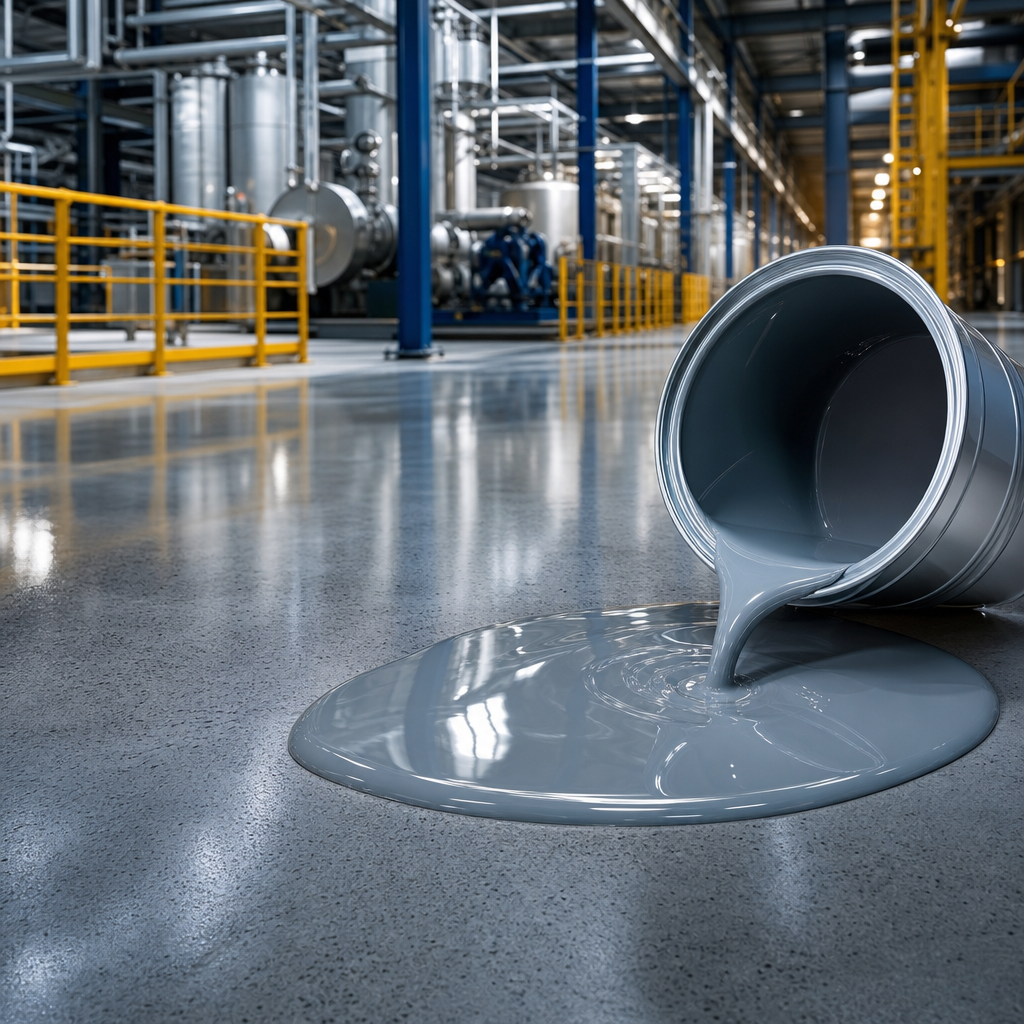
Innovations in polymers for industrial coatings and sealants are reshaping how manufacturers protect assets, extend service life, and meet stricter performance and environmental requirements across transportation, construction, energy, electronics, and heavy industry. In this context, polymers are large-chain molecules engineered to deliver adhesion, flexibility, chemical resistance, barrier protection, weatherability, or controlled curing within a coating or sealant system. Industrial coatings are films applied to metal, concrete, composites, or plastics to resist corrosion, abrasion, ultraviolet light, solvents, heat, and fouling. Sealants are formulated materials that fill joints or gaps while maintaining adhesion and movement capability under mechanical and environmental stress. I have worked with teams selecting epoxy, polyurethane, silicone, acrylic, fluoropolymer, and hybrid chemistries for factory floors, process equipment, curtain walls, pipelines, battery housings, and marine structures, and the core lesson is consistent: polymer choice determines long-term performance more than color, thickness, or marketing claims. This hub article on polymers in industrial applications explains the main material families, the most important innovations, the practical tradeoffs behind selection, and the real-world use cases that connect this topic to deeper case studies throughout the broader Case Studies and Applications section.
How Polymer Chemistry Drives Industrial Performance
The first question most specifiers ask is simple: what makes one coating or sealant last ten years while another fails in two? The answer usually starts with polymer architecture. Backbone chemistry, molecular weight distribution, crosslink density, glass transition temperature, cure mechanism, and functional groups all shape the final balance of hardness, elongation, permeability, adhesion, and resistance to heat or chemicals. Epoxy systems, for example, are valued for high adhesion, low shrinkage, and strong chemical resistance because the cured network forms a dense thermoset matrix. Polyurethanes add flexibility and abrasion resistance through urethane linkages and tunable soft and hard segments. Silicones retain elasticity at high and low temperatures because their Si-O backbone has exceptional thermal stability and rotational freedom. Acrylics offer color retention and weatherability, while fluoropolymers deliver extremely low surface energy and long outdoor durability.
In industrial practice, innovations rarely come from inventing an entirely new class overnight. They emerge from targeted changes such as introducing self-crosslinking functional groups, incorporating nano-scale fillers, shifting to waterborne dispersions, adding silane-modified backbones, or designing polymers that cure faster under lower energy input. A maintenance coating for a chemical plant may need early water resistance within four hours, overcoating flexibility for field crews, and resistance to sulfuric fumes. That pushes formulators toward advanced epoxy novolac or hybrid systems with optimized amine curing. A façade joint sealant in a hot climate may require plus or minus 50 percent movement, UV stability, and low dirt pickup, which often favors high-performance silicone or silyl-terminated polyether chemistries. Understanding these relationships is the foundation for evaluating every application in polymers for industrial applications.
Core Polymer Families Used in Coatings and Sealants
Each polymer family occupies a distinct performance space, and successful material selection begins by matching chemistry to service conditions rather than selecting by brand alone. Epoxies remain essential in primers, tank linings, rebar coatings, flooring, and marine maintenance because they adhere strongly to steel and concrete and resist many fuels, oils, and process chemicals. Their limitation is UV chalking and reduced flexibility in some formulations, so they are often paired with polyurethane or polysiloxane topcoats. Polyurethanes excel where impact resistance, gloss retention, and elastic recovery matter, including machinery finishes, wind turbine components, rail cars, and protective topcoats. Moisture sensitivity during cure and isocyanate handling requirements are important constraints, although newer low-free-monomer systems are improving safety profiles.
Silicones dominate high-movement sealing in glazing, weatherproofing, electronics encapsulation, and high-temperature gasketing. Their strengths include weatherability, thermal stability, and long-term elasticity; their drawbacks can include lower paintability and substrate-dependent adhesion without primers. Acrylics are common in waterborne industrial coatings because they offer excellent exterior durability, color retention, and lower volatile organic compound potential, making them useful in architectural metal, equipment, and general industrial finishing. Fluoropolymers such as PVDF and FEVE are chosen for extreme outdoor exposure, especially on landmark buildings and infrastructure where color and gloss retention over decades justify higher initial cost. Hybrid systems, especially silane-modified polymers and epoxy-siloxane combinations, are among the most important recent developments because they bridge performance gaps between rigid chemical-resistant networks and flexible, weather-stable elastomers.
Recent Innovations Changing the Market
Three innovation themes are driving the current market: sustainability, durability under harsher conditions, and process efficiency. Waterborne and high-solids formulations continue to replace traditional solventborne systems as regulatory pressure on VOC emissions increases in North America, Europe, and parts of Asia. The advance is not simply lower solvent content. Modern dispersions and resin design now allow higher film build, improved coalescence, and better corrosion resistance than earlier generations that struggled in severe service. In parallel, powder coatings have expanded from appliances into architectural aluminum, automotive components, agricultural equipment, and pipeline applications because they can eliminate most solvents while providing uniform, durable films when application lines are well controlled.
Another major development is the use of nano-engineered additives and functional fillers. Nano-silica can improve scratch resistance and mechanical strength; graphene and platelet minerals can reduce permeability by creating a tortuous path for moisture and corrosive ions; specialty pigments and inhibitors enable active corrosion protection rather than passive barrier behavior alone. Self-healing approaches are also moving from academic curiosity into niche industrial use. Microcapsules or reversible chemistries can help close microcracks in selected coatings, especially where maintenance access is difficult. In sealants, low-modulus hybrids are delivering better adhesion to mixed substrates, reduced dirt pickup, and improved paint compatibility. Faster curing through UV, dual-cure, moisture-cure, or low-temperature cure technologies is cutting line time in manufacturing, especially for electronics assembly, automotive sealing, and modular construction.
Performance Requirements by Industrial Sector
Industrial coatings and sealants are not selected in the abstract; they are selected against specific failure modes. In oil and gas, internal tank linings and secondary containment systems need chemical resistance to hydrocarbons, sour service contaminants, and cleaning agents. Offshore and marine assets demand protection against salt spray, immersion, impact, and underfilm corrosion, making zinc-rich primers, epoxy intermediates, and durable topcoats standard. In construction, sealants around façades, glazing systems, precast joints, and flooring transitions must handle thermal cycling, substrate movement, moisture, and UV exposure for years without cohesive or adhesive failure. In automotive and transport, polymers must survive vibration, stone chipping, road salt, fuels, thermal shock, and increasingly the thermal management demands of electric vehicles.
Electronics add another layer of complexity because coatings and sealants may need dielectric performance, flame retardancy, low outgassing, optical clarity, or resistance to thermal cycling around sensitive components. Renewable energy systems are also expanding the design envelope. Wind blades need fatigue-resistant coatings and bonding materials for composites; solar installations need sealants and backsheets that resist UV degradation and moisture ingress; battery packs require thermal interface materials, fire-resistant barriers, and sealants compatible with metals, engineered plastics, and cooling fluids. Across all of these sectors, the right polymer solution reduces total lifecycle cost by lowering maintenance frequency, minimizing downtime, and preserving structural integrity. That is why hub pages on polymers in industrial applications must connect chemistry to end-use conditions rather than treating materials as interchangeable commodities.
Selection Criteria: Matching Chemistry to Service Conditions
When choosing a polymer for coatings or sealants, engineers should assess substrate, environment, movement, cure constraints, compliance requirements, and expected maintenance interval in one decision matrix. Surface preparation remains critical. Even a premium polymer fails on contaminated steel or weak concrete laitance. Standards such as SSPC-SP and ISO 8501 for surface cleanliness, ASTM adhesion tests, ASTM B117 salt spray, ISO 12944 corrosion categories, and movement classifications used in building sealants provide a more reliable basis for selection than generic durability claims. I have seen low-cost systems outperform premium brands solely because the selected chemistry matched the substrate profile, service temperature, and application window.
| Polymer family | Primary strengths | Common limitations | Typical industrial uses |
|---|---|---|---|
| Epoxy | Adhesion, chemical resistance, high build, corrosion protection | UV chalking, limited flexibility in some grades | Primers, tank linings, floors, marine maintenance |
| Polyurethane | Abrasion resistance, gloss retention, toughness, flexibility | Moisture sensitivity during cure, isocyanate handling | Topcoats, transport equipment, machinery, wind components |
| Silicone | UV stability, elasticity, thermal resistance | Paintability challenges, primer needs on some substrates | Façade joints, glazing, electronics, high-temperature seals |
| Acrylic | Weatherability, color retention, waterborne compatibility | Lower severe-chemical resistance than epoxies | General industrial finishes, architectural metal |
| Fluoropolymer | Exceptional outdoor durability, low surface energy | Higher cost, specialized application requirements | High-end architectural and infrastructure coatings |
| Silane-modified hybrid | Balanced adhesion, flexibility, lower VOC potential | Performance varies by formulation | Construction sealants, transport assembly, mixed substrates |
Movement capability matters as much as chemistry. A rigid high-build epoxy on a dynamic joint will crack even if its laboratory properties look impressive. Conversely, a flexible silicone may survive movement but fail chemically in solvent immersion. Temperature range also changes the equation. Some polymers embrittle near their glass transition temperature, while others lose strength under sustained heat. Regulatory factors increasingly influence selection too, including VOC limits, REACH restrictions, PFAS scrutiny, food-contact compliance, and fire performance standards. The best specification aligns polymer chemistry with actual exposure, not worst-case marketing language.
Application Methods, Failure Analysis, and Lifecycle Value
Advanced polymers only deliver value when they are applied and inspected correctly. Coatings may be sprayed, brushed, rolled, electrostatically applied, dip coated, or powder coated, and each method affects transfer efficiency, film thickness, cure profile, and defect risk. Sealants may be gunned manually, robotically dispensed, or applied as preformed tapes or gaskets. Cure schedules, ambient humidity, dew point control, and line speed are not minor details; they directly determine network formation, adhesion development, and final resistance properties. A high-solids epoxy applied over marginally prepared steel at the wrong surface temperature can trap contamination and fail by delamination. A façade sealant installed outside its joint design range may tear cohesively long before the advertised service life.
Failure analysis reveals recurring patterns. Corrosion under coatings often traces back to holidays, edge retention problems, poor stripe coating, or osmotic blistering from moisture ingress. Sealant failures frequently result from three-sided adhesion, incompatible backing materials, primer omission, or using the wrong modulus for expected joint movement. The lifecycle perspective is therefore essential. A more expensive fluoropolymer finish on an exposed building envelope may be justified if repainting access is difficult and appearance retention has economic value. A hybrid sealant that reduces installation errors can lower warranty costs even if raw material cost is slightly higher. For organizations building a durable materials strategy, the smart move is to compare installed cost, inspection burden, maintenance interval, and failure consequence together. That broader view is where innovation in polymers for industrial coatings and sealants delivers measurable business value.
Where the Field Is Heading Next
The next phase of development will center on smarter, safer, and more circular polymer systems. Expect wider adoption of bio-based feedstocks where they improve carbon intensity without compromising durability, though performance validation will remain decisive. Digital formulation tools and machine learning are helping resin suppliers predict adhesion, cure behavior, and weathering outcomes faster, shortening development cycles. More products will be designed for lower energy cure, robotic application, and compatibility with automated quality control systems that use machine vision or inline spectroscopy. In maintenance environments, coatings that provide inspection visibility through color change, embedded sensing, or easier nondestructive testing will gain traction.
At the same time, the industry will keep balancing performance with regulation. The pressure to reduce hazardous ingredients, improve worker safety, and support end-of-life recyclability is real, but industrial users still need proven resistance to corrosion, chemicals, movement, and weathering. The strongest innovations are the ones that solve both sides of that equation rather than sacrificing durability for compliance headlines. For readers exploring polymers in industrial applications, the practical takeaway is clear: start with the failure mode, map it to service conditions, and then choose the polymer platform with the right balance of adhesion, flexibility, barrier protection, cure profile, and regulatory fit. From there, dig into the related case studies on sector-specific uses, comparative material performance, and field lessons. Better polymer decisions lead to longer asset life, lower maintenance cost, and fewer surprises in service. Use this hub as your starting point, then move deeper into the applications most relevant to your operation.
Frequently Asked Questions
1. What polymer innovations are having the biggest impact on industrial coatings and sealants today?
Several polymer innovations are driving major gains in industrial coatings and sealants, especially where manufacturers need longer service life, faster processing, and improved environmental compliance. Advanced epoxy systems continue to evolve with better toughness, corrosion resistance, and adhesion to challenging substrates, making them highly valuable in heavy industry, marine environments, infrastructure, and protective linings. Polyurethanes are also seeing important improvements, particularly in balancing flexibility, abrasion resistance, UV durability, and chemical performance for transportation, flooring, and exterior industrial applications. In sealants, hybrid polymers such as silane-modified polyethers and silane-modified polyurethanes are gaining attention because they combine strong adhesion, weatherability, and low volatile organic compound profiles while avoiding some of the limitations of traditional solvent-heavy chemistries.
Another major area of innovation is the development of waterborne, high-solids, powder, and radiation-curable polymer technologies. These systems are helping manufacturers reduce emissions without sacrificing the performance expected from industrial-grade protective materials. Functional polymer design is also becoming more sophisticated, with formulators tailoring backbone chemistry, crosslink density, and reactive groups to achieve highly specific results such as improved barrier protection, lower-temperature curing, self-healing behavior, anti-fouling performance, or enhanced resistance to fuels, oils, salts, and aggressive cleaners. In practical terms, the biggest impact comes from polymers that no longer force companies to choose between productivity, durability, and sustainability. The most successful innovations are those that improve all three at once.
2. How do advanced polymers improve the performance and service life of industrial coatings?
Advanced polymers improve coating performance by controlling the fundamental properties that determine how a coating behaves in real-world service. Adhesion is one of the most critical functions. A well-designed polymer system bonds tightly to metal, concrete, composites, plastics, or previously coated surfaces, reducing the risk of peeling, blistering, and underfilm corrosion. Modern polymer architectures also improve mechanical resilience by combining hardness with flexibility, which is especially important where coated parts experience vibration, thermal cycling, impact, or substrate movement. This balance helps coatings resist cracking, chipping, and premature failure.
Barrier protection is another key advantage. Many next-generation polymers are engineered to reduce permeability to water, oxygen, salts, chemicals, and contaminants. That matters tremendously in industrial environments, where corrosion and chemical attack can shorten equipment life, compromise safety, and raise maintenance costs. High-performance fluoropolymers, acrylics, epoxies, polyaspartics, and polyurethane systems can also provide strong weatherability, color retention, gloss retention, and resistance to ultraviolet degradation. In demanding sectors such as energy, transportation, and construction, these benefits translate into fewer shutdowns, less frequent recoating, and better lifecycle economics. Instead of focusing only on initial coating appearance, advanced polymer technology allows owners and manufacturers to design for long-term durability under highly specific operating conditions.
3. Why are sustainability and environmental regulations accelerating polymer innovation in coatings and sealants?
Sustainability and regulation are major forces behind polymer innovation because industrial users are under pressure to reduce emissions, improve worker safety, and meet stricter standards without compromising performance. Historically, many high-performing coatings and sealants relied on solvent-rich systems that released significant levels of volatile organic compounds during application and curing. Today, regulations in many regions are pushing manufacturers toward lower-VOC and lower-hazard alternatives. That has fueled rapid growth in waterborne polymers, 100% solids systems, powder coatings, UV-curable chemistries, and moisture-curing hybrid sealants that can deliver industrial performance with a smaller environmental footprint.
The shift goes beyond VOC reduction. Polymer developers are also working on chemistries with improved raw material efficiency, lower energy curing requirements, greater durability, and longer maintenance intervals. A coating that lasts significantly longer can reduce material consumption, labor, downtime, and waste over the life of an asset, which is an important sustainability gain in its own right. There is also rising interest in bio-based feedstocks, recycled content, and polymer systems designed to avoid chemicals of concern. For manufacturers, the challenge is not simply replacing one ingredient with another. It is redesigning the polymer platform so that corrosion protection, adhesion, flexibility, cure speed, and weatherability still meet industrial specifications. The most meaningful innovations are those that align regulatory compliance with operational value rather than treating sustainability as a tradeoff.
4. What should manufacturers consider when selecting a polymer for a specific industrial coating or sealant application?
Choosing the right polymer starts with understanding the full service environment, not just the basic substrate. Manufacturers need to consider whether the material will face constant moisture, immersion, salt spray, UV exposure, thermal cycling, fuels, acids, alkalis, abrasion, impact, or movement at joints and seams. A polymer that performs extremely well in a factory interior may fail quickly on outdoor infrastructure or in chemical processing equipment. Cure conditions also matter. Some applications require room-temperature curing, while others allow heat curing or demand very fast line speeds. In sealants, movement capability, adhesion to multiple substrates, and resistance to weathering are especially important. In coatings, hardness, film build, chemical resistance, and recoat windows can heavily influence polymer choice.
Application method and production efficiency are equally important. A polymer may offer excellent laboratory properties but be difficult to spray, mix, dispense, or cure consistently in a real manufacturing environment. Cost should also be evaluated on a lifecycle basis rather than on raw material price alone. A higher-performance polymer may reduce warranty claims, maintenance frequency, asset downtime, or total coating thickness required. Compatibility with primers, pigments, fillers, additives, and existing process equipment should be verified early in development. The best selection decisions come from matching polymer chemistry to actual operating demands, compliance requirements, and processing realities. In industrial coatings and sealants, performance depends not only on what the polymer can do chemically, but also on how reliably it can deliver that performance in the field.
5. What is the future outlook for polymers in industrial coatings and sealants?
The future of polymers in industrial coatings and sealants is moving toward smarter, more specialized, and more sustainable material design. One clear trend is the rise of multifunctional polymers that do more than provide simple film formation or gap filling. Manufacturers increasingly want systems that combine corrosion resistance, adhesion, flexibility, rapid cure, low emissions, and long-term weatherability in a single platform. There is also growing interest in responsive and protective functions such as self-healing behavior, anti-microbial surfaces, fouling resistance, conductivity control, flame retardancy, and improved thermal management for electronics and energy systems. As industrial environments become more demanding, polymer systems will continue to be engineered for narrower performance targets and tougher service conditions.
Digital formulation tools, predictive materials modeling, and advanced testing methods are also likely to accelerate innovation. These capabilities allow developers to optimize polymer structure more efficiently and reduce the trial-and-error traditionally involved in coatings and sealant development. At the same time, sustainability pressures will remain central, encouraging wider adoption of low-VOC, lower-energy, and potentially bio-derived polymer technologies. Sectors such as electric vehicles, renewable energy, semiconductor manufacturing, modular construction, and advanced infrastructure will create new performance requirements that conventional chemistries may not fully address. The outlook is strong because polymers sit at the center of how industrial coatings and sealants are expected to evolve: longer-lasting protection, faster production, smarter functionality, and better alignment with environmental goals.