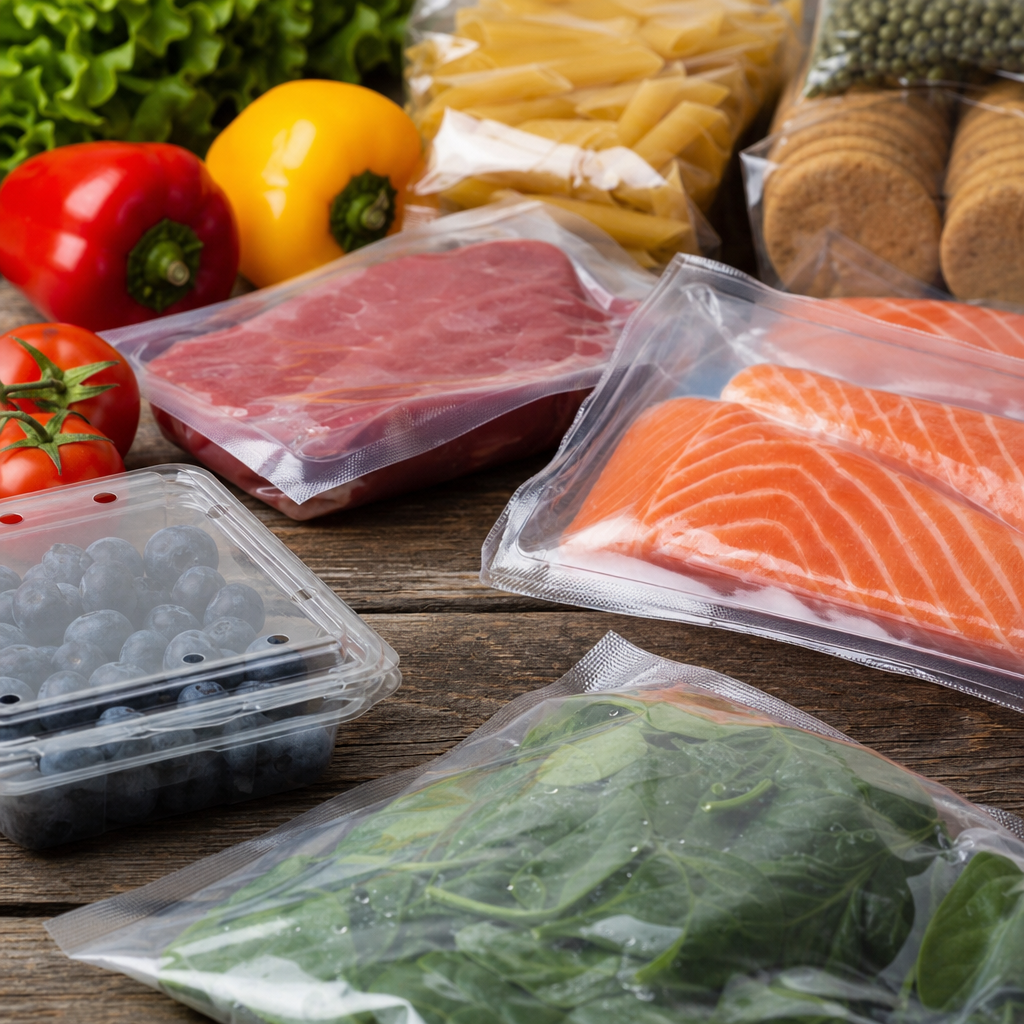
Polymers sit at the center of modern food preservation because they solve a practical problem every producer, distributor, retailer, and household faces: how to keep food safe and high quality for longer without adding unnecessary cost, waste, or complexity. In packaging and preservation, a polymer is a large molecule made of repeating units, engineered into films, trays, coatings, seals, absorbent pads, and barriers that control the movement of oxygen, moisture, aromas, oils, microbes, and light. I have worked with packaging teams evaluating shelf life failures, seal leaks, fogging issues, and oxygen ingress, and the pattern is consistent: when the polymer is chosen well, food lasts longer, ships better, and arrives with fewer defects; when it is chosen poorly, spoilage, recalls, and waste rise fast.
The role of polymers in enhancing food preservation goes far beyond “plastic packaging.” The field includes commodity materials such as polyethylene and polypropylene, high-barrier resins such as ethylene vinyl alcohol, condensation polymers such as polyethylene terephthalate and polyamides, elastomers in closures, and bio-based or biodegradable options such as polylactic acid, starch blends, cellulose derivatives, and polyhydroxyalkanoates. These materials can be used alone or in multilayer structures, where each layer contributes a specific function. One layer may provide sealability, another stiffness, another oxygen barrier, and another printability. That layered design is why a pouch of roasted coffee behaves differently from a produce bag, and why vacuum-packed meat, retort meals, bakery products, and dairy cups all rely on distinct polymer systems.
Why this matters is straightforward. Food loss and waste remain a global economic and environmental burden, and packaging is one of the most effective tools for reducing spoilage across the supply chain. Shelf life is not just a date code; it is the result of managing chemical, physical, and microbiological change. Oxidation causes rancidity and color loss. Water transfer makes crackers stale and cereal soggy. Carbon dioxide migration flattens beverages. Aroma scalping can strip flavor compounds from sauces or snacks. Microbial contamination can turn quality defects into safety hazards. Polymers help manage all of those pathways. They are therefore not peripheral to food systems; they are infrastructure for preservation, safety, logistics, and regulatory compliance.
As a hub for problem-solving with polymers, this article explains how specific polymer functions map to common preservation challenges, what material choices dominate in real applications, where tradeoffs matter, and how teams can make decisions that improve both shelf life and sustainability. The goal is practical clarity: if a company needs to reduce oxygen exposure, prevent moisture gain, survive hot filling, maintain transparency, or redesign a package for recyclability, polymer selection is usually the first lever to pull and the hardest one to reverse later.
How Polymers Preserve Food: Barrier, Seal, Structure, and Surface
The most important concept in food preservation packaging is barrier performance. Different foods fail for different reasons, so no single polymer is “best” in all cases. Oxygen-sensitive foods such as processed meats, nuts, cheese, coffee, and many ready meals need low oxygen transmission rates to slow oxidation and aerobic microbial growth. Moisture-sensitive foods such as chips, biscuits, powdered ingredients, and dehydrated meals need water vapor control. Light-sensitive products such as milk or edible oils may also need protection from ultraviolet or visible light. A polymer works by slowing transfer, not by creating an absolute wall, so the target is always to reduce transmission enough that the food remains acceptable through distribution, storage, and consumer use.
In practice, preservation also depends on seal integrity. A package with excellent barrier resin but weak heat seals will fail in the field. Polyethylene remains common because it seals reliably, tolerates contamination better than many alternatives, and performs well as an inner contact layer. Polypropylene is valued for stiffness, heat resistance, and clarity in many tubs, caps, and film structures. PET provides strength, gloss, dimensional stability, and good gas barrier for bottles and trays, especially when paired with coatings, scavengers, or multilayer structures. EVOH delivers excellent oxygen barrier when dry, which is why it is often sandwiched between moisture-protective polyolefin layers. Polyamides contribute puncture resistance in vacuum pouches for meat and cheese. The preservation result comes from the whole structure, not a single resin.
Surface behavior matters as much as bulk barrier. Anti-fog additives reduce condensation on lidded produce packs and ready meals, improving visibility and limiting localized moisture droplets that support spoilage. Slip and anti-block agents help films run on high-speed lines without sticking. Tie layers enable adhesion between otherwise incompatible polymers in coextruded webs. Sealants can be formulated for peelability in yogurt cups or high hot-tack performance in vertical form-fill-seal lines. For fresh produce, the package may need a controlled gas exchange profile, allowing oxygen in and carbon dioxide out at rates matched to respiration. That is not ordinary wrapping; it is an engineered microenvironment.
Matching Polymer Systems to Real Food Preservation Problems
When teams troubleshoot short shelf life, they usually start with the dominant failure mode. If potato chips lose crispness, moisture ingress is the prime suspect, so metallized films, oriented polypropylene, or laminate redesign may outperform a simple thicker bag. If sliced deli meat turns brown before code date, oxygen ingress, headspace composition, seal leaks, or inadequate vacuum are likely causes, often addressed with PA/PE or PET/EVOH/PE structures in thermoformed packs. If berries mold quickly, the issue may be excess humidity, condensation, and poor gas balance, making perforation design or modified atmosphere packaging more important than adding a thicker film.
In case work, I have seen companies assume that “more material” means more preservation. That is often wrong. Thickness can help, but polymer chemistry and package architecture matter more. A thicker mono-PE pouch may still provide far less oxygen barrier than a thinner multilayer pouch with EVOH. Likewise, replacing a rigid PET tray with a cheaper polypropylene tray can work for some products, but not if the original system depended on oxygen scavenging or superior dimensional stability during lidding and transport. Preservation failures often appear as food issues, yet the root cause is material mismatch between product sensitivity, process conditions, and distribution reality.
| Food category | Main preservation risk | Common polymer approach | Why it works |
|---|---|---|---|
| Fresh meat | Oxygen exposure, purge, puncture | PA/PE vacuum pouch or PET/EVOH/PE tray | Combines puncture resistance, sealability, and strong oxygen barrier |
| Snack foods | Moisture gain, oxidation | Metallized OPP or multilayer flexible laminate | Protects crispness and slows rancidity in high-fat products |
| Dairy cups | Light, oxygen, seal failure | PP or PS cup with foil or barrier lidding | Supports filling lines while preserving flavor and culture stability |
| Fresh produce | Respiration, condensation, microbial growth | Perforated PE or specialized breathable film | Balances gas exchange and humidity around the product |
| Sauces and retort meals | Heat processing stress, oxygen ingress | Retortable multilayer pouch with PP or cast PP sealant | Survives sterilization while maintaining seal and barrier performance |
These examples show why the hub topic of problem-solving with polymers must be application led. The same resin can be effective in one format and unsuitable in another. Fresh bread may benefit more from moisture retention and antifungal strategy than from high oxygen barrier. Coffee packaging may need an exceptional aroma barrier and a degassing valve because roasted beans release carbon dioxide after packing. Frozen foods need toughness at low temperatures and resistance to abrasion, while hot-filled beverages require thermal stability and controlled paneling. Preservation is therefore a systems problem, with polymers acting as tuned components inside that system.
Active, Intelligent, and Edible Polymer Solutions
Traditional barrier packaging is passive: it slows unwanted change. Active polymer systems go further by interacting with the package environment. Oxygen scavengers are a leading example. These systems, often embedded in closures, bottle walls, labels, or sachets, chemically bind residual oxygen that remains after filling or enters during storage. They are used in products such as sauces, beverages, nuts, and processed meats where small oxygen loads can still degrade quality. Ethylene scavengers help preserve fruits and vegetables by removing a ripening hormone that accelerates senescence. Moisture absorbers in meat trays help manage purge and presentation, though they must be carefully designed to avoid contamination risk.
Antimicrobial polymer technologies are another growing area, though they require disciplined evaluation. Silver-based additives, organic acids, essential oil components, chitosan coatings, and enzyme-linked systems have all been studied, but performance depends heavily on migration behavior, food composition, and regulatory acceptance. In my experience, antimicrobial claims often sound stronger in laboratory tests than in commercial distribution. A film that reduces surface growth on a model medium may deliver modest benefit on a fatty, wet, protein-rich food under variable temperature abuse. These technologies can help, but they rarely replace good sanitation, cold-chain control, and barrier design.
Edible and bio-derived polymer coatings are especially relevant for fresh produce and minimally processed foods. Alginate, pectin, cellulose, starch, chitosan, and protein-based films can reduce moisture loss, carry antioxidants, and sometimes slow respiration. Wax coatings on citrus and cucumbers are familiar examples of surface preservation using polymeric materials. Recent work on pullulan and cellulose nanocomposites shows promise for transparent, oxygen-resistant coatings, particularly when paired with natural antimicrobials. However, commercial adoption depends on coating uniformity, taste neutrality, mechanical durability, wash-off behavior, and cost at scale. Preservation gains are real, but implementation discipline decides whether they hold up outside pilot trials.
Sustainability Tradeoffs and Regulatory Realities
A serious discussion of the role of polymers in enhancing food preservation must address sustainability without ignoring physics. The light weight and performance of polymer packaging often reduce food waste and transportation emissions, yet end-of-life management remains a major challenge. Flexible multilayer structures can be excellent for preservation and poor for recycling in many municipal systems. Mono-material polyethylene or polypropylene designs improve recyclability potential, but they may sacrifice oxygen barrier, stiffness, or heat resistance unless paired with coatings or redesigned package geometry. This is where many companies struggle: the most recyclable structure is not always the one that best protects the food.
Life cycle thinking helps resolve that tension. For many foods, especially animal proteins and dairy, the environmental burden of the food itself is much larger than that of the package. If downgauging or simplifying a package leads to more spoilage, the total footprint can worsen even if the pack looks greener on paper. That does not excuse poor package circularity. It means preservation and recovery must be optimized together. In practice, teams now examine design-for-recycling guidelines, post-consumer recycled content targets, barrier coating options, tethered closures, and refill models while validating that shelf life remains intact.
Regulatory compliance also shapes polymer choices. Food-contact materials must meet migration limits and composition rules set by authorities such as the U.S. Food and Drug Administration and the European Union framework for food-contact materials. Good manufacturing practice, overall migration, specific migration, and risk assessment for non-intentionally added substances all matter, especially in recycled-content applications. Retort, microwave, freezer, and high-fat food uses each raise different compatibility questions. Claims around compostability or biodegradability must also match actual disposal pathways. A compostable polymer that enters conventional recycling can create contamination problems, while a recyclable pack accepted nowhere in practice offers only theoretical benefit. Good preservation packaging therefore requires legal, environmental, and operational fit, not just lab performance.
How Teams Choose the Right Polymer Strategy
The most reliable way to select polymers for food preservation is to translate product risk into measurable packaging requirements. Start with the food’s sensitivity to oxygen, water activity change, light, aroma loss, oil migration, and mechanical abuse. Then map the process conditions: hot fill, retort, aseptic filling, vacuum sealing, modified atmosphere packaging, freezing, microwave reheating, or e-commerce distribution. Next define the target shelf life under realistic storage temperatures, not idealized ones. Only then should the team compare structures, because “best material” is meaningless without a use case.
Testing should combine package metrics with food outcomes. Oxygen transmission rate, water vapor transmission rate, seal strength, coefficient of friction, puncture resistance, haze, and dimensional stability are useful, but they are only proxies. Real validation needs shelf-life studies, abuse testing, and leak detection, often using dye penetration, vacuum decay, or headspace analysis. I recommend reviewing not only average results but also variation across production lots, because preservation failures often come from process drift rather than nominal material performance. Packaging line speed, sealing jaw cleanliness, cooling profile, and warehouse temperature can erase the gains of a well-chosen polymer in days.
For companies building a broader problem-solving with polymers program, the practical next step is to create an application matrix linking food category, failure mode, package format, and candidate polymer structures. That framework helps teams decide when to use mono-material solutions, when to justify multilayer barriers, when active packaging adds value, and when a coating or closure change is enough. The key takeaway is simple: polymers enhance food preservation not by acting as generic wrappers but by creating controlled environments tailored to each product’s risks. Audit your current packs, identify the real shelf-life limiter, and redesign around that evidence.
Frequently Asked Questions
What role do polymers play in food preservation?
Polymers play a foundational role in food preservation by forming the materials that protect food from the outside environment while helping maintain its safety, freshness, texture, flavor, and appearance. In practical terms, polymers are engineered into packaging formats such as films, pouches, trays, lids, bottle liners, vacuum bags, absorbent pads, and edible or non-edible coatings. Each of these materials is designed to manage the factors that most often cause food spoilage, including oxygen exposure, moisture gain or loss, light, microbial contamination, aroma transfer, and physical damage during storage and transport.
One of the most important ways polymers enhance preservation is by acting as selective barriers. For example, some polymer structures are designed to reduce oxygen transmission, which is critical because oxygen can accelerate oxidation, discoloration, rancidity, and nutrient loss. Others help regulate water vapor movement, preventing products from drying out or becoming soggy. This is especially important across different food categories, from fresh produce and meat to baked goods, snacks, and dairy products. By controlling these environmental interactions, polymers help stabilize food quality over a longer period.
Polymers also support preservation through compatibility with modern packaging technologies. They are used in vacuum packaging, modified atmosphere packaging, resealable systems, tamper-evident seals, and multilayer barrier structures. In these systems, the polymer is not just a container material; it is an active part of the preservation strategy. It helps retain controlled internal conditions, limits contamination, and supports supply chain efficiency from processing plant to retail shelf to home storage. As a result, polymers reduce food waste, improve consistency, and make large-scale food distribution more reliable and cost-effective.
How do polymer-based packaging materials help extend shelf life?
Polymer-based packaging materials extend shelf life by slowing down the physical, chemical, and biological processes that lead to spoilage. Food naturally changes over time. Oils oxidize, moisture migrates, microbes grow, textures soften or harden, and delicate flavors and aromas dissipate. Carefully selected polymers help manage those changes by creating a controlled environment around the product. The effectiveness of this protection depends on the food itself and the performance characteristics of the polymer used.
For oxygen-sensitive foods, high-barrier polymer films can significantly reduce oxygen ingress, which helps preserve color, taste, and nutritional quality. This is especially valuable for meats, cheeses, coffee, snack foods, and prepared meals. For moisture-sensitive products, polymers can either block external humidity or retain internal moisture, depending on the need. Crackers and cereals benefit from moisture barriers that keep them crisp, while produce and bakery items may require packaging that balances moisture retention with controlled breathability to avoid condensation and quality loss.
Another important shelf-life benefit comes from structural and sealing performance. A polymer package must resist punctures, maintain seal integrity, and withstand handling, stacking, and transportation without failure. Even a high-barrier material loses effectiveness if the seal breaks or the package tears. Many polymer systems are also designed in multilayer combinations so that each layer contributes a different function, such as strength, heat sealability, clarity, grease resistance, or gas barrier protection. This layered engineering allows food manufacturers to tailor packaging to the specific spoilage risks of each product, which is one of the main reasons polymers are so effective in extending shelf life in real-world commercial settings.
Are all polymers used in food preservation the same?
No, polymers used in food preservation are not all the same, and that distinction is central to their value. Different polymers have very different performance profiles, which means material selection is based on the preservation needs of the specific food product. Some polymers are better oxygen barriers, some offer excellent moisture resistance, some seal easily under heat, some provide flexibility, and others contribute toughness, transparency, or chemical resistance. This diversity allows packaging engineers to match the material to the food rather than relying on a one-size-fits-all solution.
For example, a package for fresh salad greens has very different requirements from a package for roasted nuts, frozen seafood, or sliced cheese. Fresh produce often needs packaging that allows a controlled exchange of gases to support respiration without accelerating spoilage. Nuts and oily foods, by contrast, often need stronger oxygen barriers to reduce rancidity. Frozen foods need materials that remain durable at low temperatures and resist cracking, while products that are heat-filled or sealed may require polymers that can tolerate elevated temperatures without losing performance. These differences show why polymer choice is both a preservation decision and an engineering decision.
In many cases, manufacturers use multilayer polymer constructions rather than a single material. One layer may provide mechanical strength, another may resist moisture, and another may block oxygen or protect aromas. Some applications also include functional additives or coatings to improve anti-fog performance, UV resistance, or antimicrobial behavior. Increasingly, the industry is also evaluating bio-based and recyclable polymer options that can preserve food effectively while supporting sustainability goals. So while the word “polymer” may sound broad, in food preservation it refers to a highly specialized family of materials designed for different products, storage conditions, and shelf-life targets.
Can polymers improve food safety as well as freshness?
Yes, polymers can improve food safety as well as freshness, and in many cases the two goals are closely connected. Freshness is largely about maintaining desirable quality attributes such as taste, color, texture, and aroma, while food safety focuses on reducing risks associated with contamination, spoilage organisms, and environmental exposure. Polymer-based packaging supports both by creating hygienic barriers between the food and external hazards during processing, shipping, retail display, and home storage.
A major safety benefit of polymers is contamination control. Properly designed packaging helps protect food from dust, moisture, handling, pests, and microbial exposure. Secure polymer seals also reduce the risk of leaks or tampering and help maintain the intended storage environment. In products such as fresh meat, poultry, seafood, and ready-to-eat meals, polymer packaging can work with vacuum or modified atmosphere systems to slow microbial growth and maintain safer storage conditions when temperature control is also properly managed. Absorbent polymer pads used in some meat packaging can help capture excess liquid, reducing mess and limiting conditions that can contribute to quality deterioration.
Advanced polymer technologies can add another layer of protection. Some materials are engineered for active packaging applications, such as oxygen scavenging or antimicrobial functionality, which can further suppress spoilage mechanisms. Others improve product traceability and integrity through compatibility with smart labels, freshness indicators, or tamper-evident systems. It is important to note that polymers do not replace good manufacturing practices, sanitation, refrigeration, or regulatory compliance. However, they are a critical part of a broader food safety system because they help preserve the conditions that keep food stable, protected, and suitable for consumption throughout its intended shelf life.
Why are polymers considered so important for reducing food waste and improving efficiency?
Polymers are considered essential for reducing food waste and improving efficiency because they help food last longer, travel farther, and remain marketable through more stages of the supply chain. Without effective preservation materials, many foods would spoil more quickly before reaching retailers or consumers. That would increase waste at the farm, manufacturing, distribution, retail, and household levels. By extending shelf life and reducing damage, polymer packaging helps ensure that more of the food produced is actually consumed.
This waste-reduction benefit has both economic and environmental significance. When food is discarded, the loss includes not just the product itself but also the water, energy, labor, transportation, refrigeration, and agricultural inputs used to produce it. Effective polymer packaging helps protect that larger investment by maintaining food quality over time. It can reduce bruising, drying, leakage, oxidation, contamination, and premature spoilage, all of which contribute to unnecessary disposal. For retailers, this means fewer unsellable products on shelves. For consumers, it means more time to use food at home before it declines in quality.
Polymers also improve operational efficiency because they are lightweight, versatile, and highly adaptable to automated packaging systems. Compared with heavier materials, many polymer packages can lower transportation costs and reduce breakage. They can be formed into exact sizes and formats for portion control, resealability, freezer storage, microwave use, or display convenience, which improves functionality across the supply chain. When engineered well, polymer systems support preservation, usability, and logistics at the same time. That combination is why polymers remain central to modern food packaging strategies: they do not simply wrap food; they actively help make food systems safer, more efficient, and less wasteful.