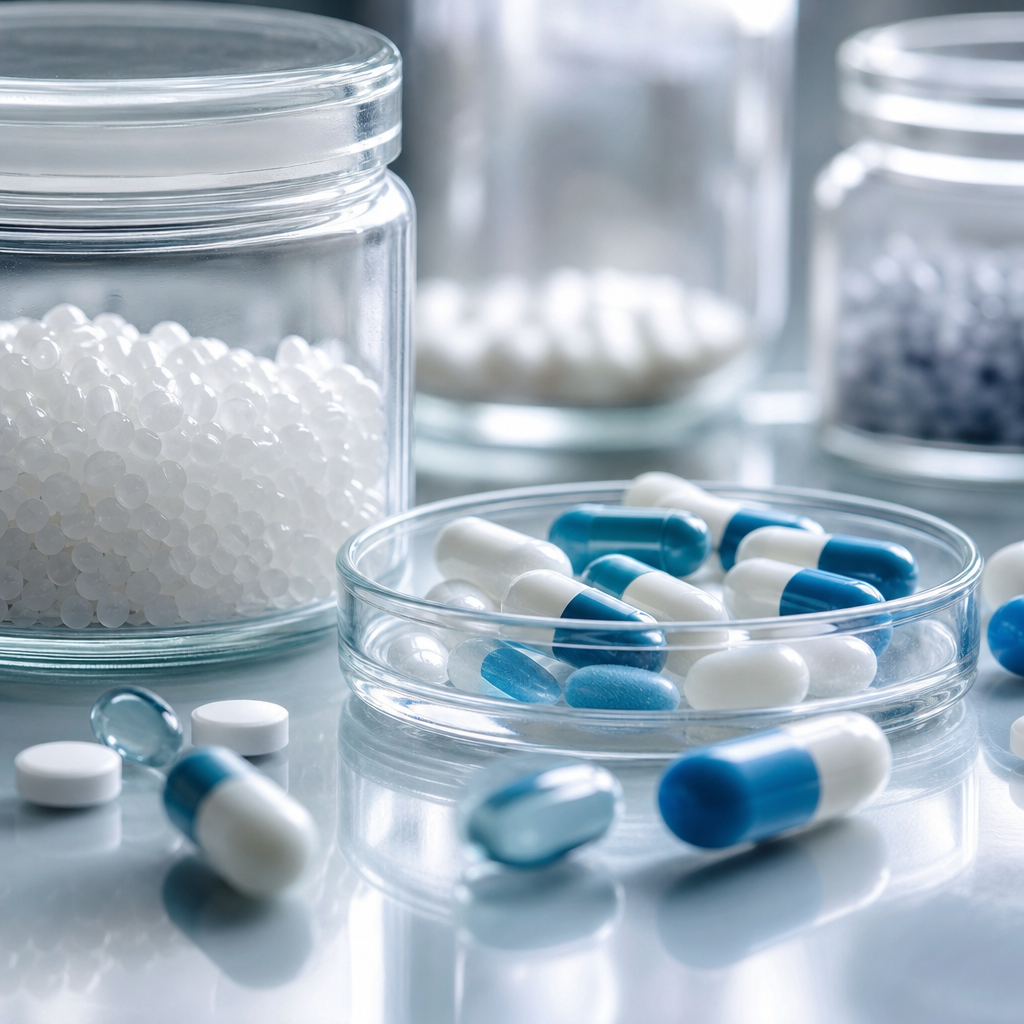
Polymers have become one of the most practical tools for enhancing drug efficacy because they solve problems that limit how medicines perform in the body, from poor solubility and rapid clearance to unstable release profiles and toxic side effects. In pharmaceutical science, a polymer is a large molecule built from repeating units, either natural, semi-synthetic, or synthetic, that can be engineered to interact with active ingredients in highly controlled ways. Drug efficacy refers not only to whether a drug works in principle, but whether it reaches the right site, remains there long enough, releases at the intended rate, and does so without creating unacceptable harm. When I have worked on formulation strategy, this distinction has always been critical: many promising compounds fail not because the pharmacology is weak, but because delivery is inefficient.
That is why polymers matter across modern medicine. They are used in tablets, capsules, injectables, implants, micelles, hydrogels, nanoparticles, transdermal systems, ocular inserts, and tissue-targeted depots. A polymer can improve bioavailability by increasing solubility, protect a fragile molecule from enzymatic degradation, extend circulation time, reduce burst release, or direct a drug toward a disease site through passive or active targeting. Common examples include polyethylene glycol for steric stabilization, polylactic-co-glycolic acid for biodegradable depots, hydroxypropyl methylcellulose for controlled oral release, chitosan for mucoadhesion, and carbomers for topical viscosity control. These are not niche excipients. They are core problem-solving materials that often determine whether a formulation is clinically viable.
As a hub topic within case studies and applications, problem-solving with polymers is best understood through the specific barriers they address. Drug molecules face recurring formulation obstacles: insolubility, low permeability, short half-life, off-target toxicity, poor patient adherence, and difficult administration routes. Polymers provide a toolkit for overcoming each barrier with design choices that can be tuned by molecular weight, charge, architecture, degradation rate, hydrophilicity, and responsiveness to pH, temperature, enzymes, or ionic strength. Regulatory familiarity also plays a role. Materials with an established safety record can accelerate development, while novel polymers may offer performance gains but require more extensive characterization, toxicology, and manufacturing controls. Understanding these tradeoffs is essential for anyone evaluating pharmaceutical applications of polymers.
This article examines how polymers enhance drug efficacy by solving real formulation and delivery problems, and it serves as a gateway to deeper case studies within this subtopic. The focus is practical rather than abstract: what challenge appears in development, what polymer strategy is chosen, how that strategy works, and where its limits appear. Looking at oral, injectable, topical, ocular, and implantable systems together reveals a clear pattern. The best polymer-enabled products do not rely on a single benefit. They combine protection, targeting, release control, manufacturability, and patient usability into one integrated design. That integrated role explains why polymer science now sits at the center of advanced drug delivery and pharmaceutical product performance.
Why polymers improve drug performance in the first place
Polymers enhance drug efficacy because they change the microenvironment around an active ingredient and therefore change what happens after administration. A poorly soluble drug may dissolve faster when dispersed in an amorphous polymer matrix such as HPMC-AS or PVP-VA. A peptide that would normally degrade in circulation may survive longer when shielded inside a PEGylated carrier or a PLGA microsphere. A drug with a narrow therapeutic window may become safer when embedded in a sustained-release matrix that smooths concentration peaks. These are direct performance gains, not cosmetic formulation changes. In development work, I have repeatedly seen a moderate molecule become commercially relevant only after polymer selection corrected its delivery profile.
The mechanisms are well established. Polymers can increase wetting, inhibit crystallization, improve mucoadhesion, alter viscosity, form diffusion barriers, provide steric stabilization, create nanoscale self-assembly, and degrade into predictable byproducts. They can also support site-specific release. Enteric polymers such as methacrylic acid copolymers protect drugs in stomach acid and release them in the intestine. Thermoresponsive hydrogels can remain injectable at room temperature and gel in situ at body temperature. Cationic polymers can interact with negatively charged mucosal surfaces to prolong residence time, which is especially useful in nasal, buccal, and ocular delivery. Each mechanism addresses a known bottleneck in efficacy.
Another reason polymers matter is that they support formulation versatility across routes of administration. The same therapeutic objective, such as maintaining effective plasma levels for weeks, can be approached through oral matrices, injectable depots, implant coatings, or transdermal films. Polymer chemistry gives developers that flexibility. It also enables combination strategies. For example, a nanoparticle may use a biodegradable core for encapsulation, a hydrophilic shell for stealth behavior, and a targeting ligand for cell-specific uptake. In practice, the best systems are often hybrid designs rather than single-function materials. That is why polymer selection should begin with the clinical problem and pharmacokinetic target, not with a material trend.
Problem-solving with polymers across major drug delivery challenges
The most useful way to assess polymers is by the problems they solve. Poor aqueous solubility remains one of the most common barriers in oral development, especially for Biopharmaceutics Classification System class II compounds. Solid dispersions with polymers such as PVP, HPMCAS, and Soluplus can keep drugs in an amorphous, supersaturated state long enough to improve absorption. I have seen this approach rescue compounds that showed strong potency in screening but unacceptable variability in early bioavailability studies. The key is balancing supersaturation with precipitation inhibition. A polymer that improves dissolution but fails to maintain solution stability may not translate into better exposure in vivo.
Rapid elimination is another major challenge, particularly with biologics and low-molecular-weight agents that diffuse away from the target quickly. PEGylation has long been used to increase hydrodynamic size and reduce renal clearance, although newer strategies now consider alternatives because anti-PEG antibodies can affect some products. Biodegradable depot polymers such as PLGA solve the same problem differently by releasing drug over days or months after injection. Lupron Depot, for example, uses PLGA microspheres to sustain leuprolide delivery, reducing dosing frequency and helping maintain therapeutic levels. Improved adherence is part of efficacy here. A medicine that works only when dosed perfectly often underperforms in real clinical settings.
Targeting and toxicity reduction are equally important. Many anticancer drugs are potent but limited by systemic exposure. Polymeric micelles, dendrimers, and nanoparticle coatings can alter biodistribution and improve accumulation in tumors through enhanced permeability and retention, though this effect varies significantly across tumor types and patients. Polymeric carriers can also be functionalized with ligands such as folate, transferrin, or antibodies for receptor-mediated uptake. In topical and ocular delivery, carbomers, hyaluronic acid, and chitosan improve residence time at the administration site, which can reduce dosing frequency and increase local efficacy. In each case, the polymer is not just carrying the drug; it is modifying the therapeutic journey from dose to response.
| Drug delivery problem | Polymer approach | How it improves efficacy | Representative example |
|---|---|---|---|
| Poor solubility | Amorphous solid dispersion with HPMCAS or PVP | Raises dissolution rate and maintains supersaturation | Spray-dried dispersions for class II oral drugs |
| Short half-life | PLGA microsphere depot | Sustained release over weeks or months | Leuprolide depot injections |
| High systemic toxicity | Polymeric micelle or PEGylated carrier | Changes distribution and reduces peak off-target exposure | Paclitaxel micellar formulations |
| Poor mucosal residence | Chitosan or hyaluronic acid system | Increases adhesion and local contact time | Ocular and nasal delivery platforms |
| Acid instability | Enteric polymer coating | Protects in stomach and releases in intestine | Delayed-release proton pump inhibitors |
Case studies that show polymers solving formulation failures
Several commercial and clinical examples illustrate how polymers convert difficult molecules into effective therapies. One of the clearest is long-acting injectable technology based on PLGA. This copolymer degrades through hydrolysis into lactic and glycolic acids, both metabolically familiar compounds, which makes it attractive for controlled release. Products containing risperidone, leuprolide, and naltrexone have used PLGA or related biodegradable polymer systems to sustain delivery and reduce dosing frequency. The practical effect is better concentration control and often better adherence. In therapeutic areas such as psychiatry or endocrinology, that adherence advantage can materially change outcomes because missed doses have serious consequences.
Another important example is PEGylation of biologics. By attaching polyethylene glycol chains to proteins or peptides, developers have historically extended circulation time, reduced proteolysis, and lowered immunogenic exposure in some contexts. Pegfilgrastim is a well-known case, allowing less frequent dosing than filgrastim. The benefit is not simply convenience; it can preserve pharmacologic activity across a clinically meaningful interval. At the same time, the field has become more nuanced. PEG is not universally ideal, and concerns about vacuolation, accumulation, or anti-PEG immune responses have pushed developers to evaluate alternatives such as polysarcosine or zwitterionic materials. That is a good reminder that polymer choice must be evidence-led, not habitual.
In oral delivery, enteric and matrix polymers have solved issues that once limited many drugs. Delayed-release omeprazole formulations use acid-resistant polymer coatings because the active ingredient is unstable in gastric conditions. Without that polymer barrier, efficacy would drop before absorption could occur. Controlled-release metformin tablets rely on hydrophilic matrix systems, commonly using HPMC, to moderate release and reduce dosing frequency. Similar matrix strategies are used widely in pain management, cardiovascular drugs, and central nervous system therapies. When these systems are designed well, they reduce peak-trough fluctuation and support more consistent symptom control. When designed poorly, they risk dose dumping or incomplete release, which is why in vitro-in vivo correlation and dissolution testing remain central to development.
How formulation teams choose the right polymer
Selecting a polymer begins with the drug’s liabilities and the intended clinical profile. Developers assess solubility, pKa, partition coefficient, dose load, stability, permeability, required release duration, route of administration, and target tissue. A weakly basic, poorly soluble oral drug may need an enteric-enabled amorphous dispersion to avoid gastric precipitation. A peptide requiring monthly dosing may need a biodegradable depot with carefully tuned lactic-to-glycolic ratio, molecular weight, and end-group chemistry. In my experience, teams make better decisions when they define the failure mode first. Is the problem dissolution, burst release, local irritation, moisture sensitivity, aggregation, or patient adherence? Polymer selection becomes clearer once that bottleneck is named precisely.
Screening then moves from broad compatibility studies to performance testing. Differential scanning calorimetry, X-ray powder diffraction, rheology, dynamic light scattering, gel permeation chromatography, and dissolution profiling are standard tools. For nanoparticles or micelles, particle size distribution, zeta potential, encapsulation efficiency, and serum stability matter. For implants and depots, degradation kinetics, residual solvent limits, and sterilization compatibility are critical. Regulatory history also carries weight. Excipients listed in pharmacopeias or used in approved products usually reduce risk. Novel polymers can be valuable, especially for targeted or responsive systems, but they require stronger justification, additional safety data, and tighter control strategies during scale-up.
Manufacturing reality should never be an afterthought. A polymer that performs beautifully in a benchtop experiment may fail during spray drying, hot-melt extrusion, aseptic filling, gamma sterilization, or long-term storage. Moisture uptake can trigger recrystallization in solid dispersions. Shear sensitivity can affect injectables. Residual monomers, endotoxin risk, viscosity drift, and batch variability all influence the final decision. Cost matters too, particularly for chronic therapies or global supply. The most effective polymer strategy is therefore the one that balances pharmacokinetic benefit, safety, manufacturability, and commercial reliability. That balance is what separates elegant lab concepts from successful pharmaceutical products.
Emerging directions in polymer-enabled drug efficacy
The next wave of polymer applications is moving beyond passive excipient roles into adaptive therapeutic systems. Stimuli-responsive polymers can release drugs in response to pH shifts, enzymes, redox state, ultrasound, light, or temperature. In oncology, researchers are exploring carriers that remain stable in circulation but release payloads in the acidic tumor microenvironment or inside endosomes. In inflammatory diseases, reactive oxygen species-sensitive polymers are being studied for site-selective delivery. For nucleic acid therapeutics, ionizable and cationic polymers are being optimized to condense cargo, protect it from nucleases, and promote endosomal escape. These systems aim to improve efficacy by making delivery conditional rather than constant.
Personalization is another major direction. Polymer systems can be tuned for pediatric, geriatric, and disease-specific needs, including altered swallowing ability, variable gastric pH, renal impairment, or local tissue pathology. Three-dimensional printing with pharmaceutical polymers is opening options for customized dose geometry and release profiles, especially for complex oral dosage forms. Combination products are also expanding, with polymers serving simultaneously as scaffold, barrier, depot, and targeting matrix in regenerative medicine and implantable devices. The broader lesson from current case studies and applications is consistent: polymers are most valuable when they are treated as active design variables in therapeutic performance. If you are evaluating drug delivery challenges, start with the problem, map the biological barrier, and then choose the polymer strategy that directly improves efficacy in the real world.
Frequently Asked Questions
1. How do polymers improve drug efficacy in pharmaceutical formulations?
Polymers improve drug efficacy by helping medicines overcome some of the most common barriers to therapeutic performance inside the body. Many active pharmaceutical ingredients are highly potent in theory but underperform in practice because they dissolve poorly, degrade too quickly, clear from circulation too fast, or cause harmful side effects when delivered all at once. Polymers address these limitations by acting as functional excipients, carriers, matrices, coatings, or conjugates that control how a drug behaves before and after administration.
For example, a polymer can increase the solubility of a poorly water-soluble drug by forming amorphous solid dispersions or molecular complexes that keep the drug in a more bioavailable state. It can also protect sensitive compounds, such as peptides or proteins, from enzymatic degradation in the gastrointestinal tract or bloodstream. In sustained-release systems, polymers regulate the rate at which the active ingredient is released, helping maintain drug levels within the therapeutic window for longer periods and reducing the peaks and troughs associated with immediate-release dosing.
Polymers also contribute to safer and more targeted therapy. By modifying the surface of nanoparticles, micelles, or implants, they can help drugs circulate longer, accumulate more effectively in specific tissues, or reduce exposure to healthy cells. In practical terms, this can mean lower dosing frequency, improved patient adherence, fewer adverse effects, and more consistent clinical outcomes. That is why polymers are considered one of the most versatile and impactful tools in modern drug delivery and formulation science.
2. What types of polymers are used in drug delivery, and why does the choice matter?
Drug delivery systems use a broad range of polymers, generally divided into natural, semi-synthetic, and synthetic categories. Natural polymers include materials such as chitosan, alginate, gelatin, dextran, and hyaluronic acid. These are often valued for their biocompatibility, biodegradability, and ability to interact favorably with biological tissues. Semi-synthetic polymers, such as cellulose derivatives like hydroxypropyl methylcellulose and carboxymethyl cellulose, are modified versions of natural materials that offer improved consistency and functional performance. Synthetic polymers, including polyethylene glycol (PEG), polyvinyl alcohol (PVA), polylactic acid (PLA), polyglycolic acid (PGA), and PLGA, are especially important because they can be designed with highly specific molecular weights, degradation profiles, mechanical properties, and release characteristics.
The choice of polymer matters because each material influences drug behavior differently. A polymer intended for oral controlled release must be compatible with gastrointestinal conditions and may need to swell, erode, or form a gel barrier predictably. A polymer used in an injectable depot must be sterile, biodegradable if necessary, and capable of releasing the drug over weeks or months without causing unacceptable inflammation. In nanoparticle or micelle systems, the polymer may need to stabilize the carrier, avoid rapid immune recognition, and support drug loading efficiently.
Selection also depends on the drug itself. Small molecules, biologics, hydrophobic compounds, and nucleic acid therapies all present different formulation challenges. A polymer that works well for enhancing tablet disintegration may not be suitable for encapsulating a protein or shielding RNA from degradation. Regulatory history, toxicity profile, scalability, and manufacturing feasibility are also major considerations. In short, the polymer is not just an inactive background ingredient; it is often a central design element that determines how effectively and safely the medicine performs.
3. How do polymers help control drug release and reduce side effects?
One of the most important ways polymers enhance drug efficacy is by controlling when, where, and how quickly a drug is released. Without release control, a medicine may enter the body too rapidly, creating a high initial concentration that increases toxicity, followed by a quick decline that reduces therapeutic benefit. Polymers can smooth out this pattern by delivering the active ingredient gradually over time. This is commonly achieved through diffusion-controlled, swelling-controlled, erosion-controlled, or stimulus-responsive mechanisms.
In matrix tablets, for instance, hydrophilic polymers absorb water and form a gel layer around the dosage form. As the gel hydrates and slowly erodes, the drug diffuses outward at a more controlled rate. In biodegradable microspheres or implants, polymers such as PLGA break down over time, steadily releasing the encapsulated drug. Enteric polymers can delay release until the dosage form reaches the intestine, protecting acid-sensitive drugs from the stomach and reducing gastric irritation. In more advanced systems, smart polymers may respond to pH, temperature, enzymes, or other physiological triggers to release the drug only under specific conditions.
This level of control can directly reduce side effects. If a polymer delivery system limits exposure of healthy tissues, prevents dose dumping, or avoids repeated high plasma peaks, the patient may experience fewer adverse reactions. Controlled release can also reduce how often the drug must be taken, which improves adherence and lowers the chance of missed doses or accidental overuse. In targeted formulations, polymer-based carriers can further concentrate the drug near diseased tissue, helping maximize therapeutic action while minimizing systemic toxicity. For many therapies, especially in oncology, pain management, hormone delivery, and chronic disease treatment, that balance between efficacy and tolerability is a major clinical advantage.
4. Are polymer-based drug delivery systems safe and biocompatible?
In general, polymer-based drug delivery systems are designed with safety and biocompatibility as top priorities, but their suitability depends heavily on the specific polymer, route of administration, dose, duration of exposure, and degradation behavior. Many polymers used in pharmaceuticals have long-established safety records and are included in approved oral, topical, injectable, ophthalmic, and implantable products. Biocompatible polymers are chosen because they do not cause unacceptable toxicity, irritation, immune activation, or interference with normal physiological function under intended use conditions.
That said, not all polymers are interchangeable, and safety must be evaluated carefully. Some polymers are non-biodegradable and intended to remain intact, while others degrade into smaller compounds that the body can metabolize or eliminate. For biodegradable systems, the byproducts must also be safe. For example, PLA and PLGA break down into lactic acid and glycolic acid, which are generally manageable in the body, making them attractive for controlled-release injections and implants. Surface characteristics, molecular weight, residual solvents, contaminants, and manufacturing consistency also influence how the body responds.
Regulatory agencies require extensive testing before polymer-containing formulations can be approved. This includes studies on cytotoxicity, hemocompatibility, irritation, sensitization, systemic toxicity, degradation products, and long-term tolerability where relevant. The drug-polymer interaction itself must also be stable and predictable. So while polymer-based systems are widely considered safe when properly designed, their safety is never assumed automatically. It is established through material selection, formulation engineering, preclinical evaluation, and clinical validation. When these steps are done well, polymers can significantly improve treatment performance without compromising patient safety.
5. What is the future of polymers in enhancing drug efficacy?
The future of polymers in drug delivery is especially promising because pharmaceutical research is moving beyond basic formulation support toward highly engineered, responsive, and personalized therapeutic systems. Traditional polymers already play a major role in improving solubility, stability, and release control, but newer generations of polymer technologies are being designed to perform far more sophisticated tasks. These include targeted delivery to tumors or inflamed tissue, intracellular transport of biologics, co-delivery of multiple agents, and environment-sensitive release triggered by pH, temperature, enzymes, or redox conditions.
One major area of growth is the use of polymers in nanomedicine. Polymeric nanoparticles, micelles, dendrimers, and conjugates can help transport drugs that would otherwise be unstable, insoluble, or rapidly cleared. This is especially important for anticancer agents, gene therapies, mRNA systems, and peptide-based therapeutics. Researchers are also developing mucoadhesive, injectable, and implantable polymer platforms that can localize therapy more effectively and reduce systemic exposure. In chronic diseases, this may translate into long-acting formulations that improve convenience and adherence. In precision medicine, polymer systems may eventually be tailored to patient-specific biological conditions or disease markers.
At the same time, the field is paying closer attention to sustainability, manufacturability, and regulatory practicality. Future success will depend not only on whether a polymer performs well in the lab, but also on whether it can be produced consistently, scaled efficiently, and integrated into real-world treatment pathways. Even so, the direction is clear: polymers are becoming more central to how medicines are designed, not just how they are packaged. As therapies become more complex and expectations for safety and precision increase, polymers will remain a key technology for translating potent drug molecules into treatments that work better in patients.