Innovations in polymer use for medical devices have reshaped how clinicians diagnose, treat, and monitor patients, turning materials science into a practical driver of safer procedures, better outcomes, and more scalable manufacturing. In this context, polymers are long-chain molecules engineered to deliver specific mechanical, thermal, chemical, and biological properties, while medical devices include everything from disposable syringes and IV tubing to implantable heart valves, drug-eluting stents, wound dressings, diagnostic cartridges, and wearable sensors. I have worked with teams qualifying device materials, and the central lesson is consistent: polymer selection is never a cosmetic decision. It influences sterilization compatibility, regulatory strategy, cost of goods, shelf life, patient comfort, and clinical performance all at once. That is why successful polymer applications matter so much in healthcare. Hospitals need devices that are lightweight, reliable, and economical. Manufacturers need materials that can be injection molded, extruded, thermoformed, 3D printed, or overmolded with tight tolerances. Regulators need evidence that additives, degradation products, and particulates are controlled. Patients need devices that do not crack, leach harmful substances, or trigger unnecessary inflammation. The most important innovations have come from matching polymer chemistry to a real clinical problem, then validating that match through standards such as ISO 10993 for biocompatibility, ISO 13485 for quality systems, and sterilization frameworks covering ethylene oxide, gamma, e-beam, and steam. This article serves as a hub for successful polymer applications by showing where polymers are creating measurable value, what material classes dominate specific device categories, and how engineers evaluate tradeoffs in actual commercial products.
Why Polymers Dominate Modern Medical Devices
Polymers dominate medical devices because they solve three design problems better than most metals, ceramics, or glass: manufacturability, tunable performance, and integration of multiple functions into one component. Polypropylene, polyethylene, polycarbonate, thermoplastic polyurethane, silicone, PEEK, PTFE, PET, PVC alternatives, cyclic olefin copolymers, and bioresorbable polymers such as PLA and PGA each occupy distinct roles because no single polymer fits every use case. For example, cyclic olefin polymers are valued in diagnostic cartridges and prefillable syringes because they offer high clarity, low extractables, and good moisture resistance. Thermoplastic elastomers and silicone remain essential where flexibility, soft touch, and repeated strain matter, such as catheter balloons, seals, and wearable interfaces. PEEK and reinforced nylon compete in structural applications requiring strength, fatigue resistance, and imaging compatibility. Compared with machined metal parts, polymer components can reduce weight, lower assembly count through snap fits or overmolding, and support high-volume manufacturing with excellent repeatability. In my experience, the commercial success of polymer-based devices often starts with design for manufacturing. If a housing can be molded with built-in ribs, living hinges, and alignment features, a company may eliminate screws, secondary operations, and assembly defects. That directly improves margin and often improves reliability. The best case studies in polymer use show that the material is not just replacing an older option; it is enabling a fundamentally better device architecture.
Successful Polymer Applications in Single-Use and Hospital Devices
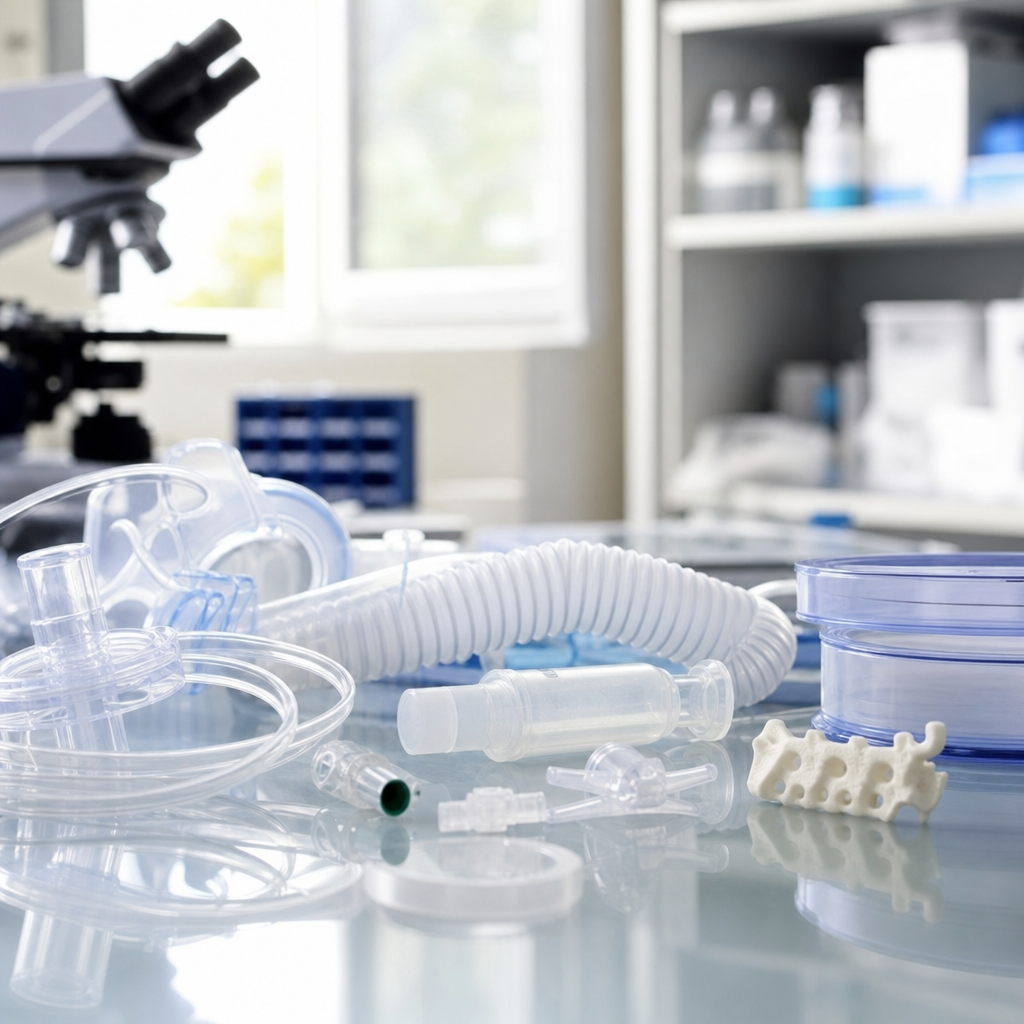
Single-use devices are the clearest example of successful polymer applications because they combine low cost, sterility, and high functional reliability at scale. Syringes, IV sets, blood bags, connectors, inhaler components, specimen containers, and sterile packaging all rely on carefully chosen polymers. Polypropylene became a workhorse for syringe barrels and many lab disposables because it handles molding well, offers chemical resistance, and maintains performance under common sterilization methods. Polyethylene remains common in tubing and liners because of flexibility and inertness. Thermoplastic polyurethane is widely used in catheters where kink resistance and softness are critical. In respiratory care, polymers enable transparent housings, soft seals, and precision drug-delivery pathways in nebulizers and inhalers.
A major shift in this category has been the move away from materials associated with concerning plasticizers or processing additives. Device makers increasingly use non-DEHP PVC alternatives, polyolefins, TPU, and specialty elastomers to reduce extractables risk while preserving flexibility. During material changes, however, teams must revalidate everything from flow behavior to bonding methods. I have seen programs delayed because a substitute tubing material changed burst performance and solvent bonding strength. Successful transitions therefore depend on full-system testing, not just a better toxicology profile. Another innovation is multilayer polymer construction in fluid management products. By combining an inner contact layer for compatibility, a barrier layer for gas or moisture control, and an outer structural layer, manufacturers tailor performance without relying on one expensive resin. This layered approach has been especially valuable in infusion, bioprocessing, and drug handling systems where fluid purity and shelf stability matter.
Implantable Devices and Long-Term Biocompatibility
Implantable devices present the highest bar for polymer innovation because the material must perform inside the body for months or years under mechanical and chemical stress. Here, successful polymer applications include ultra-high-molecular-weight polyethylene in joint replacements, PTFE and expanded PTFE in vascular grafts, silicone in long-term implants, polyurethane in pacing leads, and PEEK in spinal cages and trauma components. PEEK is a particularly important case study because it delivers high strength, fatigue resistance, and radiolucency, allowing clinicians to assess bone fusion on imaging without the artifact often seen with metal. For spinal implants, that imaging advantage is not a minor convenience; it can directly improve postoperative assessment and treatment decisions.
Bioresorbable polymers represent another major innovation. PLA, PGA, PLGA, and related chemistries have been used in sutures, fixation devices, drug delivery depots, and tissue scaffolds designed to degrade as healing progresses. When these devices work well, they eliminate the need for secondary removal surgery and reduce long-term foreign-body burden. The challenge is that degradation is never purely theoretical. Molecular weight, crystallinity, geometry, local pH, and mechanical loading all affect how a device loses mass and strength. I have seen developers underestimate how quickly thin sections can lose integrity in vivo compared with benchtop assumptions. The most successful bioresorbable products therefore couple material science with precise design controls, accelerated aging studies, and degradation modeling grounded in real use conditions.
Drug Delivery, Minimally Invasive Systems, and Wearables
Many of the most commercially successful medical devices are polymer enabled because minimally invasive care depends on flexibility, miniaturization, and user comfort. Catheters, guidewires with polymer jackets, introducers, laparoscopic seals, insulin pens, autoinjectors, transdermal patches, and on-body pumps all rely on polymers tuned for friction, elasticity, barrier properties, and dimensional stability. In autoinjectors, for example, a device may combine polycarbonate for structural transparency, acetal or nylon for precise moving parts, silicone lubricants for glide, and elastomeric seals for drug containment. The result is a compact system that can deliver a biologic with accurate dose and manageable injection force.
Wearables add another layer of complexity because skin contact, sweat, repeated motion, and consumer expectations intersect with medical requirements. Adhesive-backed patches and biosensors often use thermoplastic polyurethane films, silicones, acrylic adhesives, and breathable membranes to balance secure attachment with skin tolerance. Success here depends on more than softness. Water vapor transmission rate, tack retention, edge lift, and compatibility with electronics all matter. During several skin-contact evaluations, the biggest failure mode was not a dramatic allergic response but gradual wear-related irritation caused by trapped moisture and micro-movement. Innovations in soft, stretchable polymers and conductive polymer composites are improving this category by making sensors conform better to anatomy while preserving signal quality. That is why continuous glucose monitors, cardiac rhythm patches, and rehabilitation wearables have become stronger examples of successful polymer applications in real-world care.
Diagnostic Devices, Microfluidics, and Precision Manufacturing
Diagnostics is one of the fastest-moving areas for polymer innovation because performance depends on both material purity and manufacturability at tiny scales. Lateral flow tests, PCR consumables, microfluidic chips, cuvettes, optical lenses, reagent reservoirs, and sample collection components frequently use cyclic olefin copolymer, cyclic olefin polymer, polystyrene, PMMA, polypropylene, and specialized elastomers. These materials are chosen for optical clarity, low autofluorescence, low binding, dimensional precision, and chemical compatibility. During the rapid expansion of molecular and point-of-care testing, manufacturers favored polymers that could support high-volume molding of microchannels and chambers without sacrificing assay performance.
One reason these devices make excellent case studies is that small material changes can alter clinical sensitivity. A resin with higher protein binding may reduce analyte recovery. A colorant may interfere with optical readout. A sterilization method may shift transparency or brittleness. Because of that, successful polymer applications in diagnostics are tightly linked to process control. Mold design, gate location, residual stress, drying conditions, and post-mold handling can all affect results. Additive manufacturing is also becoming more relevant, especially for custom fixtures, surgical guides, and low-volume diagnostic components. However, 3D-printed polymers still require careful validation of anisotropy, uncured residue, and cleaning consistency. For regulated products, printing is powerful, but only when paired with a disciplined verification plan.
| Application | Common Polymer | Main Benefit | Key Limitation to Manage |
|---|---|---|---|
| Syringes and lab disposables | Polypropylene | Low cost, moldability, chemical resistance | Stress cracking in poor design or chemical exposure |
| Catheters and tubing | TPU, PE, silicone | Flexibility, kink resistance, softness | Bonding, extractables, sterilization effects |
| Spinal and trauma implants | PEEK | Strength with radiolucency | Surface optimization for tissue interaction |
| Drug delivery depots and sutures | PLA, PGA, PLGA | Resorption over time | Variable degradation under physiological conditions |
| Diagnostic cartridges | COC, COP, PMMA | Optical performance and precision molding | Assay compatibility and tight process control |
How Teams Evaluate Polymer Choices and Avoid Failure
The best medical device companies treat polymer selection as a cross-functional decision involving design engineering, manufacturing, quality, regulatory, supply chain, toxicology, and clinical use feedback. A sound evaluation starts with the use environment: duration of contact, tissue type, drug exposure, temperature, mechanical load, and sterilization route. From there, teams assess biocompatibility, extractables and leachables, mechanical properties, chemical resistance, barrier performance, and aging behavior. They also review whether the resin grade has a medical-use history, whether a device master file supports regulatory submissions, and whether the supplier can guarantee long-term formulation stability. This last point is critical. A subtle formulation change by a resin supplier can trigger expensive requalification if not managed through a robust change-notification agreement.
Failure analysis repeatedly shows similar patterns. Environmental stress cracking appears when a polymer is exposed to unexpected disinfectants, lipids, or drugs under load. Gamma sterilization can embrittle some materials or shift color. Ethylene oxide is broadly compatible but brings packaging and residual management requirements. Steam sterilization can warp parts with insufficient heat resistance. Adhesive bonds can fail when surface energy or molding residue is poorly controlled. In response, the most successful programs use accelerated aging, real-time aging, simulated use, particulate testing, and package validation early rather than after design freeze. They also design around polymer behavior instead of fighting it. If creep is a concern, they change geometry, redistribute load, or choose a different closure method. That practical mindset separates durable medical products from elegant prototypes.
The Next Wave of Polymer Innovation in Healthcare
The next wave of polymer innovation in medical devices is being driven by sustainability pressure, personalized care, and smart-device integration. Hospitals and OEMs want to reduce material waste and simplify recycling without compromising sterility or performance. That does not mean a quick shift to generic biodegradable plastics; healthcare requirements are too strict for simplistic substitutions. Instead, progress is likely to come from better single-material designs, lower-mass components, cleaner additive packages, and more efficient processing. At the same time, personalized medicine is creating demand for patient-specific guides, dental devices, hearing solutions, and prosthetic interfaces that use printable or thermoformable polymers tailored to anatomy.
Smart devices are another major growth area. Conductive polymers, stretchable substrates, and encapsulation materials are enabling sensors that can monitor pressure, motion, temperature, hydration, or biochemical markers directly on the body. The challenge will be integrating electronics, adhesives, and skin-safe materials into systems that remain accurate through daily wear. Based on current development patterns, the most successful polymer applications over the next decade will not come from one miracle resin. They will come from better combinations of material science, process discipline, and clinical insight. For companies building a case studies and applications strategy, this hub topic offers a clear lesson: polymers succeed when they are chosen for a specific clinical purpose, validated under realistic conditions, and manufactured with repeatability in mind. Review your current device portfolio, identify where material limitations are constraining performance or cost, and use those findings to guide your next polymer innovation program.
Frequently Asked Questions
1. Why are polymers so important in modern medical devices?
Polymers are essential to modern medical devices because they can be engineered with a level of precision that is difficult to achieve with many traditional materials. In medical applications, that flexibility matters enormously. Device designers often need materials that are lightweight, durable, sterilizable, chemically resistant, and compatible with human tissue, all at the same time. Polymers can be formulated to meet those exact requirements, whether the goal is to create a flexible catheter, a transparent diagnostic cartridge, a wear-resistant implant component, or a single-use disposable that reduces cross-contamination risk.
Another major advantage is that polymers support a very broad range of device functions. Some are designed for structural strength, while others are tailored for softness, elasticity, drug delivery, electrical insulation, or controlled biodegradation. This means polymers are not just passive materials; they often contribute directly to device performance. For example, in drug-eluting systems, polymer coatings can control how quickly a therapeutic agent is released. In implantable devices, specialized polymers can reduce friction, improve hemocompatibility, or encourage tissue integration.
Polymers also play a critical role in manufacturing efficiency. Many can be processed through injection molding, extrusion, blow molding, and additive manufacturing, allowing high-volume production with tight tolerances. That scalability is especially valuable for products such as syringes, IV components, diagnostic housings, and wearable monitoring systems, where consistency, cost control, and rapid production are all important. In short, polymers have become foundational in medical technology because they combine performance, design freedom, and manufacturability in a way few other material classes can match.
2. What recent innovations in medical-grade polymers are having the biggest impact on patient care?
Several polymer innovations are meaningfully improving patient care by making devices safer, smarter, and more tailored to clinical needs. One of the biggest advances is the development of bioresorbable polymers. These materials are designed to perform a medical function for a defined period and then gradually break down in the body into biocompatible byproducts. That capability is especially important in sutures, orthopedic fixation devices, tissue scaffolds, and certain drug delivery systems, because it can eliminate the need for a second procedure to remove the device.
Another high-impact area is antimicrobial and anti-fouling polymer technology. Researchers and manufacturers are developing polymer surfaces and coatings that resist bacterial adhesion, protein buildup, and biofilm formation. This is highly relevant for catheters, wound care products, implants, and other devices that remain in or on the body for extended periods. By reducing the likelihood of contamination and device-associated infection, these materials can improve outcomes while lowering the burden on healthcare systems.
There is also significant progress in polymer use for minimally invasive and wearable devices. Flexible, high-performance polymers are enabling thinner catheters, more comfortable sensors, stretchable electronics, and compact monitoring platforms that patients can wear continuously. These innovations support earlier diagnosis, more precise therapy delivery, and better long-term disease management. In addition, advanced polymer coatings are helping improve lubricity, reduce insertion trauma, and enhance overall user experience for both patients and clinicians.
Finally, additive manufacturing and patient-specific design are expanding what is possible. New printable medical polymers allow customized anatomical models, surgical guides, prosthetic components, and even some implantable structures to be produced with increasing precision. The broader impact of these innovations is clear: polymers are no longer valued only for replacing heavier or more expensive materials; they are actively shaping new generations of devices that align more closely with patient anatomy, clinical workflow, and therapeutic goals.
3. How do polymers improve the safety and performance of implantable and disposable medical devices?
Polymers improve safety and performance by allowing device developers to tune material properties for the intended clinical environment. In implantable devices, this often means selecting polymers with strong biocompatibility, predictable mechanical behavior, and long-term stability inside the body. A polymer used in an implant may need to resist cracking, fatigue, oxidation, and hydrolysis while also minimizing inflammatory response. For cardiovascular, orthopedic, ophthalmic, and soft-tissue applications, those requirements are central to device reliability and patient safety.
Surface engineering is another major factor. Polymers can be modified or coated to improve how a device interacts with tissue, blood, or drugs. For example, certain surfaces can be designed to reduce clot formation, improve lubricity during insertion, or create a barrier that controls moisture and chemical exposure. In drug-device combinations, polymer layers can be used to regulate release rates with high precision, which helps maintain therapeutic effectiveness while limiting side effects. That level of control is one reason polymer science has become so deeply integrated into advanced therapeutic devices.
In disposable devices, safety gains often come from sterility, consistency, and practical usability. Single-use polymer components such as syringes, tubing, connectors, specimen containers, and test cartridges can be mass-produced with excellent uniformity, then sterilized and packaged efficiently. Because they are intended for one-time use, they help reduce cross-contamination and simplify infection control protocols. Polymers also contribute to clear visualization, flexible handling, and break resistance, which can improve performance in fast-paced clinical settings.
Importantly, safety is not determined by the material alone but by the full design and validation process. Medical-grade polymers must be evaluated for extractables, leachables, sterilization compatibility, mechanical durability, and regulatory compliance. When those factors are managed correctly, polymers give manufacturers a powerful platform for building both implantable and disposable devices that perform reliably under real-world medical conditions.
4. What challenges do manufacturers face when using polymers in medical devices?
Although polymers offer tremendous benefits, they also present important technical and regulatory challenges. One of the most significant is material selection. A polymer that performs well mechanically may not be ideal for sterilization, and a polymer with strong chemical resistance may be difficult to bond, mold, or process into a complex geometry. Manufacturers must balance mechanical requirements, thermal properties, biocompatibility, shelf life, and cost while also accounting for how the material behaves during production and throughout the device’s intended use cycle.
Sterilization compatibility is a common challenge. Medical devices may be exposed to gamma radiation, ethylene oxide, steam, or electron beam sterilization, and not all polymers respond equally well to those methods. Some may discolor, become brittle, degrade, or change dimensionally after sterilization. These effects can alter performance or shorten product life, so validation testing is essential. In addition, manufacturers must assess how polymers interact with drugs, bodily fluids, cleaning agents, adhesives, and packaging materials over time.
Regulatory scrutiny is another major factor. Medical polymers must meet strict standards for biocompatibility, traceability, and quality control. This includes evaluating risks such as extractables and leachables, especially in devices that contact blood, tissue, or pharmaceuticals. Even small changes in resin grade, additives, processing parameters, or supplier source can trigger the need for additional testing or documentation. As a result, polymer selection in medical applications is closely tied to quality systems and long-term supply chain strategy.
There are also sustainability and end-of-life concerns, particularly for high-volume disposable products. Healthcare systems rely heavily on single-use polymer devices for infection control and convenience, but this creates waste management challenges. Manufacturers are now under growing pressure to explore recyclable designs, lower-impact materials, and more resource-efficient production methods without compromising safety. The companies that succeed in this space are typically those that treat polymer innovation as a multidisciplinary effort involving materials science, engineering, manufacturing, clinical insight, and regulatory expertise.
5. What is the future of polymer innovation in medical devices?
The future of polymer innovation in medical devices is moving toward materials that are more functional, more personalized, and more integrated with digital healthcare. One clear direction is the rise of smart polymers, which can respond to changes in temperature, pH, moisture, light, or other environmental triggers. In medical applications, these responsive materials could support targeted drug delivery, adaptive wound dressings, or dynamic implants that change behavior based on physiological conditions. This represents a shift from static materials to materials that actively participate in therapy or monitoring.
Another major trend is the convergence of polymers with electronics and sensor systems. Flexible and stretchable polymer platforms are helping enable wearable and implantable devices that continuously track vital signs, movement, glucose levels, or other biomarkers. These systems are especially important as healthcare moves toward remote monitoring, preventive care, and personalized treatment plans. Polymers are well suited to this evolution because they can provide comfort, conformability, insulation, and compatibility with miniaturized manufacturing techniques.
Advanced manufacturing will also continue to expand the role of polymers. Additive manufacturing, microfabrication, and precision extrusion are making it easier to produce patient-specific and highly complex structures that would be difficult to create using conventional methods. This opens opportunities in surgical planning tools, prosthetics, tissue engineering scaffolds, and custom therapeutic devices. As polymer chemistry and processing methods improve, clinicians and manufacturers will gain more control over mechanical performance, porosity, degradation rate, and surface functionality.
Looking ahead, the most influential polymer innovations will likely be those that solve multiple clinical problems at once: improving patient comfort, enabling less invasive procedures, reducing complications, supporting data-driven care, and making production more scalable. In that sense, polymers