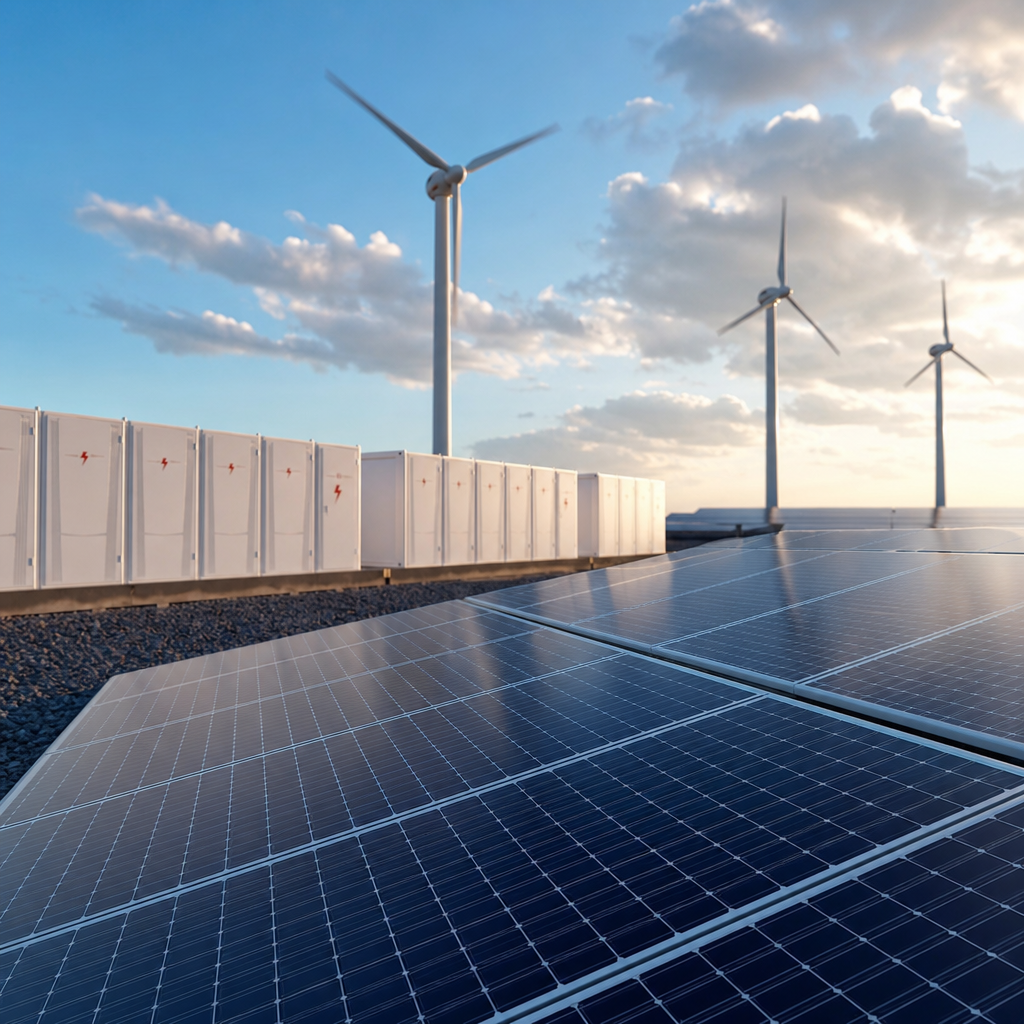
Polymers sit at the center of many renewable energy breakthroughs because they solve practical engineering problems that metals, ceramics, and glass alone cannot address at scale. In renewable energy systems, polymers are long-chain materials used as structural components, electrical insulators, membranes, coatings, adhesives, encapsulants, separators, and lightweight composites. When people ask about the impact of polymers on renewable energy solutions, the real answer is not abstract chemistry. It is lower system weight, longer equipment life, better corrosion resistance, improved electrical safety, reduced maintenance, and more flexible product design across solar, wind, batteries, hydrogen, and grid hardware.
I have seen this directly in project work where a turbine blade repair failed at the bond line because the resin system was not matched to fatigue loads, and in another case where a solar module survived harsh humidity testing largely because the encapsulant chemistry was selected for low moisture ingress and strong adhesion to glass and backsheet layers. Those examples capture why polymers matter. Renewable energy assets operate outdoors for decades under ultraviolet radiation, heat cycling, moisture, salt spray, vibration, and electrical stress. A material that performs well in a laboratory but degrades under field exposure quickly becomes a financial problem.
Successful polymer applications combine chemistry, manufacturing, and reliability engineering. Thermosets such as epoxy, polyester, vinyl ester, and polyurethane provide high strength and chemical resistance in composites and coatings. Thermoplastics such as polyethylene, polypropylene, polyamide, PET, PVDF, ETFE, and PEEK offer processability, durability, and dielectric performance in films, cable jackets, connectors, and structural parts. Specialty polymers such as Nafion-type proton exchange membranes, fluoropolymers, and conductive polymers enable functions that are essential for advanced electrochemical devices. The choice is always application specific, balancing cost, temperature limits, creep resistance, recyclability, fire performance, and exposure conditions.
This hub article covers successful polymer applications across major renewable energy technologies and explains where these materials create measurable value. It is designed as a practical entry point for readers exploring case studies and applications, so each section answers a common question clearly: where are polymers used, why are they preferred, what failures do they prevent, and what tradeoffs remain. Understanding these points matters for manufacturers, developers, engineers, investors, and procurement teams because polymer selection influences efficiency, bankability, safety, and levelized cost of energy over the full asset life.
Polymers in Solar Power Systems
Solar power is one of the clearest examples of polymers enabling renewable energy at scale. In crystalline silicon photovoltaic modules, polymers appear in the encapsulant, backsheet, junction box potting compounds, cable insulation, sealants, and mounting components. Ethylene vinyl acetate has long been the dominant encapsulant because it cushions cells, bonds layers together, and provides electrical insulation. Polyolefin elastomers are increasingly used where lower moisture permeability, improved PID resistance, or better durability is needed. Backsheets often use multilayer constructions that may include PET and fluoropolymer outer layers for weatherability and electrical protection.
The practical role of these polymers is straightforward. They protect fragile cells from mechanical shock, moisture, UV exposure, and electrical leakage while allowing decades of outdoor operation. According to IEC qualification standards such as IEC 61215 and IEC 61730, modules must survive damp heat, thermal cycling, UV exposure, and mechanical loading. Encapsulants and backsheets are central to passing those tests. Poor polymer choice can trigger yellowing, delamination, snail trails, cracking, acetic acid formation, or insulation failure, all of which reduce power output and increase safety risk.
Successful polymer applications in solar go beyond standard modules. Thin-film technologies use polymer layers for barrier functions and flexible substrates. Building-integrated photovoltaics use durable sealants and laminated polymer interlayers to combine energy generation with architecture. In floating solar, polymer floats made from high-density polyethylene resist corrosion better than metal alternatives in many freshwater environments and simplify installation. In trackers and combiner boxes, polymer housings and cable systems reduce weight and help manage ingress protection requirements. These are not secondary details. Material stability often determines whether a solar asset meets its expected twenty-five- to thirty-year service life.
Wind Energy: Composites, Coatings, and Fatigue Performance
Wind energy depends heavily on polymers because modern blades are large composite structures. Most utility-scale blades use glass fiber reinforced polymers with epoxy or polyester resin matrices, while selected high-performance zones may use carbon fiber reinforcement to control stiffness and weight. These composites offer an exceptional strength-to-weight ratio, which is critical because heavier blades increase gravitational loads, transport complexity, and drivetrain stress. A blade longer than eighty meters must remain stiff enough for aerodynamic performance yet light enough for feasible manufacturing and operation.
In practice, the most successful polymer applications in wind involve resin systems, adhesive joints, gel coats, lightning protection interfaces, and erosion-resistant coatings. Epoxy systems are widely used because they provide strong fiber wet-out, good fatigue behavior, and reliable adhesion. Structural adhesives bond shell halves and internal shear webs, replacing fastener-heavy designs that would add mass and create stress concentrations. Polyurethane-based leading-edge coatings are common where rain erosion threatens blade life. Without these polymer layers, aerodynamic losses can appear quickly, especially in offshore or high-rain regions.
One of the biggest lessons from field experience is that blade durability is not only about ultimate strength. Fatigue, moisture ingress, cure quality, void content, and bond-line integrity matter just as much. DNV guidance and IEC 61400 standards reflect this reality through design load cases and durability testing. I have seen inspection data where a minor surface coating defect expanded into laminate degradation because water entry was not arrested early. That is why successful polymer applications in wind include repair materials and maintenance systems, not just original blade manufacture. Resins, fillers, and protective coatings support life extension strategies that keep turbines producing instead of waiting for expensive blade replacement.
Energy Storage and Battery Safety
Battery systems for renewable energy integration rely on polymers in more places than most buyers realize. In lithium-ion cells, the separator is typically a microporous polyolefin film that prevents short circuits while allowing ion transport through the electrolyte. Binders such as PVDF hold active materials to current collectors. Thermal interface pads, busbar insulation, wire coatings, module housings, flame barriers, potting materials, and pack sealants are also polymer based. In sodium-ion, flow battery, and lead-acid systems, polymers remain essential as separators, tanks, gaskets, and corrosion-resistant linings.
The impact is strongest in safety and lifetime. A battery separator must maintain dimensional stability and shutdown behavior under abuse conditions. Housing polymers must meet electrical insulation and flame performance requirements such as UL 94 classifications where applicable. Adhesives and gap fillers manage vibration and heat transfer in stationary storage containers that cycle daily alongside solar and wind assets. If these materials shrink, crack, or absorb chemicals, the battery pack becomes less reliable and potentially dangerous. For grid-scale projects, even small material failures can create expensive downtime because thermal incidents trigger inspections, shutdowns, and insurance concerns.
Successful polymer applications in battery energy storage also support manufacturability. Thermoplastics enable complex molded parts that integrate clips, channels, insulation features, and venting paths into one component, reducing part count. Elastomeric seals help maintain enclosure ratings against dust and water intrusion. In containerized systems, cable jackets, conduit materials, and polymer-coated metal parts resist corrosion in coastal and industrial environments. The result is a more robust balance-of-system package, not just a better cell. For renewable developers evaluating storage, polymer engineering directly affects installation speed, serviceability, and operating risk.
Hydrogen and Fuel Cell Systems
Hydrogen technologies show how specialized polymers can unlock functions that conventional materials cannot easily replicate. Proton exchange membrane fuel cells and electrolyzers use polymer electrolyte membranes that conduct protons while separating gases and electrons. Perfluorosulfonic acid membranes, often recognized through Nafion-based materials, remain an industry benchmark because they combine ionic conductivity with chemical resistance. Gas diffusion layer binders, seals, hoses, valve components, dielectric parts, and composite pressure vessel liners also depend on polymer performance.
In green hydrogen projects, polymers matter in both electrolyzer stacks and hydrogen storage. Membranes determine efficiency, crossover behavior, and durability under variable renewable power input. Seals and gaskets must tolerate humidity, temperature, and chemical exposure without embrittlement. Type IV pressure vessels use a polymer liner with carbon fiber composite overwrap, reducing weight versus all-metal designs and making transport applications more practical. However, hydrogen service raises strict concerns about permeation, pressure cycling, and long-term aging. Material selection must be validated carefully through standards, accelerated testing, and application-specific qualification.
A successful polymer application in hydrogen is not simply choosing a chemically resistant plastic. It requires understanding diffusion, swelling, impurity tolerance, and mechanical stress. For example, a seal that performs well in ambient industrial gas service may fail in an electrolyzer stack where compression set and chemical attack occur together. Likewise, a membrane that offers high conductivity may degrade faster under transient operation. The best projects treat polymers as performance-critical components and involve suppliers early in design reviews. That approach reduces redesigns and helps align stack efficiency targets with durability expectations.
Cross-Sector Patterns in Successful Polymer Applications
Across renewable energy technologies, the same success factors appear repeatedly. First, polymers create value when they solve a clear operational problem: corrosion, weight, insulation, sealing, fatigue, chemical compatibility, or manufacturability. Second, performance must be proven under realistic environmental stress, not assumed from a generic data sheet. Third, cost should be evaluated over the asset life rather than by raw material price alone. A lower-cost resin that shortens service life can destroy project economics, while a better encapsulant, separator, or coating often pays back through reduced failure rates and higher availability.
| Renewable application | Key polymer type | Main benefit | Typical risk if poorly specified |
|---|---|---|---|
| Solar modules | EVA, POE, PET, fluoropolymers | Encapsulation, insulation, weather protection | Delamination, moisture ingress, power loss |
| Wind blades | Epoxy, polyester, polyurethane | Lightweight structure, fatigue resistance, erosion control | Bond failure, cracking, aerodynamic degradation |
| Battery storage | Polyolefins, PVDF, elastomers, engineered thermoplastics | Separation, insulation, sealing, thermal management | Short circuit, leakage, fire propagation, downtime |
| Hydrogen systems | Ionomer membranes, fluoropolymers, composite liners | Ion transport, sealing, lightweight storage | Permeation, chemical degradation, efficiency loss |
Another consistent pattern is the growing importance of circularity. Thermoset composites remain difficult to recycle compared with many thermoplastics, which is a significant issue for wind blade end of life. Manufacturers are responding with recyclable resin systems, thermoplastic composite development, and better material tracking. In solar, backsheet and encapsulant combinations influence module recycling routes. In batteries, polymer separation and flame-retardant additives can complicate recycling, yet design-for-disassembly is improving. The most credible success stories therefore pair high performance with a realistic path for maintenance, repair, and end-of-life handling rather than focusing only on initial deployment.
Selection Criteria, Standards, and Future Direction
Choosing the right polymer for renewable energy equipment starts with service conditions. Engineers should define continuous and peak temperature, UV dose, humidity, voltage stress, chemical exposure, mechanical load, fire requirements, and expected maintenance intervals. They should then compare candidate materials using data from recognized methods such as ASTM mechanical testing, UL flammability screening, IEC qualification protocols, and supplier aging studies. Finite element analysis, dielectric testing, differential scanning calorimetry, dynamic mechanical analysis, and accelerated weathering all help translate lab measurements into design decisions. The process is disciplined because renewable assets often operate for decades with limited access for repair.
Future growth areas are clear. Polymer electrolytes and solid-state battery materials may improve energy storage safety. Recyclable thermoplastic composites can change blade manufacturing and repair. Advanced barrier films may extend flexible solar applications. Bio-based polymers could reduce embodied carbon where durability requirements are met. Conductive polymers and printable inks may support lightweight electronics for smart energy devices. Yet there are limits. Some bio-based materials still struggle with moisture sensitivity, some fluoropolymers raise environmental concerns, and some high-performance polymers remain too expensive for broad deployment. Good engineering means acknowledging these tradeoffs early and selecting materials for the full operating context, not for marketing appeal.
The impact of polymers on renewable energy solutions is therefore both foundational and measurable. These materials protect solar modules, lighten wind blades, stabilize batteries, and enable hydrogen devices that would be impractical with traditional materials alone. The strongest case studies in successful polymer applications share the same formula: match chemistry to the environment, validate against recognized standards, design for maintenance and end of life, and treat polymer components as strategic assets rather than low-cost commodities. If you are building, specifying, or investing in renewable systems, review polymer choices with the same rigor you apply to cells, turbines, inverters, and power electronics, because material decisions made early often determine long-term performance.
Frequently Asked Questions
How do polymers improve the performance of renewable energy systems?
Polymers improve renewable energy systems by solving a wide range of practical engineering challenges that directly affect efficiency, durability, safety, and cost. In solar panels, for example, polymers are used as encapsulants, backsheets, sealants, and protective coatings that shield sensitive photovoltaic cells from moisture, ultraviolet radiation, dust, and mechanical stress. Without these polymer layers, many solar modules would degrade much faster in outdoor conditions. In wind energy, polymers are essential in composite blade construction because they help create large, lightweight, high-strength structures that can capture more energy while reducing the weight burden on towers and drivetrains. In batteries and fuel cells, polymers function as separators, membranes, binders, and insulators, helping control ion movement, prevent short circuits, and maintain system stability.
What makes polymers especially important is that they offer combinations of properties that traditional materials often cannot provide on their own. Metals may be strong and conductive, but they are heavy and prone to corrosion in certain environments. Ceramics can tolerate heat, but they are brittle. Glass can be transparent and chemically stable, but it adds weight and can crack under impact. Polymers, by contrast, can be engineered for flexibility, chemical resistance, low density, electrical insulation, adhesion, and weatherability. That versatility allows designers to optimize renewable energy technologies for real-world deployment, not just laboratory performance. In short, polymers help renewable energy devices last longer, operate more reliably, and scale more economically.
Why are polymers so important in solar energy applications?
Polymers are central to solar energy because they protect solar modules, improve manufacturability, and support long-term power generation in demanding outdoor environments. A solar panel is much more than silicon cells and glass. It also relies on polymer encapsulants to cushion and seal the cells, polymer backsheets to provide electrical insulation and environmental protection, and polymer-based adhesives and sealants to keep the module structurally intact over years of thermal cycling, humidity exposure, and UV radiation. These materials help prevent delamination, corrosion, water ingress, and electrical failure, all of which can reduce energy output and shorten service life.
Polymers also support new generations of solar technology beyond conventional crystalline silicon panels. In thin-film photovoltaics and emerging flexible solar products, polymer substrates and coatings can enable lightweight, bendable, and potentially lower-cost module designs. That opens opportunities for building-integrated photovoltaics, portable solar equipment, transportation applications, and installations where traditional rigid panels are not ideal. Just as importantly, polymers contribute to manufacturing efficiency because many polymer materials can be processed at scale through coating, lamination, extrusion, and roll-to-roll production methods. This can reduce material use, simplify assembly, and help bring down the overall cost of solar power deployment while maintaining high performance and environmental resistance.
What role do polymers play in wind turbines and other large renewable energy structures?
In wind turbines, polymers are best known for their role in fiber-reinforced composites used to manufacture blades, nacelle components, and other structural parts. Modern wind turbine blades need to be long, stiff, fatigue-resistant, and as lightweight as possible. Polymer resin systems combined with glass or carbon fibers make that possible. These composite materials allow engineers to build blades that are strong enough to withstand repeated loading from wind, rotation, and weather, yet light enough to reduce stress on bearings, hubs, towers, and foundations. This balance is critical because larger blades can capture more wind energy, but only if their weight and structural behavior remain manageable.
Beyond blades, polymers are used in coatings, sealants, cable insulation, vibration-damping materials, and corrosion-resistant components throughout wind energy systems. Offshore wind, in particular, benefits from polymers because the marine environment is harsh, with salt spray, moisture, temperature variation, and constant mechanical stress. Protective polymer coatings and composite materials can improve resistance to corrosion and fatigue compared with many conventional materials. Similar advantages appear in other renewable infrastructure, such as tidal systems, hydroelectric components, and mounting systems for solar installations. In these settings, polymers help extend asset life, reduce maintenance demands, and support larger, more efficient designs that would be difficult or uneconomical to achieve with metals alone.
How do polymers contribute to energy storage technologies like batteries and fuel cells?
Polymers are deeply embedded in energy storage technologies because they help control electrochemical processes while providing mechanical support and electrical safety. In lithium-ion batteries, polymer materials are used in separators that keep the positive and negative electrodes apart while still allowing ions to move through the electrolyte. They are also used as binders that hold active materials together on electrode surfaces, as insulating layers that prevent failure, and in packaging materials for pouch cells. These functions may sound secondary, but they are fundamental to battery reliability, cycle life, and thermal stability. If a separator fails or a binder degrades, battery performance can decline rapidly and safety risks can increase.
In fuel cells, specialized polymers are used as proton exchange membranes or other selective transport layers that regulate the movement of ions while separating reactants. These membranes are central to how many fuel cells generate electricity efficiently. The quality of the polymer affects conductivity, chemical durability, operating temperature range, and long-term performance. Across both batteries and fuel cells, polymers also help reduce weight and enable compact system designs, which is especially important for electric vehicles, portable systems, and grid-scale storage where footprint and energy density matter. As storage technologies evolve, advanced polymers are increasingly being designed to improve safety, support fast charging, withstand harsher operating conditions, and enable next-generation chemistries that can better complement renewable power generation.
Are polymers sustainable enough to support the future of renewable energy?
Polymers are sometimes questioned from a sustainability standpoint, but in renewable energy systems their overall impact needs to be evaluated in terms of full life-cycle performance, not just raw material origin. In many applications, polymers make renewable technologies more sustainable by improving efficiency, extending service life, reducing weight, lowering transport and installation burdens, and cutting maintenance frequency. A lightweight composite wind blade, a durable solar encapsulant, or a high-performance battery separator can significantly increase the useful output and longevity of an energy system. That means more clean energy generated over time and fewer replacements, repairs, or wasted components. From an engineering perspective, that is a meaningful sustainability benefit.
That said, sustainability challenges do remain, especially around feedstocks, recyclability, end-of-life processing, and material recovery from complex composite systems. The industry is actively working on these issues through bio-based polymers, recyclable thermoplastics, easier-to-disassemble module designs, improved blade recycling methods, and circular economy strategies for batteries and solar components. The future is not about eliminating polymers from renewable energy; it is about using smarter polymer systems that retain their performance advantages while becoming easier to recover, reuse, or recycle. In that sense, polymers are not a contradiction within clean energy. They are part of the solution, provided they are designed, selected, and managed with long-term environmental responsibility in mind.