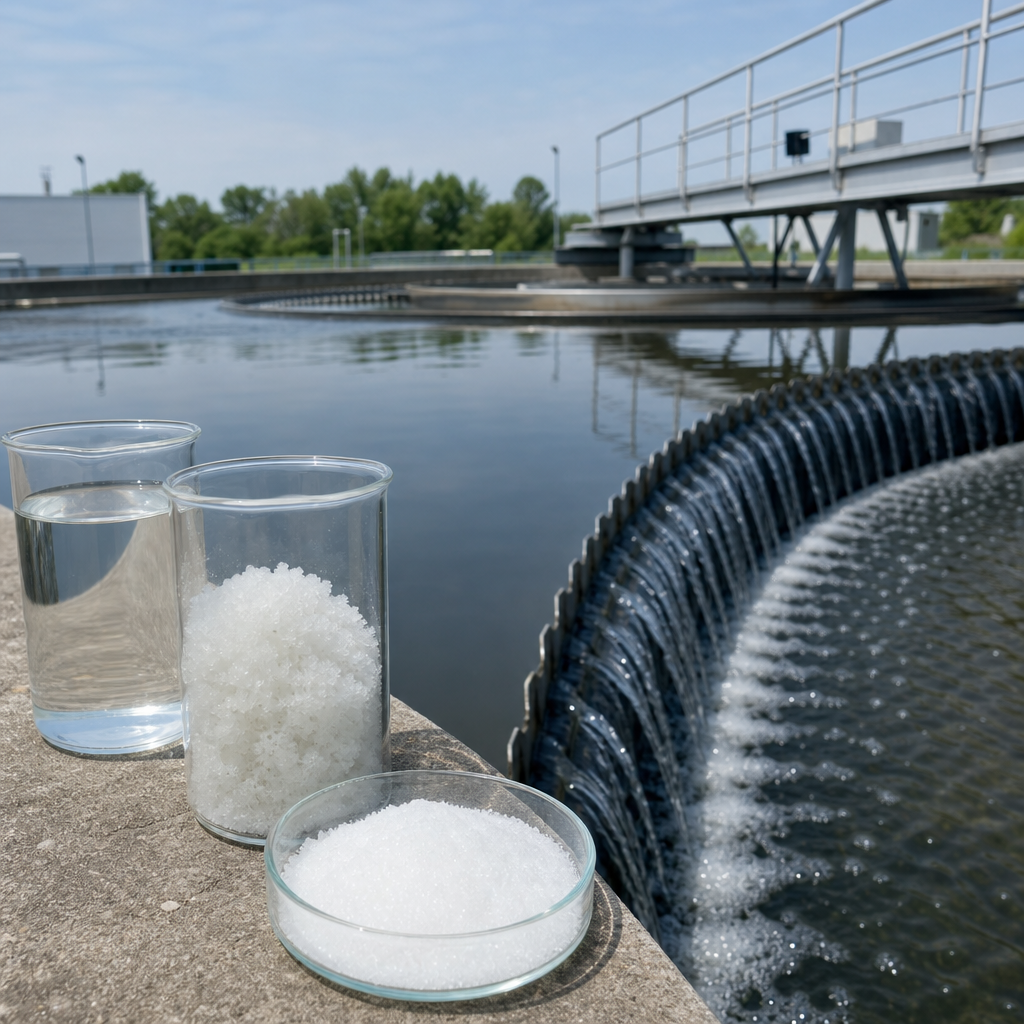
Polymers are essential materials in modern water treatment technologies because they improve solid-liquid separation, reduce chemical consumption, and help plants meet stricter water quality targets at municipal and industrial scale. In practice, when engineers discuss polymers in water treatment, they usually mean long-chain organic molecules used as coagulant aids, flocculants, dispersants, membrane materials, ion-exchange resins, adsorbent supports, and specialty binders inside treatment systems. I have worked with treatment teams selecting polymers for clarifiers, sludge dewatering presses, and polishing systems, and the same lesson appears repeatedly: the right polymer can turn an unstable process into a reliable one, while the wrong chemistry can increase costs, fouling, and residuals.
This matters because raw water quality is becoming more variable. Utilities face seasonal turbidity spikes, algal blooms, tighter limits on nutrients and trace contaminants, and pressure to reuse wastewater. Industrial operators must also manage difficult streams from mining, food processing, power generation, microelectronics, and oil and gas. Across these conditions, polymers are valuable because they can be engineered for charge, molecular weight, branching, hydrophilicity, and mechanical strength. Those tunable properties let them target specific contaminants or process goals with far more precision than many traditional materials. Successful polymer applications are therefore not a narrow niche; they are a central part of how treatment plants improve performance, resilience, and operating economics.
At a basic level, polymers work by changing interfacial behavior. In coagulation and flocculation, cationic, anionic, or nonionic polymers neutralize particle charge or bridge between particles to form larger flocs that settle or float faster. In membranes, polymers such as polyvinylidene fluoride and polysulfone create selective barriers that reject suspended solids, microbes, salts, or dissolved organics depending on pore structure. In ion exchange, crosslinked polymer beads carry functional groups that swap unwanted ions like nitrate, calcium, or heavy metals for less problematic ones. In adsorbent systems, polymer matrices support chelating sites or activated media. Understanding those roles is the foundation for evaluating case studies and determining where polymer applications deliver measurable value.
For a hub article on successful polymer applications, the key question is not whether polymers work, but how they work best in real operating environments. Performance depends on water chemistry, dose control, mixing energy, pH, temperature, upstream pretreatment, sludge handling, and disposal requirements. It also depends on compliance issues such as residual monomer limits, approved drinking water additives, and compatibility with disinfection. The sections below examine the most important application categories, the operational lessons that separate success from failure, and the evidence treatment professionals use when choosing polymer-based solutions for municipal and industrial water systems.
Coagulation, Flocculation, and Clarification: Where Polymers Deliver the Fastest Operational Gains
The most common and often most cost-effective polymer application is in coagulation and flocculation. Suspended particles in water are usually negatively charged and remain stable because electrostatic repulsion prevents agglomeration. Metal salts such as alum or ferric chloride destabilize those particles, but polymers frequently determine whether the resulting flocs become dense, shear-resistant, and easy to separate. In municipal plants treating river water, adding a cationic or nonionic flocculant after rapid mix often lowers settled turbidity, improves filter run length, and reduces sludge volume. In dissolved air flotation systems treating algae-laden source water, polymers help create buoyant flocs that attach to bubbles more efficiently than metal coagulants alone.
Successful polymer use in this stage depends on matching chemistry to the water. High molecular weight anionic polymers are commonly effective when metal hydroxide precipitates are already present and bridging is the main mechanism. Strongly cationic polymers may work better on low-turbidity, highly colored waters where direct charge neutralization is needed. Operators confirm fit through jar testing, streaming current monitoring, and turbidity trends rather than vendor claims alone. One recurring lesson from full-scale trials is that overdose can restabilize particles or create slimy floc that blinds filters. Underdose leaves fines in suspension. The best programs therefore combine bench screening, controlled feed points, and routine verification under changing raw water conditions.
Industrial case studies show the same principles under more difficult chemistry. In mineral processing and quarry wash water, anionic polyacrylamides accelerate thickening and water recovery from fine solids. In paper mills, cationic polymers improve fiber retention and clarify white water for reuse. In food plants, polymer-assisted dissolved air flotation removes fats, oils, and grease before biological treatment, preventing downstream oxygen transfer problems. I have seen facilities cut clarifier carryover simply by relocating the polymer injection point to avoid excessive shear before floc formation. That type of practical adjustment often matters as much as the product selected. Polymer success is rarely a single chemical decision; it is a process integration decision.
Sludge Dewatering and Residuals Management: Converting Separation Performance into Lower Disposal Costs
If clarification is where polymers often create the first visible improvement, sludge handling is where they frequently generate the most immediate economic return. Waste activated sludge, water treatment residuals, and industrial slurries contain fine particles and bound water that are difficult to separate mechanically. Dewatering polymers condition those solids so belt filter presses, centrifuges, screw presses, and plate-and-frame systems can produce drier cake and cleaner centrate or filtrate. In straightforward terms, the polymer helps small particles cluster into larger, stronger structures that release water more readily under pressure or centrifugal force.
Choosing a sludge dewatering polymer requires more nuance than many buyers expect. The solids source, volatile content, biological condition, age of sludge, and upstream chemistry all influence performance. Waste activated sludge usually responds differently from digested sludge or chemically precipitated residuals. A product that gives excellent capture on a centrifuge may perform poorly on a belt press because shear profiles differ. This is why serious evaluations measure cake solids, polymer consumption per dry ton, centrate suspended solids, torque or throughput impacts, and operator handling characteristics. The lowest unit price is rarely the lowest total cost. Disposal hauling, return load quality, and equipment wear matter more.
| Application | Typical Polymer Role | Primary Success Metric | Common Pitfall |
|---|---|---|---|
| Clarification | Floc growth and settling aid | Lower turbidity and longer filter runs | Overdosing causes pin floc or filter blinding |
| Dewatering | Sludge conditioning for water release | Higher cake solids and lower haulage volume | Poor make-down or wrong charge density |
| Membranes | Selective barrier material | Stable flux and target rejection | Fouling from inadequate pretreatment |
| Ion exchange | Functional resin for ion removal | Consistent effluent compliance | Regeneration inefficiency or fouling |
Successful installations usually pair polymer optimization with mechanical tuning. For example, a municipal plant can improve cake solids not only by changing from a medium-charge emulsion to a higher-charge formulation, but also by adjusting dilution water quality, aging time, and feed concentration. In one common scenario, plants using chlorinated dilution water damage polymer chains and lose performance without recognizing the cause. In industrial sludge from metal finishing or mining, high ionic strength and variable pH can collapse or distort floc behavior, so trial work must reflect actual operating extremes. Polymer applications succeed when the full conditioning system is treated as part of the process, not as an isolated consumable line item.
Membrane Technologies: Polymers as the Backbone of Filtration and Reuse Systems
Many of the most important advances in water treatment over the last three decades have depended on polymer-based membranes. Microfiltration and ultrafiltration modules made from polyvinylidene fluoride, polysulfone, polyethersulfone, and related polymers are now standard in municipal drinking water, membrane bioreactors, and industrial reuse plants. Reverse osmosis and nanofiltration rely on thin-film composite polyamide layers for salt rejection and dissolved contaminant control. These polymer materials matter because they combine selectivity with manufacturability, allowing treatment systems to deliver predictable barrier performance at large scale.
Successful membrane applications are never only about the membrane sheet chemistry. They depend on pretreatment, fouling control, and cleaning strategy. Surface waters with high natural organic matter can foul ultrafiltration quickly if coagulation is weak. Wastewater reuse systems require careful control of biofouling, scaling, and oxidant exposure because polyamide reverse osmosis membranes are vulnerable to free chlorine. When membrane projects underperform, the cause is often not a defective polymer but an upstream mismatch between feed variability and design assumptions. Experienced teams therefore evaluate silt density index, modified fouling index, total organic carbon, hardness, silica, iron, and biological activity before finalizing membrane selection.
Case studies in potable reuse and industrial recycling show how polymer membranes create value beyond basic filtration. Membrane bioreactors use submerged polymeric ultrafiltration to replace secondary clarifiers, producing low-turbidity effluent suitable for advanced treatment trains. Semiconductor fabs rely on reverse osmosis and downstream polishing to support ultra-pure water production. Textile and dyeing facilities use nanofiltration to recover water and concentrate color bodies. In each case, the polymer membrane is successful because it is part of a staged system with defined recovery targets, cleaning intervals, and integrity verification. Engineers who treat membranes as durable barriers rather than managed process assets usually face rising transmembrane pressure, shortened life, and escalating operating costs.
Ion Exchange, Adsorbent Polymers, and Targeted Contaminant Removal
Not all polymer applications involve floc formation or membrane barriers. Crosslinked polymer resins are central to ion exchange and selective contaminant removal. Strong acid cation resins soften water by exchanging calcium and magnesium for sodium or hydrogen. Strong base anion resins remove nitrate, sulfate, and natural organic matter fractions. Chelating resins with iminodiacetate or other functional groups selectively bind metals such as copper, nickel, and lead in industrial wastewater. These materials succeed because the polymer matrix provides mechanical stability while attached functional groups control selectivity, capacity, and regeneration behavior.
Municipal examples include nitrate removal in agricultural regions, where ion exchange can outperform biological denitrification when flow is moderate and brine management is practical. Industrial examples include condensate polishing in power plants and metal recovery in plating operations. Adsorbent polymer technologies also support removal of per- and polyfluoroalkyl substances, though performance varies significantly by chain length and co-contaminants. In my experience, the biggest mistake in resin projects is underestimating fouling. Iron, organics, suspended solids, and oxidants can reduce capacity or damage bead structure long before theoretical exchange capacity is reached. Pretreatment and regeneration discipline are therefore as important as resin selection.
For targeted removal, the evaluation framework should be explicit. Decision makers need breakthrough curves, empty bed contact time, regenerant efficiency, waste stream characterization, pressure drop limits, and lifecycle replacement assumptions. Regulatory acceptance also matters. Drinking water applications require materials certified to recognized standards such as NSF/ANSI 61, while wastewater and industrial systems may prioritize robustness under aggressive chemistry. Successful polymer resin applications share a common feature: they are engineered around the contaminant profile and operational reality of the site, not around generic claims about broad-spectrum removal.
How to Evaluate Successful Polymer Applications Across Case Studies
Because this page serves as a hub for successful polymer applications, it helps to define the criteria that make a case study meaningful. A strong case study identifies the treatment objective, baseline performance, polymer chemistry or class, dosing strategy, equipment context, and measured outcome. It also states constraints: pH range, temperature, flow swings, sludge characteristics, disposal route, cleaning frequency, or regulatory endpoint. Without those details, performance claims are difficult to transfer. A polymer that reduced turbidity by 60 percent in one plant may fail elsewhere if alkalinity, mixing energy, or solids composition differ materially.
When reviewing polymer case studies, focus on six practical questions. First, what contaminant or process problem was being addressed? Second, what mechanism explains the observed improvement: charge neutralization, bridging, sieving, exchange, or adsorption? Third, what operating conditions were essential? Fourth, what tradeoffs appeared, such as increased residuals, higher cleaning demand, or more complex sludge handling? Fifth, how was success measured over time rather than in a single trial? Sixth, what scale-up lessons were documented? These questions separate useful evidence from marketing language and make it easier to connect one application area to another across the broader treatment landscape.
The main benefit of understanding polymers in water treatment technologies is better decision-making. Polymers can sharpen clarification, lower sludge disposal costs, enable membrane reuse systems, and selectively remove difficult contaminants, but they perform well only when chemistry, equipment, and operating discipline are aligned. The strongest applications are supported by bench testing, pilot work, compliance review, and routine monitoring after startup. They acknowledge limits, including sensitivity to overdosing, fouling, shear, oxidants, and feed variability. That balanced view is what turns polymer selection from a purchasing exercise into a performance strategy.
As you explore this subtopic further, use this hub as a reference point for comparing case studies across municipal treatment, industrial wastewater, sludge management, reuse, and contaminant-specific polishing. Look for quantified outcomes, clearly defined mechanisms, and realistic operating context. Those are the markers of successful polymer applications, and they are the basis for choosing technologies that deliver durable results. If you are planning a treatment upgrade, start with your water chemistry, define the process objective clearly, and test polymer options under real site conditions before committing to full-scale implementation.
Frequently Asked Questions
1. What role do polymers play in water treatment technologies?
Polymers play a central role in modern water treatment because they help operators remove contaminants more efficiently, stabilize treatment performance, and reduce overall chemical demand. In many systems, polymers are used as coagulant aids and flocculants, where their long-chain molecular structure helps bind fine suspended particles together into larger, heavier flocs that settle or float more easily. This is especially important in clarifiers, dissolved air flotation units, and sludge dewatering equipment, where improved solid-liquid separation directly affects plant throughput and effluent quality.
Beyond clarification, polymers are also used in membrane technologies, ion-exchange systems, and adsorption processes. Polymeric membrane materials are engineered to selectively separate salts, organics, and particulates in ultrafiltration, nanofiltration, and reverse osmosis systems. Ion-exchange resins, which are also polymer-based, remove dissolved ions such as hardness, nitrates, and heavy metals. In specialized treatment trains, polymers can serve as support materials for adsorbents, catalysts, or functional coatings that improve contaminant capture. Taken together, these applications make polymers some of the most versatile materials in both municipal and industrial water treatment.
2. How do polymer flocculants improve solid-liquid separation?
Polymer flocculants improve solid-liquid separation by bridging small suspended particles and destabilized colloids into larger agglomerates that can be removed much more easily. After coagulants neutralize particle charges, a properly selected polymer attaches to multiple particles at once through its long molecular chains, creating stronger and larger flocs. These flocs settle faster in sedimentation basins, separate more effectively in flotation systems, and release water more efficiently during sludge thickening and dewatering.
The practical benefit is significant. Better floc formation can reduce turbidity, improve filter performance, lower sludge handling costs, and increase operational reliability during variable raw water conditions. Engineers choose among cationic, anionic, and nonionic polymers depending on water chemistry, particle type, pH, and treatment goals. Molecular weight, charge density, and dosage all matter because overfeeding or using the wrong polymer can actually worsen performance by restabilizing particles or creating weak flocs. When optimized correctly, polymer flocculants help treatment plants achieve cleaner water, better solids capture, and more efficient downstream processing.
3. Why are polymers important for reducing chemical consumption and operating costs?
Polymers are important for reducing chemical consumption because they often enhance the effectiveness of primary treatment chemicals, allowing plants to achieve target performance with lower dosages of metal salts or other coagulants. For example, when a polymer is used as a coagulant aid, it can strengthen floc formation and improve settling, which may reduce the amount of alum or ferric chloride needed to achieve the same turbidity or solids removal. This can translate into lower chemical purchasing costs, less sludge production, and fewer operational disruptions related to chemical feed adjustments.
Cost reduction also shows up in energy and maintenance. Stronger flocculation can improve clarifier loading, reduce filter backwashing frequency, and make sludge dewatering more efficient, all of which lower energy use and equipment wear. In membrane systems, polymer-based materials and pretreatment strategies can improve fouling control, extending cleaning intervals and membrane life. In ion exchange and adsorbent applications, polymer structure can be tailored for selectivity and durability, improving regeneration efficiency and reducing replacement frequency. While polymers themselves are a specialty chemical cost, their value usually comes from system-wide optimization rather than simple unit price comparison.
4. What types of polymers are commonly used in municipal and industrial water treatment?
Several major classes of polymers are commonly used in water treatment, each designed for a specific function. In clarification and sludge handling, water-soluble organic polymers are widely used as flocculants and coagulant aids. These may be cationic, anionic, or nonionic depending on the charge characteristics of the contaminants being treated. Common formulations include polyacrylamide-based products and other engineered copolymers tailored for raw water treatment, wastewater clarification, or biosolids dewatering.
In separation technologies, polymers are the backbone of many membrane systems, including materials used in ultrafiltration, microfiltration, nanofiltration, and reverse osmosis. In dissolved contaminant removal, ion-exchange resins are crosslinked polymer beads functionalized to capture specific ions such as calcium, magnesium, nitrate, arsenic, or heavy metals. Additional polymer applications include dispersants for scale and particulate control, binders in treatment media, and support matrices for adsorbents or reactive coatings. The exact polymer selection depends on feed water composition, regulatory requirements, treatment goals, equipment design, and compatibility with the broader process train.
5. How do engineers choose the right polymer for a water treatment system?
Choosing the right polymer requires a combination of lab testing, process knowledge, and real-world operating experience. Engineers start by evaluating the water or wastewater characteristics, including turbidity, suspended solids, organic content, pH, alkalinity, ionic strength, temperature, and the nature of the contaminants present. They then consider the treatment objective, such as faster settling, better float formation, improved sludge dewatering, lower filtrate turbidity, or enhanced membrane pretreatment. From there, they narrow the options by polymer type, molecular weight, charge density, and product form.
Jar testing, pilot trials, and full-scale performance monitoring are essential because polymer behavior is highly application-specific. A polymer that performs well in one plant may not work the same way in another due to differences in water chemistry, mixing energy, retention time, and upstream chemical dosing. Engineers also evaluate practical factors such as make-down requirements, feed equipment compatibility, shelf stability, residual impact, and safety handling. The best polymer is not simply the strongest or most expensive product; it is the one that consistently delivers target water quality, stable operation, and the lowest total treatment cost under actual plant conditions.