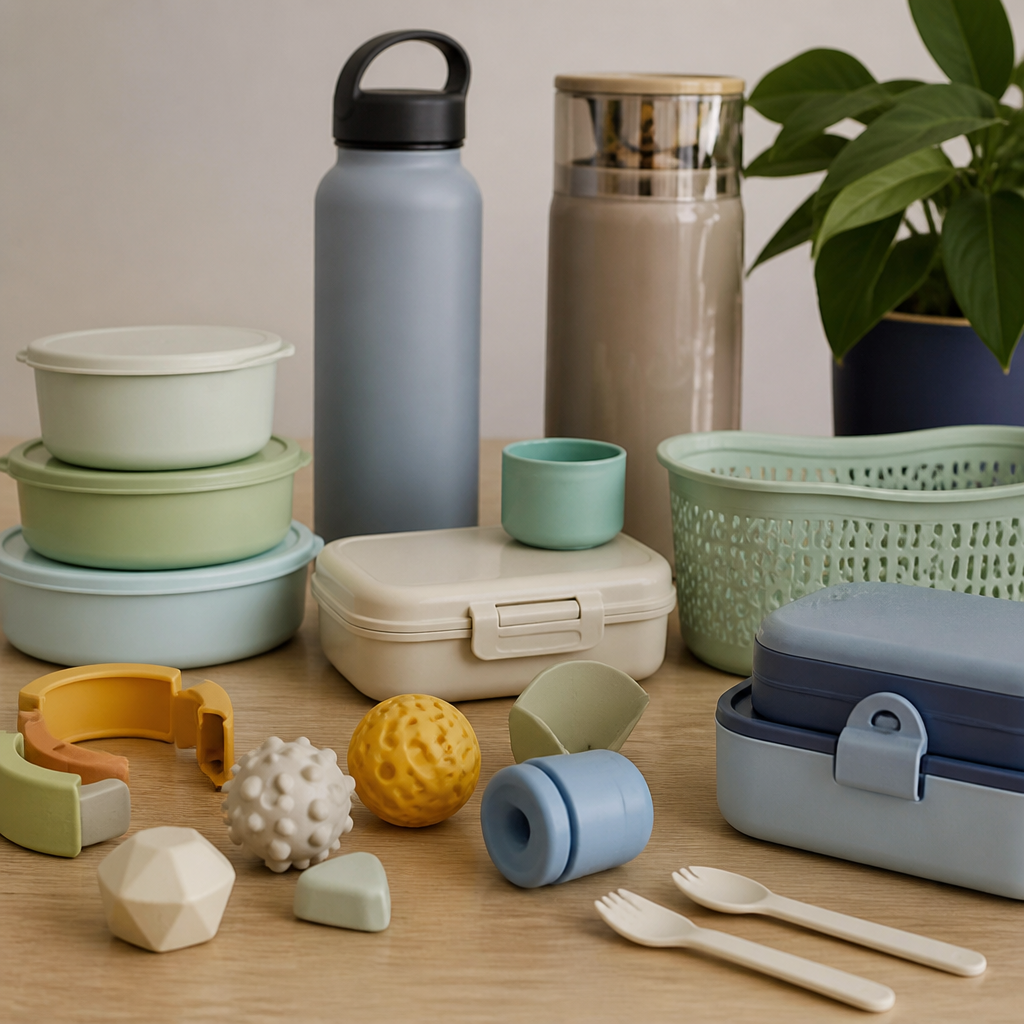
New polymer-based consumer goods are arriving on store shelves faster than at any point in the past decade, reshaping categories from kitchen storage and beauty packaging to footwear, electronics accessories, home textiles, and reusable drinkware. In this context, polymers are large-chain materials that include conventional plastics, engineered resins, elastomers, silicone systems, bio-based blends, and recyclable mono-material structures designed for specific performance goals. I have worked with launch teams evaluating these products at the packaging, materials, and retail-readiness stages, and the pattern is clear: brands are no longer introducing polymers simply because they are cheap or moldable. They are launching them because new formulations solve visible consumer problems such as breakage, weight, hygiene, refillability, thermal resistance, impact protection, and lower material use per unit. This matters because new product launches in polymer-based consumer goods now influence purchasing decisions, retailer assortment strategies, sustainability claims, and regulatory compliance all at once. For companies tracking innovative products and solutions, this category has become a practical lens on where materials science meets everyday commerce.
The most important shift is that polymer innovation is moving from hidden technical specification to front-of-pack selling point. Shoppers increasingly see terms like BPA-free Tritan, post-consumer recycled PET, food-grade silicone, thermoplastic polyurethane, bio-attributed polyethylene, and compostable PLA blends in product descriptions. Those labels can be useful, but they can also confuse buyers if the underlying benefit is not explained. A well-designed new product launch clarifies what a polymer does in plain terms: a copolyester bottle resists odors and cracking; a TPE grip improves hold when wet; a mono-material pouch is easier to process in recycling streams than a multilayer laminate; a polypropylene lunch container tolerates repeated microwave cycles better than brittle alternatives. The hub value of this topic is simple. If you want to understand new product launches across consumer markets, polymer-based goods provide one of the clearest signals of where brands are investing, what retailers are rewarding, and which technical claims are becoming commercially credible.
Why polymer-based launches are accelerating across consumer categories
Several market forces are driving this wave. First, resin and additive technology has improved. Brands can now fine-tune clarity, barrier performance, flexibility, scratch resistance, color stability, and heat tolerance with far more precision than they could even five years ago. Second, manufacturing has become more adaptable. Injection molding, blow molding, thermoforming, overmolding, and additive manufacturing allow shorter iteration cycles, making pilot launches less risky. Third, retailers want products that justify shelf space through clear differentiation. A simple material switch can create a more durable food container, a lighter travel accessory, or a refill cartridge that reduces freight cost and damage rates. Fourth, policy pressure is forcing redesign. Extended producer responsibility programs, recycled-content mandates, and restrictions on certain single-use formats are pushing companies to revisit material architecture instead of relying on legacy packaging.
In practice, the strongest launches pair a materials advantage with an easy consumer story. Consider reusable hydration products. The biggest winners typically combine odor resistance, dishwasher safety, lower weight than glass, and impact durability. In beauty, refillable polymer pods are gaining ground because they reduce shipping weight while protecting sensitive formulas. In home organization, polypropylene bins and copolyester storage systems succeed because they stack, clean easily, and survive repeated handling better than fiberboard or thin commodity plastics. In consumer electronics, thermoplastic polyurethane cases remain popular because they absorb shock and maintain grip without the brittleness associated with harder transparent materials. None of these launches succeed on chemistry alone. They succeed because the material directly improves the use experience and because brands communicate that improvement clearly in retail listings, packaging copy, and demonstrations.
What types of new polymer goods are hitting shelves now
New product launches in this space cluster around a few high-growth formats. Reusable household goods remain dominant, especially food storage, drinkware components, organizers, and cleaning tools. Soft-touch elastomers and silicones are appearing in lids, seals, grips, collapsible kitchenware, and baby products because they improve sealing and comfort. Beauty and personal care brands are introducing refill systems built from polypropylene or polyethylene families that can be separated more easily than mixed-material packs. Footwear companies are expanding molded foam sandals and recovery shoes using EVA, TPU, and supercritical foam technologies that reduce weight while improving energy return. Textile-adjacent products such as waterproof mattress covers, performance outerwear membranes, and stain-resistant table linens increasingly rely on advanced polymer coatings and laminates.
Packaging-led launches also deserve attention because they often become the consumer’s first contact with a new polymer solution. Stand-up pouches with improved barrier layers, tethered caps made possible by tougher hinge designs, concentrated refill sachets, and clear recycled-content bottles are all examples of material innovation sold through convenience. In pet care, impact-resistant food bins and odor-control waste systems are using engineered resins once reserved for industrial applications. In travel goods, polycarbonate and ABS blends continue to evolve, with premium luggage brands emphasizing crack resistance, lower shell weight, and textured finishes that hide abrasion. Even stationery and school supplies show the trend, from flexible polypropylene folders to recycled-plastic pen bodies and silicone pencil cases that resist tearing.
| Category | Common polymer systems | Main consumer benefit | Typical launch angle |
|---|---|---|---|
| Drinkware and storage | PP, Tritan copolyester, silicone | Durability, odor resistance, leak control | Reusable everyday convenience |
| Beauty and personal care | PE, PP, PET, mono-material packs | Refillability, lighter shipping weight | Waste reduction with premium feel |
| Electronics accessories | TPU, PC, ABS blends | Impact protection, grip, clarity | Device safety without bulk |
| Footwear and comfort goods | EVA, TPU foams, TPE | Cushioning, rebound, low weight | All-day comfort and recovery |
| Home organization and cleaning | PP, HDPE, elastomers | Chemical resistance, easy cleaning | Longer product life in daily use |
How brands position polymer innovation during a new product launch
The most effective launch campaigns avoid abstract materials language and connect the polymer to a specific outcome. Instead of saying a container uses advanced resin technology, strong brands say it stays clear after dishwasher cycles, seals tightly in a backpack, or survives drops from counter height. This difference matters because consumers buy results, not formulations. During launch reviews, I consistently see better conversion when messaging is structured around a problem, a material-enabled solution, and a simple proof point. For example, a phone case brand may explain that TPU corners dissipate impact energy and back that claim with a military drop-test standard such as MIL-STD-810H. A reusable bottle brand might show that its copolyester body resists staining from coffee or sports drinks compared with lower-grade alternatives.
Retail execution follows the same logic. On physical shelves, package copy has seconds to persuade, so brands highlight tactile features like flexibility, non-slip grip, soft-close lids, or crystal clarity. Online, they can go deeper with cross-sections, care instructions, recycling guidance, and side-by-side comparisons. New product launches that perform best usually answer six questions directly: What is it made of; why was that material chosen; what problem does it solve; how long will it last; how should it be cleaned or recycled; and what tradeoffs should buyers know. Tradeoffs are important. Silicone bakeware, for instance, is flexible and heat resistant, but not every formulation browns food like metal. Recycled-content plastics can slightly vary in tint. Compostable biopolymers may require industrial composting infrastructure. Clear explanation builds confidence and reduces returns.
Sustainability claims, compliance, and where launches can go wrong
Polymer-based consumer goods now face far more scrutiny than standard product launches did a few years ago. Environmental claims are a major risk area. A package labeled recyclable, compostable, recycled, ocean-bound, bio-based, or circular needs support that matches regional rules and actual end-of-life conditions. The Federal Trade Commission’s Green Guides in the United States, along with rules developing in the European Union and the United Kingdom, have made vague claims more dangerous. Retailers are also tightening requirements around restricted substances, recycled-content verification, and packaging data disclosure. For food contact products, brands may need to align with FDA regulations in the United States or EFSA expectations in Europe. For electronics accessories and toys, REACH, RoHS, CPSIA, and Proposition 65 can all affect launch readiness depending on market and formulation.
Where launches fail is rarely in the lab. They fail when performance claims, supply chain realities, and disposal guidance do not line up. I have seen promising refill packs stumble because consumers could not easily separate components for recycling. I have seen recycled-plastic home goods launch with attractive sustainability messaging only to generate complaints about odor or inconsistent color because quality controls were not tuned for feedstock variation. Another common issue is overengineering. A product may use a high-cost engineered resin for a function that a simpler polypropylene design could deliver at lower price and lower processing complexity. The best launches balance performance, manufacturability, cost, compliance, and end-of-life practicality. They also test packaging copy with nontechnical consumers before rollout, because misunderstood claims can erase a genuine innovation advantage.
What retailers, buyers, and consumers should watch next
The next wave of new polymer-based consumer goods will be shaped less by novelty alone and more by system compatibility. Retail buyers are increasingly asking whether a product fits existing recycling streams, ships efficiently, survives e-commerce handling, and supports private-label extensions. Consumers, meanwhile, are rewarding products that feel durable, easy to clean, and clearly explained. Expect more mono-material packaging, more refill-and-reuse systems, and more products built around lightweighting rather than total material elimination. Expect continued growth in mechanically recycled PET and polyethylene where appearance tolerances permit it, and selective growth in chemically recycled feedstocks for applications needing tighter purity or contact standards. Watch barrier packaging, flexible dispensing, snap-fit reusable closures, and high-performance foams. These are not fringe developments. They are where commercial launch activity is concentrating.
For companies using this page as a hub for new product launches under innovative products and solutions, the core lesson is straightforward. Polymer innovation is no longer a niche materials story; it is a mainstream product strategy that affects design, merchandising, regulation, and consumer trust. The most successful launches translate chemistry into practical value, document claims carefully, and build products around real use conditions instead of marketing trends. If you are evaluating what is new on shelves, start by asking which polymer is being used, what job it performs better than the previous option, and whether the brand explains the tradeoffs honestly. That framework quickly separates meaningful innovation from superficial reformulation. Follow that approach across adjacent categories, and you will spot the launches most likely to endure, scale, and shape the next generation of everyday consumer goods. Use this hub as your starting point, then map category-specific launches with the same discipline.
Frequently Asked Questions
1. What kinds of new polymer-based consumer goods are showing up on shelves right now?
Shoppers are seeing polymer innovation across far more categories than many people realize. It is not limited to traditional plastic containers or packaging. New polymer-based products now include lighter kitchen storage systems, flexible and impact-resistant reusable drinkware, beauty and personal care packaging with improved dispensing performance, footwear midsoles and uppers engineered for comfort and rebound, electronics accessories with better heat resistance and cable flexibility, and home textiles that combine stretch, durability, and moisture management. In many of these products, the polymer is being selected not just for cost, but for a precise mix of performance traits such as clarity, softness, toughness, chemical resistance, temperature stability, barrier protection, or recyclability.
What is changing most is the sophistication of material selection. Brands are increasingly using engineered resins, silicone systems, elastomers, mono-material designs, and bio-based blends to solve highly specific consumer problems. For example, a food storage lid may be designed to stay flexible after repeated dishwasher cycles, a cosmetic pump may use a resin that better protects formulas from air exposure, and a phone accessory may incorporate a polymer that resists yellowing, cracking, or heat distortion. The result is a wave of products that look familiar on the shelf but often perform noticeably better in everyday use.
2. Why are brands turning to advanced polymers instead of traditional materials?
Brands are adopting advanced polymers because these materials can deliver a combination of properties that is difficult to match with glass, metal, paper, wood, or ceramics alone. Polymers can be lightweight, moldable into complex shapes, resistant to moisture and chemicals, comfortable to handle, and scalable for high-volume production. That flexibility matters in consumer goods, where companies need to balance performance, aesthetics, manufacturing efficiency, shipping costs, and consumer expectations. A polymer component can be designed to snap-fit, seal tightly, absorb impact, remain transparent, or feel soft to the touch, all while supporting large production runs.
Another major reason is design freedom. Modern polymer systems allow manufacturers to engineer products around specific use cases rather than compromise around the limitations of older materials. In footwear, that can mean better energy return and lower weight. In reusable bottles and food containers, it can mean stronger durability with less bulk. In beauty packaging, it can mean precise dosing and compatibility with sensitive formulas. In home goods, it can mean stain resistance, flexibility, or wash durability. When chosen well, advanced polymers help brands create products that are more functional, more user-friendly, and often more cost-effective over the product’s life cycle.
3. Are these new polymer-based goods more sustainable, or is that mostly marketing?
The answer depends on the material, the product design, and what claims are actually being made. Some new polymer-based goods do offer meaningful sustainability improvements, but not all sustainability language means the same thing. A product may use recycled content, be made from a bio-based polymer blend, reduce material usage through lightweighting, be designed for refill systems, or use a recyclable mono-material structure that simplifies end-of-life processing. Each of those is a different sustainability approach, and each comes with its own practical limits. A lighter product can reduce transportation impact, for example, while a durable reusable product can reduce replacement frequency, but neither automatically guarantees a lower overall environmental footprint in every situation.
Consumers should look for specificity rather than broad buzzwords. Claims such as “contains 50% post-consumer recycled content,” “designed for store-drop-off recycling,” or “made from a bio-based feedstock” are more meaningful than vague terms like “eco-friendly.” It is also important to remember that performance matters to sustainability. If a reusable drinkware product lasts for years, or if a refillable package is durable enough to support repeated use, that can provide real value. On the other hand, a material that sounds greener on paper but fails quickly in practice may not be an improvement. The most credible advances combine durability, thoughtful design, material efficiency, and clear disposal or recovery pathways.
4. How can consumers tell whether a polymer-based product is high quality?
Quality in polymer-based consumer goods usually shows up in the details of performance, finish, and consistency. A well-made product should feel intentional rather than flimsy. Look for even wall thickness, secure seals, smooth edges, stable color, reliable closures, and components that fit together precisely. In kitchenware or drinkware, lids should close cleanly without warping, hinges should move smoothly, and the material should not become brittle or cloudy after minimal use. In beauty packaging, pumps and caps should dispense consistently and resist leaking. In electronics accessories, cable jackets should feel flexible without being tacky, connectors should fit securely, and cases should not show premature cracking or discoloration.
It also helps to evaluate whether the material matches the use case. A good polymer product is not simply made from a “strong” material; it is made from the right material for the job. Silicone may be ideal for heat resistance and flexibility, while a rigid engineered resin may be better for dimensional stability and impact resistance. Clear labeling can also be a positive sign, especially when brands provide care instructions, temperature limits, compatibility notes, or information about recycled or bio-based content. Ultimately, quality comes from thoughtful engineering, sound manufacturing, and realistic product claims. If a product’s handling, durability, and finish align with its intended purpose, that is usually a strong indicator that the polymer selection and design were done well.
5. What should shoppers expect next as polymer innovation continues to move into everyday products?
Consumers should expect polymer-based goods to become more specialized, more performance-driven, and more tailored to circular design goals. Instead of one generic material being used across many applications, brands are increasingly selecting polymers for targeted benefits such as refill compatibility, higher recycled content, easier sorting in recycling systems, improved barrier properties, lower weight, better tactile feel, or enhanced resistance to heat, moisture, and chemicals. This means future products may look simpler from the outside while actually containing more sophisticated material engineering. Everyday items like food storage, beauty containers, wearable accessories, appliance parts, and household organizers are likely to continue evolving in subtle but meaningful ways.
Another trend to watch is the convergence of convenience, durability, and sustainability. More products will likely be designed as reusable systems rather than one-time purchases, with polymer components optimized for repeated handling, washing, transport, and refill cycles. We are also likely to see more mono-material packaging formats, improved use of recycled feedstocks, and continued growth in bio-based and hybrid material solutions where performance permits. For shoppers, the key takeaway is that polymers are no longer just background materials. They are becoming central to how brands deliver product performance, shelf appeal, and environmental positioning. As this category grows, consumers will benefit most by paying attention to function, longevity, and the credibility of the claims attached to the material itself.