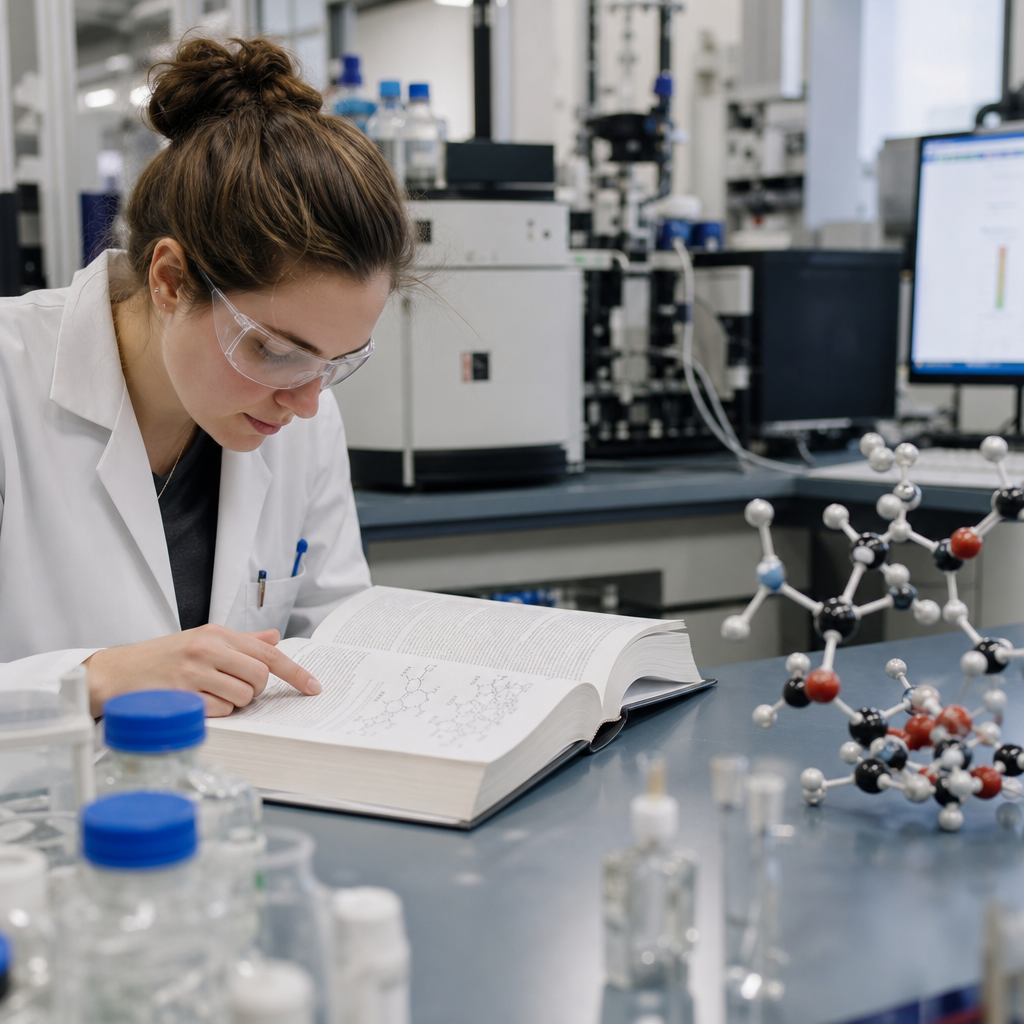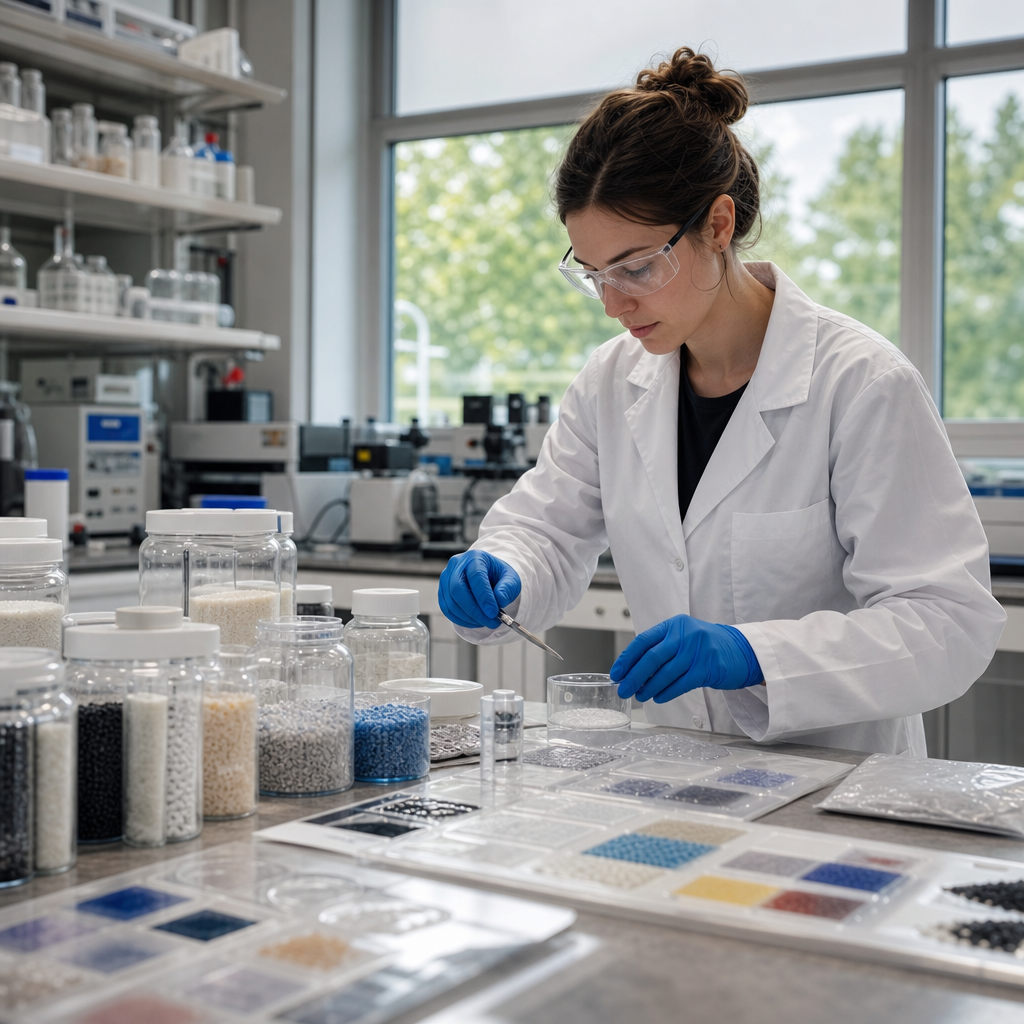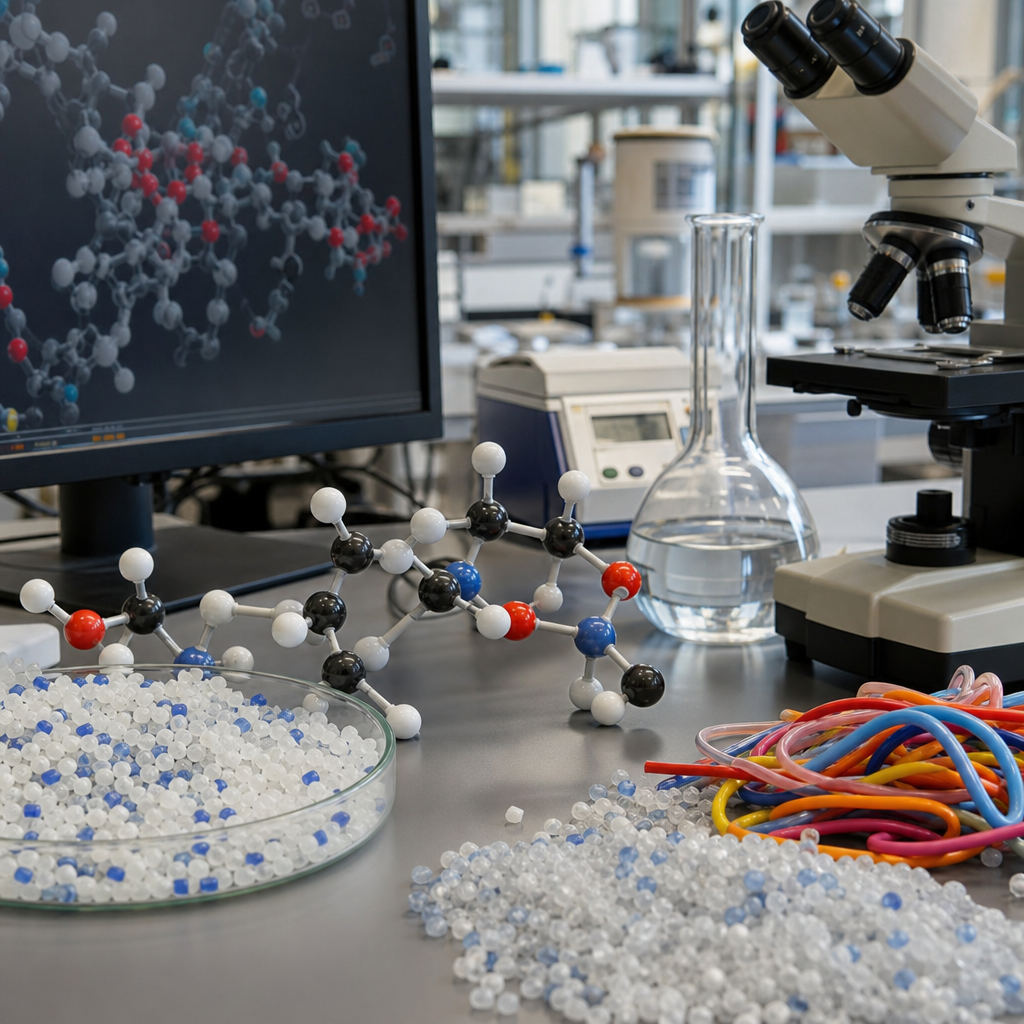
Open source tools for polymer science have moved from niche utilities to core research infrastructure, giving students, academic labs, and industrial teams practical ways to model macromolecules, analyze spectra, manage data, and reproduce results without the licensing barriers of proprietary platforms. In polymer science, “open source” means the source code is publicly available for inspection, modification, and redistribution under licenses such as GPL, BSD, or MIT. “Tools” includes molecular simulation packages, cheminformatics libraries, microscopy and spectroscopy analysis software, statistical computing environments, electronic lab notebooks, workflow managers, and databases. I have used these tools across literature reviews, structure building, molecular dynamics, rheology data cleanup, and classroom demonstrations, and the pattern is clear: the best open source stack does not replace scientific judgment, but it does dramatically expand access to rigorous polymer research.
This matters because polymer workflows are unusually interdisciplinary. A single project may involve monomer design, reaction tracking, molecular weight characterization, thermal analysis, scattering, imaging, and machine learning. Researchers often move among chemical structures, time series, spectra, micrographs, and simulation trajectories in the same week. When software is closed, expensive, or hard to integrate, results become harder to reproduce and students learn fragmented habits. Open source tools for polymer science solve part of that problem by making methods transparent, scriptable, and shareable. They also support the educational mission of a software and tools hub: helping readers understand which categories of tools exist, what each one does well, where limitations appear, and how to build a realistic toolkit that connects experiment, computation, and communication.
A useful way to think about this landscape is by function. Some tools help you represent polymers as chemical graphs or coordinate files. Others simulate chain behavior, phase separation, crystallization, or transport. Another group extracts quantitative measurements from DSC, TGA, FTIR, NMR, SAXS, or tensile data. A growing set focuses on workflows, version control, notebooks, and FAIR data principles so results can be reused. This guide covers those categories as a hub article for software and tools in educational resources, with direct explanations that answer the questions most readers ask first: which tools are best for beginners, which are trusted by experts, which work for experiments versus modeling, and how can you combine them into a dependable polymer informatics workflow.
Cheminformatics and structure building tools for polymers
The first challenge in polymer research is representing structure in a form software can use. For small molecules, standard SMILES strings are often enough. For polymers, repeat units, end groups, tacticity, branching, and molecular weight distributions make representation more complicated. Open Babel remains a foundational open source chemistry toolbox for converting file formats, generating coordinates, and handling common molecular representations. RDKit is equally important for cheminformatics tasks such as substructure matching, descriptor calculation, and data pipelines. In practice, I use RDKit most when organizing monomer libraries, reaction products, additive datasets, or property prediction features, while Open Babel is often the quick bridge between MOL, SDF, PDB, and XYZ files.
Avogadro is one of the most approachable open source molecular editors for students learning how to build repeat units, optimize geometries, and visualize conformations. Although it is not polymer-specific, it is excellent for constructing monomers and short oligomers before exporting structures into simulation tools. Jmol and PyMOL, while more visualization-oriented, help researchers inspect chain conformations, packing motifs, or coarse crystal arrangements. Polymer-specific representations remain an active development area, so many groups approximate polymers using oligomer models or custom scripts. That is a limitation worth stating clearly: no single open source editor fully captures every industrial polymer notation need out of the box, especially for complex copolymers and stochastic sequences.
For educational use, this category is where learners should start because it teaches the connection between chemistry and data. A student who can draw a repeat unit, convert a file, generate descriptors, and label metadata correctly is already building good habits for later simulation and analysis. This section also acts as a gateway to related articles on polymer representation, file formats, and chemical data cleaning within the broader software and tools topic.
Molecular simulation platforms used in polymer science
When researchers ask which open source tools are most important for computational polymer science, three names appear repeatedly: LAMMPS, GROMACS, and HOOMD-blue. LAMMPS is the broadest workhorse for classical molecular dynamics in polymers because it supports bead-spring models, all-atom force fields, coarse-grained methods, deformation, non-equilibrium simulations, and parallel scaling on large systems. It is commonly used for glass transition studies, diffusion, entanglement analysis, nanocomposites, and polymer melts under shear. GROMACS is widely trusted for high-performance molecular dynamics, especially when biomacromolecules, solvated systems, or detailed atomistic workflows are involved. HOOMD-blue is especially attractive for GPU-accelerated soft matter and coarse-grained simulations, where polymer self-assembly or colloid-polymer mixtures must be explored efficiently.
Simulation quality depends less on the package name than on the model choice, force field, boundary conditions, equilibration strategy, and analysis protocol. For atomistic polymers, researchers often rely on force field families such as OPLS-AA, GAFF, COMPASS-style approaches, or specialized parameter sets from the literature. For coarse-grained work, MARTINI and Kremer-Grest-style bead-spring models are common reference points. The software is open source, but parameter validation remains a scientific responsibility. I have seen novice users obtain polished trajectory movies from poorly equilibrated systems; visual appeal is not evidence of physical accuracy. Good polymer simulation requires checking density convergence, chain dimensions, relaxation times, finite-size effects, and sensitivity to initialization.
| Tool | Best use in polymer science | Key strengths | Main caution |
|---|---|---|---|
| LAMMPS | Melts, mechanics, coarse-grained and atomistic polymer MD | Flexible force fields, strong documentation, large community | Setup complexity can be high for beginners |
| GROMACS | Detailed atomistic simulations, solvated systems, transport studies | Fast performance, mature analysis ecosystem | Polymer building often needs extra preprocessing tools |
| HOOMD-blue | GPU soft matter simulations, self-assembly, colloid-polymer models | Efficient on modern hardware, Python-friendly workflows | Some specialized polymer methods require custom scripting |
| ESPResSo | Electrostatics, soft matter, mesoscopic polymer systems | Strong for charged and complex fluids | Smaller user base than LAMMPS or GROMACS |
Beyond molecular dynamics, quantum chemistry packages such as Psi4 and NWChem support monomer-level electronic structure calculations, reaction energetics, and parameter development. They are useful for studying monomer reactivity, oligomer conformations, and charge distributions that later inform force fields. These tools do not replace polymer-scale simulation, but they connect chemistry to mesoscale behavior. As a hub article, this section points readers toward deeper resources on polymer molecular dynamics, force-field selection, and multiscale modeling.
Data analysis tools for thermal, mechanical, spectroscopic, and imaging workflows
Experimental polymer science generates diverse data types, and open source analysis tools are now strong enough to handle most routine tasks. Python has become the central environment because NumPy, SciPy, pandas, Matplotlib, and scikit-learn together cover numerical analysis, curve fitting, tabular data cleaning, plotting, and machine learning. In practical polymer work, these libraries are ideal for processing DSC heat-flow baselines, TGA mass-loss curves, DMA temperature sweeps, stress-strain data, gel permeation chromatography exports, and rheology frequency sweeps. Jupyter notebooks make the workflow transparent: the raw file import, cleaning steps, equations, plots, and interpretation live in one reproducible document.
For image analysis, ImageJ and its Fiji distribution are indispensable. Polymer researchers use Fiji to measure fiber diameters in electrospun mats, pore sizes in membranes, domain spacing in phase-separated blends, and particle dispersion in nanocomposites. The software is extensible, widely cited, and suitable for classroom instruction because students can inspect every processing step. For spectroscopy and diffraction, open source options vary by instrument type, but Python-based ecosystems remain the most flexible. Libraries such as lmfit help with constrained nonlinear fitting, while HyperSpy is valuable for multidimensional microscopy and spectroscopy datasets. GSAS-II, though more common in crystallography, can support structural interpretation where semicrystalline polymer diffraction patterns are relevant.
The key advantage of open source analysis is auditability. If a modulus value changes after smoothing, baseline correction, or truncation, the exact operation can be documented and rerun. That is harder with opaque click-path software. The tradeoff is that teams need basic scripting literacy and disciplined file management. For educators building a software and tools curriculum, teaching one shared analysis language, usually Python or R, has higher long-term value than teaching isolated vendor interfaces.
Polymer informatics, machine learning, and databases
Polymer informatics has grown quickly because researchers want to predict properties such as glass transition temperature, dielectric constant, permeability, modulus, and solubility from structure and processing variables. Open source tools make this work accessible. Scikit-learn remains the default entry point for regression, classification, cross-validation, and feature importance. For deep learning, PyTorch and TensorFlow are common choices, especially when working with graph neural networks, sequence encodings, or multimodal datasets. The challenge in polymers is not simply model training; it is representing stochastic macromolecular structure in a mathematically useful and chemically honest way.
Reliable data sources matter as much as algorithms. The Polymer Genome project is widely discussed for property prediction, while broader materials platforms such as the Materials Project, Citrine-related published datasets, and community repositories provide context for integrating polymer information with materials informatics methods. Many researchers also assemble internal datasets from hand-curated literature extractions. I have done this myself, and the hardest part is almost never the model. It is harmonizing units, temperatures, molecular weight definitions, polydispersity reporting, processing history, and whether reported values refer to neat polymers, blends, or filled systems. A model trained on inconsistent labels will produce elegant nonsense.
For this reason, open source data validation and visualization tools are central to polymer informatics. Pandera, Great Expectations, and custom schema checks can catch malformed entries. Seaborn and Plotly help reveal outliers and hidden clusters before any machine learning begins. Readers interested in this category should also explore linked educational resources on polymer datasets, descriptor engineering, and reproducible materials informatics.
Reproducible workflows, collaboration, and choosing the right stack
The most effective open source tools for polymer science are the ones that fit into a reproducible workflow. Git and GitHub or GitLab are essential for version control, especially when scripts, notebooks, figures, and manuscript text evolve together. Conda, mamba, Docker, and Apptainer reduce the common problem of broken dependencies across student laptops, lab workstations, and computing clusters. Electronic lab notebooks such as JupyterLab-based systems, along with markdown documentation and structured folder conventions, improve continuity when researchers graduate or projects pause for months. Workflow tools like Snakemake can automate repetitive analysis across batches of spectra, simulations, or microscopy files.
Choosing the right stack depends on the question, not on fashion. For a teaching lab analyzing tensile tests and DSC curves, Python, pandas, Matplotlib, and Jupyter may be enough. For a soft matter simulation project, LAMMPS or HOOMD-blue plus OVITO for trajectory visualization is a stronger core. For image-heavy membrane research, Fiji and Python may matter more than molecular dynamics. For informatics, RDKit, scikit-learn, and careful curation are foundational. Start with the smallest stack that preserves rigor, then add complexity only when a real bottleneck appears. That approach keeps educational resources practical and keeps software serving polymer science rather than distracting from it.
Open source does have limits. Support is community-driven, interfaces may be less polished than commercial packages, and validation remains the user’s responsibility. Yet the benefits are decisive: transparency, lower cost, extensibility, easier collaboration, and stronger reproducibility. For anyone building competence in software and tools for polymer science, the next step is simple: choose one analysis workflow, one modeling workflow, and one data management workflow, then document them well enough that another researcher can repeat your results without guessing.
Frequently Asked Questions
What kinds of open source tools are most useful in polymer science?
Open source tools in polymer science span much more than molecular visualization. In practice, they cover several major categories that support the full research workflow. At the modeling and simulation level, researchers often use open source molecular dynamics and Monte Carlo packages to study polymer chain conformations, glass transition behavior, crystallization, phase separation, diffusion, and interfacial phenomena. These tools are especially valuable for investigating how chain architecture, molecular weight, branching, crosslinking, and copolymer composition influence properties at multiple length and time scales.
Another important category includes cheminformatics and molecular building tools that help generate repeat units, oligomers, polymer fragments, and input structures for downstream simulations. These are often paired with scripting libraries in Python or similar languages, which make it easier to automate repetitive tasks such as structure generation, trajectory analysis, data cleaning, and property calculations. For many polymer researchers, these scripting ecosystems become the backbone of reproducible computation because they connect raw simulation output to publication-ready figures and statistical summaries.
Spectroscopy and characterization analysis is also a major area. Open source software can support the processing of FTIR, Raman, NMR, DSC, TGA, rheology, scattering, and chromatography data, depending on file compatibility and community support. In polymer science, these capabilities matter because experimental interpretation often depends on fitting overlapping peaks, comparing batch-to-batch trends, quantifying conversion, tracking degradation, or relating thermal transitions to composition and morphology. Even when one tool does not cover every instrument format, open ecosystems make it possible to convert, parse, and analyze data using customizable workflows.
Data management and reproducibility tools are equally important. These include electronic lab notebooks, version control platforms, workflow managers, notebook environments, and open databases. Together, they help labs organize metadata, preserve analysis history, share code, and reduce the risk of irreproducible results. For polymer science in particular, where properties are sensitive to synthesis route, processing conditions, humidity, thermal history, and sample age, careful data tracking can be just as important as the simulation or measurement software itself.
In short, the most useful open source toolset is usually not a single application but an integrated stack: structure builders, simulation engines, analysis libraries, visualization tools, and reproducibility infrastructure working together. That combination enables researchers to move from hypothesis to data to interpretation without being locked into expensive or opaque proprietary systems.
Why are open source tools becoming so important for polymer science research?
Open source tools are becoming central to polymer science because they address three persistent needs at once: accessibility, transparency, and adaptability. First, they lower cost barriers. Students, early-career researchers, smaller academic labs, startups, and teams in underfunded institutions can access advanced computational and analytical capabilities without paying high licensing fees. That broader access helps democratize polymer research and training, allowing more people to participate in simulation, data analysis, and method development.
Second, open source software improves scientific transparency. In polymer science, many conclusions depend on assumptions built into force fields, fitting procedures, baseline corrections, peak models, statistical methods, and data preprocessing choices. When the underlying code is visible, researchers can inspect how a result was generated rather than treating software output as a black box. That matters for peer review, internal validation, and long-term confidence in published results. If a group is studying viscoelastic response, polymer miscibility, chain entanglement metrics, or degradation kinetics, being able to verify the implementation of the calculation can significantly strengthen the analysis.
Third, open source tools are highly adaptable. Polymer systems are complex and diverse, ranging from commodity thermoplastics and elastomers to hydrogels, biopolymers, block copolymers, ionomers, membranes, and thermosets. Off-the-shelf workflows do not always map neatly onto these materials. Open source platforms let researchers extend scripts, modify analysis pipelines, add support for custom descriptors, and connect tools across computational and experimental environments. That flexibility is essential for polymer science because researchers frequently work with nonstandard architectures, multiscale datasets, and specialized measurement protocols.
There is also a strong collaboration advantage. Open communities encourage shared benchmarks, published workflows, reusable notebooks, and method discussions that accelerate learning across institutions. Instead of each lab solving the same problem in isolation, they can build on community practices. Over time, that creates de facto standards for simulation setup, spectral processing, polymer descriptor calculation, and data reporting.
Finally, open source tools support reproducibility in a way that aligns well with modern science. When code, input files, analysis scripts, and version histories are preserved, it becomes easier to reproduce a chain of reasoning from raw data to final conclusion. In a field where small changes in processing history or model assumptions can lead to different property predictions, this is a major advantage rather than a minor convenience.
Can open source software handle both computational polymer modeling and experimental data analysis?
Yes, and that is one of the biggest reasons open source ecosystems are so valuable in polymer science. A modern polymer project often combines simulation, synthesis, characterization, and data science rather than treating them as isolated activities. Open source software is well suited to this kind of integrated work because many tools can be linked together through common file formats, APIs, and scripting languages.
On the computational side, open source packages can support atomistic and coarse-grained modeling, molecular dynamics, Monte Carlo sampling, mesoscopic analysis, and property extraction from trajectories. Depending on the method and system, researchers can investigate chain packing, segmental mobility, mechanical response, diffusion, self-assembly, interfacial structure, or thermodynamic behavior. These computational outputs can then be post-processed with open source analysis libraries to calculate radial distribution functions, end-to-end distances, radius of gyration, mean squared displacement, density profiles, orientation parameters, or domain spacing.
On the experimental side, open source tools can process and analyze data from spectroscopy, thermal analysis, microscopy, rheology, scattering, and chromatography workflows. For example, a researcher might use open source scripts to smooth raw FTIR spectra, subtract baselines, fit peaks, compare conversion over time, and export summary tables. In another project, they might analyze DSC curves to identify transitions, compare enthalpy changes across formulations, or align thermal data with molecular composition. Similar workflows can be built for SAXS, WAXS, GPC, or mechanical testing when data formats are accessible.
The real strength emerges when these two sides are connected. A polymer lab can compare simulation-derived structural descriptors with scattering data, relate calculated chain mobility to rheological behavior, or map predicted morphology against microscopy results. Because open source environments are programmable, it is easier to create end-to-end workflows that start with simulation outputs and instrument files, merge metadata, run statistical analysis, and generate reproducible figures in one place.
There are, however, practical caveats. Not every instrument vendor provides open file access, and some advanced polymer modeling tasks still require careful setup or domain expertise to avoid misleading results. Open source software does not eliminate the need for validation. Instead, it gives researchers more control over validation by letting them inspect assumptions, customize pipelines, and document each step clearly. Used well, it can absolutely support both computational and experimental polymer science at a professional level.
How should a lab choose the right open source polymer science tools?
The best way to choose open source tools is to start with the lab’s actual research questions rather than with software popularity alone. A group focused on atomistic simulation of amorphous polymers needs something very different from a group analyzing copolymer NMR data, managing formulation experiments, or building machine learning models for property prediction. Begin by defining the workflow clearly: what data will be produced, what questions need to be answered, what level of automation is required, and who in the lab will maintain the workflow over time.
Next, evaluate scientific fit. For modeling tools, this means checking whether the software can represent the polymer architectures, force fields, boundary conditions, and time or length scales relevant to the research. For analysis tools, it means confirming support for the instrument outputs, preprocessing needs, and statistical methods the lab relies on. A package may be excellent in general but poorly suited to branched polymers, crosslinked networks, multiblock systems, or a specialized rheology workflow. Matching capability to use case is more important than adopting the most widely discussed platform.
Community health is another critical factor. Strong open source tools usually have active maintainers, recent updates, clear documentation, issue tracking, examples, and user discussion channels. These signals matter because polymer science workflows often evolve. A tool with a responsive community is more likely to remain reliable, gain new features, and help users troubleshoot edge cases. Documentation quality is especially important for student onboarding and for minimizing hidden lab knowledge that disappears when a single researcher graduates or changes roles.
Labs should also assess interoperability. The most durable workflows are built from tools that exchange data cleanly and can be scripted or automated. If a molecular builder exports structures that feed directly into a simulation engine, and the resulting outputs can be parsed by analysis libraries and visualized in standard formats, the entire pipeline becomes more efficient and reproducible. Version control compatibility, notebook support, metadata capture, and containerization options can further improve long-term maintainability.
Finally, consider validation, governance,