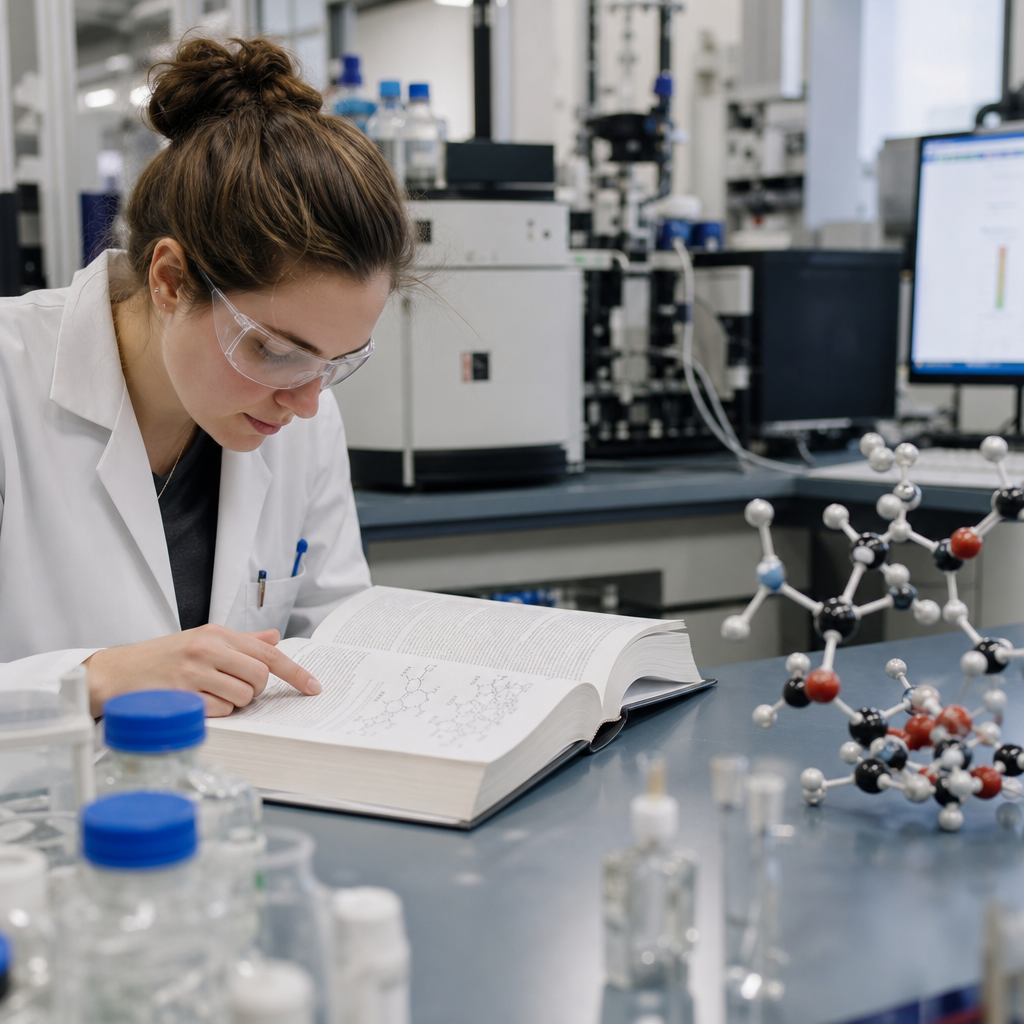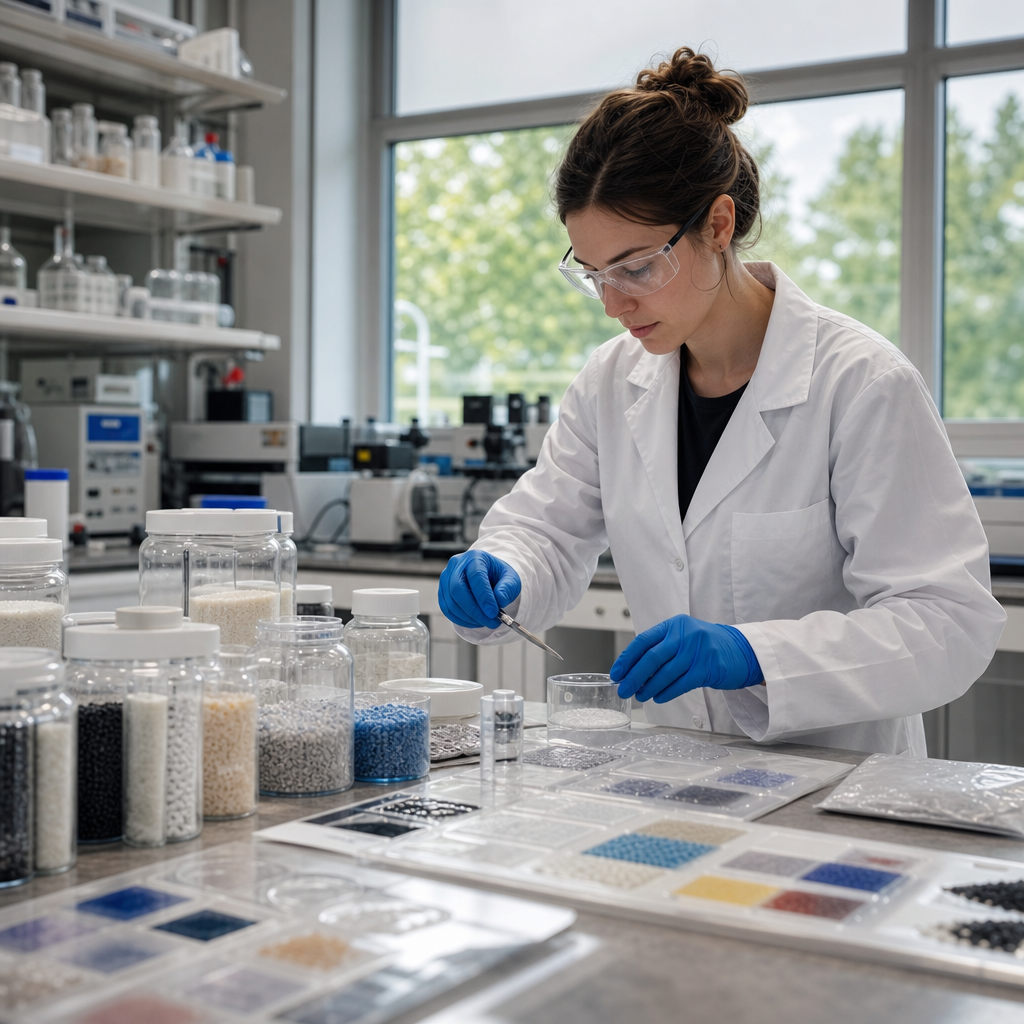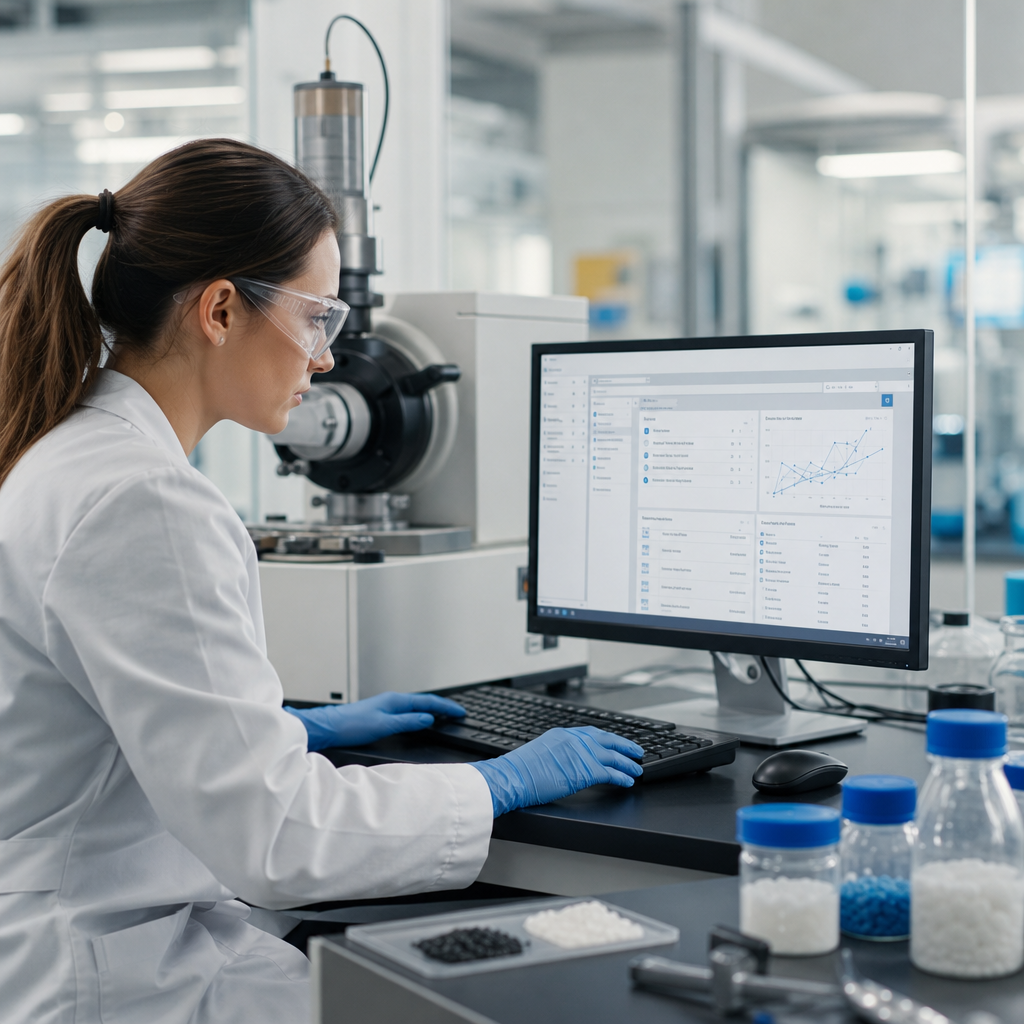
Lab management software in polymer research is the digital backbone that connects formulation work, instrument data, samples, regulatory records, and team collaboration into one controlled environment. In practical terms, it usually combines elements of a laboratory information management system, an electronic lab notebook, sample tracking, inventory control, workflow automation, and reporting tools. For polymer scientists, that matters because research rarely follows a straight line. A single project may involve monomer sourcing, reaction design, compounding, thermal analysis, rheology, spectroscopy, mechanical testing, stability studies, and scale-up documentation. When those records live in spreadsheets, paper notebooks, instrument PCs, and email chains, data quality drops and project risk rises.
I have seen polymer teams lose weeks reconstructing which extrusion run produced a promising pellet batch, which DSC method version was used, or whether a tensile result came from conditioned or unconditioned specimens. Those failures are not caused by weak science. They are usually caused by weak systems. Implementing lab management software fixes that by creating traceable links among formulations, lots, methods, raw data, approvals, and decisions. It also supports repeatability, protects intellectual property, and shortens the path from exploratory chemistry to validated product development. For an Educational Resources hub focused on software and tools, this topic sits at the center because nearly every other digital capability in a modern polymer lab depends on it.
Polymer research adds complexity that general laboratory software does not always handle well. Materials are hierarchical: a resin may be made from a monomer lot, catalyst lot, stabilizer package, and processing history, then transformed into films, fibers, plaques, or molded bars for testing. Properties are history dependent. Molecular weight distribution, crystallinity, moisture uptake, orientation, cure state, additive dispersion, and thermal history all change outcomes. A useful implementation therefore has to model not just samples, but parent-child relationships, process parameters, and test context. The goal is not simply to digitize paperwork. The goal is to build a system that reflects how polymer science actually works, so researchers can find trustworthy answers faster and make better technical decisions.
Define scope around polymer workflows, not generic lab tasks
The most successful implementations start with workflow mapping, not software demos. Before selecting fields, dashboards, or integrations, document how work moves through the lab. In polymer research, that usually means identifying the sequence from request intake to formulation planning, synthesis or compounding, sample creation, conditioning, test assignment, data review, and final interpretation. List every material state a sample can pass through: raw material, intermediate, blend, compounded pellet, molded part, coated panel, or aged specimen. Then define the metadata that must stay attached at each step, including lot numbers, composition, processing settings, operator, instrument method, environmental conditions, and storage location.
This process reveals where software must be specialized. A chemistry-focused team may need reaction templates, stoichiometric calculators, and direct links to chromatographic or spectroscopic files. A materials characterization group may prioritize sample genealogy, method versioning, and automated import from DSC, TGA, DMA, GPC, FTIR, and rheometer outputs. An applications lab may need stronger request management, customer-facing reporting, and design-of-experiments support. Systems such as LabVantage, STARLIMS, Benchling, LabWare, and Sapio can cover parts of this landscape, but none should be implemented as an abstract enterprise tool. The configuration must mirror the lab’s real scientific pathways, naming conventions, and decision checkpoints.
A practical way to define scope is to choose one representative use case with high value and manageable complexity. For example, a thermoplastic formulation workflow might include raw material registration, blend recipe approval, twin-screw extrusion batch records, pellet inventory, injection molding parameters, tensile and impact testing, and statistical comparison to a control. If the software can support that end to end, the team learns where data structures break, where users hesitate, and where instrument integration saves the most time. Starting from a defined polymer workflow also helps justify investment. Leaders can quantify cycle-time reduction, fewer transcription errors, better traceability, and stronger knowledge retention instead of promising vague digital transformation.
Select core modules that support traceability, methods, and collaboration
Most polymer labs do not need every module on day one, but they do need a coherent foundation. The essential components are sample and batch management, an electronic lab notebook, method control, inventory tracking, search, and reporting. Sample and batch management should support genealogy so a researcher can trace a test specimen back to a compounded lot, then back to raw material lots and the exact process settings used. Electronic notebook functions should capture rationale, observations, attachments, and calculations in a structured form without forcing scientists into rigid templates for early-stage exploratory work. Method control should track approved procedures, revision history, and training acknowledgments.
Inventory matters more in polymer research than many teams expect. Additives, curing agents, coupling agents, fillers, colorants, and catalysts often have shelf-life limits or moisture sensitivity. A good system records receipt dates, certificates of analysis, storage conditions, hazard classifications, and remaining quantity by container. That reduces the chance of using expired peroxide, the wrong stabilizer package, or an unverified filler lot. Search and reporting are equally important. Scientists need to find all formulations containing a certain hindered amine light stabilizer, every polypropylene batch processed above a given melt temperature, or all DMA runs on samples conditioned at fifty percent relative humidity.
Collaboration features should not be underestimated. Polymer programs involve chemists, process engineers, analysts, quality teams, and sometimes external manufacturing partners. Role-based access, review workflows, comment trails, and controlled sharing are necessary to move work forward without losing accountability. The system should also fit adjacent tools rather than replace them all. Statistical analysis may still happen in JMP or Minitab. Structure drawing may stay in ChemDraw. Instrument control should remain with vendor software. The lab management platform earns its value by becoming the trusted system of record that links those tools together and preserves context around every result.
Build a polymer data model that captures composition and process history
The hardest and most important design task is the data model. If a polymer lab stores only sample IDs and test values, the software will become a nicer spreadsheet, not a research platform. The model needs entities for raw materials, formulations, process runs, derived samples, test methods, results, and approvals. It also needs relationships. A film sample may be derived from an extrusion lot, slit roll, and orientation step. A cured thermoset plaque may depend on resin, hardener ratio, catalyst level, mixing speed, degassing time, mold temperature, and post-cure schedule. Each of those factors can explain why properties changed.
Composition should be represented in a way that supports both scientific understanding and practical search. For many teams, that means recording each component with role, grade, supplier, lot, nominal loading, actual loading, units, and whether the value is target or measured. For research formulations, percent by weight is common, but some systems also need molar ratios, phr, or masterbatch letdown percentages. Process history should be equally explicit: screw speed, zone temperatures, residence time, die geometry, cooling profile, molding pressure, cure profile, draw ratio, annealing conditions, or humidity exposure. In polymer science, performance often depends as much on processing as on chemistry.
| Data object | Key fields | Why it matters in polymer research |
|---|---|---|
| Raw material | Supplier, grade, lot, COA, storage condition, expiration | Ensures traceability and flags lot-to-lot variability |
| Formulation | Component list, target loading, actual loading, revision, owner | Preserves exact composition and supports comparison studies |
| Process run | Equipment, settings, timestamps, operator, deviations | Captures thermal and shear history that drives properties |
| Derived sample | Parent batch, geometry, conditioning, storage location | Links test specimens to manufacturing history |
| Test result | Method version, instrument, analyst, raw file, calculated value | Supports defensible interpretation and reproducibility |
When designed correctly, this structure enables advanced questions. Researchers can compare all EVA formulations with similar vinyl acetate content but different peroxide levels, or isolate whether impact strength shifted after a dryer maintenance event. It also improves future machine learning readiness because the data is contextualized, not flattened. That is one reason implementation should involve active scientists, not only IT and vendors. The nuances of sample genealogy, conditioning, and processing metadata determine whether the system becomes a lasting knowledge base or an expensive administrative layer.
Integrate instruments, calculations, and quality controls carefully
Instrument integration is often the difference between enthusiastic adoption and user resistance. Polymer laboratories generate large volumes of data from DSC, TGA, DMA, GPC, FTIR, UV-Vis, rheometry, universal testing machines, hardness testers, and microscopy platforms. Manual file upload is acceptable at first for low-volume workflows, but high-throughput teams benefit from automated ingestion. The software should at minimum capture raw file references, method versions, instrument identifiers, analyst names, and timestamps. Where possible, it should parse key outputs such as glass transition temperature, melt flow index, storage modulus, molecular weight averages, or tensile strength while preserving links to the original vendor files.
Integration should be governed by validation rules. Units need normalization. Method versions must be locked to result records. Calculated fields should be transparent, especially for values like crystallinity, conversion, crosslink density proxies, or normalized property retention after aging. If calculations occur outside the platform in Python, R, JMP, or Excel, the workflow should still record script version, template version, or workbook identifier. In regulated or customer-audited environments, undocumented calculations are a recurring source of compliance findings. Even in early research, poor calculation traceability weakens confidence in trend analysis.
Quality controls should be built into the implementation from the beginning. Use controlled vocabularies for sample types, test status, and failure reasons. Require review for out-of-spec or anomalous values. Set permissions so only authorized users can release approved methods or modify master data. If the lab follows ISO 17025 principles, Good Documentation Practice, or internal quality management standards, reflect those expectations in workflows rather than treating them as separate paperwork. A polymer lab that embeds these controls early avoids the common problem of trying to retrofit governance after years of inconsistent records.
Manage change, training, and rollout in phases
Software projects fail less often because of technical defects than because users do not trust the new process. Polymer researchers are busy, skeptical of extra clicks, and protective of experimental flexibility. That skepticism is reasonable. A badly configured system can slow iteration and hide nuance. The implementation team should address that directly by showing how the software reduces duplicate entry, shortens searches, standardizes recurring work, and protects authorship. Use real lab examples during design reviews: retrieving all formulations that used a certain carbon black, tracking which plaques were conditioned for forty-eight hours, or comparing GPC results across two instrument methods.
Training works best when role based. Analysts need instrument and results workflows. Formulators need recipe, batch, and notebook functions. Lab managers need dashboards, approvals, and exception handling. Administrators need master data, permissions, and audit support. Short scenario-driven sessions outperform generic vendor tutorials. Provide job aids with screenshots and naming examples relevant to polymer work, such as sample suffixes for molded bars, films, and aged variants. During early deployment, assign super users inside each functional group. They become local translators who can explain both the software and the scientific logic behind required fields.
Rollout should be phased. Start with one workflow, one site, or one instrument family. Measure adoption and fix pain points before expanding. Common phase one choices include sample registration plus tensile testing, or formulation management plus thermal analysis. Phase two may add inventory and broader instrument integration. Phase three often introduces reporting, customer request portals, or data science connections. This staged approach reduces risk and produces visible wins. It also creates the internal case for adjacent educational resources, including deeper articles on electronic notebooks, instrument integration, validation, analytics dashboards, and sample lifecycle design across the broader software and tools hub.
Measure success with scientific and operational metrics
An implementation is successful only if it improves research execution. Track scientific metrics and operational metrics together. Scientific indicators include reproducibility of repeated formulations, completeness of metadata, ability to explain variance, and speed of comparing historical experiments. Operational indicators include time from sample creation to result availability, percentage of records with missing fields, manual transcription events, inventory discrepancies, audit findings, and turnaround time for standard reports. Baseline these before rollout. Without a starting point, teams tend to rely on anecdotes instead of evidence.
In my experience, the clearest early signal is searchability. If a scientist can answer a meaningful question in minutes instead of hours, adoption rises naturally. Another strong signal is genealogy completeness. When every tested specimen can be traced back to composition, lot, process, and method, root-cause analysis becomes faster and more credible. Watch for negative indicators too. If users keep shadow spreadsheets, if attachments lack naming discipline, or if data exports are required for routine interpretation, the configuration likely needs refinement. Good lab management software should reduce friction in common tasks, not move it elsewhere.
Leadership should review outcomes quarterly and use them to prioritize improvements. That might mean adding barcode tracking for freezer samples, integrating universal test machine outputs, tightening approval rules for customer reports, or simplifying notebook templates for discovery work. Continuous improvement is part of implementation, not a postscript. Polymer research evolves as projects, instruments, and regulatory expectations change. The software must evolve with it while preserving data integrity and scientific context.
Implementing lab management software in polymer research is ultimately about making complex materials work traceable, searchable, and repeatable. The right system does more than store files. It captures composition, process history, sample genealogy, method control, and results in a structure that reflects how polymer science actually happens. That foundation helps teams reduce errors, protect intellectual property, strengthen collaboration, and move faster from experiment to decision. It also creates the hub that supports every other software and tools investment across an educational resources program.
The most reliable path is straightforward: map polymer workflows carefully, choose core modules that solve real lab problems, design a data model around composition and processing, integrate instruments with disciplined controls, and roll out in measured phases with strong training. Keep success tied to scientific outcomes, not just deployment milestones. When researchers can trust the record, compare historical work quickly, and trace a property shift back to a material or process variable, the system is doing its job.
If your lab is still managing polymer data across paper, spreadsheets, and isolated instrument folders, start by documenting one high-value workflow and the metadata it truly needs. That single exercise will clarify requirements, expose hidden risks, and give your team a practical roadmap for implementing lab management software with confidence.
Frequently Asked Questions
1. What should polymer research teams evaluate before implementing lab management software?
Before implementation begins, polymer research teams should first map how work actually moves through the lab rather than how it appears in a standard operating procedure. In polymer R&D, projects often involve iterative formulation changes, multiple resin or additive variants, instrument-heavy characterization, and long experimental timelines that connect synthesis, compounding, testing, and regulatory documentation. That means the software must support non-linear workflows, versioned formulations, sample hierarchies, instrument data capture, and strong traceability across every stage of the research process. A careful evaluation should identify where data is currently created, where it gets duplicated, where decisions depend on disconnected spreadsheets or notebooks, and where delays occur because teams cannot easily find prior formulations, test methods, or sample histories.
It is also important to define the functional requirements by role. Polymer chemists may need structured experiment templates, formulation management, and searchable historical results. Analytical scientists may require seamless integration with spectroscopy, chromatography, thermal analysis, rheology, and mechanical testing systems. Lab managers often prioritize sample custody, inventory visibility, workflow controls, reporting, and audit readiness. Quality, regulatory, and IP stakeholders may focus on electronic signatures, change histories, permissions, and secure record retention. When these role-specific needs are gathered early, the implementation is more likely to produce a system that people genuinely use rather than one that simply stores information.
Beyond features, teams should evaluate data structure and scalability. Polymer research generates complex relationships between raw materials, batches, formulations, test specimens, instrument runs, and performance results. The software should be able to model these relationships clearly so that a team can trace a finished data point back to a specific lot of monomer, compounding run, curing condition, or test method version. It should also be flexible enough to support future growth, whether that means additional instruments, multiple research sites, collaboration with manufacturing, or stronger quality and compliance requirements later on. In short, the best starting point is not asking which software has the longest feature list, but which platform most effectively supports the reality of polymer research, protects data integrity, and helps scientists move faster with better visibility.
2. How do you design workflows in lab management software for polymer formulation and testing?
Designing workflows for polymer formulation and testing requires balancing structure with flexibility. Polymer research does not usually follow a simple one-step process. A project may begin with a target property profile, move into formulation design, continue through synthesis or blending, then branch into processing trials, environmental conditioning, and multiple rounds of mechanical, thermal, chemical, or rheological testing. The lab management software should therefore be configured to reflect these linked but variable stages. Rather than forcing all work into one rigid workflow, successful implementations create modular workflows that connect formulation records, sample preparation steps, instrument analyses, approvals, and final reporting while still allowing scientists to iterate as results come in.
A strong workflow design typically starts with a digital representation of the formulation itself. That means tracking raw material identities, supplier and lot information, concentration ranges, processing conditions, and each version or revision of a blend. From there, the workflow should generate and connect downstream sample records, test requests, and specimen identities. For example, one formulation batch may produce multiple plaques, films, fibers, or molded parts, each with different conditioning histories and test assignments. If the system can preserve these parent-child relationships, scientists can later compare performance outcomes accurately and determine whether a property change came from chemistry, processing, sample handling, or test conditions. That level of detail is especially valuable in polymer research, where small changes can significantly affect results.
Workflow automation should also support practical lab operations. The system can route samples for specific analyses, assign tasks to analysts, trigger notifications when testing is complete, and apply approval steps for critical results or formal reports. Templates for recurring experiments and test methods help standardize data capture without limiting innovation. At the same time, the workflow should allow exceptions, comments, and experimental deviations to be documented clearly, since exploratory work often involves adjusting conditions in response to unexpected findings. The goal is not to eliminate scientific judgment but to create a controlled environment where every decision, change, and result is traceable. When workflow design is done well, polymer teams gain speed, consistency, and confidence in the reproducibility of their research.
3. How can lab management software improve traceability and data integrity in polymer research?
Traceability and data integrity are among the most important reasons to implement lab management software in polymer research. Polymer projects often involve a large chain of interconnected variables: raw material lots, catalyst choices, additive packages, mixing order, extrusion settings, cure cycles, conditioning times, instrument configurations, and analyst interpretations. When these details are scattered across paper notebooks, personal files, spreadsheets, and instrument-specific folders, it becomes difficult to prove exactly how a result was generated. Lab management software centralizes these records and creates a controlled digital history that links formulations, samples, tests, results, and approvals into one coherent system. That makes it easier to reproduce experiments, investigate anomalies, and defend decisions internally or externally.
In practical terms, improved traceability comes from structured record relationships and automatic event logging. A well-configured system can show which raw materials were used in a given formulation, which batch produced which samples, which test methods were applied, which instruments generated the data, and who reviewed or approved the results. If a tensile result looks unusually high or a DSC trace differs from expectations, researchers can quickly review the complete sample lineage instead of manually reconstructing the history from multiple sources. This is particularly valuable in polymer development programs where minor changes in feedstock or processing can create significant property shifts. Better traceability shortens root-cause investigations and helps teams separate meaningful trends from noise.
Data integrity improves when the system enforces consistency and reduces manual handling. Standardized templates, controlled vocabularies, role-based permissions, audit trails, and electronic signatures all contribute to more reliable records. Instrument integrations can pull data directly into the platform, limiting transcription errors and preserving metadata such as timestamp, method version, and operator identity. Revision control ensures that changes to formulations, methods, or records are documented rather than overwritten. Together, these controls create a trustworthy research environment where data is easier to find, easier to compare, and more defensible during IP reviews, customer audits, regulatory inquiries, or technology transfer. For polymer organizations trying to build reusable knowledge rather than isolated project files, that is a major operational advantage.
4. What implementation challenges are most common in polymer labs, and how can they be avoided?
One of the most common implementation challenges is trying to digitize a messy process without first improving it. If a polymer lab already has inconsistent naming conventions, unclear sample handoffs, duplicate formulation records, or undocumented test variations, moving those problems into software will not solve them. It usually makes them more visible. The best way to avoid this is to spend time upfront standardizing core data structures, naming rules, workflow stages, and ownership responsibilities. Teams should agree on how formulations will be versioned, how samples will be labeled, how methods will be referenced, and what information is required at each step. This foundation prevents confusion later and gives the software a clean operational model to enforce.
Another major challenge is poor user adoption. Scientists are unlikely to embrace a system that feels like administrative overhead or that slows down active research. This often happens when implementation is driven only by IT or compliance priorities without enough involvement from bench scientists and analysts. In polymer labs, usability matters because researchers work across formulation design, pilot processing, sample preparation, and characterization workflows that can change quickly. To avoid resistance, involve real users in requirements gathering, workflow design, and testing. Configure screens, templates, and reports around how the lab actually works. Keep data entry focused on meaningful information rather than forcing excessive fields that add effort but little scientific value. Training should be role-specific and practical, not generic.
Integration and migration are also frequent pain points. Polymer labs may rely on legacy instruments, separate inventory systems, shared drives full of historical reports, and spreadsheets that contain years of formulation intelligence. If these sources are ignored, the new platform may feel incomplete from day one. A phased implementation usually works best. Start with high-value processes such as sample tracking, formulation records, or instrument-linked test data, then expand as users gain confidence. Historical data should be prioritized based on relevance; not everything needs to be migrated, but critical knowledge should remain searchable and connected. Clear governance after go-live is equally important. Assign system owners, define change control, review data quality regularly, and continue refining workflows based on user feedback. The most successful implementations are treated as operational programs, not one-time software installations.
5. What results can a polymer research organization realistically expect after implementing lab management software?
A polymer research organization can realistically expect better visibility, faster information retrieval, and stronger consistency across projects, provided the software is implemented thoughtfully. One of the earliest benefits is that scientists spend less time searching for historical formulations, sample records, instrument files, and prior reports. Instead of relying on individual memory or manually digging through folders, they can search a centralized system and quickly understand what was tested, under which conditions, and with what results. This directly supports faster decision-making in formulation optimization, troubleshooting, and comparative studies. In research environments where timelines depend on iterative learning, reducing the time needed to find and trust data can have a meaningful impact on development speed.
Teams can