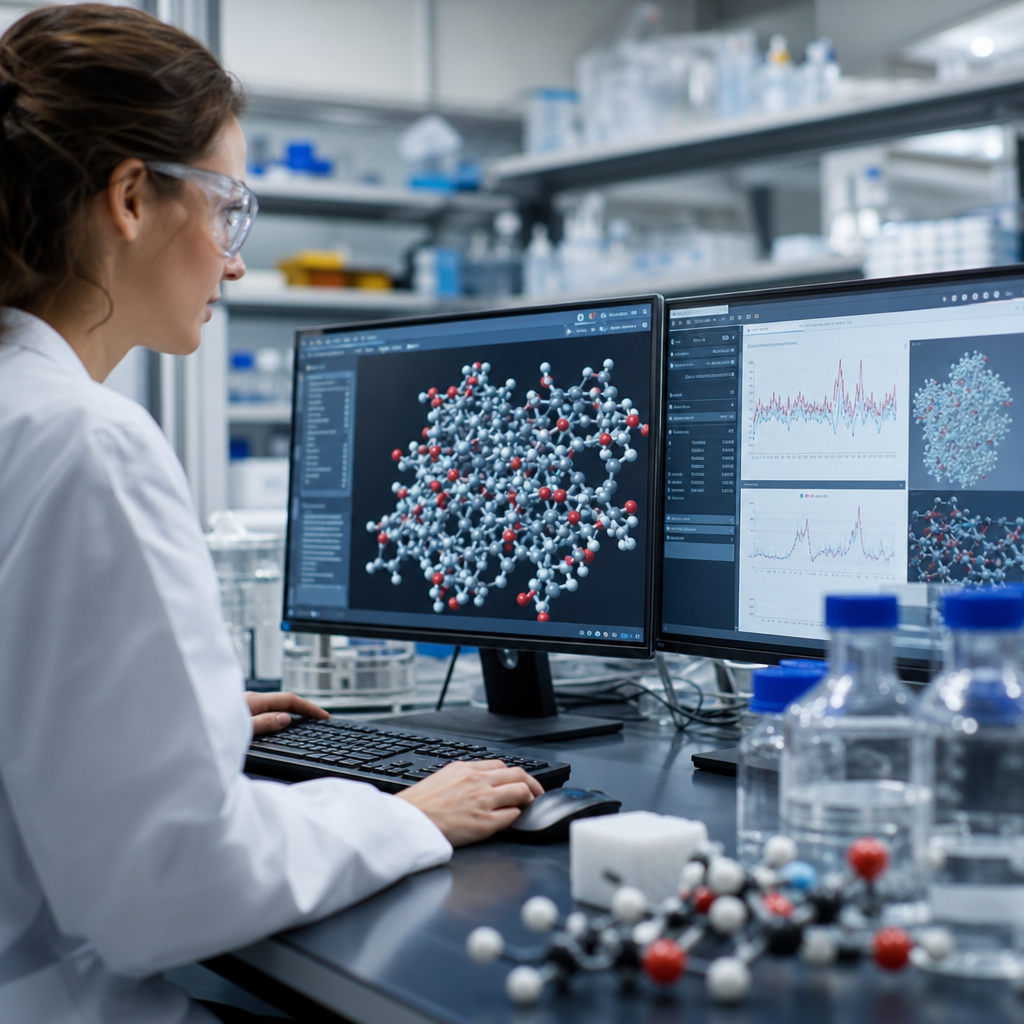
Advances in software for polymer property prediction are reshaping how materials teams design plastics, elastomers, fibers, coatings, and composites. Polymer property prediction software refers to digital tools that estimate mechanical, thermal, rheological, barrier, electrical, and processing behavior before extensive laboratory testing begins. In practice, that means using molecular simulation, machine learning, finite element analysis, cheminformatics, and curated experimental databases to answer questions such as: Will this copolymer meet a target glass transition temperature? How will molecular weight distribution affect melt viscosity? Can a recycled blend maintain impact strength after multiple processing cycles? I have worked with these platforms in formulation screening and process development, and the biggest shift over the last decade is speed with traceability. What once required disconnected spreadsheets, handbook lookups, and custom scripts can now be done in integrated environments that link chemistry, structure, process conditions, and predicted performance.
This matters because polymer development is expensive, iterative, and highly sensitive to small formulation changes. A few percent change in plasticizer content, branching, crystallinity, filler loading, or moisture uptake can alter stiffness, shrinkage, permeability, and durability enough to fail a specification. Traditional trial-and-error still has value, but it scales poorly when teams must evaluate hundreds of candidate resins across sustainability, manufacturability, and cost constraints. Modern software reduces the search space by combining first-principles models with data-driven ranking. It also improves cross-functional decision making: chemists can compare monomer choices, process engineers can simulate cooling and warpage, and quality teams can benchmark variability against historical lots. As a hub page for software and tools, this article explains the major categories of polymer prediction software, what each does well, where limitations remain, and how organizations can build a practical workflow that moves from molecular idea to manufacturable part with fewer failed iterations.
Core Categories of Polymer Property Prediction Software
The software landscape is broad, but most polymer property prediction tools fall into five functional categories. First are molecular modeling packages, including molecular dynamics, Monte Carlo, quantum chemistry, and coarse-grained simulations. These tools estimate chain conformation, cohesive energy density, solubility parameters, diffusion, and in some cases transition temperatures or elastic response. Examples used across industry and academia include Materials Studio, Schrödinger Materials Science tools, LAMMPS, GROMACS, and Gaussian-linked workflows. They are strongest when chemistry-specific interactions matter, such as hydrogen bonding in polyamides or segmental mobility in amorphous thermoplastics.
Second are data-centric informatics platforms that combine polymer descriptors with experimental databases and machine learning. These systems predict properties from repeat-unit structure, composition, additives, and process metadata. Third are computer-aided engineering tools for processing and part performance, such as Autodesk Moldflow, Cadmould, SIGMASOFT, COMSOL Multiphysics, Abaqus, and Ansys. They model filling, cooling, residual stress, warpage, viscoelasticity, and structural response. Fourth are formulation and laboratory informatics tools, including electronic lab notebooks, LIMS, and materials data management systems, which do not always generate predictions themselves but are essential for training reliable models. Fifth are specialist calculators for permeability, weathering, flame behavior, dielectric performance, or life-cycle tradeoffs. The strongest organizations connect these categories rather than treating them as separate islands.
How Molecular Simulation Software Predicts Polymer Behavior
Molecular simulation software predicts polymer behavior by representing atoms, bonds, and intermolecular forces explicitly or in reduced form. Molecular dynamics calculates how chains move over time under a defined force field, temperature, and pressure. For polymers, common force fields include COMPASS, OPLS, PCFF, CHARMM, and DREIDING, though selection must match the chemistry and target property. If the goal is density, cohesive energy, or local packing, an all-atom simulation may be sufficient. If the goal is long-timescale chain entanglement or diffusion in large systems, coarse-grained methods become necessary because full atomistic models are computationally expensive.
In my experience, simulation is most useful when teams ask a narrow, physically grounded question. For example, estimating Hildebrand or Hansen solubility parameters can quickly screen solvent compatibility for coatings or recycling processes. Simulating free volume can support qualitative comparisons in gas barrier studies for packaging polymers. Glass transition temperature can sometimes be estimated by tracking changes in specific volume versus temperature, although absolute accuracy depends heavily on cooling rate and force-field calibration. Crystalline polymers are harder because morphology, lamellar thickness, and processing history dominate properties. Software can capture trends, but not replace measured DSC, DMA, or tensile data when certification decisions are at stake. The key advance is not that simulation predicts every property perfectly; it is that simulation now provides decision-grade ranking early enough to eliminate weak candidates before synthesis or compounding.
Machine Learning Platforms and Polymer Informatics
Machine learning has become the fastest-growing segment of polymer property prediction software because it can map complex structure-property relationships when enough quality data exists. Polymer informatics platforms encode repeat units, copolymer ratios, tacticity, molecular weight, polydispersity, additive content, and process conditions into descriptors that algorithms can learn from. Common methods include random forests, gradient boosting, Gaussian processes, support vector regression, graph neural networks, and transformer-based models adapted to materials text and chemical representations. Public resources such as PoLyInfo, the Materials Project ecosystem, Citrine-style data infrastructure, and organization-specific historical datasets often provide the foundation.
The best results come from constrained use cases. Predicting density, refractive index, glass transition temperature, or tensile modulus within a defined chemical family is realistic. Predicting impact strength across unrelated resins with inconsistent test methods is much less reliable. I have seen teams overestimate model accuracy because they mixed ASTM and ISO data, ignored specimen conditioning, or failed to capture filler dispersion and processing shear history. Good software now addresses this by surfacing uncertainty intervals, data lineage, and out-of-domain warnings. That is a major advance. A model that says “prediction unavailable because this chemistry is outside the training space” is more valuable than a polished but misleading number. As a hub topic, polymer informatics deserves special attention because it increasingly acts as the coordination layer between simulation, testing, and engineering analysis.
Process Simulation and Finite Element Tools for Real Parts
Even the best chemistry model is incomplete if it ignores manufacturing. Process simulation software translates material data into part-level outcomes. Injection molding tools predict fill pressure, weld lines, sink marks, air traps, fiber orientation, residual stress, cooling time, and warpage. Extrusion packages model die swell, temperature profile, residence time, and pressure drop. Thermoforming, blow molding, and additive manufacturing tools estimate thickness distribution and anisotropy. Structural solvers then use these outputs to predict stiffness, creep, fatigue, and failure under service loads.
Consider a glass-filled polypropylene housing. A generic datasheet may report tensile modulus, but actual stiffness depends on flow-induced fiber orientation, gate location, wall thickness, and cooling profile. Moldflow or similar software can generate orientation tensors that feed into Abaqus or Ansys for anisotropic structural analysis. That workflow often explains why a part fails in one rib geometry despite acceptable coupon data. For elastomers, hyperelastic models such as Mooney-Rivlin, Ogden, or Yeoh are fitted from test data and used in finite element software to predict seal compression or vibration response. For viscoelastic thermoplastics, time-temperature superposition and Prony series are commonly applied. The advance here is interoperability. More platforms now let users pass material cards, process histories, and mesh-based property maps across tools, reducing the old problem of manually re-entering assumptions and silently introducing error.
Data Quality, Standards, and Validation Workflows
Prediction quality depends more on data discipline than on algorithm branding. Polymers are especially difficult because the same named resin can vary by grade, stabilizer package, molecular architecture, moisture content, and processing path. A trustworthy workflow captures metadata rigorously: test standard, sample preparation, conditioning environment, machine type, strain rate, thermal history, lot number, and composition basis. ASTM and ISO methods matter because modulus, impact, melt flow, and heat deflection values shift with method details. Software that stores only a single number without context creates false precision.
| Software Category | Best For | Typical Inputs | Main Limitation |
|---|---|---|---|
| Molecular simulation | Early chemistry screening | Repeat unit, force field, temperature, density | High compute cost, calibration sensitivity |
| Machine learning platforms | Rapid property ranking | Descriptors, historical test data, process metadata | Biased by training data quality |
| Process simulation | Manufacturing and warpage prediction | Rheology, pvT, mold geometry, cycle conditions | Requires accurate material card data |
| Finite element analysis | Part performance under load | Elastic, viscoelastic, anisotropic material models | Garbage in, garbage out from assumptions |
| Lab and data management tools | Model traceability and reuse | Test results, formulations, SOPs, lineage | Value depends on disciplined adoption |
Validation should be staged. Start with retrospective checks against known materials, then run prospective predictions on a small blind set, then compare model output to designed experiments. Useful metrics include root mean square error, mean absolute percentage error, calibration curves, and confidence interval coverage. For classification tasks such as pass-fail barrier thresholds, precision and recall matter more than R-squared. In regulated or customer-audited environments, software should preserve versioning of datasets, feature pipelines, and model parameters. That audit trail is not administrative overhead; it is the basis for trust when a formulation choice affects qualification timelines, warranty risk, or safety margins.
Specialized Tools for Key Polymer Properties
No single platform predicts every polymer property equally well, so specialists often rely on dedicated tools and modules. Rheology software fits Cross, Carreau-Yasuda, Herschel-Bulkley, and viscoelastic constitutive models to capillary, rotational, and oscillatory data for use in processing simulation. Permeability tools estimate oxygen, water vapor, or solvent transport using free volume concepts, dual-mode sorption models, or empirical correlations. Crystallization and kinetics packages fit Avrami-type behavior, Lauritzen-Hoffman analyses, or DSC-derived models to improve cooling and shrinkage predictions. Dielectric analysis tools support cable, capacitor, and electronics encapsulation design by relating frequency and temperature to permittivity and loss.
There are also sustainability-oriented tools that estimate recycled content effects, life-cycle impacts, and circularity tradeoffs alongside classic performance metrics. For example, a packaging team may use software to compare virgin PET, recycled PET, and multilayer alternatives on oxygen transmission rate, stiffness, and carbon footprint simultaneously. Adhesive and coating developers often use formulation software that combines Hansen solubility parameters, pigment volume concentration, cure kinetics, and VOC constraints. In flame-retardant applications, software may screen halogen-free packages against UL 94 targets while tracking effects on viscosity and mechanical properties. These narrower tools are valuable because they encode domain-specific knowledge that general platforms often miss. A hub strategy should therefore connect property-specific software pages, not force every problem into one umbrella system.
Implementation Strategy for Teams Building a Software Stack
The most successful teams do not begin by buying the largest platform. They begin by mapping decisions that repeatedly consume lab time or cause late-stage failure. In one implementation I supported, the highest-value use case was not exotic molecular design; it was predicting shrinkage, warpage, and cycle time for semi-crystalline injection molded parts with frequent tooling revisions. Once that workflow stabilized, the team expanded into machine learning for formulation screening and then added molecular simulation for solvent resistance questions. That sequence mattered because it delivered operational wins early and built trust in the software stack.
A practical roadmap has four stages. First, create a governed materials data foundation with standardized naming, metadata, and links to raw test files. Second, prioritize one high-volume prediction problem with measurable cost impact, such as melt viscosity at processing temperature, glass transition of a formulation family, or gate-induced warpage. Third, connect prediction output to the workflow where decisions are made, whether in PLM, ELN, CAD, or CAE. Fourth, maintain the system with active learning: every new experiment should improve the model or challenge its assumptions. Vendor evaluation should focus on openness, API access, exportability, uncertainty handling, and support for polymer-specific data structures rather than presentation quality alone. If a tool cannot represent copolymer composition, filler morphology, or test-condition metadata cleanly, it will become a reporting layer instead of a predictive asset.
Advances in software for polymer property prediction now give materials organizations a practical way to reduce development cycles, improve formulation quality, and make better manufacturing decisions earlier. The field has matured from isolated simulation experts and spreadsheet correlations into connected workflows that combine molecular modeling, machine learning, process simulation, finite element analysis, and disciplined data management. Each category has a clear role. Molecular tools explain chemistry-driven trends. Data-driven platforms rank candidates rapidly when training data is trustworthy. Process and structural solvers show how a resin behaves in a real part under real manufacturing conditions. Specialist modules add depth for rheology, permeability, crystallization, dielectric behavior, coatings, adhesives, and sustainability tradeoffs.
The central lesson is straightforward: the best polymer prediction software is not the one with the most features, but the one that answers a defined materials question with traceable assumptions and validated accuracy. Teams should demand metadata rigor, method consistency, uncertainty reporting, and interoperability across their toolchain. They should also accept limits. Some properties remain highly process dependent, morphology dependent, or too data sparse for dependable prediction without targeted experiments. Used well, however, modern software sharply reduces blind trial-and-error and helps experts spend lab time where it creates the most value.
As the Educational Resources hub for software and tools, this page should guide readers toward deeper articles on molecular simulation, polymer informatics, process simulation, materials databases, rheology tools, and validation methods. If you are building or upgrading a polymer development workflow, start by identifying one costly prediction problem, audit the quality of your underlying data, and select software that fits that use case before expanding. That focused approach delivers faster wins and stronger long-term capability.
Frequently Asked Questions
What is polymer property prediction software, and why is it becoming so important?
Polymer property prediction software is a category of digital tools used to estimate how a polymer, polymer blend, composite, coating, fiber, or elastomer is likely to perform before teams commit to large-scale synthesis and testing. Instead of relying only on iterative laboratory work, materials scientists and engineers can use software to predict key behaviors such as stiffness, strength, impact resistance, glass transition temperature, melt viscosity, permeability, dielectric performance, weatherability, and processability. These platforms often combine several methods, including molecular simulation, machine learning, finite element analysis, cheminformatics, statistical modeling, and access to curated experimental databases.
Its importance is growing because modern polymer development has become faster, more complex, and more application-specific. Teams are being asked to design materials that meet demanding targets across cost, sustainability, durability, manufacturability, and regulatory compliance, often under tight timelines. Traditional trial-and-error development can be too slow and expensive when dozens or hundreds of formulation variables are in play. Prediction software helps narrow the design space early, identify promising candidates, reduce failed experiments, and improve communication between R&D, processing, product development, and quality teams.
Another major reason for its rise is that polymer performance depends on structure at multiple scales. Small changes in molecular weight distribution, branching, crystallinity, filler loading, additive package, or processing conditions can produce large shifts in final properties. Advanced software is now better equipped to capture these relationships by linking chemistry, morphology, and process history to real-world behavior. As a result, companies can make more informed decisions sooner, accelerating innovation while reducing development risk.
Which polymer properties can modern prediction software estimate most effectively?
Modern polymer property prediction software is strongest when applied to properties that can be tied to molecular structure, composition, morphology, and processing history through established models or high-quality training data. Common targets include mechanical properties such as tensile modulus, elongation, toughness, creep response, and viscoelastic behavior; thermal properties such as glass transition temperature, melting point trends, heat deflection behavior, thermal conductivity, and coefficient of thermal expansion; and rheological properties such as melt viscosity, shear thinning, relaxation behavior, and flow under processing conditions.
These tools are also increasingly effective at estimating barrier and transport properties, including gas permeability, moisture uptake, and diffusion behavior, which are especially important in packaging, membranes, electronics, and protective coatings. In addition, software can support the prediction of electrical and dielectric properties, optical performance, chemical resistance, weathering trends, flame behavior indicators, and interfacial performance in filled or reinforced systems. For composites and formulated systems, many platforms also model how fillers, fibers, plasticizers, stabilizers, and compatibilizers influence final behavior.
That said, predictive accuracy varies by property and by the quality of available data and models. Properties governed by well-understood physics or backed by robust datasets tend to be estimated more reliably than long-term real-world outcomes such as environmental stress cracking, multi-year aging, or performance under unusual service conditions. In practice, the best software does not replace testing; it prioritizes the most likely winners, flags likely failures, and helps teams design smarter validation programs. The real value lies in reducing uncertainty early and directing experimental resources where they matter most.
How do technologies like molecular simulation, machine learning, and finite element analysis work together in polymer prediction?
These technologies are most powerful when used as complementary layers rather than as isolated tools. Molecular simulation works at the chemistry and structure level. It helps researchers understand how monomers, repeat units, chain architecture, crosslink density, intermolecular interactions, and local morphology affect intrinsic material behavior. Depending on the method, it can provide insight into chain mobility, free volume, crystallization tendencies, interfacial adhesion, diffusion, and temperature-dependent transitions. This makes it especially useful in early-stage material design when experimental data may be limited.
Machine learning adds speed and pattern recognition. Once sufficient high-quality data are available, ML models can detect complex nonlinear relationships between formulation variables, structural descriptors, processing parameters, and measured properties. This is particularly valuable for screening large candidate spaces, optimizing formulations, identifying hidden correlations, and predicting performance across families of related polymers. In many modern workflows, machine learning is used to rank promising candidates, estimate uncertainty, and guide active learning strategies that determine which new experiments will most improve the model.
Finite element analysis connects material behavior to product-level performance. Even if a polymer’s intrinsic properties are known, engineers still need to understand how a component will behave in its actual geometry and service environment. FEA uses constitutive material models to simulate stresses, strains, deformation, heat transfer, creep, impact response, and failure risk in parts such as housings, seals, films, medical devices, automotive components, and structural laminates. When integrated properly, molecular simulation informs materials selection, machine learning accelerates prediction and optimization, and FEA translates those predicted properties into design decisions. This multiscale approach is a major reason software for polymer property prediction has become so influential in advanced materials development.
What are the biggest advantages of using prediction software instead of relying only on physical testing?
The biggest advantage is speed. Physical testing remains essential, but building, processing, conditioning, and evaluating every possible formulation is rarely practical. Prediction software allows teams to screen many options quickly and focus laboratory effort on the most promising candidates. This can significantly shorten development cycles for plastics, coatings, adhesives, elastomers, fibers, and composites, especially when teams are balancing performance targets with cost, sustainability, and manufacturing constraints.
Another major benefit is cost reduction. Material development can become expensive when raw materials are scarce, pilot runs are required, or specialized tests must be repeated across many conditions. By reducing the number of low-probability experiments, software lowers material consumption, equipment time, and labor demands. It also improves decision quality by showing tradeoffs earlier. For example, a team may discover that increasing stiffness could harm impact performance or processability, or that a bio-based reformulation may need changes in additives to maintain thermal stability. Seeing those interactions early supports better planning and fewer late-stage surprises.
Prediction software also improves knowledge reuse and collaboration. Experimental results often sit in separate spreadsheets, notebooks, or business units, making it difficult to learn from prior work. Modern platforms can organize and standardize historical data, connect chemistry with processing and testing outcomes, and create a shared foundation for future projects. This is especially valuable in companies with multiple product lines or geographically distributed teams. Importantly, the goal is not to eliminate physical testing but to make it more strategic. The most effective organizations use software to reduce uncertainty, optimize test plans, and bring stronger candidate materials into the lab with a higher chance of success.
What limitations should teams keep in mind when adopting polymer property prediction software?
The most important limitation is that prediction quality depends heavily on data quality, model scope, and the realism of assumptions. Polymers are highly sensitive to details such as molecular weight distribution, tacticity, branching, crystallinity, orientation, additives, filler dispersion, moisture content, thermal history, and processing conditions. If the software has incomplete input data or is trained on a narrow dataset, its predictions may look precise while missing critical real-world effects. This is especially true when teams apply a model outside the chemistry space or processing window for which it was originally developed.
Another challenge is that some properties are inherently harder to predict than others. Short-term, well-characterized properties may be modeled reasonably well, while long-term aging, fatigue, environmental stress cracking, weathering, contamination sensitivity, and failure mechanisms in complex service environments remain difficult. Multiphase systems such as filled compounds, blends, reinforced composites, and reactive formulations can add further uncertainty because microstructure evolution and interfacial effects are not always captured perfectly. In addition, machine learning models can inherit bias from legacy data, and even physics-based models may simplify phenomena that matter in manufacturing or end use.
Successful adoption therefore requires a disciplined workflow. Teams should validate software predictions against trusted experiments, track uncertainty, document model applicability, and maintain strong data governance. It is also wise to involve both computational specialists and hands-on materials experts, because domain knowledge is essential for interpreting outputs correctly. When used responsibly, polymer property prediction software is extremely valuable, but it performs best as part of a broader decision framework that includes expert judgment, targeted experimentation, and continuous model improvement.