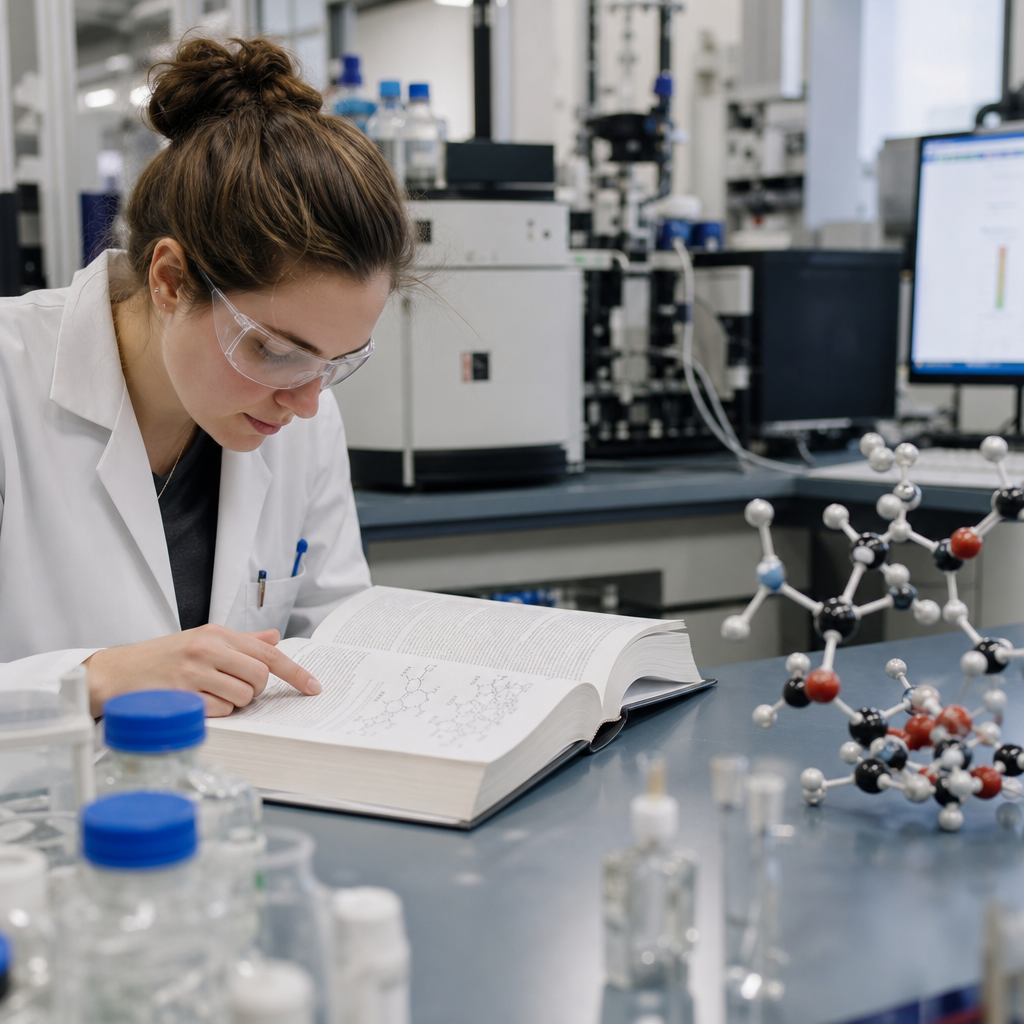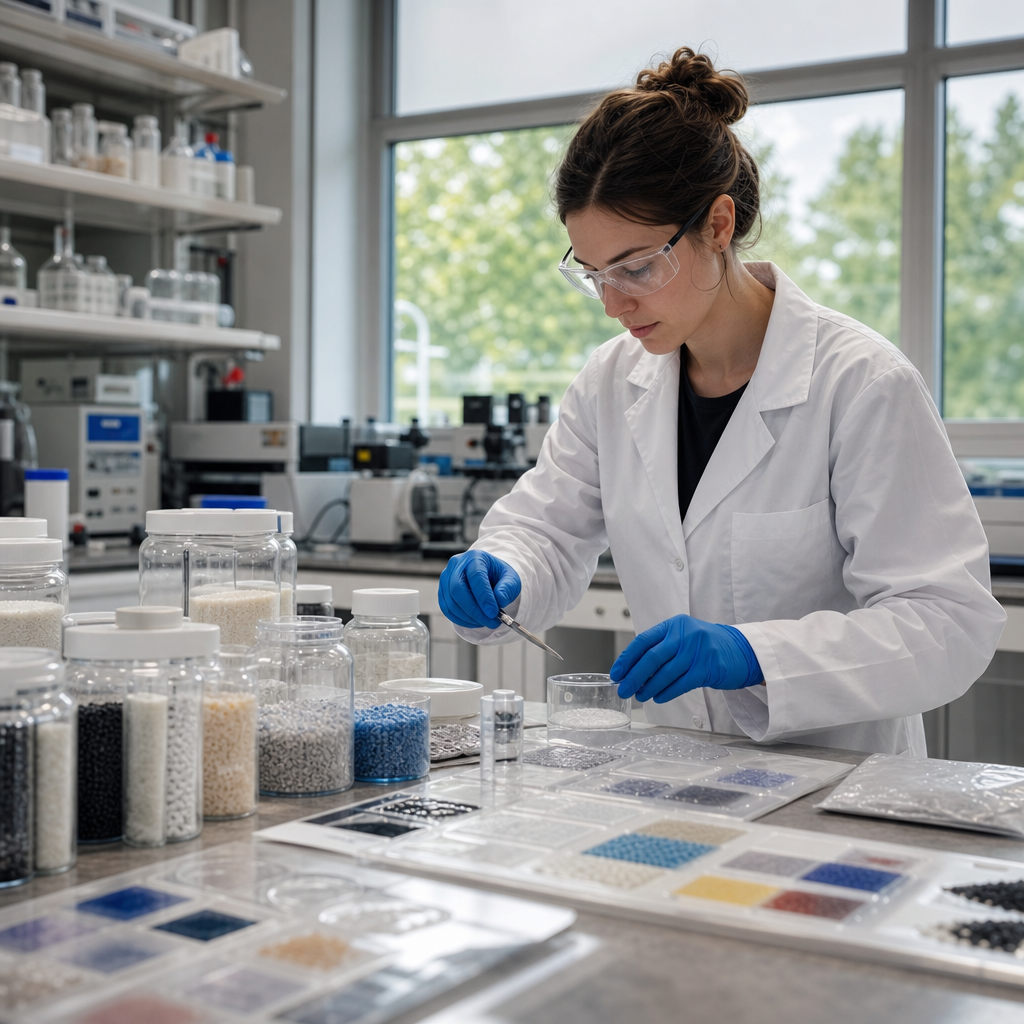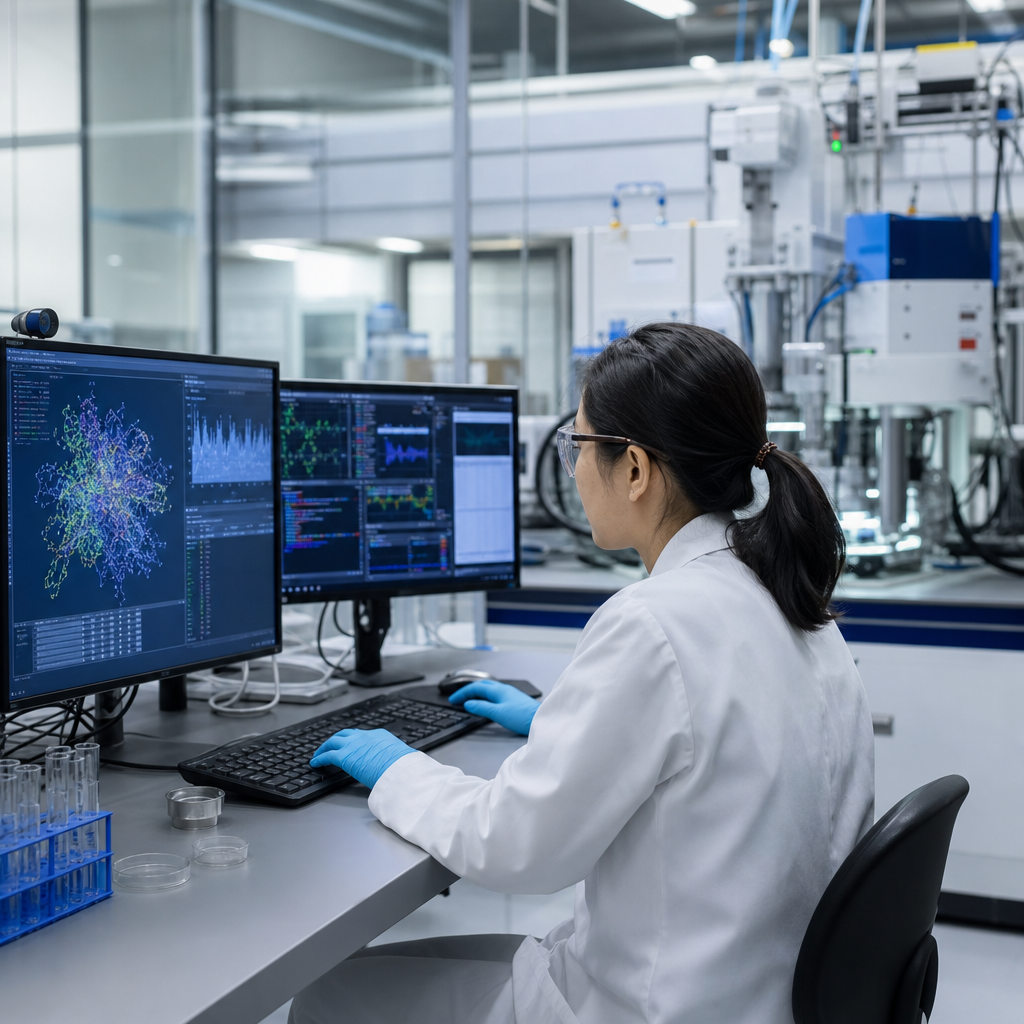
Big data tools are reshaping polymer science by turning vast, messy experimental and simulation records into practical guidance for designing materials faster, cheaper, and with better performance. In polymer science, “big data” does not only mean huge file sizes. It refers to high-volume, high-variety, and high-velocity information generated from synthesis logs, spectroscopy, rheology, microscopy, molecular dynamics, quantum calculations, process historians, patents, and published literature. “Tools” includes the software, databases, cloud platforms, machine learning frameworks, laboratory information systems, and workflow engines used to collect, clean, analyze, visualize, and reuse that information. For researchers, educators, and industrial teams, this matters because polymers are highly sensitive to chemistry, molecular weight distribution, branching, additives, processing history, and end-use conditions. Traditional trial-and-error methods cannot efficiently explore such a large design space.
I have seen this shift directly in materials programs where months of manual spreadsheet work were replaced by connected data pipelines that linked formulation records to thermal, mechanical, and processing outcomes. When those links are reliable, teams stop repeating failed experiments and start asking better questions: which monomer families improve barrier properties, how extrusion temperature affects crystallinity, or which descriptors best predict glass transition temperature. This article serves as a hub for software and tools in polymer science, explaining the major categories, what each tool does well, where limitations appear, and how to choose a workable stack for education, research, and industry. It also points to the practical workflows that make data useful rather than merely abundant.
Why Big Data Fits Polymer Science So Well
Polymer science is unusually data rich because every material carries structure across multiple scales. A single project may include monomer identity, catalyst selection, conversion, molecular weight averages such as Mn and Mw, dispersity, tacticity, crosslink density, DSC thermograms, TGA curves, DMA traces, tensile results, permeability, microscopy images, and long-term aging data. Add process variables from injection molding, extrusion, blow molding, or electrospinning, and the number of possible interactions becomes enormous. Big data tools help organize this complexity into searchable, analyzable forms.
The field also benefits because polymer properties are often nonlinear. Small changes in copolymer ratio, filler loading, or thermal history can cause large changes in modulus, toughness, optical clarity, or melt viscosity. Standard linear regression is sometimes useful, but richer approaches such as random forests, gradient boosting, Gaussian processes, and graph-based models often capture patterns better when paired with chemically meaningful descriptors. This is especially valuable in domains such as battery binders, recyclable packaging, biomedical hydrogels, membrane separations, and lightweight composites, where property targets must be balanced rather than optimized one at a time.
Educational programs increasingly teach students to think of polymers as both physical materials and data objects. A sound curriculum now includes cheminformatics basics, statistical design of experiments, data wrangling, and reproducible computing alongside spectroscopy and thermodynamics. That shift prepares graduates to work with modern research groups and manufacturers that rely on digital records and automated analysis.
Core Software Categories in the Polymer Data Stack
The software and tools landscape in polymer science can be understood as a stack. At the foundation are data capture systems: electronic lab notebooks such as Benchling, LabArchives, and Signals Notebook; laboratory information management systems; and instrument software from vendors like TA Instruments, Malvern Panalytical, Bruker, Waters, and Thermo Fisher. These systems hold the raw evidence. Above them are storage and governance layers, which may include SQL databases, cloud object storage, version control, metadata catalogs, and access controls. Without consistent naming and metadata, polymer datasets become unusable very quickly.
The next layer is analysis. Python has become the dominant general-purpose environment because libraries such as pandas, NumPy, SciPy, scikit-learn, RDKit, matplotlib, and seaborn support cleaning, feature engineering, machine learning, and visualization. R remains strong for statistics and publication-ready graphics. For molecular and mesoscale simulation, common tools include LAMMPS, GROMACS, Materials Studio, Gaussian, ORCA, and VASP, depending on the scale and method. Polymer-specific workflows may add descriptor generation from repeat-unit structures, chain topology calculations, or coarse-grained modeling.
Finally, there are workflow and collaboration layers. Jupyter notebooks, Git, DVC, MLflow, KNIME, and cloud environments help teams reproduce results and share models. In practice, the strongest polymer data programs connect these layers instead of treating them as isolated software purchases.
| Tool category | Primary use in polymer science | Common examples | Main limitation |
|---|---|---|---|
| Data capture | Record synthesis, formulations, instrument outputs, metadata | Benchling, LabArchives, vendor instrument software | Data silos and inconsistent naming |
| Database and storage | Centralize structured and unstructured records | PostgreSQL, Snowflake, AWS S3 | Requires schema design and governance |
| Analysis and ML | Model properties, classify spectra, optimize formulations | Python, scikit-learn, TensorFlow, RDKit | Performance depends on data quality |
| Simulation | Predict structure-property behavior across scales | LAMMPS, GROMACS, Materials Studio | Computational cost and parameter sensitivity |
| Workflow and reproducibility | Track code, models, experiments, and decisions | Git, Jupyter, MLflow, KNIME | Adoption can lag in wet-lab teams |
Data Sources, Standards, and the Importance of Metadata
Most failures in polymer analytics are not caused by weak algorithms. They are caused by poor data structure. In one packaging project I supported, oxygen transmission data looked inconsistent until we separated samples by conditioning humidity and film orientation. The model improved immediately, not because the code changed, but because the metadata was corrected. That pattern is common. Polymer data needs context: sample preparation, annealing time, shear history, test standard, specimen geometry, environment, and instrument calibration status.
Recognized standards matter here. ASTM and ISO methods define how tensile strength, melt flow, impact resistance, thermal transitions, and barrier properties are measured. If a dataset combines ASTM D638 tensile results with different specimen types or mixes DSC runs with different heating rates, direct comparison can mislead. FAIR data principles are also important: data should be findable, accessible, interoperable, and reusable. In educational settings, teaching FAIR practices is often more valuable than teaching a single software package because tools change faster than good data habits.
Polymer naming creates extra challenges. A material may be described by trade name, common abbreviation, repeat unit, copolymer ratio, or proprietary formulation code. Cheminformatics standards such as SMILES help for small molecules, but polymers need additional representation for repeating units, end groups, distributions, and architecture. This is why robust metadata dictionaries, controlled vocabularies, and sample identifiers are essential parts of the software stack, not administrative extras.
Machine Learning and Predictive Modeling for Polymer Properties
Machine learning is one of the most visible big data applications in polymer science, but its value depends on matching the model to the question. For property prediction, supervised learning can estimate glass transition temperature, elastic modulus, dielectric constant, gas permeability, degradation behavior, or solubility from structural descriptors and processing parameters. Random forest models often perform well on medium-sized tabular datasets with mixed variables. Gradient boosting methods like XGBoost are strong when nonlinear interactions dominate. Neural networks can be effective for larger datasets, especially when image, spectrum, or sequence-like inputs are involved.
Good models in polymer science use physics-aware features whenever possible. Rather than feeding only text labels into an algorithm, teams should include descriptors such as Hansen solubility parameters, polar surface area, aromatic fraction, crystallizable segment content, chain flexibility proxies, or simulation-derived free volume estimates. A model that blends chemical descriptors with process inputs usually outperforms one that ignores how the material was made. For example, predicting tensile strength for a semicrystalline polymer without cooling rate or draw ratio often produces unstable results because morphology strongly affects the outcome.
Uncertainty estimation is equally important. Gaussian process regression is helpful in low-data environments because it predicts both values and confidence intervals. That feature is useful for active learning, where the model recommends the next experiment expected to provide the most information. In polymer discovery, active learning has been used to screen candidates for coatings, electrolytes, and thermosets while reducing the number of lab iterations needed to hit target properties.
Simulation, Digital Twins, and Multiscale Integration
Big data tools do not replace simulation; they make simulation more connected and more useful. Polymer behavior spans atomistic, mesoscopic, and continuum scales, so no single model answers every question. Molecular dynamics can estimate chain conformation, diffusion, interfacial behavior, and local packing. Quantum chemistry can probe reaction energetics or electronic properties for specialized systems. Finite element models can predict component-level stress, heat transfer, or flow behavior. The challenge is integrating these outputs with experiments and manufacturing data.
That integration is the basis of digital twins in polymer processing. A digital twin is a continuously updated virtual representation of a material, process, or asset that combines mechanistic models with real operating data. In extrusion, for instance, torque, temperature, screw speed, die pressure, and residence time can be linked to viscosity models and quality measurements to predict defects before off-spec product is produced. In composites manufacturing, sensor data and cure kinetics models can help estimate degree of cure and residual stress in near real time.
For educators, the key lesson is that simulation files should not live in isolation. The useful practice is to tag them with composition, force field, boundary conditions, version history, and validation notes, then connect them to experimental records. When this is done, simulations become searchable evidence rather than one-off figures in a presentation.
Literature Mining, Patents, and Knowledge Graphs
A large share of polymer knowledge is buried in papers, patents, datasheets, and internal reports. Natural language processing tools can extract monomer names, reaction conditions, additives, performance claims, and application areas from this text at a scale no manual review can match. This is especially valuable for scouting alternatives to PFAS-containing materials, identifying recyclable polymer platforms, or mapping prior art around barrier coatings and flame retardants.
Knowledge graphs are increasingly useful here because they represent relationships rather than just documents. A graph can link a polymer family to catalysts, processing routes, test methods, target properties, and applications. That structure supports better search and reasoning. If a team wants a transparent, solvent-resistant coating with lower VOC processing, a graph-based system can surface related chemistries and known tradeoffs from multiple sources. Tools in this space may combine vector search, named entity recognition, ontology design, and graph databases such as Neo4j.
Patents deserve special mention because they often contain practical formulation ranges and processing windows absent from academic papers. However, patent language is noisy and strategically broad. Effective mining requires careful normalization, human review, and legal awareness. Software speeds discovery, but expert judgment remains essential.
Practical Adoption in Labs, Classrooms, and Manufacturing
The best big data strategy for polymer science is rarely the most complex. Start with a narrow workflow that fixes a real problem, such as centralizing DSC and tensile data with sample identifiers and test conditions. Once that foundation works, add automated parsing, dashboards, and predictive models. In classrooms, students can learn this progression through small projects: cleaning a rheology dataset, correlating copolymer composition with Tg, or comparing model performance with and without process variables. These exercises teach both scientific reasoning and data discipline.
In manufacturing, adoption succeeds when operators, process engineers, chemists, and data specialists share definitions and quality rules. A model that predicts scrap is useless if batch codes, grade names, and shift logs are inconsistent. Governance should therefore include naming conventions, calibration routines, validation checks, and clear ownership for each dataset. Cybersecurity and intellectual property controls also matter because formulations and processing know-how are core business assets.
As a hub for software and tools under educational resources, this topic connects naturally to deeper articles on electronic lab notebooks, polymer databases, cheminformatics, spectroscopy analytics, simulation platforms, workflow automation, and machine learning model validation. The lasting impact of big data tools on polymer science is not automation alone. It is better decisions made from connected evidence across chemistry, processing, structure, and performance. Build that connection deliberately, choose tools that fit your data maturity, and invest in metadata first. Teams that do will accelerate learning, reduce wasted experiments, and create polymer research environments that are more reproducible, collaborative, and effective. Explore the related software and tools topics next, then map one workflow you can improve this quarter.
Frequently Asked Questions
1. What does “big data” actually mean in polymer science?
In polymer science, big data is not limited to extremely large datasets or oversized simulation files. It refers to the combination of volume, variety, and velocity of information generated across the full materials workflow. Researchers produce data from monomer and polymer synthesis records, reactor conditions, spectroscopy, chromatography, rheology, microscopy, thermal analysis, mechanical testing, molecular simulations, quantum chemistry calculations, manufacturing process logs, patents, and scientific literature. Each source may use different formats, different naming conventions, and different levels of quality, which makes the data both valuable and difficult to use.
The real impact of big data tools comes from their ability to organize, clean, connect, and interpret these diverse records. Instead of treating every experiment as an isolated event, scientists can use data infrastructure, machine learning, and statistical analysis to identify patterns across many experiments, formulations, and processing conditions. For example, they can connect molecular architecture to viscosity, crystallinity, tensile strength, permeability, or degradation behavior across hundreds or thousands of prior observations. This turns scattered historical data into a practical design resource.
In other words, big data in polymer science is less about “having a lot of files” and more about building systems that can learn from many kinds of evidence at once. That is why it is becoming so important in modern polymer R&D. It helps researchers move from trial-and-error development toward more predictive, evidence-driven materials design.
2. How are big data tools changing the way new polymers are designed and developed?
Big data tools are transforming polymer development by making it possible to predict promising materials before researchers spend time and money making them in the lab. Traditionally, polymer design often relied on expert intuition, literature review, and repeated rounds of synthesis and testing. That approach still matters, but data-driven methods now make the process faster and more systematic. By analyzing large collections of prior experiments and simulations, big data tools can highlight which monomer combinations, molecular weights, copolymer ratios, additives, or processing conditions are most likely to achieve a target property profile.
This is especially useful because polymer behavior depends on many interacting variables at once. A small change in tacticity, branching, molecular weight distribution, curing conditions, filler loading, or extrusion temperature can shift final performance in significant ways. Big data platforms can capture these interactions more effectively than simple one-factor-at-a-time experimentation. They allow researchers to search broad design spaces, rank candidate materials, and focus resources on the most promising formulations.
These tools also support inverse design, where scientists begin with the desired outcome rather than the starting chemistry. For instance, a team may want a polymer with specific stiffness, transparency, heat resistance, and recyclability. Instead of manually screening endless combinations, a data-driven workflow can suggest candidate structures and processing pathways that are statistically linked to those targets. This can shorten development cycles, reduce failed experiments, and improve the likelihood of discovering materials that balance performance, manufacturability, and cost.
Just as important, big data tools help teams learn continuously. Every new experiment, simulation, or plant run can feed back into the model and improve future predictions. That creates a compounding advantage: the more well-structured data an organization captures, the better its design guidance becomes over time.
3. What kinds of big data tools are most useful in polymer science?
The most useful big data tools in polymer science usually work together as part of a broader digital workflow rather than as a single standalone solution. At the foundation are data management systems such as electronic lab notebooks, laboratory information management systems, materials databases, and process historians. These tools help capture experimental details, preserve metadata, and make records searchable. Without structured data collection, even advanced analytics tools struggle to deliver reliable insights.
On top of that foundation, researchers use data integration and preprocessing tools to clean inconsistent records, standardize units, resolve naming differences, and link experimental data with simulation and literature sources. This step is critical in polymer science because the same material may be described in multiple ways, and essential context such as sample preparation or thermal history often determines whether a dataset is truly comparable.
Machine learning and statistical modeling tools are then used to detect relationships, classify materials, predict properties, and optimize formulations. Depending on the problem, teams may use regression models, clustering methods, neural networks, Bayesian optimization, or active learning strategies. Natural language processing is also increasingly valuable for mining patents and journal articles, extracting information about monomers, synthesis conditions, and reported performance trends from unstructured text.
Simulation platforms contribute another major layer of value. Molecular dynamics, coarse-grained modeling, density functional theory, and finite element methods can generate data that complement experimental work. When simulation results are integrated with lab data, researchers gain a richer picture of structure-property-processing relationships across multiple length and time scales.
Finally, visualization and decision-support tools help scientists interpret results and act on them. Dashboards, interactive maps of design space, and uncertainty estimates make it easier to understand where the model is confident, where data gaps exist, and what experiment should be run next. In practice, the best toolset is the one that connects data capture, analysis, simulation, and decision-making into one coherent workflow.
4. What are the biggest challenges of using big data in polymer science?
The biggest challenge is usually not the lack of data, but the lack of usable data. Polymer science generates enormous amounts of information, yet much of it is fragmented, inconsistent, incomplete, or trapped in formats that are difficult to analyze. Experimental records may omit crucial metadata such as solvent system, humidity, shear history, annealing conditions, or instrument calibration. Different labs may measure the same property in different ways, making direct comparison difficult. If those issues are not addressed, even sophisticated algorithms can produce misleading results.
Another major challenge is the inherent complexity of polymers themselves. Unlike small molecules, polymers are rarely defined by a single exact structure. Molecular weight distribution, chain architecture, sequence distribution, tacticity, branching, end groups, additives, and processing history all influence behavior. That makes data representation more complicated and raises the bar for building accurate predictive models. A model that works well for one polymer family may not generalize well to another if the underlying chemistry or processing physics differ too much.
Data integration is also difficult because polymer research spans many scales and disciplines. Scientists may need to combine molecular simulations, synthesis logs, spectroscopy outputs, rheology curves, microscopy images, and manufacturing data into a single framework. Each source has its own noise, resolution limits, and assumptions. Aligning them into a trustworthy dataset requires domain expertise as well as computational skill.
There are also practical organizational barriers. Teams may store data in isolated systems, use incompatible software, or lack shared standards for naming materials and recording experiments. Intellectual property concerns can further limit data sharing between groups or companies. On top of that, researchers must be careful not to overtrust black-box models. In polymer science, predictions need to be tested against physical understanding, not treated as automatic truth.
The good news is that these challenges are manageable. Better metadata standards, disciplined data capture, interoperable databases, hybrid physics-informed models, and close collaboration between polymer scientists, data scientists, and process engineers are all helping the field move forward. The strongest results usually come from combining computational power with deep materials expertise.
5. Why do big data tools matter for the future of sustainable and high-performance polymers?
Big data tools matter because the future of polymer science depends on solving several difficult goals at the same time: higher performance, lower cost, better manufacturability, improved recyclability, reduced environmental impact, and faster development timelines. Those objectives often conflict with one another. A material may be strong but hard to recycle, inexpensive but thermally unstable, or sustainable but difficult to process at scale. Big data tools help researchers navigate these tradeoffs more intelligently by revealing patterns that would be difficult to detect through conventional trial-and-error methods alone.
For sustainable polymers, data-driven methods can accelerate the search for bio-based feedstocks, recyclable thermoplastics, degradable systems, solvent-efficient processing routes, and lower-energy manufacturing conditions. Researchers can compare large datasets on feedstock origin, synthesis pathways, life-cycle indicators, performance metrics, and end-of-life options to identify formulations that offer a better overall balance. They can also use predictive models to screen candidates before committing to extensive lab work, which reduces waste and speeds progress.
For high-performance applications, big data tools support the design of polymers and composites with tightly tuned properties for aerospace, electronics, healthcare, packaging, membranes, coatings, and energy storage. By linking chemistry, morphology, and processing history to final function, these tools help optimize not just the material itself but also the route used to make it. That is essential for scaling discoveries from the bench to real manufacturing environments.
Perhaps most importantly, big data tools allow polymer science to become more proactive and predictive. Instead of asking only “What happened in this experiment?” researchers can ask “What should we make next, what will it likely do, and what tradeoffs should we expect?” That shift is powerful. It improves innovation speed, strengthens decision-making, and supports the development of polymer systems that are both technically advanced and more aligned with economic and environmental realities.