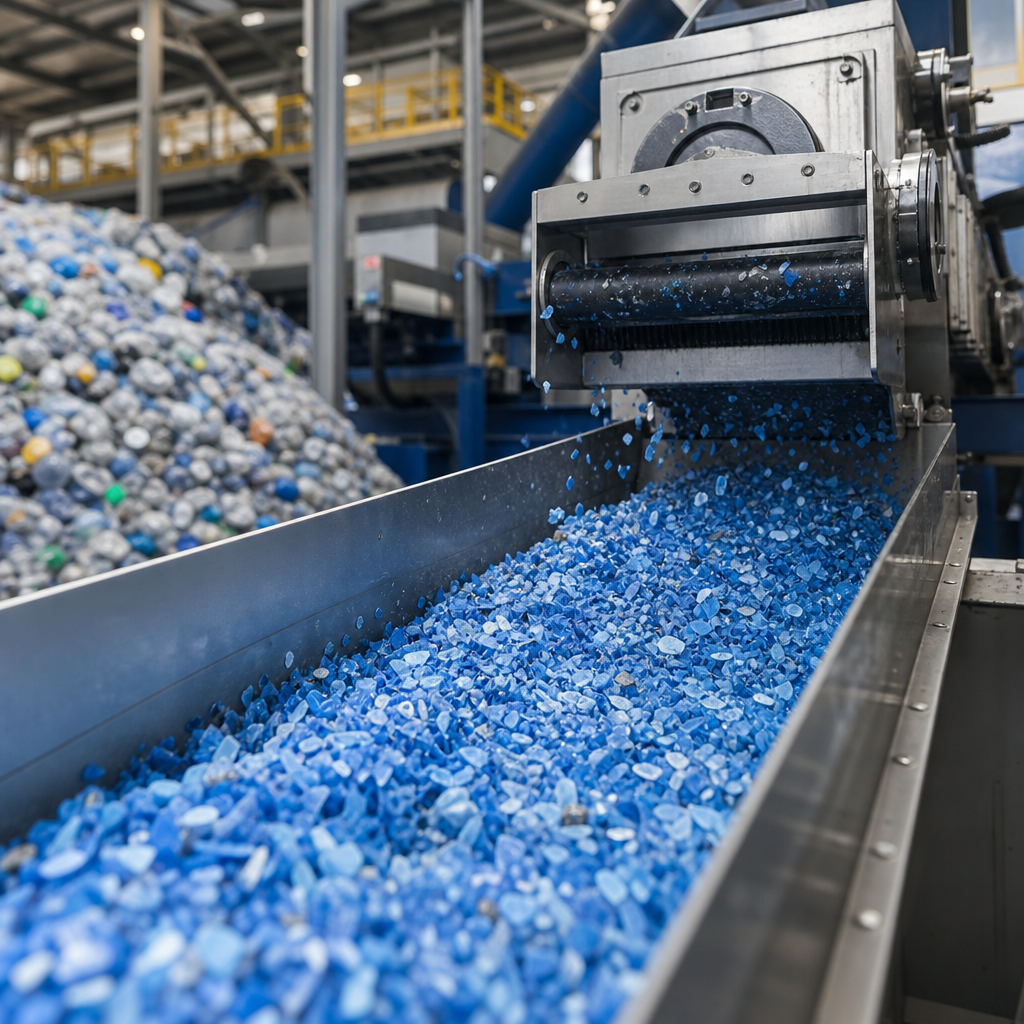
Advanced robotic systems rely on polymers because modern machines must be lighter, tougher, quieter, safer, and easier to manufacture than metal-only designs allow. In robotics, a polymer is any large-molecule material, including commodity plastics, engineering thermoplastics, elastomers, thermosets, hydrogels, and high-performance composites reinforced with carbon or glass fiber. I have worked on robotic assemblies where replacing machined aluminum brackets with polymer composite parts cut weight by more than a third while improving cable routing and impact resistance. That practical tradeoff explains why innovative polymer applications now sit at the center of industrial robots, medical robots, soft robots, autonomous vehicles, and collaborative machines.
The importance of polymers in robotics comes from how closely robot performance depends on material selection. Every actuator, sensor housing, end effector, cable sheath, seal, bearing surface, and protective enclosure must meet competing requirements: stiffness versus flexibility, strength versus mass, thermal stability versus cost, and chemical resistance versus processability. Metals remain essential for frames, gears, and shafts, but polymers often solve the secondary problems that determine whether a robot is commercially viable. They damp vibration, insulate electronics, survive cleaning chemicals, reduce lubrication needs, and enable shapes that would be expensive or impossible to machine. Additive manufacturing has accelerated this shift by letting engineers prototype nylon, TPU, PEEK, PEKK, and photopolymer parts directly from CAD.
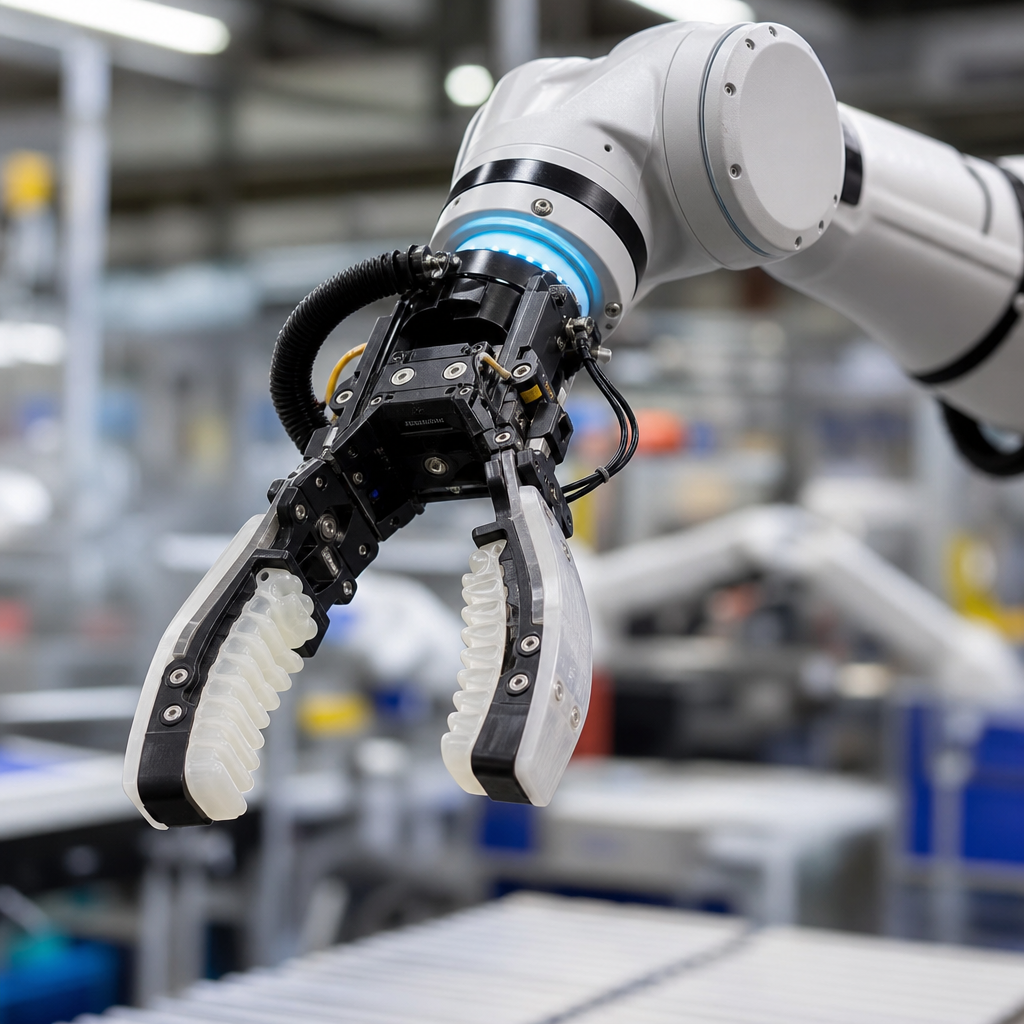
For companies exploring innovative polymer applications, the key question is not whether polymers belong in robotics but where each polymer class fits best. A robot arm moving automotive panels needs wear-resistant cable carriers and low-friction bushings. A surgical robot needs sterilizable housings, biocompatible tubing, and precise flex circuits. A warehouse robot needs impact-tolerant covers, polyurethane wheels, and battery insulation. A soft gripper handling fruit needs silicone or thermoplastic elastomer fingers with controlled compliance. This hub article maps those use cases, explains material choices in plain language, and highlights the design rules engineers use when selecting polymers for advanced robotic systems.
Structural polymers and composites in robot frames
Polymers are increasingly used in structural robot components when engineers need high specific strength, corrosion resistance, and design freedom. Glass-filled nylon, polycarbonate blends, ABS, acetal, and carbon-fiber-reinforced thermoplastics appear in covers, brackets, joints, sensor mounts, cable guides, and even load-bearing links in lighter systems. For higher-end designs, carbon-fiber composites deliver exceptional stiffness-to-weight performance. Industrial drone frames, quadruped shells, and mobile robot chassis frequently use composite laminates or short-fiber reinforced thermoplastics because every gram removed reduces motor torque demand, energy consumption, and battery size.
In practice, structural polymer selection starts with creep, fatigue, and environmental exposure. Engineers know that an unfilled thermoplastic can deform slowly under sustained load, especially at elevated temperatures. That is why heavily loaded housings may use 30% glass-filled PA66 instead of standard nylon, and why precision robotic links may shift to PEEK or carbon composite when dimensional stability matters. I have seen low-cost prototypes fail because designers treated a printed PLA bracket like a machined aluminum part; after several weeks near a motor, heat and load caused measurable drift. Advanced robotic systems succeed when polymer structures are designed around anisotropy, ribbing, insert placement, and realistic service life.
Composites also simplify function integration. A molded structural panel can combine mounting bosses, channels, snap fits, EMI shielding fillers, and impact features in one part. That consolidation reduces assembly time and part count. Collaborative robots benefit especially because polymer exteriors create rounded, energy-absorbing surfaces that improve human-robot interaction. While steel still carries major loads in many six-axis arms, polymer composite skins, covers, and secondary supports improve ergonomics and protect operators. This is one reason application engineers increasingly discuss polymer architecture alongside kinematics and control software.
Elastomers and soft robotics for safe interaction
Soft robotics would not exist in its current form without polymers. Silicone elastomers, polyurethane elastomers, thermoplastic polyurethane, and other compliant materials allow actuators and grippers to bend, inflate, twist, and conform to irregular objects. Instead of controlling rigid links through purely hard joints, soft robotic systems use material deformation as part of the mechanism. Pneumatic artificial muscles, fiber-reinforced elastomer actuators, and vacuum-powered grippers all rely on predictable polymer elasticity. This matters in food handling, prosthetics, agricultural harvesting, and medical devices, where delicate contact is more valuable than absolute rigidity.
A simple example is a soft gripper used in produce packing. Traditional metal fingers can bruise tomatoes or peaches unless force control is perfect. A silicone-based gripper with tuned wall thickness and chamber geometry distributes contact pressure over a larger area and tolerates variation in size and orientation. The polymer itself becomes a passive intelligence layer, reducing the sensing and control burden. In rehabilitation robots, elastomeric interfaces improve comfort at the skin boundary, lowering pressure points and shear. In collaborative applications, compliant polymer skins can absorb incidental contact energy and reduce injury risk.
The design challenge is durability. Elastomers can tear, swell in oils, age under UV, or change stiffness with temperature. For that reason, advanced teams test Shore hardness, elongation at break, hysteresis, compression set, and chemical compatibility early in development. Reinforcement strategies, such as embedding textiles or using multi-material overmolding, extend life significantly. Soft robotics is not simply about choosing a squishy material; it is about engineering repeatable deformation under thousands or millions of cycles. When done correctly, polymers unlock robotic behaviors that rigid metal mechanisms cannot reproduce economically.
Polymers in actuation, transmission, and tribology
Many robotic gains come from reducing friction, noise, and maintenance in moving assemblies, and polymers play a major role here. Acetal, PTFE-filled compounds, UHMWPE, nylon, and PEEK are used in bushings, sliding elements, cages, gears, wear strips, and bearing components. These materials can run with little or no lubrication in suitable conditions, which is valuable in cleanrooms, medical devices, and food processing environments where grease control matters. Compared with metal-on-metal contact, polymer interfaces often reduce noise and tolerate contamination better, though load and temperature limits must be respected.
Polymer gears are a classic example. They are not universal replacements for steel gears, but they excel in low-to-moderate torque applications where quiet operation, corrosion resistance, and low inertia matter. Service robots, compact actuators, inspection robots, and instrument drives often use injection-molded acetal or reinforced nylon gears. The lower mass reduces backlash effects during acceleration and can improve efficiency in stop-start motion profiles. Similarly, cable-driven robots use polymer sheaths and liners to reduce drag and protect conductors during repeated articulation. In robotic joints, engineered polymer plain bearings from suppliers such as igus are common because they handle oscillating motion well and simplify maintenance planning.
Tribology decisions require careful system thinking. Polymers can wear quickly if shaft finish, contact pressure, or thermal buildup are wrong. Moisture absorption in nylon can change dimensions, and a low-friction material may still fail from creep if preload is excessive. Successful designs therefore combine lab wear testing, finite element analysis, and supplier data with real application duty cycles. This is especially important in autonomous mobile robots that operate continuously across warehouses and distribution centers. Polymer wheels, rollers, dampers, and liners often determine uptime more than the control stack does.
Sensing, insulation, and electronics packaging
Robots are electromechanical systems, so polymers also serve as electrical, optical, and protective materials. Polyimide films are widely used in flexible printed circuits because they combine thermal stability with thin, bendable form factors. Epoxy encapsulants protect sensors and control boards from moisture and vibration. Liquid crystal polymer appears in some high-density electronic connectors. Silicone gels and potting compounds cushion delicate components. Polycarbonate and PC-ABS blends are common in control enclosures because they offer impact resistance and good moldability, while fluoropolymers and cross-linked polyolefins protect cables from abrasion and heat.
Sensor performance often depends on polymer packaging as much as on sensing elements. Force-sensitive resistors, tactile arrays, strain gauges on flexible substrates, and capacitive touch layers all rely on polymer films, adhesives, and dielectric layers. In collaborative robots, polymer skins may embed pressure sensors or conductive traces to detect contact. In mobile robots and drones, lightweight polymer radomes and lens covers protect cameras, LiDAR, and antennas without adding unnecessary mass. Medical robots add further constraints: materials may need ISO 10993 biocompatibility screening, resistance to sterilization, or low outgassing in enclosed systems.
Thermal management is another nuanced area. Most polymers are thermal insulators, which is useful around batteries, connectors, and operators, but problematic near motors, power electronics, and high-current busbars. Engineers address this by using thermally conductive filled polymers, metal inserts, heat spreaders, and careful ventilation paths. In several robotic electronics packages I have reviewed, the failure was not electrical design but trapped heat inside an attractive polymer enclosure. Good polymer application in robotics means treating housing material, wall thickness, venting, EMC needs, and assembly process as one integrated design problem.
Manufacturing methods and material selection criteria
Choosing the best polymer for an advanced robotic system depends on process as much as chemistry. Injection molding suits high-volume housings, gears, and clips with tight per-unit costs after tooling investment. CNC machining of acetal, UHMWPE, PEEK, or PTFE works for low-volume precision parts. Thermoforming can produce large lightweight covers. Resin transfer molding and prepreg layup support composite structures. Additive manufacturing is indispensable for iteration and custom end-of-arm tooling, especially with selective laser sintering nylon, fused filament TPU, and high-temperature materials in industrial printers from Stratasys, Markforged, and EOS.
The table below summarizes common polymer choices in robotics and the tradeoffs engineers evaluate.
| Material | Typical robotic uses | Key advantages | Main limitations |
|---|---|---|---|
| Glass-filled nylon | Brackets, housings, gears, structural mounts | Strong, moldable, cost-effective | Moisture absorption, creep under heat |
| Acetal/POM | Gears, bushings, sliding parts | Low friction, dimensional stability | Lower high-temperature capability |
| TPU | Soft grippers, cable strain relief, wheels | Flexible, abrasion resistant | Can deform under sustained load |
| Silicone | Soft actuators, seals, medical interfaces | Excellent compliance, biocompatible grades | Tear risk, variable gas permeability |
| PEEK | High-performance bearings, insulators, medical parts | High temperature, chemical resistance | High material and processing cost |
| Carbon-fiber composite | Arms, chassis, drone frames | Very high stiffness-to-weight ratio | Higher cost, complex fabrication and repair |
Selection criteria usually include modulus, impact resistance, creep, fatigue, coefficient of friction, dielectric strength, flame rating, sterilization compatibility, ingress protection needs, and total cost of ownership. Standards matter. Flammability may require UL 94 ratings. Medical applications may need biocompatibility and sterilization validation. Industrial environments may require IP sealing, chemical resistance, or ESD-safe formulations. The best material is not the one with the highest headline strength; it is the one that survives the actual load case, environment, manufacturing route, and maintenance interval at an acceptable cost.
Application case studies across advanced robotic systems
Industrial robots use polymers extensively even when their main structures are metal. Dress packs rely on polymer conduits, cable jackets, and strain-relief components to survive millions of articulation cycles. End effectors often use UHMWPE wear pads, polyurethane rollers, nylon fingers, and compliant TPU contact surfaces. Autonomous mobile robots combine polymer battery housings, bumper skins, wheel treads, optical windows, and molded sensor brackets to balance durability with manufacturability. In warehouses, these parts absorb impacts that would dent metal and create difficult field repairs.
Medical and laboratory robotics push polymer innovation further. Surgical systems use high-performance polymers for insulation, catheter components, sterile barriers, and lightweight instrument housings. Diagnostic automation relies on chemically resistant plastics in fluid paths, valve bodies, pipetting assemblies, and cartridge systems. Because these robots often contact reagents, disinfectants, or patients, material validation is stringent. Engineers evaluate extractables, sterilization effects, and particulate generation, not just strength. In one lab automation project, changing to a more chemically resistant fluoropolymer tubing eliminated repeated maintenance caused by solvent stress cracking.
Field robots and defense systems add another set of priorities: weathering, sand abrasion, shock, and low weight. Agricultural robots use soft polymer grippers for fruit, composite covers for corrosion resistance, and elastomer mounts to isolate sensors from vibration. Underwater robots depend on seals, cable jackets, buoyancy foams, and pressure-tolerant polymer components. Space robotics often uses specialized polymers in wire insulation, films, and composite structures where outgassing and radiation become critical. Across all these cases, innovative polymer applications expand what robots can do, where they can operate, and how safely they can interact with people and fragile environments.
Conclusion
Polymers are fundamental to advanced robotic systems because they solve problems that metals alone cannot solve efficiently. They reduce mass, enable compliant motion, improve tribology, protect electronics, simplify manufacturing, and make robots safer around humans and delicate products. The most successful applications come from matching polymer type to duty cycle, environment, and process: composites for lightweight stiffness, elastomers for safe contact, engineered thermoplastics for wear parts, and specialty polymers for sensing and insulation. Material choice is never isolated from design geometry, validation testing, and lifecycle cost.
For teams building this subtopic into a broader case studies and applications strategy, polymers deserve to be treated as a design platform, not a supporting detail. Each robotic use case—from warehouse autonomy to surgery to agriculture—creates a different material map, and understanding that map leads to better reliability and performance. Use this hub as your starting point, then evaluate each application with real loads, real environments, and real manufacturing constraints. The payoff is straightforward: smarter material decisions produce better robots.
Frequently Asked Questions
Why are polymers so important in advanced robotic systems?
Polymers are important in advanced robotic systems because they solve several design problems at once. Robots are expected to move quickly, operate efficiently, handle repeated loads, reduce noise, interact safely with people, and be manufactured at a reasonable cost. Metal-only designs can do many of these things, but often with weight, vibration, corrosion, complexity, and production limitations that become harder to manage as systems get more advanced. Polymers give engineers a much wider material toolbox. That toolbox includes standard plastics, engineering thermoplastics, elastomers, thermosets, hydrogels, and fiber-reinforced composites, each suited to different robotic functions.
One of the biggest advantages is weight reduction. In robotic arms, mobile robots, drones, grippers, housings, brackets, and cable-management systems, reducing mass improves acceleration, lowers energy consumption, and decreases the load on motors, bearings, and gearboxes. That can lead to smaller actuators, longer battery life, better cycle times, and lower wear over the life of the machine. Polymers also help with vibration damping and noise control, which matters in collaborative robots, service robots, medical devices, and precision automation where smooth, quiet operation is a real performance requirement, not just a comfort feature.
Another reason polymers matter is design freedom. Many polymer parts can be injection molded, thermoformed, cast, bonded, overmolded, additively manufactured, or molded with integrated features such as clips, channels, seals, hinges, and mounting points. That lets designers combine what would have been multiple metal parts into a single component. Fewer parts usually means simpler assembly, lower labor costs, better reliability, and fewer failure points. In advanced robotics, where packaging is tight and functions are highly integrated, that flexibility is a major advantage.
Polymers also improve safety and environmental resistance. Elastomers can create compliant surfaces for human-robot interaction, while specialized thermoplastics and composites can resist chemicals, moisture, UV exposure, sterilization cycles, or electrical insulation requirements. In short, polymers are not used as cheap substitutes for metal. In well-engineered robotic systems, they are selected because they enable performance characteristics that are difficult or inefficient to achieve with metal alone.
What kinds of polymers are commonly used in robotics, and what does each type do?
Robotics uses a broad range of polymers because no single material fits every job. Commodity plastics such as polypropylene, polyethylene, ABS, and PVC may appear in covers, guards, wire routing components, and non-structural housings where cost, ease of fabrication, and chemical resistance matter more than extreme strength. These materials are often used in support roles, but they are still valuable because enclosure design, protection, and manufacturability are critical parts of a successful robot.
Engineering thermoplastics play a much larger structural and functional role. Materials such as nylon, acetal, polycarbonate, PEEK, PPS, and UHMW can be used for gears, bushings, bearing surfaces, sensor mounts, frames, connectors, wear pads, and precision-machined or molded components. These polymers offer better mechanical strength, dimensional stability, heat resistance, fatigue performance, and wear behavior than commodity plastics. Glass-filled and mineral-filled versions can increase stiffness, while lubricated grades can reduce friction in moving assemblies.
Elastomers are another essential category. Silicone, TPU, EPDM, nitrile, and other rubber-like materials are used for seals, vibration isolators, compliant grippers, cable strain relief, protective boots, wheels, traction surfaces, and human-contact interfaces. In collaborative and service robotics, elastomers help absorb impact, reduce slip, and improve tactile interaction. They are often chosen not for structural strength but for flexibility, resilience, and energy absorption.
Thermosets and advanced composites are especially valuable when high stiffness-to-weight ratio is needed. Carbon-fiber-reinforced and glass-fiber-reinforced polymer systems can replace aluminum or steel in robot links, brackets, panels, end-effector structures, and mobile platforms. These materials can dramatically reduce weight while maintaining rigidity, which directly improves robotic dynamic performance. Hydrogels and other soft polymer systems also appear in specialized fields such as soft robotics, biomedical robots, and bioinspired actuators, where compliance, water content, or tissue-like behavior is useful. The key point is that polymer selection in robotics is highly application-specific. Engineers match mechanical, thermal, electrical, tribological, and manufacturing requirements to the right polymer family rather than treating “plastic” as a single material category.
How do polymers improve robot performance compared with metal components?
Polymers improve robot performance in several ways, and many of those improvements come from system-level effects rather than just part-for-part substitution. The most obvious benefit is lower mass. When a robotic component such as a bracket, housing, arm segment, or end-effector structure is made from a polymer or polymer composite instead of machined metal, the reduction in weight can be significant. That lower mass reduces inertia, which means motors can accelerate and decelerate the robot more efficiently. The result can be faster movement, lower energy use, improved positional control, and less stress on drivetrain components.
Polymers can also outperform metals in vibration and acoustic behavior. Many polymer materials naturally damp vibration better than aluminum or steel. In robotics, less vibration can mean better sensor stability, reduced backlash effects, quieter operation, and improved precision in certain applications. This is especially important in inspection robots, laboratory automation, medical robots, and collaborative systems operating near people. A quieter, smoother robot is often a better robot from both a performance and usability standpoint.
Another major advantage is functional integration. A polymer part can often be designed with snap-fits, embedded inserts, cable channels, compliant sections, sealing features, and complex geometries that would be expensive or impractical in metal. By consolidating multiple parts into one molded or printed component, engineers reduce assembly time, alignment issues, fastener count, and tolerance stack-up. That can increase reliability while lowering manufacturing cost. In high-volume robotics, these savings are substantial. In low-volume advanced systems, the real value may be faster iteration and easier customization.
Polymers also offer targeted benefits such as corrosion resistance, electrical insulation, lower friction, chemical compatibility, and impact resistance. Some grades are ideal for sliding contact or wear applications, while others are chosen because they survive sterilization, outdoor exposure, or aggressive cleaning agents. Of course, metals still remain essential in many robotic systems, especially where very high loads, temperatures, or dimensional tolerances are involved. But in many cases, the best-performing robot is not the one with the most metal. It is the one that uses metal where metal is necessary and polymers where polymers deliver better overall system behavior.
Are polymer components durable enough for demanding robotic applications?
Yes, polymer components can absolutely be durable enough for demanding robotic applications, but durability depends on choosing the right material, geometry, and manufacturing method for the actual service conditions. A common mistake is to compare a generic plastic part to a high-strength metal part and assume polymers are always weaker or less reliable. In reality, advanced robotics often uses carefully selected engineering polymers and composites that are designed for fatigue resistance, wear performance, thermal stability, impact toughness, and chemical exposure. When specified correctly, these materials can perform extremely well over long service lives.
Durability in robotics is not just about maximum tensile strength. It also includes fatigue under cyclic loading, creep under constant load, abrasion, friction, temperature swings, humidity, UV exposure, shock, and exposure to oils, solvents, cleaners, or sterilization processes. Different polymers respond differently to each of these conditions. For example, a polymer that performs well in a dry indoor industrial setting may not be ideal in a hot, chemically aggressive environment. That is why material selection must be based on the real duty cycle, not just a datasheet headline value.
Design practice matters just as much as material choice. Engineers improve polymer durability by accounting for ribbing, wall thickness, load paths, insert placement, fiber orientation, fastening method, and stress concentration. They also consider how a part will be molded or machined, because processing affects crystallinity, residual stress, porosity, and final mechanical properties. In dynamic robotic assemblies, testing is especially important. Good teams validate polymer parts with cycle testing, environmental testing, impact testing, and field-use simulation rather than relying on assumptions.
In many advanced robotic systems, polymer parts are not merely “good enough”; they are the preferred solution because they reduce weight, resist corrosion, absorb vibration, and simplify manufacturing without sacrificing reliability. The key is intelligent engineering. Poorly selected polymers can fail early, just as poorly designed metal parts can fail early. But properly designed polymer gears, housings, mounts, isolators, links, and composite structures can be highly durable and fully suitable for demanding industrial, medical, aerospace, and service robotics applications.
What should engineers consider when selecting polymers for robotic designs?
Engineers selecting polymers for robotic designs need to think beyond basic strength and cost. The first question is what the part actually has to do. Is it carrying structural load, guiding motion, damping vibration, insulating electrical systems, protecting electronics, contacting a human user, or surviving a harsh environment? The answer determines whether the designer should look at a rigid thermoplastic, an